Tips for preventing and dealing with shoulder injuries

By Kyle Swanson

Shoulder pain is estimated to affect nearly 20 percent of people at some point in their lives. Causes of shoulder pain can range from trauma to overuse injuries or a combination of both.

Contact sports such as football or hockey can lead to traumatic injuries. Golf, racket sports, swimming and throwing sports can lead to overuse injuries. The type of injury usually determines the type of symptoms people have.

Kyle Swanson

The shoulder is complex is the most unstable joint in the body. It’s made up of a “sloppy” ball-and-socket joint, which allows for a wide range of motion. One of the most important structures for shoulder function is the rotator cuff complex. For the shoulder to work properly, it relies on the coordinated function between the muscles, ligaments and bony structures. An injury to any one of these can cause pain and a loss of function.

Shoulder injury signs and symptoms include:

• Loss of motion

• Weakness

• Pain with overhead activities/lifting

• Night pain

• Popping/clicking

• Feeling of instability

Common shoulder injuries

Rotator cuff tears. The rotator cuff is a group of four muscles and tendons that surround the shoulder and help with motion and stability. Tears to the rotator cuff are more common in aging athletes and can be a result of trauma, or overuse. Many people endure rotator cuff pain, especially at night.

Bursitis. The bursa is a thin, fluid-filled sack that allows for smooth motion between the tendon and bone. It can become inflamed and interfere with normal shoulder movement. This is usually the result of overuse – commonly seen in overhead sports, such as volleyball or baseball. The pain may arise when reaching for something overhead and at the end of the day.

Arthritis. Cartilage, the smooth covering on the end of bones, can become damaged from an injury or normal use. Cartilage has a poor capacity to heal and degenerates over time, which leads to arthritis. When there is significant loss of cartilage, the normal movement of the shoulder joint is lost. Shoulder arthritis typically causes loss of motion, morning stiffness and significant pain.

Your treatment options

Most shoulder injuries can be treated with rest, activity modification, ice and anti-inflammatories. If the pain does not improve after seven to 10 days, it’s important to see a physician who specializes in shoulder injuries.

Depending on the severity of the injury, X-rays or an MRI may be required. Upon diagnosis, physical therapy may be prescribed and/or a cortisone injection may be offered to decrease the inflammation. Surgery may be necessary if there is a tear. Today, with modern technology, most of the injuries requiring surgery can be treated arthroscopically, minimizing trauma and recovery time.

Injury prevention

Warming up before any activity requiring repetitive motion of the shoulder is crucial. Preseason conditioning and strengthening the rotator cuff and core muscles can help prevent injuries later in the season. Proper mechanics can take stress off the shoulder, decreasing the chance of injury. The key is to be consistent with your program.

Education and assessment are key factors in the treatment of shoulder pain. On Sept. 12, from 6-7pm at Sierra Nevada College in Incline Village I will present the latest techniques and procedures in treating shoulder arthritis. This free wellness lecture will provide an in-depth look into the anatomy of the shoulder, signs and symptoms and treatment options.

Kyle Swanson is an orthopedic surgeon with Tahoe Orthopedics & Sports Medicine.



Life-work balance — a constant struggle

By Hannah Seligson, New York Times

Kelly Azevedo used to work upward of 70 hours a week.

It wasn’t really for the extra money. It’s just that she doesn’t have children. When colleagues were on kid duty, she had to pick up the slack.

“Parents are a special class, and they get special treatment,” says Azevedo, 27, who left her job at an Internet marketing firm to start She’s Got Systems, a website for entrepreneurs based in Sacramento. While she was covering for her former colleagues, she says, she sometimes sacrificed her own obligation to take care of her ailing grandparents.

On this Labor Day weekend, when we celebrate the American worker, or at least the last unofficial days of summer, Azevedo is giving voice to what many people feel in their bones: the pursuit of “work-life balance,” which sounds so wholesome and reasonable, can be a zero-sum game in the office.

In theory, flextime seems like an everyone-wins proposition. But one person’s work-life balance can be another’s work-life overload. Someone, after all, has to make that meeting or hit that deadline.

As a result, many Americans who work for companies that embrace flexible hours are confronting a sort of office class warfare. Some employees have come to expect that the demands of their children, in particular, will be accommodated — and not all of their colleagues are happy about it.

These tensions are hardly new. But at a time when many Americans are struggling to find or keep jobs — and when many of us are being asked to do more with less — the issue has come to the fore.

Child care has long been the third rail in this conversation, and it is receiving renewed attention in no small part because of a recent article in The Atlantic by Anne-Marie Slaughter. She discussed the moment she realized that she was unable to hold down a high-level State Department job and attend to her two adolescent boys. While advocating workplace flexibility for everyone, Slaughter stressed the special problems that women face balancing their careers with children.

Slaughter, 53, says both mothers and fathers should be “open and indeed proud” to leave early for the sake of their children and deplores the notion that spending more hours in the office automatically translates into getting more work done. But sometimes there is no substitute for office face time.

It’s not just the moms who are juggling.

“My kids have swim classes that start at 5pm,” says Aziz Gilani, 32, a director at DFJ Mercury, a Houston-based venture capital firm. “The net result is that I’m sure there are times when my partners are expecting me to be in the office and my office is empty because I’m doing one of these parental commitments. I’m sure it creates a burden for them.”

Gilani says it helps that two of his four partners also have young children, but that also means he’s often on the other side. “Sometimes I need an answer immediately, because what we work on is often time-sensitive, but my partner is at soccer practice with his daughter and that has created a decent amount of inconvenience.”

“It’s rough,” he says, but office technology enables them to work around the problem.

Gilani says there has never been a major spat at his firm over the issue. But Deborah Epstein Henry, founder of Flex-Time Lawyers, has found that colleague resentment is very common. “It’s the reason that a lot of work-life balance programs fail,” says Henry, whose firm, based in Ardmore, Pa., advises law firms and other organizations on flexibility policies. “In an ideal world, no one else is saddled with more work if their colleague works a reduced schedule.”

However, reality often strays far from the ideal.

Megan, 31, an associate at a large law firm in Washington who asked that her last name not be used because of the delicacy of the issue, says that when she worked on a case with a more senior lawyer who had a part-time schedule because she had several children, Megan ran the whole case. “She swooped in at the last minute and took all the credit,” says Megan, who is married but does not have children. “Getting the experience was the upside.”

Some employees don’t mind filling in for their colleagues with children — in fact, they see it as paying it forward and advancing the feminist mission to “have it all.”

“I put a high priority on helping other women achieve career success and time with their family,” says Jessie Kornberg, 30, a litigator at Bird, Marella, a Los Angeles-based law firm. But recently she ended up covering for a man — her boss — when he could not make it to a court hearing because of child care responsibilities.

Read the whole story


Dissecting food labels can be a healthy habit

By Mandy Kendall

I had to entertain some guests last weekend and there were some particular dietary requirements that I had to be aware of and cater for. This meant scrutinizing food labels in the supermarket in much more detail than I usually would, and it reminded me what a minefield of numbers and strange words the food-labeling world really is.

First, you have the nutrition facts and then the table with all the percentages and food groups. Then you have the list of ingredients. What’s most important? What should we look at first?

Mandy Kendall

So I decided this week to highlight some of the main aspects of food labeling with Qwik-e tips on what to consider when deciding on your food product choices.

Zero doesn’t mean zero – Labeling laws allow foods, with less than 0.5 grams per serving of an ingredient, to state that they contain zero grams of that ingredient. So for example, if you eat a food that says trans fat free, but you have 10 servings of it over a period of time you may actually be consuming up to 5 grams of trans fat without realizing it. The only way to check is to read the ingredients.

Reduced versus low – Be aware that these don’t mean the same thing. Reduced means that the food contains 25 percent less of the stated ingredient than it used to. Also reducing an ingredient is not always a good thing. Reduced fat peanut butter tends to contain the same calories but more sugar and you end up going without the goodness found in the nut fat.

Serving sizes – Before you look at anything else get an idea of what all the figures on the label relate to by checking how big the serving size is. Sometimes manufacturers will state a very small serving size to make the calorie count or something else appear to be unrealistically smaller than it is.

Calorie conundrum – We all need calories to survive and there will be variations on how many we need each day depending on such things as body size, muscle mass (muscle needing more calories that fat to sustain itself) etc. However, it is generally recommended that an averagely active male should consume 2,000-2,500 calories a day with an equally active woman requiring about 1,500-2,000 calories per day. General rule of thumb is to aim to get as much nutrition rich food for your total calorie intake per day as possible. (For example, 2,000 calories of whole grains, vegetables and fruits is much better for you, and will constitute a whole days food, whereas 2,000 calories of fast food will probably only amount to one large meal and provide little or no nutrition). Once you know how big the serving size is you will have a much better idea if the calories per serving are worth it.

Fiber and sodium levels – Basic rule of thumb is the more fiber and less sodium (salt) the better. Less fiber means it’s probably been over processed. More sodium tends to mean it’s been so processed that more salt has had to be added to make it more palatable. More than 500 milligrams of sodium is worth considering as too high.

Check the number of ingredients – The greater the number, the less healthy the food is likely to be (unless all the herbs and spices are listed separately). The more processed a food is the more likely it is to be full of stabilizers, preservatives and flavor enhancers — which trick our bodies into wanting more.

Check top and bottom ingredients – Check what is at the top (because food manufacturers must list the ingredients by the percentage they are in the pack with the largest listed first, and so on) and then check the ingredients at the bottom (where a lot of the preservatives and additives will be listed), if the ingredients at either end of the list don’t look great chances are the ones in the middle won’t either.

Do you know what each ingredient is? – Some people try to work on the premise that if they don’t recognize all of the ingredients (or can’t pronounce them), or couldn’t reproduce the food themselves in their own kitchen, then they think twice before putting it in their shopping cart.

Avoid as many additives as possible – Many additives and preservatives have been linked with life threatening diseases. Potassium bromated (sold as bromated vegetable oil), a potentially harmful human cancer causing agent has been banned in many countries but not in the US. Other ingredients that have had negative press will be listed using other names not so easily recognized. For example trans fats may be listed as hydrogenated or partially hydrogenated vegetable oil. Also be aware that monosodium glutamate is often listed as autolyzed yeast extract, hydrolyzed vegetable protein, yeast extract, natural flavoring, spices, soy extract, protein isolate, disodium inosinate or disodium guanylate.

Look for whole grains – If a grain has been processed (as in white flour) then all the bran and germ are taken out along with many essential vitamins and minerals. Try and chose whole grains like brown rice or whole kernel rye. Be aware that many package labels will state ‘whole grains’ on the front but may still contain a large quantity of processed grains. Where they are on the list will indicate what quantity there are.

Heart.org has a more details list of what food labels really mean.

Until next time.

Mandy Kendall operates Health Connective in South Lake Tahoe, which aligns wellness seekers with their ideal wellness provider. If you have questions, would like some advice, or would like to request some Qwik-e tips on any health and well-being topic, drop her an email at connect@healthconnective.com or keep an eye out on Lake Tahoe News for regular Qwik-e tips on how to make healthy changes one Quick and Easy step at a time.


Tahoe resident turns cane into defensive device for seniors

By Eamon McNiff, 20/20

Relying on a cane was once considered a sign of an aging, weakened body. But today, some seniors are finding empowerment through their canes: They’re using them as weapons of self-defense through a fighting technique known as “cane fu.”

“You can carry it anywhere you want. It’s a medical device, so it’s always with you,” cane fu creator Mark Shuey Jr. told “20/20’s” Chris Cuomo. “If you carry a knife, you’ve got to take it out of the sheath. If you carry a gun, you have to take it out of the holster. [With] a cane, you’re already locked and loaded.”

(Watch the full story on two hours of “20/20” Friday.)

Shuey is a 65-year-old martial arts expert and world champion living in Lake Tahoe. He is trained in all manners of fighting techniques, including weapons, but hadn’t applied those skills to a cane until he saw first-hand 10 years ago how the device was being neglected.

The Nevada resident noticed his elderly father refusing to use his cane because of the stigma it created. Around that time, he learned that several elderly people near his brother’s house in Palm Springs, Fla., were robbed while carrying their canes.

“I got this epiphany to go out there and let people know what a cane really can do. It can help them,” Shuey said.

With that, Shuey developed a specialized martial arts program with seniors in mind.

Read the whole story


Environment-art come together to benefit youth literacy

Bona Fide Books presents a day dedicated to the environment at Sagehen Creek Field Station near Truckee with Three Ways to Look at a Landscape, a benefit for youth literacy and leadership program Adventure Risk Challenge.

Using hands-on and creative methods, participants will be taught tree, plant, and wildlife identification keys and then translate that knowledge into artistic responses to the land.

Presenters include Janet Smith (poet), Sue Kloss (biology instructor), and Michelle Murdock (artist). Each session begins with a talk, followed by time in the woods and then an exercise or experiential piece to encourage engagement with nature and self through drawing, writing, observing and/or taking field notes.

The Sept. 23 event is $60, which includes lunch. For more information and to sign up, contact (530) 573.1513 or editor@bonafidebooks.com. Space is limited.


HopeFest raises money for cancer patients

It’s time to “HOPE” again. HopeFest 2012 is Sept. 7 at the Carson Tahoe Cancer Center.

This annual benefit concert is one of the biggest game changers for people in the area because 100 percent of the money raised directly supports local cancer patients in need.

For many, in addition to the stress of the disease, they also have to deal with an accompanying financial crisis. As a result, people need help with basic things like gas to get to treatment, a place to stay for extended care, a helping hand with insurance co-pays.

Thanks to the generosity of musical groups Mo5aic and The Cutters, food and drink sponsors Firkin & Fox and High Sierra Brewing Company, and Dick Campagni — which is offering $10,000 in cash or a new car for the HopeFest raffle — the event has something for everyone.

Last year more than $37,000 was raised. Because of the dramatically increased local need, the goal this year is $100,000.

For more information, call (775) 445.5161.

The event is at 1535 Medical Parkway, Carson City.


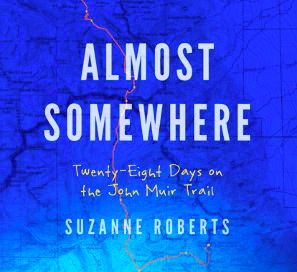
‘Almost Somewhere’ is a journey worth taking

By Kathryn Reed

So much of life is about the journey and not the destination.

Sometimes escaping the routine of our daily lives for an extended period of time helps bring clarity to the meaning of that journey. It did for Suzanne Roberts.

“Almost Somewhere: Twenty-Eight Days on the John Muir Trail” is more than a memoir of Roberts’ experience on this famous path through the Sierra. It is more than the story of what it’s like to spend a month hiking the 211-mile trail.

While she was a recent college graduate when she did the hike and now she is a college instructor, Roberts’ reflections on this time in her life is in some ways like a coming of age book.

Undoubtedly men and women will each get something different out of this book. People will relate to it in their own way. But it’s hard to imagine anyone describing it as just a hiking book. It is so much more.

Maybe being of a similar age, of having spent time a year after college on a solo backpacking trip in Europe it made me have a profound connection to this book – really, to the journey. Sometimes we have to prove things to ourselves and we don’t know what those things are or why.

With this book, Roberts, who teaches at Lake Tahoe Community College and Sierra Nevada College, has expanded her classroom to teach us all about the power of women, the sense of accomplishment in pushing oneself beyond her comfort zone and the realities of being immersed in nature day after day.

“Almost Somewhere” – it’s a 260-page journey that is bound to take you beyond the John Muir Trail.


8 Tahoe inspired writers to share their work

Tahoe Writers Works will host the fourth annual Celebration of Writers Around the Lake on Sept. 14 at 7pm at the Valhalla Grand Hall at the Tallac Historic Site.

Enjoy a lively evening of literature at the lake with eight writers who call Tahoe home or find their inspiration in its depth.

The $10 admission includes a wine reception featuring the Après Wine Company followed by readings from award-winning writers. Books will be available for signing and purchase.

The event will showcase several local writers including Suzanne Roberts, reading from her just-released memoir, “Almost Somewhere: Twenty-Eight Days on the John Muir Trail”, Scott Lucas (“The Immersive Worlds Handbook: Designing Theme Parks and Consumer Spaces”), Jared Manninen (“Mega ’99: Tales of an Appalachian Trail Thru-Hiker”) and Tim Hauserman (“Tahoe Rim Trail: The Official Guide for Hikers, Mountain Bikers and Equestrians, 3rd edition”). Tahoe-influenced writers Stefanie Freele (“Surrounded by Water”) and Steve Robinson (“Why Stevie Can’t Date”) will also read from their latest books. Three readers from the recently released “Tahoe Blues: Short Lit on Life at the Lake” by local press Bona Fide Books will round out the evening.

Tahoe Writers Works, formerly the Lake Tahoe Writing Club, is a nonprofit organization based in South Lake Tahoe. Each year, the group organizes events to create a stronger literary and arts community in Lake Tahoe, including Bare Bones Open Mic and Murder Mystery Theater at Valhalla. The group also publishes the literary journal “EDGE”.


Postcards have not lost their relevance for travelers

By Breaking Travel News

Despite what people may think, the humble postcard is still managing to hold its own as a form of holiday correspondence. More than a quarter (28 percent) of international visitors at Generator Hostels still send a postcard to friends and family when traveling abroad.

This is according to a survey of 505 people by Generator Hostels, Europe’s fastest growing hostel chain.

While some holiday-goers are sending postcards back to their friends and family, unsurprisingly the most favoured method of contact while abroad is Facebook, with 73 per cent of those surveyed using it to contact family and friends back home.

Despite the rising popularity of social networks, it seems the personal touch has not lost favor, with many young travelers phoning (60 percent) and texting (60 percent) their closest friends and family while abroad.

Video calls were a surprisingly popular method of contact, with 33 percent choosing it to contact their friends and family at home while traveling. This highlights the popularity of applications such as Skype or Apple’s Facetime.

“It is great to see that young travelers are still sending postcards in this era of mobile technology. Postcards have always been the traditional way of telling everyone at home what a great time you’re having on holiday,” said Julia Luker at Generator Hostels.

“However, it’s not surprising to see that video and Facebook are some of the most popular modes of contact, especially with so many hostels and hotels providing Internet access free of charge. We regularly see guests sharing their location at our hostels on Facebook, and using the free Internet in the social areas to Skype their families at home.”


Fireworks captivate South Shore audience

We here on the South Shore of Lake Tahoe just witnessed what, in my estimation as a 30-year veteran of South Shore fireworks displays, could be the best fireworks-music mix and sync ever.

Wow!

South Lake Tahoe rocks. I would like to thank all of the people involved who help to produce and pay for this amazing event we now enjoy twice a year.

— Toogee Sielsch

Fireworks over the South Shore of Lake Tahoe on Sept. 2. Photos/Howie Nave

The dark sky becomes illuminated.