Stop making excuses about why you are overeating

By Mandy Kendall

We just had a wonderful weekend with a houseful of guests. However, besides hours of fun and reminiscing, there was also quite a bit of indulging. When you are celebrating and entertaining it seems so much easier to say “oh what can it hurt just this once”. So now we need to get back on track and clean up our acts. The long weekend was fun but there are no more excuses now.

So what excuses do we use around food, why do we make them and what can we do about them?

Mandy Kendall

Here are this week’s Qwik-e tips on how to change those excuses for good habits:

I deserve this — Rewarding with food is a dangerous precedent that is often started in childhood by well-meaning parents. When we reward ourselves, Serotonin (the happy hormone) is released which is then associated with whatever it is we are rewarding ourselves (which is more often than not an unhealthy food). Better to reward yourself with something healthy (a fun activity, a healthy food, etc.), which is what your brain will crave when you next go to reward yourself.

I’ve started so I’ll finish — We all fall off the wagon at times, and it is all too easy to keep going. The trick is to stop yourself as soon as you realize the overindulgence. Put down the fork halfway through that piece of cake or that second helping. There is no law that you have to finish something just because it’s on your plate (and, yes, your mom will forgive you when you tell her it’s because you want to be healthier).

I’ve earned this — It’s true that increased activity and exercise will have us burning more calories, but research has shown that we tend to seriously overestimate just how much more we can have. Try to refuel with nutrient rich foods as carbohydrate-rich foods can lead to slower recovery and increased inflammation.

Eating helps me when I’m stressed — A study published in Appetite found that foods like chocolate reduce feelings of stress for about three minutes, but then the stress returns. In the long run eating to control stress actually makes things worse. During stressful times our stress hormone cortisol makes you crave sugary food. However after eating sugary foods your blood sugar spikes, then crashes, making you feel irritable and prone to stress all over again. The good news is that you can lower your cortisol levels without calories by practicing relaxation methods such as deep breathing, stretching, sipping black tea, listening to soothing music, etc.

I’m addicted to it, I can’t give it up — We tend to be addicted to the way a food makes us feel. Sugar especially affects our brain and body chemistry and how we feel. However, we can still get that feeling from other healthier foods (whole pieces of fruit for example) if we give our bodies time to adjust. Try taking a few days break from soda or a favorite sweet treat, exchanging it for a healthier option and see how different it makes you feel.

I don’t eat more than anybody else I know — Studies show that if your friends and family are overweight and/or unhealthy, then chances are you will be as well. Also, women will often eat similar amounts of food that their male partners do, when on average our calorie requirements might only be two-thirds that of our men. Ask a professional dietician to help you assess your personal requirements.

It’s healthy so I can have more of it — A study from Cornell found that we become victims of something called the health halo. When we think a food is healthy we tend to eat more of it. It is still wise to be cautious of portion sizes, even with so called healthier foods, and check food labels to make sure the food is really nutritious and we are not being drawn into a marketing ploy.

It was just there — To help prevent eating for convenience have a kitchen clear out to get unhealthy options out of temptations way. Convenience food tends to be just that … a convenience and nothing else. Basic rule of thumb; the longer a food’s shelf life, the less nutritious it is. Also, try to at least be aware of why you are eating something. Hunger? Boredom? Emotion? If it’s boredom or emotion, just make a mental note of what lies underneath it, you may be surprised at what patterns emerge over time and of areas that might need addressing.

Until next time.

Mandy Kendall operates Health Connective in South Lake Tahoe, which aligns wellness seekers with their ideal wellness provider. If you have questions, would like some advice, or would like to request some Qwik-e tips on any health and well-being topic, drop her an email at connect@healthconnective.com or keep an eye out on Lake Tahoe News for regular Qwik-e tips on how to make healthy changes one Quick and Easy step at a time.



Book sale benefits Douglas County libraries

The Douglas County Public Library’s annual book sale is Sept. 22 from 11am-5pm and Sept. 23 from 9am-1pm.

The sale will be at the C.V.I.C. Hall, 1602 Esmeralda Ave. in Minden.

Hundreds of used books and audio books will be for sale; DVDs and VHS tapes will also be available.

A special preview will be on Sept. 22 from 9-11am for members of Friends of Douglas County Public Library. Become a member and attend the preview by joining the Friends of the Library at the door on Saturday morning. Save 10 percent and get first choice of sale items.


Fundraiser will help land trust buy Royal Gorge

Truckee Donner Land Trust must have $11.25 million by Dec. 20 to purchase Royal Gorge.

The acquisition of Royal Gorge properties means access to 3,000 acres of open space, which comprises much of the historic Donner Summit area. The area offers cross-country skiing, birding, appreciation of history, hiking, biking, wildflower and wildlife observation.

A “mystery” location has been chosen for a special Sept. 23 concert to benefit the Truckee Donner Land Trust for the acquisition of Royal Gorge.

Featured will be Rootstock Percussion, San Francisco Bay Area musicians Christopher Rowe, Daniel Kennedy and Loren Mach, who specialize in 20th century percussion repertoire. After a brief intermission, the audience will be treated to the Sacramento Philharmonic Brass Ensemble with principal trumpet James Rodseth, trumpet Michael Meeks, principal trombone Joel Elias and others from the Sacramento Philharmonic Orchestra.

The concert will be followed by a wine and hors d’oeuvres reception at Sugar Bowl’s Lake Mary Cabin. Special wines and food will be sampled; participating restaurant sponsors are Moody’s, Dragonfly, Sugar Bowl, Cottonwood and The Summit Restaurant. Wines will be offered by the Pour House, Dave Lose and Soda Springs General Store.

The Donner Summit Area Association in collaboration with the Donner Summit Historical Society, Sugar Bowl and Donner Ski Ranch are hosting the event.

Suggested minimum donation is $50. RSVP is required by Sept. 15. Contact Sugar Bowl through Thursday at (530) 426.6742 and Friday through Sunday at (530) 426.6740.

Meet at the Donner Ski Ranch parking lot at 1:30pm on Sept. 23; the concert will begin promptly at 2pm. Comfortable walking shoes are advisable.


Building a case for high school journalism

By Holly Epstein Ojalvo, New York Times

It’s Day 2 of Student Journalism Week here on The Learning Network. On Monday, Frank LoMonte, executive director of the Student Press Law Center (SPLC), explained student journalists’ First Amendment rights and the context in which student publications operate.

Today he provides some reasons, in the big picture, school journalism programs are valuable.

By Frank LoMonte

Journalism education is facing a “perfect storm” of peril.

Journalism classes are being crowded out by the urgency to drill students on core standardized-testing subjects. Cash-strapped states and districts are squeezing electives and extracurricular offerings in search of savings; one state, Kansas, nearly stopped financing journalism on the grounds that the profession no longer offers gainful career opportunities. And image-conscious school administrators are removing some of the profession’s best teachers in retaliation for student writing that’s considered excessively negative or controversial.

In this precarious time, those who study journalism, teach it or just value it must be extra-vigilant and extra-prepared to defend the continued importance of journalism education, even when salaried newsroom jobs are melting away faster than the polar ice caps.

Fortunately, the case is an easy one.

Workplace skills: Name something that an employer – any employer – wants in a young employee. Analytical thinking? Clear writing? Sensitivity to deadlines? This should be starting to sound familiar – because it’s the package of skills that journalism conveys uniquely well through hands-on experience. Leadership? Check. Teamwork? Check. It’s one of very few school activities that accurately simulates a work environment – because it is a work environment.

Online civility: Imagine that you are a principal whose school is plagued by cyberbullying. You might well find yourself wishing for some magic antidote that would reinforce to students the importance of verifying their facts, correcting their errors, signing their real names to what they publish, entertaining opposing viewpoints and considering the impact of their words on others. This too should be starting to sound familiar – this too is journalism. The values imparted by working in a newsroom are the values that every educator wants every young citizen of the Internet to learn, practice and live.

Accountability of schools: The nonpartisan Brookings Institution reported in December 2009 that just 1.4 percent of the space and airtime in the mainstream media is going toward education coverage. Ever tried walking into a public school in 2011 with a reporter’s notebook and a camera? You’d get farther in the Pentagon. If professionals can’t bring us ample coverage news of conditions like overcrowded classrooms and ineffective curriculum, who can? Fortunately, there is an army of “embedded journalists” at the ready – the last, best watchdogs for the taxpayers who pay about $590 billion a year to support K-12 education nationally. Adults need candid, uncensored student journalism if they are to have any idea what is going on inside the schools they support.

Ethics: If we’ve learned nothing else from paying for the party that Wall Street executives threw bundling up risky mortgage loans and selling them as securities, it’s that when a small number of influential people act in blind self-interest, everyone suffers. Fortunately, there’s an app for that – and yes, it too is journalism. Think of another academic subject that forces young people, on a daily basis, to weigh – and experience – the impact of their decisions on others, and to put the adherence to the truth ahead of personal gain. Geometry? Chemistry? English composition? Nope, nope and nope. By working in journalism – and by being given the freedom to fail and to learn from their failures – students experience what it means to be a “professional.”

Empowerment: If you are not the homecoming queen or the basketball captain, school can be a place of social isolation and self-doubt. Alienated, disempowered kids are at greatest risk for outcomes ranging from bad (dropping out) to horrible (suicide). But no peg is too square for the newsroom, where the creativity and smarts that mark students for ostracism suddenly become assets. Students who are allowed to make their own editorial judgments – with a light hand of guidance from a well-trained faculty adviser – experience the pride and validation for which teenagers are starved.

Journalism training may not guarantee a lucrative job as a magazine editor or a television anchor, but it remains a proven pathway to college and career success. Ask U.S> Attorney Preet Bharara of Manhattan, the “Colbert Report” producer Tom Purcell, the Emmy-winning actress Susan Lucci, the film reviewer Gene Shalit or the top-gun campaign consultant Mark J. Penn, each of whom got started as a high school journalist.

With America facing a well-documented deficit of civic engagement, journalism remains a portal through which students – whether as participants or simply as readers – engage with the larger world outside schoolhouse walls. It’s essential that the doorway remain open and inviting.


Tahoe Tails — Adoptable Pets in South Lake Tahoe

Russell is a pretty typical Jack Russell terrier – very cute, very friendly, and very energetic.

He is house trained, crate trained and has good manners. He likes other well-mannered dogs nad has lived with cats and small children. Russell enjoys long walks and car rides. He came to the shelter because his owners’ new grandchild is allergic to him.

Russell is neutered, microchipped, and vaccinated. He is at the El Dorado County Animal Services shelter in Meyers, along with many other dogs and cats who are waiting for their new homes. Go online to see photos and description of all pets at the shelter.

Call (530) 573.7925 for directions, hours, and other information on adopting a pet. For spay-neuter assistance for South Tahoe residents, go online.

— Karen Kuentz


Book details best cycling routes in Eastern Sierra

By Wendilyn Grasseschi, Mammoth Times

It started with a climbing accident that left local climber and teacher Jim Barnes too injured to climb for a while.

Things did not improve when he stepped on a stingray and his foot got infected.

Not only couldn’t he climb, he couldn’t walk very far.

For a man accustomed to constant physical activity, it was a time of sheer frustration.

He decided to hop on a road bike and that’s when the love affair started.

“I loved the effort of the climb and the thrill of the descent,” he said. “I started climbing every hill in the area, and then I decided I wanted to do the Everest Challenge ride, six weeks out.”

He complete the challenge and came in third for his age group.

“After the race, I set my sites on climbing every hill in the [Eastern Sierra],” he said.

Over the next several years, Barnes rode every paved road in the Eastern Sierra, much of it alongside his friend and climbing partner, Nate Greenberg.

From the crazy climb up Nine Mile Canyon in the far Southern Sierra to Lake Tahoe’s Rim Trail, the duo attacked every road they could over the years.

A few years ago, they decided to write a book, which is now on the shelves of Mammoth’s own, independently owned bookstore, the Booky Joint.

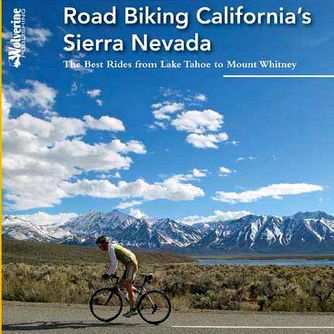
Called “Road Biking California’s Sierra Nevada The Best Rides From Lake Tahoe to Mount Whitney,” the book details 48 different rides that span the breadth and width of the Sierra, with a decent majority of them concentrated in the Eastern Sierra.

Read the whole story


Trains take the stress out of traveling in England

By Susan Wood

LONDON – If securing Wimbledon or Olympic tickets were as easy to negotiate as getting around England by rail, the All England Club and London Games officials would have to dramatically expand their venues.

United States take note.

Great Britain is one of those places where you can forget getting behind the wheel and successfully touch down in 2,500 places in England via BritRail. Prior to the Games, Lake Tahoe News spanned one end of England to another – London to the Lake District (Windermere station) to Bath and back to the host city without any glitches.

The system with its 18,700 trains and varied connections to the London Underground as well as bus routes and air makes “Am”trak look like “am”ateur hour in terms of being on time, number of routes, convenience, train comfort and helpful staff. (Granted, Britain is only about two-thirds the size of California.)

The train system in England makes it so a tourist does not need a car. Photos/Kathryn Reed

It’s difficult to believe California in 2012 is still debating installing a high-speed rail train linking the north with the south.

What’s more, “Fast Food Nation” author Eric Schlosser must have been onto something when he lamented in his best-selling book how U.S. motorists’ love affair with the car and its isolationist view of the world may be attributable to the downfall of our transportation system and high carbon footprint leading to climate change. At the time, strip malls were going in – encouraging vehicle miles, and train tracks were dug up.

This is not so in England. The British people and their visitors embrace the romantic, relaxing form of travel. The system is run by 26 train operators, with Network Rail handling the infrastructure of the system. The company intends to spend more than 10 billion pounds this decade on improving it.

The Intercity 125 provides the majority of long-distance services. For example, at King’s Cross, the line covers 393 miles from London to Edinburgh in four hours flat. Virgin Trains, a subsidiary of the highly successful, customer service-oriented airlines of Virgin America and Virgin Atlantic, operates 334 high-speed trains. First-class customers may use at-seat catering if they don’t feel like walking 10 feet to the snack bar. The lounge features soft drinks, some cocktails, sandwiches and snacks. There are also power ports for audio entertainment, laptops and cell phones.

The Great Western first-class cabins provide roomy seating and the London Times on the table in the morning from Bath to Reading. Most train cars with seating at the tables have large picture windows to accommodate daydreaming and a glimpse of what’s in store for a visitor. The rides are smooth and quiet.

The trip from London to Windermere is an adventure in green with villages that almost invite a rider to get off before the planned destination. Only one stop – Oxenholme – sat in between the route. Once in Windermere, the bus to the bucolic Ambleside, along with a row of taxis sat ample and ready because the service is on time, and there is a coordinated system that alerts other means of transportation and their passengers of the arrival times. (Take note South Lake Tahoe. BlueGo would appear to be a joke to a British traveler, assuming they figured out what a BlueGo is.)

The BritRail timetables posted at stations are easy to follow. And once on the train, a bulletin scrolls the names of the stations before and during the stops. There’s plenty of space for baggage. And unlike some tourism destinations, the staff is courteous, friendly and helpful. Upon the trip from Windermere to Bath – a conductor printed out a more convenient schedule with Birmingham and Bristol as connections, as if it were no trouble at all.

BritRail, which can be reached through the British Tourist Authority at 800-GO2-BRIT or online www.BritRail.com, sells a variety of passes. Aside from a standard unlimited pass, the FlexiPass offers train travel for four, eight and 15 days within a two-month period. On the consecutive pass, a rider can pick any sequence of days. Sleeper cars start at 38 pounds per berth in standard class and six pounds more for first class. Tickets may be previously arranged.

A BritRail pass is not to be confused with the London Underground pass, which whizzes passengers through the busy city in a matter of minutes. A trip from the West End to East London around the host city’s Olympic Grand Central can take about an hour.

The Underground, or tube as locals call it, represents a superior metro rail network to get around London. Billed as the largest underground network in the world, the system evolved through the efforts of F.J. Sprague. The engineer saw that the trains needed to advance from steam power to electric cars. Each electric motor cranked out enough electricity to power 30 homes. In its first year, 5 million people came on board.

Today, 12 lines serve central London through routes running from east to west, north to south and most providing several different ways to connect the diversified neighborhoods that make up this cosmopolitan city.

“You just don’t need a car in this city,” said Alison Hull, a public relations executive who undoubtedly needs to get around. Hull added she and her husband own a car, but pull it out to use about once a month.

For visitors, purchasing the London Pass for access to more than 50 attractions in a designated number of days runs hand in hand with the Travel Card. The auxiliary pass allows a traveler to board the tube as many times as desired in that time frame. The London “attraction” Pass gives a tourist the opportunity to board the unique double-decker sightseeing buses or city cruise lines on the River Thames, another option of negotiating the city.

ngg_shortcode_0_placeholder (Click on photos to enlarge.)


Award-winning author to speak, give workshop at SNC

As part of the Community Read, Tim O’Brien will speak at Sierra Nevada College on Sept. 21 and conduct a writing workshop ($50) the following morning from 10am-noon.

The Friday evening talk is free and open to the public. Contact the SNC Registrar’s Office to register for the workshop — (775) 881.7435 or jrainwater@sierranevada.edu.

O’Brien graduated from Macalester College in 1968 and was drafted into the Army. He served as a soldier in Vietnam in 1969-70.

He has published numerous stories and books, fiction and non-fiction, most of them connected in some way with his experience in Vietnam. He received the National Book Award in Fiction in 1979 for his novel “Going After Cacciato”. In 2005, “The Things They Carried” was named by the New York Times as one of the 20 best books of the last quarter century. It received the Chicago Tribune Heartland Award in fiction and was a finalist for the Pulitzer Prize and the National Book Critics Circle Award.


Historic Virginia City church to commemorate 150-year anniversary

St. Mary’s in the Mountains Catholic Church of Virginia City will celebrate the 150th anniversary of its founding with three days of celebration Sept. 14-16.

This icon of the Comstock is the birthplace of Catholicism in Nevada.

The celebration will begin Sept. 14 with a wine tasting as well as guided tours of the historic and recently renovated church and museum from 4-6pm. Wine will be from St. Mary’s Mad Monk Wine Cellar and commemorative glasses will be available for purchase.

The original baptismal font is on display as well as treasures serving the parish for the past 150 years.

On Saturday afternoon, Bishop Randolph Calvo of Reno will celebrate an anniversary Mass at 4pm.

For more about all the weekend activities, contact St. Mary’s at (775) 847.9099 or stmarysvc@att.net.


Coffee takes out neck kinks for computer workers

By My Health News Daily

If your job is a literal pain in the neck, drinking coffee may help, a study from Norway says.

People who drank coffee before sitting down to work at a computer for 90 minutes reported less pain in their necks and shoulders than those who didn’t drink coffee, according to the study. Some in the study had previously suffered chronic neck and shoulder pain, while other participants hadn’t — but people in both groups who drank coffee reported less pain, the researchers said.

Among people whose daily work involves low levels of muscle activity, such as sitting at a computer all day, about 10 percent report shoulder and neck pain, according to the study.

The researchers looked at 48 people, including 22 with chronic neck or shoulder pain, and 26 healthy people. The experiment was part of research on how pain develops during office work; it was not intended to look at the effects of caffeine, the researchers said.

People in the study reported to the laboratory first thing in the morning, so to offset any effects of sleepiness, coffee and tea were available. Nineteen of the study participants chose to drink either coffee or tea, but were instructed not to drink more than one cup.

Then, for 90 minutes, participants performed a computer task, using only a mouse.

Researchers found that people who drank coffee — whether they had previous chronic pain or not — developed less pain over the course of the 90 minutes, compared with those who didn’t drink coffee. And at the end of the computer task, the coffee drinkers rated their pain as less intense than the other study participants.

It’s possible the reduction in pain experienced by coffee and tea drinkers in the study was due to other traits or lifestyle behaviors common to people in this group. Future studies should be conducted in which participants are randomly assigned to consume caffeine or not in order to better understand whether the caffeine itself is truly reducing pain, the researchers said.

The study, conducted by researchers at the Sunnaas Rehabilitation Hospital in Norway, was published Sept. 3 in the journal BMC Research Notes.