Tahoe celeb golf tourney returning $65,000 to area nonprofits

The American Century Championship will distribute $65,000 to South Shore charities.

The Lance Armstrong Foundation, the celebrity golf tournament’s nationally designated charity, in partnership with the Lake Tahoe Visitors Authority, NBC Sports and American Century Investments, will provide funds to area nonprofits for specific needs to help make a difference in the community.

Nonprofits have until Oct. 15 to apply for funding. Applications are online. Recipients will be announced Nov. 1, with checks presented at the LTVA meeting Nov. 8 at 3pm.


STHS students place 3rd at international forestry competition

South Tahoe High School seniors Emily Barnett and Tyler Myers took third place at the 9th annual International Junior Foresters’ Competition in Russia.

Their field research project The Effects of Fire and Forest Thinning on the Biodiversity of Understory Plants in the Lake Tahoe Basin was one of 52 projects presented by students from around the world.

The students were honored during a large concert celebrating Day of the Forest Worker in Moscow, during which the head of the Russian Federal Forestry Agency, V.N. Maslyakov, presented their prizes.

The competition, which was Sept. 12-14, 2012, is hosted by the Russian Federal Forestry Agency. This annual event brings together youth from nations around the world to promote and reward young scientists for their interest and efforts in the environmental field and encourage international dialogue concerning forestry issues.

This was the first time the United States participated in the competition.

Barnett and Myers’ project grew out of their participation in the U.S. Forest Service Lake Tahoe Basin Management Unit’s Youth Conservation Corps.


Hot Rod of the Year belongs to Tahoe resident

By Thom Taylor, Hot Rod

Lake Tahoe’s Tom Gloy was awarded the Goodguys Tank’s Hot Rod of the Year for 2012 for his channeled Deuce roadster.

Built by Roy Brizio Street Rods in South San Francisco, the traditionally styled roadster is anything but traditional. The body has been narrowed through the cowl, grille and windshield. They also sectioned the radiator shell 3 inches.

To get Gloy down low in the seat, the floorboards were radically lowered – more so than any other hot rod to roll out of Brizio’s shop.

Out back, the rear quarters were filled and smoothed and the rear wheels tucked tightly against the channeled body.

The custom Brizio chassis features torsion bar suspension from Moal Coachbuilders, a Magnum 5-inch dropped axle, Wilwood brakes, custom 18 and 16-inch ET knockoff wheels, a 302-inch, Hilborn EFI Ford crate motor and Tremec 5-speed.

Bay area body & paint specialist Darryl Hollenbeck of Vintage Color Studio shot the mid-1950s Porsche blue that perfectly contrasts the red leather interior stitched by Sid Chavers, also of San Francisco.

Gloy was a racecar driver for over 25 years, having collected a Trans Am World Championship as well as a Formula Atlantic title. He drove in six IndyCar races including a start in the 1984 Indy 500 finishing 14th. He wanted more than a show car, and to prove it he recently drove the roadster over 2,000 miles from his Nevada home to Indy to accept the award.


Lecture about open water food web dynamics in Lake Tahoe

Dave Beauchamp will share what is known about Lake trout, Kokanee salmon and Mysid shrimp interactions in the open water (pelagic zone) of Lake Tahoe based on past research and will also describe the U.S. Fish and Wildlife Services efforts to fill in information gaps related to the Kokanee salmon, Mysid shrimp, and other Lake Tahoe zooplankton.

His presentation will be Oct. 3 at 3:30pm at the Tahoe Center for Environmental Sciences, 291 Country Club Drive, Incline Village.

He will describe how seasonal changes in environmental conditions, food supply, predation and competition influence a potential niche for Lahontan cutthroat trout.

Beauchamp is a professor of Aquatic & Fishery Sciences at the University of Washington. His research program focuses on predator-prey interactions, bioenergetics modeling, behavioral ecology, distribution, growth, population dynamics, and food web dynamics in large western lakes, estuarine, and marine systems. Some current investigations include: Early marine feeding, growth and survival of salmon and forage fish in Puget Sound; Columbia River Basin Food Web Review; Food web implications of re-introducing native salmon or trout above dams; and development and application of visual foraging models for predatory fish.

For more information, contact Heather Segale at (775) 881.7562 or hmsegale@ucdavis.edu.


Horses provide children opportunity to build confidence, life skills

By Cindy Cowen

What we so often hear about in our daily lives centers around negative happenings in our community: abuse, drug related crimes, students failing in our education system. We hear about children in trouble and the lack of resources to help.

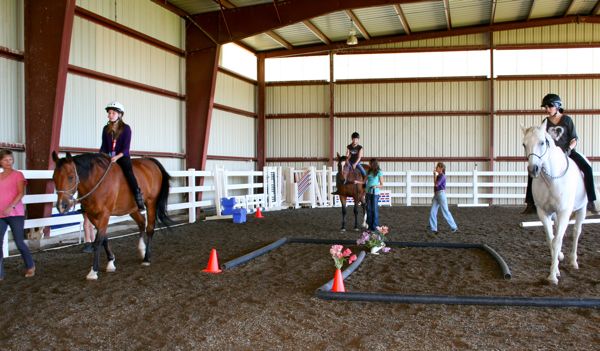
One program that is tending to the emotional, social and personal needs of our youth in the Lake Tahoe, Carson Valley and neighboring communities is Between Horses and Humans, a small nonprofit that pairs able bodied children with equine partners to develop leadership and communication skills. Through leadership group classes or private classes, children learn the value of dedicated perseverance, clear communication, and generosity of heart. Working with horses enhances the children’s ability to understand how to approach new situations with confidence, handle miscommunications without frustration or anger, and respect others.

Horses help youngsters develop more the equestrian skills. Photo/Provided

Directed by Barbara Slade, a talented horsewoman and teacher, Between Horses and Humans operates mainly out of Skyhawk Ranch in Gardnerville. Slade explains that the highly sensitive horses, through their actions and responses, mirror back to the children the state of their emotions. The children learn how to modify their behavior and responses in order to successfully work with the horses, who give them unconditional love and acceptance.

With kindness, firmness and intuitive coaching from Barbara, children learn techniques and leadership skills with horses that, beyond the joyful mastery it gives them, teaches them how to deal with their life challenges in new, positive and life affirming ways.

Parents and children are thrilled by the changes in character that the horses inspire. A young mother, whose husband had died, struggled with her child’s debilitating grief over her father’s death. Between Horses and Humans classes have changed the child’s life.

One child, in the throes of family and self-esteem issues, has attended private classes for several months. She uses her equine partner as a personal motivator when difficult situations come up in her life. She said horses have taught her about inner-strength, patience and trust.

Teachers report that students in the leadership classes made marked improvement in behavior and social interactions, and show greater focus and determination in academics.

Between Horses and Humans targets able-bodied children and young adults from age 8 and up. Children are referred to the program by a variety of sources such as social agencies, educators, therapists, counselors and private individuals.

On Oct. 20, Between Horses and Humans is hosting a fundraiser at Skyhawk Ranch. Students will demonstrate their new leadership skills with their equine teachers. Following the demonstration, there will be a luncheon and silent auction.

If you are interested in learning more about the program or the fundraiser, call Barbara Slade at (775) 265.0901 or go online.


Care Flight offering paid flights as a way to fund new equipment

By Adam Rasmussen, KTVN-TV

Care Flight plays a vital role in Northern Nevada, able to transport patients in critical condition to health care centers in just minutes.

Saturday, it hosted its inaugural Flight For a Good Cause fundraising event, giving people a unique opportunity to fly inside one of its medical helicopters.

For $75, each person was given a 15 minute helicopter ride from the Truckee Airport. All the proceeds go directly to Care Flight.

“The reception from the public has been absolutely amazing,” says Kurt Althof with Care Flight. “We sold out in record time.”

Dozens of people signed up, and the rides continued all afternoon. Care Flight expects to raise about $12,000 to purchase some new medical equipment.

“We’re looking at what’s called an video laryngoscope,” says Althof. “It’s to open up and secure an airway for those patients that need assistance breathing.”

A necessity for Care Flight, which receives an average of three emergency calls per day.

“That’s up to 90 to 160 calls every month,” says Althof. “So, these are folks that really need emergency air medical transport.”

Every bit of money helps, especially considering how expensive operation costs are.

“Completely configured for medical transport, it’s between $4 million and $4.5 million per aircraft,” says Althof. “We have four of these.”

There wasn’t enough room on the helicopter, so our camera wouldn’t fit. But we did follow along with some folks preparing for their first ride.

That included Lester Reynolds and his 4-year-old son Kaleb.

“Oh, he was so excited,” says Reynolds. “He’s been excited for like three weeks.”

After a 10-minute orientation, everyone is buckled into place. Once in the air, they fly over Squaw Valley and North Lake Tahoe.

A great experience for a father and son, who say it was definitely money well spent.

“My first time and it was awesome,” says Reynolds. “You’re going 120 mph, and it was great.”

Care Flight will offer rides again next Saturday in Gardnerville and again in Reno the week after. It’s completely sold-out, but there is a waiting list just in case someone cancels.


A haunted tour of Truckee for adults only

Spirits of days gone by will be summoned to haunt the streets of historic Truckee during the adults-only Historical Haunted Tour on Oct. 18-19.

The annual walking tour attracts more than 300 attendees, more than 60 volunteers and features tales of yore with a memorable and entertaining twist at Truckee’s historic gems and watering holes. The spooky walking tour begins with a glass of wine, interesting characters and a prize packed raffle at Moody’s.

New featured haunts include the downtown Mountain Home Center, MOBO Law, Bespoke, Coffee Bar and Scraps Dog Bakery. And, attendees will return to favorite stops – The Pour House and the Old Jail Museum.

Historians and researchers from the Truckee Donner Historical Society spearhead the tales about Truckee’s Wild West railroad roots. At each stop, attendees’ imagination and senses will be tapped by original performances, visits from the infamous Truckee Regulators and songs by the Barbershop Quartet. It is rumored a libation or two will also be featured when least expected.

There will be never before told stories about the scars left by raging fires and the tragic mishaps on the rails in Truckee. And, for the first time, the tour will dive into the lingering haunts left by Wells Fargo & Co.’s Haunted Express Train Car No. 5. Attendees will experience the most gory, frightening and amusing tour this October.

The Historical Haunted Tour, a fundraiser for Trails & Vistas and the Truckee Donner Historical Society, has raised more than $15,000 for the two nonprofits. Admission is $35 per person. Tickets are available online.


Tahoe Tails — Adoptable Pets in South Lake Tahoe

Billie Jean is a nice, Oriental mix girl who came to the shelter very pregnant. She had her kittens at the shelter and raised them in a foster home. They have all found homes of their own now and Billie Jean is still waiting for hers.

She doesn’t mind other cats or well behaved dogs. She is a big talker and cuddler.

Billie Jean is spayed, microchipped, and vaccinated. She is at the El Dorado County Animal Services shelter in Meyers, along with many other dogs and cats who are waiting for their new homes. Go online to see photos and description of all pets at the shelter.

Call (530) 573.7925 for directions, hours, and other information on adopting a pet.

For spay-neuter assistance for South Tahoe residents, go online.

— Karen Kuentz


Tahoe authors snare readers with evocative readings

By Kathryn Reed

CAMP RICHARDSON – The outdoors and sex. Those are the overriding themes of people in Lake Tahoe want to hear about.

Seven books were featured during the annual Celebration of Writers earlier this month at the Valhalla Grand Hall. Tahoe Writers Works each fall brings together a group of authors who either live in the Lake Tahoe area or write about the region.

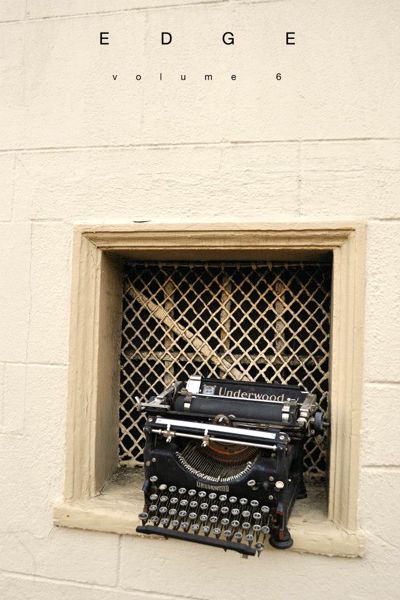
"Edge" -- now in its sixth volume -- is put out annually by Tahoe Writers Works.

It gives people a chance to hear the words – and then be inspired to pick up a copy of the book to read it in its entirety. One of the great things about the reading is the inflection of the writer’s voice is real as opposed to what the reader might hear in her mind. And then there is the back-story to the passage being read that is only available during a reading like this one.

Frank Riley and Joan Douglas started the evening by reading their essays that are captured in “Tahoe Blues” – which is 60 micro-essays and flash fiction all about Tahoe. Bona Fide Books in Meyers published the book earlier this year.

Riley takes people on a hiking escapade that involves getting close enough to know what a bear’s breath smells like.

Douglas’ was a bit eerie to read – not to mention disturbing. Hearing it was even more ominous. Living in the lake after dying. The sounds of people on shore, but unable to make any noise. All the children she is surrounded by. It is haunting. While it’s well written, it’s just not a Tahoe I want to even think about.

A much happier take involving the outdoors was next. Tim Hauserman spoke from his cross country skiing book about all the types of snow – from boilerplate to butter to mash potatoes.

Suzanne Roberts was able to combine sex appeal and the outdoors as she read a chapter out of “Almost Somewhere” – a book about hiking the John Muir Trail. This vignette is about how three recent female college graduates go about getting a quarreling couple to leave their campsite.

Roberts and Scott Lukas, who was the next reader, teach at Lake Tahoe Community College. Roberts is in the English department, while Lukas is a professor of anthropology and sociology. Their books clearly reflect their different specialties.

Lukas read from “The Immersive Worlds Handbook: Designing Theme Parks and Consumer Spaces”.

Steve Robinson’s delivery is so refreshing it makes me want to read “Why Stevie Can’t Date”. He describes the book as a collection of autobiographical short stories that are not all connected. The section he read this particular Friday evening was about when he was a 17-year-old who looked older than 21 working at the Sahara in Stateline and what a second date in the showroom meant. This was the time when Tahoe had its A-game when it came to attracting entertainment.

Author Stefanie Freele offered the audience a choice of topics – sex, revenge and Tahoe. The listeners picked sex and revenge. These were part of her collection of short stories in “Surrounded by Water”.

Last up for the evening was Jared Manninen who read segments from his book about his experience on the Appalachian Trail.

It was an evening that proved Tahoe is rich with writers.


Every American is on the dole to some degree

By Michael Grunwald, Time

The sun is shining on Miami Beach, and I wake up in subsidized housing. I throw on a T-shirt made of subsidized cotton, brush my teeth with subsidized water and eat cereal made of subsidized grain. Soon the chaos begins, two hours of pillow forts, dance parties and other craziness with two hyper kids and two hyper Boston terriers, until our subsidized nanny arrives to watch our 2-year-old.

My wife Cristina then drives to her subsidized job while listening to the subsidized news on public radio. I bike our 4-year-old to school on public roads, play tennis on a public court and head home for a subsidized shower. Then I turn on my computer with subsidized electricity and start work in my subsidized home office.

It’s just another manic Monday, brought to us by the deep pockets of Big Government. The sunshine is a natural perk, and while our kids are tax-deductible, the fun we have with them is not. The dogs are on our dime too. Otherwise, taxpayers help support just about every aspect of our lives.

Of course, we’re taxpayers too, and we don’t exactly fit the stereotype of entitled welfare queens.

Cristina is an attorney and until recently was a small-business owner. I’m a journalist, an economic red flag these days, but I work for the company behind the Harry Potter and Batman movies, so at press time I was still getting paid.

My family’s subsidies are not the handouts to the poor that help fuel America’s political culture wars but the kind of government goodies that make the comfortable even more comfortable. Our federally subsidized housing, for example, is a two-story Art Deco home in the overpriced heart of South Beach. But our mortgage interest is a personal deduction, my home office is a business deduction, and federal subsidies keep our flood insurance cheap. Even our property taxes are deductible.

So thanks for your help.

The 2012 election is shaping up as a debate over Big Government, but it is only loosely tethered to the reality of Big Government. The vast majority of federal spending goes to defense, health care and Social Security plus interest payments on the debt we’ve run up paying for defense, health care and Social Security. Nondefense discretionary spending–Washingtonese for “everything else,” from the FBI to the TSA to the center for grape genetics–amounts to only 12 percent of the budget.

Still, it’s a big government. The U.S. did not spend even $1 billion in 1912; it will spend $3.8 trillion in 2012 on everything from Missing Alzheimer’s Disease Patient Assistance ($593,842) to Snow Survey and Water Supply Forecasting ($9,409,400), from mortgage insurance for manufactured homes ($64,724,187) to ironworker training on Indian reservations.

There will be an additional $1.3 trillion in tax expenditures, federal benefits (like the deductions for my 401(k) and my nanny’s salary) that are basically identical to those normal spending programs except that they happen to be provided through the tax code.

The rise of the Tea Party and the weakness of the Obama economy have fueled a Republican narrative about Big Government as a threat to liberty, redistributing wealth from honorable Americans to undeserving moochers, from taxpaying “makers” to freeloading “takers.”

In fact, most Americans are makers and takers — proud of our making, blind to our taking.

Republicans often point out that only half the country pays income taxes, but just about all Americans pay taxes: payroll taxes, state and local taxes, gas taxes and much more. The problem is that we pay in $2.5 trillion and pay out $3.8 trillion. And those trillions of dollars don’t all go to undeserving moochers, except insofar as we’re all undeserving moochers.

7am: Subsidized food, water, electricity and clothing

The right routinely portrays government as a giant mess of Solyndra failures, lavish agency conferences in Vegas and pork for society’s leeches. But my taxpayer-supported morning didn’t feel like mooching at the time.

For example, my family pays for that water I use to brush my teeth, about $100 a month. But that’s a small fraction of the true cost of delivering clean water to our home and treating the sewage that leaves our home. And it certainly doesn’t reflect the $15 billion federal project to protect and restore the ravaged Everglades, which sit on top of the aquifers that provide our drinking water.

Most Americans think of the water that comes out of our faucets as an entitlement, not a handout, but it’s a government service, and it’s often subsidized.

Similarly, my family pays more than $200 a month for the electricity that powers our toaster at breakfast. But that number would be much higher if the feds didn’t subsidize the construction, liability insurance and just about every other cost associated with my utility’s nuclear power plants while also providing generous tax advantages (“depletion allowances,” “intangible drilling costs” and so forth) for natural gas and other fossil fuels.

The $487 we’re paying this year for federal flood insurance is also outrageously low, considering that our low-lying street floods all the time, that a major hurricane could wipe out Miami Beach and that the Property Casualty Insurers Association of America estimates that premiums in high-risk areas would be three times as high without government aid.

Some federal largesse — tax breaks for NASCAR racetracks ($40 million) and subsidies for rum distilleries ($172 million) and rural airports ($200 million)–is just silly. There’s no reason my poker buddies should be able to deduct the gambling losses I inflict on them once a month. (Just kidding, guys!)

The silliest handouts that brighten my morning are the boondoggles that funnel billions to America’s cotton and grain farmers and maybe knock a few cents off the price of my T-shirts and my kids’ breakfast waffles. Uncle Sam sends at least $15 billion every year to farmers and agribusinesses in the form of grants, loans, crop insurance and other goodies. The farm lobby is so omnipotent in Washington that when the World Trade Organization ruled that U.S. handouts give our cotton farmers an unfair advantage over Brazil, the U.S. cut a deal to shovel $147 million a year to Brazilian cotton farmers rather than kick our own farmers off the dole. Our food and clothing may seem cheap, but, oh, we pay for them.

Read the whole story