Changing habits may prevent headaches

By Mandy Kendall

I remember a lot of my chiropractic patients’ complaints centered around headaches and their causes varied from case to case.

The majority of headache cases that I treated could be generally attributed to muscular and emotional tension. These were most commonly classified as tension type headaches and were, for the most part, lifestyle related and not life threatening.

The World Health Organization states that ‘tension type headache (TTH) alone affects two-thirds of adult males and more than 80 percent of females and that 3,000 migraine attacks occur every day for each million of the general population. Less well recognized is the toll of chronic daily headaches: up to one adult in 20 has a headache every or nearly every day.
Mandy Kendall

There can be a number of factors contributing to headaches, many of which can be alleviated with a change in lifestyle.

Here are some Qwik-e tips to help rule out the cause of, and alleviate the frequency and severity of headaches;

Hydration – A frequent contributor to headaches is dehydration. Caffeine can also lead to headaches, especially during caffeine withdrawal, (although thankfully these are short lived and stop once the body has adjusted to having less caffeine). Before reaching for painkillers try a couple of large glasses of water to rehydrate the body (and the brain more importantly).

Eat regularly – Your brain needs oxygen and glucose to function, so low blood sugar can trigger headaches for some people. Try eating unprocessed foods little and often to see if that helps reduce your headaches. If you tend to wake with a headache, try eating a piece of fruit before going to bed (rather than fruit juice which can spike blood sugar levels and then drop again) and drinking a large glass of water upon waking.

Muscle tension – Strong muscles run up the back of the neck and up over your head. Tension in these muscles from poor posture and/or overuse can cause headaches through the compressive nature of tight muscles. For example, working on a laptop for prolonged periods can cause the head to be held in a tilted-down position and cause the muscles at the back of the neck and head to be overused. To release tension try this Qwik-e stretch every 30 minutes; sit up straight, hang your arms loosely by your sides, gently let your head lower forward as if you were trying to rest your chin on your chest. Breathe deeply five or six times (letting your head sink down a little further with each exhale). A warm pad placed around the shoulders and the base of the neck before this stretch will also help release the tension in the muscles.

Emotional tension – In the same way that mechanical overuse of muscles can cause tension, emotional issues can cause muscles to tighten in much the same way. During times of emotional stress, some simple deep breathing may help to dissipate muscle and emotional tension. Repeating accepting on the in-breath and releasing on the out-breath will help to deepen the relaxing effect.

Trauma – Physical trauma to the body can affect the alignment of your spine, which in turn can cause increased muscle tension and decreased nerve function. A common side effect of many accidents can be ongoing headaches. Consult a healthcare professional who deals with body alignment (a Chiropractor for example) to rule out misalignments that may be a factor in causing the headaches.

Environmental – For some people artificial lighting can be the cause of headaches. Flickering neon tube lighting or even the imperceptible flickering on a computer screen can trigger headaches. Try and assess whether you only get headaches in certain places and eliminate the possibility that lighting could be a factor.

Foods – Many foods such as chocolate and caffeine can be contributors to headaches, as well as preservatives and additives in foods. We know it is common for people to have intolerance for food types such as wheat, dairy and gluten, but intolerance to chemicals added to foods often goes undetected. Try totally avoiding processed foods for at least a week (along with drinking plenty of water) to monitor any affect on the severity and number of headaches.

Medications – Some medications are known to cause headaches (and don’t forget the contraceptive pill is considered a medication). Check the list of side effects of any medications you are taking and consult your doctor to see if there might be a better version for you to try.

Allergies – Especially those that affect the sinus area can be a major contributing factor to headaches. Taking local honey during the pollen season can be very effective at reducing your body’s inflammatory response to local pollens etc. Being tested for allergies could help determine if they are a factor in your frequent headaches.

Important note – Discuss any concern over headaches with a healthcare professional. Especially if they are severe in nature, last for long periods of time, are associated with vomiting, a temperature, cause changes in vision, a strong aversion to light and/or a stiff and painful neck. Any headache associated with any kind of trauma to the body should also be reported to a healthcare professional.

Until next time.

Mandy Kendall operates Health Connective in South Lake Tahoe, which aligns wellness seekers with their ideal wellness provider. If you have questions, would like some advice, or would like to request some Qwik-e tips on any health and well-being topic, drop her an email at connect@healthconnective.com or keep an eye out on Lake Tahoe News for regular Qwik-e tips on how to make healthy changes one Quick and Easy step at a time.


Being super rich is not a requirement to give to charity

By Claudia Buck, Sacramento Bee

Bill Gates and Warren Buffett started it. Now a small but growing group of far-less-wealthy Californians are joining in: taking a public pledge to leave money to charity after they’re gone.

And it doesn’t require being one of America’s billionaires. The point is not about how much you’re giving, but why.

“Everyone can leave a bequest to charity of something. We want to change the idea that you have to be rich to leave money to charity,” said Elfrena Foord, a certified financial planner and co-founder of the California Plan Your Giving Project.

This month the state Legislature marked the third Plan Your Giving Day, which encourages everyday residents to earmark a portion of their assets – of any amount – for charitable causes. Since it was launched two years ago, about 500 individuals and couples have signed on.

Judy McGarry, a retired Sacramento County probation and compliance officer, is among them.

Inspired by the project, she recently set up a five-figure endowment and upped the percentage she’s leaving in her trust to the Sacramento Senior Safe House, a residential respite for abused or neglected seniors.

“I did some soul-searching and looked at what causes are important to me. I’m very passionate about this,” said McGarry, on a recent tour of the Safe House, an immaculate six-bedroom home tucked away on a quiet residential street in northeast Sacramento. Staffed mainly by volunteers, the 24-hour facility enables abused seniors to get back on their feet emotionally and financially. Its $250,000 budget is funded entirely by donations.

McGarry, who made her financial gifts in memory of her late mother, sees it as a personal legacy that will live on long after she’s gone.

Rocklin residents Michael and Lindy Dunlavey, who ran a successful graphic design business for years, also signed the California giving pledge. Now retired, they’ve designated bequests in their trust to a number of local charities, from the Crocker Art Museum to the Placer County SPCA.

“Sacramento has been really good to us, so it’s something we feel is important to do, especially for local groups,” said Michael, who’s served on a number of community boards, including the Crocker, Habitat for Humanity and the Sacramento History Foundation.

Charitable bequests certainly aren’t a new concept. Any number of museums, symphonies, nonprofits, churches and charities continually ask donors to leave something behind in their wills. And many people, especially at year-end tax time, routinely make financial donations to causes they care about.

But giving seems to be coming back in vogue. Nationally, total giving in 2011 by individuals was $218 billion – up by nearly 4 percent from 2010, according to Giving USA, the research arm of the Center on Philanthropy at Indiana University. Donations by individuals are 73 percent of all charitable giving, it said.

And it comes in all sizes.

Billionaires like investor Warren Buffett, along with Microsoft co-founder Bill Gates and his wife, Melinda, garnered big headlines in 2010 when they launched The Giving Pledge, which asks America’s billionaires to pledge at least 50 percent of their wealth to charity in their lifetime or after.

Nearly 100 individuals and families have taken the pledge, from 28-year-old Facebook co-founder Mark Zuckerberg to aging oil tycoon T. Boone Pickens. Just last month, another 12 signed on, including Netflix CEO Reed Hastings and Intel co-founder George Moore.

A more modest slice of the philanthropy movement are so-called “giving circles,” where like-minded people pool their money and give to causes they deem important.

One of those, the One Percent Foundation, aimed at those in their 20s and 30s, was co-founded in 2007 by Daniel Kaufman, a Sacramento native. Over conversations while at UCLA law school, he and some friends realized they rarely gave to any significant causes.

“This is a very socially conscious, very involved generation,” Kaufman said, “… but most of us felt we couldn’t afford to give, didn’t know where to give or thought our donation wouldn’t have any impact.”

Inspired, he and his friends pooled their money and sent $500 to a hunger relief organization voted on by the group. The idea caught on among their west Los Angeles friends. After graduating and scattering across the country, the group formalized itself online as the One Percent Foundation in 2009.

Like the name implies, participants donate 1 percent of their annual income. For graduate students living on loans, that might mean a few bucks a month. For a recent grad with a $35,000 job, it’s a monthly $29.17.

It’s all done online. Every quarter, the One Percenters dole out two grants in a designated category: environment, education, health, international aid or poverty. Members nominate organizations they’d like to see funded and the entire membership votes. Everyone gets one vote, no matter how much they give.

“Part of it is getting people in the mindset that they can do this. With rent, student loans, credit card payments, many (young adults) think ‘No way,'” said Kaufman, 33. “But if you change that to giving $20 a month, now it looks like a couple beers or going to the movies and buying popcorn. It totally changes how they think about (giving).”

Today, One Percent has about 500 members who’ve donated more than $200,000 in the last three years.

“It’s turned into an effort to engage an entire generation through their 30s … by building a habit of thoughtful, sustained giving,” said Kaufman, a lawyer who’s since returned to Sacramento to raise his family and launch Third Plateau, a philanthropic consulting firm.

For those concerned their kids or heirs might feel cheated out of part of their inheritance, financial experts say a family’s charitable giving can accomplish just the opposite.

“It’s a great way to pass on your values to your kids,” said Carrie Schwab Pomerantz, president of the nonprofit Charles Schwab Foundation and a mother of three. “More than anything, it’s part of bigger life skills: building character in a young person. Giving creates emotional growth.”

Foord advises parents to have a conversation with their children about what causes – Girl Scouts, Boy Scouts, public television, church – are important to a family and why they’re being remembered.

“If someone with two kids leaves $10,000 to charity, each child inherits $5,000 less. But that child also inherits the value that ‘our family shares a little of what we have to make a difference and help others,’ ” said Foord, who said her charitable instincts were instilled by her mother and grandfather, who left money to causes in their wills and trusts.

Planned giving doesn’t have to involve attorneys and fancy fees, she noted. It can be as simple as changing the beneficiary on an IRA or annuity, or adding a charity’s name as “Transfer-on-Death” (TOD) to a mutual fund or CD account.

“Everybody has something to give, even a few dollars,” said Schwab’s Pomerantz. “It’s in our DNA, no matter what your economic background.”


Scary stories to be recited at Zephyr Cove library

Spooky stories will be told at the Douglas County Public Library in Zephyr Cove on Oct. 20 at 3:30pm.

Carol Nageotte (aka Tilly the Witch) will be on hand.

Dress in your Halloween costume for this special storytime. Children will receive a Halloween treat to take home.

Children ages 4 and up will to listen to stories from the books “Making Friends with Frankenstein: A Book of Monstrous Poems and Pictures” by Colin McNaughton and “The Spook Matinee: and Other Scary Poems for Kids” by George Ulrich. Other library books, special pop-up books, and a flashlight story will be featured.

Tilly the Witch will end the program with her favorite poem — “Spider on the Floor.”

The Douglas County Public Library is located at 233 Warrior Way in Zephyr Cove.

For more information, call (775) 588.6411.


‘Rocky Horror Picture Show’ at Boathouse Theater

Valhalloween at the Valhalla Boathouse Theater is Oct. 26 and 27.

Grab your fishnets and your feather boas and reserve your tickets now for two showings of “The Rocky Horror Picture Show”.

Cost is $15. Doors open at 10pm, costume contest each night at 10:30pm, and then the film at 11pm.

For tickets, call (530) 541.4975.

No outside props, bags, backpacks, food or drinks.

This event is not recommended for children.

The Tallac Historic Site is located 2 miles past the intersection of Highway 50 and Highway 89, just past Camp Richardson, on the lake side of Highway 89. Please turn right on the street with the sign “Valhalla.” If parking lot is full, feel free to park along Hwy 89 outside entrance.


Winning poet to read at LTCC

Brooklyn poet Lexa Hillyer, winner of Bona Fide Book’s 2011 Melissa Lantis Gregory Poetry Prize, will read from her prize-winning collection on Nov. 2.

Each year the Meyers publishing house chooses a work of poetry to publish in honor of Lantis.

“Acquainted with the Cold” is this year’s selection.

The Nov. 2 7pm event is part of Lake Tahoe Community Colleges’ Writers’ Series.

The free event is at the South Lake Tahoe college’s library.

Also featured will be Sacramento Poet Laureate Jeff Knorr.


Restaurants to give portion of proceeds to TACCD

In celebration of Tahoe Area Coordinating Council for the Disabled’s 31st year anniversary TACCD is being honored by five restaurants that includes an invitation to the community.

October was chosen for the annual fundraising events to highlight Disability Awareness and Employment month.

The restaurants mentioned below will donate a percentage of their income for a selected day.

The contributions and money collected will increase TACCD’s funding base to make sure important services such as develop low income housing (like Tahoe Senior Plaza, Kelly Ridge, and Sky Forest Acres), make the city more accessible (sidewalks, curb cuts), work with the city on its transition plan to become fully ADA compliant, and to continue efforts to encourage return of good and reliable transportation continue at the same high level.

Restaurant scheduling is as follows:

Oct. 10 — Jalisco Grill for lunch and dinner (2660 Lake Tahoe Blvd., Town and County Center)

Oct. 16 — Ernie’s Café for breakfast and lunch (1207 Emerald Bay Road)

Oct. 17 — Passaretti’s for lunch and dinner (1181 Emerald Bay Road)

Oct. 25 — Steamers for lunch, dinner and a City Council Candidate’s Meet & Greet from 6-8 pm (2236 Lake Tahoe Blvd.) and Taqueria Jalisco (3097 Harrison Ave.).

If there are any other businesses who are interested in participating, contact David Kelly at (530) 544.1127.

Each direct donation to TACCD in the amount of $25 will have the donor entered into a drawing for a helicopter flight for two from Lake Tahoe Airport over Emerald Bay ($140 value compliments of Reno Tahoe Helicopters). Mail donations to TACCD, 2572 Lake Tahoe Blvd., Ste. 2, South Lake Tahoe, CA 96150 or leave donation, name and phone number with the business owner when you stop by for breakfast, lunch or dinner.


Indiana Bones to take kids on journey through time

The Douglas County Public Library is having a special appearance by storyteller Indiana Bones in Genoa’s Town Hall at 10:30am on Oct. 13.

As performed by Mike McCartney, an Emmy Award-winning writer and performing artist, Indiana Bones combines archaeology, adventure, and folklore to thrill and educate audiences.

With the use of artifacts, puppets, and the crack of his whip, Indiana Bones takes you on a journey through time. His stories teach and strengthen the imagination.

The Genoa Town Hall is located on Main Street in Genoa. For information, call (775) 782.9841.


Tahoe Tails — Adoptable Pets in South Lake Tahoe

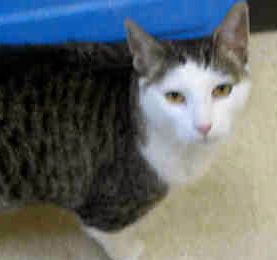
Clack is a nice cat who has been at the shelter for several months. We’d really like to find him a good new home.

He is a Manx and has a very short tail. He will chase dogs, and so should not go to a home with a dog. But that’s his only vice.

He likes other cats, and came to the shelter when his owner died. (The shelter currently has five Maine Coon cats, so if you’re looking for a large furry feline, now is the time to adopt.)

Clack is neutered, microchipped, and vaccinated. He is at the El Dorado County Animal Services shelter in Meyers, along with many other dogs and cats who are waiting for their new homes. Go online to see photos and description of all pets at the shelter.

Call (530) 573.7925 for directions, hours, and other information on adopting a pet.

For spay-neuter assistance for South Tahoe residents, go online.

— Karen Kuentz


Series of writing workshops in Truckee

Tangled Roots Writing in Truckee has a few workshops coming up.

One is Shaping and Revising your Project. This ongoing three-part workshop series will help develop your first draft into a refined piece through monthly feedback in a small dedicated group of writers while learning techniques for structuring and revising your book. Tips on project management, working with deadlines, and publishing will be given. Classes are Oct. 21, Nov. 11 and Dec. 9 from 10am-1pm. Cost is $160.

Monday nights is a Creative Writing Workshop. Craft, technique, and prompts for fiction, nonfiction, and poetry. This is a six-week sessions from Oct. 22-Dec. 3 — no class Nov. 19, from 6-8pm. Cost is $140.

For more information and to register, call Karen Terrey at (530) 386.3901.


Douglas County explorers excel at competition

Cadets of Douglas County Sheriff’s Office Explorer Post No. 2015 recently won numerous top honors at a Law Enforcement Explorer Cadet competition in Paso Robles.

The 13th annual Central Coast Law Enforcement Explorer Competition hosted more than 400 law enforcement explorer cadets from 42 law enforcement agencies throughout California, Nevada and Arizona.

The three-day competition was extremely demanding; testing the mental preparedness, physical endurance and tactical and operational expertise of competing Explorer Cadets.

Cadets compete in a variety of law enforcement related scenarios, including Felony Suspect Detainment and Arrest, Crisis Negotiation, Vehicle Traffic Enforcement Stops, DUI Investigations, Vehicle Searches, Building Searches, Domestic Violence Investigations, Suspect Interview and Interrogation, Emergency Medical Aid, Patrolling, Hazardous Response/Active Gunman and a host of other law enforcement related tasks. Explorer Cadets also compete in individual and team physical agility tests.

Fifteen Douglas County Sheriff’s Office Explorer Cadets competed in the event. They ranged in age from 14 to 19. Due to the outstanding performance by the DCSO Explorer Cadets in the various competitions during the event, they placed third overall out of the total of 42 competing Explorer Posts.

The success of the DCSO Explorer Cadets is the culmination of months of extensive training and practical application exercises administered by DCSO Youth Services Officers Chris Griffith and Teresa Duffy.

To be a member of the DCSO Explorer program, Cadets must maintain an academic grade of 2.5 or above in school. Additionally they must train for several hours each week at the Sheriff’s Office, and they participate in hundreds of hours of community service each year.