Signs help warn people of oncoming stroke

By Mandy Kendall

I met a lady the other day who, from all appearances, looked very healthy. What’s so unusual about that you say? Well, two weeks prior to our meeting she had suffered a fairly major stroke. Fortunately for her she had received prompt medical treatment and made a full recovery.

So what is a stroke?

MedicineNet says, “A stroke, or cerebrovascular accident (CVA), occurs when blood supply to part of the brain is disrupted, causing brain cells to die.”

The area of the brain that is affected by a stroke varies and will determine the side effects or symptoms the person experiences, but most commonly there will be some kind of paralysis or loss of function to the physical body, speech, memory, cognitive abilities etc.
Mandy Kendall

Now, there is good news and bad news about strokes.

The bad news is that strokes are the fourth leading cause of death in America and a leading cause of adult disability. The good news is that up to 80 percent of strokes are preventable with changes in lifestyle and health practices. Reducing blood pressure and cholesterol levels are believed to be highly contributing factors in the reduction of deaths from strokes in the last decade.

Potential risk factors include: high blood pressure, cigarette smoking or exposure to secondhand smoke, high cholesterol, diabetes, being overweight or obese, physical inactivity, obstructive sleep apnea (a sleep disorder in which the oxygen level intermittently drops during the night), cardiovascular disease, use of some birth control pills or hormone therapies that include estrogen, heavy or binge drinking and use of illicit drugs such as cocaine and methamphetamines.

The bad news is that strokes are anything but rare with more than 500,000 people a year in America experiencing their first or even a recurring episode. The good news is that with today’s medical care and technology a stroke’s paralyzing and disabling effects don’t have to be permanent, however the extent of recovery is hugely influenced by how quickly the stroke victim receives treatment and the first few hours are critical.

The bad news is that only 20 percent of U.S. hospitals are “stroke certified”. The good news for those of us in Lake Tahoe and the surrounding area is that Renown Medical Center in Reno was one of the first hospitals in the country to receive this certification.

So, how do you recognize a stroke and what can you do about it?

Some of the classic symptoms include: sudden numbness or weakness of the face, arm, or leg, especially if it occurs on one side of the body; sudden confusion, trouble speaking, or understanding speech; sudden trouble seeing in one or both eyes, or double vision; sudden trouble walking, dizziness, loss of balance, or coordination; sudden severe headache with no known cause, drowsiness, nausea, or vomiting.

However stroke symptoms can also be less obvious than these and are often mistaken for something less serious.

So here are three Qwik-e tips on how to spot a potential stroke: (they use the acronym STR – as in STRoke)

S: Ask the person to SMILE.

T: Ask them to TALK and form a simple sentence (for example get them to tell you what day of the week and date it is) .

R: Ask them to RAISE both arms.

If a person has any difficulty in doing any of these three things, then it is time to call 911.

Until next time.

Mandy Kendall operates Health Connective in South Lake Tahoe, which aligns wellness seekers with their ideal wellness provider. If you have questions, would like some advice, or would like to request some Qwik-e tips on any health and well-being topic, drop her an email at connect@healthconnective.com or keep an eye out on Lake Tahoe News for regular Qwik-e tips on how to make healthy changes one Quick and Easy step at a time.


Christian writer upsets bookstores by using the word ‘vagina’

By Ruth Graham, Slate

The word vagina has caused trouble for a lot of women this year, from Michigan state Rep. Lisa Brown to Naomi Wolf. And now, perhaps, for a prominent evangelical writer who refused to remove the word from her new book about women and the Bible.

Rachel Held Evans’ upcoming book “A Year of Biblical Womanhood” tracks her yearlong attempt to follow all of the Bible’s instructions for women, from making her own clothes to “submitting” to her husband. (I wrote about the project last year for Slate.) Now one of the biggest Christian bookstore chains in the country, LifeWay, has opted not to carry the book, and Evans is speaking out about the “chokehold” that the Southern Baptist-owned business wields over Christian writers.

The story begins in March, when Evans mentioned on her blog that her editor had suggested she remove the word vagina from the book’s manuscript to appease strict Christian bookstore content standards. “If Christian bookstores stuck to their own ridiculous standards, they wouldn’t be able carry the freaking Bible,” she wrote, adding that, despite her annoyance, she had acquiesced to the request because, hey, no author wants to risk losing sales. Her publisher told her they expected 40 percent of her book’s total sales to come from Christian bookstores; LifeWay is one of the biggest sellers, with 160 stores in 26 states and a robust online business, and its standards are considered the strictest.

Her readers were outraged. Someone started a petition on Amazon called “Put the word ‘vagina’ back into Rachel’s book!” Another fan made “Team Vagina” T-shirts. Other Christian authors came forward with their own stories of having had to purge books of mentions of champagne, and scandalous phrases like “darn it.” Readers cheekily dubbed the debacle “Vaginagate,” a name Evans quickly embraced.

With such a public outpouring, the Tennessee-based writer ultimately decided to leave the word vagina in her book and face the consequences.Though Evans makes many conservatives unhappy when she writes things like “I learned to be a feminist from Jesus,” or when she challenges popular church leaders and theologians, she considers herself a member of the group, not an outsider, and is an increasingly prominent voice in the evangelical community. And so she felt that she could probably afford to take such a risk. In October, Christianity Today named her one of its “50 Women to Watch,” an honor she shares with the likes of Pulitzer Prize-winning author Marilynne Robinson and former Secretary of State Condoleezza Rice. Her book has already received plenty of attention, and between 80,000 and 100,000 readers visit her blog monthly.

What’s oddest about this whole dustup is how uncontroversial Evans’ book is. For most readers, “A Year of Biblical Womanhood” won’t prompt any pearl-clutching. Its author is a devout Christian, the large Christian publisher Thomas Nelson is publishing it, and Evans calls its content “super-PG”—no bad words, and “not even that aggressively egalitarian or feminist.” There are actually two vaginas in the book: One is an anatomical reference to a woman raped in the Congo, which no one in the publishing process had a problem with. The troublesome instance is from a passage about a 16-year-old Evans signing an abstinence pledge card at a youth rally at church, where, she writes, she signed “my promise to God and my vagina.” That kind of cheeky reference stuck out to editors trying to conform to LifeWay’s unwritten standards. (Evans goes out of her way to say that her editors are not the problem here; they’re trying to sell books, she says, and none of them delights in the bowdlerizing that comes with the job.)

About a month ago, Evans met with her team at Thomas Nelson and received the bad news: LifeWay had opted not to carry the book in its 160 stores, despite the fact that it had sold her 2010 memoir, “Evolving in Monkey Town” (in which she reaffirms her faith after wrestling with the fundamentalism of her youth), and that every other major Christian bookstore will carry the new book. She says she was told privately by someone in leadership at LifeWay that “vagina” was not the main issue, but he declined to tell her more.

“I don’t know if they were more offended by my vagina or my brain,” she says with a laugh. “The only thing I know is that my editor said, if you leave this word in, there’s a good chance LifeWay won’t carry it.”

It’s possible, in fact, that this is about her brain — or at least what makes it from her brain to her mouth. Evans proudly identifies as evangelical, but not everyone will allow her that label. Last week, well-known pastor John Piper’s website hosted a harsh review of “Womanhood”, accusing the book of “question[ing] the validity of the Bible.” And author and theologian Denny Burk devoted a detailed blog post to why Evans doesn’t qualify as an evangelical. Her offenses include insufficient deference to the concept of Biblical inerrancy — the notion that the Bible is completely free of error — and her willingness to serve communion to gay churchgoers.

And Evans has taken on LifeWay directly in the recent past. When the chain abruptly removed DVDs of the 2009 movie “The Blind Side” from its stores this past summer because of “street language and racial slurs,” she wrote a fiery post about the power that LifeWay wields over every step in the publishing process: Christian publishers need to place their books there to reach their audience, so editors pressure writers to meet the LifeWay standard. Evangelical biographer Eric Metaxas told Religion Dispatches this summer that his editor asked him to remove the phrase “a total crapshoot” in deference to bookstores that would object to the gambling term.

“Writers adjust our content to fit this very sanitized, very strict conservative mold, which means we’re not producing the best writing or the best books we can produce,” Evans says. “Everyone bends over backward to meet these demands.”

But no one knows precisely what those demands are. And Evans sees a difference between the leeway afforded to male and female authors. She rattles off several recent books written by men that include less-than-clinical usages of boobs and testicles. LifeWay carries powerful pastor Mark Driscoll’s recent advice book Real Marriage, which includes approving descriptions of anal sex, role playing, and sex toys within a conservative theological framework. (Driscoll wrote the book with his wife, Grace.)

“We select resource that are consistent with the expectations of our customers based on several issues, including things like alignment with evangelical beliefs, LifeWay’s values and vision, and past sales by an author,” Martin King, LifeWay’s director of communications, told me. He declined to define “values and vision,” but said LifeWay is guided by the Southern Baptist statement of faith.

King dismissed the notion that LifeWay intends to act as a moral guide for the publishing industry. “I would expect authors to write what they feel led to write, and then see if there’s an audience,” he said. “As Ms. Evans pointed out [online], there are a lot of places to sell books, and LifeWay is not the only outlet.” King also added that Evans’ first book did not sell well for the chain in 2010, though her profile has risen considerably since then.

Evans says she hoped for a different ending to this story: She imagined triumphing over LifeWay’s constraints and empowering other authors to write freely. Instead, she finds herself alienated, again, from a community she loves and writes for. “I often hear from evangelical leaders, ‘Oh we’re really eager to have more female leaders,’ ” she says. “I want to say, ‘This is my voice. This is what it sounds like.’”


Lecture to focus on things falling from the sky

The minivan-sized meteorite that broke up over the Sierra on April 22 was not just any old space rock. It was one of the rarest types of meteorites to fall to Earth — a carbonaceous chondrite, the earliest solid material to form in the solar system more than 4.5 billion years ago, before the planets, including the Earth, formed.

This meteorite could turn out to be one of the most important observed fall since the late 1960s, says UC Davis geology Professor Qing-Zhu Yin.

These primitive meteorites provide a glimpse into the first few millions of years of the Solar System’s history.

Yin will give a talk Nov. 1 at Tahoe Center for Environmental, followed by a brief question-and-answer session.

The no-host bar opens at 5:30pm. The presentation begins at 6pm.

The center is at 291 Country Club Drive, Incline Village.


Marshmallow study proves youngsters can make rational decisions

By Sarah Kliff, Washington Post

In 1972, Stanford University’s Walter Mischel sat 600 children down at a table with a marshmallow and gave them a choice: They could eat one marshmallow now, or wait 15 minutes and get two marshmallows.

The ability to hold out for the latter correlated with greater success and self control later in life, leaving most students in Psych 101 to assume the immediate marshmallow eaters were destined for failure.

But perhaps not! A team of researchers at the University of Rochester revisited the marshmallow experiment. And what they found was that the ability to delay gratification isn’t just a hardwired, innate skill. Quite the opposite. Behavioral cues play a big role in determining who holds out for that second marshmallow, and the results call into question how much self-control actually has to do with it.

The Rochester researchers once again got a bunch of kids into a room. But they did something a bit different. Right before giving the kid a marshmallow, they would have an encounter with an adult. One would be unreliable; he would promise a bunch of fun art supplies that would never appear. Another would be reliable, delivering the art supplies as promised.

That earlier encounter had a huge influence on kids’ willingness to wait for a second marshmallow. Only one of the 14 children in the unreliable condition held out for the full 15-minute wait. They may have assumed that the second marshmallow, just like the art supplies, was a big lie. More than half of the kids who had just had a reliable encounter, however, made it through the 15-minute wait.

“The results of our study indicate that young children’s performance on sustained delay-of-gratification tasks can be strongly influenced by rational decision-making processes,” the researchers conclude.

In other words, sometimes eating the first marshmallow is actually the more rational approach, based on what the child knows about the situation. Why should an adult who failed to provide promised art supplies, after all, be relied on to deliver a second marshmallow?

“Being able to delay gratification — in this case to wait 15 difficult minutes to earn a second marshmallow — not only reflects a child’s capacity for self-control, it also reflects their belief about the practicality of waiting,” says Celeste Kidd, a doctoral candidate in brain and cognitive sciences at the University of Rochester and lead author on the study. ”Delaying gratification is only the rational choice if the child believes a second marshmallow is likely to be delivered after a reasonably short delay.”

The researchers contend that this could be true on a larger scale. If a child or adult lives in an environment where promises always get broken and outcomes are unreliable, the most rational response is to eat the marshmallow right in front of her — and not wait for the promised marshmallows of the future.


Tahoe Tails — Adoptable Pets in South Lake Tahoe

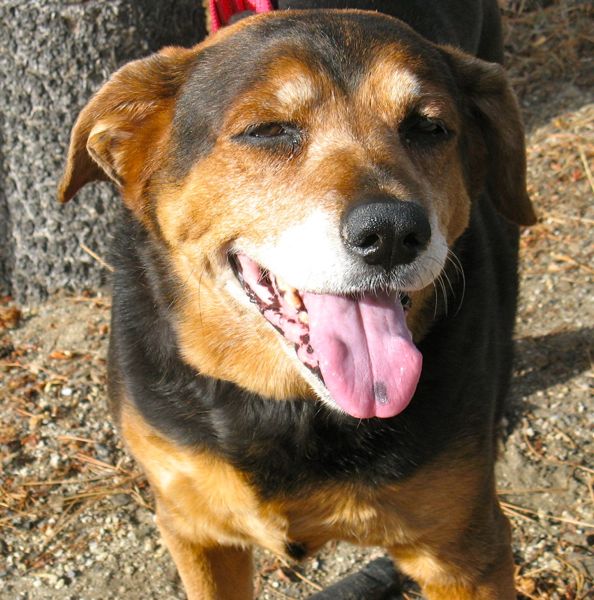
Jazzy is a 7-year-old beagle-Lab mix who loves to go for walks and car rides.

She is in the prime of her life, and is the perfect dog for someone who wants a nice, calm, yet fun companion. Jazzy is house trained and has great manners, plus she likes other well-mannered dogs. She will wait patiently for you when you are at work. She came to the shelter when her owners moved and couldn’t take her with them.

Jazzy is spayed, microchipped, and vaccinated. She is at the El Dorado County Animal Services shelter in Meyers, along with many other dogs and cats who are waiting for their new homes. Go online to see photos and description of all pets at the shelter.

Call (530) 573.7925 for directions, hours, and other information on adopting a pet.

For spay-neuter assistance for South Tahoe residents, go online.

— Karen Kuentz


Fundraiser to help South Lake Tahoe artist

South Lake Tahoe Art League is hosting a fund-raising lunch for Peter Darvas on Oct. 18 from 1-5pm at at Tepp’s Villa Roma, 3450 Lake Tahoe Blvd., South Lake Tahoe.

Darvas suffered the loss of his studio and home on Pioneer Trail to fire last month.

Live music will be provided by Patrick Major.

Menu includes poached salmon in wine, chicken Romano, pastas, salads and more.

There will be an original Darvas door prize, raffle prizes, silent auction for remaining paintings and giclees.

Tickets are in $20 advance. Purchase them at the Tahoe Art League, art galleries at Ski Run Marina and Tep’s Villa Roma or $25 at the door the day of the event.

For more information, call (530) 448.4107.


Mutt Strut — A day for dogs to play with their people

By Kathryn Reed

South Lake Tahoe went to the dogs Sunday during the 8th annual Mutt Strut.

It wasn’t just South Shore residents participating in the fundraiser – some came from Squaw, others from the Bay Area, even San Diego. And a few foreign languages could be heard, too.

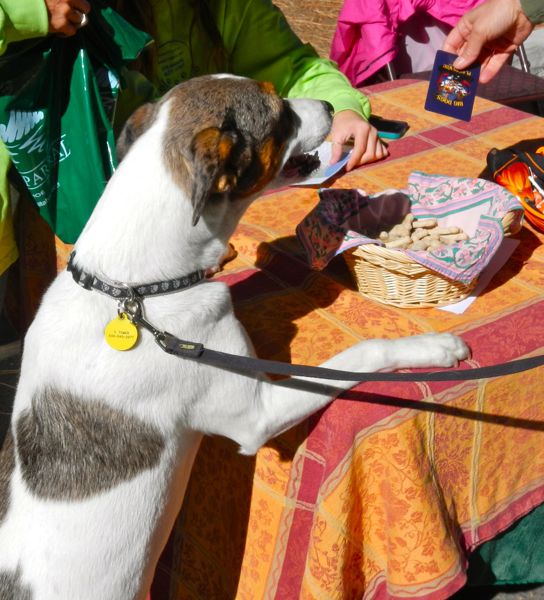
Bindi would like more than one treat. Photos/Kathryn Reed

Starting at Regan Beach on Oct. 14, the canine brigade strutted by the water dog park, to Lakeview Commons, down Highway 50 and finally ended at the beach at Timber Cove. Along the way the two-legged walkers gathered a poker hand for a chance to win prizes.

Sydney is wearing a Placer County Search and Rescue vest. While she is retired, she really thinks she is just working part time. Her owners – Chris Caltran and Kiki Campbell – are also there with Skyy. Skyy was enjoying the waters of Lake Tahoe as much or more than the walk.

Karen Frates goes back and forth between letting Snap, her Chihuahua, walk and carrying him. A 1½-mile walk (and that’s just one way) is a little much for this little guy.

Once at Timber Cove it’s time for the games. Dogs could see who could eat a hot dog the fastest. Then people and their dogs walked to the music and when it stopped the dogs had to sit. The last dog to sit was eliminated.

Lorenzo and Beauregard tied as winners.

Animal Coalition of Tahoe puts on the event. Ninety percent of the proceeds go for spay and neuter services, while 10 percent benefit the animal shelter in Meyers.

ngg_shortcode_0_placeholder (Click on photos to enlarge.)


Hearst Castle — a legacy of a media giant for all to bask in

By Kathryn Reed

SAN SIMEON – Clearly, I worked for the Hearst Corporation in the wrong era. Well, come to think of it, I don’t think any of William Randolph Hearst’s employees were ever invited to his castle, so I guess it didn’t really matter when I worked for the Examiner and Chronicle.

But what is so great is that his mega-estate on the Central Coast is now a state park, so even the grunts (or former as the case may be) in the Hearst empire can visit and not be thrown out. The family gifted the property to the state in 1958.

I have always heard wonderful descriptions about this oasis on a hillside five miles from the ocean. But in many ways, superlatives would lessen the true grandeur of this architectural wonder.

The Neptune pool at Hearst Castle makes one want to take a few laps. Photos/Kathryn Reed

After all, this is a Julia Morgan designed Mediterranean-style estate that took 26 years to build.

She had the foresight to use reinforced concrete in this seismically prone area.

The Neptune pool is probably one of the most photographed entities of any state park. With cushy chairs near the pool, it is easy to fantasize about what life was like in the first half of the 20th century as Hollywood’s elite flitted about.

While the structure is all Morgan, the décor represents Hearst’s eclectic tastes – from 15th century choir stalls, to tapestries also centuries old, to using paper napkins and having ketchup and mustard bottles on the table, to somewhat tacky furniture coverings.

The “big house” contains 115 rooms in 69,000-square-feet of space. Three cottages would have provided privacy for his many guests – many who hailed from Hollywood. Thirty fireplaces helped keep the ocean chill away. An elevator could take people between floors.

To manage his media empire Hearst had 100 telephones installed at the castle so he could talk to editors wherever he was on the estate. He also had each of his papers flown in daily so he knew exactly what was going on. Obviously, this was long before the days of cell phones and the Internet.

At one time this working ranch had 250,000 acres associated with it. Plus, there was a menagerie of exotic animals that would have rivaled the best zoos of the time or even today.

The gardens are lush. Being on the coast, flowers are vibrant this time of year. And varietals that are never seen in the mountains fill the landscape.

Three tours are available. The one we went on was described as the best for first-time visitors. At a cost of $25, it is well worth it. But what is also great about the park is the visitors center has a ton of displays and information if people don’t want to take the ride to the top of the hill to tour the castle.

A 40-minute movie at the visitors center sets the stage for what visitors will see. It explains why the media mogul chose San Simeon as his home even though his business interests were nowhere near there. The film delves into Hearst’s upbringing, his marriage, children and mistress.

ngg_shortcode_1_placeholder  (Click on photos to enlarge.)


Finding the center of California requires time to explore it

By Susan Wood

CAMBRIA – It’s easy to fall in love with the Central Coast of California in autumn – or during any other time of year for that matter.

With so much to do and see, what will soon become apparent on a trip through a region that stretches from Santa Cruz to Santa Barbara is the time allotted to fully take in the varied sights and activities will require that of a vacation hopping countries in Europe.

California has maintained the reputation for being the land of the active. But for the more docile wanting to appreciate the finer tastes and bountiful harvests in life, the Central Coast has emerged with formidable wine regions.

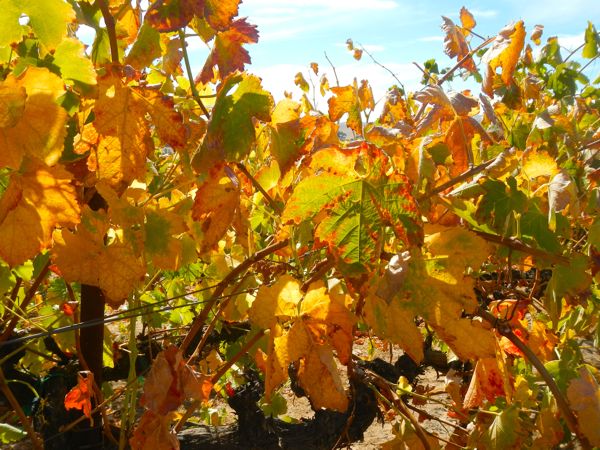
Fall is evident throughout the vineyards of the Central Coast. Photos/Kathryn Reed

Paso Robles (which the locals nickname “Paso”) and Santa Ynez Valley may make the case of being the next Napa and Sonoma valleys.

This is the land of Pinot Noir. But as the more than 200 Paso Robles area wineries such as J. Lohr, Peachy Canyon and Robert Hall have proven, bold tastes may come from bottles of Grenache, Cabernet Sauvignon or even Sauvignon Blanc on a 90-degree day 25 miles east of Cambria.

Cambria, this crown jewel of the Central Coast, represents the proverbial California lifestyle – a quaint town broken up between two villages and a beach where a one-mile boardwalk allows a walker the experience of being on the bluff or in the sands and moonstones.

When the fog doesn’t roll in, the sunset brings out all types to Moonstone Beach in the hopes of catching the last-second green flash at the horizon line. It’s worth driving hours to see.

Then, there are the stones the beach is named after. Even on an average weekday morning, people were spotted looking down or even digging for the small, bluish rocks.

“The good news is people decided to travel this summer,” said MaryAnn Carson, executive director of the Cambria Chamber of Commerce. Carson added that after two bad, recession-spawned years in 2009 and 2010, the town has used 12 major events – to bring people to the region.

San Luis Obispo County assists the promotional efforts. Towns as far away as Pismo Beach take part.

Plus, the multitude of area hotels has supported the ventures by taxing the tourists 1 percent to subsidize these events.

Visitors have a place

The El Colibri Boutique Hotel and Spa is situated above the popular Moonstone Beach, requiring just a three-minute walk on the boardwalk from the hotel to see the ocean.

Nestled within a nature preserve, it’s the only hotel lining the boardwalk on the west side of Moonstone Drive.

The place is a perfect launching pad for a 10-minute drive north to the monumental Hearst Castle, cycling one of the best, most scenic stretches of the California Coast where elephant seals are bountiful on the beach and flocks of pelicans soar over the water.

Named after a hummingbird, El Colibri is as intimate, charming and relaxed as its picturesque surroundings. Inside, there’s a romantic feel to the 34-room hotel. Every room comes with a gas fireplace to take the nip of the fog away. Saturday nights feature jazz performers and a local winery. On one September night, the Midnight winery uncorked a Zinfandel that rivals those in El Dorado and Amador counties.

The spa stands out as an exceptional amenity. Dunking in the hot tub in a semi-private, open space may be the ultimate remedy for capping off an evening in a restful state – if not for the more-than-memorable massages from therapists Terri and Diane.

The latter provided Kae, who declared she was a “new woman” after receiving “one of the best massages (she’s) ever had.” Among the many treatments offered, Kae got an aromatherapy massage.

(Just one shortfall: the offerings of the complimentary continental breakfast and evening tapas in the comfortable wine bar don’t live up to the service level of the hotel, so you’ll need to look elsewhere for nutrition – especially if out wine tasting.)

Robin’s restaurant in the “east village” fits the bill for lunch or dinner.

Going south to ‘Sideways’ land

Filling the tummy for a day of wine tasting or evening out is not an issue in Buellton, located four miles west of the cute Danish town of Solvang in the Santa Ynez Valley.

A chef cooking eggs to order can get any day off on the right foot at the Marriott Santa Ynez. This Marriott is large and comes with many amenities, including tennis and squash courts and even a game room near the swimming pool patio.

It’s yet another perfect jumping off spot for cycling the Santa Ynez Valley, home of one of the most acclaimed organized bike rides in the state – the Solvang Century, which is always in March. (Bring your rain gear as this reporter has been caught in hail twice during that event.)

On the way to the Danish town, it’s advised to take the time to check out Ostrich Land, if only from the road on a bike. The rescue farm is listed as one of the area attractions between Buellton and Solvang.

Solvang is the quintessential walkable town – with wayfinding signs, an inviting village green and sidewalks lining the shop-filled streets. (Note: the Danish eateries may introduce the aebleskiver for those seeking a delightful puffball pastry in the middle of the day.)

The Santa Ynez Valley is a wine region that’s made it to the big screen. More than 80 wineries offer vintages ranging from Syrah to Chardonnay. But it was the love of Pinot Noir that put the region on the map when the movie “Sideways” was released in 2004. The story of two very different men out wine tasting before one gets married became a cult hit that brought scores of people discovering the region.

According to Buellton Chamber of Commerce and Visitors Bureau Executive Director Kathy Vreeland, the fascination has endured yet another year despite a 20 percent recessionary dip in visitation in 2009 and 2010.

“I don’t think any of us expected (the popularity),” Vreeland said.

And now, there’s a sequel called “Vertical” in the works.

Still, the original saga of Miles and Jack lives on at the Hitching Post restaurant in its real name in the movie. The steakhouse still boasts throngs of people who stop to just have their pictures taken in front of the sign or eat at the movie characters’ table.

“People want to follow what Miles and Jack did,” Vreeland said.

There’s even a Sideways wine tour.

That aside, followers who swear off Merlot (as Miles declared in the movie because his ex wife drank it) and onto the more hearty Pinot Noir will still appreciate the vast varietals found in the valley such as Lincourt’s tangy Chardonnay and Beckman’s four-way, Syrah-based blend of Cuvee Le Bec.

(Note: a preceding stop at Wandering Dog Bar for a few flights of local wines and advice from fourth-generation wine taster and staffer Ian may be just the ticket if time is a factor.)

If you go:

Cambria: Off Highway 1 between Monterey and Morro Bay

El Colibri Boutique Hotel and Spa

Rooms start at $169 (midweek specials for $139).

Buellton: Off Highway 101 between Santa Maria and Santa Barbara

Marriott Santa Ynez

Rooms start at $149.

ngg_shortcode_2_placeholder (Click on photos to enlarge.)


‘Silent Spring’ impresses more today than when first published 50 years ago

By Bryan Walsh, Time

When my predecessors at Time reviewed ecologist Rachel Carson’s book “Silent Spring” 50 years ago this month, they were less than impressed. While the piece praised her graceful writing style, it argued that Carson’s “emotional and inaccurate outburst” was “hysterically overemphatic,” which I believe is a fancy way of saying that the lady writer let her feelings get the best of her.

Time’s take was gentle compared with the reactions of some of her other contemporary critics. As William Souder writes in his new biography of Carson, “On a Farther Shore”, chemical companies threatened her with lawsuits after she argued that pesticide overuse was ruining the environment and threatening human health. Others insinuated that she was in league with communists who wanted to cripple American agriculture. As a former chemical-industry spokesman put it bluntly, “If man were to follow the teachings of Miss Carson, we would return to the Dark Ages, and the insects and diseases and vermin would once again inherit the earth.”

Today “Silent Spring” is regarded as a masterpiece, one of the most influential books of the 20th century. The criticism of Carson–and the sexism implicit in much of it–is a relic from an age devoted to better living through chemistry. Yet 50 years after its publication and 48 years after Carson’s untimely death from breast cancer, there’s still a small but vibrant industry in attacking “Silent Spring” and its author.

The claim now is that her polemic against pesticides led the world to phase out the insecticide dichlorodiphenyltrichloroethane, or DDT. That might seem like a good thing. In “Silent Spring” Carson describes the toxic effects of DDT use on animals, particularly birds, and in 1972 the Environmental Protection Agency banned it partly on the grounds that it was a probable human carcinogen. So long-lived and potent is DDT that even now, 40 years after the ban, most Americans still carry traces of the chemical in their bodies.

But DDT was also effective in killing the mosquitoes that carry malaria. Conservative critics have argued that by turning the world against DDT, Carson crippled efforts to fight the deadly disease in Africa, where it kills hundreds of thousands of people a year. The right-wing Conservative Enterprise Institute maintains a website called RachelWasWrong.org arguing that Carson’s “extreme rhetoric generated a culture of fear, resulting in policies that have deprived many people access to life-saving chemicals,” namely DDT. In 2005, British politician Dick Taverne wrote that “the anti-DDT campaign that she inspired was responsible for almost as many deaths as some of the worst dictators of the last century.”

The Godwinning of Carson ignores a few facts. Carson took pains to make it clear that she wasn’t calling for the banning of all pesticides, especially those that might be able to protect human beings against insect-transmitted diseases. Carson simply wanted to bring some balance to the use of powerful chemicals at a time when ecology was barely considered a science and industry had license to do whatever it wanted in the name of progress. As for DDT, many experts believe the pesticide would have been less effective against malaria-carrying mosquitoes in the scattered and remote villages of sub-Saharan Africa than it was in more densely populated North America. Africa’s staggering malaria death toll has more to do with decades of Western indifference than it does with a single book.

If “Silent Spring” gave birth to the modern green movement, the critical reaction to it created the blueprint for how industry defends itself against environmentalism. Whether it’s pesticides, asbestos or air pollution, the battle plan is the same: question the science, attack the scientists’ credibility and warn of unbearable costs. The plan hasn’t worked: the U.S. has become cleaner and healthier since “Silent Spring”, and the Dark Ages that serious men warned us about have yet to descend. But the fight is far from over, as the polarized debate over climate change demonstrates. Rachel Carson may have prophesied a silent spring, but the battle between her acolytes and her enemies will be long and loud.