2 comedies by James McLure to be staged at LTCC

Lake Tahoe Community College’s Theatre Arts Department is putting on “Lone Star” and “Laundry and Bourbon,” two companion one-act comedies by renowned playwright James McLure.

McLure is known for his plays addressing the challenges soldiers faced returning from the Vietnam War.

Performances are Nov. 9, 10, 15, 16, 17 at 8pm, and Nov. 11 and 18 at 2pm.

Tickets are $10, $7 for seniors, $5 for students with valid ID, and children under 13; free for veterans and active military.

Children younger 6 will not be admitted.


Artown looking for designs for 2013 poster

Each year Artown commissions a regional artist to create a unique piece of fine art to be used for the Artown poster and marketing materials for the July festival. A panel of judges consisting of arts leaders, the previous year’s artist and the members of the Artown board will review the submissions and select the artist.

The piece of art will be transformed into a poster, incorporated into the Artown website and utilized in many of the Artown marketing materials. The selected artist will be required to sign 300 posters for Artown.

This artist will be contracted at a non-negotiable rate of $3,000 and will receive 100 posters from Artown for non-commercial use for the sole purpose of promoting the artist’s work.

Submit no more than two concepts designed specifically to promote the July 2013 Artown festival. This is not a call for a designed poster. Artown contracts with a graphic designer to create all the marketing materials including the poster from the selected art piece.

The deadline is 5pm Nov. 30.

For more info, contact (775) 322.1538 or office@renoisartown.com.


Job burnout a growing issue with workers

By Ellen Jean Hirst, Chicago Tribune

While the economy is flashing signs of a rebound, it’s a markedly different story for a growing number of workers, according to a recent survey.

More workers than ever report feeling burned out by their jobs, according to a ComPsych Corp. survey of nearly 2,000 employees conducted during September that sought to measure stress levels and their effects in the workplace.

“We’re seeing a growing trend of employee burnout,” said Richard Chaifetz, chief executive of Chicago-based ComPsych, a global provider of employee assistance programs. “It’s a product of the sputtering economy — companies continue to be slow to hire, and prolonged employee stress inevitably turns into decreased performance, unfortunately.”

During the recession, companies shed millions of jobs as they strove to cut costs and shore up the bottom line. But that work didn’t go away with the elimination of the position, it just got shifted, pushing workers to do more with less, workplace experts said.

According to the report:

•Nearly 1 out of 4 employees say their top work priority is just being present at work

•About 2 in 3 workers report high levels of stress with extreme fatigue and a feeling of being out of control.

•More than half of those surveyed said they miss one to two days of work per year because of stress.

Sherrie Bourg Carter, a clinical psychologist who focuses on employee burnout, said she hears complaints from burned-out clients firsthand. Those who say showing up for a job is their highest priority are at high risk, she said.

“Each employee has increasingly demanding workloads,” said Bourg Carter, of Fort Lauderdale, Fla. “The work still has to be done, but employers want to do it with fewer employees. One person is often doing the work of two people and probably without any support staff.”

Herbert Freudenberger was the first to alert the world to the dangers of “burnout” in 1974 when he coined the term in his book, “Burnout: The High Cost of High Achievement.” He described burnout as a complete lack of motivation or reaction to incentives.

Since then, the term has become a catchphrase for maniacally stressful days. But burnout is a chronic problem, said Bourg Carter, author of “High Octane Women: How Superachievers Can Avoid Burnout.” It starts with mild stresses that most people experience, but if nothing is done to manage the stress, it can become unbearable.

“The actual state of burnout is not just a bad day or a bad week,” Bourg Carter said. “It’s when a person is so consumed with symptoms that they can’t function.”

Burnout usually sneaks up on people, she said.

“All of a sudden you’re exhausted, you’re feeling cynical and unattached,” Bourg Carter said, “and you think ‘What happened to me?'”

In addition to extra work, a lack of job satisfaction can exacerbate feelings of burnout, said Jennifer Schramm of the Society for Human Resource Management. Because middle-age workers have delayed retirement, Schramm said, younger employees feel like they can’t advance. Less than 50 percent of workers said they were satisfied with their career development in the society’s most recent job satisfaction survey.

“It could have a domino effect down the ladder where everyone feels a little bit stuck,” said Schramm, the society’s manager of workplace trends and forecasting. “A lot of the millennials really are having a hard time.”

Those most likely to burn out are those who work excessively without breaks or outlets for stress, said Thomas Donohoe, who researches work-life balance at East Tennessee State University.

But there’s hope, even for voluntary — and involuntary — workaholics.

Donohoe said talking about stressors with trusted friends or family is a good place to start. Other options include taking five minutes to eat or do simple exercises at the office, going for a brief walk or taking a catnap on the subway with a phone alarm set.

“Most people expect their brain to constantly be on,” Bourg Carter noted, “but if your brain is constantly on, it will eventually shut itself off.”


Pancreatic cancer diagnosis tests Tahoe family

Publisher’s note: Denise Rury will be at this morning’s South Lake Tahoe City Council at 9 to talk about Pancreatic Cancer Awareness Month and accept a proclamation from the city.

By Denise Rury

It’s November, which for my family means its Pancreatic Cancer Awareness Month, a time of remembrance, not just awareness. It was 3½ years ago that my mother, Jeanette Criner, was diagnosed with pancreatic cancer. The gravity of this announcement was even more devastating because her father was also diagnosed with pancreatic cancer and died within three weeks.

Despite what little she knew, really what most of us know about pancreatic cancer, she knew enough to know what a formidable enemy she was up against. The statistics are pretty dismal. Pancreatic cancer has the lowest survival rate of all cancers tracked by the American Cancer Society and the National Cancer Institute: 94 percent of pancreatic cancer patients die within five years of diagnosis and only 6 percent will survive five more years. Seventy-four percent of patients die within the first year of diagnosis.

Jeanette Criner

Jeanette was diagnosed with stage one pancreatic cancer, which gave her the option of having one of the few tools available in treating this cancer — surgery. The surgery, known as the Whipple operation, where the head of the pancreas, a portion of the bile duct, the gallbladder and the duodenum is removed. It is a complicated and long surgery, but at this point it was the best option available. Tough Jeanette was understandably fearful, she was determined to do whatever it took to fight this.

The surgery seemed to have gone well, but unfortunately a few cancer cells were found outside of the pancreas and perhaps when she recovered from the surgery, gained some weight and was ready, chemotherapy was on option. This was late August 2008 and despite all the efforts of Jeanette with physical therapy, the care and attention of her medical staff, the love and support from her family, she continued a downhill battle that lasted seven months.

I watched my mother having gone from an active woman that at the age of 72 still worked, baked, tended to her garden and enjoyed hikes in and around her beloved Lake Tahoe to becoming a frail, depressed patient who lost hope when it became obvious that her best efforts just weren’t working. Jeanette spent her last couple months surrounded by family, at various times from all across the country, even the world, which was of great comfort. She had the love and support at all times of her family here in Tahoe and would still get out and about to enjoy another favorite activity — coffee with her children or grandchildren to chat about the funny or mundane, anything but pancreatic cancer.

As her health continued to deteriorate, she made the decision to stop cancer treatments and start hospice care. I remember the last time she was outside, taking in the beauty of the lake and knowing it was the last time she would ever see Lake Tahoe. I remember how hard, even in the face of the obvious, trying to encourage her to keep fighting, have a reason, some reason to still be here but that day, with her staring out the window, looking at the lake, it was apparent that this was it. It was only a week or so later that she left for good.

Denise Rury is a resident of South Lake Tahoe.


Tahoe Tails — Adoptable Pets in South Lake Tahoe

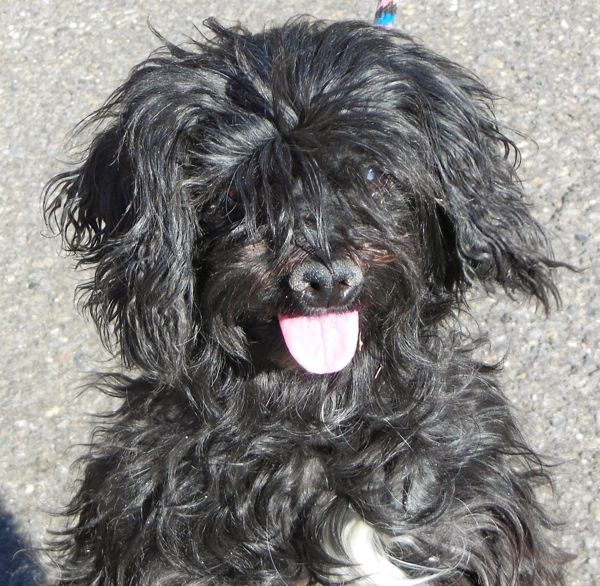
Kaida is a 7-year-old poodle/Maltese/Lowchen mix who came to the shelter very matted. She has now had a haircut, and looks a bit like a black lion.

She is a very friendly girl who likes her walks, is house trained and has good manners. She likes other gentle dogs and didn’t chase the cats she met at the shelter.

Kaida needs a quiet, adult only home as she has cataracts and although he can see light and dark, fast movements scare her.

Kaida is neutered, microchipped, and vaccinated. She is at the El Dorado County Animal Services shelter in Meyers, along with many other dogs and cats who are waiting for their new homes.

Go online to see photos and description of all pets at the shelter.

Call (530) 573.7925 for directions, hours, and other information on adopting a pet.

For spay-neuter assistance for South Tahoe residents, go online.

— Karen Kuentz


Night out in S. Tahoe to raise money for kids to ski

Tahoe Regional Young Professionals will bring the Lake Tahoe community together to raise funds for Tahoe SkiDUCK, (SKi and snowboarding for Disabled and Underprivileged Children and older Kids) on Nov. 10 from 7-10pm at Riva Grill in South Lake Tahoe.

SkiDUCK is a grassroots nonprofit dedicated to enriching the lives of disabled and underprivileged children by sharing the joys of skiing and snowboarding. SKiDUCK is run entirely by volunteers, and all donations received will go directly to support its programs.

The inaugural Winter White Party raised $3,000 for Tahoe Youth & Family Services and TRYP hopes to raise even more this year.

The evening will be hosted by Dreu Murin and feature live music from John Chevallier and photos by Brad Scott. There will also be holiday games, and door and raffle prizes donated by local businesses. Light hors d’oeuvres will be served and drinks will be available for purchase. Attendees are encouraged to wear “winter white” (not required) to help make the evening sparkle.

TRYP will also be accepting donations of new and gently-used ski and snowboarding gear at the front door on behalf of SkiDUCK. Gloves, helmets and goggles for all sizes are needed.

Advance tickets are $10 for TRYP members and $15 for non-members. Tickets will be available at the door on a first-come, first-served basis at a cost of $20 for TRYP members and $25 for non-members.

Advance tickets are available at:

Tahoe Production House at 2291 Lake Tahoe Blvd., South Lake Tahoe and Weidinger Public Relations at 225 Kingsbury Grade, Ste. C., Stateline.


Review: Chevy Volt leaves skiers with cash for lift tickets

By Justin Keppler, Ski Channel

Skiers and snowboarders around the world spend millions of dollars in fuel costs every season as they travel to and from their favorite ski resorts. In fact, many would say that the hardest part about each sport is just getting up to the mountain.

With gas prices now reaching astronomical levels, enjoying a day out on the slopes is becoming more and more difficult. It’s clear that things simply cannot stay the same. In order to adapt to these ever-increasing transportation challenges, consumers have begun searching for alternative energy sources to fuel their active lifestyles.

There are a number of options currently on the market, with more than 43 all-new models being introduced through 2015. One of the standout electric vehicles on the market today is the 2013 Chevrolet Volt, developed and produced by General Motors.

“It is imperative we seek vehicles like the Chevy Volt. With the popularity of snow sports, and the increasing number of people pursuing the backcountry, this car is a vital part of the answer for the future.”

The good folks at Chevy have created the Volt to address the consumers growing concern for fuel efficiency and emission levels. One of the primary features of this electric vehicle line is its extended range. Thanks to an additional gasoline-powered motor-generator, drivers are no longer consumed with anxiety when they stray too far from the nearest EV Charging Station. Feel free to go that extra mile, because when the battery runs out, the gasoline system will automatically kick in, and your driving experience won’t miss a beat.

The EPA rates the Chevy Volt at 98 miles per gallon-equivalent while in all-electric mode. During driving situations that require a combination of gas and electric (like when you’re running late for first chair), the vehicle operates at 60 mpg. And when you deplete your battery power, due to you buddy warming up his feet while you were still on the mountain taking a few final runs, you’ll still be able to make it down the mountain at an average of 37 mpg (35 city/40 highway) while using the gasoline powered motor-generator.

“Climate change is already effecting our mountains and one of the most effective individual actions we can take to decrease our carbon footprint is to become smarter about how we get there. Battery powered transportation, like the Chevy Volt, is a realistic alternative now that will truly make a difference”.

Edmunds, a leading resource for automotive information has put the Chevy Volt to the test to determine if it can truly deliver on its eco-friendly claims. According to Senior Editor and Green Car Expert John O’Dell, ”The Chevrolet Volt’s nearly 35 miles of all-electric range will get many skiers and boarders up the mountain with no tailpipe emissions, and those who can plug in at the cabin or lodge might be able to do the whole trip gas-free. For those who live farther away from their favorite snow, the Volt’s EPA-estimated 60 mpg overall fuel efficiency – gas and electricity combined – still makes it a great green ride.”

O’Dell went on to explain, ”Using the Volt’s seat heaters instead of the cabin heater also will help save battery power and increase all-electric range while still keeping you toasty. And with front wheel drive and traction control, plus a low center of gravity, the Volt’s a good snow car when equipped with the proper tires and cables (when required).”

Anyone that knows how to enjoy a day on the snow, recognizes that it is a luxury that should never be taken for granted. To show their continued dedication to addressing climate change, ski resorts around the nation have begun implementing environmentally sustainable practices; such as energy efficient lift systems and snowmaking operations to lessen their carbon footprint. Ski resorts also appreciate that winter sports enthusiasts are typically quick to embrace cutting edge technologies – especially when they have potential environmental benefit.

One shining example is Stevens Pass, which made headlines when they installed the nation’s first EV Charging Station in a mountain pass environment. Stevens Pass has established an eco-friendly reputation by not only seeking sustainable methods to preserve and maintain its world-class snow conditions, but also by providing its community with the tools to follow their lead.

“Since we installed our two charging stations in May 2011, we’ve seen users every month of the year, and have served hundreds of EV drivers so far,” explained Ross Freeman, Environment & Sustainability Manager at Stevens Pass. “Washington State’s electrification of U.S. Highway 2 makes an all-electric trip from the city to the mountains (and beyond) entirely possible.”

Freeman went on to say, “We strive to make a real difference in reducing our carbon footprint, and supporting the use of electric vehicles puts us one more step ahead of the competition.”

The ski and snowboard industry has never been afraid of evolution. Each year, exciting changes to products are developed and new ideas are eagerly embraced. When making purchasing decisions for other important facets of life, they expect the same level of commitment to finding a better way. Chevrolet has created a vehicle that not only appeals to those residing on the forefront of innovation, but anyone with an adventurous spirit.


Cash mobs — the latest buy-local trend

By Katy Steinmetz, Time

One recent morning in Richmond, Va., in a half-vacant strip mall, a mob began to form in front of a modest variety store. You might assume that Upscale Flea Market owner Forondo Holmes would feel a twinge of panic, or at least puzzlement, about this highly unusual event: like many other businesses these days, his bazaar has struggled. But he was all smiles. Happily for Holmes, his shop was about to be hit by a cash mob.

The cash mob is gathering steam across the nation as a bona fide social phenomenon. But unlike its forebear, the flash mob–a pointless bit of performance art popularized in the 2000s, in which groups convened in public places and danced to “U Can’t Touch This” or engaged in large-scale pillow fights — cash mobs have a quantifiable purpose. That purpose is simple: support a local business by using Facebook, Twitter and other forums to gather a throng of shoppers at the same independently owned business on the same designated day.

Since a systems engineer organized the first cash mob in Buffalo, N.Y., last year, they’ve gone viral. Hundreds of cash mobs have sprung up across the U.S. — in all 50 states — as well as in large European cities such as London and Milan. Mobbers may be asked to spend $10 or $20, to show up at one time or throughout the day, but the basics are always the same: local business, cash, en masse.

The idea is a perfectly timed tonic for a sour economic moment. “I’m happier to give it to them instead of a big business,” says Ashley Massey, the mother of 5-year-old Olivia, who arrived at Upscale Flea Market excited to spend her birthday money on dress-up clothes. The local shop gets a cash infusion, and the shoppers can benefit from a sense of solidarity. “People are struggling all over the country,” says Knox County Mayor Tim Burchett, who’s been organizing cash mobs for the past year in Tennessee. “This is an opportunity for everybody to join hands.”

Studies have shown that spending money at local businesses has a bigger impact on the local economy than shopping at big chains. Even the most spendthrift cash mob can’t make a business in a single day, but many mobbed owners say their real payout came over time, through repeat customers and increased name recognition. “We depend on word of mouth,” says Scott Duennes, whose natural-food store, Nature’s Bin, was mobbed last spring. The siege raised the store’s profile and turned first-time shoppers into second-timers, he says. “A lot of those folks never knew Nature’s Bin existed before.”

So who’s behind this whole thing? There are at least two variations on that story. In July 2011, Chris Smith, the systems engineer in Buffalo, read articles online about the negative effect that Groupon-type schemes can have on small businesses. Many lose money on the drastic discount and never recoup it with repeat customers. “I thought there had to be a better way to do that,” Smith says, “and the semantics of [cash mob] worked for me.” He sent a tweet about his flash/cash revelation: get people to flood a local business all at once, but make sure the business charges full price so customers don’t get accustomed to unsustainable deals.

Buffalo responded. Weeks later, Smith and about 100 fellow citizens each spent around $10 at a wine shop, with local media in tow. He’s been hosting cash mobs ever since.

The second person to suggest the idea was Andrew Samtoy, an attorney from Cleveland. He says he was independently struck by the same notion a couple months after Smith (who says he finds that plausible). When the wordplay hit, Samtoy says he had a friend’s boutique in mind. He imagined a mob of people each spending $20 there. “It wouldn’t be much per person,” he recalls thinking, “but it would have a big impact on her bottom line.”

Rather than send a tweet, Samtoy and his friends quickly snagged the “Cashmobs” Twitter handle, Gmail address and WordPress account. Samtoy also landed an NPR interview for his first mob and inspired friends across the U.S. to host their own. Venture capitalists were soon flying him to San Francisco to hobnob with the social-media elite. When Samtoy came home this spring, he filed for the trademark Cash Mobs and incorporated as Cash Mobs Inc.

So Smith uttered the words first; Samtoy shouted them through a megaphone. And while Smith sees cash mobs as an open-source idea that “nobody owns,” Samtoy feels more proprietary about it. He also says he’s against making money from the businesses or mobbers. However, should his website become a hub for cash mobs–where people list them, share their stories and learn how to use social media–would he be against revenue from ads or games? “It’s still in the early stages,” he says. “We’re open.”

Samtoy has crafted cash-mob rules: chosen stores should offer affordable products for men and women, religious-charity stores are off-limits and so on. But it’s near impossible to regulate viral social phenomena. Since Smith’s inaugural gathering, local unions have used cash mobs to demonstrate their collective buying power, and chambers of commerce have organized them to highlight member stores. Mayor Burchett instituted them as a do-it-yourself economic-stimulus package. “The beautiful part is that wherever there’s a cash mob, they kind of think it’s their own idea,” Smith says. “They all do it their own way that suits their local character.”

In Virginia, Upscale Flea Market was chosen through a pay-it-forward system: after a business is mobbed, the owner selects the next local store that could use a boost. Holmes’ shop was chosen by the owner of Richmond’s Red Skirt consignment boutique. “We go to church together,” Holmes explains. “If you can’t take care of your own, nobody else will.”


Live Violence Free looking to ease burdens of the holidays

With the holiday’s right around the corner, many local families are finding themselves with few resources as they struggle to rebuild their lives after experiencing violence. They are solely focused on how they will pay rent and provide food and warm clothing for their families.

For the 12th year in a row, Live Violence Free, formerly South Lake Tahoe Women’s Center, is organizing an opportunity for community members and businesses to come together to provide happier holidays for local adult and child survivors of violence. Last year the community helped hundreds of individuals who were working with Live Violence Free.

Each family who was adopted expressed gratitude and many mothers cried when they saw the gifts donors had brought for their children.

There are many ways people can help local families who have been working closely with Live Violence Free:

• Adopt a family and receive a wish list completed by the family. There are families of all sizes to accommodate any budget.

• Donate non-perishable groceries or gift cards for pre-cooked holiday meals at local grocery stores so families can enjoy special holiday meals and make happy memories together.

• Make a special end-of-the-year tax deductible donation toward Live Violence Free’s Adopt-A-Family program or to support our other comprehensive and trusted programs and services for survivors of domestic violence, sexual assault and child abuse.

• Call to learn about the many different ways we could put your energy to good work as a volunteer – one hour per week or even one per month would really help.

The deadline to adopt a family is Dec. 1 and the deadline to turn in gifts is Dec. 10 by 4pm.

Live Violence Free is located at 2941 Lake Tahoe Blvd., South Lake Tahoe.

Contact Diana at (530) 544.2118, ext. 7621, or by email at dmezacabrera@liveviolencefree.org for information or to volunteer.


Combat pilot relives Vietnam War so others may learn

By Kathryn Reed

Leaving college to enlist in the Army. Wanting a change, a new direction, to be a bit defiant and get off the track his parents had laid out. It can happen to any 22-year-old.

The difference is this was 1967. The Vietnam War was raging. Young American men, boys really, were dying every day. The country was divided.

No one thought about supporting the soldiers and not the conflict. Forty-five years ago they were one and the same.

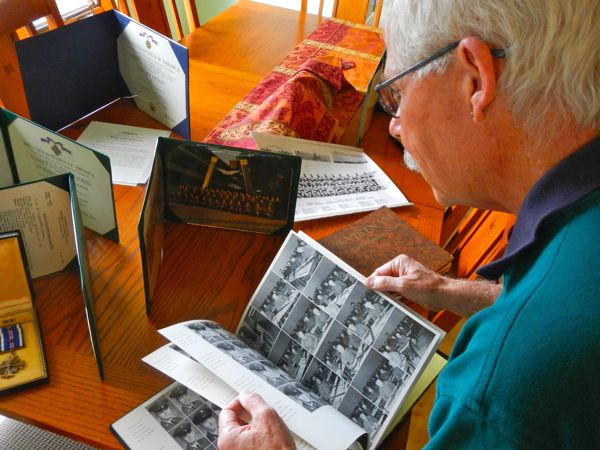
South Lake Tahoe resident Gary Jones looks through a yearbook from infantry training. Photos/Kathryn Reed

This was when protests were the norm on college campuses. It was a time when more people were drafted into the military than willingly walked into a recruiting office.

Gary Jones admits his desire to join the Army and go to flight school was part rebellion. After all, the junior at UC San Diego wasn’t in danger of being drafted.

Today, his life is what is taught in history classes.

This South Lake Tahoe resident has donated memorabilia to the local library that will be on display all month in honor of Nov. 11 being Veterans Day.

While Jones wants to tell his story, the 66-year-old’s voice quivers a bit as he relives his last mission over enemy territory. The one that sent him to a hospital in Japan for three months, the one that left him with diminished muscle mass, the one that is the root of his post traumatic distress.

He was with a unit in Cu Chi, a village near the Cambodian border. His job as a light observation helicopter pilot was to fly low to find trails. After a while, Jones could tell how old the trail was, the equipment that had been on it as well as the number of people. He describes it as being like an Indian trail guide.

While a Cobra flew above to be the main firepower, gun battles could not be avoided.

“I took AK47 fire up my right side,” Jones tells Lake Tahoe News. It went through the seat, into his thigh, off his armored chest plate, bounced off his elbow and exited through his bicep.

“It blew me off the controls,” Jones said. “My gunman grabbed the controls and we started to climb.”

But this just made the helicopter an easier target. Jones was able to set the chopper in a rice paddy. He looked out and it appeared to be raining. In a way it was – it was raining bullets around the three Americans.

“I could move my arm and leg. Blood was everywhere in the cockpit,” Jones said. “I was starting to go into shock. I was saying goofy stuff on the radio.”

Medics arrived and he was airlifted out. In Japan, men just like him – those wounded in combat — surrounded Jones. There was a certain camaraderie. It was not until he was back in the States that the survivor’s guilt settled in.

He had been writing what he called graphic, truthful letters home. Those stopped just before he was shot. He finished them as he recuperated, which was a cathartic experience.

On the table in his South Lake Tahoe home, a few feet away from where he is sitting, is his Purple Heart medal as well as the Distinguished Flying Cross.

His dress uniform has all the ribbons he earned while serving from December 1967 to March 1971.

It was in 1975 that he moved to Tahoe with his wife. He started as a probation officer. Two years later he joined the Nevada National Guard. In 2002, he retired from the guard. Jones had retired from the El Dorado County District Attorney’s Office the preceding year after having been an investigator since 1981.

Sometimes he misses flying and the sense of family the military lifestyle provides.

But Vietnam is never that far away. He is wearing a shirt that says Vietnam Helicopter Pilot Association, Life Member. A model of the helicopter he flew is on a bookshelf. When the traveling Vietnam Wall was in Carson City last weekend he was there. He has the etchings of names of boys he went to high school with, of men he served with and soldiers he witnessed die.

“It’s important to talk about it,” Jones says of his experience as well as what people today in the military are going through.

ngg_shortcode_0_placeholder  (Click on photos to enlarge.)