Esther Evans — 1921-2012

Esther Bernice Hughes was born in Pomfret, Conn., on Dec. 28, 1921. She came to California as a tot with her parents and they settled into Long Beach where her siblings, Roland and Mildred, were born.

Esther grew up with music in the house, cats in the yard and playmates on every corner. After high school, she entered UCLA to pursue a degree in music and education. Following graduation she applied and was accepted into the Julliard School of Music in New York, where she specialized in piano and voice.

Returning to California, she was contacted by a friend and schoolmate, Thelma Bernhardt, who tempted her with a job in Lake Tahoe teaching music and English at a new high school. In 1950, Esther packed up her belongings and moved to Bijou (South Lake Tahoe was not yet incorporated), where she was hired to begin her career at South Tahoe High School.

At that time, the school was housed in what is now the American Legion Hall on Highway 50. She rented a small duplex from Thelma, who often sent her handsome brother to perform maintenance during the winter months. The brother, Owen Evans, ended up proposing to Esther and they were married on April 12, 1952.

Owen and Esther Evans

They had also survived the infamous “Winter of 1951-52” when storms closed roads for weeks at a time and Tahoe residents relied on one another for food, firewood, and medical needs.

In pursuit of an education, Owen applied to Cal Berkeley and was accepted. Esther followed suit, and they spent several years living in Richmond while attending the college. With diplomas in hand, they returned to their beloved Tahoe where Owen was employed by the U.S. Forest Service (the Eldorado National Forest at that time) and Esther continued her teaching career.

In 1960, they adopted Leona and Esther decided to be a stay-at-home mom. Now that the family was slightly larger, Owen began the task of building a home for them on Tamarack Avenue. He convinced the Forest Service to allow him to dismantle one of the Baldwin family guest cottages on Fallen Leaf Lake, and log by log, drove them in his 1947 Studebaker pickup to the property on Tamarack. He reassembled the structure, adding insulation and a front porch, and it became their home. The cabin still remains.

Not one to remain inactive, however, Esther began teaching piano and voice in her home while participating in many social and service organizations on the South Shore. She was instrumental in getting the first chapter of the American Association of University Women started, as well as the Toastmasters Club. She was a leading member of the local Christian Women’s Club and brought the Community Concert series to Tahoe. She was also involved in the Tahoe Arts Project, and served as a soprano in the Tahoe Choir. Her rendition of Gilbert and Sullivan’s “They Call Me Buttercup” was priceless.

Esther served as a local television talk show host that focused on arts and culture in the area. The show was broadcast from the basement of what is now the county building on Highway 50 and Takela. She was also a soprano in the Lake Tahoe Community Presbyterian Church’s choir for many years, after which she took on the role of organist/pianist.

Years later she was hired by Hope Lutheran Church to fill the same position and came to enjoy her new Christian family.

Most amazing about her social skills, however, was Esther’s ability to make a 742-square-foot log cabin seem like a mansion when she entertained.

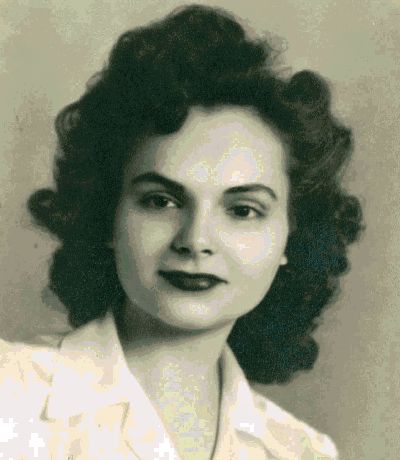
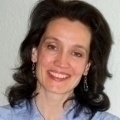
Esther Hughes, circa 1940

When Leona was old enough, Esther returned to teaching as a substitute in the intermediate and high schools. Admittedly, her biggest challenge as a teacher was having her own daughter in the classroom.

Esther also got her real estate license and began selling homes. She fell in love with the first house she was asked to sell, which was on Mount Olympia Circle. They bought the house and expanded into almost 4,000 square feet.

In 1993, Esther was diagnosed with Alzheimer’s. Although typically a disease that causes unpredictable and even violent behavior, Esther remained her sweet, compassionate self. Once when the family was shopping and ran into an old friend, Esther exclaimed, “I have Alzheimer’s, but don’t worry. It’s not contagious.”

The family continued to care for her until she became a resident of Barton Hospital’s Skilled Nursing Facility in February 2006. In the hands of their loving, generous and caring staff, Esther thrived. The staff became family and the facility became home. Although Esther lost her Mount Olympia home to the Angora Fire, her spirit lives on in the form of a community garden.

Esther passed peacefully with Leona and her Skilled Nursing family by her side on Nov. 15, 2012. She goes to join her adoring “OE” as well as her siblings.

In lieu of flowers, the family asks that you perform a random act of kindness and help someone or a critter in need. The family will be hosting a remembrance day on Dec. 2 from 2 to 5pm at their home – 1897 Toppewetah St. in Meyers. Everyone is welcome. A celebratory service will also be at the Skilled Nursing Facility on Dec. 4 at 2pm (2170 South Ave., South Lake Tahoe).


SNC faculty keeping book publishers busy

The English faculty at Sierra Nevada College in Incline Village has recently been making its mark on the literary scene far and wide.

Brian Turner, director of the MFA program, was recently featured in Parade magazine. His book “Here, Bullet” was listed as one of the top 10 by this generation of vets. The reviewer writes, “The strongest poems from Brian Turner’s collection distill both grisly reality and the unlikely flashes of beauty he witnessed during his year in Iraq as an army infantry team leader.”

Other SNC faculty poets making big moves include Jared Stanley and Laura Wetherington. Stanley recently had a second collection of poetry published, “The Weeds”. American poet and editor Cole Swensen commented, “At times funny, always smart, Stanley’s poetry provides particularly difficult ecologies with their own ecopoetics, one that strikes a vivid vigilance, collapsing the distance between representation and presentation ….”

Stanley, who was also appointed a research fellow at the Center for Art and the Environment at the Nevada Museum of Art, has been on a whirlwind reading tour, as has Laura Wetherington, author of “A Map Predetermined and Chance”. Wetherington has given readings in Oakland, San Francisco, UC Merced, Fresno State and other venues. She will be featured in the Writers in the Woods series Feb. 15-16 at Sierra Nevada College.

In the academic publishing, English instructor Chris Anderson has an article forthcoming in the CATESOL Journal (California Association of Teachers of English to Speakers of Other Languages) titled “Defining and Evaluating Success.” It is a qualitative study examining the level of preparedness of college English teachers who work with multilingual students.

Nonfiction author Ann Marie Brown, who will be teaching Travel and Adventure Writing this spring at SNC, had the fifth edition of her “Moon Handbooks: Tahoe” published in September. In June, a ninth edition of her book “California Hiking” was published by Avalon Travel.


Tahoe Tails — Adoptable Pets in South Lake Tahoe

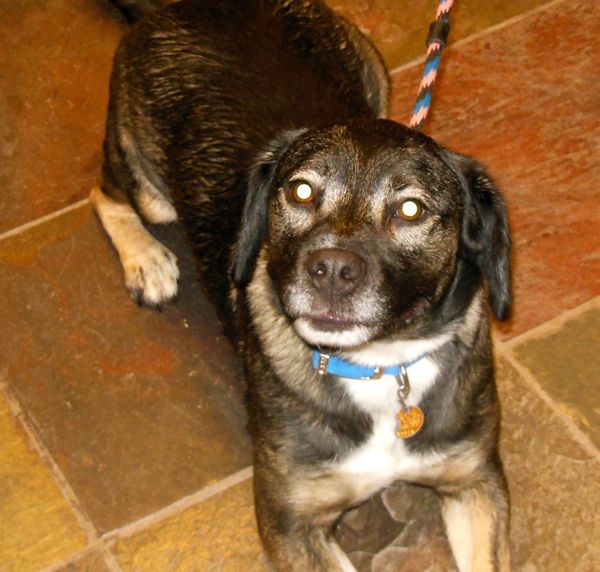
Sidney is a nice hound mix. All of her breeds are a bit of a mystery.

She is 3-years-old and very sweet, about 45 pounds, and she will lean up against you for pets. She is house trained and has good manners. She likes to play with other friendly dogs and would like to meet yours before going home. She has lived with small children.

Sidney is spayed, microchipped, and vaccinated. She is at the El Dorado County Animal Services shelter in Meyers, along with many other dogs and cats who are waiting for their new homes.

Go online to see photos and description of all pets at the shelter.

Call (530) 573.7925 for directions, hours, and other information on adopting a pet.

For spay-neuter assistance for South Tahoe residents, go online.

— Karen Kuentz


Venerable jazz house Yoshi’s thrives with musicians like Klugh

By Susan Wood

OAKLAND – Guitarist Earl Klugh played to a sold-out crowd this month at the legendary Yoshi’s – proving why he has been nominated for a dozen Grammy awards.

For 30 years, Klugh has been honing his skills as an artist.

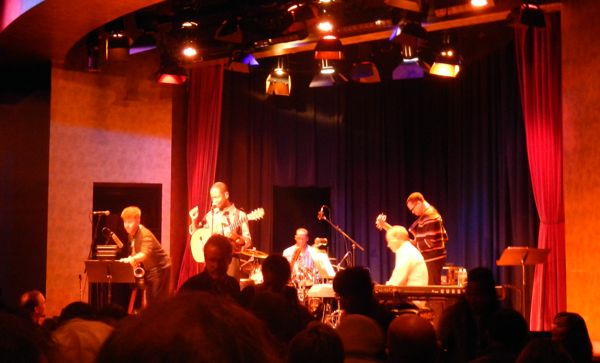
Yoshi’s Oakland, which is celebrating 40 years in business this year, brought out jazz enthusiasts on a recent Saturday night to Jack London Square to hear and see Klugh with his accomplished quartet of musicians. Any one of them could have stolen the show judging from their solo performances.

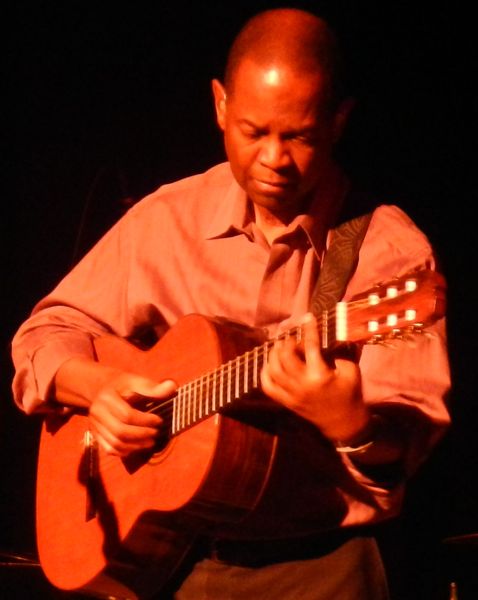
Earl Klugh plays to a sold-out Yoshi’s Oakland on Nov. 3. Photos/ Kathryn Reed

The circular stage and tiered seating added value to an intimate setting. And the sound engineering was astoundingly on the money – an absolute rarity in many large concert arenas or supper clubs.

Klugh must have liked the sound. He started and ended the show smiling.

“This is why people dream of living in such a place,” Klugh said early on of a tune inspired by a trip to San Juan, Puerto Rico. The ensemble seemed to instantly transport the captivated audience, who intently watched a pickless Klugh strum his acoustical guitar with ease as if he were providing a master’s course demonstration.

For that number, he collaborated with legendary jazz performer George Benson, whom he toured with years ago.

Through the years, Klugh, who started playing guitar at age 10 in Detroit, has collaborated with a number of jazz greats. These include Chris Botti, Peabo Bryson and Kirk Whalum in South Carolina. Next April in Colorado, he’ll share the stage with the king of jazz ballads, Jeffrey Osborne.

At Yoshi’s, it was the perfectly in tune ensemble of the quintet that made the show.

Saxophonist and flautist Nelson Rangell took the performance to a whole new level when he whistled an entire tune – hitting a high C with the precision of an instrument. The song was extremely romantic. While one man yelled “crazy,” the rest of the audience roared and gave him a standing ovation. Rangell also played the flute like a cascading waterfall.

All the band members had their chance to shine. Drummer Ron Otis showed the beautiful delicacies of the syncopated jazz beat.

David Lee on keyboards took the audience on a journey from sentimental keystrokes to an amplified mini rap number.

Bassist Al Turner plucked and pounded at his guitar, turning the usual backup instrument into a solo act. The groovy rhythm instantly got the audience nodding and rocking in their chairs.

Yoshi’s Oakland is an ideal venue for listening to the likes of jazz great Earl Klugh and his four friends.

When they weren’t on their feet or swaying to the beat, the audience members kicked back to take in the tenderness of the sound. One woman was so relaxed, she placed her elbows on top of the counter as if Klugh played a personal concert for her.

From Puerto Rico to South Africa, it was world beat meets jazz from the Klugh-led musicians. Klugh has played all over the world, becoming the acoustical king of “cool jazz.”

“This is a beautiful piece of music,” Klugh said to open the song “Sonora.” He sat down with his guitar as if resting in the desert. Like a jazz music station, Klugh’s concert was less talk, more music – much tender and sentimental like his well-known “Living Inside Your Love.” His rendition of “Alfie” brought a collective hush over the nightclub. (The show was worth the $35 price tag for Saturday night and definitely $25 for Sunday.)

In its four decades of sharing superior jazz acts, Yoshi’s has hosted a lineup of great performers – most recently David Sanborn, often Spyro Gyra and occasionally the sultry sound of Diana Krall.

Photos on the wall between the nightclub and the restaurant provide a glimpse of the long, storied past.

Yoshi’s began in 1972 as a small, North Berkeley sushi bar owned by a trio of struggling students. Its founder Yoshie Akiba, who was orphaned in World War II, came to the United States to study fine arts and dance. She opened the Yoshi’s Japanese Restaurant with two of her best friends — journalist, carpenter Kaz Kajimura and painter, Japanese cook Hirojuki Hori.

After two moves resulting in its 17,000-square-foot location that took the seating from 25 to 220, Yoshi’s brought on club artistic director Peter Williams to orchestrate the mix of world, neo-soul, blues, jazz and Afro-Cuban acts. Then, along came Executive Chef Shotaro “Sho” Kamio, who greatly expanded the Japanese menu.

Like the ensembles playing in the nightclub, a diner could be satisfied with a combination of items sprinkled across the eclectic menu. (Highly recommended for two are the panko fried organic Brussels sprouts with spicy miso aioli; veggie sushi rolls with wasabi; and grilled rosemary wagyu beef skewers that melt in your mouth. Bypass the classic tofu dish.)

If not for the inevitable aftermath, a diner may want to spend the entire night glued to the cocktail menu with its varied assortment of libations. (In a minute I would reorder the Ginger and Jazz libation, which includes ginger liqueur, vodka and lemon.)


Historic Claremont Hotel a modern-day marvel

By Susan Wood

BERKELEY – Many would say the Claremont Hotel Club and Spa ages like a fine wine.

It breathes comfort, brings on total relaxation, embraces the good life and evolves through a rich history that permeates every inch of the 279-room, 22-acre estate that turns 100 in 2015.

Just driving into the parking lot of the grand estate can instantly transport a guest into a world where the big desire is to park the car until one is sadly leaving. Hoteliers take note: this is the difference between crash-pad lodging and an experience.

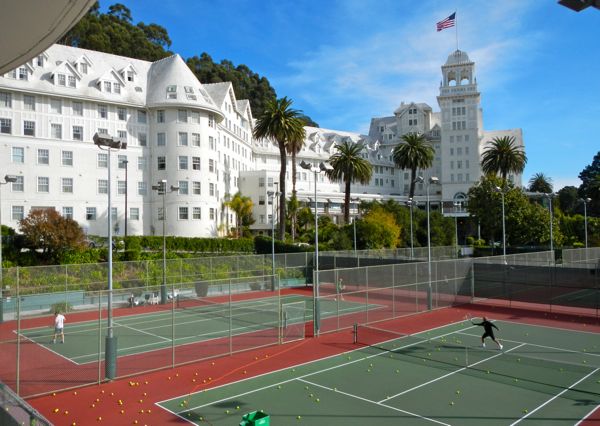
When not relaxing in the room taking in that spectacular view complete with the Bay and Golden Gate bridges, a guest can easily lounge, dine, play tennis (or even ping-pong), swim laps and enjoy any one of the multitude of treatments available in the 20,000-square-foot spa.
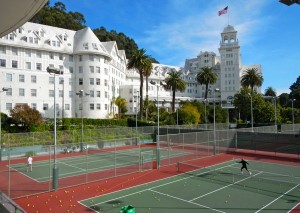
The Claremont Hotel successfully blends comfort, activities and excellent cuisine. Photos/Kathryn Reed

Many hotels bank much of their annual revenue in the summer. But the Claremont is entering the fall during the Cal football season and with much anticipation of a successful holiday season. For the former, any given fall weekend may bring out other university colors along with those from UC Berkeley – situated about a mile away. For the latter, winter holiday events marking the hotel’s grand guest experience and local community outreach peaks at Thanksgiving and continues through Christmas. For this, it takes a company crew to string lights and decorate the sprawling place.

Of course, the Claremont isn’t just any hotel. Legendary architect Frank Lloyd Wright called the resort “one of the few hotels in the world with warmth, character and charm.” A guest gets that from the initial walk into the lobby marked by high ceilings and a grand piano and ongoing strolls down the hallways lined with historic photos.

It holds a coveted AAA 4-Diamond rating.

And, there’s the history – with a day-to-day countdown to its 100th anniversary posted on its website.

“I’m sure they’ll do something big,” Cathy of the concierge department said, adding the milestone should also be “interesting.”

How the hotel marks its centennial celebration will be up to the sales department and the ownership group Paulson & Co., who placed the iconic hotel on the market for $80 million through Winthrop Realty Trust. The investors bought the hotel in 2011 after former owner, Morgan Stanley, filed for bankruptcy.

The change in ownership is something the staffers have gotten used to about every decade, concierge Sandy said. They all work to put out a great product, regardless of who owns the place.

Big and interesting changes are customary characterizations for the Claremont from its early beginnings.

Rush for gold ignites golden history

A Kansas farmer named Bill Thornburg struck it rich during the Gold Rush days in California and brought his wife and daughter west with the promise of building an English castle with horse stables on the 13,000 acres he bought in the East Bay. After his wife died and his daughter moved to England, Thornburg sold the castle to the Ballard family. But on a dry, windy day in July 1901, the castle burned to the ground. (That wasn’t the first time the property would see a devastating fire. But when the destructive Oakland Hills Fire raged through the neighborhood in 1991, the hotel majestically stood tall and untouched. And according to longtime employee Sue, a Meritage bartender, the hotel got donations “from all over” to help out the victims – many of who evacuated to the hotel.)

In the early 1900s, a realty syndicate led by San Francisco lawyer Frank C. Havens, Francis M. “Borax” Smith of the Twenty Mule Team fame, and local developer John H. Spring bought the property from the Ballards and used its railroad experience with the idea of erecting a hotel resort with a train running through the property. (The rail ran through today’s tennis courts.)

One night, a checker game with high stakes between the owners put the hotel into Haven’s hands. He modeled a new Elizabethan chateau after another he owned in downtown Oakland called the Key Route Inn. It was demolished in 1913.

After the repeal of prohibition, a state law banned the Claremont from selling alcohol because it was assumed the hotel sat within one mile from the Cal campus. But in 1936, an enterprising student with the help of her friends actually measured the distance and found that the Claremont was located more than a mile away – by only a few feet. The Claremont celebrated by opening the Terrace bar, which is now part of the Paragon restaurant and bar, and awarded the student free drinks for life.

In the 1930s, guests started flocking to the hotel bought by staffer Claude Gillum for $250,000 to partake in the resort’s offerings such as the swimming pool patio complex and live music from the likes of some of the greats of the Big Band era – Tommy Dorsey, Louie Armstrong and Count Basie.

Heritage lives on

To this day, guests and visitors can take in live music with a full food menu at the Paragon Bar.

Guests may also venture off the property to celebrate another landmark milestone. Yoshi’s jazz club marks 40 years in Oakland this year with a long list of great acts from saxophonist David Sanborn to acoustical guitarist Earl Klugh. It’s easiest to just grab a taxi to travel the five miles to the Embarcadero West. (Note: Pass on the Coit Limousine service as at least one of their drivers had never heard of Yoshi’s and insisted on getting assistance from us on how to get there.)

If you don’t want to venture out, the Paragon may be just the ticket for late-night activity. On one recent Saturday night, a band with a big steel drum sound rocked a full house. Earlier that day, the bar’s terrace was filled with many enjoying the sunshine with a libation and one of the best views in the Bay Area. (Hats off go to the Cal student who circumvented the alcohol ban because the warm November afternoon screamed for a glass of white wine with appetizers.)

Eat, drink and take in the view

One of the great things about the Claremont is you never have to leave the property if you are hungry.

Paragon and Meritage are very different experiences, but what they have in common is gorgeous views of San Francisco. With that iconic skyline, it would be hard to find someone who ever gets tired of looking at it. Plus, there’s the Golden Gate Bridge and boats of all sizes – from those with sails to mammoth salties – plying the waters of the bay.

Paragon offers outside seating, while Meritage has a bank of tables along the window with booths behind those that also offer stunning views.

Not wanting to ruin our appetite for dinner, we chose three starters at Paragon to be our lunch. And it’s such a nice change to find at least three vegetarian items instead of the customary single (if that) option Tahoe restaurants provide.

The mushroom cigars ($12) look a bit like a cigar, so they are aptly named. But the flavor is nothing like a cigar – which was a good thing. They are served with a spicy truffle aioli. The garlic fries ($7) are tasty, but the problem was with how they were served. The cone container ensured all the garlic was at the bottom instead of distributed evenly on the fries. While they are called Gilroy garlic fries, if you are expecting what is served at AT&T Park, you will be a bit disappointed. The butternut squash ragout ($7) was a great surprise and something neither of us had had before, but would like to again.

On the other side of the hotel is the more formal restaurant, Meritage. But this does not mean one has to have dressy clothes – it is still California, after all, where casual is customary for dinner.

Instead of filling up on a basket of bread, the server brings you a choice of wheat, olive or baguette. More can be had if one piece is not enough, but not having it all on the table meant not testing our willpower and not having any go to waste.

Main courses come in appetizer and entrée sizes. We each opted for the appetizer size just in case we would want dessert. That decision paid off.

The meat eater had the pan-seared Scottish salmon ($13) and barely put her fork down in between bites it was so good.

The vegetarian had the forest mushroom ravioli ($12). It was good, but nothing to rave about.

We were both impressed with the different salads we had to start with – the Champagne poached pear salad ($13) and the special baby greens ($13). It was the dressing that made the dish of greens so good.

Our waiter, Cesar, made a good call in having us try two desserts. Baked fall was the special of the night. It was a bit like a baked Alaska except sweet potato is used instead of ice cream. But what we like the most was the pumpkin curry cheesecake. This is what we would have again – say, at sunset with an aperitif.

Recreational options help burn those calories

Still without getting in a car, guests and club members have ways of working off the desire to lounge, eat and drink.

The pool patio within the Claremont Club entry – where the hit movie “Mrs. Doubtfire” was filmed — comes with three swimming pools and a hot tub. In two pools, much of the emphasis is placed on lap swimming. Afterward, more than 100 padded chaise lounges surround the pools so one can make a day of it. Kids even have their own shallow pool that comes with a unique beach-like sloped entry.

A massive gym with six elliptical machines and five treadmills in one room facing the pool area keep your mind off being inside as the patio calls sun worshipers. The Bay View Cafe is open with a pool patio menu of burgers and sides. In the summer, a bar is set up on the patio.

For those itching to get out and stretch, urban walks and a hike up the steep Claremont Canyon start on the club side of the property leading down the street near a Peet’s coffeeshop along Claremont Avenue.

Berkeley is a town full of its own rich history and now thriving neighborhood microcosms down well-known streets – Shattuck, College, Telegraph and University. Walking, window shopping, eating and drinking is embraced on the weekend. (Note: a stop at the university student hangout, Kips, is suggested for a pint of microbrew and nachos made with homemade tortilla chips and topped with homemade salsa.)

Back at the Claremont Club, tennis enthusiasts may immerse themselves in the club’s court clinics, then book a massage to work through the workout.

Pain is part of the pleasure

“Edgrrrrrrrrr!”

At random times Kae would make this outburst – mostly walking uphill on our urban walk. But she smiled at the same time.

Edgar was the name of the tennis instructor from the day before. A day later, the glutes were being reminded of how he ran her all over the court.

Dripping sweat and with a beet-red face, she was smiling with a wild-eyed look walking off the court. It had been more than a decade since receiving any sort of private tennis instruction. Kae said the hour clinic was worth every penny. ($90)

She seemed to drool looking at the many courts – some lighted – from our room. If only tennis were a year-round sport in Tahoe.

Two days after Edgar inflicted pain upon Kae’s muscles, it was time for Ron to do something about it. With 17 years of experience massaging guests at the Claremont, Ron is the atypical resort therapist. He actually listened to Kae’s request to have her keyboarding-tennis dominant arm be tended to. (So often resort massage therapists treat guests like they are on an assembly line instead of the unique body that is on their table.)

As good as Ron was – especially being able to stop Kae from her Edgrrrrrrrrr! rant – the $145 for 50 minutes (not even a full hour) was a bit spendy. (So the recommendation is to spend a bit of time enjoying the spa and steam room.) One doesn’t have to be a hotel guest to enjoy Edgar’s workout.

Many Berkeley residents use the Claremont Club. And one nearby couple who are club members said they even stayed at the hotel when they got their house painted. They bring their small dog, as the Claremont is pet friendly. (Recommended: inquire about crating rules with the hotel.) The hotel takes in many local residents as guests for special occasions ranging from weddings and anniversaries to birthdays and holiday gatherings. (Guests who married at the Claremont decades ago and saved their bill are invited to commemorate their wedding anniversary with room rates comparable to those paid 50 years ago.)

For now, best available rates for bay view rooms (highly recommended) start at $263 per night over the weekend in December. There are discounts amounting to 15 percent off in the fall and “home for the holidays” packages. If money is not an issue, rent the “bell tower” suite for $2,500 a night.

Kathryn Reed contributed to this article.

ngg_shortcode_0_placeholder (Click on photos to enlarge.)


Thanksgiving does not have to be stressful

By Mandy Kendall

The holidays can often be a double-edged sword. On one hand it is wonderful getting friends and family together, but on the other hand, the reality can often have even the closest families coming to blows (physically or verbally). Extended travel, house guests, hosting, cooking, overindulging and the odd skeleton in the closet can make for some tense times around the holiday season.

There is often a tendency for us to try to be all things to all people during the holiday season. The perfect hostess, the perfect cook, the perfect housekeeper all sounds very desirable, but ultimately can leave us feeling exhausted, underappreciated and left wondering why we bothered in the first place (again). Admitting that we are human and accepting, or asking for, help could result in a much more enjoyable experience.

Mandy Kendall

So in true Qwik-e tradition here are some tips for helping to make this holiday season a much calmer and more enjoyable time.

Prepare — The older I get, the more I rely on lists. Lists help map out timings and job delegations. A list of jobs on the fridge, with spaces for names alongside, gives family members an opportunity to choose what jobs they dislike the least. You may be surprised to find out what people prefer doing when given a choice. You can then take charge and allocate jobs randomly if the kids (big kids included) don’t sign up voluntarily. If you are going to delegate dishes for your guests to bring, try and leave yourself with dishes a) you love cooking and b) can be prepared as much in advance as possible. That way everyone arrives to the gathering ready to start having fun.

Delegate — I know some of us like to think we can do everything ourselves, but the fact of the matter is a) it’s a pretty lonely, and a lot of hard work when we do and b) people generally like helping as it makes them feel useful. Utilize guests/neighbors/kids/friends who offer to help…they likely wouldn’t have offered if they didn’t want to help. Even those who don’t offer (you know who you are) can be asked to do small jobs to make sure everyone is part of the day and no one person is left doing everything. A meal where each guest brings a pre-arranged dish makes for a much more relaxed and enjoyable time all round. The host is less stressed and can enjoy their guests rather than slaving away in the kitchen and guests feel like they have really contributed to the event.

Be realistic — There are only so many hours in the day and time becomes a precious commodity especially around the holidays. Start with how much time you really have, then take away how much time you would like to have for yourself to enjoy the occasion (be selfish here; you deserve it). Then you can decide what to do with the remainder and remember a job delegated is a job you don’t have to do … giving you more time.

Say no — It’s OK to say no. People will still love you and may even end up respecting you more for your decisiveness. Adding an alternative suggestion or solution that suits you better, or at least explaining why you’ve said no, can help take the sting out of turning someone, or something, down. However, if your reason for saying no is just because you don’t want to, sometimes just leaving it at no is best.

Pace yourself — Having a protein rich breakfast will help you resist the urge to snack throughout the day when prepping in the kitchen. A bit more protein (a protein drink or bar perhaps) a little while before the main meal will also help you from overeating.

Stay hydrated — We all get a little fractious when we are dehydrated and alcohol will have a much greater affect on you (and you will likely drink more than you mean to) if you are thirsty.

Don’t forget to breathe — If all else fails, take yourself somewhere quiet (even if that’s the bathroom) and just breathe in and out for a couple of minutes. It may also help to focus on the word “accepting” when breathing in, and “releasing” when breathing out.

Be thankful –– This is a day of Thanksgiving for all that we have, and that it is a day of sharing with friends, family and loved ones. Start the holiday meal with everyone saying one thing they are grateful for. This will help bring all the guests together and may also help diffuse any tense moments that may have happened before the meal … or even prevent some occurring after.

Wishing you all a very happy, peaceful and thankful holiday.

Until next time.

Mandy Kendall operates Health Connective in South Lake Tahoe, which aligns wellness seekers with their ideal wellness provider. If you have questions, would like some advice, or would like to request some Qwik-e tips on any health and well-being topic, drop her an email at connect@healthconnective.com or keep an eye out on Lake Tahoe News for regular Qwik-e tips on how to make healthy changes one Quick and Easy step at a time.


Holiday concert in Genoa

Christmas in the Sierra Concert, featuring David John and the Comstock Cowboys returns to the historic Genoa Town Hall on Dec. 8.

This musical stage performance is in the Old West style.

There are performances at 5pm and 8pm. Tickets are $20. Seating is limited.

A no host bar will be in the Town Hall.

Each ticket holder receives 10 percent off of dinner purchased at Genoa restaurants including Tombstone Tap & Grill, Genoa Station Bar and Grill, and Walley’s 1862 Restaurant located at the 1862 David Walley’s Resort. Genoa Country Store will offer the discount to guests attending the 5pm show only as the store will close at 5pm. Show your ticket or ticket stub for your discount.

For more information and to purchase tickets, call (775) 782.8696.


Young voices express the spirit of holiday season

By Kathryn Reed

Holiday music spills into the hallway, beckoning visitors to find the classroom the sounds are emanating from.

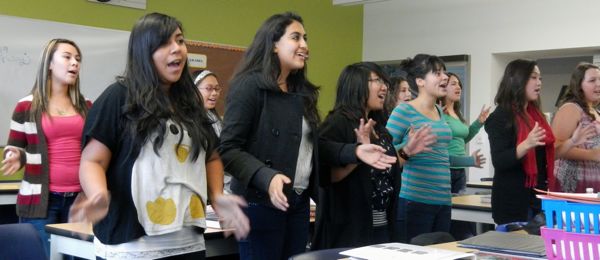
Swiveling to the song, two rows of young women are lined up between the desks and chairs. Some know the words by heart, while others read them on the screen.

“Guys, it’s the twist. You really need to get into it,” Paul Kushner instructs them.

This is the weekly rehearsal of the Blue Ribbon Choir – an all girls choir open to high school-age students. They are gearing up for the 18th annual Holiday Extravaganza in December. These 18 are part of an ensemble of nearly 300 students who will share the stage at MontBleu casino in Stateline for this two-day event.

The range of voices makes one think this is a professional, and definitely older, group. In just two hours the improvement is noticeable. If they sound this good in mid-November, what will the harmony be like in another month?

Sitting in the front of the room the harmonies – some four-part – are distinctive, rich and captivating. And to think they only practice as a group for two hours a week shows the natural ability as well as the work being put in outside of the four walls of South Tahoe High School. Each singer has a CD of the music and binder with the lyrics.

Blue Ribbon Choir members practice Nov. 13 for the December Holiday Extravaganza. Photo/Kathryn Reed

When one of the singers wants to go over a part Kushner is able take out the accompaniment on the computer and just play their part. There is no money to pay someone to accompany them, so the music is all computerized.

It helps that Kushner has a master’s degree in computer education. He has been teaching in Lake Tahoe Unified School District for decades and is the founder of the district’s choral program.

“More T’s and D’s” is a common refrain from Kushner. It is all about annunciation. It is knowing how to breathe when singing the word “Christmas” – not holding the vowel sound.

The Blue Ribbon Choir is the elite group – the one younger kids aspire to be in. Many of the girls in the room remember when they were little and knowing that it was this choir that they are now part that would mean they had accomplished something special.

A teacher recommendation or having been in an advanced choir are the ways to gain entry into this choir.

During a break they explain the reason they like being part of the choir is that it is challenging, allows them to express themselves, they meet new people, learn new music, they become a family.

Four of them want to carry their interest in music beyond high school. Sara Ortega wants to compose music, while Kaylee Chandler wants to teach it as well as perform professionally.

Yari Torres isn’t sure what she wants to do with music, but knows it is something she could fall back on. She has been singing since third-grade – the age where LTUSD starts its students in choir. (However, Zaira Monette started in second grade because no one knew how old she was so they didn’t kick her out.)

Sammi Bender wants to go to a top music school and see where it leads her. In December she will sing the national anthem at a Kings basketball game. She sang the “Star Spangled Banner” all summer at the standup paddleboard races in South Tahoe.

Bender, who is home schooled, says she got her voice from her grandfather, not her parents. She likes being in the Stadium View Building – one of the new facilities at STHS in the last few years – because the acoustics are much better. She’s taking acting classes at Lake Tahoe Community College and hopes to try out for the winter production. Not being a student at STHS prevents her from being in plays at that school.

The choir comes under the auspices of the South Lake Tahoe Children’s Choral Society. All the adult leaders volunteer their time and expertise.

“Because it’s not school affiliated, we can do some very sacred music,” Kushner explains. Christian and Jewish tunes are part of the repertoire, so is a rap song.

The Holiday Extravaganza includes all the choirs in the district, which started practicing their tunes a month ago. In all, 31 songs will be sung. And for the finale, everyone will participate.

——

Notes:

• 18th annual Holiday Extravaganza

• Dec. 19 and Dec. 20, 7pm, MontBleu showroom in Stateline

• $10 adults, $5 students and seniors, younger than 5 free. Tickets available at the door.


Lake Tahoe orthopedic surgeon recalls the days before medicine became mired in bureaucracy

By Kathryn Reed

Working 10-, 12-hour days, sometimes seven days a week. Unable to leave until every patient was treated because there was no on-call doctor to call. But all the while forming a bond with patients that doesn’t happen today.

Oh, and then there were the cattle drives along Highway 50.

Things have changed tremendously in South Lake Tahoe and in the field of medicine since Paul Fry first began practicing here in the 1960s.

Fry will be the recipient of the Spirit of Philanthropy award Dec. 1 at the Barton Foundation’s 21st annual Gala, which is part of the four-day Festival of Trees and Lights.

Paul Fry will be honored Dec. 1 at the Barton Foundation Gala. Photo/Provided

When Fry opened Tahoe Fracture Clinic in 1964 the office was in the complex where Tahoe Pharmacy is. Looking out his window he could see the twice-yearly cattle drives. Ranchers took their herds either over Echo Summit to Placerville or over Kingsbury Grade to the Carson Valley for the winter, then brought them back to graze in the basin in the summer.

Fry remembers one year a rancher with a knee issue refused to get out of the saddle for surgery because straggler cows needed to be rounded up so they wouldn’t be lost to the cold and snow. Work came first, no matter the pain.

In those days, private medical insurance was a rarity. Ranchers walked around with wads of cash.

“It was all done in cash and a handshake,” Fry recalls.

Fry took out the rancher’s knee cartilage and the rancher took out a stack of bills to pay the doctor.

“I think the most satisfying part of the profession is dealing with people – trying to help them regardless if you get paid or not,” Fry told Lake Tahoe News.

When the town was cut off from the rest of the world for days at a time because of snow, people would gather at the few places that were open year-round. Everyone knew each other. Most of the town shut down between October and May. Heavenly and the casinos were the big draws in the winter.

“I compare what Tahoe was say 25 years ago to what it is now. We were one of the first and foremost vacation areas, at least on the West Coast. We’ve lost our charm,” Fry said. “I look at it now like we are not the head of the dog, we are the tail of the dog. Aesthetically, we need to clean up Highway 50.”

He recalls after the 1960 Olympics at Squaw Valley, the South Shore was hopping well into the 1970s.

Treating ski injuries

Fry with Bob Oden of Aspen were the two doctors who created formal medical care for the U.S. Ski Team. It’s a tradition Barton doctors have had a role in to this day with Richard Steadman taking over for Fry, and current Barton docs Steve Bannar and Terry Orr being part of the Olympic medical team more recently.

When Fry and Oden were involved, it was a volunteer position – flying all over the world, providing medical care to racers. Fry said he got burned out and turned it over to Steadman, who had joined his practice five years after it opened.

Locally, it was Heavenly Valley Ski Resort and Sierra Ski Ranch where skiers made turns. It wasn’t until 1972 that Kirkwood opened, and early on snowboarding wasn’t a sport.

Fry remembers one Washington birthday weekend when in a 48-hour period he treated 30 broken legs. He attributes the number of injures to bindings not releasing. Plus, helicopter service did not exist so Fry handled all the orthopedic injuries.

“Every doctor, all 11 of us, were expected to take emergency room calls. There were no paramedics, no anesthesiologists, no emergency room physicians,” the 81-year-old said.

He was one of the few specialists around. Even so, he still had to do a bit of everything – including delivering a few babies over the course of his career.

When Fry first started treating patients at Barton Memorial Hospital if someone broke their femur, there was no device to put in a rod or plate. Instead, the patients came back in the spring for six to eight weeks of traction. He said there could be between 10 and 15 people in traction any given March.

On sunny days the patients would be wheeled out to the patio to get some sun. And that is when the contraband marijuana would come out.

“Nurses would report it to administration. Administration called the police. The police would give them a lecture. They couldn’t arrest them because they were in the hospital,” Fry recalls with a chuckle. “After a while we gave up.”

Today, a broken femur would be operated on immediately or the next day, with the patient able to go home in less than a week.

Changes in medicine

While Fry praises technology, especially diagnostics, he emphatically liked practicing medicine earlier in his career than he does today.

“The biggest problem I see is the bureaucracy that has crept into the medical profession,” Fry said.

He also longs for the days when doctors had a better connection and better communication with their patients – something like the old country doctor. He attributes all the specialization to creating a disconnect between patient and doctor.

Today, the orthopedic surgeon assists his son, Mike Fry, with surgeries once a week; provides pro bono services to the Barton Community Clinic; and sits on the board of directors for Barton Health and Carson Valley Medical Center.

As for the award that will be bestowed upon him next month, Fry said, “The honor doesn’t really belong to me as much as it does to the people who have supported me along the way to be in the position to get the honorarium.”

—-

4th annual Barton Foundation Festival of Trees & Lights – Nov. 29-Dec. 2

• Nov. 29: Senior Stroll and entertainment: 10-11am (Free for seniors 55-plus)

Designer tree public viewing and entertainment: 10am-2pm

• Nov. 30: Designer tree public viewing entertainment: 10am-2pm

Family Night: 5-9pm

• Dec. 1: Teddy Bear Breakfast: 8:30-9:30am

Designer tree public viewing entertainment: 10am-2pm

The Gala: 5:30pm-midnight

• Dec. 2: Designer tree public viewing and entertainment: 10am-2pm

Family movie showing, “The Polar Express”: 3pm

Public viewing ($5 for adults; $3 for senior citizens (55-plus); $3 for children (ages 3-12); children 2 and under are free) and Family Night tickets ($35 for a family of six). Available at South Lake Tahoe Raley’s.

Event is at MontBleu casino in Stateline.

All proceeds benefit Barton Memorial Hospital’s emergency department Level III trauma center designation.


CalStar pilot taking his skills to Africa to help others

By Gene Hall

Veteran CalStar flight nurse Mark Haase, who works in South Lake Tahoe, is about to embark on the adventure of a lifetime, and in so doing will help the poverty-stricken nation of Tanzania.

Haase, who has been with CalStarfor 12 years, will be one of a select group of 200 paragliders from around the globe who in early February will come together for a world record-breaking event organized by Wings of Kilimanjaro. The group will climb and then fly by paraglider from the “Roof of Africa” – Mount Kilimanjaro, the highest freestanding mountain on the planet. The mountain at its highest elevation is 19,341 feet.

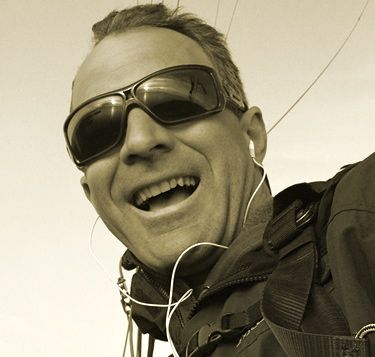
Mark Haase

Haase, 43, will travel to the African nation on Jan. 28. Weather depending, he and the other volunteer pilots will then set off for the summit. What makes this event particularly significant is that for more than 20 years the government of Tanzania has strictly enforced a ban on the use of paragliders, hang gliders and mountain bikes in the Kilimanjaro National Park. The ban was lifted for this event so the Tanzanian people can receive badly needed help.

Each participant is required to raise money for a variety of needs in Tanzania. They do this by asking for public support for their efforts. Haase is asking interested individuals to go online. For those making a donation of $100 or more, Haase has offered to take him/her on a 45-minute one-hour tandem paraglide over Lake Tahoe.

All money raised will support the One Foundation and Plant with Purpose. Both organizations have a strong presence in Africa, and both focus their efforts on community, environmental and humanitarian aid. Wings of Kilimanjaro hopes to raise $1 million through the event.

Haase notes that he is paying his own air fare to Africa (about $2,000), as well as wages for a porter and cook (approximately $3,500). Gear for the trip costs $7,000 but fortunately, he already owns the necessary equipment.

Citizens of Tanzania, according to Haase, struggle with basics of life that most Westerners take for granted. “Fresh water is not the norm in Tanzania,” he said. “Rather, most citizens find water in small trenches of essentially dirty water that must be transported in measurements of kilometers. Also, forests have been decimated through lack of education, thus increasing the plight of vegetation, erosion control and so on.”

In addition to completing the record-breaking climb and flight, Haase plans to spend time educating Tanzanians about basic healthcare.

“I’m talking about hygienic care such as hand washing, as well as proper storage and food handling,” he said. “Water treatment, storage and overall healthcare are a high priority as well.”

Haase will arrive well prepared for his endeavor in Africa. He has been involved with EMS efforts of one kind or another since 1986. He has served as a firefighter, ski patrolman, and search and rescue team member. He has been climbing for more than 25 years and has made many trips to the tops of El Capitan and Half Dome in Yosemite, as well as summits in North Africa and Western Europe. A paraglider for six years, Haase

has earned a number of certifications, including one as a professional tandem pilot.

Gene Hall works for CalStar.