NLTRA looking for lodging, marketing committee members

The North Lake Tahoe Chamber/CVB/Resort Association is accepting applications for three open seats on its Marketing Committee, as well as open seats on its Lodging Committee.

The North Lake Tahoe Chamber/CVB/Resort Association Marketing Committee is made up of board members, appointed lay (community) members and a Placer County CEO representative. Lay members are selected based on marketing experience, type of business affiliation and geographic representation with an emphasis on those representing small business, event management, restaurant, retail, cross country and activity providers.

The Marketing Committee seats will each serve a three-year term from January 2013 to December 2015. The North Lake Tahoe Chamber/CVB/Resort Association Executive Committee will review applicants and provide a recommendation to the organization’s board of directors at the January meeting.

Individuals for consideration need to submit a letter of interest and resume to Chief Marketing Officer Andy Chapman, of the North Lake Tahoe Chamber/CVB/Resort Association by Dec. 28 at 5pm via email, Andy@PureTahoeNorth.com, or by mail at Attention: Marketing Committee Application, North Lake Tahoe Chamber/CVB/Resort Association, P.O. Box 5459, Tahoe City, CA 96145.

For the North Lake Tahoe Chamber/CVB/Resort Association Lodging Committee, applicants must own or operate a lodging facility in eastern Placer County. The committee meets the first Thursday of every other month.

Individuals for consideration need to submit a letter of interest and resume to Visitor Information Services Manager Emily Sullivan-Detwiler, of the North Lake Tahoe Chamber/CVB/Resort Association by Dec. 28 at 5pm via email, Emily@PureTahoeNorth.com, or by mail at Attention: Lodging Committee Application, North Lake Tahoe Chamber/CVB/Resort Association, P.O. Box 5459, Tahoe City, CA 96145.


Barbie gets makeover with more dads doing toy buying

By Stephanie Clifford, New York Times

For the first time in Barbie’s more than 50-year history, Mattel is introducing a Barbie construction set that underscores a huge shift in the marketplace. Fathers are doing more of the family shopping just as girls are being encouraged more than ever by hypervigilant parents to play with toys (as boys already do) that develop math and science skills early on.

It’s a combination that not only has Barbie building luxury mansions — they are pink, of course — but Lego promoting a line of pastel construction toys called Friends that is an early Christmas season hit. The Mega Bloks Barbie Build ’n Style line, available next week, has both girls — and their fathers — in mind.

“Once it’s in the home, dads would very much be able to join in this play that otherwise they might feel is not their territory,” said Maureen O’Brien, a psychologist who consulted on the new Barbie set.

Consumer surveys show that men are increasingly making the buying decisions for families, reflecting the growth in two-income households and those in which the women work and the men stay home. One-fifth of fathers with preschool-age children and working wives said they were the primary caretaker in 2010, according to the latest Census Bureau data. And 37.6 percent of working wives earned more than their husbands in 2011, up from 30.7 percent 10 years earlier.

“Kids are going to grow up with dads that give them baths and drive them to soccer and are cutting up oranges for team snacks,” said Liz Ross, president for North America of BPN, part of the IPG Mediabrands holding company, which recently completed a study on male consumers. “What will go away, albeit slowly, is the image or the perception of the befuddled dad.”

The change is having consequences beyond toys. Consumer products have traditionally been marketed to appeal to women, and stores have been designed for women’s sensibilities. Now, some brands and stores are catering directly to male decision-makers. Sears is reorganizing stores to put tools next to work wear, for instance, based on men’s preferences. Procter & Gamble is working on men’s grooming aisles at top retailers, a nod to the fact that women are no longer choosing shampoos or shaving creams for their husbands. With the selling point that it helps girls develop spatial reasoning, the Barbie set, a joint effort of Mattel and the toy company Mega Bloks, is also meant to pique fathers’ interest.

“Dad is a bigger influencer in terms of toy purchases over all, and this sets up well for that, because the construction category is something Dad grew up with and definitely has strong feelings and emotions about,” said Vic Bertrand, chief innovation officer of Mega Brands, Mega Bloks’ parent company.

Construction sets for girls are a speedy growth category, thanks to Lego’s introduction of its Friends line in January. Despite criticism that those sets were sexist — themes include a beauty shop and a fashion studio — Lego’s chief executive said in August that the company sold twice as many of the sets in the first half of the year as it had expected, and retailers like Amazon and Target have named them hot holiday toys.

Anne Marie Kehoe, vice president of toys for Walmart U.S., said that, with the Barbie addition, construction toys aimed at girls will represent about 20 percent of the toy construction category by the end of this year, while last year there were just a handful of products.

Research shows that playing with blocks, puzzles and construction toys helps children with spatial development, said Dr. Susan C. Levine, chairwoman of the psychology department at the University of Chicago and co-principal investigator at the National Science Foundation’s Spatial Intelligence and Learning Center. Even controlling for other skills such as verbal and numerical skills, she said, children with better spatial thinking are more likely to eventually go into mathematics, engineering, science and technology.

She said that a set aimed at girls could be beneficial, if only because it might increase girls’ likelihood of participating in construction activities.

O’Brien, the consultant on the new Barbie set, said adults had traditionally been “the limiting factor” in why girls have not played with those toys as often.

Recently, she said, there has been a shift in attitudes, as parents study research on development and spatial play. “For this particular product, one of the advantages is you can appeal to both moms and dads,” she said of the construction set.

During her research, O’Brien said, she watched a grandfather jump in to explain building principles to his granddaughter, who was playing with the Barbie. Still, the construction set is not exactly dump trucks and dirt. It remains “unapologetically all girl,” said Stephanie Cota, senior vice president of global marketing for Barbie, girls’ brands and games at Mattel.

The Mega Bloks building pieces are pink (Pantone 219, the signature Barbie color), and the construction choices are scenes like a fashion boutique, a mansion and an ice cream cart. Each set comes with a small Barbie figure that can be snapped into the scene.

Mattel, the world’s largest toy maker, still leans heavily on Barbie, one of its most popular and longest-running franchises. However, pressure to update Barbie has been high — Mattel has introduced Barbies with video cameras and digital cameras in recent years.

Yet sales of Barbie in North America through September fell 1 percent, even as sales of Mattel’s other girl brands, like Disney Princess dolls, rose 44 percent. Mega Brands makes just a fraction of what its larger rival Lego does, and had revenues of about $376 million last year.

The Barbie brand, which tends to raise feminists’ ire for its overly sexualized dolls, not to mention the 1992 version saying “Math class is tough,” has already taken some high-arched steps toward gender equality. A computer-engineer Barbie was introduced two years ago, for instance, with the support of the Society of Women Engineers.

This time, though, the introduction appears to be a response more to market changes than to critics.

Girls “don’t necessarily care about, ‘That’s a boy toy; that’s not for me,’ ” said Cota of Mattel. “Now, more so than ever, girls are looking at what’s fun, what they like.”




Minimize the waste that often comes with Christmas

By Mandy Kendall

Christmas can be expensive enough with all the gifts and food without the added cost of decorating and gift-wrapping. The more eco-conscious of us might balk at all the waste that goes on with gift-wrapping because it is just torn off and thrown away. However, with a little thought and creativity, wrapping can be as much fun as the gifts themselves and decorations can help you do your part in helping to protect our wonderful planet.

So here are a few more holiday Qwik-e tips on different ways to get your house and your gifts ready for Christmas:

Mandy Kendall

Have kids help out — Entertain the kids and get them to help out at the same time. Recycled paper can be turned into unique wrapping paper by young hands and some crayons, glue and glitter. Homemade plastic bag bows are a great way to re-use plastic bags, are easy for kids to do and make for great looking gifts. Check out this website.

Multipurpose wrapping — Putting gifts in boxes or containers that can be used again and again helps reduce the amount of wrapping waste that so often happens at Christmas. I still have a beautiful box my aunt gave me years ago which was the container for her gift to me. I don’t remember what the gift was, but I use the box for my jewelry and I still think of her every time I see it. Get creative. Fill a watering can or sturdy basket with gardening items for the gardener on your list. Fill pretty glass jars (hand painted perhaps) with unusual soaps or bath salts for someone who needs a little pampering. A bucket can be filled with useful gifts for that handyman in your life. You could use a pashmina or large scarf as part of the gift and it’s wrapping too. Furoshiki is Japanese gift-wrapping that uses material as the wrapping paper. Here for some nifty wrapping ideas.

Recycle gift bags — Our family has recycled and r-circulated the same few gift bags for a few years now. It has become a competition to see how long we can make them last. We each bought large sturdy gift bags and each year our gifts are given in those bags (no matter what size the gift is). We now recognize each other’s gift bag designs, which helps in knowing who the gift came from too! If you end up with wrapping paper to recycle, just ask the family to peel off the tape before it goes into the recycle pile. Lots of recycling plants won’t accept paper with tape on it.

You could have a competition with your family to see who can come up with the most creative, eco-friendly wrapping with the winner being awarded a special gift from the rest of the family, or maybe even a trophy to be kept until next year’s competition.

Decorating

Go green on lights — LEDs are by far the most economical and environmentally friendly lights. They don’t burn out and use much less electricity than conventional bulbs. Electric candles can look pretty authentic and also take care of any concerns over health issues and accidental fire dangers.

Trees — Let’s face it, Christmas trees are lovely but they are really only a foundation upon which to hang all our treasured baubles and decorations. With all the artificial options these days, there is no reason to chop down a tree to decorate your house anymore. As well as the huge array of realistic looking artificial trees that can be used year after year, there are many other options you could try for something a bit different. You could go very environmental and use a large herb bush as the basis for your tree. If you do decide to have a natural tree, try and make sure it comes from a sustainable source and find out where it can be recycled.

Keep it natural — You could bring a little of the outside inside to help decorate. Pine cones (sprayed silver or gold) make for great centerpieces and fireplace decorations. Dead twigs and small branches can be twisted together for the basis of garland and wreaths. Obviously, the idea is to pick up stuff that is already lying around and not to start chopping live foliage down… just make sure you shake off any live creepy crawlies that might be attached. Fresh fruit and nuts make very festive additions to table decorations, piled high in a bowl or on a cake stand around a large candle. Tied bundles of cinnamon sticks and dried candied fruits can add a festive scent to your designs too.

Happy Holidays!

Until next time.

Mandy Kendall operates Health Connective in South Lake Tahoe, which aligns wellness seekers with their ideal wellness provider. If you have questions, would like some advice, or would like to request some Qwik-e tips on any health and well-being topic, drop her an email at connect@healthconnective.com or keep an eye out on Lake Tahoe News for regular Qwik-e tips on how to make healthy changes one Quick and Easy step at a time.


Brubeck’s legacy includes a summer on the South Shore

By Lee Vestal

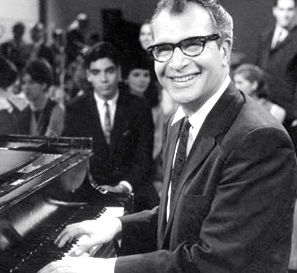
Dave Brubeck, one of America’s great jazz legends passed away this week. Did you know he and his band spent a summer playing at Globin’s Al Tahoe Hotel in 1941?

While researching my walking tour of the Al Tahoe neighborhood of South Lake Tahoe I came across Fred Hall’s 1996 biography of Brubeck, “It’s About Time: The Dave Brubeck Story.” According to Hall, they performed at the lake that summer and it makes for an interesting story.

According to Hall, Brubeck, while a student at the University of the Pacific in Stockton he had put together a large band and was playing at many locations around Stockton and San Francisco. In the summer of 1941, during Brubeck’s senior year, Frank Globin (Globini according to Hall) hired Brubeck and his band to be the house band for the summer. Brubeck was to play at the hotel (now Rojo’s) and at Globin’s Chalet on the Al Tahoe pier.

Dave Brubeck circa 1965

Brubeck’s brother, who played in the Del Courtney band, had played at Al Tahoe a couple of years before and warned Brubeck of what to expect. Globin would fire the band after the first night and offer them low paying jobs around the hotel; they would play their music for free. Sure enough, Globin fired the band after the first night’s performance. Brubeck though, having been warned by his brother, negotiated a better deal. The band would be given sleeping quarters above the dance pavilion at the Chalet and would be paid the door receipts from Saturday night performances. They’d get meals in return for playing in the hotel dining room.

The large band didn’t last long in the dining room. Globin complained that the horns were too loud and told Brubeck to “put sand in the horns.” Brubeck muted the horns, but Globin wasn’t satisfied and told Brubeck to “get rid of the horns!” Brubeck complied; the large band played only on the weekends at the Chalet, while a piano trio played in the dining room. The trio playing the dining room earned meals for the entire large band, which according to Hall was, “rice and green curried lamb, twice a day, for the rest of the summer.”

I don’t know if Frank Globin and his Al Tahoe Hotel can take credit for busting Brubeck out of the big band and into the small jazz ensemble that made him famous or not, but just like Brubeck’s music, the idea sounds good to me.

I think I’ll “Take 5” and listen to some music.

“It’s About Time: The Dave Brubeck Story” by Fred M. Hall is available at online retailers.

Lee Vestal is a tour docent at the Lake Tahoe Museum in South Lake Tahoe. He may be contacted at lthstours@sbcglobal.net.


Brubeck — a frequent Tahoe performer dies at age 91

By AP

HARTFORD, Conn. — Jazz composer and pianist Dave Brubeck, whose pioneering style in pieces such as “Take Five” caught listeners’ ears with exotic, challenging rhythms, has died. He was 91.

Brubeck died Wednesday morning of heart failure after being stricken while on his way to a cardiology appointment with his son Darius, said his manager Russell Gloyd. Brubeck would have turned 92 on Thursday.

Brubeck, who grew up for a time near Honey Lake in northeast Lassen County on land worked by his rancher father, had a career that spanned almost all American jazz since World War II. He formed The Dave Brubeck Quartet in 1951 and was the first modern jazz musician to be pictured on the cover of Time magazine — on Nov. 8, 1954 — and he helped define the swinging, smoky rhythms of 1950s and ’60s club jazz.

He and his groups also appeared regularly at venues at Lake Tahoe and in Reno.

The seminal album “Time Out,” released by the quartet in 1959, was the first ever million-selling jazz LP, and is still among the best-selling jazz albums of all time. It opens with “Blue Rondo a la Turk” in 9/8 time — nine beats to the measure instead of the customary two, three or four beats.

A piano-and-saxophone whirlwind based loosely on a Mozart piece, “Blue Rondo” eventually intercuts between Brubeck’s piano and a more traditional 4/4 jazz rhythm.

The album also features “Take Five” — in 5/4 time — which became the Quartet’s signature theme and even made the Billboard singles chart in 1961. It was composed by Brubeck’s longtime saxophonist, Paul Desmond.

“When you start out with goals — mine were to play polytonally and polyrhythmically — you never exhaust that,” Brubeck told The Associated Press in 1995. “I started doing that in the 1940s. It’s still a challenge to discover what can be done with just those two elements.”

After service in World War II and study at Mills College in Oakland, Brubeck formed an octet including Desmond on alto sax and Dave van Kreidt on tenor, Cal Tjader on drums and Bill Smith on clarinet. The group played Brubeck originals and standards by other composers, including some early experimentation in unusual time signatures. Their groundbreaking album “Dave Brubeck Octet” was recorded in 1946.

The group evolved into the Quartet, which played colleges and universities. The Quartet’s first album, “Jazz at Oberlin,” was recorded live at Oberlin College in Ohio in 1953.

Ten years later, Joe Morello on drums and Eugene Wright on bass joined with Brubeck and Desmond to produce “Time Out.”

In later years Brubeck composed music for operas, ballet, even a contemporary Mass.

In 1988, he played for Mikhail Gorbachev, at a dinner in Moscow that then-President Ronald Reagan hosted for the Soviet leader.

“I can’t understand Russian, but I can understand body language,” said Brubeck, after seeing the general secretary tapping his foot.

In the late 1980s, Brubeck contributed music for one episode of an eight-part series of television specials, “This Is America, Charlie Brown.”

His music was for an episode involving NASA and the space station. He worked with three of his sons — Chris on bass trombone and electric bass, Dan on drums and Matthew on cello — and included excerpts from his Mass “To Hope! A Celebration,” his oratorio “A Light in the Wilderness,” and a piece he had composed but never recorded, “Quiet As the Moon.”

“That’s the beauty of music,” he told the AP in 1992. “You can take a theme from a Bach sacred chorale and improvise. It doesn’t make any difference where the theme comes from; the treatment of it can be jazz.”

In 2006, the University of Notre Dame gave Brubeck its Laetare Medal, awarded each year to a Roman Catholic “whose genius has ennobled the arts and sciences, illustrated the ideals of the church and enriched the heritage of humanity.”

At the age of 88, in 2009, Brubeck was still touring, in spite of a viral infection that threatened his heart and made him miss an April show at his alma mater, the University of the Pacific.

By June, though, he was playing in Chicago, where the Tribune critic wrote that “Brubeck was coaxing from the piano a high lyricism more typically encountered in the music of Chopin.”

More acclaim came his way when it was announced that he would be a recipient of the Kennedy Center Honors at a ceremony in late 2009.

Brubeck told the AP the announcement would have delighted his late mother, Elizabeth Ivey Brubeck, a classical pianist who was initially disappointed by her youngest son’s interest in jazz. (He added that she had lived long enough to come to appreciate his music.)

Born in Concord, Calif., on Dec. 6, 1920, Brubeck actually had planned to become a rancher like his father. He attended the College of the Pacific (now the University of the Pacific) in 1938, intending to major in veterinary medicine and return to the family’s 45,000-acre spread.

But within a year Brubeck was drawn to music. He graduated in 1942 and was drafted by the Army, where he served — mostly as a musician — under Gen. George S. Patton in Europe. At the time, his Wolfpack Band was the only racially integrated unit in the military.

In an interview for Ken Burns’ PBS miniseries “Jazz,” Brubeck talked about playing for troops with his integrated band, only to return to the U.S. to see his black bandmates refused service in a restaurant in Texas.

Brubeck and his wife, Iola, had five sons and a daughter. Four of his sons — Chris on trombone and electric bass, Dan on drums, Darius on keyboards and Matthew on cello — played with the London Symphony Orchestra in a birthday tribute to Brubeck in December 2000.

“We never had a rift,” Chris Brubeck once said of living and playing with his father. “I think music has always been a good communication tool, so we didn’t have a rift. We’ve always had music in common.”


Dugard memoir captures a life of captivity

By Kathryn Reed

Some books I don’t want to read, but I know should. Such was the case with “A Stolen Life” – Jaycee Lee Dugard’s memoir.

It was also one of those books that I wanted to be done with fast. Selfishly, I just didn’t want Dugard’s 18-year ordeal to linger long on my nightstand. Though, truth be told, I have had it for more than a year. I just needed to be ready to read it. And when I was, I read it fast.

I wasn’t living in South Lake Tahoe when Dugard, who was 11 at the time, was snatched from a school bus stop in Meyers. But I was here in 2009 when word came she had been found – alive – living in Antioch (just three hours away) and had given birth to children who were fathered by her kidnapper-rapist.

The book is worth reading no matter how many news accounts you’ve read.

It would make for an interesting high school or college level project – perhaps in an English, psychology, or criminal justice class. It is definitely not a book to be read by all ages.

I was surprised that the emotion I was left with at the end of the 273 pages was disbelief. Still, I cannot believe Dugard’s will to live. I don’t know how she endured the endless sexual, emotional and verbal abuse.

She writes about how she got through it all. Her thoughts. Her mindset. Her emotions.

It’s a gritty book. It’s an honest book. It will make you angry and sad. But in the end I was just amazed by this woman’s journey from innocent child to bruised woman. Battered, yes, but nowhere near broken.

That is what is so remarkable – that at least when the book came out in 2011 – is that Dugard was well on the road to recovery.

In some ways I would like to read the next chapter, so to speak, of her life. And another side of me hopes she goes on to live a life without a spotlight on her or any member of her family.


Caltrans Meyers’ enclave becomes a village of seasonal workers sleeping and eating onsite

By Kathryn Reed

MEYERS – Aromas of freshly made food waft from a nondescript building tucked off Highway 89. Three hot meals a day are served here. Boarders are upstairs sleeping – in the middle of day.

Today starts week four of winter at the Meyers’ Caltrans depot.

When it’s storming out – and it doesn’t have to be white stuff that is falling from the sky – the heavy equipment operators are working 12-hour shifts. There may be no time for breaks.

“Anything dealing with our highways we take care of,” Mark Wagener explains during lunch Dec. 5. “There’s so much sand on the road we have to clean the catch basins regularly.”

Twelve-hour shifts at the Caltrans kitchen in Meyers are routine for Claire Neville. Photos/Kathryn Reed

Rocks are sliding on the road and storm drains are backed up. Most of the mop up is done by hand.

When it’s snowing, Wagener is in a plow truck or grader.

This seasonal facility usually operates from sometime in November through April. Though there was the year it opened in October.

Any city, county, state or federal employee can eat here. Lake Valley personnel and California Highway Patrol officers are dining on Dec. 5. Each meal is $4.

The lunch crew can put sack lunches together so workers stay nourished throughout their shift.

On Wednesday, heavy equipment mechanic Walt Wimsett and Wagener are relishing the meal in front of them as they sit in the dining area that seems a bit like a cafeteria. The difference is the quality of food.

“This is the best meatloaf I’ve ever had,” Wimsett says. “This reminds me of the cooking I grew up with.”

Real mashed potatoes and green beans are also on his plate. Pudding is available for dessert.

Wagener enjoys fish Fridays the most. He said the choice of a half dozen items from shrimp to salmon to chowder keeps him filled up.

Keeping workers fed

Dennis Russo has been cooking here since 1996 – having been a cook for nearly 50 years. Caltrans has 15 cooks in the state – mostly in snow country. The closest facilities like this to Tahoe are the one at Caples Lake and the two on Interstate 80.

Russo has three people helping him make sure there is plenty of food for the crew. And like any restaurant, it’s a bit of a guessing game to know how many mouths there will be to feed on any given day.

Russo said after a while he’s gotten good at knowing the forecast and figuring out how many workers will be on duty.

It’s a full commercial kitchen that is capable of producing meals for the masses.

Beef ribs with an Asian rub are on the counter. That’s what was served for dinner last night.

Soup is always available. So are fresh fruit and a salad bar.

“We do cookies, cakes, pies. They are spoiled,” Claire Neville, one of the cooks, says with a smile.

She said newbies to the Meyers’ family – and a family is what they consider themselves – can gain 20 pounds in a season. Healthy and not so healthy items abound. For instance, on Wednesday homemade cinnamon rolls with frosting were whipped up for breakfast. But fresh fruit and yogurt are also available.

The breakfast sandwiches are one of the more popular items first thing in the morning.

Dinners run the gamut from pork, fish, beef – to steak about every 10 days. Burger bars, fresh chili over a hotdog, chicken Monterey and seven-spice chicken are some of the favorites.

Home away from home

Some of Caltrans’ employees live nearby and go home at the end of their shift. More than a dozen are in town for the next six months.

Russo is one of them. He has a room upstairs. He calls Oakdale home the rest of the year.

Their quarters are sparse. Rooms are on the second and third floors, off hallways that look like a rundown hotel, or maybe an old college dorm. The worn brown carpet has seen better days. Rooms have twin beds, a sink, closet, dresser and old TV. Down the hall are the communal bathroom and laundry facility.

Towels and sheets are cleaned by a service, but clothing must be laundered by the individual.

On the first floor near the entrance is a break room of sorts. It doubles as a family room. A pool table, foosball, television and comfy couches fill the room.

“If it snows, there are no days off until the sun shines,” Russo says.

ngg_shortcode_0_placeholder (Click on photos to enlarge.)


75-watt lightbulb about to be permanently switched off

By Caroline Winter, Bloomberg Businessweek

The phaseout of traditional 100-watt incandescent lightbulbs in January – a move to meet new federal efficiency standards – struck panic in the hearts of some consumers.

Home Depot reported a nearly 20 percent spike in sales of 100-watt bulbs for 2011 as people rushed to stockpile. At least one Ohio woman made sure to squirrel away enough bulbs to last 50 years.

A month from now, on Jan. 1, 2013, traditional incandescent 75-watt bulbs also will go the way of the dodo, as the second stage of the federal lightbulb phaseout goes into effect. This time around, however, shoppers seem more relaxed.

“Last year we saw some consumers buying up product, but that’s really slowed down,” says Bill Hamilton, president of lightbulb merchandising at Home Depot. “Customers are beginning to embrace the new technology.”

Hamilton says the initial rush to hoard traditional incandescent bulbs may have resulted from a reluctance to learn about alternatives.

“We’ve done some focus groups and customers have basically told us, ‘I haven’t had to think about lightbulbs or lighting for the last 100 years – don’t make me learn about it now,’ ” he says.

These days, customers have gotten over the hump and discovered numerous alternatives, including LEDs, compact fluorescents, and even incandescent bulbs that meet the federal requirement of being at least 25 percent more efficient.

It also doesn’t hurt that the retail price of energy-efficient bulbs has dropped by more than half over the past year, as companies perfected their technology and rolled out mass production, says Hamilton.

Not everyone has embraced the government’s energy-efficiency standards, which passed in 2007. Rep. Michele Bachmann, R-Minn., who once declared, “I think Thomas Edison did a pretty patriotic thing for this country by inventing the lightbulb,” has sponsored the Light-Bulb Freedom of Choice Act to repeal the phaseout of incandescent bulbs. And in July, House Republicans adopted a measure to halt the lightbulb-efficiency law.

“People are sick of the government treading where it just doesn’t belong,” said Rep. Michael Burgess, a Texas Republican who sponsored the lightbulb amendment that was added to a broader energy-spending bill.

The House measure is, in fact, an extension of a rider placed on the lightbulb law in December 2011, prohibiting the U.S. Department of Energy from using any funds to enforce the federal lightbulb law.

This means that, although such lighting manufacturers as General Electric and Royal Philips Electronics stopped making traditional 100-watt bulbs, there’s no guarantee that other companies would do the same. (The efficiency standards prohibit only the manufacturing and distribution of the lightbulbs, not their sale.)

“Some in Congress are willing to put U.S. jobs at risk for political positioning,” said Joseph Higbee, a spokesman for the National Electrical Manufacturers Association (NEMA). “This is an example of a few politicizing lightbulbs at the risk of American workers and the economy.”

Higbee says manufacturers are, in fact, supporting the efficiency legislation, which NEMA estimates could mean $10 billion to $15 billion worth of national energy savings per year. Companies such as GE and Philips, he says, have invested millions of dollars in developing alternative products, and they resent being left in limbo because of political infighting in Washington.

Higbee expects the rider preventing enforcement of lightbulb-efficiency laws will be dropped in 2013, and that the phaseout will continue into 2014, when the traditional 60-watt and 40-watt bulbs are scheduled to be discontinued.

The biggest shift for customers, meanwhile, will be learning the new lightbulb lingo. Instead of thinking in “watts,” which measure the amount of power going into a bulb, they henceforth must think in “lumens,” which measure the amount of light produced.

Explains Higbee: “A more efficient bulb will require fewer watts to produce the same amount of lumens as a less-efficient bulb.”

If this doesn’t make sense, don’t worry. Home Depot has spent plenty of time and money over the past year training employees to help customers find what they need.

“Articulating what’s best – what the advantages are in terms of energy, light output, quality and color – that’s really our biggest weapon,” says Hamilton.

For those who just don’t want to give up their trusty Edison bulbs, there’s always eBay. Hurry, while supplies last.


Dinner-show combo benefits South Tahoe performing arts group

South Tahoe High School Performing Arts Booster Association’s 2nd annual special fundraising Stars Night Out is Dec. 14 at 5pm.

The fundraiser dinner is $30 per person at the high school. Catering is by the STHS Culinary Arts and entertainment by the STHS music department.

“White Christmas” stage production is at 7pm. That ticket is another $10.

After dinner and at intermission, there will be a silent auction in the Tahoe Arts and Design Academy building with student-designed and themed gift baskets.

For more info or to buy a ticket, contact Madonna Doyle at (530) 545.9734 or madonnadoyle@att.net.


Tahoe Tails — Adoptable Pets in South Lake Tahoe

Kitty came to the shelter when his owner died. Her family would have taken him in, but Kitty is very scared of their dogs.

He is a beautiful, very sweet and affectionate cat who would like a quiet indoor-only home. He has his own litter box, scratcher and carrier to go home with.

Kitty is neutered, microchipped, and vaccinated. He is at the El Dorado County Animal Services shelter in Meyers, along with many other dogs and cats who are waiting for their new homes.

Go online to see photos and description of all pets at the shelter.

Call (530) 573.7925 for directions, hours, and other information on adopting a pet.

For spay-neuter assistance for South Tahoe residents, go online.

— Karen Kuentz