Allman talks about appreciation for life; to play Tahoe

By Donna Isbell Walker, Gannett

At 64, Gregg Allman is lucky to be alive.

For more than three decades, as the face and blues-soaked voice of the Allman Brothers Band, Allman lived as hard and fast as he possibly could.

Copious amounts of drugs and alcohol eventually took their toll, and a 1995 intervention by friends was the impetus for his sobriety. In 2010, Allman underwent a liver transplant necessitated by all those years of abuse.

Allman, who comes to the South Shore Room at Harrah’s Lake Tahoe on Saturday, has made quite a turnaround, and these days he sees things from a whole different perspective.

If he could live his life over again, “I would erase all drugs and alcohol,” Allman said in a recent phone interview from his home in Savannah, Ga. “They were nothing but a hindrance, nothing but a deterrent. … They came out with that one commercial where they said, ‘Cocaine is a lie.’ It’s all a lie, all of it. Alcohol is not supposed to be ingested, maybe a little wine. But hard liquor, it just eats away at the lining of all your intestines.”

He has spent the past few years learning about the effects of drugs and alcohol on the human body, with the same passion he once put into scoring the drugs and chugging the drinks.

“I have gone to great lengths to find out just what each one of these things that I used to take does to you. It’s a nightmare. No wonder I had to have a new liver. And thank God that they can do that. I give thanks every day, every day, morning and night. I’m so grateful to be alive,” Allman said.

Much of that journey is recounted in Allman’s memoir, “My Cross to Bear,” which came out earlier this year. The book is a raw, down-and-dirty look at a life of career highs and lows, intense love affairs, including a marriage to Cher, and unspeakable pain, particularly the death of his brother Duane.

“My Cross to Bear” began as a journal in the early 1980s, Allman said. He mostly wrote it as a way to remember and reflect on his life, never intending to publish it.

“I was thinking, this is great, I really need to write this stuff down, go into real detail about it, so when I get to be real old — old codger sittin’ on the front porch in a rockin’ chair — I can pick out a few of these pages and it’ll take me right back,” he said.

His manager saw the journal and encouraged Allman to turn it into a book.

Allman didn’t gloss over his own flaws in writing about his life. “A lot of people said, ‘Man, you let ‘em know a little too much, didn’t you?’ And I don’t think so, no,” he said.

One of the toughest parts was writing about Duane, his beloved older brother and bandmate, who was killed in a 1971 motorcycle crash. Allman speaks haltingly about reliving that chapter of his life.

“It’s hard, you know. There’s not a day that passes that I don’t think of him,” he said. “There were parts of (writing) it that were gotten through a little bit slower than other parts.”

Through it all, Allman said, he has had the rare gift of being able to build a career around what he loves the most.

“I looked around and thought, man, what a wonderful life I have to be so fortunate as to have your passion be the way you make your living also. I mean, that is so fortunate,” he said. “So many hundreds of thousands of people just trudge to work and trudge home and go searching for the right amount of the legal tender. It’s so sad. I mean, get on the freeway, (complain) about this and that, the price of gas and all. The white-shirt army, I am so glad I don’t belong to it.”

Saturday’s show is part of a short tour in support of Allman’s latest solo album, “Low Country Blues,” a collection of traditional blues songs, along with a new tune written by Allman and his Allman Brothers bandmate Warren Haynes.

It’s his first solo project in 14 years. “Isn’t that ridiculous?” he said with a chuckle.

For much of that interim, Allman was focused on maintaining his sobriety and regaining his health.

But another factor was the 2002 death of his longtime producer Tom Dowd, a Rock and Roll Hall of Fame inductee who produced most of the Allman Brothers Band’s catalog.

The right producer is a crucial part of the recording process, Allman said, explaining that “he hears things that you don’t hear.”

The producer helps to weave all of the musical elements into one cohesive piece, and “he becomes real, real important. … You really start leaning on this person.”

Dowd was that person for Allman, beginning with the Allman Brother’s Band’s iconic 1971 live album “At Fillmore East.”

After Dowd’s death, “to have to break another one of these in, pardon the expression there, but it’s like too big of a hill to climb for the stuff that was going on in my life then.”

Eventually, he connected with T-Bone Burnett, best known for his work on the “O Brother, Where Art Thou?” soundtrack, and “Low Country Blues” was released last year.

Allman’s current tour features only a handful of dates over a six-week period. That’s because he’s taken a bigger role in scheduling his tours.

“I don’t do more than two concerts in a row,” Allman said. “The first one just kind of oozes out. And the second one, you actually put a little effort into it, and it really smokes. But the third one, I don’t know, it’s like, ‘We’re gonna do this again?’”

Having the breaks between each date keeps the shows fresh, and Allman said he wishes he had taken the reins sooner.

“I should have done that all along,” he said. “Of course, I didn’t have my butt in the seat, shifting all the gears. That takes a few years to happen. My grandfather told me, ‘You have to have your foot in the door, your butt in the seat, shifting all the gears. Then you’re going somewhere.’”


Science through theater engages students

By Kathryn Reed

ZEPHYR COVE – Suddenly the sun is gone. Plants wither. People and animals die. No air to breathe. No water to drink.

Briefly, all of this happened at Zephyr Cove Elementary School on Jan. 15. It was all to show the students how important the sun is to the survival of life on Earth.

They actually showed themselves as they took on various roles.

In a whirlwind of interactive learning, students in Brenda Capshaw’s third-grade class are being taught about the solar system. Diane Handzel is taking over the class for an hour for eight Tuesdays to teach them a bit of science through theater.

The students act out parts in a variety of skits. It’s nonstop action even though it’s part lecture, part video, part question-answer, part acting. There is no down time. It’s all about learning, even if the kids think it’s playtime.

Third-graders at Zephyr Cove Elementary on Jan. 15 learn about the sun. Photo/Kathryn Reed

This is the third year Handzel, who runs Get in the Act! Arts in Action, has worked at Zephyr Cove. And in that time science test scores have gone up.

“There is no real data that Arts and Action helps life science scores, but I like to think it did,” Principal Nancy Cauley told Lake Tahoe News. “Not only are the students learning facts about the solar system, they get to act out in crazy, creative ways that kids love.”

The money to pay for the Arts and Action program comes from the parent-teacher club.

The third-graders are broken into groups representing animals, humans, water, land and air. Amongst themselves they are to figure out why their group is the most important to the Earth. While they all came up with viable reasons, in the end, it was the sun that is ultimately the most important.

When asked what they learned about the sun, they raised their hands, to say: it’s made of gases and atoms, it’s the only star in our solar system, it gives off light and energy, without it the Earth would float away because of the lack of gravity, and that it’s the center of the solar system.

Handzel and a colleague created the Stateline company in 2009. They work throughout the Lake Tahoe Basin – including Tahoe Valley Elementary School in South Lake Tahoe, Truckee Elementary, and Tahoe Lake Elementary in Tahoe City.

“We work with the teacher and the classroom curriculum,” Handzel told Lake Tahoe News after wrapping up the sun segment. (Next week she will focus more on planets.) It’s about introducing vocabulary and science concepts. And it’s geared to the appropriate grade level.

Second-graders might learn about magnets, while fifth-graders get instruction on electricity.

“I believe she has had an impact on how kids see the world through science,” Cauley said. “They have a better understanding of science because they were able to use every sense of being to act it and be it.”


History: Tahoe boats leave long wake

Publisher’s note: The following is reprinted with permission from the Lake Tahoe Historical Society’s July 1989 newsletter.

There is no doubt that soon after Lake Tahoe was discovered, some adventurer found his way onto its surface in some kind of water craft. Sailboats, steamers, tugs and barges were busily at work on the lake by the late-19th century. By the turn of the century, when Tahoe was becoming a resort community, a number of people were ready for adventures on the lake just for pleasure using the internal combustion engine to facilitate the ride.

Lake Tahoe, with its twenty mile length of open, smooth water, was natural for speedboating. A commercial activity moved off the lake and onto trains and highways, the lake became the province of pleasure boats. New craft were developed with new engines capable of faster and faster speeds. New styles were designed which have become classic. Speedboat racing, tourist treks and rides on the lake just for the thrill of speed soon became popular attractions of a Tahoe summer.

In the early years of the 20th century motorboats had been narrow-beamed launches with small engines often converted from other uses. By 1920, a new kind of runabout was produced by companies such as Chris Craft, Gar Wood and many others. When they arrived at Lake Tahoe, they found a home. By the 1930s, commercial ventures crisscrossed the lake once again carrying passengers to scenic and noteworthy spots, not in 19th century steamers but in speedboats or turnabouts. Races and regattas that featured this new style of boat were held every year.

The new craft were narrow-beamed, sharp stemmed wooden boats with gleaming mahogany finish, polished brass fittings and raised, overhead decks and windshields. They were generally from twenty to forty feet long, though some exceeded these limits. They sported engines from fifty to three hundred horsepower that helped them fly across the water! These classic-styled boats became synonymous in the west with our lake that many westerners to this day call them “Lake Tahoe Boats”. To the enthusiast of course, they are Chris Craft, Gar Wood, Belle Isle or Hackers or any one of a number of other makes. They are sometimes called “woodies” but this is hardly a dignified name for such a thoroughbredcraft.

These beautiful boats, lovingly restored, are still displayed at annual boat shows around the lake in places like Carnelian Bay, Tahoe Keys and Tahoe City.


USGS officials to give lecture on ARkStorm potential at Tahoe

Dale Cox and Michael Dettinger with the U.S. Geological Survey will discuss ARkStorm impacts at Lake Tahoe on Jan. 31 at the Tahoe Center for Environmental Sciences in Incline Village.

The no-host bar opens at 5:30pm, with the presentation begins 6pm. Cost is $5.

The USGS is working with local communities to use the science, technology, expertise and meteorological data behind the ARkStorm scenario to test the resiliency of communities and expose vulnerabilities usually only realized following catastrophic events. Modeling such an extreme event allows officials at all levels to be prepared when disaster strikes.

For more information, contact Heather Segale at (775) 881.7562 or tercinfo@ucdavis.edu.


Tahoe Tails — Adoptable Pets in South Lake Tahoe

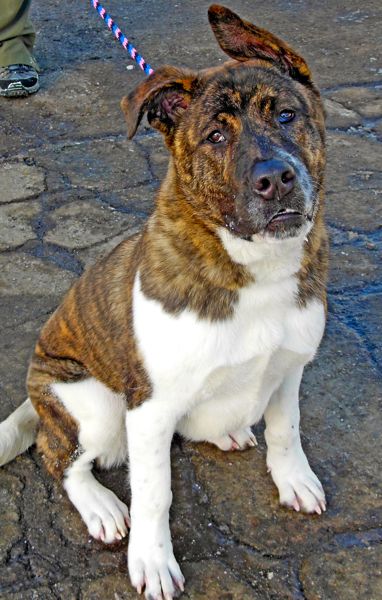
Caesar is a very fun-loving, energetic 7-month-old purebred Akita.

He obeys well, plays great with people and other dogs and will do well with a family with teenage children. Caesar knows all his basic commands and even some tricks, including roll over, shake and high five as well as sit, come, stay and down.

He is a very big puppy and will be a large adult dog.

Caesar is neutered, microchipped, and vaccinated. He is at the El Dorado County Animal Services shelter in Meyers, along with many other dogs and cats who are waiting for their new homes. Go online to see photos and description of all pets at the shelter.

Call (530) 573.7925 for directions, hours, and other information on adopting a pet.

For spay-neuter assistance for South Tahoe residents, go online.

— Karen Kuentz


‘Get Out of My Crotch’ writers, publisher to speak at LTCC

The Lake Tahoe Community College Writers’ Series will celebrate the book launch of “Get Out of My Crotch” on Jan. 25 at 7pm.

In this anthology, 21 writers examine reproductive rights, access to health care, violence against women, and the rise of rape apologists in the 21st century in the United States.

The book hits the streets Jan. 22 on the 40th anniversary of Roe v. Wade.

It was published by Cherry Bomb Books, an imprint of Meyers press Bona Fide Books.

The event at Lake Tahoe Community College’s library will feature a short reading and discussion with contributors Janet Frishberg and Camille Hayes, as well as publisher and co-editor Kim Wyatt.

The event is free. Books will be available for purchase.


Women of the Wild West take over Genoa

The Wild West returns to Genoa on Feb. 1-3.

See the early days of Nevada through the eyes of Eilley Bowers – famous “Queen of the Comstock” and Julia Bulette – Virginia City’s most beloved “working girl”. With their dislike for one another, the comedy and the drama will unfold on the stage of Genoa’s Historic Town Hall.

In this original two act play by CobwebPalace Productions, Eilley Bowers is played by Lisa Bommarito. Julia Bulette is played by Kim Copél, who is a local historian. Both women are residents of Genoa and long-time locals.

Performances are scheduled for 7pm Feb. 1 and Feb. 2, and 2pm Feb. 3. Doors open one hour prior to each performance for no-host cocktails, a raffle and fortune telling.

Period attire is encouraged.

The general admission tickets are $12. Tickets can be purchased at the following Genoa businesses: Genoa Town Office, Genoa Trading Company and Sweet Repeats. Tickets may be purchased by contacting Lisa Bommarito at (775) 782.3893 or Kim Copél at (775) 220.0605. Part of the proceeds will benefit the town of Genoa.


3 flu vaccination clinics set for South Lake Tahoe

The El Dorado County Public Health Division in South Lake Tahoe has three walk-in flu vaccination clinics this month.

The dates are Jan. 16, Jan. 18 and Jan. 23 from 1:30 to 4pm. The location is 1360 Johnson Blvd., Ste. 103.

The cost for the flu vaccine is $10, but no one will be turned away.

The vaccine is available for those age 6 months and older.

Individuals who cannot attend one of the walk-in flu clinics may schedule an appointment to receive the flu vaccine at another time.

For more information or to schedule a flu vaccination appointment, call (530) 573.3155.


Classical musicians to play at Edgewood Tahoe

W’intermezzo at Edgewood Tahoe is a classical concert and artists’ reception featuring the internationally acclaimed classical duo of American pianist Deborah Dewey and Icelandic violinist Elfa Run Kristinsdottir.

The Jan. 31 event is a fundraiser for Soroptimist International South Lake Tahoe.

Tickets are $29 in advance and $35 at the door. They are for sale online and during business hours at Deb Howard & Co. in South Lake Tahoe.

The performance starts at 6pm at Edgewood Tahoe in Stateline.


Bear biologist to give talk in South Lake Tahoe

California Department of Fish and Game bear biologist Mario Klip is giving a talk Jan. 12 at 10am in the Aspen Room at Lake Tahoe Community College.

South Lake Tahoe’s American Association of University Women is putting on the free event.

Klip has a background in business and always had a strong affinity for wildlife. After obtaining an MBA and working in high tech for 10 years, he started working with wildlife in 2008.

He has a master’s in biology, is a doctoral student at UC Berkeley and is a Tahoe bear biologist focusing on research, aversive conditioning, outreach and education. His talk will cover bear biology and Tahoe urban-wild black bear research.

Klip will be bringing his trained Karelian bear dogs, Villa and Sasha, who are used to help avert bears from populated areas around Lake Tahoe.