Vegas ad aimed at gay travelers getting national attention

By Richard N. Velotta, Las Vegas Sun

A Las Vegas ad campaign unveiled in June got a second wind after a national publication called attention to the city’s bid to attract gay and lesbian travelers, a lucrative market.

The Huffington Post ran a story about the “sizzling” Las Vegas Convention and Visitors Authority campaign. Several other media outlets followed.

The ads depict a conservative-looking heterosexual couple standing among a group of same-sex couples, with a tagline that reads, “Everyone’s welcome … even straight people.” Another similarly tagged ad uses the imagery of a station wagon parked among sports cars in a valet line.

The ads first ran in LGBT-specific magazines Curve, Instinct, Passport, Metrosource and Out.

The Post reported that photos of the campaign are making the rounds on online sites Buzzfeed, Towleroad and New Now Next, among others.

The LVCVA has worked for seven years to attract the gay market to Southern Nevada. Same-sex partners generally have higher travel budgets and spend more freely than their straight counterparts. The LVCVA even has a staffer dedicated to diversity marketing, which includes efforts to attract gay travelers.

In 2011, the U.S. Census Bureau reported that 10 percent of the nation’s population is gay. At the time, there were 15 million gay adults in the United States, with a median age of 45. They had buying power of $690 million, and their average household income was $82,000 a year. About 35 percent made more than $100,000 a year.

Sixty-four percent are college graduates, compared with the national average of 29 percent, and 85 percent take annual vacations, compared with 64 percent of their straight counterparts.

Surveys have found that Las Vegas is one of the best cities at marketing to gay travelers. The International Gay and Lesbian Travel Association perennially ranks Las Vegas among the top five domestic markets for gay travelers. The city competes with New York, San Francisco and Key West, Fla., for the top spot.


History: Railroads diminished as lumber harvest faded

Publisher’s note: This is reprinted with permission from the March-April 1990 Lake Tahoe Historical Society Newsletter.

By Lyn Landauer

The era of railroads within the Lake Tahoe Basin was short and no trains now run in any portion of the Lake Tahoe Basin. Every summer, beginning in the 1860s, engines, track-layers, and loggers labored to cut timber and move it to the lake, haul it to Glenbrook and thence to the Comstock Mines. The last of the railroads ran from Tahoe City to Truckee from 1899 until 1942. This was the only one that carried more passengers than lumber. All of these lines were narrow gauge except Matthew Gardner’s standard gauge near what is now Camp Richardson.

In 1884, George Chubbuck built a narrow gauge railroad running from Taylor’s Landing (near Bijou) up into the hills south of the lake. At first the wooden narrow gauge track headed southwest from the lake shore, across the meadow, Heavenly Valley, Trout, and Cold creeks. It passed Chubbuck’s headquarters at Sierra House and ended about four miles from the lake. As was the custom with lumber railroads, the line was extended as it was needed. As soon as a stand of trees was logged, track was laid to the next section. Eventually the Lake Valley Railroad line ran as far as Meyers and sent lumber on contract to the Carson & Tahoe Lumber & Fluming Company of Glenbrook.

Chubbuck’s first steam engine had a saddle tank on top to supply the water. Logs were stacked on flat cars pulled by the engine which had a diamond shaped stack, oil-burning headlight, and wheels that drove furiously to move its load of logs to the lake. The engineer stopped the cars next to a ramp and the logs would be rolled off into the lake by lumbermen. This slow, heavy monstrosity of an engine was distorting the wooden track so it was relegated to use as a donkey engine. A new engine, new track and other changes were then made.

Chubbuck’s operation was slow to fulfill this contract in good time and William Bliss, son of Duane Bliss of Glenbrook, was sent to manage the laying of new 35 pound narrow gauge steel track, extend the line to Meyers and building of the trestle pier into the lake. When the latter was in place, the train ran out onto the pier and logs could then be dumped directly into the lake ready for the tug that would tow them to Glenbrook. In operation by this time were a ten-ton locomotive called the Santa Cruz and fifteen flat cars. Other engines were barged over from the Glenbrook line when necessary. The engineer drove the cars out onto the pier, off-loaded the logs and then moved to the other end of the cab where a headlight faced the rear of the train. He then made the return trip in reverse, with engine and empty flat cars backing into the timber forest.

At its height, the Lake Valley Railroad had eleven miles of track but the operation became unprofitable as lumber reserves diminished. In 1899, along with the other Bliss enterprises, the LVRR moved to Tahoe City. All that was left in Lake Valley was a sagging round house at Bijou and miles of lumber slashings, bark stumps, and sawdust alongside the rotting lumber chutes. A portion of the right-of-way can still be seen just off Al Tahoe Boulevard, as can pieces of track, ties, and other artifacts in various places in the woods. The track was taken up in some places and left where it was or buried in others. Several miles of it were deposited with the Historical Society in the 1970s.

The Lake Valley line was an important part of the history of Lake Tahoe – but it is no more. Only the echoes remain in traces of the the-of-way and in the remaining worn steel ices of track at the museum. They are a tangible vestige of the days of the railroads in the Lake Tahoe Basin.


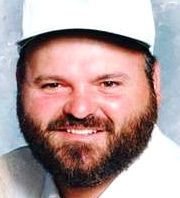
Bert Joseph Lucido — 1952-2013

A celebration of life for longtime Lake Tahoe Unified School District bus driver Bert Joseph Lucido will be Feb. 2 at 1pm at St. Theresa Catholic Church in South Lake Tahoe.

Mr. Lucido died Jan. 25 from injuries related to a fall. He was 60.

Bert Lucido

He was born Oct. 8. 1952. Mr. Lucido spent most of his life in South Lake Tahoe, having moved to the city in 1958.

Mr. Lucido always had a smile on his face as he drove the yellow bus and was always waving to people. The South Tahoe High grad had also worked for South Tahoe Public Utility District.

He liked all kinds of sports, but it was the San Francisco Giants and 49ers that he rooted for most often.

Mr. Lucido is survived by his wife Del, daughter Dani, mother Frances, sister Francine, brothers John and David, nephews Greg and Tommy, and niece Alexa.

In lieu of flowers, an account has been established at Wells Fargo Bank to provide for the continuation of his daughter’s college education. Donations may also be sent to any charity for the blind in honor of his nephew, Tommy.


Ethics arise with reprinting books with false facts

By Leslie Kaufman, New York Times

Journalism is meant to be the first draft of history, and newspaper articles fit that mold nicely, fading into the archives. But books are not so neat.

The digitization of books has facilitated the rerelease of a spate of nonfiction works years or decades after their initial publication, and in some cases the common interpretation of their subject matter has evolved or changed significantly.

Melville House confronted this situation with its decision to reissue in December a 1964 book by A. M. Rosenthal, “Thirty-Eight Witnesses: The Kitty Genovese Case.” The book was originally released just months after the murder in March 1964 of 28-year-old Catherine Genovese, known as Kitty, who at around 3 a.m. was returning from her job at a tavern to her apartment in Kew Gardens, Queens, when she was assaulted, stabbed to death and then raped by a psychotic killer.

It was a gruesome story that made perfect tabloid fodder, but soon it became much more. Rosenthal, a Pulitzer Prize-winning reporter who would go on to become the executive editor of the New York Times, was then a new and ambitious metropolitan editor for the paper who happened to be having lunch with the police commissioner 10 days after the crime. The commissioner mentioned that 38 people had witnessed the murder, and yet no one had come to Genovese’s aid or called the police.

Rosenthal quickly mapped out a series of articles centered around a tale of community callousness, and then followed in June with his quick-turnaround book, published by McGraw-Hill. National and international interest in the issue spiked, and soon the Kitty Genovese case became a sociological phenomenon studied intensely for clues to behavioral indifference.

In the years since, however, as court records have been examined and witnesses reinterviewed, some facts of both the coverage and the book have been challenged on many fronts, including the element at the center of the indictment: 38 silent witnesses. Yet none of the weighty counter-evidence was acknowledged when Rosenthal’s book was reissued in digital form by Melville — raising questions of what, if any, obligation a publisher has to account for updated versions of events featured in nonfiction titles. Dennis Johnson, the publisher of Melville House, said he knew about the controversy but decided to stand behind Rosenthal’s account. “There are, notably, works of fraud where revising or withdrawing the book is possible or even recommended, but this is not one of those cases,” he said. “This is a matter of historical record. This is a reprint of reporting done for the New York Times by one the great journalists of the 20th century. We understand there are people taking issue with it, but this is not something we think needs to be corrected.”

But others say there was a way to tip at the controversy without correcting the book. “If you are taking a piece of iconic journalism and reissuing it, it is probably in the interest of the reader of today to place it into a context that makes sense,” said Peter Osnos, the founder and editor at large of PublicAffairs Books, which handles numerous works by journalists. “That doesn’t change the value of the literature.”

In this electronic era publishers are increasingly reaching into their backlists to exploit popular nonfiction from the past. In this case Johnson said that reissuing works in digital form was a mostly automatic effort. For the most part people in the industry agree that there is not a high burden on a publisher to update books based on new evidence about old events, or even to acknowledge that new facts or interpretations exist.

“It would never enter a publisher’s mind that they were obliged to add material,” said Jane Friedman, a co-founder and chief executive of Open Road Media, which specializes in digitizing and marketing backlist books. “The information may have changed, but we are not journalists or academics. The book is the book.”

Still, she said, it could be a smart marketing opportunity. “I like new material because I like to make something fresh if I can. It would have been so interesting to bring up the controversy and start a debate.”

Some publishers and authors do make an attempt to stay current. In his biography on Joe Paterno, Joe Posnanski quickly added material dealing with a shocking new development — the sexual abuse scandal at Pennsylvania State University, where Paterno coached. Still, the book has been criticized for presenting a generally favorable portrayal of a figure whose reputation had since been greatly tarnished.

The fear at the time of the Kitty Genovese case was that urban areas were becoming much more dangerous, and her death amid unconcerned neighbors was a definitive tipping point. Rosenthal’s book played a significant role in building up the incident’s notoriety. The book, which went in and out of print over the decades, also kept the case alive for generations of students studying “Genovese Syndrome,” a description of why onlookers turn away from bad events and the diffusion of responsibility.

But over time the basic facts were called into question. As early as 1984 the Daily News published an article pointing to flaws in the reporting. In 2004 the Times did its own summation of the critical research, showing that since Genovese crawled around to the back of the building after she was stabbed the first time (her assailant fled and returned) very few people would have seen anything.

The article quoted among others Charles E. Skoller, the former Queens assistant district attorney who helped prosecute the case and who also has written a book on it. “I don’t think 38 people witnessed it,” said Skoller, who had retired by the time of the interview. “I don’t know where that came from, the 38. I didn’t count 38. We only found half a dozen that saw what was going on, that we could use.” There were other mitigating factors as well; it was a cold night, and most people had their windows closed.

“Maybe only five people were in the position to hear her calls, if even that,” said Kevin Cook, an author who is currently researching the case for a book of his own and trying to determine exactly who knew what.

Rosenthal’s book was digitized in large part because of a campaign by Andrew Blauner, a literary agent whose clients included Rosenthal and who has long had an interest in the Genovese case.

Blauner would not address the criticism of the book’s assertions but said he thought that, details aside, Rosenthal’s work was about humanity and thus more relevant than ever.

“I don’t think that there’s any question that the story of Kitty Genovese is iconic and important, timely and timeless and transcendent, on so many levels,” he said. “There is, in my view, great intrinsic value and virtue in Abe’s book being made available to as many people as possible, in as many formats as possible.”

Blauner argued that when Melville first brought the book back into print in 2008, it contained a new preface by Samuel G. Freedman, a journalism professor who also writes a religion column for the Times. The preface, Blauner said, acknowledged that “myths” had built up around the book. But that introduction talks only about myths about Rosenthal’s role in the story, not the story itself.

Freedman said that Rosenthal was a mentor and that he had been honored to asked to write the introduction. “The post-facto controversy about Abe’s book is certainly available with a few simply online searches to anyone who wants to find it,” he said. “But I chose not to disparage the book in an introduction to it, and I live serenely with that decision.”

Anyway, it is doubtful that Rosenthal, who died in 2006, would have wanted any addendum attached that acknowledges the challenges to his conclusions. When the journalist reporting the 2004 Times article approached him with the skeptics’ claims, he was resolute.

“In a story that gets a lot of attention, there’s always somebody who’s saying, ‘Well, that’s not really what it’s supposed to be,’” Rosenthal is quoted as saying. “There may have been 38, there may have been 39, but the whole picture, as I saw it, was very affecting.”


STHS student competes against professionals and wins

South Tahoe High School 10th-grader Austin Allen’s photograph “Hope Valley” was purchased by Marshall Medical Center in Placerville.

The hospital and El Dorado Arts Council had a contest for all California artists to enter artwork to be purchased for permanent display in the hospital. Professional artists submitted artwork

STHS is the only school to have a student submit a photo.


Employment law seminar in Stateline

The business community is invited to attend the employment law update “What’s on Your Mind?” on Feb. 1, from 9am-noon at the Lake Tahoe South Shore Chamber of Commerce, 169 Highway 50 in Stateline.

Sponsored by the chamber in partnership with the Sierra Human Resources Association, this seminar includes updated information managers and business professionals need to know for 2013.

The format includes a presentation followed by plenty of time to ask attorneys from California and Nevada questions. David Cohen of Cohen Durrett LLP in Sacramento and Nicole Harvey of Harvey Law Firm in Reno will cover new laws as well as best employment practices in general.

Early bird registration: $39 for chamber and SHRA members, $49 for non-members. Beverages and snacks will be provided at 8:30am. Attendees will be able to purchase 2013 employment law products at a discount.

Seating is limited and advance registration is required online.

For more info, call Laura Moriarty at (530) 573.0224 or Emily Abernathy at (775) 588.5900, ext. 303.


History: Simple flumes play big role in Tahoe timber

Publisher’s note: This is reprinted with permission from the September-October 1989 Lake Tahoe Historical Society newsletter.

Picture two long slabs of thick heavy wood placed at right angles to each other, braced by trestle legs so that they form a constant and connected downhill trough. It does not sound like much but it was an invention that was vital to the lumber business in the Tahoe basin from 1867 to 1900. The steep slopes, the lack of roadways and the fact that most of the lumber was headed for Virginia City and the Comstock Lode, made this simple device an important link in the transportation chain.

The V-flume was invented by a man named J.W. Haines in 1867. It was so simple to build and operate that it was two years before Haines sought to patent it. It was too late for him to make a profit from it however, for it was in widespread use by then and he lost his patent suit. By 1873, the Carson & Tahoe Lumber & Fluming Co. had a twelve mile long flume above Glenbrook and in 1876, Flood & Fair opened a fifteen mile flume east from Mount Rose to Carson City where its logs met at the Virginia & Truckee Railroad headed for Virginia City. By then, there were dozens of other V-Flumes operating in the mountains around the lake.

When a tree was cut, logs were taken to the head of the flume and placed in the trough. There had to be a constant flow of water at least one inch deep, or the boards had to be greased, to ease movement of the logs. Men stationed along the way with long poles kept logs form snagging or catching on anything. Gravity did the rest. At the end of the trip, logs hit the lake with a resounding crack and an impressive splash of water. There they would be chained together, towed to Glenbrook, hauled up the eastern summit and placed in another flume which took them to the train yard in Carson City.

There are still pieces of aging, cracking wood lying in the basin that were once used in V-Flumes. When lumbering stopped at the turn of the century this once-vital device was left rotting and abandoned but not quite forgotten This simple, elegant mechanical device illustrates the ingenuity and creative skill of the 19th century Americans.


Lake Tahoe’s Olympic gold medalist Teter tells the world how to ‘Master Snowboarding’

By Susan Wood

Olympic gold medalist Hannah Teter, who snowboards for Sierra-at-Tahoe and hails half the time from the South Shore, has written a book about her sport.

The “how to” book called “Mastering Snowboarding” reveals its “seven truths” as told by one of the best. Teter has won many awards, including five medals in the Winter X Games in 2003, 2004, 2005, 2009 and 2010. Most notably, she won gold for the United States in 2006 at the Winter Olympics in Torino, Italy – for which she was tapped as the U.S. Olympic Committee’s Sportswoman of the Year.

Now – at a the mere age of 26 as of Jan. 27, she has elected to share the secrets of her craft with beginners and moderates as well as advanced riders.

Everyone has to start somewhere. For Teter, it was the back yard of her parents’ home hitting a jump her brother had built.

“I think I got a little banged up, but I had the bug from (then on) and never looked back,” Teter told Lake Tahoe News.

When asked why she is giving away her secrets in such a competitive sport, Teter added: “I wanted this book to be something that any rider from the first-day beginner to the up-and-coming pro could pick up some tips from, (ones) that I wish I had been presented with when I was coming up.”

This isn’t the first time Teter has given back. She is an active philanthropist – especially when it comes to the world’s poor. She started Hannah’s Gold in 2008, named after her family’s maple syrup that comes from her hometown of Belmont, Vt. The charity donates profits from the foundation to the village of Kirindon, Kenya, where the money goes to securing clean drinking water, schools and farming projects. Her efforts got the attention of Ben and Jerry’s Ice Cream of Vermont, which labeled a flavor after her – “Hannah Teter’s Maple Blondie.” (Note: This reporter from Vermont tried it a few years ago on a visit to the company’s Waterbury factory and highly recommends it to all sweet tooths.)

This time, Teter gives back by warning snowboarders in her seven truths, that yes, “Everyone fails.” It’s all a part of the risk one takes to advance in any humbling sport.

“It’s easy to get down on yourself when you first start snowboarding,” the book says on how to “stay positive” in the “What to expect” chapter highlighting the seven truths. “Practice makes perfect.”

The other six truths sound simple and include:

• You are going to feel uncoordinated.

• Feeling embarrassed is optional.

• Visualizing helps.

• You may love or hate snowboarding right away.

• If you are optimistic and focus on having fun, you will enjoy the ride.

• You are going to be sore at the end of the day.

The “Getting the most out of your ride” chapter may reduce the soreness of workouts. Techniques involving crunches, dumbbells, medicine balls and stretches are featured.

The book, which is co-written with Tahoe Snowboard magazine founder and editor Tawnya Schultz, highlights a little of the snowboarder’s own language. For example, the “ollie” means to use the momentum of your body on a jump.

There’s also a host of rail tricks with cute names such as the tail and nose taps along with the wall ride. The tricks chapter represents the most compelling tips Teter said she wants readers to take away from the book.

“Some fun tricks in there aren’t super fun to learn,” she said of the challenge.

Once again, most things worthwhile in life don’t come easy.

“There are many tricks to be learned, and they are well diagrammed,” randyw22 posted on Amazon.com, one place where the book can be purchased for $15.17 in softback as a coffee table book and $11.99 on Kindle.

It appears Teter is challenging herself yet again for the upcoming Winter Games in Russia in 2014, telling Lake Tahoe News she’s working on a few new tricks.

“I’m hoping to have (them) dialed in before the end of the season,” she said.

What’s the biggest obstacle to honing the craft?

“(It’s) always mental. Once you release that self-doubt (that) is the biggest obstacle to success … the sky is the limit,” Teter said.

Teter knows all about a limitless sky.

She came across the opportunity to write the book through her management. The publishers, Human Kinetics, have come out with a slew of recreation-oriented how-to books on a range of topics – from social dancing and high-scoring baseball to senior fitness and the triathlon anatomy. The Illinois-based company has released seven “mastering” books in the series, which also highlights mountain biking and judo. Beyond Amazon, Teter’s is available through Barnes & Noble and Books a Million.

“We obviously picked her because she’s well known in the sport. It’s great we got someone of her caliber,” the Illinois-based company’s Publicity Manager Alexis Koontz told Lake Tahoe News.

Koontz announced Teter’s book a month ago, and it has received rave reviews. One came from the head coach of the U.S. Snowboarding and Freeskiing Association.

“Hannah has not only won Olympic gold and silver medals, but she has also lifted women’s snowboarding to the next level during her 10-year pro career. ‘Mastering Snowboarding’ lays out a clear path so you too can reach your potential, feel great and have fun,” Mike Jankowski said in a statement.

Of course, a girl has to have some fun, and that’s something Teter has come to embrace when she’s not working.

The pro snowboarder, who has perfected the skills of flying through the air above the manicured, hard-packed superpipes, enjoyed the oh-so different experience of carving Tahoe’s recent holiday powder at Sierra-at-Tahoe before hitting the road.

“I had the time of my life. Sierra-at-Tahoe is family to me. It is the most fun mountain to shred in all of Tahoe,” she said.

The ski resort west of Meyers rewards the pro with her own “walk-of-fame-style” preferred parking spot marked by a star just next to the slopes.

When she visited, she dropped off a copy of the book to Sierra General Manager John Rice, whom she mentions in the book’s acknowledgements alongside marketing manager Mindi Befu.

“Hannah has become a true champion in many aspects of life, as a competitive snowboarder and as a philanthropist. Her passion for the sport and for life are what set her apart from other successful athletes. We wish her all the success in the world with her latest project as an author,” Rice summarized.

After a quick read, Rice said he found the book to be “a very complete guide to snowboarding” – from the tricks and gear to health and safety.

In particular, the Sierra chief also liked the way she covered all aspects of the sport, including its origin. “The History of Snowboarding” in Chapter 1 notes “snurfing” in the 1970s from an East Coast surfer sliding on lunch trays strapped to his feet. Snowboarding gurus Jake Burton Carpenter and Tom Sims took notice, and the sport’s popularity took off in the 1980s. In the decade’s second year, the first National Snowsurfing Championships were staged at Suicide Six ski area in Woodstock, Vt. – this reporter’s hometown. The first ski area in the United States was launched within a mile from Suicide Six – Mt. Tom.



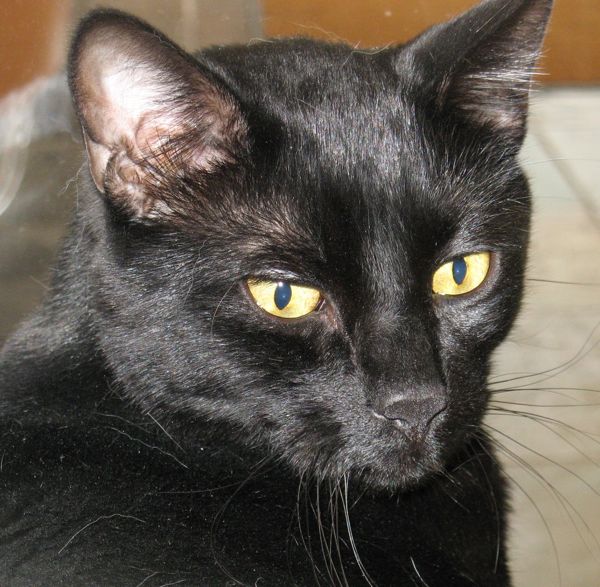
Tahoe Tails — Adoptable Pets in South Lake Tahoe

Violet has been in the shelter system for more than a year. She was transferred to our Meyers shelter in the hopes of finding a home at Lake Tahoe.

She is 5 years old and is very affectionate with people, but she’d rather be your only pet. Violet has her own large covered litter box.

Violet is spayed, microchipped, and vaccinated. She is at the El Dorado County Animal Services shelter in Meyers, along with many other dogs and cats who are waiting for their new homes. Go online to see photos and description of all pets at the shelter.

Call (530) 573.7925 for directions, hours, and other information on adopting a pet.

For spay-neuter assistance for South Tahoe residents, go online.

— Karen Kuentz


Pollock Pines camp registration opens in February

Sugarloaf Fine Arts Camp brings a unique camp experience to the students of El Dorado County. The weeklong sessions provide a supportive environment for campers to expand their fine arts skills and to experiment with new ones.

The camper’s week focuses on their specialty major and an elective of their choice and includes a daily recreation period and nightly campfire program. Sugarloaf is an overnight camp that runs Sunday to Saturday for each of the two sessions.

The staff includes many El Dorado County teachers and many Sugarloaf alumni. To be eligible, students will need to have completed fifth grade and not yet completed 12th grade by July of the year of camp. S

ugarloaf Fine Arts Camp is administered by the El Dorado County Office of Education. Priority for enrollment is given to El Dorado County students with out-of-county applicants also eligible. Sugarloaf Fine Arts Camp takes place at Sly Park Environmental Education Center in Pollock Pines.

Online applications for Sugarloaf Fine Arts Camp 2013 will be taken from Feb. 4-18.