Squaw-Alpine boss goes undercover at both resorts

By Kathryn Reed

New trainees throughout the season are par for the course at a ski resort. So when the “older” ski dude with what he describes as a blonde mullet and matching Fu Manchu beard showed up, it wasn’t any big deal. At least not at that moment.

The new kid, though, was actually their boss.

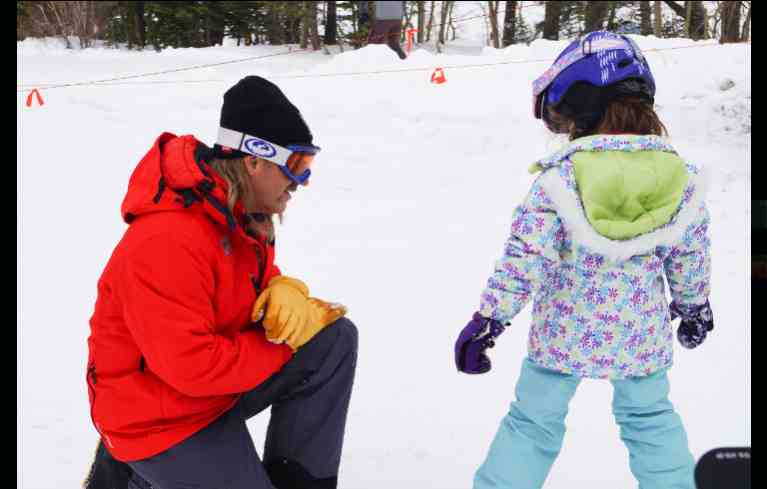
Andy Wirth, CEO and president of Squaw Valley and Alpine Meadows ski resorts, changed his look and job title in January unbeknownst all but a few key members of his executive team. And it was being filmed.

On March 8 at 8pm, Wirth will be the subject of the CBS show “Undercover Boss”. The show is all about a chief executive officer going undercover to see how his or her company is really functioning, to talk to the people doing the real work, to figure out what needs improving and what is working. The underlying theme of the show, which is in its fourth season, is bosses find out how their decisions affect others.

Andy Wirth, CEO of Squaw and Alpine, goes undercover to give a snowboarding lesson. Photo/Provided

Andy Wirth, CEO of Squaw and Alpine, goes undercover to give a snowboarding lesson. Photo/Provided

(Wirth has not seen the final cut of the show.)

“Probably the most single compelling aspect that still resonates with me today is the depth of character, passion and how much people care about their jobs,” Wirth told Lake Tahoe News. “On the one hand I’m proud to say I didn’t find anything surprising. I always knew we had a hard working, dedicated staff.”

He was approached to do the show through business associates in the Midwest. At first he was hesitant, but then the producers had answers to all of his concerns.

With 2,300 employees between both resorts during peak season, it’s hard for any boss to know everything that is going on. Wirth recommends this type of undercover operation for any CEO.

He was already one of those bosses who would get in the trenches. He’s worked lift maintenance, climbing to the top of lift towers.

But the show took it to a new level.

“I will look like a dork, but I am OK with that,” Wirth said.

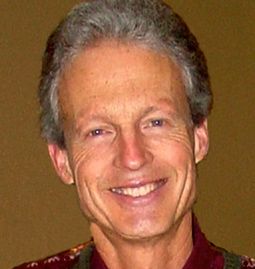
Andy Wirth -- what he really looks like. Photo/LTN file

Andy Wirth — what he really looks like. Photo/LTN file

At Alpine he worked in the terrain park and as a snowboard instructor; at Squaw he was on the ski patrol.

“I haven’t done a beacon search in a long, long time. That was a bit of a challenge,” Wirth said.

He took over Squaw in 2010 when KSL Capital Partners bought the resort, and added the job duties at Alpine when the resorts merged in 2011.

“The reason I’m CEO and president of a ski company is because I love this business. It includes the operations,” Wirth said. “To stand at the top of Squaw Peak and see the sunrise over Lake Tahoe in 30, 40 mph winds … I love that environment. It is home for me.”


Steven Robinson — 1946-2013

By Jane Braxton Little, Sacramento Bee

WESTWOOD – Steven Earl Robinson grew up in San Diego, but he lost his heart to the mountains and meadows of Lassen County’s Westwood on his very first visit.

An avid surfer from the time he could pick up a long board, Mr. Robinson pursued the sport until he entered the Air Force during the Vietnam War. He served most of his time working at a communications center in the Philippines, finishing his tour in Washington, D.C.

His life was changed by a visit to a friend in the tiny town of Westwood. He returned to Westwood in a week with all his possessions “and never looked back,” said his wife, Judy.

Mr. Robinson, who worked as a carpenter, loved the outdoors, especially fishing, she said.

But his true passion was Mountain Meadows Conservancy, the organization he founded in 2000 and served as a volunteer executive director until his death Feb. 17 after a lengthy illness. He was 66.

Mr. Robinson focused on halting a four-season resort planned for 7,000 acres of undeveloped land on Dyer Mountain – the biggest development proposal in the northern Sierra.

He was unpolished, plain-spoken and easily dismissed by would-be developers, who “seemed to mistakenly take him for a hermit,” said Tom Mooers, executive director of Sierra Watch, a Truckee-based conservation organization. “What they couldn’t see was Steve’s quiet, effective role as a leader,” he said. “The development has not been built and the mountain is still there.”

Mr. Robinson’s conservation work took him beyond Westwood to the entire Sierra Nevada range, where he developed relationships with other environmental groups and gradually built support for Mountain Meadows.

Mr. Robinson served six years on the board of the Sierra Nevada Alliance and was honored in 2010 with the Bedrock Award, given for commitment and leadership that benefits conservation of the entire 400-mile range.

He is survived by his wife, Judy of Westwood; son, Sparke Robinson of Grass Valley; daughters, Jackie Oswald of Otis, Ore., and Jennifer Roberts of Westwood; and nine grandchildren.

Services will be later this year.

In lieu of flowers, the family suggests a donation in Mr. Robinson’s name to the Mountain Meadows Conservancy, P.O. Box 40, Westwood, CA 96137.


Backcountry of Chile feature of film on North Shore

Alpenglow Sports presents the fifth and final installment of the 2012-13 Winter Film Series featuring Donny Roth on March 14 at Olympic Valley Lodge.

Roth has spent nine years searching remote corners of Chile looking for the perfect Southern Hemisphere backcountry skiing location. 2012 brought below average snowfall that created a last-second change of plans with two friends. Pulling together some unusual resources, the three friends head into the Cordillera, where few people have traveled in the winter. For a week, the team explores unique terrain, is blown away by incredible sunsets and condors flying overhead, all while making first descents on a daily basis.

As amazing as the trip was, the story has just begun. Is this the future of backcountry skiing in South America?

The Winter Film Series is free. It is designed to motivate, inspire, and educate. The show begins at 7pm.

Call Alpenglow Sports at (530) 583.6917 with questions.


Drug Store Project — 10 years of anti-drug message

Publisher’s note: This is first of a few articles about the Drug Store Project. This marks the 10-year anniversary of the program. This year’s event will be April 2 at Lake Tahoe Community College. For more info about volunteering, donating or if you have questions, email Lisa Huard at lhuard@ymail.com.

By Lisa Huard

The Drug Store Project is a reality-based depiction produced each year for the sixth-graders in the South Lake Tahoe area. We strive to show our youth the possible consequences one can experience with drug and alcohol use.

The research out there is mind-boggling even for those of us who regularly use it. There are endless studies and just as many interpretations of the data, but one thing continues to stand out amongst all the information; the sooner we can deter a youth from experimenting with drugs and alcohol, the better the chance they will not use drugs as an adult.

It's not real here -- but the consequences of drug use and abuse could result in death. Photo/LTN file

It’s not real in this scene from Drug Store Project — but the consequences of drug use and abuse could result in death. Photo/LTN file

Going from childhood to adolescence is the tightrope our kids walk every day and learning “who they are” and “what they believe to be true about themselves” is their individual challenge.

Yes we can teach them the information, providing we’ve taken the time to understand it ourselves. But when the rubber hits the road it will be the individual themselves who makes the final decision.

“Choices, what are yours” is a reminder to our kids that they are truly the one making decisions about their health and future.

This day-long event isn’t the answer, but it is an opportunity for all involved to learn factual information and to step out of the “me zone” and learn about how our behaviors affect all of those who love and care for us. Tobacco, alcohol, marijuana and other drug use/abuse has an enormous negative ripple effect on family members, friends, communities, and our nation. It costs us in lives and it’s financially costing our nation more and more.

The National Institute on Drug Abuse conducts a yearly survey that focuses on the nation’s eighth-, 10th-, and 12th-grade students from 395 public and private schools accounting for approximately 50,000 students. Students are surveyed as teenagers and followed subsequently for many years on an individual basis. The 2012 Monitoring the Future survey is comprehensive and one conclusion drawn shows a continued high use of marijuana by our kids.

Our local California Healthy Kids Survey mirrors that concern. The survey also showed that teens’ perception of marijuana’s harmfulness is on the decline; they believe that it’s not such a big deal. This in itself could be the reason of increased experimentation/use of marijuana use amongst our youth.

NIDA sites a 38-year funded study which was published this year in the Proceedings of the National Academy of Sciences which showed a significant drop in IQ (8-points) between the ages of 13 and 38 of people who were cannabis dependent. Those using cannabis heavily before age 18 showed impaired mental abilities even after they stopped using. Their findings, as many others, show a link between prolonged marijuana use and cognitive impairment.

I’d love to say that our educational system provided for drug prevention and violence prevention education beginning in grade K and throughout a child’s learning career, but it doesn’t. If it did, if the money and time were spent, I do believe our children would do better as students, be more successful meandering through adolescence, and would be happier and more thriving adults. I also venture to say that with consistent and accurate information in school and at home, we’d have less of a demand for drugs therefore we’d see less deaths, less health issues, less health costs, and more productive citizens.

As I indicated earlier, the Drug Store Project isn’t a cure, but it does provide all involved with information to consider and a platform to begin the discussion. We can all do our part by becoming more knowledgeable, more aware, and more approachable in speaking and supporting our youth.

If you’d like to see a bit more about our program, go online.

Lisa Huard is a safe schools consultant who lives in South Lake Tahoe.


Arts scene in Tahoe thriving

By Robert Schimmel

I’ve been involved with and in the arts for too many years to put up with the complaints regarding “there’s nothing to do in Tahoe”.

Sure, this isn’t New York, San Francisco, Chicago, Santa Fe, Jackson Hole or even Vegas, which may just be why you are here. This is beautifully and uniquely Tahoe, small and spectacular in myriad ways. And trust me, in case you haven’t been to the other places, they don’t have Big Blue, snowcapped skiable peaks, hiking, camping, boating, fishing, stage shows, five-star dining, etc., all at their fingertips. Nope, they have to drive for hours to find views that can’t even match our repetitiously scenic shots or to breathe air they can’t see.

Robert Schimmel

Robert Schimmel

So when someone moans about his or her boredom or lack of stimulating cultural activity, do us all a favor and encourage a return ticket, a Google search class at Lake Tahoe Community College, or getting involved with solutions rather than complaints. Then mention this sampling of events to see if there’s any real heart behind the whining as Tahoe’s vibrant community of amazing artists and organizations step up to make this as unique and fulfilling a place to live as any traffic congested or glamour saturated, billboard lined boulevard in this country.

Sure, Tahoe has challenges regarding sustaining and growing the arts like any city, and I fully intend to keep you as aware of them as I can and to offer solutions or involvement opportunities. Meanwhile, let’s get a grip and appreciate this sliver of great offerings.

January began with Lake Tahoe Community College’s opening of three stimulating and distinct exhibits. This art department holds a candle to no one and seeks the finest nationally known or academically accomplished artists to take part in its Haldan Gallery shows. The “Cadre Show” — Laboratory for new Media at San Jose State University — shook the usual parameters of simple viewing. I loved it once the artists explained their interactive concepts. In The Foyer Gallery, Suzanne Roberts presents her “The World of Streets” photo exhibit that opens ones eyes to just that. And in The Commons Gallery the South Tahoe High School Student Exhibition amazes and encourages anyone regarding creativity in our young people.

All exhibits are up through mid-March.

Shifting to classical music and choral performance, Tahoe Symphony Orchestra and Chorus (TOCCATA) had its eighth winter MusicFest Jan. 19-20 with nationally known violinist Elizabeth Pitcairn performing Prokofiev’s Concerto in D major on the legendary red Stradivarius violin in South Lake Tahoe and Incline Village. Trust me, again, this was fabulous and a must-hear when she returns in September.

A similar and equally elegant performance I missed came Jan. 31 — W’intermezzo at Edgewood in Stateline presented by Soroptimist International of South Lake Tahoe. It featured the internationally acclaimed classical duo of American pianist Deborah Dewey and Icelandic violinist Elfa Run Kristinsdottir performing a selection of works by Telemann, Schubert and others.

And for the second straight year, Rotary’s classy and intimate Off the Wall fine art auction on Feb. 9 at Inn by the Lake in the South Lake Tahoe was a resounding success. Notable artists and guests partook in the social benefit and excitement of the live auction, tasty hors d’oeuvres and Champagne. This small, but warm venue seems to fit perfectly, but I hope over the next few years we will see a larger scale fine art affair developing with the community’s support for scholarships made possible by Rotary.

Oh, whispers have it that just maybe LTCC, who partnered a bit this year, will continue and even increase its support. Some of us recall the elegant Art from the Heart events years ago.

Bert’s Café owner Bueno Ketelsen and Casey Bartlemay perform the Paso Doble dance March 1. Photo/Kathryn Reed

Bueno Ketelsen, Bert’s Cafe owner, and Casey Bartlemay perform the Paso Doble dance March 1. Photo/Kathryn Reed

On March 1 a full house resulted at Dancing with the Stars, presented by Tahoe Arts Project at MontBleu casino, with more buzz and excitement than I’ve seen in quite awhile for an informal, non-auction, no freebies event. In this case, the visiting artists were the Utah Ballroom Dance Company that makes their shows unique with an adaptation of the popular TV series “Dancing with the Stars” format in their week-ending public performance. The kids, parents, and entire audience loved the experience, and this particular formula, to me, is a grand slam as it also brought divergent elements of the community into the mix and expanded appreciation for the arts all the more. Thank you, TAP and UBDC. Are we thinking annual event?

The full list of happenings is lengthy and may or may not fit ones taste or daily needs, but Tahoe’s “got game” and don’t let anyone tell you differently unless they can buy your ticket, too.

Robert Schimmel is a professional artist and teacher in South Lake Tahoe as well as host of “Lake Tahoe Art Scene” on KTHO radio on Thursdays at 5:15pm.


Tahoe Tails — Adoptable Pets in South Lake Tahoe

Wormie is an affectionate, super high energy Jack Russell mixed with poodle. At least that’s our best guess.

dogHe weighs about 20 pounds and he likes well behaved children. He is crate trained, and would like a very active owner. He would probably do very well at agility or flyball.

And he is looking forward to receiving a new name.

Wormie is neutered, microchipped, and vaccinated. He is at the El Dorado County Animal Services shelter in Meyers, along with many other dogs and cats who are waiting for their new homes. Go online to see photos and description of all pets at the shelter.

Call (530) 573.7925 for directions, hours, and other information on adopting a pet.

For spay-neuter assistance for South Tahoe residents, go online.

— Karen Kuentz


South Tahoe planning for its 50th anniversary

South Lake Tahoe has launched the Tahoe Heritage Program in honor of the city’s 50th anniversary on Nov. 30, 2015.

sltThis program is being organized to record the oral history of Lake Tahoe’s early history by some of the original families which settled in the South Shore.

The city envisions the creation of partnerships to include an anniversary book and special event celebrations throughout the year.

Another idea is to create fireside chats at Lakeview Commons during the summer months. Community members would be encouraged to attend to share their Tahoe stories while roasting marshmallows and sipping on hot cocoa around the fire pit.

Volunteers for the Tahoe Heritage Program can be longtime local or new community members. The only requirement is to have a passion for the South Shore’s history.

To volunteer for this program, call Tracy at (530) 542.6093 or via email tfranklin@cityofslt.us.


Writing workshop focuses on creative process

Through fun writing prompts, lively discussions, and in-depth readings Creative Writing: Exploring the Creative Process is designed to be a playful and productive class to open your mind to new approaches to your own creative process.

Experiment with catalysts for inspiration from the Surrealists and Oulipo to art and cross-genre works. This class is for all levels of writers looking to find new connections and infuse imagination into their writing.

Karen Terrey has an MFA in creative writing from Goddard College. She teaches English as an adjunct professor at Lake Tahoe Community College, and works as a writing coach in Truckee through her business Tangled Roots Writing.

The four-week class will be on Thursdays from 6-8:30pm starting April 4. Cost is $89. It will be at Sierra College’s Truckee campus. To signup, call (916) 781.6280 or email ghage@sierracollege.edu.


4-day photo-art workshop in Yosemite

The Yosemite Twin Valleys Waterfall Workshops on May 3-6 offers unique opportunities for photographers and outdoor enthusiasts to compare and contrast natural and geological features of Yosemite and Hetch Hetchy landscapes.

Activities will include photography field sessions and a two-day plein air painting workshop. Other highlights include interpretive natural history hikes and birding walks throughout the “Twin Valleys” of Yosemite National Park.

James McGrew returns as the leader of the annual four-day event, and he will be joined by several local Yosemite professional photography guides and naturalists. McGrew and David Lukas will each lead an interpretive hike on May 3 that will serve as an introduction to the landscape and its rich history. A two-day combined plein air painting and naturalist workshop conducted by McGrew will begin on May 4 and will span both valleys. Alternately, several options of morning and evening light photo field sessions will be available on all four days from a faculty of well known Yosemite photographers.

Central to all programs will be a focus on the waterfalls during their peak season. National Geographic photographer, Phil Schermeister will be directing a waterfalls class from Yosemite Valley. Robb Hirsch will share elements of composition with aspiring photographers in Hetch Hetchy while Yosemite veterans Al Golub, Gabriel Mange, and Joshua Cripps will guide daily photo sessions from various shooting locations.

For more information about YExplore, contact Lindsey Beedlel at lbeedle@christiecomm.com or  (805) 969.3744.


Math is becoming bedtime reading for kids

By Bonnie Rochman, Time

One recent evening in West Caldwell, N.J., a library hosted a pajama party. Twenty little kids in princess nightgowns and football flannels counted out glittery animal stickers and pasted them onto homemade dominoes. Then they raced a stuffed pink frog on a carabiner up and down a zipline, raising and lowering their arms to speed it up and slow it down–physics in motion.

Laura Bilodeau Overdeck, a Princeton-trained astrophysicist turned stay-at-home mom, watched the scene intently. This pajama party was her idea. She’s the founder of the nonprofit Bedtime Math, and she wants kids to fall in love with numbers. As part of that mission, she wants to change the way parents put their kids to bed.

mathIt’s not that Overdeck, 43, is quibbling with the sacrosanct bath-then-book nighttime routine. She just wants parents to add a math problem, as she and her husband, investment-fund manager John Overdeck, have done with their kids, ages 4, 7 and 9. A year ago she launched the Bedtime Math website; an app and book are forthcoming. She’s reached out to libraries across the U.S., offering gratis do-it-yourself kits for Bedtime Math pajama parties–dominoes, stickers and zip-line cord included. She is exploring partnerships with organizations like the Girl Scouts in Chicago and is hoping to reach science museums. “Everyone knows they should read a book to their kids before bed,” she says, “but nobody knows they should be doing math too.”

The core of Bedtime Math is pretty simple: a free daily math problem, geared to one of three levels of difficulty: “wee ones” (prekindergarten), “little kids” (kindergarten to second grade or so) and “big kids” (second grade and up). The subjects tend to be ones that especially appeal to children–candy, for example. A recent wee-ones calculation: “M&M’s last 13 months, but Life Savers last only 9 months, despite their name. How many months will those M&M’s outlast the Life Savers?” States, weather and arcane holidays like International Pancake Day also play starring roles, as do animals; a recent problem asked kids to calculate how far a skunk can spray its scent.

Overdeck is hoping that candy and other child-friendly puzzles can be a remedy for math anxiety. Research shows that early math skills are a better predictor of academic success than reading ability. But the U.S. is in a numbers slump: America’s students rank 25th out of 34 industrialized countries in math. Everyone from the Girl Scouts to Sesame Street has launched efforts to reverse the trend.

“U.S. children are not performing up to the level one would expect,” says Sian Beilock, author of Choke, about performance anxiety. Part of the problem might be cultural. “You never hear people walking around bragging that they can’t read,” she says, “but you hear people all the time saying ‘I don’t do numbers.'” Beilock, a psychology professor at the University of Chicago, will soon lead a study of the program’s impact on two groups of preschool- and kindergarten-age children.

“Bedtime Math is part of a project that a lot of people are working on, which is, What is the cultural shift that will get kids coming into school already comfortable with math?” says Dan Finkel, a co-founder of Math for Love, a Seattle outfit that advises teachers on how to use games to spice up math education.

In contrast to Math for Love, Overdeck targets parents, not educators.

“If it’s related to schools, it sounds compulsory,” she says. “We want kids to feel about math the way they feel about dessert after dinner.”

The Overdecks have always done math — bedtime and otherwise — with their kids, beginning when their oldest was 2: they would count the appendages on the stuffed animals in her collection. Last February, Laura began to share her family’s math habit, e-mailing a few friends and relatives a sample problem. Since then, 20,000 people have signed up to receive her daily messages. Bedtime Math now has a staff of five; Laura still designs the problems, with the help of a calendar of dates worthy of a challenge, such as Cookie Monster’s birthday and the anniversary of Alaska’s statehood.

It’s hard to argue that Bedtime Math isn’t fun, but some are skeptical that it’s a cure-all.

“It won’t be a slam dunk for everyone who uses it,” says Finkel, who thinks math before bedtime revs kids up when they should be winding down.

With the University of Chicago study yet to start, the strongest evidence that Bedtime Math can change children’s skills comes from data collected from Snacktime Math, a program of Bedtime Math problems given to kids attending summer camp at a New Jersey Boys & Girls Club: more than 70 percent of the largely low-income students improved their skills after a six-week session.

Most of the other data in support of Bedtime Math are, for the time being, anecdotal.

One mother told Overdeck that her child’s zest for Bedtime Math enables her to use it as a threat: “If you don’t brush your teeth now, no math tonight!”

Sandy Smith, a Bedtime Math subscriber who attended the West Caldwell pajama party with her two preschoolers, says, “I always concentrated on the reading part, and I forgot to focus on the math.” Her confession is all the more revealing because she is an elementary school teacher.

In early February, Bedtime Math threw a pajama party at Manhattan’s brand-new Museum of Mathematics, where kids can do things like live out geometry by pedaling square-wheeled trikes over curved tracks. The Overdecks are major donors to the museum, where some 100 kids made their own card-stock clocks and tangrams while sipping hot chocolate. (Parents could opt for a splash of Kahlúa in theirs.)

“We want math to be warm and fuzzy,” says Overdeck. Which isn’t to say it should be easy. Thanks to popular demand, at the end of February, Bedtime Math is rolling out a new, Einstein-like level of difficulty, “the sky’s the limit,” for tweens, teens and even adults. When it comes to end-of-the-day problem solving, why should little kids have all the fun?