STHS grad retells near-death experience to help others

Publisher’s note: This is one of a few articles about the Drug Store Project. This marks the 10-year anniversary of the program. This year’s event will be April 2 at Lake Tahoe Community College. For more info about volunteering, donating or if you have questions, email Lisa Huard at lhuard@ymail.com.

By Molly Cocking Lovell

I was your regular 15-year-old kid. I thought I was untouchable, nothing could ever happen to me. Yes, I had those people come talk to us in health class about bad things that had happened to them because of drugs or alcohol, but it could never happen to me.

That all changed the summer after my freshman year in high school. I had just finished my first year at South Tahoe High School, excelling in my studies, completing my reign as class president, and creating great memories with a wonderful group of friends. I went out to a party for my first time that summer, lying to my parents, telling them I was going to a friend’s house to watch movies. The last thing I remember from that night was drinking my first beer; the next thing I remember was waking up in the intensive care unit at Barton Memorial Hospital with a tube down my throat breathing for me.
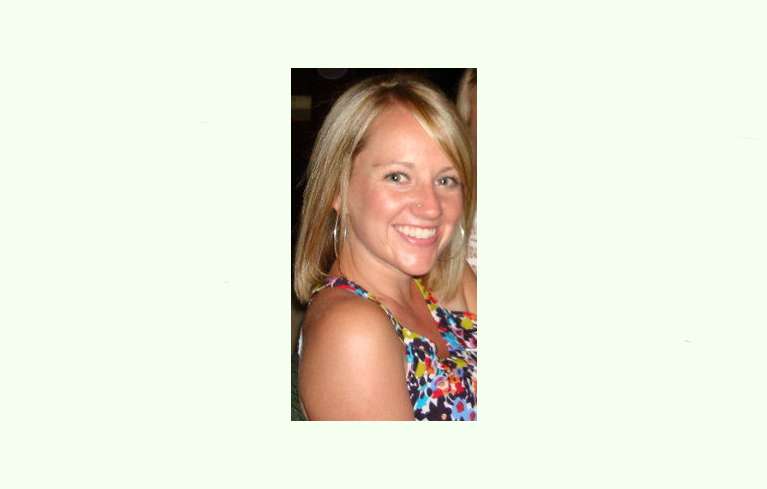
Molly Cocking

Molly Cocking Lovell

The rest of the night has had to be retold to me by friends and family who were there to witness the worse night of my life, all due to the choices I decided to make.

After my first beer I started drinking hard alcohol like it was lemonade. At that point I was so intoxicated I had no gag reflex telling me what I was ingesting was toxic. I woke up in the morning with cuts, bruises and aches everywhere, which was explained to me that there was a group of guys at the party I didn’t know holding me up and taking bets on how long it would take for me to fall over once they let go of me. I also fell down a flight of concrete stairs, which ended in a very expensive CAT scan of my head when I arrived at the hospital.

My friends I was with started to get concerned when I was in the bathroom vomiting blood and they couldn’t get me to respond to them. My friends wanted to call 911, but people at the party didn’t want to get in trouble and told them to just let me sleep it off in the back room; “I’d be fine.”

To this day I owe my life to my friends who didn’t listen and called 911, because when I arrived at the hospital the emergency room physician said if I had gotten there 15 minutes later, I might have not been able to be resuscitated. My friends, in a panic, started driving me to the hospital instead of waiting for an ambulance. In route a friend put her hand over my mouth and realized I had stopped breathing. When we arrived in the ambulance bay my parents were there and started CPR on me on the pavement until a gurney came. Inside the ER a tube was placed down into my lungs to breath for me because I was so intoxicated I had lost the drive to breath. IVs were started, my stomach was pumped, a catheter was placed into my bladder and a diaper was put on me because I had lost control of my bowel movements.

My blood alcohol came back at 0.25, with the added suspicion that some sort of synthetic medication might have also been put in my drink due to my unresponsiveness.

I was moved to the intensive care unit where the doctor told my parents they had done everything they could, but there was a chance I wouldn’t make it through the night. I had drunk in one night what many adults might drink in a month or two. The doctor informed them my organs had begun to shut down and time would only tell if I came out intact.

I woke up the next morning still not remembering anything from the night before, but as soon as I opened my eyes and saw my mom next to my bed I knew what I had done and what I had put my family and friends through.

They extubated me that morning from the machine breathing for me and started to pull tubes and lines, which was all very unpleasant. I was discharged later in the afternoon to go home very banged up and possessing the worst hangover anyone could ever imagine.

For less than 24 hours in the hospital the bill my parents were hit with was more than $20,000. This was more than 10 years ago, so the bill today would be at least double.

I had weekly appointments with my primary care doctor to check on my liver and kidney functions to make sure everything was still functioning correctly. I’m very lucky to say I walked away physically unscathed after my wounds healed and the weeklong hangover ran its course.

My emotional wellbeing took some time to get back. I had done something horrible to my family that no one ever wishes to do. I had made my parents face potentially having to bury their child and my brothers to go on without a big sister. I had put all my friends who had stuck their necks out for me in a bad position with their parents and the law. But those friends are why I’m alive. If they hadn’t been watching out for me, I would not be here today to tell my story, and hopefully prevent other people from making the same mistakes I did.

I speak every year at the Drug Store Project not so much telling kids “don’t drink” but instead “to make smart choices”. The easiest way to not get yourself into a situation like mine is to abstain from drinking. But if it’s something that is decided must be tried, you need to have people around you who care about you and have your best interest in mind if something were to happen.

I also caution students about the ever evolving date rape drugs, and the importance of never leaving your drink (alcoholic or non-alcoholic) unattended. This too was very likely what I ran into that night as well. In the years that I have done Drug Store, if I have even touched one kid, I’ve done what I set out to do. If I prevent one person and their family and friends from going though what we all went through that night, this whole project has been worth it!

Molly Cocking Lovell is an emergency room nurse at Carson Tahoe Regional Medical Center.


Reno art director to give talk in Incline

William L. Fox, director of the Center for Art + Environment at the Nevada Museum of Art in Reno, will present an illustrated journey of art made during the Anthropocene, an informal geologic chronological term that serves to mark the evidence and extent of human activities that have had a significant global impact on the Earth’s ecosystems.

The artwork ranges from landscape painting to earthworks and beyond.

William L. Fox

William L. Fox

This is part of UC Davis Tahoe Environmental Research Center’s monthly lecture series.  The event is April 18 at 5:30pm.

Fox has variously been called an art critic, science writer, and cultural geographer. He has published 15 books on cognition and landscape, numerous essays in art monographs, magazines and journals, and fifteen collections of poetry. Fox has researched and written books set in the Antarctic, the Arctic, and the deserts of Chile, Australia, and the United States. He is a fellow of both the Royal Geographical Society and Explorers Club, and recipient of fellowships from the Guggenheim Foundation, National Endowment for the Humanities, and National Science Foundation. He has been a visiting scholar at the Getty Research Institute, the Australian National University, and National Museum of Australia.

TERC is at 291 Country Club Drive, Incline Village. The event costs $5.

For additional information, contact Heather Segale at (775) 881.7562 or hmsegale@ucdavis.edu.


Bowers Mansion earns national significance

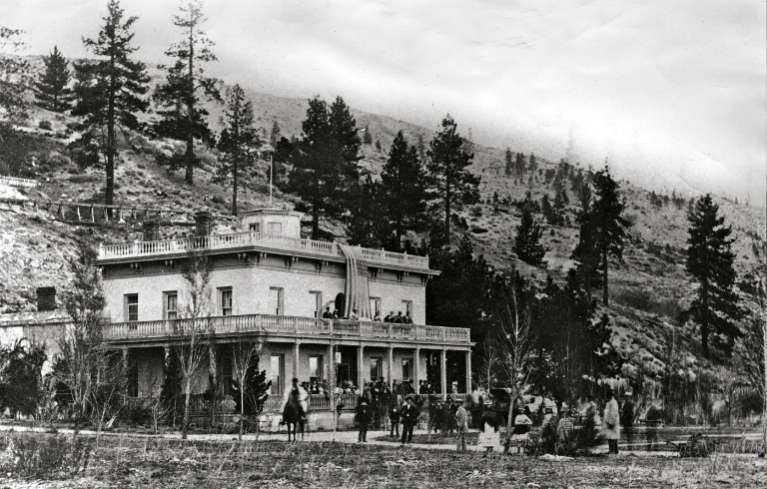
Bowers Mansion in the Washoe Valley is now on the National Register of Historic Places.

In 1976 it was listed as a local historic place, but this month it was given national significance. The National Register is the nation’s official list of cultural resources worthy of preservation.

Constructed between 1862 and 1863, Bowers Mansion is located on Old Highway 395 in Washoe City. The mansion conveys the story of its owners, Sanford (Sandy) and Eilley Bowers, and the successes and failures associated with the wealth they amassed and lost as the West shifted from placer to hard rock mining. Notably, the Bowers’ home is an early example of how wealth acquired from hard rock mining enabled impressive mansions to be built away from the mine sites.

Bowers Mansion becomes nationally recognized. Photo/Provided

Bowers Mansion becomes nationally recognized. Photo/Provided

The elevated historical recognition provides a national context for hard rock mining as well as an opportunity in the future to evaluate the Mansion as a National Historic Landmark.

Bowers Mansion retains excellent historic integrity in its interior and exterior. Despite changes in ownership and declines in maintenance, the mansion was restored and rehabilitated during the 1960s. Today, the expansive home and grounds are maintained as the Bowers Mansion Regional Park where views both to and from Washoe Valley remain much as they did during the days of the Bowers.

For additional information about Bowers Mansion, go online.


Hotel lobbies becoming Wi-Fi magnets

By Barbara De Lollis, USA Today

Travelers may hate paying for Wi-Fi in their guest rooms, but more hotels are getting ready to offer it for free in lobbies.

More than 300 Marriott Hotels & Resorts locations will flip the switch in the coming weeks on free lobby Wi-Fi to please guests and non-guests alike, a senior Marriott executive tells USA TODAY.

Wi-Fi currently is free in the lobbies of about 185 of Marriott’s nearly 500 hotels, and it will become standard across all hotels by March 31, says Marriott’s Michael Dail.

“We have so many people who don’t spend the night but may come for a meeting or happy hours. That’s what they want,” says Dail, the brand’s marketing vice president. “A lot of our hotels already offer (free Wi-Fi), but we want to make it standard.”

The move toward free lobby Wi-Fi underscores how hotels have sought to reinvent lifeless lobbies and common areas to lure a new generation of travelers who work and socialize differently. The hotels are adding libraries, lounges, communal tables, desktop computers, ping pong tables and various other conversation starters with the hope that people will linger and work over coffee, cocktails or a $10 hummus plate.

“Over the past five years, we have renovated (hotel lobbies) and overhauled the menus, so the last piece is opening up the Wi-Fi access,” Dail says. “These are great social hubs for meetings, for leisure travelers, for social business. People are congregating there like people do in a house kitchen.”

Some owners of upscale hotels predicted this would be the future. Sunstone Hotel Investors, for instance, began making Wi-Fi free in the lobbies of its Marriott-brand hotels starting about three years ago as they were updated, says Marc Hoffman, the company’s executive vice president. The company owns Marriott hotels in Boston, Philadelphia, Portland, and Park City.

“We noticed several years ago the trend for travelers to want to enjoy public area, bars, restaurants, lobbies in a new way,” he says. People also rely on lobby Wi-Fi to “reduce the frustration” over paying for Internet in their rooms, he says.

As Sunstone revamped each lobby, the spaces were unveiled with free Wi-Fi. As a result, Sunstone has seen a “dramatic increase” in the use of the spaces, food and beverage sales, and guest satisfaction, Hoffman says.

Hyatt behind Marriott

Lagging behind Marriott is Chicago-based Hyatt, which still has several locations where lobby visitors seeking Wi-Fi will be asked to pay a fee, says Hyatt spokeswoman Amy Patti.

Many of Hyatt’s full-service hotels in the U.S. have installed two desktop computers that provide 15 minutes’ worth of free Internet, she says.

But in today’s wired world, travelers get annoyed and may even move when they discover that they have to pay, since Wi-Fi is free in so many other places.

“It’s interesting how many of the upper end and luxury hotels want to charge for this service, while at the same time trying to position their public spaces as ‘social hubs’ that are supposed to be friendly places to informally connect, socialize and relax,” says frequent traveler Mark Snyder. “It happened to me recently in NYC, so I went around the corner to a place that truly is a ‘social hub’ — Starbucks.”

Frequent traveler Henry DeLozier also has a strategy to get around Wi-Fi fees in hotels where he doesn’t have elite status, such as Fairmont. “I refuse to pay and carry a wireless modem instead,” he says.

Hilton, Doubletree, Sheraton: Free lobby Wi-Fi old news

Marriott and Hyatt, however, are exceptions.

Wi-Fi, for instance, has been free in the lobbies of the 300-location Doubletree by Hilton chain since 2005. And last year, the 550-location Hilton chain made it free, says spokeswoman Dasha Ross.

Starwood’s Sheraton chain also offers free Wi-Fi in its lobbies.

Does Marriott’s move mean that travelers can expect even bigger news: That the chain will make Wi-Fi free in guest rooms?

“We’d love to do the full hotel, but we’re not ready,” Dail says.

Potential downside?

When large hotels make Wi-Fi free in public spaces, data usage typically soars, says Roger Crellin, president of hotel-Internet provider iBahn.

“We have seen an up to 300 percent increase in data traffic,” he says. “From a business perspective it’s a great service.”


TRPA announces Best in the Basin winners

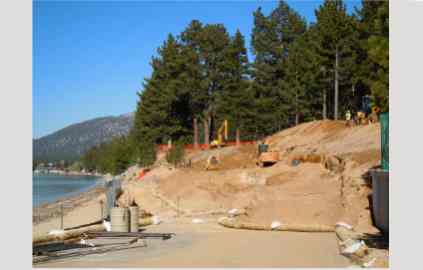
Lakeview Commons continues to win awards. Photo/LTN June 2011

Lakeview Commons in South Lake Tahoe continues to win awards. Photo/LTN June 2011

The Tahoe Regional Planning Agency will recognize recipients of the 2012 Best in the Basin Awards at its March 27 Governing Board meeting beginning at 9:30am in Stateline.

This is the 23rd year TRPA’s Best in the Basin awards program has recognized projects that demonstrate exceptional planning, design, and compatibility with the Lake Tahoe environment. Local professionals in the fields of landscaping, planning, engineering, water quality, and resource management judged each category.

The 2012 Best in the Basin project winners are:

Stormwater BMPs

El Dorado County, Donaldo Palaroan CE, for the BMP Retrofit of the Shakori Drive Maintenance Yard, 1121 Shakori Drive, Meyers.

Residential Remodel and Green Building Project

David Reichel and Katharine Miller for the Ottawa Drive Garage and Guest House Project, 1330 Ottawa Drive, Meyers.

Residential Rebuild Project

Bill and Sue Parker for the Parker Family Retreat, 6900 West Lake Blvd., Tahoma.

Commercial Project

Alan and Martha Bryan for the Cedar Glen Lodge Remodel, 6589 North Lake Blvd., Tahoe Vista.

Restoration Project

Incline Village General Improvement District, Brad Johnson PE, for the Third Creek Restoration Project Final Phase, between Highway 28 and the lake, Incline Village.

Restoration Project, Honorable Mention

Nevada Division of State Lands, Elyse Randles Land Agent, for the Burgundy Hills Soil and Stream Environment Zone Restoration Project, Country Club Drive, Incline Village.

Erosion Control Project

Washoe County, Kris Klein, and Nevada Tahoe Conservation District, Megan Kelley PE, for the Hybrid BMP Project, Village Boulevard between Ace Court and Golfers Pass Road, Incline Village.

Public Service Project

Incline Village General Improvement District, Brad Johnson PE, for the Diamond Peak Skier Services Building, 1210 Ski Way, Incline Village.

Forest Fuel Reduction Project

Meeks Bay Fire Protection District and Area Homeowners, Come Again Meadow Fuel Reduction and Meadow Restoration Project, 3 Ring Road, Rubicon Bay.

Forest Fuel Reduction Project Honorable Mention

Tahoe Douglas Fire Protection District and Logan Creek Community Homeowners, Logan Creek Community Defensible Space Project, Glenbrook.

Recreation Project

Tahoe City Public Utility District for the Lakeside Trail, a 1-mile segment of trail connecting the “64 acres” to the Tahoe State Recreation Area, Tahoe City.

Shorezone Project

South Lake Tahoe, Hillary Roverud, and California Tahoe Conservancy, Bruce Eisner, for the El Dorado Beach Improvement Project at Lakeview Commons, Lake Tahoe Boulevard and Lakeview Avenue, South Lake Tahoe.

Other/Mixed-Use Project

Tahoe Yacht Harbor LLC, Jim Phelan Manager, for the Tahoe City Marina Master Plan, 700 North Lake Blvd., Tahoe City.

—-

For 2013, the Best in the Basin nomination period will run from Jan. 1 to Dec. 31 for projects that are completed between Oct. 12, 2012 and Dec. 31, 2013.

The updated nomination period will allow the judging panel to attend project tours the following spring or early summer when snow has receded and vegetation is at its best, rather than dodging changing weather conditions and visiting winterized sites in late October or November as has been the practice.

For additional information, call Jeff Cowen at (775) 589.5278 or email to jcowen@trpa.org.


A glimpse into the sheriff’s department

By Ted Long

On March 19, I completed my first session of the El Dorado County Sheriff’s Citizens Academy. Of the 30 participants, I was the only one from South Lake Tahoe, and like many other things I have done in Placerville, it seems that Lake Tahoe is in a different world.

And with the new lines for supervisor we will soon lose a resident supervisor.

Ted Long

Ted Long

I am participating in the program for several reasons, one is just something to do, but more important as a former attorney who has seem his share of police abuse, former grand jury member who has investigated and reported on the sheriff’s office several times and as a curious citizen. In an effort to encourage more South Lake participation in county affairs I would like to share with you my weekly adventure.

The class, 14 in all, meets every Tuesday at the government center and according to Sheriff John D’Agostini, is done as an effort to inform and educate the public on the operation of the sheriffs’ office. The sessions will cover all aspects of the sheriff department from hiring to actual hands-on operations and include a ride along.

Session one was about the hiring practices and training of a new sheriff’s deputy. The class was run by Bob Ashworth, a captain with 25 years of service in the department. A very likable guy who answered everyone’s questions. He used his path as an example of the process, starting with his teen-age desire to be a cop, his military service while he waited to be old enough, 21, to apply for a job with a police department. After five years in Birmingham, Ala., he came to El Dorado County where he has worked his way up to captain.

While his presentation is homey and interesting, the best part for me was the questions. He explained how certain issues in your past might or would disqualify you for the job, such things as drugs, prior criminal behavior, questionable events dealing with sex and other behavior, all of which seemed to make sense, except when asked if there were any real research on the truth of these conclusions, he said no.

There is a strong military influence as you might suspect. The problem as I see it is that through years of “inbreeding” the department reflects a certain lack of diversity. A large group of similar thinking individuals, hiring others. In explaining the interview process I noted there was no citizen input. Ashworth seemed to think that it might not be useful. He did note that the use of marijuana is not as much a barrier as it use to be, especially medical use. It just seemed to me that seeing such a change might open the department to consider other issues. For example, a non-violent criminal record as a youth, might just be the lesson that would make someone a good cop? Just a thought, which a citizen participant might bring?

Next week is a tour of the communications center and the jail.

Ted Long is a resident of South Lake Tahoe, former City Council member and has been on the El Dorado County Grand Jury.


Author, photographer, climber to tell stories of India

Last summer and fall, with three Canadians and four Indian climbers, Andy Selters went to an area at the northern tip of India that, due to border disputes, had been prohibited and unexplored. The team discovered high passes and wildlife, and climbed and named several peaks over 20,000 feet high.

After climbing, Selters stayed on in an isolated village that had not hosted a Westerner before. He befriended the people and documented much of their vanishing, traditional way of life.

Now he is sharing his experience. Mixing photographs, recorded audio, and live narration, Mountains of the Blue Sheep portrays the expedition and the village people, and tells the hidden history of one of the world’s most remarkable yet least known mountain areas in the world.

The show is sponsored by LTCC’s Wilderness Education Department. It is in part a benefit for the Sierra Avalanche Center. The center will have drawings and giveaways for outdoor gear too. Admission is $10 at the door.

The event is April 12 at 7:30pm at Lake Tahoe Community College’s Duke Theater, One College Drive, South Lake Tahoe.

For more details on the show content and Selters, go online.


‘Best of Broadway’ coming to Truckee

Colorful costumes, resounding voices and contagious songs will soon fill the Truckee High School theater as the hard work of 30 students comes to fruition on May 10, the opening night of “Best of Broadway!”

Since February, performers in the Truckee High School Drama Club have been rehearsing 15 hours per week.

Barbara Wilkinson is this year’s producer.

Dancers from InnerRythms Dance Centre will be performing in a number of songs including “Cell Block Tango” from “Chicago.” Inner Rhythms’ director Elizabeth Archer is the choreographer for the musical.

The show’s volunteer vocal coach Linda Saxton, youth program director at the Nevada Opera, brings more than 35 years of musical expertise to the production. Costumes, designed by volunteer Jennifer Boehm, will

vary from one scene to the next as the eras depicted in the various featured musicals – expect to see everything from flapper style dresses to bohemian and hippie outfits to present day street wear.

Tickets will be available beginning April 10 at Truckee Community Recreation Center located off the

Pioneer Center round-a-bout at 8924 Donner Pass Road. Tickets will also be available each night of performance at the door if they have not already sold out.

Performances will take place at 7pm on May 10, 11, 16, 17 and 18 and there is a special Mother’s Day matinee at 2pm on May 12.


Iraq war is missing from U.S. classrooms

By Jonathan Zimmerman

Upon today’s 10th anniversary of America’s war in Iraq, a critical question with serious ramifications has been little explored: What are our children being taught in schools about the conflict, as it passes from “current events” into history?

To answer this question, one obvious place to start is school textbooks. I looked at several of them, and was happily surprised. The books present a fairly complex and balanced view of the war in Iraq, avoiding the falsehoods and sugarcoating that has so often marred American history instruction. But textbooks only tell part of the story.

Just as important is what is actually emphasized in the classrooms, and the ability of teachers to engage in real inquiry. Unfortunately, a combination of school policies and judicial decisions have made it so that many kids learn little or nothing about what we have done in Iraq, or why we have done it.

I’m a professor of education and history, and wrote a book examining conflicts over history in American public schools. But for me, this probe is more than theoretical: My daughter is an 11th-grader in a suburban public high school, where she takes Advanced Placement U.S. History.

Her textbook, “The Enduring Vision: A History of the American People,” has a 2009 edition that carefully examines the Iraq and Afghanistan wars. It includes lengthy passages about controversial issues, including prisoner abuse overseas and domestic surveillance at home. Ditto for the 2009 edition of another textbook, “Out of Many: A History of the American People,” co-authored by Yale’s John Mack Faragher, which is also used in many high schools around the country. Its new section on the Iraq War leads off with a picture of George W. Bush’s now-infamous “Mission Accomplished” photo op in May of 2003, when Bush declared that “the United States and our allies have prevailed.” But they hadn’t, of course, and the book pulls no punches about that. Parts of Iraq “plunged into chaos” after the U.S. invasion, which “strengthened a new generation of terror networks now drawn to do battle with American forces,” the book declares.

It also disputes American claims about weapons of mass destruction in Iraq, citing critics who charged that Vice President Dick Cheney and Secretary of Defense Donald Rumsfeld had “manipulated Pentagon intelligence estimates, selectively emphasizing data based on ideology rather than dispassionate analysis.” The section concludes with a long passage about prisoner abuse and torture at Abu Ghraib. Although Bush expressed “deep disgust” at photos of the abuse, the book notes, White House memoranda revealed that legal counsel Alberto Gonzales had urged Bush to declare the treatment of suspected terrorists exempt from Geneva Convention accords on war prisoners.

So our textbooks aren’t simply spouting pro-American propaganda, like they once did, and that’s certainly reassuring. But Cheney et al needn’t worry about a new generation of MoveOn.org protesters (who also get an approving nod in Faragher’s book) streaming out of American high schools. You wouldn’t sense much controversy about America’s wars in Iraq and Afghanistan if you walked through the halls of my daughter’s school, or if you sat in on her classes. Indeed, you might not know we’re at war at all.

That’s partly because these conflicts have gone on so long. She was 5 years old when we attacked Afghanistan (which is described at the end of her textbook). Now she’s 17, and we’re still there. How can you take note of something that’s always been around you? It’s all the kids know, which means they often know next to nothing about it.

Then there’s the absence of conscription, which means that almost none of these kids will go abroad to fight. In America, we leave that to the lower-middle-class and the poor. In a few inner-city high schools, teachers have raised hackles about military recruiters and have invited “counter-recruiters” to visit. Overall, though, there’s often even less critique of the wars in our poorer school districts than there is in our wealthier ones. The teachers have their hands full already, keeping order in overcrowded classrooms, and the kids often see the military as their only route into the middle class.

Let’s be clear: There was never a democratic golden age in America’s schools, when students and their teachers engaged in full-throated debate about the events of the day. During both world wars, teachers were fired for raising questions about them. And in the Vietnam era, as anti-war protest drifted from colleges into the high schools, many teachers tried to muzzle it. Some of them threatened to fail or downgrade students who wrote or talked about the war. And a 1971 survey found that over half of American social studies teachers spent less than 10 percent of class time on “controversial issues,” including the conflict in Vietnam.

But today, in many classrooms, there’s literally no time for any of that. Starting in the 1980s, with the “Back to Basics” movement, states began to mandate minimum-competency examinations for high school graduation. The 1990s brought another round of state-level tests, seeping into middle and elementary schools. And then came No Child Left Behind, the 2002 federal law requiring yet more exams — and tying various sanctions, positive and negative, to the outcomes. More than at any point in the past, schools would be judged by how their students performed on standardized tests.

Increasingly, then, anything that didn’t promise to raise the kids’ scores got left by the wayside. As always, the best teachers continued to question students about current affairs. But it took real courage to do so, in the face of ever more oversight and pressure from test-minded principals and superintendents.

Then there were the lawyers, and the judges. During these same years, American courts significantly reduced the speech rights of teachers in their own classrooms. So discussing the war in Iraq wasn’t just a diversion from your most urgent job, which was preparing the kids for the test. It could also mean the end of your job, period.

Just ask Deborah Mayer. In January 2003, as a first-year elementary school teacher in Monroe County, Ind., Mayer taught a lesson from Time For Kids — her district-approved student current-events magazine — on the looming American invasion of Iraq. The article contained a report on an anti-war demonstration in Washington, D.C., which prompted a student to ask Mayer if she would ever attend such a protest. Mayer replied that she had recently driven by a “Honk for Peace” march in nearby Bloomington, and had honked her own horn in support. She also said that people should seek peaceful solutions to their conflicts, noting that her own school trained student mediators for exactly that purpose.

After parents got wind of this exchange and complained, Mayer was told that her contract would not be renewed. A district court upheld the school board’s decision, and then a federal appeals court did the same. It drew on the Supreme Court’s 2006 Garcetti v. Ceballos ruling, which held that public employees do not have free-speech rights at work; instead, their words belong to their employer.

“The school system does not ‘regulate’ teachers’ speech as much as it hires that speech,” the appeals court underlined. “Expression is a teacher’s stock in trade, the commodity she sells to her employer in exchange for a salary. The teacher hired to lead a social-studies class can’t use it as a platform for a revisionist perspective that Benedict Arnold wasn’t really a traitor, when the approved program calls him one.”

So if the “approved program” says that we should “Support our Troops” — and that we shouldn’t say anything else about the war in Iraq, or in Afghanistan — well, that’s what the teacher has to do. Never mind that she has a mind of her own, or is enjoined with helping her students make up theirs. She is a civic ventriloquist, paid to repeat the words that the state puts in her mouth.

To be sure, we’ve all had teachers who tried to impose their own opinions upon us. That’s indoctrination, not education. But the best guard against it is not removing controversial questions from discussion, which is what authoritarian states have historically done. Instead, we need to prepare teachers who can model the skills of democracy: inquiry, reason, tolerance and dialogue. And we need to give those teachers the space to practice them.

I’m not optimistic, on either count. I teach at a school of education, where the students are imbued — if not indoctrinated — with the gospel of “social justice.” Too often, though, that means teaching a single truth instead of encouraging our students to find their own. And when they become teachers, you can bet they’ll repeat the same error.

In the fall of 2003, after the war in Iraq had begun, I flew to Chicago to give a speech about it to local school teachers. I told them that their duty was neither to get kids to support the war, nor to oppose it; it was to provide students with the information and the skills to arrive at their own, reasoned judgments about it. Afterward, a very nice young teacher thanked me for my talk. “You’re right,” she told me. “If we can get the kids talking and thinking, they’ll realize that the war is a great imperial misadventure.”

That’s a near-perfect embodiment of what my own students have learned to call Zimmerman’s Fallacy: If everyone actually reasoned from the facts, unencumbered by cant and deception, they’d agree with me. But they won’t, and they don’t, and they shouldn’t. Democracy depends upon a shared faith: that people of equal intelligence can reason from the same facts to different conclusions. If you don’t believe that, you don’t believe in democracy. And you shouldn’t be a public school teacher.

Since 2003, to be sure, there has been plenty of cant and deception about the war in Iraq. And there are lots of good reasons, in retrospect, to call it a misadventure. But there’s still a case to be made for it, too. Our kids need to hear that. Instead, in many schools, they hear almost nothing. And the silence is deafening.

So, how much are our children learning about the war today? It’s only one example, but my daughter’s experience may be instructive. Remember that textbook I described to you, with its passages about American torture and surveillance? It turns out her class isn’t using that 2009 edition, but still using the one from 2002. It came out right before the U.S. invaded Iraq.

Jonathan Zimmerman is a professor of education and history at New York University. He is the author of “Small Wonder: The Little Red Schoolhouse in History and Memory” and three other books. This article first appeared in Salon.


STHS students demonstrate consequences of drug use

Publisher’s note: This is one of a few articles about the Drug Store Project. This marks the 10-year anniversary of the program. This year’s event will be April 2 at Lake Tahoe Community College. For more info about volunteering, donating or if you have questions, email Lisa Huard at lhuard@ymail.com.

By Kathryn Reed

“Pick your friends wisely.”

That’s one way Caleb Russell stays away from drugs and alcohol.

As a freshman at South Tahoe High School, students who want him to use illegal drugs or alcohol have confronted him.

“If you’re not doing it, you’re not cool” is what some kids think, Odalys Rodriguez said. She, too, is a freshman at STHS. But she’s not buying the rhetoric.

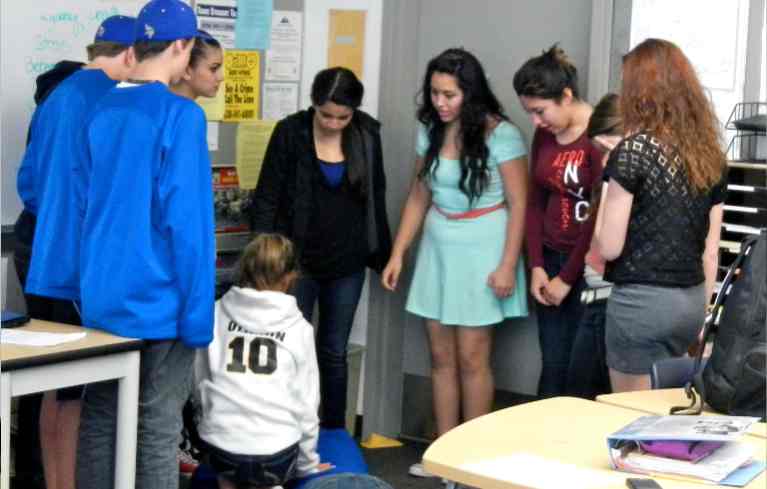
Both students are part of the AVID program and are part of a group of 11 students who will be instrumental in the April 2 Drug Store Project. Now in its 10th year, the Drug Store Project teaches sixth-graders about the dangers of drugs. All of these AVID kids went through the program.

“It really did scare me,” Rodriguez said of Drug Store Project.

Russell said, “It gives you an idea of what will happen.”

They are proof that the program has worked.

South Tahoe High students prepare for role in the April 2 Drug Store Project. Photo/Kathryn Reed

South Tahoe High School students prepare for their roles in the April 2 Drug Store Project. Photo/Kathryn Reed

It’s March 14 and the freshmen are in the middle of their second rehearsal. Music plays and a group dances. Three others are talking another kid into taking some Vicodin and mixing his drugs. He does. And then he passes out.

This is aptly named the “party scene” during Drug Store Project. What happens to that kid as well as the underage party hostess unfolds in other scenes.

While their part is a huge component of Drug Store Project, they are having fun rehearsing, learning lines, trading out parts and helping each other. When it comes to the real day they have to perform the skit nine times because the younger students come in that many groups.

“It sends a message to sixth-grade kids to avoid a party situation,” teacher Julia Russell said. “They want to share with kids that you have to be aware at parties and make good choices.”

Choices – that’s the overwhelming message of Drug Store Project. That everyone has a choice to say yes or no to whatever they are confronted with and that each decision has consequences.

Part of the high school organization’s mission is community service. This is the second year AVID students have participated in Drug Store Project, while previously Friday Night Live kids did.