Tahoe Tails — Adoptable Pets in South Lake Tahoe

dogLion is a 6-year-old Puggle, half Pug and half Beagle.

Check out that cute underbite. He is house trained, weighs about 20 pounds, and walks nicely on his leash. He loves to play with other dogs and didn’t chase the cats that he met at the shelter.

Lion came to Tahoe when his former shelter ran out of room for him.

Lion is neutered, microchipped, and vaccinated. He is at the El Dorado County Animal Services shelter in Meyers, along with many other dogs and cats who are waiting for their new homes.

Go online to see photos and description of all pets at the shelter.

Call (530) 573.7925 for directions, hours, and other information on adopting a pet. For spay-neuter assistance for South Tahoe residents, go online.

— Karen Kuentz


Cocking pulling the plug at South Tahoe PUD

By Kathryn Reed

Think South Tahoe Public Utility and Dennis Cocking is probably the first name that comes to mind.

Even his boss admits Cocking is the face of the district.

“People go to him when they want to know what is going on with the district,” South Tahoe PUD General Manager Richard Solbrig said.

But after May 1 people will have to go to someone else. Cocking is retiring.

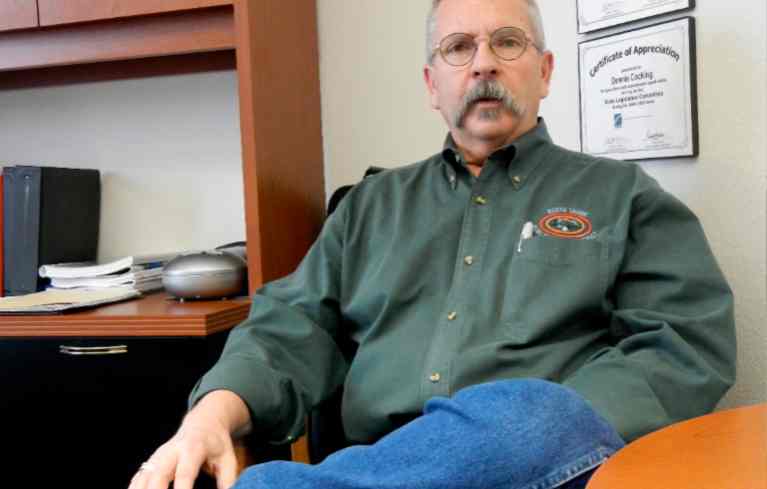
Dennis Cocking with retire from South Tahoe PUD on May 1. Photo/Kathryn Reed

Dennis Cocking with retire from South Tahoe PUD on May 1. Photo/Kathryn Reed

While his job title is public information officer, the job duties go well beyond being a spokesman.

“PIOs as a whole have evolved into legislative affairs. It’s legislative and public affairs,” Cocking said.

In a lengthy interview with Lake Tahoe News in his office, which is full of family photographs and certificates of recognition, Cocking spoke of how his life at the district evolved from working part time in the summers in the field starting in 1988, to getting hired full time in the mid-1990s in customer service. He’s had the PIO job since 1997.

Cocking has effectively put his business administration degree with an emphasis in marketing and public relations to work.

“As a board member, I can say Dennis has been an invaluable resource in terms of preparing me for understanding the community and understanding the issues and providing a bridge between the community and the board,” board President Eric Schafer told Lake Tahoe News.

MTBE in Tahoe’s drinking water

It was in 1998 that the district filed the lawsuit against the oil companies for contaminating the wells with the fuel additive MTBE. Then the legislative affairs aspect of the job kicked in and to this day has never let up.

It’s talking about the legislative affairs side of things that brings out a sparkle in Cocking’s eyes.

Shell was the last hold out in the MTBE suit. The British company wanted to settle for $26 million. That wasn’t good enough for the district. Their belief was the ratepayers should not have to pay a dime.

From 1998 to 2001, for three days a week, one of five district employees was in the San Francisco courtroom. Cocking was in that rotation.

“This small, little water district in the mountains took on big oil,” Cocking said. “(MTBE) was elevated from a local problem to a national problem.”

He said it was tricky to manage the media because saying the wrong thing could affect the trial.

And then he and board member Jim Jones faced contempt of court charges – which added more stress to the situation. Those charges were dropped in the final settlement negotiations.

“The lawsuit said the oil companies should have known the contaminants that were in it,” Cocking said. “We got money to pay for the costs incurred and attorneys. We netted $35 million.”

The money could only be spent on the district’s water supply. The last of those dollars will be used this summer on projects.

“We have recovered all the lost capacity,” Cocking said of the wells that had been contaminated.

Working on Tahoe issues

Securing money for the district has been a primary goal of some of Cocking’s legislative activity. He is a regular in Sacramento and Washington. He says it’s all about developing relationships.

“His written skills are such that he can get across with clarity complicated issues and have it make sense to people,” Solbrig said.

While the 2007 Angora Fire is hard for most locals to forget, it’s often the firefighters who are heralded for containing the inferno in a matter of days. But it was South Tahoe PUD that was supplying that water.

“We were singled out by the incident commander. He said it was rare to go to a fire of this magnitude and not run out of water,” Cocking said.

But it was close.

The 254 houses that burned then created active leaks. Foundations were flooding. Water pressure was decreasing and the threat of running out was very real.

STPUD crews scoured the burn area to try to turn off the valves. And, this, at a time when some of their own had lost their homes.

Cocking said the ability to keep supplying water demonstrated that the district’s priority of replacing infrastructure proved to be prudent.

Going forward

A scare when Cocking was 37 had him and his wife come to the realization that when they could retire they would, the 60-year-old said. He was diagnosed with stage 4 melanoma and told he had six months to live. They had three kids all younger than 4 at the time.

Kathy Cocking will retire April 5 after spending 35 years with Barton Health. She is currently vice president of operations.

They sold the house Dennis Cocking grew up in, which had been in his family since 1965. (Cocking is a South Tahoe High grad.) Their new home is on 5 acres near the Pine Nuts.

Their first trip will be up the Oregon coast. RVing has been a passion of the Cockings for years. Now there will be more time to explore.

Plus, their first grandchild is on the way.

But neither one expects to stop being involved in the community. But what exactly the next chapter entails, well, that remains to be written.

With the district on a mission to not replace every person who quits or retires, the initial plan is for Cocking’s duties to be divided between three members of upper management.

“I’ve always enjoyed his witticisms. He would be a difficult person to replace, which is probably why we aren’t,” Schafer said.


Spring allergy season could be a doozie

By Cathy Payne, USA Today

This year’s spring allergy season is nothing to sniff at: The season may be longer and stronger, allergists say.

Blooming trees have been releasing pollen into the air, triggering allergic reactions in some people. The start of tree pollination varies across the country.

Increased mean temperatures from climate change affect tree pollination, says Richard Weber, president of the American College of Allergy, Asthma and Immunology. “We are seeing trees not only pollinate earlier but also produce more pollen,” he says.

Some people who are sensitive to tree pollen also may feel the effects of grass pollen as spring gives way to summer. They may get a break before ragweed pollen hits in the fall.

Many people with spring and summer allergies may not get relief until July, when it gets very hot and pollen counts go down, says William Berger, an adviser for the Asthma and Allergy Foundation of America.

The higher pollen levels may worsen symptoms for some people, but effects vary among individuals, says Weber, an allergist in Denver.

With an allergy, the immune system overreacts to a trigger substance, or allergen. Outdoor allergies (also known as seasonal allergic rhinitis or hay fever) occur when allergens found outdoors are inhaled into the nose and lungs.

Common allergens are tree pollen in the spring, grass pollen in the summer and weed pollen in the fall, as well as mold spores. Outdoor mold spores peak in July in warmer states and in October in colder states.

A study in the September issue of the journal Annals of Allergy, Asthma and Immunology echoed the impact of climate change on allergies. The study linked increased pollen concentrations and lengthened allergy seasons to warmer temperatures.

The ragweed pollen season has grown as much as 13 to 27 days longer since 1995, found a 2011 study from the U.S. Department of Agriculture. It linked the later end of the season to higher temperatures from climate change.

Weber says that with increased exposure to allergens because of longer pollen seasons, more people may become sensitized. “Older patients are coming in with new onset of hay fever,” he says.

About 16.9 million U.S. adults were diagnosed with hay fever in 2011, according to the 2011 National Health Interview Survey. About 6.7 million U.S. children were reported to have hay fever.

Pollen and mold are among the allergens that can trigger asthma attacks.

Asthma, a chronic disease affecting the lungs, causes breathlessness, chest tightness, coughing and wheezing. In 2010, about 18.7 million adults and 7 million children had asthma in the USA, according to the CDC’s National Asthma Control Program.

To find out if you have symptoms of allergies or allergic asthma, you can start with an online self-test from the American College of Allergy, Asthma and Immunology.

If you have allergies, treatment includes avoidance of allergens, medication and immunotherapy, such as allergy shots.

Berger, an allergist in Mission Viejo, says it is important to see a board-certified allergist for diagnosis and treatment. He says having allergies is “a common problem but has a huge impact on quality of life.”

Tips for people with allergies:

  • Watch the pollen count. If pollen counts are high, you may want to avoid outdoor activities during early morning hours. (You can find pollen levels on allergy relief and weather sites  and the National Allergy Bureau.)
  • When driving, keep your car windows closed.
  • When you’re home, keep your bedroom windows closed.
  • Clean your air-conditioning filters regularly.
  • If you’ve been outdoors, take a shower and wash your hair to get rid of any pollen.


Hotel guests want experience over amenities

By Nancy Trejos, USA Today

Hotels used to try to keep guests indoors at their bars, restaurants and spas.

Now they’re dragging them outside.

Hotels are taking their concierge role to a new level, offering tailored experiences that expose guests to the history, foods and attractions of the community surrounding them. The experiences are often exclusive. Sometimes they’re free, but most often, they’re not.

Food and wine events leave lasting memories when average foodies get a change to meet celebrity chefs. Photo/LTN file

Food and wine events leave lasting memories when average foodies get a chance to meet celebrity chefs. Photo/LTN file

The more expensive they are, the more elaborate they become, such as the $10,000 “Bucket List” experience offered by the Ritz-Carlton, Charlotte which is available to one guest at a time. The experience changes once it is sold. In April, it will include four floor seats to an NBA Charlotte Bobcats game, a player meet and greet, two nights in a suite, and a few meals. The full amount goes to a local charity.

Chekitan Dev, an associate professor of marketing and branding at Cornell University’s School of Hotel Administration and author of “Hospitality Branding”, says it is an extension of the pre-recession amenity wars. Now that the economy is getting better, hotel guests value experiences more than they do “stuff.”

“Travelers faced a dizzying array of amenities on the bathroom vanity,” he says. “Housekeepers had to keep the items stocked, and hotel owners faced bigger bills … Research that suggests people value experiences more than they value stuff has led many brands to rework their amenities that’s less about stuff and more about high value unique experiences coupled with exclusive access.”

Some examples:


At the Carlyle, a Rosewood Hotel in New York, young guests can get the “Super Sophie Experience” based on Kelly Florio Kasouf’s children’s book series, “The Super Adventures of Sophie and The City”. Children get loaner iPad minis to follow Sophie’s virtual tour of favorite spots such as Grand Central Station, the Chrysler Building, and more. It’s included as part of a package starting at $835 that includes a stay for two and gifts such as an Oscar de la Renta children’s dress inspired by the books.

At the Hotel Indigo Long Island-East End, guests can take wine and spirits tours through the “North Fork Uncorked Tour Package.” In addition to an overnight stay for two, they get tastings at three vineyards or distilleries, breakfast and snacks. The price: $270 on weekdays and $329 on weekends, plus tax.

At the Mandarin Oriental in Washington, D.C., the concierge arranges a behind the scenes tour of the U.S. Capitol, during which guests can step out onto the balconies overlooking the National Mall. Exclusive tours of the Bureau of Printing and Engraving are available as well. Prices vary depending on timing and number of people. Another D.C. establishment, the Ritz-Carlton, Washington, D.C. is offering two tickets to the new Newseum exhibit marking the 50th anniversary of President John F. Kennedy’s assassination. It is part of a stay for two starting at $489 a night.

Guests with more limited budgets can still experience unique activities.

At IHG’s Holiday Inn Resort Los Cabos in Mexico guests can take a bike tour, free with a stay, through the adjacent estuary, a natural preserve that is home to more than 350 different species of fauna. The tour also takes them through downtown San Jose del Cabo and seasonal attractions such as the local rodeo.

The Fairmont Mayakoba in Mexico’s Riviera Maya has recently started to offer to all hotel guests complimentary sea kayaking close to the Mesoamerican Reef, the largest in the Americas.

“Our guests are … interested in going ‘off the guidebook pages’ at times, and we look to develop activities, oftentimes with our neighbors and partners, that give them that extra insight or an experience that they haven’t had before,” says Mike Taylor, a Fairmont spokesman.

Radha Arora, president of Rosewood Hotels and Resorts, says he believes offering guests unique experiences sets Rosewood hotels apart from the competition.

“Rosewood has always strived to offer unique, personalized experiences which acquaint our guests with the destination and provide them with access they may not otherwise have,” Arora says.

Maryam Wehe, senior vice president at Applied Predictive Technologies, which does hotel consulting, says hotel guests might rate a hotel stay higher because of a unique experience,

“Leisure travelers who have chosen a hotel for a destination stay are looking to the hotel to create unique memories,” she says. “‘What was memorable? What stood out during this vacation?’ are becoming benchmarks for rating hotel stays. In response to this challenge, hotels are looking to go beyond the pool and palm trees to create ‘Do you remember when…’ experiences.”

But, she says, the strategy doesn’t necessarily work at all hotels.

“The question that hotels need to ask is which types of locations and with which guest segments (do) these ideas really work, and where they do not work?,” she says.

Adam Weissenberg, vice chairman and U.S. leader of Deloitte’s travel, hospitality and leisure sector, says that offering experiences “could potentially build loyalty if they are interesting offerings to the guests.”

But he considers them more “ways to attract leisure customers on weekends to hotels, which are full during the week for business travelers.”

“I think this has always been the challenge for hotels,” he says. “They are just now coming up with more creative ideas.”


NPR canceling ‘Talk of the Nation’

By Brian Stelter, NPR

BOSTON — NPR is ending the 21-year-old call-in radio show “Talk of the Nation” and encouraging local stations to replace it with an expanded version of “Here and Now,” an afternoon newscast that is produced here.

The plan, announced Friday, is the product of discussions that began more than two years ago between NPR and some of its biggest member stations. The stations wanted a magazine-style news show at the middle of the day, something along the lines of “Morning Edition” and “All Things Considered,” the two bookends of most stations’ weekday schedules.

“Here and Now” fits that description. The program, produced by Boston University’s WBUR, started locally in 1997 and began to expand nationally in 2001. Until now, it has been distributed by a rival programmer, Public Radio International, but in the summer it will start to be distributed by NPR instead.

NPR will partner with WBUR to turn the one-hour “Here and Now” into a two-hour show, with contributions from NPR News staff and other local stations. A co-host, Jeremy Hobson, will join the current host of the program, Robin Young.

The partnership marks the first time that NPR, a national supplier of newscasts and shows, has linked arms with a station in this way. “Together, we’re addressing both what the audience is looking for and what member stations have been looking for,” said Kinsey Wilson, the chief content officer for NPR.

He declined to comment on the specifics of the financial arrangement, but said, “We’re confident that by partnering together we can make this both an editorial and a financial success.”

The longer version of “Here and Now” will start July 1, immediately after “Talk of the Nation” bows out. “Talk” is a radio fixture from 2 to 4pm Eastern time, broadcast by 407 stations and reaching 3.53 million listeners a week, according to NPR. (That total counts all the people who hear the program at any point during the week.) It mixes long-form interviews with calls and emails from listeners.

Neal Conan, an NPR reporter and anchor since 1977 and the host of “Talk” since 2001, will “step away from the rigors of daily journalism,” NPR said in a statement.

“They set the standard in many ways for high-quality call-in talk,” Wilson said about “Talk of the Nation.”

The Friday version of “Talk of the Nation” — “Science Friday with Ira Flatow” — will continue to be distributed by NPR, the organization said.

Wilson said the decision to end “Talk” came out of the discussions with WBUR about a partnership.

Local stations continue to produce their own call-in shows, he said, and some are carried nationally, like “On Point,” which is also produced by WBUR. But the change announced Friday is a move away from opinion and toward straightforward storytelling.

Among local stations, there has been a “hunger for a stronger news presence in the middle of the day,” said Charlie Kravetz, the general manager of WBUR, who helped organize a meeting of station directors about midday news back in 2010.

“Here and Now” is broadcast by 182 stations now, but many of them are small; of the 25 biggest radio markets in the country, only eight currently carry it. Partly for that reason, it reaches about 1.35 million listeners a week, far fewer than “Talk of the Nation.” A spokeswoman for NPR noted that its audience has grown about 11 percent from a year earlier.

NPR will begin to pitch “Here and Now” to stations on Friday morning. While “I’m sure we won’t convince everyone,” Mr. Wilson said, “our goal is to convince a large number of stations that carry ‘Talk of the Nation’ to carry ‘Here and Now.’”

The arrangement strengthens NPR’s ability to react to breaking news situations. The two-hour program will be produced between noon and 2pm Eastern, and then updated as needed until 4pm for stations that choose to carry it later in the afternoon. This way, “Here and Now” can be a bridge from “Morning Edition,” which starts at 5am in some markets but is updated until noon, to “All Things Considered,” which starts at 4pm.

“This will essentially provide us the ability to go live, if we need to, from 5 in the morning until 10 o’clock at night,” Wilson said.

NPR produced a midday news magazine called “Day to Day” in the mid 2000s, but it was canceled in 2009.

Kravetz said, “A central part of our plan is to tap into a lot of the public radio stations across the country that are doing wonderful journalism that never gets heard outside of their markets.”

For the three months that “Talk” is still on, NPR and WBUR will hire new staff members for the expansion. Mr. Hobson, currently the host of public radio’s “Marketplace Morning Report,” distributed by American Public Media, will come on board and Meghna Chakrabarti, a local host in Boston, will be the backup host.


Uthe turning in his assistant DA badge

By Kathryn Reed

Hans Uthe is good about talking on just about any subject except if the topic is himself.

It took his wife, Beth, to convince him to speak to the media about his retirement. And then in an interview with Lake Tahoe News he spent more time talking about his colleagues, his dad and crime in general than he did his career, the cases he’s tried or his future.

“Humble and unassuming” is how El Dorado County Superior Court Judge Suzanne Kingsbury describes Uthe.

The two worked together in the DA’s office when Jerry Lasarow had the position Uthe now has.

Hans Uthe is closing the door on his tenure as lead prosecutor in the Tahoe office of the El Dorado County District Attorney's Office. Photo/LTN

Hans Uthe is closing the door on his tenure as lead prosecutor in the South Lake Tahoe office of the El Dorado County District Attorney’s Office. Photo/LTN

“I remember a time when we were in the Justice Court, presided over by now retired Judge [Gene] Rasmussen, when a fellow came in for arraignment who was charged with a Fish & Game violation for illegal possession of a kestrel, a small hawk-type bird. Gene looked a little puzzled because the code section wasn’t readily familiar, when Hans launches into a lengthy and detailed explanation about what a kestrel was, its habitat, diet, etc. The judge was getting frustrated because he wanted to move his calendar along, but Hans was so caught up in his story that he didn’t even pause for a breath,” Kingsbury told Lake Tahoe News.

Uthe is known for having a breadth of knowledge about an array of topics. One of those is substance abuse.

He estimates at least 80 percent of the crimes in South Lake Tahoe have a substance abuse component – outright drug use or sales, burglaries to pay for drugs or an argument that escalated into battery because of being under the influence. Most of the DUIs also involve locals.

“The percentage of crimes by locals is higher than you’d think,” Uthe said.

He points to the casinos, the 24-hour community being a huge factor. When talking to his counterparts on the North Shore they don’t experience the crime rate South Lake Tahoe does.

“I’ve always thought we generate more crime than a community this size should,” Uthe said. “This community was leading the state last year in heroin seizures.”

South Lake El Dorado Narcotics Enforcement Team leader Jeff Catchings said he regularly works with Uthe to make sure the prosecution team has what it needs to obtain a conviction.

“He was very, very easy to work with,” Catchings said. “He’s a very smart attorney.”

That respect also comes from those on the other side of the aisle.

“Hans and I have worked together for several years, always on opposing sides of criminal cases. While I congratulate him on his retirement, he will be sorely missed in the criminal courtrooms of South Lake Tahoe. Hans brings decades of experience into the courtroom and always acts in a dignified and respectful manner,” attorney Rob Woelfel said. “Hans has dedicated himself to public service and to protecting the citizens of El Dorado County. He is also very generous with his time, volunteering for activities such as mentoring teens through the teen court program and helping those struggling with drug addiction through the court.”

It’s the Roberson case that Uthe says he is most proud of, even though as he describes it, he played a minor role. He credits colleague Trish Kelliher, now retired South Tahoe police Capt. Martin Hewlett and FBI Agent Chris Campion for putting Ulysses Roberson behind bars.

“Roberson is pure evil. I don’t think he has a single redeeming quality,” Uthe said.

Roberson in December 2009 was convicted of second-degree murder in the death of his son.

“Our job is to exonerate those who are falsely accused and convict those who are guilty of crimes,” Uthe said.

Uthe’s boss, Vern Pierson, said, “Because of Hans’s hard work, dedication and compassion, many victims and citizens of El Dorado County have seen justice served. Hans will be greatly missed by the office and the law enforcement community. We wish him all the best in his retirement.”

With only one week left in the El Dorado County District Attorney’s Office, the top prosecutor in the South Lake Tahoe office will be leaving a huge void. He’s been the assistant district attorney since July 4, 1998. April 5 is his last day.

“He has been a supportive boss for his troops, not only backing them up, but providing assistance anywhere it was needed. If one of his support staff was out, leaving the others short handed, he would sit down and churn out clerical work. He never hesitated to pick up a case or a calendar for the attorneys in the office,” Kingsbury said.

There are no plans to replace him. It means an office that is already lacking personnel will be even more comprised.

“I’m concerned,” Uthe said of his position not being filled. “You always have to have leadership in an office.”

The 58-year-old plans to spend more time with his wife – who he says has supportively understood his job has been his priority. While he hasn’t gotten on the slopes this year, he intends to. If he doesn’t, it will be the first year he hasn’t skied. After all, he spent 10 years on the Bear Valley ski patrol.

Mountain biking, hiking and fly fishing are the other outdoor endeavors he enjoys.

The Uthes moved out of Tahoe several years ago after people with access to a police scanner heard he had been called out to a crime scene. They took the opportunity to throw rocks through windows at his home. That was enough of being so close to the bad guys.

And while he can see doing some pro bono legal work, Uthe said he has no intention of being in the private sector for compensation.

“I gave everything I had,” Uthe said of his time in El Dorado County. Now he wants a little time for himself.


Truckee looking for drivers on cell phones

April is National Distracted Driving Awareness Month, and the Truckee Police Department, in cooperation with the California Highway Patrol and other law enforcement agencies nationwide, is participating in educational and enforcement activities related to distracted driving.

The overall goal of the increased enforcement is to convince drivers of the dangers of distracted driving and reduce the number of people impacted by this risky behavior. The “It’s Not Worth It!” theme of this national campaign emphasizes that a phone call or text isn’t worth a hefty fine or a collision.

Truckee PD hopes to encourage safe behavior for local drivers by enhancing enforcement activities specifically related to cell phone use during the month of April.

Truckee PD offers the following tips to avoid becoming distracted from safe driving:

1. Turn off your phone and/or put it out of reach while driving

2. Include in your outgoing message that you can’t answer while you are driving

3. Don’t call or text anyone at a time when you think they may be driving

4. Adjust controls and set your song playlist before you set out on the road

5. Stay alert and keep your mind on the task of driving- often after a long day at work or a not-so-restful night’s sleep, people’s minds can wander when behind the wheel. If you find yourself daydreaming – clear your head and focus on the road.


How to maintain your health while traveling

By Nancy Trejos, USA Today

When Colleen Hurley travels for work, she’s often rushing to a meeting as soon as she gets off the plane.

A dietitian from California, she’s got to be in top form when she visits clients, even if she’s been on a plane for hours.

“It can be both physically and mentally exhausting — particularly when you spend hours on a plane — or sometimes for me even in the car, and then having to hit the ground running and go straight to a client meeting,” she says.

Through the years, she’s figured out ways to eliminate the stress of the road. She prepares for her meetings well in advance of boarding her flight. Midair, she takes a power nap. On the ground, she sticks post-it notes on her rental car dashboard with presentation points that she can glance at occasionally. She constantly refreshes her iPod playlist with podcasts that will entertain her during the little downtime she has.

Traveling frequently can take its toll on the mind and the body. USA Today Road Warriors, frequent travelers who, combined, rack up millions of miles a year on the road for business, say the biggest challenges they face are eating healthy, exercising regularly, sleeping well and missing loved ones back home.

“Being on the road can be energizing and enlivening. However, it can also be lonely, disorienting, and exhausting,” says Stephanie Holdenried, an Oakland resident who works in the North America office of adventure travel company Explore Worldwide.

A study late last year by Carlson Wagonlit Travel found business travelers are often stressed out when they travel, especially when they feel they aren’t making efficient use of their time, when their travel plans are disrupted and when they break their regular healthy habits. Stress levels increased with age and frequency of travel, the study found.

But even leisure travelers have to endure some stress on their way to that carefree vacation spot. Traveling is anything but relaxing, with long security lines at airports and uncomfortable seating on planes.

“Travel is inherently more difficult than it was back in the day,” says David Gee, a Minnesota-based speaker who helps train salespeople. “The whole TSA thing is a nightmare, and the stress level of people today is exponentially higher. And that adds to my stress.”

Hotels and airlines increasingly encourage travelers to stay sane and healthy on the road. United Airlines, for instance, now awards frequent fliers miles for joining a gym or purchasing health and fitness products through GlobalFit, which has 10,000 gyms nationwide.

In addition to fitness centers, Marriott’s Residence Inns have pools and whirlpool spas. They also have complimentary evening socials to help travelers unwind.

To help travelers relax even more, IHG’s Crowne Plaza has a Sleep Advantage program with soft bedding, aromatherapy kits and quiet zones where no housekeeping or engineering can take place from 9pm to 10am Sunday through Thursday.

Ritz-Carlton hotels across the country are introducing healthier spa menus. Kimpton hotels will soon have yoga mats in every room.

Holdenried says she often takes advantage of any hotel amenities that will help her feel healthier while traveling. “I will treat myself,” she says.

To stay fit, she always seeks out hotels with pools or yoga studios nearby. She tries to stay somewhere close enough to her appointments so she can walk, and she’s always scoping out scenic routes for walking or running.

Other Road Warriors say they’ve figured out their own tricks for staying grounded while traveling. Here are some of their tips for relaxing and recharging on the road:

Plan well: Come up with daily itineraries so you’ll know where you’ll be and what you’ll be doing most of the time. Surprises may pop up, but you’ll still feel as if you have some control of your trip. Make lists if it helps you feel organized.

“Spontaneity is great, but having a bit of structure helps a lot,” says Carolyn Scott-Hamilton, who started the Web series The Healthy Voyager.

Pack healthy snacks: Always carry back-up food in case you can’t find anything healthy to eat. Think fresh or dried fruits, almonds, trail mix, kale chips, protein bars, soy chips, cereal and plenty of water. Staying hydrated is key.

Tom Holland, president and founder of fitness company TeamHolland, packs a small separate bag with healthy goods such as oatmeal and energy bars. “This really makes a difference and prevents late-night trips to the vending machine,” he says.

Eat healthy meals: Hotels are now offering healthier food in their restaurants, room service menus and even minibars. Walk through most major airports, and you’ll see as many salad bars as burger joints.

But you’re not going to have all your meals at your hotel or the airport. Do some research before you head to your destination, and find out what healthy food options are around you. Before you go to a restaurant, study the menu online to see if there’s anything you can eat. Don’t be afraid to go to a restaurant and ask the chef to prepare you a lower-calorie meal.

Go easy on the booze. “Cocktails provide tons of empty calories, are dehydrating, make it difficult to be on your A game if you’re hung over, and let’s face it — you don’t’ want to embarrass yourself in front of your clients,” says Hurley, the frequent traveler.

Don’t skip the workout: Hotels have gotten into the fitness craze in recent years. Fitness rooms have gone from glorified closets to full-on gyms in many cases. But sometimes, there’s no time for the gym.

Holland says he always travels with rubber exercise bands so he can get in a workout in his room or just about anywhere else. Exercise videos are also abundant online. If all else fails, you can take a long walk.

Keep in touch with loved ones back home: Technology has made everyone more connected. Lonely? Videocalling services such as Skype, FaceTime, Tango and ooVoo will let you see friends and relatives every day if you’d like to.

Denise Antoon, founder of public relations company Antoon Group, says the hardest part of traveling is being away from her three sons, ages 18, 6, and 4.

“I make every effort to not miss anything important with my kid’s schedules like a game, birthday or school event.” she says. But when she is away, she’ll call or Skype them every day. “It is important for me to not make them think work is the priority over them.”

Don’t take your work to bed: Replaying the events of the day will only keep you awake. Tune it out, and spend some moments concentrating on yourself. Meditate, take a hot bath or shower, listen to music, watch your favorite TV show. Avoid the Blackberry or iPhone.

“Don’t look at tomorrow’s schedule right before going to bed,” Hurley says.



Google kills print edition of Frommer’s travel guides

By Verne Kopytoff, CNN-Money

Spotting a tourist used to be easy. Just look for someone toting around a travel guide. Today, vacationers are organizing their trips entirely online. All they need to carry with them is a smartphone to occasionally look up tourist attractions and navigate around town.

Travel guide publishers are in upheaval amid this new reality. Sales of guidebooks are down sharply as people instead turn to sites like TripAdvisor for hotel and restaurant reviews. The industry’s decline was hammered home recently with two big developments.

The latest came Thursday with word that Google planned to kill the print edition of Frommer’s, the travel guide giant it acquired last year. Google declined to comment, although Skift, a travel news site, reported that Google’s editors had already broken the news to authors of some upcoming titles. Frommer’s has long been a bible for globetrotters, and its extinction in print, at least, would be a big loss for the travel guide industry. Google could continue to publish digital books under the Frommer’s name and keep Frommer’s website alive, however.

The second development, the BBC’s sale of Lonely Planet, happened earlier this month. The British broadcaster disclosed plans to sell the guide-book publisher for $78 million, far less than the nearly $200 million it had originally paid. The buyer, NC2 Media, a Nashville-based media company controlled by reclusive billionaire Brad Kelley, promises to continue publishing travel guides. But the huge loss the BBC took on the sale highlights the difficulty travel guide businesses face in the digital age.

“If you go back 15 or 20 years, a guidebook was the only source of information for a traveler to go on,” said Stephen Palmer, managing director for Lonely Planet. “Now people are using six to eight different sources of information to plan that trip. We believe the guidebook still has a role in that mix.”

The decline in guidebook sales started with the recession, which decimated leisure travel. The influx of mobile devices compounded the problem. Bookstores like Borders, a big source of travel guide sales, shut down en masse. Free online travel information became more readily available, further eliminating the need to pay $30 for a guidebook.

Major travel booking engines like Expedia, Orbitz and TripAdvisor all make hotel reviews from users available to people deciding where to stay, for example. AirBnB and VRBO.com, which focus on private vacation rentals, have similar critiques. You’d have to go pretty far off the beaten path to find a hotel, restaurant, or bar that hasn’t been praised or panned somewhere online. The question is whether anonymous critics are as trustworthy as professional travel writers.

Travel guides must also compete against free open source guides, which are written by volunteers. Wikitravel and Wikivoyage, a branch of Wikipedia, offer free online travel tips for cities and countries around the world. Their prose tends to be utilitarian compared with some of the professionally written guides. But they generally give a decent overview, with the usual details about hotels, tourist sites, and how to get around.

Google’s brief history with travel guides started when it acquired Frommer’s along with the Unofficial Guide series from John Wiley & Sons for $22 million. It wasn’t Google first foray into print, however. A year earlier, it had bought Zagat Survey, best known for its restaurant ratings. Google planned to incorporate both Frommer’s and Zagat reviews into its online products. The rise of Yelp and TripAdvisor had showed that reviews could be valuable.

What Google would do with Frommer’s print business was always a question, however. The match between the online Goliath and an older school publisher seemed odd. A number of Frommer’s titles scheduled for release in February and earlier this month are now overdue. The most recent titles published focusing on Napa and Sonoma along with Banff and the Canadian Rockies, may be the last to be printed with Frommer’s name.

Palmer, from Lonely Planet, said that the demise of Frommer’s print guides would be an opportunity for his business to gain market share. But he’s still waiting to see how the situation plays out. Lonely Planet sells about 5 million guidebooks annually, Palmer said. But sales are lower than they were before the recession.

U.S. guidebook sales are down 10 percent to 20 percent since 2008, he said. Recently, sales have stabilized, providing a glimmer of hope. To reach a bigger audience, Lonely Planet has started a new series of books, Discover, that are for more mainstream travelers who must make due with shorter vacations. “I don’t think anyone is pretending that sales of travel guides aren’t down,” Palmer said. “But they aren’t off a cliff. What we’re seeing now is a level of stability.”

Like many travel guide publishers, Lonely Planet is investing in its online business. And like many media companies, news included, the transition is difficult. Lonely Planet, of course, uses its website to sell print guidebooks along with pushing digital copies. It also makes money from online advertising and for connecting visitors with hotel reservations and insurance, among other things.

In five years, Palmer said that even more people will use tablets and smartphones to plan their vacations. But some travelers will still prefer analog over digital, contrary to predictions about travel guides heading for a quick extinction. “I think there will be a place for books,” Palmer said.


De-cluttering can be liberating

By Mandy Kendall

I’ve never been one to complain about sunshine, but recently I have been none too happy with the brilliant rays beaming through our windows highlighting all the dust that I have been ignoring throughout the winter. So I started doing some cleaning and that made me look at the spare bedroom that had become our “temporary” storage area when we recently moved. (Which is now two months ago!)

It’s amazing how quickly extra stuff becomes part of the furniture and you just don’t see it anymore. However, when you clear it out of the way you realize how much it was cluttering up your life and how liberating the space can be.

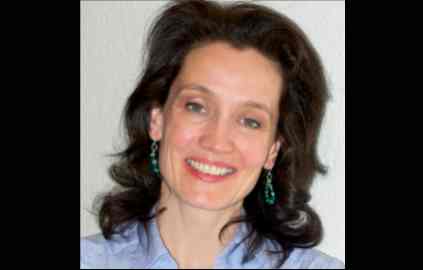
Mandy Kendall

Mandy Kendall

We seem to be able to tolerate quite a bit before we decide things need to change, and it is often something quite insignificant (like dusty window sills) that is the catalyst that leads us to big changes.

This is the time of the year we tend to do some spring cleaning; so is there something taking up space in your house that’s been around for so long you don’t see it anymore (except maybe when you clean around it) and is no longer serving a purpose?

Are there things in your life that you unnecessarily tolerate? They may be small (a drawer that sticks for instance) but add a few of them together and they soon take up time and energy and distract from the flow of your day.

So what are you tolerating that could be changed? What else could you clear out of your life? Could we look a little deeper than our wardrobes and garages?

The clutter in our minds is often way more demoralizing than the stationary bike gathering dust. Unresolved issues or tolerances with other people or situations can take up a lot of mental energy and can cause us to become stuck, unable to move forward, or moving in a direction we don’t want to go.

• Be brutally honest with yourself — If you’ve not used something in the last 12 months chances are you’re not going to. If there is something in your life that is not moving you forward in the direction you want to go, perhaps that needs to go too.

• Take it one step at a time – De-cluttering your whole life in one go may be more overwhelming than anything. Take it one wardrobe, room or bad habit at a time.

• Think about what you would like to make room for — Deciding what you want to do with all this new space, energy, cash or attitude will be a great motivating factor in helping make it happen.

• Make a clean start — The act of cleaning something or clearing a space, cannot only improve how things flow in your physical space, it can also have a similar effect on how your mental and personal energy flows.

• Prioritize your de-cluttering — Decide on all the things you would like to clear out of your life (you know I’m going to suggest making a list don’t you) and start with some small tasks that you can complete easily to help boost that sense of achievement that will help spur you on to the larger issues.

• Take time to enjoy your hard work — Reward yourself for making these changes. Use the new found time to do something you really enjoy or celebrate your revitalized space with friends.

• Make it a habit — You will probably find that life will present you with more stuff to clutter up your life again. Try and schedule regular de-cluttering sessions. You don’t have to wait for spring.

Until next time.

Mandy Kendall operates Health Connective in South Lake Tahoe, which aligns wellness seekers with their ideal wellness provider. If you have questions, would like some advice, or would like to request some Qwik-e tips on any health and well-being topic, drop her an email at connect@healthconnective.com or keep an eye out on Lake Tahoe News for regular Qwik-e tips on how to make healthy changes one Quick and Easy step at a time.