Questioning law enforcement’s war on drugs

By Ted Long

This week’s meeting of the Sheriff’s Citizen Academy was with the drug enforcement unit of the sheriff’s office. Led by two young, undercover drug officers, it was the hottest so far.

The leaders were, like all those before, very likable and willing to answer questions. While I cannot say they admitted that the war on drugs was not working, they sure seem to wonder in the way they answered that question. The problem is the policy is not their job. They are paid to follow orders and enforce the law as it exists.

Ted Long

Ted Long

The bulk of the evening was spent sharing stories with great detail on the growing of marijuana on the hillsides of El Dorado County. We saw photos of the helicopter drops and the removal of tons of plants ripped from the landscape. We heard how the growers called “Mexican grows” lived and attempted to harvest their crop for payment of $5,000 for the year. That they were threatened with death of their families in Mexico if they talked and how the process goes on over and over again each year.

The most difficult part for me was understanding how they could not see that it is not only not working, but the continued enforcement is only making it worse. For example, they explained how marijuana in New York is worth about $5,500 a pound because it is a felony there and only $2,500 here because of the lesser penalties. Therefore shipping to the East Coast has grown greatly in the past few years.

It seemed hard to get the point across that the issue is not the danger of using drugs and that we need to stop it, or at least slow it down. We all agree it’s a bad thing. The issue is what we are doing to make any difference? As I listened to many of my fellow participants I could not help but think of the prohibition discussions of the ’20s. No one seems to understand that the repeal of prohibition did not end alcohol consumption; it only ended the crime associated with it. The same is true of drugs. We have created major criminal cartels by making it so profitable to grow and distribute. It is the profit that buys the guns and provides the incentives. Like any business without profit it dies.

If it were legal and therefore regulated like alcohol, the emphasis would be on the regulation, and education, issues like the obvious abuse of medical use cards could be stopped, doctors should be held responsible for issuing them to unqualified users. Dispensaries today remind me of the speakeasies of the ’20s. Take the profit out, add reasonable regulation, education and tax the sales to pay for it and we may make some progress. And by the way, our jails are filled with mostly drugs users at incredible cost to taxpayers.

More people are killed and families ruined over the use of guns than drugs, yet we do little or nothing. Last week, on the same day, when the terrible bombing took place in Boston and the 8-year-old was killed, a dozen kids were killed in ghettos in New York and Los Angeles by guns. Boston in headlines; their deaths, no one noticed on page 23 of the San Francisco papers.

I say we need a better discussion of what works and what only feeds the problem. After hearing from the experts, my view is that drug wars are going the same way as the alcohol wars and the one war that we actually are winning goes unnoticed, cigarette smoking, seems to be going well, and no one is in jail over it.

Ted Long is a South Lake Tahoe resident participating in the El Dorado County Sheriff’s Citizens Academy.


Tahoe book publisher looking for writers

Bona Fide Books is seeking submissions for “Tahoe Sepia,” a collection of true historical stories or vignettes about life at Lake Tahoe.

Submissions should be no more than 1,000 words. Any subject is welcome, including family history. The deadline is Sept. 1.

Contributors will receive a copy of the collection.

Send stories to submissions@bonafidebooks.com with Tahoe Sepia in the subject line, or to Bona Fide Books, P.O. Box 550278, South Lake Tahoe, CA 96155., or drop it off at Bona Fide Books in Meyers.

For more information, contact editor@bonafidebooks.com or (530) 573.1513.


South Tahoe women change lives in Kenya

By Jen Gurecki

NAIROBI, Kenya – “This is the most dangerous thing you’ll do all day,” I said to the group as we crossed the road.

No lions or machine guns, just cars, motorbikes and matatus. The traffic lights function, but most people are color blind to the red, green and yellow. Crosswalks should be called crossruns.

And Americans make driving through roundabouts look easy.

These are just a few of the realities of Nairobi, Kenya, that turn every single day into an adventure. In January, eight Lake Tahoe women made the 26-hour journey to Nairobi to experience this.

When they stepped onto Kenyan soil, they knew they would be exploring one tiny corner of a vast continent, immersing themselves in a culture far different than their own, and witnessing the work of the Zawadisha Fund. What they didn’t realize is that when they returned home, they would have a new lease on life, inspired to make change locally based on what they saw was possible in a place where most people think everything is impossible.

Julie Lowe of South Lake Tahoe works with the children of Kenya. Photos/Provided

Julie Lowe of South Lake Tahoe works with the children of Kenya. Photos/Provided

These eight women — Wendy David, Hannah Greenstreet, Doris Groelz, Betsy Williams, Teresa Bertrand, Julie Lowe, Angela Swanson and Pat Papp — are the same women you see in Lake Tahoe at school board and City Council meetings, and contributing to the local economy through their thriving businesses. They are activists building a healthy and vibrant community we call home.

What became clear during our two weeks together is that they had a keen ability to find connections with one another, despite race, class, political affiliation, or location. They were able to hold a space in their hearts and in their heads for those whom they thought they would never meet. And they refused to accept the inequality that other women face simply because of where they were born.

It was the latter that sparked the creation of the Zawadisha Fund, a micro-credit organization started in Lake Tahoe, whose mission is to empower, entrust, and expand opportunities for women in Kenya. Through an intelligent approach to micro-lending, we are improving the quality of life of women through small business loans, savings, education, and preventative health care. For as little as $60, we can vastly improve a woman’s life, granting her the opportunity to enter the job market and provide for her family. It seems nothing short of a miracle, and this is what has drawn so many people to this part of the world.

On the first day of our two weeks together, I shared “How to Write About Africa,” a scathing satirical essay by the highly acclaimed Kenyan author Binyavanga Wainaina. He has said that when writing about Africa, sunsets and starvation are solid starting points. Broad brush strokes to define a continent made up of 54 countries, 900 million people.

Africa is: poverty, HIV, conflict, diamonds.

Africans are: corrupt, destitute, infected, hungry.

The story has been told a thousand times over, fact woven with fiction. When we think about people living in poverty on the continent of Africa these are the images we see in our minds. Yet these sorts of images evoke pity, and pity is an incredibly unproductive and disempowering agent of change.

Enter Winnie and Duncan, the founders of Dolphin Anti-Rape & AIDS Control Outreach. Their energy and passion for ending violence against women through self-defense workshops is contagious and completely shifts pity into power. Zawadisha’s collaboration with Dolphin is rooted in our belief that business loans alone cannot empower women. If we truly want to increase their quality of life, we need to look at poverty through a wider lens. Violence is an issue that affects women’s status in society, and through Dolphin’s workshops they not only learn how to protect themselves, but how to have a stronger voice. In a world where exploding violence against women has threatened the very fabric of many societies, Dolphin has inspired the women and children of Kenya — and South Lake Tahoe — to reclaim their bodies, their homes, their schools, and their communities.

The Zawadisha Fund is helping to provide a better life for the women and children of Kenya.

The Zawadisha Fund is helping to provide a better life for the women and children of Kenya.

Our group spent three days with Dolphin, first being trained on the self-defense skills and then two days in schools working with children.

“I have never taken self-defense training. So actually running through the training and cultural curriculum with the Dolphin team in the Kolping House garden was gift enough. But then we had the opportunity to go with Dolphin into two Nairobi schools and see how they connect, and practice and sing and touch the lives of these boys and girls of all ages,” Julie Lowe said. “It brought tears to my eyes to see how culturally-relevant rape prevention coming from the minds and mouths of smart, energetic Kenyan women and men could transform the culture from the little ones on up.”

Zawadisha’s two-week Service Adventure Tour was designed to provide an experience where people could connect to one another, people whom we often believe are fundamentally different than ourselves. These perceived differences faded away during our two-day financial literacy workshop with Tuinuane Lending Circle. Tuinuane is Swahili for “to lift up,” and that is the name this group of women from Eldoret, Kenya gave themselves nearly two years ago as Zawadisha’s first group of borrowers.

“I loved every part of this travel adventure, however, the 2½ days that I spent with the Kenyan women was a life changing event for me. Seventeen women arrived at 4 in the afternoon and by 7 that evening they were joyfully singing to us and soon we were all singing and dancing together with the camaraderie of being women that truly cared about each other,” Wendy David said. “I was transformed by their warmth, their attitude of joy, their stories of creating small businesses to support their children’s education or to feed their families. I felt proud to be a woman walking, singing, teaching, learning, laughing and weeping with these strong beautiful women. I look at life through a different lens now, a lens that focuses even more on where real joy is lives. It is in the heart.”

Our time with Dolphin and the Tuinuane women were unforgettable, but the three-day safari in the Maasai Mara was unmatched in beauty and excitement. We found ourselves surrounded by animals most people only see in a zoo: elephants, giraffes, lions, zebras, cheetahs, hippos and even a leopard.

“We discovered the connection between power and harmony in the vast and animal-rich Maasai Mara. The sheer beauty of the giraffes, cheetahs, leopards and lions brought us a deep understanding of the circle of life,” Hannah Greenstreet said.

It was during the safari that our group took on the moniker “Bahati Dumas” or “lucky cheetahs” after witnessing a mother cheetah and her two cubs hunt, kill and feast on a Thompson gazelle.

They made a significant mark on the individuals they encountered, and they too were deeply transformed by their experiences.

Jen Gurecki is a Lake Tahoe resident and the founder of the Zawadisha Fund.

—

Note:

The Zawadisha Fund is organizing the next Service Adventure Tour to Kenya on Feb. 1-16, 2014. If you would stare in amazement at elephants, cheetahs, lions and giraffes; walk in humble appreciation through the slums; marvel at the resiliency and grit of our micro-loan recipients; find courage as we assisted Dolphin in teaching self-defense skills to children; and embrace our new friendships, email jen@zawadisha.org or go online to learn more.


Pet food becomes haute cusine

By Lauren Coleman-Lochner and Leslie Patton, Bloomberg

Brad Kriser has been known to down a dog biscuit or two. Kriser, the founder of an upscale pet-food chain that’s opening stores in major U.S. cities, sees his pets as family, and sampling their diet is what good parents do.

“People will really do absolutely anything they can for their pets,” said the founder and chief executive officer of Santa Monica’s Kriser’s, which forecasts that revenue will increase 40 percent this year. “The way that people treat them is sometimes better than their non-furry children.”

While fancy dog food has been mostly a luxury item for almost a decade, the trend has picked up considerable steam as the economy has recovered from the financial crisis. The lure of selling dog food for more than twice its traditional price has drawn big-box pet chains PetSmart and closely held Petco Animal Supplies into the gourmet kibble business. It also has private-equity investors eyeing upstarts such as Kriser’s.

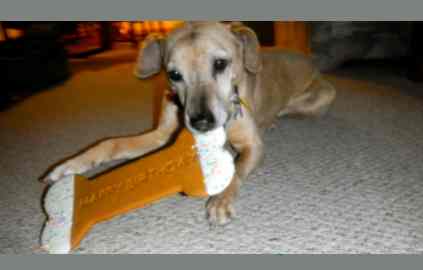
AJ likes high-quality birthday treats. Photo/LTN

AJ likes high-quality birthday treats. Photo/LTN

“It’s really capitalizing on the trend of health and wellness,” said Josh Goldin, a managing partner at Alliance Consumer Growth in New York, a private-equity firm seeking high-growth consumer brands that invested in Kriser’s last year.

His firm is betting big on the trend, with investments in the Honest Kitchen, a maker of human-grade dehydrated pet food, and PawGanics, which sells nontoxic cleaning products for families with pets. PawGanics is already being sold by Petco, the San Diego chain that Texas Pacific Group and Leonard Green & Partners purchased in 2006 for about $1.8 billion.

The natural pet foods trend started about a decade ago, around the same time consumers started paying more attention to their own food, said Josh McBee, an analyst at researcher IBISWorld in Santa Monica.

Natural products got a boost in 2007 after 4,000 pet owners said their pets were killed by eating contaminated food. The animals died of kidney failure after eating food made with Chinese wheat gluten tainted by the chemical melamine, added to make the protein content seem higher.

Super-premium pet food, which includes most natural and organic products, makes up about 11 percent of the $20 billion U.S. pet-food market and is growing at a faster pace than lower-priced selections, said Shannon Brown, an analyst for researcher Packaged Facts. Premium and natural foods will help the overall market gain 3.5 percent to 4.5 percent annually for the next few years, she said.

Allison Thompson, 30, said she doesn’t mind spending a little extra on grain-free food for Bella, her 6-year-old Boston Terrier.

“She had cancer last year, so I put her on a natural diet,” she said, while picking up a 4-pound bag of Fromm Beef Frittata Veg dog food for $13.49 at a Kriser’s in Chicago’s Bucktown neighborhood.

Bella is “very picky, but she loves this,” Thompson said.

The first Kriser’s store opened in Chicago’s tony Lincoln Park neighborhood in 2006, across the intersection from a Petco shop. Kriser’s expects to operate more than 20 stores by the end of the year, with 11 in Chicago and the remainder divided between Southern California and Denver, where it expanded last year. It’s scouting new markets.

The company’s executives call their chain “The Whole Foods of Pets” and like to locate shops, which average about 2,400 square feet, near those grocery stores because they serve similar customers – largely affluent and health-conscious.

PetSmart, headquartered in Phoenix and with more than 1,200 locations, also is getting in on the action, selling grain-free Innova Prime dog food made from chicken, peas and turkey for $52.99 for a 25-pound bag. The chain also sells 33-pound bags of Blue Buffalo Life Protection foods, some made with free-range lamb, for $51.99. In contrast, a 30-pound bag of Pedigree dog food is $19.99.

Super-premium brands such as Blue Buffalo have been “a major component of the success of PetSmart over the past couple years,” said Sean McGowan, an analyst at Needham & Co. in New York. Not only do the brands carry higher profit margins, they also bring in new customers who purchase other items, he said.

PetSmart shares more than tripled from 2008 through the end of last year. As of the end of last week, they sat at just under $67 per share.

About 79 percent of pet owners consider the quality of pet food to be as important as the quality of human food, according to market researcher Mintel. That is why closely held Newman’s Own Organics, headquartered in Connecticut, began selling pet food about 12 years ago, said Chief Executive Officer Peter Meehan.

“This whole industry has grown up around anthropomorphic behavior of humans – we take trends and things that we’re doing and we apply them to animals,” he said.

Newman’s Own Organics pet food is twice as expensive as some brands. Still, customers are loyal to its offerings – some made with organic beef from Uruguay and lamb from New Zealand, said Meehan, who declined to provide sales figures.

While Kriser’s doesn’t disclose revenue, the chain’s owners say same-store sales may gain as much as 20 percent this year, following increases of more than 10 percent in previous years. The stores try to lure customers with regular events, including pet birthday parties, lectures, and grooming and training sessions.

Kriser and President Ken Grouf, who are cousins, even taste a lot of the food themselves, Kriser said. So how are those biscuits?

“You would probably think that you’re eating Teddy Grahams,” he said.


Workshop focuses on creating poetry

Do you want to write poetry, but don’t know where to start? Do you write poetry, but don’t feel you are as creative as you could be?

Learn new ways to approach language and craft in your writing of any genre in a workshop offered by Tangled Roots Writing in Truckee.

Focus on poetry through guiding prompts, readings, and discussion. Even if you don’t “get” poetry, you will come away with ideas for your writing and process.

Karen Terrey is the instructor.

Tea and chocolate are provided during the $40 workshop on May 2 from 5:30-8:30pm.

For more information, call (530) 386.3901.


Tahoe Tails — Adoptable Pets in South Lake Tahoe

dogToby is most likely part Harrier, which is a relative of the foxhound and beagle.

Toby is a cheerful and sweet-tempered boy, about 6 years old and 60 pounds, and he is quite easy-going and likes children. He likes to play with female dogs, and is happiest with them and people.

As a hound, he likes to go exploring, sniffing, and trailing, so he should be kept on a leash or in a safe enclosed area. Toby’s owner died and he had nowhere else to go.

Toby is neutered, microchipped, and vaccinated. He is at the El Dorado County Animal Services shelter in Meyers, along with many other dogs and cats who are waiting for their new homes.

Go online to see photos and description of all pets at the shelter.

Call (530) 573.7925 for directions, hours, and other information on adopting a pet. For spay-neuter assistance for South Tahoe residents, go online.

— Karen Kuentz


Holocaust survivor to talk at LTCC

Local author and Holocaust survivor Leon Malmed will share a short documentary film, discuss his story of survival, and sign copies of his book “We Survived … At Last I Speak” at Lake Tahoe Community College on April 26 at 7pm.

The free event sponsored by the LTCC Foundation will be in the Aspen Room.

Books will be available for purchase and signing, and $5 from every sale will go to the LTCC Foundation in support of student scholarships and academic success.

Malmed and his sister, Rachel, watched as their parents were arrested and taken away in 1942 Nazi-occupied France. Neighbors offered to watch the children, believing the parents would return in just a few days. Instead, their parents were taken to Auschwitz-Birkenau, and never returned. The two siblings were taken in by their neighbors. The couple provided a safe home to the children through roundups, threats, air raids, and the many difficulties and sacrifices of wartime.


Tahoe building featured in green building book

When the Tahoe Center for Environmental Sciences building opened a few years ago at Sierra Nevada College it was immediately heralded as being extremely green.

The accolades for the Incline Village school continue with it being featured in the recently released book “The World’s Greenest Buildings” by Jerry Yudelson and Ulf Meyer.

book“(The book) provides the very first large-scale study comparing building performance data worldwide from the highest-rated large green buildings of the past 10 years, using actual energy and water operating data from 57 projects in 18 countries. It offers architects, engineers and project developers a new way to understand how high-performance buildings can be designed and constructed,” is how the authors describe their work.

TERC is a platinum LEED certified building from the U.S. Green Building Council. To achieve this designation, the project design had to achieve more than 52 credits in:

• Sustainable sites

• Energy and atmosphere

• Water efficiency

• Materials and resources

• Indoor environmental quality

• Innovation and design process.

The green building experts choose the Tahoe school as one of 16 buildings to include in the book. It was singled out for its high performance and energy efficiency. Collaborative Design Studio was the architect for the project.

In the six years it has been open, the building has used 9.6 kWh per square foot per year. This is less than one-tenth of the national average of about 100 kWh.

It also has a rainwater storage system, photovoltaics, solar thermal hot water, cogeneration, low flow fixtures and concrete with 25 percent fly-ash content.

— Lake Tahoe News staff report


Robert Plant to headline High Sierra Music Fest

The 23rd annual High Sierra Music Festival announces a headliner whose legendary status is unprecedented in the history of the festival. The voice of Led Zeppelin and a member of the Rock & Roll Hall of Fame, Robert Plant will appear with his latest outfit, the Sensational Space Shifters.

The band will draw from Plant’s long career and focus on his years with Led Zeppelin. With a career spanning more than 40 years, Plant is regarded as one of the most important and influential singers and artists in the history of music.

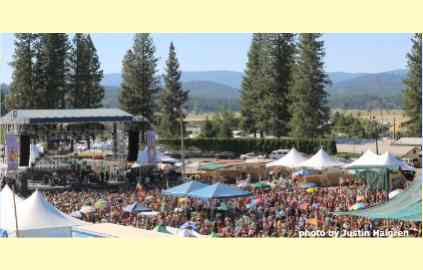
This will be the 23rd High Sierra Music Festival. Photo/Justin Halgren

This will be the 23rd High Sierra Music Festival in Quincy. Photo/Justin Halgren

This performance will be on the first night of the Festival, July 4. The festival is July 4-7 at the Plumas-Sierra County Fairgrounds in Quincy.

The festival lineup includes Primus, Thievery Corporation, moe., Steel Pulse, Leftover Salmon, The Greyboy Allstars, Gramatik, Emancipator, The John Scofield Überjam Band, The Infamous Stringdusters, Lee Fields & The Expressions, Allen Stone, North Mississippi Allstars, Pimps of Joytime, Lord Huron, White Denim, Carolyn Wonderland, Rubblebucket, The Barr Brothers, Papadosio, The M Machine (Live), Moksha Featuring Skerik & Jennifer Hartswick, Orgone, Peter Apfelbaum & Sparkler, Sarah Jarosz, Anders Osborne, The Hot 8 Brass Band, Mike Dillon Band, Aoife O’Donovan, Houndmouth, Lukas Nelson & Promise of the Real, The Revivalists, Futurebirds, Nataly Dawn, Silent Frisco, Tumbleweed Warriors, The Melodic, The Whiskey Sisters, Miner, Octopus Nebula, The David Mayfield Parade, Fruition, The California Honeydrops, Jelly Bread, Scott Pemberton, Living Folklore, Artists-at-large Skerik and Jennifer Hartswick, and more to be announced.

For all details on tickets, camping and parking, go online.


‘All the President’s Men Revisited’ — not just a nostalgia trip

By Hank Stuever, Washington Post

Around here, the offer of watching a two-hour documentary about how Washington Post reporters Bob Woodward and Carl Bernstein chased the Watergate story is about as appealing as taking the car into the shop to get the tires rotated. I’m looking at the calendar and not seeing what we like to call the peg. (The 40th anniversary of the middle of the Watergate saga? The 37th anniversary of the movie premiere of “All the President’s Men?” The 563rd anniversary of the printing press?)

Yet here I sit, thoroughly absorbed by executive producer/narrator Robert Redford’s “All the President’s Men Revisited,” a fresh and even stirring reminiscence airing this Sunday on Discovery.

Redford and his crew, including director Peter Schnall, stylishly manage what countless think tank and j-school panel discussions struggle to do — cut through the recollections of the major players (Woodward, Bernstein, their boss Ben Bradlee, Nixon White House counsel John Dean, etc.) and utilize their well-trod anecdotes and war stories in a way that seems new.

Because let’s face it: Watergate is fading before our eyes. For measuring distance, we in 2013 are now farther away from the events portrayed in “All the President’s Men” than the film “Bonnie and Clyde” was from the real Bonnie and Clyde. Richard Nixon himself is nearly 20 years gone. Mark Felt, the former FBI official who outed himself as Deep Throat in 2005, died four-plus years ago. And while the Post legends and ex-White House staffers (the film also talks to Hugh W. Sloan, Bud Krogh and Alexander Butterfield) come across as a relatively hale bunch in this film, it is in fact the younger interview subjects who do the most to revivify the entire saga as both a political and cultural watershed.

Thus Jon Stewart of “The Daily Show” shares a bit of the ubiquitous and jowly impression of Richard Nixon he used to do as a boy. (Any American who was a child during the Watergate years remembers how you could get the adults in the room to laugh and pay attention to you with a well-timed slouch and “I am not a crook.” You didn’t even really have to know what it meant.) “Ten years old [and] I had my Nixon down,” Stewart says in the film. “Now I have a much more complex view of the man and his presidency. The sad truth is, I think Nixon would by today’s standards be considered maybe a conservative Democrat, [and] maybe at some levels a radical leftist.”

And MSNBC’s Rachel Maddow, who was an infant during the Watergate hearings, is always good at giving history’s constitutional crises a relevant place in today’s conversation: “Richard Nixon is now the guy who, when you see photos of him even at his prime, you cannot believe he was ever president of the United States.”

It’s smart of Redford and company to acknowledge all this. But their “All the President’s Men Revisited” is no Watergate for Dummies, either; it is as concerned with the historical ramifications as it is with the imprint on popular lore and culture. Those who lived through it will find what they’re looking for, whether it’s a renewed sense of apoplexy or even just bemusement. Those who came along after won’t feel that familiar shame of being treated like a kid.

Through his narration, Redford, who portrayed Woodward in Alan J. Pakula’s still popular 1976 movie, makes clear that he’s working out a couple of things here: What is Watergate’s resonance? What do we — as a culture — remember most? What’s different about the world now when compared to the world of 1972? He’s as interested in talking to people like Sloan and Dean as he is in talking to his old pal (and co-star) Dustin Hoffman, who played Bernstein.

“I was amazed by Woodward and Bernstein’s resolve,” Redford tells the viewer. “There’s nothing glamorous about what they were doing, but I thought it was important to portray the tedium, the hard work. And the feelings about the film from the studio’s standpoint was [that the story was] noncommercial. ‘Newspapers, typewriters, phones? Hunh-unh,’ ” Redford characterizes the lukewarm-to-negative response in Hollywood. “‘Washington? Huh-unh.’”

It turned out that the trappings and tools and personalities of journalism were, for a glorious moment, in­cred­ibly sexy. Now Redford and his crew return with Woodward, Bernstein and ­Bradlee to the newsroom on the fifth floor of that brown, Brutalist property on 15th Street that is (you may have heard) currently for sale, probably as a teardown. With Vanity Fair photographer Annie Leibovitz there to document them, and Discovery’s cameras documenting that, and a newsroom full of Posties observing this A-list distraction with equal measures of admiration and weariness (“Watergate, again?”), an awkward vibe of cinema verité sets in. Working at the Post now, one feels a reverential obligation to the work that brought us here, while hurrying like mad toward a future no one has figured out.

“It sure is quiet in here,” Bernstein observes, surveying a plum- and chartreuse-schemed news operation that is centered around a starship bridge of high-def TV screens. Gone is the clatter of typewriters and jangling of phones; gone is the ability to chain-smoke at one’s desk, the way Bernstein did. (“Why did things have to change?” Woodward jokingly asks.)

Rather than revel in newspaperdom’s former glories, “All the President’s Men Revisited” asks a very good question: If a president’s re-election committee authorized the break-in of the other party’s campaign offices, how would the story unfold now? How would it be reported? How would it play?

Marcus Brauchli, who was the Post’s executive editor at the time of the film crew’s visit, gives an eloquent answer that takes into account the new media landscape and why things can never be like they were. As he describes how Twitter users and partisan watchdogs would pounce on the news of the Watergate break-in, the screen itself splinters into an effective chaos of sources, voices and information, which would simultaneously advance, spin and debunk the break-in and its impact. What took Woodward and Bernstein (and other news organizations and, lest anyone forget, prosecutors) weeks and months to piece together could come together in a day or two; the work would happen at those very cubicles Bernstein finds so unsettlingly quiet, as wonks wearing headphones dive deep into databases. Professional and amateur reporters would be following the money, in real time. “The tedium, the hard work” that Redford admired back in the ’70s are what remain. As then, the skill is in the sifting, the verifying.

“All the President’s Men Revisited” spends just enough time on this sort of thing without becoming one more ambivalent documentary about the future of news. Instead, it turns to the epic tragedy that was Nixon himself.

By the time the “smoking gun” tape brings the president down, the film struggles to maintain the artful distance it had so capably established for two hours; those who are old enough to remember their anger and outrage quickly rediscover it. The tape unspools and the paranoia takes hold. “It’s hard to get past the tapes,” political consultant Mary Matalin observes. “Just the insanity.”

“The real Nixon is on those tapes,” Bernstein says. “It is a road map of his mind, it is a road map of his presidency.”

Ben Stein, who is glimpsed as a young man in the footage of doleful White House staffers listening to Nixon’s farewell speech in the East Room (“My mother was a saint,” etc.), reflects on it once more: “It’s really sad. I don’t think any president has been more persecuted than Nixon. I think he was a saint.”

Then Stein breaks into tears, which comes off as both ridiculous and moving, depending on the viewer. This is the first project I’ve seen that seems to understand that, when it comes to Watergate, there is something about it that remains deeply personal, and not just for the people who experienced it firsthand. We live — and even thrive — in the crater it left behind.