Guitarist DeGrassi to put on benefit show in Tahoe

Valhalla Grand Hall on May 25 will be the site of a solo guitar performance by Alex DeGrassi.

The concert, co-sponsored by Sorensen’s Resort, is a benefit for the Sierra Nevada Alliance and the Sierra Fund, nonprofits working to protect the Sierra Nevada.

For more information and tickets, call the Alliance at (530) 542.4546, ext. 305.

A VIP reception starts at 6pm, with the concert at 7:30pm. General admission is $25, and VIP tickets are $100.

Valhalla is on the South Shore on Highway 89, just north of Camp Richardson.


Travel clients told to bring their own bottles

By Terry Gardner, Los Angeles Times

Two Seattle tour companies have launched Travelers Against Plastic to motivate travelers and tour operators to say “no” to disposable plastic water bottles and choose other methods of ensuring their water is safe to drink.

Crooked Trails and Wildland Adventures launched the website, which allows travelers to make a no-plastic-bottle pledge, on March 22. By last week, 136 people and 10 tour operators had signed the pledge.

Eight of 10 single-serving plastic water bottles wind up in landfills, according to the Recycling Institute. About 34.6 billion bottles are emptied annually in the U.S.

Chris Mackay, co-founder of TAP and executive director of Crooked Trails, says her guests are told to be prepared to clean their own water on their travels. In 2008, a guide to Machu Picchu in Peru watched in disbelief, Mackay says, as her group filled their water bottles from a waterfall, then cleaned the water.

Mackay says the surprised guide said, “On behalf of my country, I want to thank you for doing this, because we have plastic water bottles everywhere and along the rivers. You are the first people I’ve seen clean their own water.”

Water is easily cleaned, Mackay says. She likes the Klean Kanteen’s bottle because it has a wide mouth that easily accommodates a SteriPEN. The pen uses UV light (rather than chemicals) to quickly kill 99.9 percent of bacteria, viruses and protozoa that cause water-borne illness.

REI lists a variety of methods for treating water.

For travelers without a good reusable bottle, a custom TAP bottle is available from Kleen Kanteen for $21.95; 25% of the proceeds will be donated to TAP.


Tahoe Tails — Adoptable Pets in South Lake Tahoe

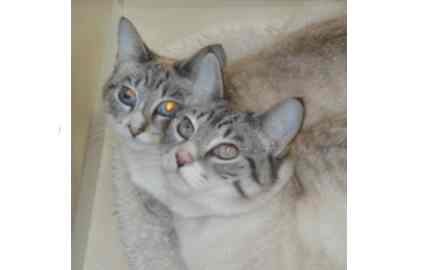
Mallow and Orchid are back. These beautiful siblings were adopted a few months ago, but one member of the family became very allergic to them.

catsOne good outcome of their short stay in a new home is that they are now more relaxed and confident than when they were first in the shelter. They are great cats, about 1 year old, and very affectionate with each other and with people.

Mallow and Orchid are spayed and neutered, microchipped, and vaccinated. They are at the El Dorado County Animal Services shelter in Meyers, along with many other dogs and cats who are waiting for their new homes.

Go online to see photos and description of all pets at the shelter.

Call (530) 573.7925 for directions, hours, and other information on adopting a pet.

For spay-neuter assistance for South Tahoe residents, go online.

— Karen Kuentz


3-day workshop with guitarist

Sorensen’s Resort in Hope Valley is offering a three-day workshop and benefit concert with world-renowned acoustic guitarist Alex DeGrassi.

All levels are welcome to participate in a casual atmosphere as DeGrassi offers insight into techniques, arranging, and his extensive performing experience. Instruction will be in the mornings.

Workshop attendees receive free admission to the concert.

The workshop is May 24-26. It starts with a Friday evening reception with wine and hors d’oeuvres, classes are Saturday-Sunday from 9am-1pm. The concert is Saturday night at the Valhalla Grand Hall. (Tickets just for that may be obtained by calling 530.542.4546, ext. 305.)

Cost for the three days is $275 guests/$325 non-guests. Lodging and meals extra.

For more info, call 800.423.9949.


Time to weigh-in on El Dorado mental health services

The El Dorado County Health and Human Services Agency, Mental Health Division wants the public to review and provide comment on the 2012-13 Mental Health Services Act (MHSA) Plan Update.

The draft plan update is posted online or a copy may be obtained by contacting Stephanie Carlson at (530) 621.6315.

The update provides information on current MHSA programs and budgets for this fiscal year. MHSA components in the update include: Community Services and Supports; Prevention and Early Intervention; Workforce Education and Training; Innovation; and Capital Facilities and Technology Needs.

A public hearing hosted by the El Dorado County Mental Health Commission will be on May 29 from noon-1pm. The hearing will be conducted via teleconference at two locations: 1360 Johnson Boulevard, No. 103

South Lake Tahoe and 415 Placerville Drive, Suite K, Placerville.

Public comment may also be submitted through May 28 to MHSA@edcgov.us or Health and Human Services Agency, Mental Health Division, MHSA Project Team, 670 Placerville Drive, Suite 1B, Placerville, CA 95667.


Pain of adoptions can last a lifetime

By Anita Creamer, Sacramento Bee

Just before Christmas 1962, when she was 20 and unmarried, Freddie Stewart gave birth to a baby girl. At the hospital, she refused to hold her firstborn; she remembers thinking that if she saw her daughter, she couldn’t handle giving her up for adoption.

“I went away from this experience and tried not to look back,” said Freddie Stewart Lussier, now 70. “I thought I’d dealt with it. I just put it out of my head.”

She lives today on a 10-acre property in the El Dorado County foothills, where she has goats, chickens and dogs. Kelly Camber, a daughter she raised after a brief marriage in the mid-1960s, visits often, and Freddie’s grown twin granddaughters and their children spend time with her.

But as with many other mothers of her generation, the loss of her birth child was deep and lasting, a permanent wound. Over the next five decades, Freddie carried a burden of guilt and grief. She couldn’t even talk about her firstborn.

Not when her brother, Wendell Alderson, 60, tried to raise the subject.

“You could see the look on her face,” he said. “Her face would fall. It was hidden. It was a deep, dark secret in our family.”

And not when the family friend who helped arrange the birth daughter’s private adoption asked Freddie if she wanted to see photos.

“I’d say no,” said Freddie. “It was painful, but I was able to put it behind me. Dwelling on it, what was that going to do?”

And then, through happenstance and what Freddie Lussier calls God’s will, she and her birth daughter, Lori Fox, finally met.

During adoption’s age of shame – roughly the three decades beginning in 1945 – the practice was shrouded in secrecy. And young women from middle-class families paid a steep emotional price for pregnancy before marriage.

Often, they were sent to maternity homes where they gave birth to babies they immediately relinquished.

In many ways, Linda Orozco’s story is typical. Today, she’s a volunteer for support groups that help people touched by that era of adoption, but in 1967, she was pregnant and unmarried. She fled to Sacramento, Calif.’s maternity home, Fairhaven Home for Girls, where she gave birth to the son she gave up.

“Society looked down on an unwed mother,” said Orozco, now 67 and a retired state worker. “Your own family looked down on you. You felt like damaged goods.

“I didn’t start talking about it until 31 years later. I had so much shame and pain and sorrow and loss. I had grief I didn’t know was in me all those years, because it was locked up.”

And no one talked about the pregnant girls who vanished, except in whispers.

“The stigma was huge,” said Ellen Herman, a University of Oregon history professor who created “The Adoption History Project,” an online archive of adoption history.

“It’s difficult to convey that today to anyone under 30 or even 40. We don’t remember the degree of shame associated with nonmarital childbearing.”

Although statistics on legal adoption were gathered haphazardly on the state and federal levels in the 1950s and 1960s – and informal adoptions were never recorded – experts suggest that about 120,000 children were adopted each year during those decades, peaking at about 175,000 in 1970.

Research shows that today about 5 million Americans are adoptees, and only 3 percent of them are younger than 18.

For most of them, birth records remain sealed. Even today, adoptees in most states, including California, need a notarized request to receive basic information about their birth parents: age, height, weight and limited medical records. Their identities are not revealed as part of that request.

But in California and 30 other states, adult adoptees and birth parents can find each other through mutual-consent registries, which allow both parties to express their interest in getting in touch. Alternatively, online adoption search sites can also provide help.

On a practical level, what this involved process often means is that the past remains hidden, cloaked in silence.

“Closed adoption was done to protect the birth mother’s reputation and to protect the adoptee,” said Leslie Mackinnon, a spokeswoman for an Atlanta-based advocacy group, Concerned United Birthparents. “And it was done to protect adoptive parents from anyone coming back to claim their child.

“It really messed a lot of people up. Secrets and lies never do anyone any good.”

Freddie Lussier grew up in Roseville, Calif., when it was still a small railroad town, a place where everyone knew everyone else and neighborhood gossip flowed freely.

She worked in a local beauty shop, and she could hear the other women talk after she got pregnant. So she left town, going to live with an older sister in Sacramento until the baby’s birth.

“The man I’d been seeing was older than me, but there was no great love there,” she said. “I didn’t know what to do. I was probably four months along when I told my mother.

“She was mad and disappointed. You know.”

A family friend mentioned that she knew a local couple who wanted children but couldn’t have them. Freddie and her mother visited a Sacramento attorney, where Freddie signed the papers.

“I don’t remember having a choice,” she said. “My mother wanted to meet the people, but the attorney advised us not to.

“Everyone told me that (the birth child) would never know she was adopted. I never pursued a reunion, because I’d never disrupt her life that way. Really, I put that birth so far in the back of my head that it was almost like it hadn’t happened.”

The secrecy surrounding adoption created complicated parallel fictions: Not only was the birth mother expected to compartmentalize her past, but adoptive parents also sometimes felt the need to hide the reality of their circumstances.

Perhaps some of them worried that the stigma of unwed motherhood would tarnish the child they had adopted. Perhaps they feared that their families would be singled out as different.

“Secrecy of all kinds came into the open starting in the 1960s,” said Herman, the University of Oregon historian. “Secrets lose toxicity when that happens.

“Families now aren’t expected to keep up the pretense that adoptive families are exactly the same, because they’re not. Adoptive children have more than one mother and father. People in the 1950s and ’60s tried to pretend otherwise for very well-intentioned reasons.”

For some, the power of secrecy remains.

The woman who adopted Lori Fox, who raised her and loved her, is 81 now and a widow. She does not like the idea of a newspaper story and does not want her name used. Like many of her generation, she prefers that private matters remain private.

It was only by chance that she met Wendell Alderson at the funeral several months ago of the mutual friend who had helped arrange the adoption of his sister’s birth child.

The two began talking – and, he said, she helped put him in touch with Lori, her only child.

“She told me, ‘I’d like for Lori to know some of her family,'” he said.

Lori Fox is today a 50-year-old mother of three who lives in Manteca. She was 8 when her parents told her she was adopted.

“My parents sat me down and told me,” she said. “They cried. I felt bad for them. And I felt bewildered.

“I never wanted to ask questions. My mother didn’t want me to feel different, and I didn’t want her to cry.”

But she was intensely aware of the secrecy surrounding her adoption, which stemmed in part, she said, from her adoptive parents’ fear that the biological mother might want her back.

“It was hush-hush,” Lori said. “I was never encouraged to tell anybody I was adopted. If anybody asked questions, my mother was uncomfortable. It was really sad.”

Once she grew up and had children of her own, Lori wanted to know basic health information. She petitioned the state for a non-identifying report, but she didn’t want to pursue a full-fledged search.

“I didn’t want to disrupt her life,” she said, echoing her birth mother’s words. “But I always envisioned meeting her one day. I thought, ‘When it’s supposed to happen, it will happen.'”

After Wendell Alderson and her adoptive mother met at the funeral, he wrote a note, sending his email address in case Lori wanted to get in touch. Within days, she responded.

“I was excited,” she said. “I couldn’t wait.”

The adoption landscape changed with the times, altered by the sexual revolution, the women’s movement and widespread access to birth control and abortion. Sacramento’s Fairhaven maternity home, located near Tahoe Park, closed in 1979 and is now the site of a seniors’ community.

Today almost 27 percent of America’s children – 22 million kids – are raised by single parents, according to Census Bureau statistics. Almost 85 percent of custodial parents are women, and 35 percent of them have never been married.

Federal Centers for Disease Control figures show that less than 1 percent of children born outside marriage today are placed for adoption.

If unmarried motherhood has become routine, so has open adoption, the practice of birth and adoptive parents staying in touch through the exchange of photographs, cards and, in some cases, visits.

It developed for a simple reason: Baby boomer adoptees started asking questions.

“By the late 1970s, they started showing up at adoption agencies, wanting information,” said Mackinnon, the Concerned United Birthparents spokeswoman. “And birth mothers started coming back wanting to know that the child they’d given up was OK.

“We’re finally educating the public that with open adoption, it’s better for the child and everybody else. The kid does not feel abandoned. They feel loved.”

Over time, the secrecy and stigma faded. Even so, the reunions bringing together adoptees and their birth parents – these intimate strangers – can remain difficult.

“The public seems to think that people find each other and live happily ever after,” said Mackinnon.

“The reunion is just the beginning of another incredibly emotionally wrought chapter. People are not prepared.”

In the middle of the week, Lori Fox made chicken and pasta for Wendell Alderson and his spouse, Ken Nather, in their comfortable east Sacramento home. She works as a college English instructor in Sacramento, and as a break from her long commute home to Manteca, she spends the occasional weeknight in her newfound birth uncle’s home.

She has met Freddie only once. They text occasionally. But the two women are cautious and respectful of one another and their families.

“I texted Lori, ‘You have to reassure your mother that no one wants to take her place, and no one could,'” said Freddie.

Their reunion took place at Wendell’s home in late January, several months after he and Lori met. It was delayed because Freddie had been ill for much of the fall. She has chronic obstructive pulmonary disease and in November was hospitalized with pneumonia.

“I don’t know if this is a new chapter opening or an old chapter closing,” said Lori. “Freddie and her daughter, Kelly, walked in, and we all hugged. Freddie and I didn’t cry, but Kelly did.”

Then they stood looking at one another, trying to figure out family resemblances, as the secrets that froze their family in silence for 50 years began dissolving.

“We’re both looking forward to getting to know each other better,” said Freddie. “This is something I never thought would happen. It was kind of God’s will, you know.”


Bluegrass-country to echo through Virginia City

Virginia City turns over its Comstock roots to all things bluegrass and country at the Americana Music Festival on July 19-21.

Headlining the sixth annual festival is country star James Otto, known for his chart-topping hit “Just Got Started Lovin’ You.” The lineup includes national, regional and local musicians the Novelists, the Tuttles with A.J. Lee, Rita Hosking and more than 10 bluegrass and modern country bands performing more than 30 shows.

Concerts are at five locations throughout Virginia City, including First Presbyterian Church, Piper’s Opera House, Fourth Ward School, Delta Saloon festival parking lot located next to the Bucket of Blood, Virginia City Middle School and Red Dog Saloon. Headliner performances take place Friday and Saturday on the town’s main drag, C Street, which is closed for the event.

The event also plays host to the inaugural Americana Music Festival Beer Crawl. For $10 it includes one Coors Light, a commemorative cup and discounted brews at 10 of Virginia City’s historic saloons.

Tickets now on sale for $20 for general entry including access to each show throughout the festival weekend, excluding Friday and Saturday night headliners. The $30 all-inclusive pass includes access to every musical act including the headlining concerts Friday and Saturday night in downtown Virginia City. A $100 VIP pass includes access to all shows, a pass for the Americana Music Festival Beer Crawl and exclusive perks to be announced. Purchase tickets here.


Open source software topic of tech forum

Tech Tuesday will feature Dave Norton, who’s been working in the world of supercomputing for the past 30 years designing, building, and programming some of the world’s largest computers.

Norton will discuss open source software (free downloadable software) for Android operating systems; Chrome and Firefox web browsers, OpenOffice, LibreOffice, Google Docs, and challenges to Microsoft Office.

Attendees will learn the genesis of open source software, and where it might be appropriate to use. Different types of open source licenses and the different philosophies behind them will also be discussed. While there are several types of free software licenses, they commonly grant freedom to run the program, to study how the program works, to change the program to do exactly what you need (access to the source code is a precondition of this), and to distribute your modifications to the software.

Attendees will look at some of these programs, learn how to install them using common configuration options, and learn what a virtual machine is and who might benefit from using it.

This workshop put on by Lake Tahoe South Shore Chamber of Commerce is May 7 from 8-9:30am in the chamber’s conference room at 169 Highway 50. It is for members and $15 for prospective members. Reserve a space online.


Nutrient-rich food will help with weight loss

By Mandy Kendall

Now that summer is round the corner, some of us may be thinking ahead about getting in shape for all those activities and, dare I say it, more revealing wardrobes. The winter may have encouraged us to gain a little insulation over the past few months that we no longer need. So how should we go about releasing those unnecessary inches?

We are all probably familiar with the “calories in, calories out” view on weight loss and how we need to burn more calories than we consume in order to lose weight. However, all calories are not created equal. Our bodies respond differently to different food groups. For example, protein calories need more energy than fats and carbohydrates to digest and our bodies will respond differently to 200 calories of ice cream versus 200 calories of broccoli.

Mandy Kendall

Mandy Kendall

Even calories from within the same food group will elicit very different responses in the body. Trans fats, from cakes and muffins produce a totally different response than say the fat from fish, avocado and nuts. Processed foods and alcohol all contain a lot of empty calories and offer very little to the body other than material that is often eventually just stored as fat.

Conversely, nutrient rich foods tend to be lower in calories, so they help you remain satisfied for longer while consuming fewer calories. As a guideline, the less a food is processed the more nutrient rich it is likely to be.

The National Weight Control Registry reports that the majority of their most “successful (weight loss) losers” all have something in common; they eat breakfast. Eating shortly after you wake helps jumpstart your metabolism (“breaking the fast” you were in while you were sleeping), helps prevent snacking during the morning or making bad food choices for lunch because of hunger.

Recent studies have suggested that instead of a meal of breads and cereals (often laden with sugar), a breakfast based on higher proportions of protein and fiber (for example an omelet with mushrooms and bell peppers) is the better option. This combination helps to moderate blood sugar levels throughout the morning and prompts fat burning instead of fat storing.

Call it what you may … exercise, training, working out … our bodies need movement to maintain strength and integrity. However, even if we were to be perfectly still all day our bodies still need a certain number of calories every day to maintain our internal systems like temperature control, heartbeat, breathing, etc. This is called our testing metabolic rate. Any calories we take in, above that number, need to be used up otherwise they will be stored in fat cells for future use. Fat cells require little or no calories to maintain themselves, whereas muscle cells burn energy (using calories). So a great way to increase your RMR is to increase the amount of muscle tissue you have. The more muscle tissue you have, the more calories you will burn every day. Eating protein rich foods is a great way to encourage muscle growth. Another reason to increase your protein intake.

One of the most recent trends in weight loss research surrounds something we all do every day, (or should I say every night) — sleeping. There is growing evidence that there are strong links between sleep and weight. A study in 2011, published in the International Journal of Obesity discovered that people trying to lose weight were more successful if they slept between six to eight hours a night. According to research, a lack of sleep decreases levels of leptin (the hormone that tells you when you are full) and increases levels of ghrelin (the hormone that tells you when you’re hungry). So, basically, when you’re tired, you will feel hungry and not know when you’re full. A dangerous combination.

So here are our Qwik-e tips for helping you to shape up and release some unwanted weight:

Quality rather than quantity — Before you eat something, try and ask yourself what nutrition is this going to give my body? The great thing about nutrient rich food is that more often than not it is low in calories and incredibly filling so you can have quality and quantity.

The most important meal of the day — Try and eat within an hour of waking and make the first meal of the day high in protein and fiber. Protein and fiber at every meal makes losing weight no big deal.

Exercise — It is important to include strength training (using weights for example) into your daily exercise in order to maintain a good percentage of muscle mass.

Sleep it off — A good night’s sleep is essential to help balance your “eating” hormones to make sure you are not trying to “eat yourself awake”.

Health Connective is running a group Nutrition, Energy boosting, Cleansing and Weight Release program in May. Each participant will also receive additional vouchers to be used with Health Connective holistic health professionals in our community. Email connect@healthconnective.com for more details.

Mandy Kendall operates Health Connective in South Lake Tahoe, which aligns wellness seekers with their ideal wellness provider. If you have questions, would like some advice, or would like to request some Qwik-e tips on any health and well-being topic, drop her an email at connect@healthconnective.com or keep an eye out on Lake Tahoe News for regular Qwik-e tips on how to make healthy changes one Quick and Easy step at a time.


South Shore dancers to perform at Harrah’s

Lake Tahoe’s Shining Stars celebrate the joy and beauty of dance in their 30th annual recitals on the stage of the South Shore Room at Harrahs’ Lake Tahoe on April 28.

The dancers, who are from the Marcia Sarosik Dance Studio, will put on two performances – 1pm and 5:30pm.

The recitals are to showcase the talent and hard work of the dancers who range in age from 2½ to “young at heart” adults. They will be performing an array of dance styles including classical ballet, tap, traditional jazz, contemporary jazz, musical theater, partnering and hip hop.

The show features favorite songs, old and new, with songs from recitals over the past 30 years and some current hits.

Tickets can be obtained online. There will be some tickets available at the door 30 minutes prior to each show.