A day to remember Old Glory

June 14 is proclaimed by the United State as Flag Day. It is a day to remember our flag, Old Glory.

South Lake Tahoe’s Mike Crowley submitted the following poem in honor of today being Flag Day.

Call Me Old Glory, by D. Alsup

Call me Old Glory

Or Stars and Stripes

This Star Spangled Banner

Must flow all night.

I must fly high

amongst the hillside,

Low amongst the grass

Touching every heart string,

Without hitting the grounds I pass.

I must feel the breeze

Go through me

Go around

Up and below,

Feel the freedom I stand for,

To channel it below.

I must hear the calls for freedom

Wipe the tears that flow,

Strengthen the badges of courage

Of those men and women we know,

who fight for right and justice

who toil for honors sake

who represent this flag

For this United States.


South Tahoe gearing up for July 4 parade

A slew of people have started to sign up to be in South Lake Tahoe’s second annual Fourth of July Parade and Event.

The parade will start at Big 5 at the Y at 10am July 4 and conclude at the American Legion Post by 11am.

It will feature veterans and active military personnel. Two local Gold Star moms will have cars in the parade in remembrance of their sons lost in battle, Sgt. Tim Smith and Spc. Garrett Fant.

Plans are under way for the second annual Fourth of July Parade in South Lake Tahoe. Photo/Provided

Plans are under way for the second annual Fourth of July Parade in South Lake Tahoe. Photo/Provided

There is no charge for veterans or active duty military to be in the parade, but they need to register through the parade producer, Golden Bear Events.

Businesses, service clubs, and families may also be in the parade.

Last year featured a vintage garbage truck from South Tahoe Refuse, an antique military transport truck, vintage vehicles from the South Tahoe High alumni carrying elected officials and veterans, the Soroptimist Fighting Chance car, the Banana Man in the Jamba Juice car, Beachcomber Inn with a surfin’ USA theme, Affordable Construction Services with employees in Uncle Sam hats, and a South Lake Tahoe fire Truck.

A celebration of independence will be at the Legion from 11am to 3pm. A short ceremony will honor veterans, then music, food, vendors, and fun will be available until mid-afternoon.

For more information, call JoAnn at (530) 544.7412.


Help available for those 55+ looking for a job

Approximately 40 percent of the adults who live in El Dorado County are age 55 or older and this percentage is expected to increase. Many of these individuals continue to stay active in the job market or are actively seeking employment.

To assist these individuals, the El Dorado County Connections – One Stop is expanding its outreach efforts through the Mature Job Seeker Assistance Program. The Mature Job Seeker Assistance Program provides free assistance and support to older people looking for a job in El Dorado County.

Free services through the Mature Job Seeker Assistance Program include:

• Help creating and printing resumes

• Paid work experience

• Access to job recruitment boards, computers, copiers and fax machines

• Tips on how to network and use social media

• Updating communication techniques for interviews

• Connecting hobbies, activities and non-work skills to new employment

• Encouraging self-confidence, adaptability to change and self-motivation

• And more.

The Mature Job Seeker Assistance Program is operated at the Connections – One Stop offices located at 3368 Lake Tahoe Blvd. in South Lake Tahoe. and 3047 Briw Road in Placerville. Office hours are Monday-Friday, 8am to 5pm. For more information, call (530) 573.4330 in South Lake Tahoe or (530) 642.4850 in Placerville.


El Dorado County Fair retains ag roots as entertainment grows

By Kathryn Reed

Agriculture – it was the common thread of communities that led to the creation of fairs.

The selling of livestock and the celebration of the harvest are not what they once were. But fairs, they are still going strong.

The four-day El Dorado County Fair opens today with the theme Blue Jeans and Country Dreams.

El Dorado County’s fair dates to 1859 when it was in Coloma. The current site in Placerville was first used in 1939.

Mutton bustin is usually a crowd favorite at the El Dorado County Fair. Photo/LTN file

Mutton bustin is usually a crowd favorite at the El Dorado County Fair. Photo/LTN file

The fairgrounds have grown to 47.77 acres. Loren and Mary Forni once owned this land. The $6,196.50 needed to buy the land came from a horseracing pari-mutuel tax account created by the Legislature in 1933. Today the fair is run by a nonprofit, with no money coming from the county’s general fund.

“The importance of fairs is that they instill a sense of community. The community is coming together not only to run into each other at the fair, but to look forward to seeing the animals the kids have raised and to the auction to see how the community comes together for the kids,” Jody Gray, CEO of the fair, told Lake Tahoe News.

While plenty of livestock can be viewed – from cows to rabbits to goats – and an abundance of pies, jams and knitting to marvel over, many who attend this fair and others are doing so for the entertainment.

South Lake Tahoe Mayor Tom Davis, who has been on the fair board for almost nine years, said, “There is a lot less agriculture and more entertainment and bands.”

The board members, though, buy one of the pigs each year and then in the fall have a barbecue. It’s their way of supporting the kids.

Through FFA and 4-H many youngsters on the West Slope participate in a way of life that today is foreign to those living at Lake Tahoe. Cattle no longer have a presence in the basin and few horses are here. The rabbits that are hopping around are wild and tend to be a nuisance to gardeners.

It’s the non-animal contests that Tahoe residents tend to participate in.

Gray, who graduated from South Tahoe High in 1980, said with the growing interest in locally sourced foods more people are competing in the pie and preserved goods competitions.

Plenty of eggs have come in as well because of the proliferation of backyard chicken coops.

Photography entries have also been escalating now that digital is the norm.

Most of the events at the fair are covered with the $9 entrance fee. The carnival rides are separate.

—-

Fair details:

• Dates-times: Opens at noon today and goes until midnight. Continues noon to midnight Friday; 10 am to midnight on Saturday; and noon to 10pm Sunday.

• Location: El Dorado County Fairgrounds, 100 Placerville Drive, Placerville.

• Tickets: $9 for ages 13 and older, $7 for ages 7-12 and seniors, free for children 6 and under and attendees in military uniform. Ride wristbands are $30.

• More info: Website or (530) 621.5860.


Virginia City to display art from Wally Cuchine collection

The Comstock History Center presents Wally’s World: The Loneliest Art Collection in Nevada, featuring 35 pieces of art from Wally Cuchine’s collection.

Known for his unflagging commitment to and support of artists, as well as his unswerving faith that the art and artists of Nevada are a valuable resource, Cuchine has acquired an unparalleled personal collection of Nevada art. The exhibit is named for Nevada’s Highway 50, known as The Loneliest Road in America.

The exhibit runs June 22-Aug. 18 at the Comstock History Center, 20 North E St., Virginia City. Museum hours are Thursday-Sunday from 11am-4pm. The exhibit is free.


Nevada celebrating history of Lincoln Highway

To celebrate the 100-year anniversary of the Lincoln Highway, the communities along Nevada’s historic Highway 50 will reward travelers with complimentary commemorative coffee mugs during the month of June.

The Lincoln Highway became the United States’ first paved coast-to-coast road for the automobile. It paralleled many parts of the Pony Express route.

The Lincoln Highway Association has set two official tours to start June 22 in San Francisco and New York. The West tour route from San Francisco will go through Nevada’s Pony Express Territory on Highway 50 to Fallon overnight on June 24 with a second overnight in Ely on June 25.

Mug locations:

Dayton Chamber

Dayton Museum

Fernley Chamber of Commerce

Fallon Convention Center

Austin Courthouse/Austin Chamber

Eureka Opera House

Ely’s White Pine Public Museum

Great Basin National Park.


‘Why I Farm’ gets to the core of small farming

By Susan Wood

RENO – The roots of “Why I Farm,” as told by small, third generation farmer Gary Romano, run deep.

It was clear by the recent Meyers-based Bona Fide Books opening party releasing Romano’s historic, semi-political account — subtitled “Risking it all for a Life on the Land” — that there’s a vested interest in the topic. About 40 people showed up at Campo restaurant in Reno on Thursday to hear the author toast, read and answer questions relating to the book. Some knew him. Others didn’t. Still, among the supportive crowd, all have a stark interest in Americans taking responsibility for what they consume and how the industry that supports them stays alive.

Small farmers are a dying breed these days. Yet, there is a segment of people associated with the Slow Food Movement who would love to buy local and fresh. Unfortunately, they do not make up the majority of Americans. Romano is among those rare outspoken farmers who want to do something about that.
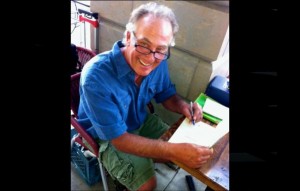
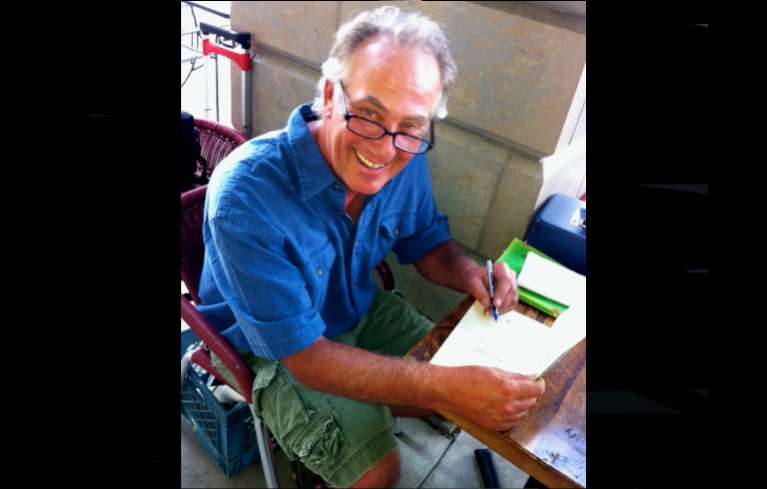
Gary Romano's book delves into the plight of the small farmer. Photo/Daphne Gauged

Gary Romano’s book delves into the plight of the small farmer. Photo/Daphne Gauged

The Sierra Valley Farms owner joked about how farming is not a lucrative business, but one in which you can receive much reward. Few people can dictate the utter beauty of using a locally grown heirloom tomato “to make that (bacon, lettuce, tomato sandwich)” with such passion.

“It doesn’t get any better than that,” he said.

The audience seemed transfixed as Romano read and explained his need to dive into the dirt.

During the question-and-answer session it became obvious the attendees bought into the message.

“What grows best in the Sierra Valley?” one woman asked.

“Greens,” Romano quickly responded.

“The key is to know where your food comes from,” renowned chef and Campo owner Mark Estee told the attentive crowd while holding up the book. Estee, who commercially buys produce from Romano’s individual farmers market in Sierra Valley, reminded those who raised a glass of Prosecco and enjoyed his culinary snacks to make sure they purchase the book.

Consequently, Romano and Bona Fide Books Publisher Kim Wyatt accommodated a line of eager buyers after the talk.

“I’m a local farmer, you’re a local book publisher. Let’s make a book,” she recounted his introduction in finding her as “a kindred spirit.”
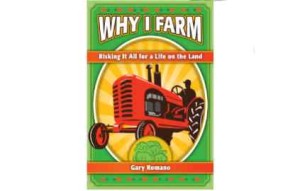
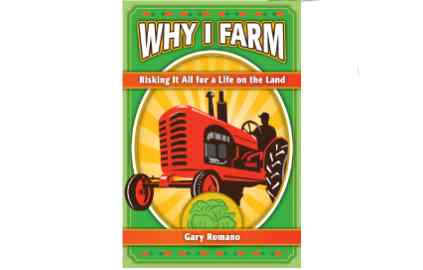
"Why I Farm" is the latest release from Meyers-based Bona Fide Books.

“Why I Farm” is the latest release from Meyers-based Bona Fide Books.

“I love his family history,” she added. Wyatt also thrives in publishing local stories, as shown by the release of “Permanent Vacation,” “Tahoe Blues” and “Get Out of My Crotch.”

Romano’s quick read highlights his evolution into farming as an adult in the 1990s, decades after he was introduced to the craft and industry as a child. The book is full of pictures, descriptions and 91 years of memories of his grandfather and father’s fresh flower business that took him from the metropolis of San Francisco to the Sierra Valley north of Truckee. The book is part political in trying to find a solution for the industry and consumers seeking to support it through their food choices. It’s also part nostalgia with a sentimental twist of this close-knit Italian family.

He told Lake Tahoe News the making of the book was sometimes emotional.

“It is because I lost my brother. And with twins, you have this connection. And he knew our (family) history better,” he said of his late brother, Larry.

Wendy Baroli, co-proprietor of Girl Farm, could relate. The fourth generation farmer with Italian roots makes a living at the long-standing family craft with Jill Heaton. Even on the night of the book launch, Baroli brought lettuce for Romano. The two farm operations often barter.

Like Romano, Heaton finds it ironic that the masses tend to worry more about food grown locally at farmers markets rather than the produce of big distribution chains selling at the supermarkets. The American public often leans toward the familiar. Then, there’s the borderline absurd farmers face from the public’s fear of bug infestations to illness outbreaks.

“I think it’s very interesting their top concerns (are) how fresh is it and then the safety of it,” Heaton said, while shaking her head. “I tell people: ‘If there’s something wrong with the food, we’re done’,” she said. Heaton and Baroli have their Northern Nevada household food supply down to a science, only buying coffee, sugar and flour at the traditional grocery store.

Romano also touched on how the self-sufficiency of growing your own food is lost on a younger generation pursuing a better paycheck. So the support of other small farmers into the food web represents a welcome change in our society.

The idea of supporting each other is: “You lift one small farmer up, you lift them all”: – especially as the book points out, the farmer is not the most experienced self-promoter.

The next promotional event highlighting “Why I Farm” is June 12 at Sundance Bookstore and Music in Reno. “Why I Farm” is available through Bona Fide as well as Amazon, but the latter takes more than a 55 percent cut.


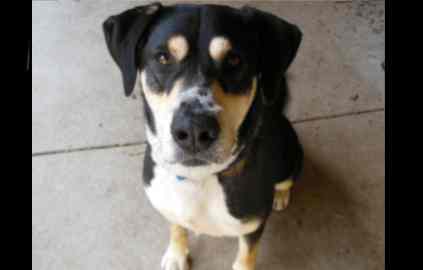
Tahoe Tails — Adoptable Pets in South Lake Tahoe

Toby

Toby

Toby is a great all-around dog, and we have no idea why he hasn’t found his new home after being at the shelter for three months.

He is most likely a Harrier, which is a relative of the foxhound and beagle.

Toby is a cheerful and sweet-tempered boy, about 6 years old and 60 pounds, and he is quite easy-going and likes children. He likes to play with female dogs and be with people. As a hound, he likes to go exploring, sniffing, and trailing, so he should be kept on a leash or in a safe enclosed area.

Toby’s owner died and he had nowhere else to go.

Toby is neutered, microchipped, and vaccinated. He is at the El Dorado County Animal Services shelter in Meyers, along with many other dogs and cats who are waiting for their new homes.

Go online to see photos and description of all pets at the shelter.

Call (530) 573.7925 for directions, hours, and other information on adopting a pet.

For spay-neuter assistance for South Tahoe residents, go online.

— Karen Kuentz


Financial know-how of Americans in short suppy

By Brenda Cronin, Wall Street Journal

Some household balance sheets have mended during the recovery but that may be thanks less to fiscal stewardship than the improving economy.

In fact, Americans’ grasp of concepts such as investment risk and inflation has weakened since the recovery began in mid-2009. Research released last week shows that on a five-question test (Take the test here), respondents did worse in 2012 than in 2009. The average number of correct answers fell to 2.9 in 2012 from 3.0 on the test in 2009.

The test, along with a wide-ranging survey of financial capability of more than 25,000 American adults, was conducted during the fall and funded by the Financial Industry Regulatory Authority Investor Education Foundation.

“People are finding it a little easier to make ends meet,” Finra Chief Executive Richard Ketchum said in presenting the 2012 National Financial Capability Study results last week in Washington. “More respondents have rainy-day funds, which puts them in a better position to deal with life’s unexpected events…But there are still very significant concerns,” he said, adding that debt continues to be a serious problem.

Patterns of spending and saving changed little between the two studies: 41 percent of respondents still say they spend less than their income, 19 percent spend more than it and 36 percent spend roughly what they earn.

In the most recent study, 40 percent of respondents said they had no trouble covering their monthly expenses, a slight improvement from 36 percent in 2009.

Although many respondents were short on financial education, they didn’t lack confidence about managing their books. Researchers said they found “a disconnect between self-perceptions and actions in day-to-day financial matters.” Many people who gave themselves high marks for managing their finances also were using non-bank borrowing methods, such as payday loans, or had overdrawn their checking accounts.

The survey focused on four areas of financial capability: making ends meet, planning ahead, managing financial products and financial knowledge and decision-making. (The five-question test was part of the fourth area, financial knowledge.) Researchers sliced the data by age, gender, ethnicity and education as well as census division and state.

It isn’t surprising that the worst downturn in the U.S. since the Great Depression hasn’t produced better personal financial habits, said Annamaria Lusardi, who was part of the team that designed the questions for the Finra test and survey.

Although the tattered economy often was front-page news throughout the recession, she said, simply reading about markets and the economy is no substitute for financial-literacy education at school or work.

“It’s not that people learn because we’re in a financial crisis,” said Ms. Lusardi, a professor at George Washington University and director of the school’s Global Center for Financial Literacy. “We can’t expect people to learn about inflation by osmosis.”

She emphasized that young people in particular need education not only on asset and wealth-building, but on managing debt. The study found that debt remains an acute problem for those with lower incomes and less education — as well as the young.

Among young people ages 18 to 34 years old, 43% have used often high-cost methods of borrowing, such as pawn shops or rent-to-own establishments, Lusardi said, compared with about 30% of the entire population.

“That means… young people are basically becoming accustomed to financial transactions that require non-bank institutions and that are also high-cost,” Ms. Lusardi said.

Young people also are likely to have precarious finances and scant savings socked away for emergencies. When asked if they would be able, in one month, to come up with $2,000 for an unexpected expense such as car repairs, 49 percent of 18-34-year-old respondents said probably not. That contrasts with 27 percent of respondents age 55 or older who said they couldn’t, and 42 percent of those between ages 35 and 54.

Planning for further down the road also got short shrift: 40% of respondents said they had set aside a rainy-day fund that they could live on for three months; 56 percent said they hadn’t.

Survey questions on housing yielded good and bad news. While the number of 0% down payments on homes fell by 5 percent from 2009 to 2012, foreclosures inched up, with 3.7 percent of respondents in 2012 involved in one, compared with 3 percent in 2009.

“Financial literacy is this new skill and we need to live in this new world of individual responsibility,” Lusardi said. “Very few countries have taken the initiative to improve financial literacy and capability… If you don’t do that, this is not something that grows with you or that people acquire by their daily lives.”


Valhalla theater season starts in July

“The Complete Works of William Shakespeare (Abridged)” is a zany comedy that is coming to the Boathouse Theatre on the South Shore.

It will be July 5-7 and July 11-13 at 7:30pm, and on July 13 at 2pm.

Written by Adam Long, Daniel Singer, and Jess Winfield, the Bard meets the Three Stooges and it’s a worldwide phenomenon, earning the title of London’s second-longest-running comedy after a decade at the Criterion Theatre.

For details and tickets, go online or call (530) 541.4975.