Electronic devices disrupting sleep patterns

By Kathryn Roethel

It may seem like the screens on your electronic devices consume your every waking hour. Now, new research indicates that, if you use smartphones and tablets before bed, they may be cutting into your sleep hours, too – or at least delaying them.

New research from the Mayo Clinic shows that smartphones and tablets set at their brightest settings and held very close to the face emit enough light to suppress the body’s production of melatonin, a hormone the brain releases when lighting is dark or dim.

Read the whole story


2 weekends for tour of artists studios

Tahoe Art League’s annual Artist Studio Tour is July 26-28 and August 2-4 from 10am-5pm each day.

Attendees may visit 20 to 30 local artists in South Lake Tahoe locations to talk with them and view their sculpture, oils, watercolors, dye on silks, drawings, photography, jewelry and related works. Art works will be for sale. Some artists will do demonstrations.

The tour is self-guided; a map will be provided. Pick up maps online or at TAL Art Center, 3062 Highway 50, South Lake Tahoe.

Local renowned artists included are watercolorist Lady Jill Mueller, oil and watercolorist Dave Russo, marble sculptor David Foster, oil painter Kit Knight, and dye-on-silk painter and watercolorist Nina Major.


Machine may replace handmade fireworks

By Nick Leiber, Bloomberg Businessweek

The U.S. spent close to $1 billion on fireworks in 2012, according to the American Pyrotechnics Association. The trade group’s executive director, Julie Heckman, expects sales to climb “a little bit” this year, continuing the market’s steady upward trajectory.

Unsurprisingly, the bulk of what explodes in America’s skies and crackles in backyards is imported from China, though a few display companies that put on shows do make a bit of their own stuff.

Less well known: Most fireworks are still made by hand to avoid accidental explosions in factories.

“The materials are friction sensitive,” explains Heckman. “Until I did my first trip to China about 20 years ago, I would’ve never really appreciated ‘made by hand.’ The number of man hours (for) 20 minutes of enjoyment is just astronomical.”

Fireworks veteran Jim Widmann of Sandy Hook, Conn., wants to speed up the manufacturing process. After learning the trade from fabled display giant Fireworks by Grucci and running his own outfit, he invented a machine that automates the most laborious step of making an aerial shell.

It pastes the paper that contains the gunpowder “about eight or 10 times faster” than it would take by hand, says Widmann, 55. He notes none of the roughly 450 machines he’s sold through Connecticut Pyrotechnic Manufacturing, his 6-year-old business, has caused accidents.

And they’re “pretty intuitive” to use, he says. “I’ve sold plenty of machines to people I haven’t been able to speak one word with, using video, pictures and the manual.”

His timing is good, says Phil Grucci, president and CEO of his family’s storied “multimillion-dollar” fireworks business, which dates back to 1850.

Grucci says in China, “The labor that was available to manufacture fireworks is migrating to manufacture” more lucrative products, such as electronics and pharmaceuticals.

Widmann’s “technology, and that technique for pasting a shell is now widely revolutionizing the labor reduction in some of the manufacturers in Asia,” he says. It’s “given China the ability to maintain their productivity.”

The labor shortage “has left a lot of people asking, what’s the future of fireworks manufacturing in China going to be? Part of the solution to that is increased automation,” says Jesse Veverka, who just returned to the U.S. after shooting in Asia for “Passfire,” his forthcoming documentary about fireworks culture.

Widmann doesn’t expect to earn much from China. Even though Chinese factories are using his technology, few are buying his machines, which cost about $2,500. After traveling in China’s fireworks district multiple times and getting a Chinese patent, “It finally occurred to me that the Chinese are not going to buy my product,” says Widmann. When they “decide to use something like this, they just knock it off, one way or another.”

Widmann, who has sold his machines in 30 countries, says a lot of business comes from hobbyists in the U.S., which Veverka estimates “on the order of 50,000 people.” They build their own for backyard fun in states with permissive fireworks laws.

And “I can pretty confidently say that every remaining (display fireworks) manufacturer” in the U.S. uses the machine, says Widmann.

He is hopeful about bringing the business back to the U.S. “I’m a big proponent of American fireworks manufacturing, for obvious reasons: I sell a machine that does it,” says Widmann.

He says he’s been talking with the owners of one of the big display companies in the U.S. about its investment in domestic facilities to bring back some manufacturing, even if just for specialty items or to safeguard against shippers ending the transportation of fireworks.

“We’re not dead yet,” Widmann says. “There’s a chance there might be a resurrection.”


Tribute concert to Jerry Reed

Joey Carmon is putting on Guitar Man, a tribute show to Jerry Reed.

Reed was a singer who became a good ol’ boy actor in car chase movies like “Smokey and the Bandit”. Most everything about Reed was distinctive: his guitar playing, writing, voice and his sense of humor.

The event is July 14 from 5-7pm at the Genoa Town Park on Nixon Street.

Bring a blanket and picnic dinner.


Theater season in S. Lake launches with laughter

By Kathryn Reed

Small stage, older audience, limited talent pool, not a ton of money. Community theater can be limiting.

But those factors were not noticeable to those who on Friday night attended the debut of the summer theater season at the Boathouse Theatre. “The Complete Works of William Shakespeare (Abridged)” will be staged at the South Shore theater for five more nights.

This is the third season the Valhalla Festival of Arts has put on three plays. Much of it has to do with them being moneymakers. The nearly 160-seat theater was almost sold-out Friday.

“We want interesting, well-written pieces, but we also need something that entertains people,” Ginger Nicolay Davis, president of the Tahoe Tallac Association, told Lake Tahoe News. “One of the biggest challenges is to pick the right material.”

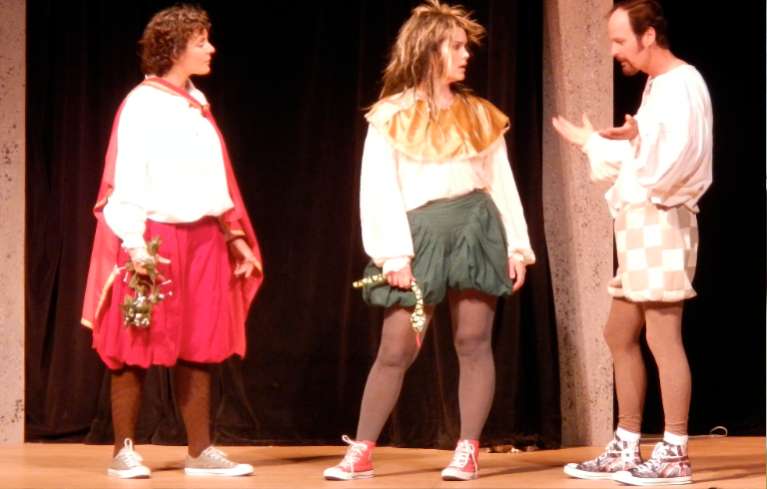
“The Complete Works of William Shakespeare (Abridged)” is very much a farce that keeps the audience laughing. Photo/Kathryn Reed

“The Complete Works of William Shakespeare (Abridged)” is very much a farce that keeps the audience laughing. Photo/Kathryn Reed

She is reading a dozen scripts now for next year’s season.

When it comes to picking a play, the size of the venue is a huge criterion. A play that features multiple actors won’t work. Nor will elaborate sets because of the limited stage area.

Seeing the same actors in play after is play is common in a small town. Because those in the local theater business know each other, they know who can do what. That’s why when it comes time to select a play the decision-makers do so knowing who might be able to play which part.

A desire to have a family-friendly play is also part of the mix.

“For next year I’m already reading family-friendly shows that perhaps we could cast kids in as well,” Davis said.

This version of Shakespeare was chosen to appeal to younger community members. While there were youngsters in the audience July 5, some of the material is not appropriate for little kids.

It’s a fun play with some Tahoe references woven in.

“I think this Shakespeare is really family friendly, but it is PG-13. It is Three Stooges meets Shakespeare,” Dave Hamilton said of this comedic play.

Hamilton is in his first season as festival director. But he is intimately familiar with the venue, the people and festival as a whole. He co-wrote the highly popular “Guilty Pleasures”, has been on the Tahoe Tallac Association board and is the former theater arts director at Lake Tahoe Community College.

“Everyone of us has a pretty significant background,” Hamilton told Lake Tahoe News.

But the actors aren’t getting paid.

Valhalla – or any theater company – can’t just put on any play they want. They must pay for the rights to the play. Something like “The Complete Works of William Shakespeare (Abridged)” runs about $1,200 because it’s based on a percentage of proceeds. A play from the 1950s or ’60 might have a flat fee of about $500.

And while the 2013 season has just begun, decisions about 2014’s shows will be made in a matter of months.

—–

Valhalla festival plays:

• “The Complete Works of William Shakespeare (Abridged)” July 6-7, July 11-13.

• “Motherhood Out Loud” July 18-21.

• “Better Late” Aug. 1-4.

More info about these shows and the entire festival may be found online.


Being a casino lawyer is not just about gaming

By Ed Komenda, Las Vegas Sun

Serving as a general counsel attorney for a major gaming company might be one of the most demanding jobs in the world.

From lawsuits to labor strikes and a lagging economy, the job demands thick skin and endless endurance.

Tim Donovan and Brian Larson are two of the best.

As general counsel for Caesars Entertainment, Donovan and his staff recently won an American Lawyer Media award, naming them one of the best legal departments in the country. Caesars is the parent company of Harrah’s Lake Tahoe and Harveys in Stateline.

As Boyd Gaming’s lead attorney, Larson has helped the company blossom from a locals casino to a national contender with properties across the country.

Read the whole story


People make loneliest road a bit more tolerable

By Claire O’Neill, NPR

It’s hard to say where the the 287-mile stretch of Nevada’s Highway 50 got its nickname “the loneliest road in America.” Photographer Ty Wright thinks some writer got clever in a Life article once upon a time — and that it just stuck.

But when he set out on a road trip for a grad school project in photojournalism, Wright was less interested in the origins of the superlative and more curious about its veracity: Is it really the loneliest road? And if so, who actually lives there?

He spent about 10 days exploring the five or so towns that dot the highway — and mostly what’s in between: a lot of nothing. His goal as a photographer was to capture how it looks. And to do that, he says, he listened.

“I think people get behind their cameras and start shooting without listening,” he says. “If I don’t know you, how can I tell [your] story through images? Even with a place. I found myself parking on the side of the road … just listening.”

A self-described “people person,” Wright says he found himself searching for connections in the most unlikely places. He has tales of ranches and brothels — and accounts of general goodwill from the locals, who seemed more than willing to accept an outsider without questions. But he still had questions: Who are the locals on this lonely road?

“It takes a certain type of person,” Wright says. “A strong, self-sustaining kind of person. They have different worries because their neighbor might be 2 miles away. They’re a lot more independent. They’re their own maintenance men. Their own proprietors. And they know how to live off the land. The ethic of work,” he says, “is just insane.”

Of course, one man’s “middle of nowhere” is another man’s home. Still, why make home on a lonely road?

“There was no consensus,” Wright says, “but I think it was just a tie to the community. And a tie to the land. There’s something spiritual and really unique to that place. You see the sawtooth edges of the mountains and the sunset stretches clear behind you and it looks like there’s two suns. I’ve never seen anything like that.”

Maybe it’s easy for a city slicker to say, but these days it seems like having little reception and lots of road is a rare experience. Yet the feeling of isolation, even in (or maybe especially in) the most wired urban areas, is universal. Wright’s antidote for travel loneliness contains a universal truth:

“Ultimately I’d say that people make the road not so lonely.”


Display of patriotism in S. Tahoe during parade

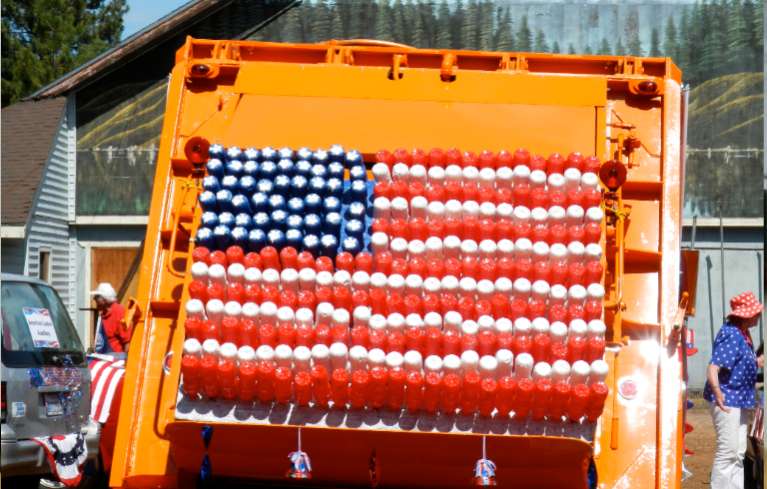
South Tahoe Refuse makes an American flag out of plastic bottles. Photo/LTN

South Tahoe Refuse makes an American flag out of plastic bottles. Photo/LTN

Red, white and blue were everywhere – in the parade, on the vehicles, as decorations and definitely the color of choice for attire.

About 35 vehicles participated in the second annual South Lake Tahoe Fourth of July parade.

Golden Bear Events organized the parade that was dominated by military veterans and city public safety vehicles.

The group of vehicles made their way from the Tahoe Valley Pharmacy to the American Legion at was described as walking pace.

Lots of people lining the parade route were waving U.S. flags. Plenty of horns were honking by people not even participating.

The parade ended at the Legion Hall where festivities continued on.

— Lake Tahoe News staff report


Dehydration, heat exhaustion not to be taken lightly

By Beth Brown

It’s important for people to understand the difference between heat exhaustion and dehydration, especially if you are exercising in high temperatures and even high altitudes, such as Lake Tahoe and our surrounding areas.

Heat exhaustion is a condition, where symptoms may include heavy sweating and a rapid pulse, a result of your body overheating. It’s one of three heat-related syndromes, with heat cramps being the mildest and heatstroke being the most severe.

Beth Brown

Beth Brown

Heat exhaustion is preventable. Causes of heat exhaustion include exposure to high temperatures, particularly when combined with high humidity and strenuous physical activity. Signs and symptoms of heat exhaustion may develop suddenly, or over time, especially with prolonged periods of exercise.

Possible heat exhaustion symptoms include:

• Cool, moist skin with goose bumps when in the heat

• Heavy sweating

• Feeling faint or dizzy

• Fatigue

• Weak rapid pulse

• Muscle cramps

• Nausea

• Headache

Without immediate treatment, heat exhaustion can lead to heatstroke, a life-threatening condition. Some things you can do when you start to feel heat exhaustion symptoms: stop activity and rest (in a comfortable and cool spot, like under a shady tree); slowly drink cool water and/or sports drinks with electrolytes. Seek help immediately if you think you are experiencing heat exhaustion.

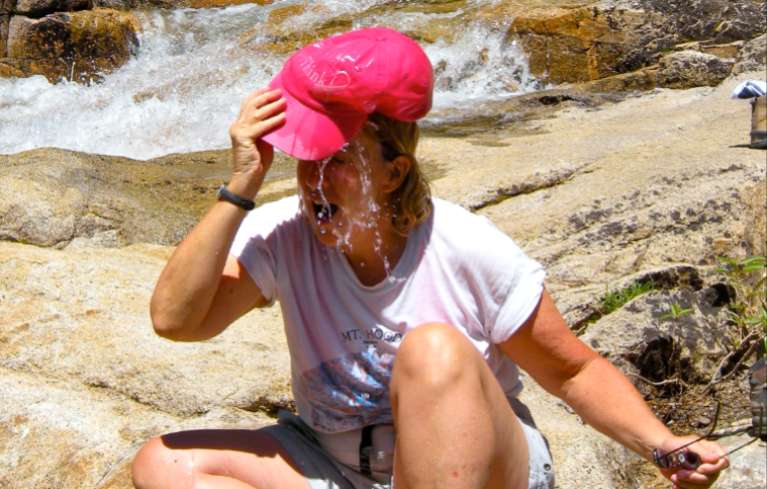
Staying cool on a hot hike is important. Photo/LTN file

Staying cool on a hot hike is important. Photo/LTN file

Dehydration occurs when you lose more fluid than you take in, and your body doesn’t have enough water and other fluids to carry out its normal functions. Anyone may become dehydrated, but young children, older adults and people with chronic illnesses are most at risk. If you don’t replace lost fluids, you may get dehydrated. Common causes of dehydration include intense diarrhea, vomiting, fever or excessive sweating. Not drinking enough water during hot weather or exercise also may cause dehydration. You can usually reverse mild to moderate dehydration by drinking more fluids, but severe dehydration needs immediate medical treatment.

The safest approach is prevention. Monitor your fluid loss during hot weather, illness or exercise, and drink enough liquids to replace what you lose. Mild to moderate dehydration is likely to cause: dry sticky mouth, feeling tired or sleepy, fatigue, feeling thirsty, not urinating, unable to make tears, dry skin, headache, constipation, dizzy or lightheaded feeling.

Severe dehydration, a medical emergency, can cause: Extreme thirst, irritability, lack of sweating, no urination, shriveled and dry skin, rapid heart rate and rapid breathing, hot skin, confusion. Unfortunately, thirst isn’t always a reliable gauge of the body’s need for water, especially in children and older adults. A better indicator is the color of your urine: Clear or light-colored urine means you’re well hydrated, whereas a dark yellow or amber color usually signals dehydration.

 When to see a doctor. If you’re a healthy adult, you can usually treat mild to moderate dehydration by drinking more fluids, such as water or a sports drink (Gatorade, Powerade, others). Get immediate medical care if you develop severe signs and symptoms such as extreme thirst, a lack of urination, shriveled skin, dizziness and confusion. (Mayo Clinic, 2013)

Barton wants you to have a safe and happy summer and the best prevention is education. So, whether you’re running, hiking, cycling or even boating be sure to keep the above warning signs in mind.

If you feel as though you or a loved one are experiencing any of these symptoms, be sure to call 911 or visit Barton Memorial Hospital’s emergency department, located at 2170 South Ave., South Lake Tahoe. Questions, call (530) 541.320.

Reference: Mayo Clinic, July 2, 2013, Heat Exhaustion.

Beth Brown is director of nursing for Barton Emergency Services.


Tips to keep pets safe during fireworks

As public fireworks displays begin thundering on the Fourth of July, the phones start ringing at Regional Animal Services. Every year, animal services sees a sharp increase in stray dog calls during the 24-hour period around July 4-5 as dogs attempt to flee from the noisy fireworks.

Fourth of July fireworks are no fun for dogs. Some will go to extreme measures, such as jumping through open windows, in their effort to escape the noise. Once out, these dogs may wander many miles from home, or hide themselves under decks or sheds for days. This includes cats as well.

To help keep pets home and safe over the Fourth of July holiday, Washoe County Regional Animal Services offers the following tips:

  • Before the fireworks start, bring and keep your dog inside.
  • Keep windows and doors closed.
  • Take steps to lower outside noise such as leaving a radio, television, fan, or air conditioner on.
  • If you know your dog does experience extreme anxieties to loud noises, it may be worthwhile to contact your veterinarian to see what recommendations they may have.
  • If you’re going to a firework display, the best way for everyone to get the most enjoyment is to leave your pets at home.

Regional Animal Services staff also encourages pet owners to make sure their pets have identification tags and are microchipped just in case they do get lost. This will expedite getting pets and their families reunited.