Sunscreen should be reapplied throughout the day

By Mandy Kendall

Are you really protecting yourself against the sun?

We may be most of the way through the summer but it is never too late to make sure we are protecting ourselves correctly in the sun.

Mandy Kendall

Mandy Kendall

Here are some common mistakes people make when it comes to spending time in the sun:

I don’t burn, so I don’t need sunscreen — Apparently one of the most common sunscreen misdemeanors is not wearing any. By now we should all know that too much time in the sun can increase the risk of skin cancer (the most common of all cancers) and early skin aging. Tanning quickly and never burning is not an indication that you are immune to the dangers of the sun.

I have a high SPF number lotion, so I’m protected — SPF (Sun Protection Factor) only applies to protection against UVB rays that cause sunburn. In order to protect yourself against the skin-damaging UVA rays as well you will need to make sure your lotion has the words ‘broad spectrum’ somewhere on the bottle.

I’m going to finish up last year’s sun tan lotion before I buy a new bottle — The active ingredients in sunscreen deteriorate over time and lose their ability to protect our skin. Also an open bottle can grow germs as the preservatives in the lotion lose their efficacy too. Check storage instructions on the bottle as well. Heat often degrades sunscreen meaning lotion kept in the glove compartment or your beach bag may become ineffective over time.

I have sunscreen in my moisturizer — Many facial moisturizers have an SPF in them, however we often don’t wear enough, or re-apply it enough, to make it effective. Experts suggest applying a sunscreen under your makeup for best protection.

I only need a dab of lotion — The rule of thumb for the amount of lotion you should be using is about a shot glass full of sunscreen to cover the whole body. Obviously, some bodies are larger than others but it is generally agreed that there is no such thing as too much sunscreen.

I put sunscreen on this morning, so I’m protected all day — The active ingredients in sunscreen are good for about two hours, less if you’re sweating or swimming. Re-apply often and let it soak in for a few minutes before you dive back in the water.

It’s OK, I put on waterproof sunscreen — Recently changed FDA rules no longer allow the words “waterproof”, “sweat proof” or “sun block” on sunscreen bottles. Instead, manufacturers can only claim, based on testing, that their product is water resistant for either 40 or 80 minutes. After that you need to reapply.

It’s not sunny today, so I don’t need sunscreen — UV rays easily penetrate haze, fog and cloud meaning it doesn’t have to be warm and sunny to cause skin damage. UVA rays, responsible for skin aging, can cause damage through thick clouds and also glass.

How much SPF do I need? — Skin experts generally recommend an SPF of at least 30. However, that doesn’t mean that SPF 60 is twice as protective. SPF 30, when applied properly, can block out around 96 percent of sunburn causing rays. As the SPF number increase you only see a small increase in protection, around 98 percent with SPF 50 and under 99 percent with SPF 75. The strength of SPF does not change how often you need to reapply or how long you can be in the sun.

I’m re-applying new, high SPF sunscreen so I’m good to stay in the sun — Sunscreen can’t block out 100 percent of the sun’s damaging rays so you should also protect yourself in other ways with hats, sunglasses and protective clothing to minimize the damage. Just because you don’t burn doesn’t mean you’ve protected your skin. Once you’ve tanned, you’ve damaged your skin.

If I wear sunglasses at all, I just buy a cheap pair — Not protecting your eyes in the sun exposes you to a greater risk of cataracts, macular degeneration and skin cancer on the eyelids (which makes up 10 percent of skin cancers). Cheap sunglasses may not provide much, if any, protection against UV rays. Look for a pair that blocks 99 percent of UVA and UVB rays. If you’re not sure your sunglasses are protecting you enough, you can take them to an eye doctor who should be able to scan the lenses to measure the protection they offer.

Sunburn happens

Aloe Vera has anti-inflammatory and antioxidant properties to help soothe and heal sunburn. Pharmacies will have many varieties but try to look for the highest percentage of aloe possible, or better still cut the end off an aloe leaf and wipe the gel directly on the burn. The piece can be kept in the fridge for further applications.

A spoonful of honey not only helps the medicine go down, it is also is hailed amongst other things as a healer of sunburn. Many studies have shown that its antibacterial and anti-inflammatory properties can help to heal wounds so can be used as an effective sunburn reducer.

Until next time.

Mandy Kendall operates Health Connective in South Lake Tahoe, which aligns wellness seekers with their ideal wellness provider. If you have questions, would like some advice, or would like to request some Qwik-e tips on any health and well-being topic, drop her an email at connect@healthconnective.com or keep an eye out on Lake Tahoe News for regular Qwik-e tips on how to make healthy changes one Quick and Easy step at a time.



Inequity in pay begins with childhood chores

By Soraya Chemaly, Salon

Gender as an organizing principle for how we value labor appears to have depressingly early, yet unsurprising, roots. Boys, on average, spend two fewer hours doing household chores per week than girls do (they play two hours more). And if they live in households where children are compensated for doing chores, boys make and save more money.

Year after year, studies repeatedly confirm these patterns. The problems women face with unequal pay and housework duties actually start in childhood.

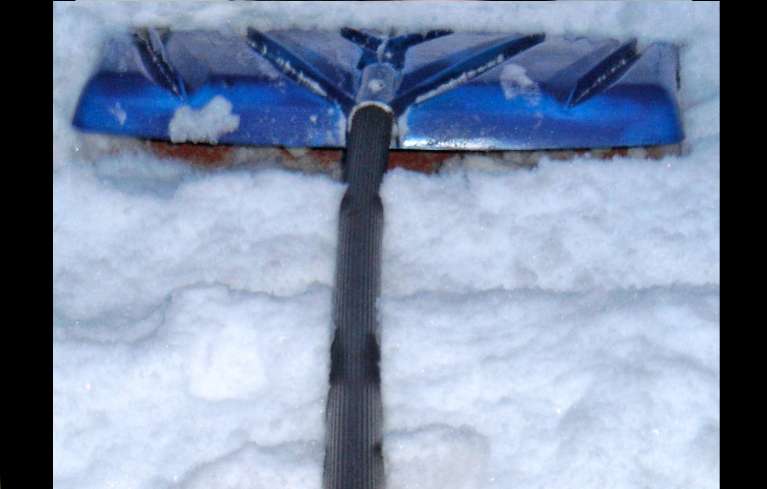
Shoveling snow might garner a higher wage for kids. Photo/LTN file

Shoveling snow might garner a higher wage for kids. Photo/LTN file

A 2009 study conducted by University of Michigan economists found a two-hour gender disparity in responsibilities per week in a study of 3,000 kids. That same year, Highlights magazine, a children’s publication, surveyed its readers and found that 75 percent of girls had chores, while just 65 percent of boys did. This disparity in chores and free time continues into adulthood all over the world.

According to the Organisation of Economic Co-operation and Development, men “report spending more time in activities counted as leisure than women. Gender differences in leisure time are wide across OECD countries.”

The fact that boys’ chores appear to be more profitable makes the childhood chore gap even more disturbing. Turns out, parents tend to value the work that boys typically do more highly than the work girls do. A website that helps parents teach children how to earn, spend and save responsibly, pktmny, found “significant divides based on gender, age and the nature of the task being undertaken by each child,” according to Louise Hill, COO of the company.

For example, mowing the lawn generally garners higher allowance wages than folding laundry. Shoveling a snow-covered driveway might yield more cash in hand than emptying the dishwasher.

Read the whole story


Plan now to fund your child’s college education

By John McDonough

Generation after generation, parents have taught their children to prepare for college now, which often means in elementary school or even earlier.

These days, financial experts are giving parents the same advice.

Can you afford the college that will give them the best chance in life? Will paying for their education force you to have to work well into your golden years? These are the questions I ask parents every day.

Many parents really don’t know how to begin answering these questions; they are afraid of walking into a financial situation that they won’t be able to safely walk out of. But the alternative – saddling their children with debt well into their 30s and 40s – is not an appealing alternative.”

Here are four disturbing trends in the challenge of paying for a college education:

• The net worth of today’s thirtysomethings: Adults in their 30s have 21 percent less net worth than thirtysomethings 30 years ago, according to a new Urban Institute report. Why? Much of it has to do with high-interest student loans and credit card debt. The return on investment of a college education is excellent – college grads earn 84 percent more than those with only a high school diploma, according to Georgetown’s Center on Education and the Workforce. But paying off that investment without outside help is exceedingly burdensome for a graduate.

• Student loan debt is even greater than credit card debt: That’s right – topping all Americans who have made poor decisions with their credit cards are ambitious high school graduates, whose collective student load debt shoots past $1 trillion. More important than this being a crucial social epidemic, it’s potentially a very real problem for your child. President Obama scored some political points in identifying with most Americans when he said his student load debt was paid off only after he was elected to the U.S. Senate. Two-thirds of students leave college with some form of debt, according to the Federal Reserve Bank.

• Fluctuating interest rates: Recent controversy over federal Stafford loans interest rates adds to the insecurity of borrowing as a college financing strategy. Given the unpredictability of Congress, which allowed the U.S, credit rating to drop while standing on political principles, one can’t reliably predict whether interest rates will rise or fall.

• Your children cannot refinance their loans: While a borrower who has racked up tens of thousands of dollars in gambling debt can refinance their payments, student loans remain at fixed rates. In collecting money on student loans, there is no statute of limitation, and today it’s very common – the norm, actually – for student loan holders to take nearly two decades to pay off their debt. With the annual average cost of public universities exceeding $22,000 per year, and the same often surpassing $50,000 at private universities, it’s no surprise.

John McDonough is the managing member at Studemont Group, which is primarily focused on helping retirees gain peace of mind with unique market rescue and recovery programs.


Rebelution and Matisyahu coming to South Shore

Rebelution and Matisyahu will bring their Island-fused rock spirited jams and blissful irie grooves to Lake Tahoe on Aug. 21.

Known for their grassroots blend of soul and rhythm beats capped with messages of world peace, Rebelution and Matisyahu, along with special guests Collie Buddz and Zion-I, have spent the summer headlining music festivals nationwide on the Good Vibes 2013 Tour.

The MontBleu show n Stateline begins at 6pm.

Tickets are $30 in advance and $35 the day of the show. Contact Ticketmaster or the MontBleu — 888.829.7630.


Temple Bat Yam celebrating 30th anniversary

Temple Bat Yam is celebrating its 30th anniversary with a weekend of festivities, Aug. 16-18.

On Friday at 6pm at the temple (3260 Pioneer Trail, South Lake Tahoe) there will be a pre-shabbat nosh. At 6:3pm, there will be a “Friday Night Live” with Sam Glaser, world renown entertainer.

On Saturday at 9am, there will be a breakfast at the temple, followed by various outdoor activities.

At 7:30pm at TBY, (tickets available at 6:30pm), there will be a talent show with singers, pianists, guitarists, ukulele players singing “Sunrise Sunset”, a harpist playing Broadway melodies, original dramatic poetry readings, Hawaiian dancers; a recitation-song of “If I Were a Rich Man” from “Fiddler on the Roof”; and

keyboard playing and singing by Sam Glaser.

On Sunday, there will be a brunch at Casino Fandango in Carson City.

The weekend events are also a fundraiser for Temple Bat Yam. Admission for the entire weekend is $130 for one person, $330 for up to six people in a family and $65 per event for one person. Bring a check to Temple Bat Yam on Thursday or Friday from noon to 5pm, or for a credit card, call (530) 542.1211 on those dates at those times.

For more information, email tbycelebrating30@aol.com.


‘Good Girls Revolt’ details groundbreaking sex discrimination case against Newsweek

By Kathryn Reed

Where would women journalists be today if it weren’t for a group from Newsweek who decided to sue their bosses for discriminating against them?

That’s a hard question to answer. What is easier to discern is their lawsuit had a lasting impact on how men in newsrooms treat women.

“The Good Girls Revolt: How the Women of Newsweek Sued Their Bosses and Changed the Workplace” is a book by Lynn Povich that came out in 2012. She was one of the women who sued.

It was a long, arduous process that in March 1970 started with 46 staff members filing a complaint with the Equal Employment Opportunity Commission saying they had routinely been discriminated against when it came to hiring and promotions.

bookSecretaries and researchers. That’s about all women were good for, according to most men in that era.

Considering Katharine Graham was president of the company that owned Newsweek, one might think the women would have had an easier time. Not so. Povich said Graham asked which side she was supposed to be on.

It took multiple complaints to be filed for the culture to finally change in earnest.

A big sea change was when Povich in 1975 became the magazine’s first female senior editor. But the fight wasn’t over. When she found out her male colleagues were making more money, she fought for and won equal pay.

Pay equity in most every profession is still an issue between the genders – with women making pennies on the dollar compared to their male counterparts.

I remember in 1988 when I was hired as a reporter at the Tahoe Daily Tribune right out of college that I found out how much a male colleague was making – someone who was hired after me. I was making $7 an hour and the new guy $8.50. I confronted the managing editor at the time. He said he thought the new reporter had a family so he was getting paid more than me.

Being in my early 20s, I knew this wasn’t right, but I didn’t know what to do. If only there had been a “good girls revolt” at the Trib – I would have been part of it.

While it’s still a male-dominated profession and one with plenty of testosterone, there are women on the mastheads of magazines and newspapers like never before.

Still, the book points out how women – even at Newsweek – who as recently as 2007 were not on equal ground with the men.

Povich does an excellent job of crafting a story that, while historical in many ways, is relevant today. She interviewed dozens of people instead of merely relying on her memory. A nice addition is at the end of the book she gives a synopsis of where the key people are today.

“The Good Girls Revolt” is a must-read for any woman of any age who works as a journalist and for those who are concerned about equal rights among the sexes, especially in the workplace.


‘McConkey’ movie tickets on sale

The documentary film “McConkey” will go on the road this fall with one-night screenings in more than 20 locations, including a special film tour premiere in Shane McConkey’s hometown of Squaw Valley.

Tickets are on sale for the Oct. 5 5pm screening.

Attendees are advised to dress in warm clothes because it’s an outdoor venue. Blankets and chairs are welcome. After the movie, the night will be topped off with a live musical performance by a surprise guest artist. Tickets are $15. In the event of cancellation due to inclement weather, a backup screening will be scheduled indoors on Oct. 6 at Olympic Valley Lodge.

No outside alcohol will be permitted into either venue.

On Oct. 8, “McConkey” will be released for digital download and rental.


Quintet to play in Genoa park

Tepid Club of Cool is coming to Genoa on Aug. 18.

Tepid Club of Cool is an acoustic jazz/swing quintet playing swing style and American songbook type music.

Bring a blanket and picnic dinner to Genoa Town Park on Nixon Street.

The 5-7pm concert is free.


Job market requires reinventing yourself

By Darlene Quinn

Brushes with poverty, extended periods of joblessness and a reliance on welfare is part of the “new normal” for the average American worker, according to data reported from the Associated Press.

Economic security isn’t what it used to be before the economic crash of 2008; survey data points to the loss of manufacturing jobs, the globalized economy and a widening gap between rich and poor as reasons for why four in five workers in the United States will experience economic hardship in their lifetime.

I certainly don’t envy what the average worker will likely endure throughout his or her career, but as an ambitious woman coming up through the ranks of corporate culture – the boy’s club – many decades ago, I know the hardship of sustaining the career of your dreams.

Change is natural; change is life, and you don’t have to be afraid of it.

Here is some career advice to struggling professionals:

• Parlay your strengths; experience and education isn’t everything. Unfortunately, many workers are finding this out. Nowadays, even advanced college degrees are no guarantee of job security. It’s not uncommon to find holders of master’s degrees working in low-paying jobs. While a degree is still needed to get your foot in the door of most professional job openings, consider that which you most excel. As a professional, you may not be perfect in every aspect of your career, but there are activities in a job that you probably do regardless of work. Perhaps that’s managing groups of people, writing or designing websites. What is your strength, and how does that translate to a more promising field?

• Shoot for the top. Of course, you don’t have to be in a state of economic hardship to consider switching fields. The Internet is allowing us to be more connected than ever and permanently altering the employment landscape. Perhaps you see an opportunity in online education and, as an administrator on a college campus you know the weaknesses of today’s traditional university system. If you take well to new software, are available beyond the usual 9-to-5 hours and have a stable work history, then why not make more than a lateral move?

• Is it time to trade in that necktie or pantsuit for your passion? After having accomplished so much in the corporate world, I decided it was time for a new direction, so I pursued mu passion for writing and have done very well, winning multiple awards. Perhaps it’s time to take what you already love doing so well at home and apply it to a career. If you love cooking, for example, and others love what you create, you may want to consider a new career.

Darlene Quinn is an author and journalist from Long Beach, whose novels about deceit, intrigue and glamour in the retail fashion industry were inspired by her years with Bullocks Wilshire specialty department stores and are now in development for a major TV series.


Tahoe Tails — Adoptable Pets in South Lake Tahoe

Buddy

Buddy

Buddy is a 1-year-old Rottweiler who just arrived at the shelter along with 10 other dogs from overcrowded shelters in Reno and the Central Valley.

He is nice boy who gets along well with other dogs. With proper food he will put on the appropriate 15-plus pounds better suited to his frame. He is also quite smart, and his new family should be familiar with Rottweiler characteristics and be prepared to take him to training classes.

Buddy is neutered, microchipped, and vaccinated. He is at the El Dorado County Animal Services shelter in Meyers, along with many other dogs and cats who are waiting for their new homes.

Go online to see photos and descriptions of all pets at the shelter.

Call (530) 573.7925 for directions, hours, and other information on adopting a pet.

— Karen Kuentz