Important to keep employees engaged

By Trevor Wilson

An alarming Gallup poll published earlier this year is still sending shockwaves throughout the business community: Most American workers either hate their jobs or don’t care one way or the other about them.

Less than a third of Americans are actively engaged in their work, meaning they’re passionate about it, enthusiastic and energetic. They’re consistently productive, and high performing.

Gallup estimates the 20 million who are “actively disengaged” – openly negative and unhappy have a staggering effect on the economy, costing the United States $450 billion to $550 billion each year in lost productivity.

To engage the 70 percent of non-committal or “actively disengage” employees, business managers need to change how they view human capital.

Engaging employees is an issue I’ve been working on for more than two decades, and there is a solution. I call it human equity — the unique assets each individual brings to the workplace that are often unrecognized. Recognizing and leveraging your own human equity, as well as that of your employees, addresses not only the incredible waste of human capital illustrated in the recent poll, but also related concerns business leaders share, including the constant need for innovation. These challenges are not unique to the United States.

There is a reason why executive royalty, such as Warren Buffet and former General Electric CEO Jack Welsh sought talent beyond traditional criteria like knowledge and skills, which are also important.

Here is a method for uncovering valuable intangibles in employees; I call it the SHAPE V Talent model:

• Strengths: Consider strength as defined by the 1999 Gallup StrengthsFinder study, which includes “consistent near-perfect performance in an activity.” The study identifies 34 qualities, which can be innate and, unlike skills, are not learned. Individual employees and managers should not force a square peg into a round hole; if an employee’s near-perfect, near-effortless strength is in research and analysis, but not so much in data management, managers should allocate this resource accordingly.

• Heart: Have you ever wondered what comes first, whether you’re good at something because you like it, or you like it because you’re good at it? The chicken-or-egg question aside, what matters is the passion one has for a talent. This includes activities a worker would do even if he or she didn’t have to do it on the job. If a talented manager won the lottery and decided to quit his job, for example, he might be inclined to manage people in a local political campaign or take the helm of his son’s baseball team.

• Attitude: There are three general attitudes an employee might have, according to a branch of study in positive psychology. First, there are those who approach their work as a job, who seek only a paycheck and benefits. The second group includes those with a career perspective who seek advancement. The third group views their work as a calling and deeply connects with what they do every day.

• Personality: In 2009, nearly $500 million was spent on personality testing in North America alone. A reliable test isn’t valuable in so much as it reveals differences among workers, which are most likely already apparent. The value of these tests is in showing how and where differences lie. Understanding differences can lead to an appreciation for how and why coworkers perform and improve the synergy of teams.

• Experience: Who is the person you’re sitting next to at work; who is she when she’s not making business-to-business calls, scheduling meetings or troubleshooting technical problems? How does her race, religion, economic background, family situation and overall lifestyle influence – or not influence – her work life? More important, how might her life beyond work offer diversity of thought in the workplace? Life experience should not be overlooked when assessing talent.

• Virtue: Value in action, that’s virtue. Candor, temperance, courage – these traits preempt problems like public scandals, harassment and discrimination and foster a positive moral pragmatism among coworkers and practical wisdom among leaders. With social media continuing to expose bad behavior and employee morale revealed to be at a stunning low, this is a significant quality in the on-going search for the best talent.

Trevor Wilson is the CEO of TWI Inc. and creator of the human equity management model. He is the global diversity, inclusion and human equity strategist who regularly speaks at corporate functions.
Polar Express adds more trains for North Pole

Following consecutive sell-out years, the Polar Express is returning with 15 additional train rides to accommodate 3,600 more passengers. This all-ages ride from the frosty Northern Nevada landscape to the North Pole will depart Fridays, Saturdays and Sundays from Nov. 22 through Dec. 22. Tickets are on sale.

The train rides are based on the iconic holiday feature film and children’s book by Chris Van Allsburg. The story is about a doubting young boy who takes an extraordinary train ride to the North Pole on Christmas Eve. The V&T Railroad has partnered with Rail Events Inc. to offer the experience.

The V&T’s 100-year-old steam engines and holiday decorated passenger cars leave the Carson City Eastgate Depot and travel nearly two miles before stopping at Santa’s mythical North Pole retreat.

To purchase tickets, call 877.724.5007.


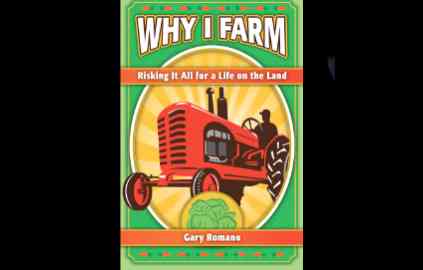
‘Why I Farm’ should be mandatory reading for anyone who eats produce

By Kathryn Reed

I want to throw out all the store bought produce in my refrigerator. I want to be less frustrated with my tomatoes and basil that are struggling this year and be more appreciative of how hard it is to grow good produce. I want to hug a farmer – but not just any farmer.

I want to start with Gary Romano and then all the other small farmers; especially the ones growing organic produce.

Reading Romano’s book “Why I Farm: Risking It All for a Life on the Land” starts with a look at his family’s roots in farming, their struggles and Romano’s early days of digging in the soil.

farmBona Fide Books in Meyers published the book this year.

And while Romano is only in his mid-50s, the evolution of the small farmer in his lifetime has almost been revolutionary. And not necessarily in a good way.

He points out how the government – at the state and federal levels – has allowed big corporate farms to dominate the food market. Those are the farms that get the subsidies. They are the ones with fewer regulations. They are the ones putting goods into grocery stores where there is no way for the consumer to know what chemicals have been used to get them to look so perfect and taste so bland.

Raw, honest and authentic. That’s what this book is. Romano doesn’t hold back. He tells readers what he thinks the F in IRS Schedule F form really stands for.

Romano’s Sierra Valley Farms is 65 acres in Beckwourth; which is north of Truckee. And it’s certified organic.

He worries about the future of farming, the food supply and whether there will be a fourth generation Romano to take over this farm.

“Farmers should be able to pass on the farm to their children without the fear of the kids having to sell the family farm to pay the estate taxes,” Romano writes.

While Romano gets a bit whiny toward the end of the book, it reads like a man who is desperate and clearly frustrated with the regulations, the lack of the public’s understanding of where food comes from and the bleak outlook for the future.

Romano estimates “only 5 percent of Californians have access to local produce and products and buy directly from farmers.”

He explains why it’s important for people to know where their food comes from, why people should buy local produce, and what can be done so farmers like himself can continue to do what they do.

That was one of things I really liked about the book – it identifies problems, comes up with solutions and explains why the problems are problems and why they should be solved.

—-

Notes:

• Romano’s second book, also to be published by Bona Fide Books, will come out next year. It is titled “July and Winter: Farming and Gardening in the Sierra”.

• “Why I Farm” is available online.

• Romano will give a talk and sign books Oct. 22 at 6pm at the South Lake Tahoe library, 1000 Rufus Allen Blvd.


Sharilyn Nelson — 1939-2013

Sharilyn Silver Nelson was a starter and a joiner who made things happen no matter where she lived.

She was active in many Truckee area organizations until her death on Aug. 31. She was 73.

Sharilyn was born Nov. 12, 1939, in Salt Lake City. This is where she spent the bulk of her childhood.

Sharilyn Nelson

Sharilyn Nelson

She learned to ski at age 6 and was still on the slopes into her 70s. Skiing became a family activity for the Nelsons when they lived in the Bay Area. And it continued when Sharilyn and husband Chris moved to Truckee in 1995. Eventually their grandchildren became their skiing partners.

The home Sharilyn and Chris built was featured one year on the Truckee-Tahoe Home Tour.

Sharilyn met her future husband at a Laundromat near the University of Utah campus where they were both students. She earned a bachelor’s in education in 1961. And they were married a year later.

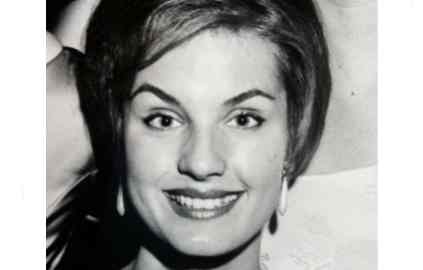
While in college, Sharilyn was a drum majorette, in the homecoming court and crowned the engineering queen. She did a bit of modeling right after college.

In addition to her exterior beauty, it is her inner beauty that family and friends remember most. She was one of the most selfless people anyone could ever know.

Teaching first grade in Salt Lake City and Las Vegas were her first career jobs. When the family of five moved to Concord in 1971, Sharilyn taught music and early childhood development at Diablo Valley College in Pleasant Hill.

She was also a concert pianist and always had a grand piano that she would play at home. When the windows were open neighbors could hear the music she created as her hands gracefully caressed the ivory.

The love of music was something the couple shared through the years.

Sharilyn would later enter the business world as a recruiter for temporary and full-time positions, mostly in finance and high tech.

She started a number of clubs in Tahoe Donner – Bridge Club, Gourmet Group, Book Club, and Senior Alpine Ski Club (with husband Chris). At Sugar Bowl Ski Area she volunteered as a mountain host. She was also involved with fundraising and scholarship awards with the American Association of University Women and the Chi Omega Sorority at University of Utah.

She always said one of her main goals was to ensure her three children earned college degrees. They did, with one earning an advanced degree.

In 2012, Sharilyn was preceded in death by her husband, Chris. They had been married for nearly 50 years.

Survivors include son Matt Nelson of Truckee, daughters Courtney Nelson Murrell (Mark) of Truckee and Kimberly Nelson Eilian (Kevin) of New York City, grandchildren Gavin and Megan Murrell and Jerome Eilian, and sister Michelle Silver Whitmore of Park City, Utah.

In lieu of flowers, donations may be sent to the Truckee-Donner branch of the American Association of University Women, P.O. Box 1326, Truckee, CA 96160. Please make check payable to AAUW CA Special Projects Fund or (AAUW CA SPF), with Tech Trek — Truckee Donner branch or (TT-TD branch) on the memo line. Tech Trek was Sharilyn’s signature endeavor—math and science camps/education for girls.

An open house will be at the family home in Truckee on Sept. 22 from noon-4pm.


Exhibit explores differences between Nevada regions

Geographical Divides: Finding Common Ground is an exhibit that explores the connections and dissimilarities between Northern and Southern Nevada cultures and geographies.

Sixteen Nevada artists – eight from the south and eight from the north — paired up with their geographical counterpoints to collaborate on art that commented on each others economic, environmental, political and social settings. The exhibit opens Sept. 14 and runs through Dec. 15 at the Comstock History Center, 20 North E S. in Virginia City. The center is open Thursday-Sunday from 11am-4pm.

The exhibit is free.


Guitar concert benefits South Tahoe High

Double neck guitar phenom Ian Ethan Case will play a benefit concert for South Tahoe High School on Sept. 12 at 6pm.

This will be a solo performance by Case.

This is a fundraiser for the school.

The performance will be in the South Tahoe High TADA Theater, 1735 Lake Tahoe Blvd., South Lake Tahoe.

The $10 tickets will be available at the door.


Book lays out a path for career success

By Kathryn Reed

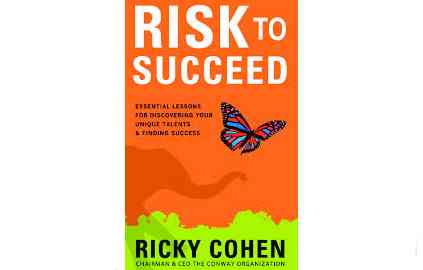
We can learn a lot from animals – especially butterflies and elephants.

With these two as the main “characters” in “Risk to Succeed: Essential Lessons for Discovering your Unique Talents & Finding Success”, author Ricky Cohen is able to connect to readers in a way that isn’t preachy and is captivating.

Self-help type books are not something I usually read. And it’s not because I don’t need help. But it takes being sent a review copy (as was the case here) or a friend recommending the book for me to start turning the pages.

book 21-02-02Cohen is the former CEO of Conway Stores, one of the top discount retail chains in the country. He is the current CEO of the Conway Organization, a holding company with a large real estate and operating portfolio. The book was published this year.

The book could easily be read and reread at various times in a person’s life because of the struggles that seem to crop up from time to time. It’s a reminder to look at the big picture, that work is not the answer to total happiness and that success can be defined various ways.

I can see this book appealing to people starting off in a job – or those still in college – as well as seasoned workers who are needing to be recharged.

“Risk to Succeed” also points out how failing publicly can be liberating, as it becomes one of life’s lessons. And as with so many of life’s lessons, while they may not be fun to go through at the moment, they often make us stronger and more appreciative.

With a butterfly’s help, an elephant is able reach her full potential in “Risk to Succeed”. This book might do the same for you.


Tahoe author to talk about book on Siberia

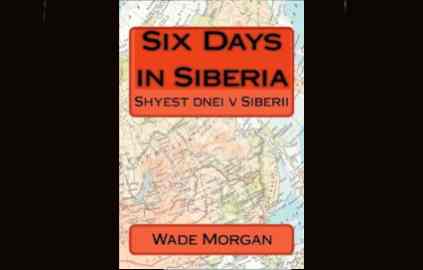
bookLocal author Bill Morgan (pen name Wade Morgan) will be discussing his book “Six Days in Siberia”, a suspense thriller with overtones of a spy novel, on Oct. 1.

Morgan has more than 50 years of experience as a soldier, civil engineer, forest ranger, director of an environmental regulatory agency, management consultant and technical writer. He has been to Siberia three times, including an assignment in the town of Baikalsk where he conducted a seminar on conflict resolution for officials of that town.

The free event is presented by the Friends of the Library. It starts at 6pm at the South Lake Tahoe Library, 1000 Rufus Allen Blvd.

A book sale and signing will follow.


New U.S. citizens say the struggle was worth it

By Tovin Lapan, Las Vegas Sun

Here are the stories of three people who are on the cusp of naturalization and one immigrant who was sworn in as a U.S. citizen this summer:

Raquel Juarez, 21, is a diminutive Guatemalan with a wide smile and energetic personality who wants to be a U.S. citizen, thanks to John F. Kennedy.

Juarez has wanted to join the Kennedy-created Peace Corps since she was in seventh grade and her neighbor was a two-term corps member.

“He later became the country director in Jordan, and knowing him and then later becoming involved in community service myself really motivated me,” Jaurez said.

A third-year UNLV student, Juarez spent her youth in schools in the Lake Tahoe area and Guatemala. Her biological parents are both Guatemalan, but Juarez’s mother divorced her father and married a U.S. citizen when Juarez was 3 years old.

Read the whole story


A new perspective on passing

By Robert S. Wood

I just lost a dear friend of 50 years. She was more than a friend, more like a soul mate. Her passing reminded me of how little the public knows about death, and how fearful our traditional beliefs about it have become.

We know it’s the end of our physical life, and that’s about all. The rest is hope, fear, myth, superstition and wild conjecture. No wonder death is the biggest, longest-running source of anxiety in our lives.

Dissatisfied with what self-appointed authorities on death tell us, I set about researching alternative views, going back to ancient history, consulting the wisdom of the ages, new evidence, other cultures, modern science, metaphysics — everything I could find.

What I discovered excited and intrigued me. Instead of the negative, morbid, depressing beliefs we know so well, I found a highly optimistic outlook that contradict our grim, fearful views.

My discoveries so excited me, they inspired me to write a couple of books on what I learned — good news about death with the potential to create a new paradigm and save untold suffering worldwide.

My friend’s death reminded me that local readers in these difficult times might benefit from hearing what I learned — especially older readers who increasingly wonder and worry about death as it draws closer.

Instead of being something to dread, I learned, death can be something to look forward to when the time is right, a wonderful end to suffering, a blessed relief. Experts say it’s generally far less traumatic than birth.

Little known modern science reveals that our traditional fearful beliefs about death are all wrong. We can pass away whenever we want, they say, by simply letting go of the life force that keeps us alive.

Mind-boggling quantum physics, building on the discoveries of Albert Einstein in the 1920s, says we actually cannot die until we make the decision to depart this lifetime. Think of the implications.

Instead of having no control over the time and manner of our passing, just the opposite turns out to be true. So our lifetime fears of death from any cause are groundless.

Ultra modern science assures us we can depart this old world whenever we want, because we create all the events of our life with our thoughts not our actions. It therefore follows that we determine when we’re ready to leave this lifetime. Instead of fearfully waiting for our bodies to fail, we can simply let go of them.

Why make an unconscious decision to let the body fail, when you can consciously decide when to depart? When you’re mentally completely ready, you can just go to sleep one night firmly intending to wake up on the other side. And you will.

As I wrote in “Peaceful Passing, Die When You Choose with Dignity & Ease,” ”It’s the path of passing chosen by wise men and women down the ages, and it’s increasingly employed today by enlightened, spiritually aware, advanced thoughtful people everywhere.…”

Applied science tells us: (1) We can die whenever we want, easily, painlessly and peacefully. So there’s no longer a need to wait helplessly for death to overtake us.

We can avoid all the pain and suffering of lying hopelessly in some hospital bed while our relatives wring their hands and our savings disappear. Sadly, that’s how most Americans die nowadays.

(2) It means we’re safe from death from any source — from accident to illness to natural calamity to murder, terror or war — safe from every kind of threat — as long as we believe ourselves safe and wish to continue living. So our lifetime fear of death no longer has any basis.

(3) Knowing that everyone who dies made the decision to do so frees us from needing to grieve for them, because they went willingly. We can mourn for our loss of them, but not for their loss of life, because they made the decision to pass.

(4) Quantum physics also tells us that there can be no real death. Only the body dies. Our mind, soul and spirit live on. Death of the body is therefore not the end, a happy belief now shared by a majority of Americans.

Our personal beliefs about death and dying profoundly affect the quality of our lives. Changing our beliefs about death to conform to those supported by modern science can create a new and happier paradigm of death in America, with the potential to prevent untold needless suffering

Making the final decision to depart requires a combination of belief, desire and willpower, but anyone can do it. So why wait until you’re dying to change your beliefs? Why go through life with the brakes on, when you can take back control of your life — and assure yourself an easy death.

Changing your beliefs now, well in advance of need, can dissolve your fear of death and provide you a new lease on a happier life — paving the way for a happier passing, irrespective of your religious or spiritual beliefs.

This discovery lifted a great weight off my shoulders and brought me a new freedom, because now I know I can cross over whenever I want, and until them I’m perfectly safe. I didn’t need to grieve for my friend because I know that she was ready to go. Instead I rejoice in the end of her suffering and her blessed relief.

Clinical scientific studies of near death experiences confirm that all deaths require an individual decision to let go of life. So do the people who once walked the earth who have died and now speak to us from first hand experience from the other side. What they tell us is entirely consistent with the findings of modern science.

So, there really is an easy way to kick the bucket, cross over, buy the farm, turn out the lights and say goodbye. It’s an option that’s truly good news for all of us.

Robert S. Wood and his wife spend half the year in Lake Tahoe and the other half in Sedona. He is the author of a dozen books, including the original trail guide to Desolation Wilderness.