Being grateful is changing the world

By Mandy Kendall

It’s hard sometimes when things don’t go quite the way you expected or wanted to remember the things that are going the right way or are just as you wanted.

Even though it might not seem like it at times, many believe we are more fortunate now than at any other time in history. Whether you believe that or not, it is never a bad time to be grateful for what we do have.

Studies are showing that time and time again an “attitude of gratitude” has many benefits.
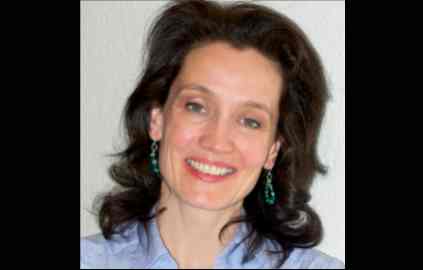
Mandy Kendall

Mandy Kendall

According to the American Psychological Association, teenagers who are grateful have “a more positive outlook on life, are better-behaved and more hopeful than their less grateful peers.” The Journal of Happiness Studies quoted in 2010 that “grateful high school students have higher GPAs than their non-grateful counterparts.”

The Journal of Applied Psychology: Health and Wellbeing discovered that subjects who journaled what they were grateful for just before going to bed, fell asleep faster and stayed asleep longer. A study in the American Journal of Cardiology found that appreciation and positive emotions are linked with changes in heart rate variability” and “may be beneficial in the treatment of hypertension and in reducing the likelihood of sudden death in patients with congestive heart failure and coronary heart disease.”

David Steindl-Rast is a monk who gave the closing talk at the 2013 TEDGlobal. He said, “Gratefulness can change our world in immensely important ways. If you’re grateful, you’re not fearful. If you’re not fearful, you’re not violent. The grateful act out of a sense of enough, not scarcity, so they are willing to share. Being grateful does no less than change the power balance of life. It’s a nonviolent revolution that even revolutionizes the concept of revolution. Grateful people are joyful people; the more joyful people are, the more we’ll have a joyful world.”

So, it seems that being grateful does much more than give you that warm fuzzy feeling. Considering all the potential physical, mental and global health benefits of gratitude I thought I would devote this week’s Qwik-e tips to an Attitude of Gratitude and how to practice one.

Just think — about what you are truly grateful for. It could be simply the fact that it is a beautiful day and you are glad to be alive. You could get really specific and think of people, places, feelings or experiences. Let your imagination run wild.

Tell someone — what you are grateful for, or even tell them that you are thankful they are in your life.

Start or end your day — by writing down at least one thing a day that you are grateful for. Studies have shown this boosts mental and physical health.

When things are not quite going to plan — just pause a moment, take a deep breath and think of something you really appreciate. It can really help to put things in perspective.

If you feel that something is missing in your life — or there is something that you must have, just take some time to remember and appreciate what you have already.

If you encounter something, or someone, that is negative — take a moment to find something positive about it, or them.

Pay a compliment daily — to help someone, and you, feel appreciation.

Pay your gratitude forward — if you really appreciate something, help others enjoy it too. (If you truly love your morning coffee, maybe pay for the coffee of the person behind you in line.) Find a way to donate some time, money or skills to a cause that gives other people something to be grateful for.

Until next time.

Mandy Kendall operates Health Connective in South Lake Tahoe, which aligns wellness seekers with their ideal wellness provider. If you have questions, would like some advice, or would like to request some Qwik-e tips on any health and well-being topic, drop her an email at connect@healthconnective.com or keep an eye out on Lake Tahoe News for regular Qwik-e tips on how to make healthy changes one Quick and Easy step at a time.


Intimate gathering benefits LTCC music program

An afternoon of live music, food and drink is designed to raise money for the Lake Tahoe Community College Music Department to be able to buy instruments.

The Lake Tahoe Community College Foundation and David Brock Music are putting on the Sept. 29 3pm event at a private residence in Stateline.

Music will include performances by LTCC faculty members Mark Williams (tenor and piano), Anna Helwing (soprano and piano), and Jon Smart (guitar). Additional music will be performed by co-host David Brock (organ and piano).

Advance reservations are required and seating will be limited to 40 people. The ticket price is $100 per person. Bring or mail a check for $100 per guest payable to the LTCC Foundation/Music Department, c/o Peter Bostic, LTCC Foundation Office, 1 College Drive, South Lake Tahoe, CA 96150 or purchase tickets at the college bookstore or online. A street address and directions for the event will be provided with the purchase of a ticket.

For more information, call Peter Bostic at (530) 541.4660, ext. 245.


Author to be in Kings Beach signing books

Elk Grove author R.J. Machado De Quevedo will be signing books Sept. 13 from8:30am-5pm at the North Tahoe Event Center, 8318 N. Lake Blvd., Kings Beach.

In the supernatural mystery thriller “The Deceiver” college student Melanie Bishop finds herself stranded across the globe and thrust into the middle of an otherworldly battle that’s been raging since the dawn of time. Melanie makes a decision that will change her life forever. But choosing to accept her role and her destiny doesn’t mean the battles are over. It means the war has just begun.

For more information, call 877.727.0697 or email michelle@keymgc.com.


State honoring S. Lake Tahoe disabled advocate

By Kathryn Reed

Becoming an advocate for the disabled wasn’t something David Kelly aspired to be. There is not one defining moment that led him on this 30-plus year mission.

“I saw what I thought was people being treated unfairly,” Kelly said. That was in South Lake Tahoe in the early 1980s. The 70-year-old has been on a mission ever since to fight for equality.

He’s never received a dime for his efforts – of which he is extremely proud.

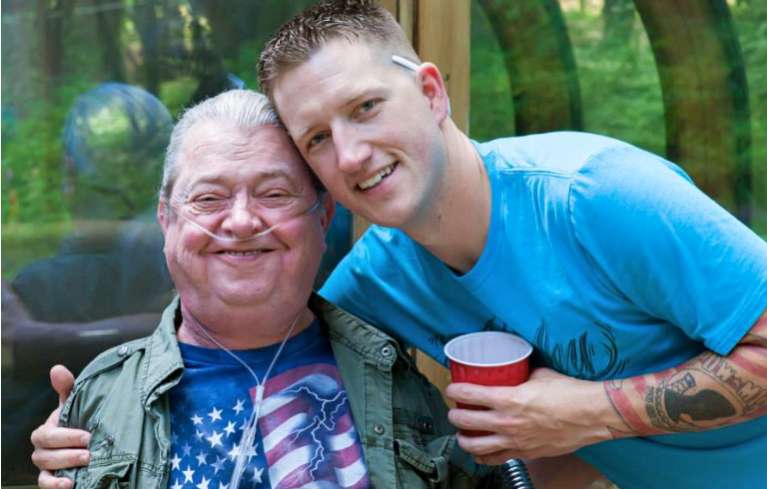
David Kelly with his son, Jason. Photo/Provided

David Kelly with his son, Jason. Photo/Provided

“I do it because it needs to be done,” Kelly told Lake Tahoe News.

Today, the state of California is recognizing his efforts. The South Lake Tahoe resident has been named one of the state’s 50 Notable People in the Disability Community. The Department of Rehabilitation on its website is honoring the 50 people with their profile being the main feature for one week, and then remaining there. Kelly’s week starts Sept. 12.

People selected are “individuals who inspire others by their advocacy, leadership, accomplishments, achievements, and/or dedication to the disability movement and to employment, independence, and equality of Californians with disabilities,” according to the state website.

John Pillsbury, who works for the Department of Rehabilitation and is the secretary of the Tahoe Area Coordinating Council for the Disabled, of which Kelly chairs, nominated Kelly.

“I am continuously moved by his honesty and courage to move on issues to help our residents,” Pillsbury told Lake Tahoe News. “He has a done a great job. He does the right thing.”

Kelly has post polio syndrome. He has far exceeded the life expectancy many doctors told him he would have. He is a fighter. And “no” is not a word in his vocabulary even when people say it to him.

Former South Lake Tahoe City Councilmember Kathay Lovell remembers having an immediate connection with Kelly. In large part this had to do with Lovell’s dad having polio and never thinking of him as handicapped – the word that was in vogue when she was growing up.

“I find David to be an incredibly astonishing man. He has accomplished many things in our community,” Lovell told Lake Tahoe News. “He has persevered to do projects that by anyone else’s imagination were probably impossible to do.”

Kelly is the man behind Tahoe Senior Plaza, Kelly Ridge (named in his honor), and Sky Forest Acres. These three developments are affordable housing for seniors and those with disabilities.

“A lot of people were involved, but without Dave they would not have gotten off the ground,” Pillsbury said.

Kelly is not done. He is working on creating another affordable housing complex in the city.

Other goals are to develop a shelter and build transitional housing for the disabled.

He will be in Minden on Friday because he received a call from a concerned citizen about the plans to change things at the courthouse there that could affect the disabled.

A couple phone calls a week come in from people asking for his advice or help with matters. While he is not an attorney, he knows the law, people to call and how to make change happen.

“My biggest gripe with politicians is they make up laws and not one of them is disabled. They don’t see what is really needed,” Kelly said. “They have all the best intentions in the world, but half of them are not needed or are useless laws. They should have rethought how the law is used. It makes it harder on businesses, harder on recreation and harder on everybody.”

Kelly was one of the first people to criticize disabled attorney Scott Johnson when he came through town suing businesses. He said that is not the way to bring about change. It’s the way to make money.

Besides being chairman of TACCD, Kelly is also on several other boards related to the disabled.

And while Kelly has received numerous awards in his lifetime, to be named one of the top 50 advocates for the disabled in California is the crowning achievement. He said he is humbled to be in the company of the 49 others.


Overweight kids learning about willpower

By Bonnie Rochman, Wall Street Journal

A recent research program is testing an intriguing hypothesis: Can overweight children be taught to eat less by putting their favorite dishes right in front of them?

Kerri Boutelle, a professor of psychiatry and pediatrics at UC San Diego’s School of Medicine, calls her willpower-enhancing technique “cue exposure.” The aim is to train the brain of overweight and obese children to reduce the desire to eat when they’re not actually hungry. And since many impulses to eat come from triggers in our environment, such as getting an urge to snack while watching TV, interrupting such automatic responses can help children cut down on mindless eating.

Boutelle, working with children between the ages of 8 and 12, recently completed a four-month study with 40 obese kids and conducted an earlier eight-week study involving 36 overweight children. The results: Children seem capable of learning to subdue their food cravings, but it isn’t clear how long the willpower lasts after the experiments are over.

In the studies, the participants are given a favorite food, such as a brownie, and told to rate their craving on a scale of 1 to 5—1 means “I can resist this,” and 5 is “I’m dying for it,” Boutelle says. The children are instructed to put the brownie down, wait 30 seconds and rate their cravings again. Another rating is recorded after the participants sniff the brownie, then again after taking a small bite and later after staring at it for five minutes. Finally, Boutelle directs the children to throw the brownie away.

Read the whole story


Auditions set for South Shore winter pageant

Young actors are needed for the “Best Christmas Pageant Ever”.

The production is a joint project between the Tahoe Tallac Association and Barton Health Festival of Tree and Lights.

Auditions for the primary roles (9 years and older) will be at the Duke Theatre at Lake Tahoe Community College on Sept. 13 at 6pm. Some acting and stage experience is needed for lead roles. Auditions for secondary roles (8 years and younger) will be at the college theater on Sept. 14 at 3pm.

Rehearsals will be on Fridays this month, increasing to two or three days a week in October and November.

The production will be during the Festival of Trees and Lights at MontBleu in Stateline on Dec. 5 Dec. 6 and Dec. 8.

For more info, contact Ginger Nicolay-Davis at ginger@mysouthlaketahoehome.com or (530) 318.6686.


Tahoe Tails — Adoptable Pets in South Lake Tahoe

Dandelion

Dandelion

Dandelion is a 2- or 3-year-old Australian terrier, a breed known for its intelligence and easygoing personality.

He is energetic and fun and he loves people (including kids) and other dogs. Confident cats are OK too. His wiry fur is non-shedding, and he’s got a special underbite to keep you laughing. Dandy weighs about 10 pounds.

Dandelion is neutered, microchipped, and vaccinated. He is at the El Dorado County Animal Services shelter in Meyers, along with many other dogs and cats who are waiting for their new homes.

Go online to  see photos and descriptions of all pets at the shelter.

Call (530) 573.7925 for directions, hours, and other information on adopting a pet.

— Karen Kuentz


Poets to share their work at LTCC

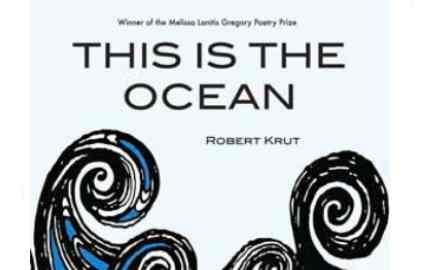
Bona Fide Books will launch poet Robert Krut’s award-winning collection “This Is the Ocean” with a reading and book signing on Oct. 11 at 7pm.

The free event is part of the Lake Tahoe Community College’s Writers’ Series.

bookKrut’s second collection, “This Is the Ocean” claimed the Meyers publisher’s 2012 Melissa Lanitis Gregory Poetry Prize, offered annually in honor of the local artist who died in 2009.

“The themes and images in this book really got under my skin,” Kim Wyatt, publisher of Bona Fide Books, said in a press release. “It reads like cinema, or like a dream, and it made me see things in a new way.”

Krut is the author of “The Spider Sermons” (BlazeVox, 2009). His poems have appeared widely in print and online. He teaches at UC Santa Barbara in the Writing Program and College of Creative Studies.

Patricia Smith will also read at the event. She is a nationally acclaimed writer, poet, performer and is a distinguished visiting professor and writer-in-residence at Sierra Nevada College in Incline Village.

Books will be available for signing and purchase. “This Is the Ocean” will also be available through Bona Fide Books, select stores and online beginning Oct. 11.

Lake Tahoe Community College is located at 1 College Drive in South Lake Tahoe. For more information, contact Kim Wyatt at editor@bonafidebooks.com.


Presidio caters to the comforts of civilians

The national cemetery at the Presidio with Angel Island in the San Francisco Bay. Photos/Kathryn Reed

The national cemetery at the Presidio with Angel Island in the San Francisco Bay. Photos/Kathryn Reed

By Kathryn Reed

SAN FRANCISCO – Who slept here? What were their communal meals like? What were there conversations? If only walls could talk.

The Inn at the Presidio used to be where single officers would reside when this was an Army base. Today it is upscale lodging for civilians.

Since the Army left in 1994 the entire Presidio has slowly been evolving into a neighborhood of its own in San Francisco, historical landmark and recreation destination. The Presidio is a national park site within the greater Golden Gate National Recreation Area.

(The Presidio Trust manages most of the Presidio. The trust is not within the Department of Interior like the National Park Service so officials differentiate the Presidio by referring to it as a “park site.”)

The 22-room inn opened in 2012 and is the first lodging – other than camping – within the 1,491-acre park.

The three-story brick building built in 1903 is on the National Registrar of Historic Properties. The white columns along the front porch give it a Southern feel.

A sense of history fills the inn without its feeling old and musty. Adding an authentic charm, some of the décor came from the salvage yard. Walking in one notices the display of bugles. Old photographs transport you to another era.

Despite its age, the renovation is modern without being over the top. An eye toward today’s traveler with the appropriate lighting, a desk for those needing to do a bit of work and enough outlets for gadgets make it contemporary.

Warm colors, soft fabrics and a plush robe have guests collapsing onto the comfortable couch or bed.

Each night wine, cheese and other snacks are put out. Dreaming Tree, the Geyserville winery in which musician Dave Matthews is a partner, is the featured wine. We share conversation around an outdoor fire pit with a woman from El Dorado Hills on a repeat visit, a woman moving back to San Francisco wanting to relax before unpacking, and a family of four from Texas on their first trip to The City.

Cookies and milk are available for the younger crowd. A few families are staying at the inn. Some of the rooms have couches that fold into a bed.

To take off the chill from the evening and morning fog we turn on the gas fireplace. Reclining on the couch or sitting in the chair by the fire we finish off a glass of wine we brought up from the evening reception.

It’s hard not to feel at home. The empty mantel above the fireplace made me have thoughts of adding personal items. But then I might not have left.

The bathroom is plenty large enough for two to use at the same time, though the tub is ordinary in size. It’s doubtful any soldier ever bathed in this exact tub based on the newness of the fixtures. And why change the plumbing? After all, a bachelor in the Army would have no need for an oversized tub.

In the morning we sit at the long communal table as we eat what is more of a traditional European continental breakfast.

The staff is unobtrusive, yet accommodating.

From the shared balcony part, of the western tower of the Golden Gate Bridge is visible. Expanding from the front of the inn are myriad buildings that once bustled with men and women in uniform.

The Presidio has been home to three armies dating to 1776 – Spain, Mexico and the United States. The U.S. Army occupied the site from 1846-1994.

The only negative of the inn is how early trucks arrive. Both mornings at about 5:30 that annoying beep-beep-beep of a truck backing up woke us up. We heard others complain about it as well.

Rooms start at $195 per night. But two of the nice things about pricing at the inn are parking is $6 per night and the taxes are much less, being on federal land so guests aren’t paying The City’s hotel tax.

Things to do

One of the best things about the inn is the proximity to trails. Out the back door is the Ecology Trail that leads to Inspiration Point and Mountain Lake. The lake, which is one of two natural lakes in The City, is being rehabbed.

We end up walking about seven of the 24 miles within the park. (Some of the trails allow mountain bikes.)

We connect with the Bay Area Ridge Trail that takes us through a massive eucalyptus grove where artist Andy Goldsworthy’s Spire is located. His third piece of art in the park is slated to be installed this fall.

Most of the trees in the Presidio are not native. Still, as ones die off some non-native trees are being replanted to keep with the historical nature of the area that people are accustomed to. There are, however, 300 native plant species in the park. And more than 300 bird species call the Presidio home.

Walking along it’s peaceful, even when we’re by a road. The traffic is so light.

With eight scenic and historic overlooks, it’s hard to keep walking. Instead we just want to absorb the surroundings. Breathtaking is an understatement. At one point we are halfway between Baker Beach and the Golden Gate Bridge. This has us seeing the bridge looking into the bay instead of out to the ocean, which is the common view.

Concrete bunkers are artifacts from days gone by when the military had weapons at the ready to attack anyone who might invade.

Those iconic towers scratch the blue sky. A day without fog. We opt not to walk the 1.7 miles across the bridge, but instead get on the Presidio Promenade.

This leads us past the national cemetery. Row after row of white tombstones bring back memories of Arlington National Cemetery. It is a stark reminder of what this plot of land was originally used for.

Around the bend is Crissy Field. This area has been completely renovated. It would be hard to know it was once an airstrip. This was the military’s first Air Coast Defense Station on the Pacific Coast.

Presidio Trust

The Presidio Trust was established in 1998 to be the caretaker of the Presidio after the Army left. A nonprofit board, staff of 340 and army of volunteers run the operation much like this were a city unto itself.

This is the first year the Presidio Trust has not received a subsidy from the federal government to keep it functioning.

Most of the money comes from rent collected from the 3,000 people who live in one of the 1,200 houses. Housing that was for soldiers is available to anyone. It ranges from apartment style to a seven-bedroom house that used to be the home of a general that goes for about $15,000/month.

The trust brings in about $5 million a year from Lucas Films, which opened a 23-acre digital arts campus in 2005.

Rehabbing old buildings, bringing in commercial entities, attracting the public and creating easier access from the Golden Gate Bridge are all ongoing endeavors of the trust. At the forefront is preserving the historical integrity of the buildings and the land.

The trust is balancing the need to refurbish buildings while keeping the historical nature of them. It also means dealing with current building codes and seismic standards.

When the Army pulled out there were those who wanted to keep the base’s golf course just for military use – something about needing it for national security reasons. That argument didn’t have legs and the course is open to the public.

One of the bunkers on the grounds has been transformed into storage for wine. Collectors and restaurants rent the storage facility.

Talks are under way with a chef – whose name is not being disclosed – about creating a fine-dining restaurant.

More tourist accommodations are likely in the future, too. It’s the trust that runs the Inn at the Presidio. And the response to it has been greater than expected.

ngg_shortcode_0_placeholder (Click on photos to enlarge.)


Landline phones becoming antiques

By Jeffrey Sparshott, Wall Street Journal

About one-third of U.S. households have ditched landline phones, driven by younger Americans relying on their cellphones, new Census Bureau data showed Thursday.

Just under 71 percent of households had landlines in 2011, down from a little more than 96 percent 15 years ago. Cellphone ownership reached 89 percent, up from about 36 percent in 1998, the first year the survey asked about the devices.

The youngest households are abandoning landlines in droves. About two-thirds of households led by people ages 15 to 29 relied only on cellphones in 2011, compared with 28% for the broader population.

Read the whole story