Understanding balance may help athletes, seniors

By Shirley S. Wang, Wall Street Journal

New research into how we maintain our balance could help athletes and prevent falls among older people.

Scientists are finding that maintaining stability and balance with each step we take requires complex coordination of foot placement, arm movement, trunk angle and neck and head motion. That’s because every step is different from the one before it. There are slight variations in stride length and width and the angle at which the foot hits the ground, as well as small shifts of weight in the torso. People’s bodies when walking must constantly make minuscule adjustments to accommodate these variations.

Other research is exploring how the brain controls our balance, which isn’t well understood. A recent study identified a pocket of motion-detector neurons deep in the brain that sends out an alert when the body moves in unexpected ways, such as after stumbling on a crack in the sidewalk. The alert triggers compensating reactions throughout the body aimed at helping us to not fall down.

Read the whole story


LTCC to show ‘Matthew Shepard is a Friend of Mine’

A documentary film about the life of Matthew Shepard will be shown at Lake Tahoe Community College on Oct. 12 at 7:30pm in the Duke Theatre.

Tickets are $5 at the door.

In October 1998, two men lured Matthew Shepard, a gay freshman at the University of Wyoming, from a bar in Laramie. He was kidnapped and driven to a field where he was tied to a fence, beaten, and left to die because he was gay.

A new documentary, “Matthew Shepard is a Friend of Mine”, explores the life and tragic death of Matthew Shepard through a personal lens. The film follows Michele Josue, director of the film and a close friend of Shepard’s, as she travels to pivotal locations in his life, interviewing friends and family members, and gaining insight into the life and devastating loss of Matthew Shepard.

Shepard’s murder was a shocking tragedy that made headlines around the world. As people denounced the hatred and senseless violence that caused Matthew’s death, a much-needed dialogue about hate crimes and intolerance began. This set the stage for the landmark Matthew Shepard and James Byrd Jr. Hate Crimes Prevention Act that was signed into law by President Obama in 2009.

The LTCC Theater Department is one of a handful of organizations across the country that will be presenting this film on or around the 15-year anniversary of Shepard’s death. The film will have its world premiere on Oct. 4 on both coasts simultaneously with a screening at the Mill Valley Film Festival and at an event hosted by the Washington National Cathedral.

In addition to the film screening, the LTCC Theater Arts Department will present the play “The Laramie Project: 10 Years Later” in November.

For more information, call (530) 541.4660, ext. 240.


Repairing skin damage is possible

By Mandy Kendall

A little while ago I wrote about the harmful effects of the sun on our skin and how to help prevent damage. Unfortunately, as hard as we try to protect our skin during those summer months, prevention is not always 100 percent effective. So, now that summer has come to a close, here are some Qwik-e tips on ways of helping to repair the skin damage that might have been inflicted.

Exfoliating — Performs a number of functions. It removes layers of dead skin cells (which can make your skin look dull and old), it can help speed up cellular turnover, increase cell renewal and help your skin creams work more effectively by allowing them to penetrate new skin cells. There are various ways of exfoliating, from scrubbing with granulated creams, scrubs, peels, masks, and home micro-dermabrasion systems or using a chemical to dissolve the skin cells. Whichever you choose, follow the instructions carefully and don’t expose your skin to the sun for a few hours afterward. Just before bed (2-3 times a week) is always a good time to exfoliate.

Mandy Kendall

Mandy Kendall

Supplements for your skin – Any kind of anti-oxidant creams will help to rejuvenate your skin. Lotions containing vitamins A and C contain strong anti-aging properties. Vitamin C, topically applied in a cream, contains powerful antioxidants that help fight off the free radicals that cause damage in the first place. Vitamin A helps promote the generation of new skin cells as well as drawing water up to the surface of the skin. Be aware that vitamin A can increase your skin’s sensitivity to the sun, so creams with vitamin A should be applied at night.

LED light therapy — Originally discovered by NASA for wound healing, LED light promotes cellular activity and renewal. A study by Advanced Laser and Dermatologic Surgery Clinics showed significant improvement in skin condition following a series of LED light therapy treatments. Treatments are generally experienced in clinics and spas, but equipment is now available to use in your own home.

Continue protection — Even during the winter our skin is exposed to the UVA/UVB rays that can cause long-term damage, so try to use a daily skin cream that has an SPF of at least 15. Be sure that the sunscreen that you are using is a “broad spectrum” lotion that will help block out UVA and UVB rays.

From the inside out — Much of our skin’s condition is dictated by our lifestyle. Plenty of sleep, plenty of water, unprocessed healthy foods and limiting the smoking and drinking vices will all go toward vibrant, healthy skin.

Until next time.

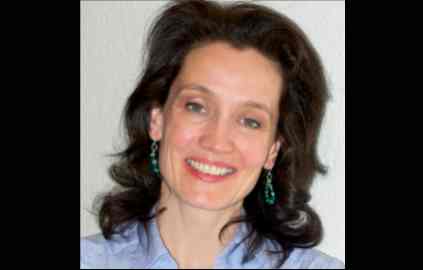
Mandy Kendall operates Health Connective in South Lake Tahoe, which aligns wellness seekers with their ideal wellness provider. If you have questions, would like some advice, or would like to request some Qwik-e tips on any health and well-being topic, drop her an email at connect@healthconnective.com or keep an eye out on Lake Tahoe News for regular Qwik-e tips on how to make healthy changes one Quick and Easy step at a time.


Students learn about overcoming disabilities

By Kathryn Reed

Nationally ranked wrestler in high school. Green belt in martial arts. World traveler. Accomplished artist. Motivational speaker.

This is a great resume – and one that is similar to many people’s. What makes Brett Eastburn different, a word he probably would not use, is that he has no arms or legs. The 41-year-old was born with a congenital birth defect known as Quad-membral Limbs Deficiency.

When he played high school basketball the other team just stared as he scooted down the court dribbling the ball. They didn’t bother to cover the guy under the basket because they never thought Eastburn could throw the ball. He could. And he soon became his coach’s secret weapon.

“Handicaps are not always where they appear to be,” Eastburn said, pointing out that the other team’s preconceived thoughts about his ability became a disability for them.

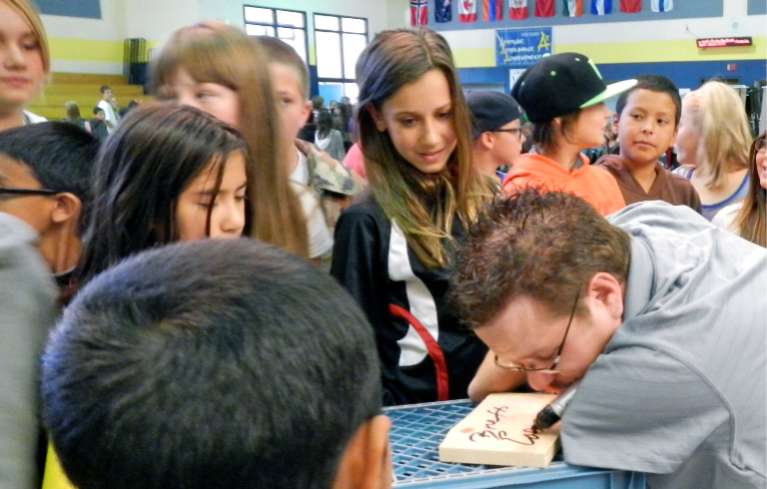
Brett Eastburn signs autographs Sept 26 for South Tahoe Middle School students. Photo/Kathryn Reed

Brett Eastburn signs autographs Sept. 26 for South Tahoe Middle School students. Photo/Kathryn Reed

The message Eastburn brought to the entire South Tahoe Middle School student body on Sept. 26 was about what people can do.

“When you say you can’t you are right because you aren’t even going to try,” Eastburn told the nearly 800 students as well as the adults in the room.

He started to draw to prove his point. To do so Eastburn put a marker next to his cheek that he held there with what he has of a left arm. (He is quick to point out that his nickname on his high school basketball team was stub.)

When he’s done with drawing Garfield he asks the audience if they could do the same thing. Most said no. To which Eastburn said, “You have missed the point of the presentation.”

And then Eastburn explained how by breaking the process into pieces it is easier to accomplish the goal. It’s starting with a circle, making some squiggles and other shapes to have the finished piece of artwork.

He said people tend to fail when they try to do everything at once.

Sitting on a table Eastburn was able to show the students how he can throw a football without fully developed limbs. He has no hands or elbows. He put a spiral on a football that might have Jim Harbaugh wondering if Colin Kaepernick should be replaced.

Eastburn readily admits these skills didn’t come easily. It took multiple times at failure to be able to be accomplished at what he desired to do.

“No” does not appear to be in his vocabulary.

He knows people can be uncomfortable when they see him. But if the number of students who sought his autograph after the assembly is any indication, STMS kids thought he was someone special.

Principal Beth Delacour told Lake Tahoe News it is good for students to realize “we are more alike than different.”

(Soroptimist International Tahoe Sierra paid for the presentation.)

Students were able to ask him any question. He said he uses a toothbrush for his teeth, a razor to shave, has no problems going to the bathroom by himself, and wiggles into his clothes. He has different ways to handle silverware for eating.

Eastburn sprinkles humor into much of what he has to say. After all, he is also a standup comedian. He’ll be at the Pioneer Underground in Reno at 8 tonight. (It’s for adults.)

Last year Eastburn published a book about his life called “I’m Not Missing Anything”. He and his wife, who is able bodied, travel the world spreading the message that people can do what they want if they put their minds to it.


Poetry reading, workshop at SNC

Al Maginnes and Peter Makuck are part of Sierra Nevada College’s Writers in the Woods series.

They will give a reading at the Incline Village school (room 139/141) on Oct.4 at 7pm and a workshop Oct. 5 at 9am.

Maginnes’ poems have appeared in “Poetry, The Georgia Review”, and “Shenandoah”. Makuck is a poet, short story writer, critic and professor at East Carolina University.

Readings are free and open to the public. The three-hour workshop can be taken for credit and is also free to students. There is a $50 registration fee for community members.

Contact June Sylvester Saraceno at (775) 881.7514 or jsaraceno@sierranevada.edu for more info.


Time to sign up for health insurance

By Barton Health

Ready to change your health care coverage? If so, the time to do it is rapidly approaching.

Open enrollment for the Health Insurance Marketplace, often called the health insurance exchange, starts Oct. 1. The marketplace is designed to help you find health coverage that fits your budget and meets your needs. Coverage starts Jan. 1.

What’s in it for me?

When you use the Health Insurance Marketplace, you’ll fill out an application and find out what your monthly premiums will be for various levels of insurance coverage. You’ll also find out whether you qualify for subsidized lower out-of-pocket costs.

In addition, the marketplace will tell you whether you qualify for free or low-cost coverage available through Medicaid (Medi-Cal in California) or the Children’s Health Insurance Program.

How is it different from before?

Insurance plans in the marketplace are offered by private companies, and they all cover the same core set of benefits, called essential health benefits. These essential health benefits include at least the following items and services: ambulatory patient services, emergency services, hospitalization, maternity and newborn care, mental health and substance use disorder services, including behavioral health treatment, prescription drugs, rehabilitative and habilitative services and devices, laboratory services, preventative wellness services and chronic disease management, and pediatric services.

No plan can turn you away or charge you more because you have an illness or medical condition. And plans can’t charge women more than men.

How do I find my exchange?

If you live in California, visit California’s Health Insurance Marketplace, called Covered California, online. Nevada residents can visit Nevada’s Marketplace.

Yeah, but will it really help me?

The marketplace simplifies your search for health coverage by gathering the options available in your area in one place. With one application, you can compare plans based on price, benefits, quality, and other features important to you—before you make a choice. You can also get help online or by phone.

We can help you

Remember, enrollment starts Oct. 1. Go to Barton’s website to access to local health care reform information, future educational events, website links, and the latest news affecting area residents.


STHS launches homecoming with annual parade

The South Tahoe High School Homecoming Parade will begin Sept. 28 at 10am at the corner of Al Tahoe Boulevard and Highway 50.

It will end at the high school.

The parade is the kickoff event to a weeklong celebration of homecoming activities culminating with the football game and high school dance on Oct. 4.

The South Tahoe High School Alumni Foundation is coordinating the event. The class of 1963, celebrating its 50-year class reunion, will be the marshals of the parade and will be followed by classmates from the classes of 1964, 1966 (The Rebels), 1967, 1968, and 1973 (celebrating 40-year reunion!).

The South Tahoe High School will welcome back alumni by participating in the parade featuring the pep band, cheerleading squad, football and volleyball teams, class spirit trucks and others are expected to join in the festivities.

Also joining the parade will be members of the Corvette Club, South Tahoe Refuse, Cardinale Toyota, Lake Tahoe Golf Course, A Fighting Chance vehicle (sponsored by Soroptimist International of South Lake Tahoe), Pop Warner Cheer Squad and several other community entries.

KTHO/KOWL will be announcing the parade on the corner of Tahoe Keys Boulevard and Highway 50 as the parade passes by.

Russell Foulk (1980) will be inducted into the alumni Wall of Honor and will also be featured in the parade.

Foulk is an assistant clinical professor at the University of Washington Department of Ob/Gyn, and the University of Nevada School of Medicine. He routinely teaches medical students, residents and general education courses. He is also the medical director of the Nevada Center for Reproductive Medicine. He is the only board-certified reproductive endocrinologist in Northern Nevada and has expertise in all areas of reproductive medicine and advanced reproductive technologies.


Time for Tahoe to be a hub for the arts

By Robert Schimmel

On Sept. 17, the City Council addressed the recent issue of the ordinance regarding Temporary Arts and Crafts Fairs, and it was heartening to see how the process went. With the council apparently leaning (3-2) in committed fashion to cutting the fairs from 12 to four per summer starting in 2014, speakers in defense of the status quo spoke passionately against the change.

I added my comments at the end in support of the “big picture” of the Arts in Tahoe and will come back to that.
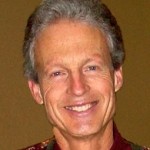
Robert Schimmel

Robert Schimmel

The heartening part during the council’s discussion and was that one member appeared open to new information and a consequent altered position. Hal Cole, in humorous fashion, accepted responsibility for this issue coming to the floor circuitously, so his questions and responses appeared to be quite sincere as he weighed facts and opinions. The ultimate act of wisdom came from Mayor Tom Davis when he made the motion to back off the draconian cut of 12 to four and moved that it be 10 for 2014 with a reduction of two per year until four is reached in 2017, supposedly.

This motion was seconded and approved 3-2 (Conner, Davis and Cole), which showed Cole’s willingness to adjust in response to the evidence, and needs of the parties affected, including the city’s future loss of revenue from this reduction.

In recognition of the case made for a “high end” image to which I also aspire, there is no reason that arts and crafts fairs can’t be upgraded to help make and sustain an everyday economy that means “Tahoe = Art+”. Fears that such fairs and/or larger festivals compete with galleries, etc. has some merit, but it’s lopsided in that different clientele patronize each venue.

The “pie” is not static or limited. The competing art venues actually create more business for each other, and the more people we attract, the more adjacent spending occurs within the community. Art Meccas all around the country have very successful outdoor festivals on a regular basis, but they didn’t get that way overnight. We need to work with those making the fairs possible, create or delegate a city liaison to work on a long term image/vision with such people, and make this a town known for its ongoing cultural life supported by local, professional talent and others. Taos, Jackson Hole, Park City, Scottsdale, Santa Fe, etc. have less natural talent and resources and have done it. Why not Tahoe?

This addresses the big picture of how Tahoe itself needs to come together and promote a vision that attracts visitors based on what is here and God given: our rare, stunning geography plus its resulting unlimited recreational possibilities. Arts and culture tied to geo-tourism sound like a winner to me in response to our needs for diversification of our economic base that has too long depended on the casinos. In South Lake Tahoe, are we willing to build a foundation for long-term growth that can include all the areas represented by environmental, medical, geo-tourism, the arts and clean industries? Will we strive to build up our communities around cultural excellence and an educational system that has incredible potential in its improving elementary magnet schools’ programs, its impressive South Tahoe High School TADA and extensive Lake Tahoe Community College arts, music, theater programs and facilities?

Currently, too many rules and regulations squelch creativity and make it impossible for artists and promoters to put Tahoe on the map as “the place to shop for and experience amazing art exhibitions, public art happenings, etc.” We have lost and will continue to lose participating artists even if they remain in the area. Why not encourage our own and attract other world-class artists, musicians, performers, etc.? Many new ideas and opportunities are already here and the upscale direction is right under your noses with redevelopment, new technologies, etc. Regulations are part of the problem; we must corral them and put energy into developing an attitude of how to succeed not you can’t.

Let’s join with the countless efforts to create such change through citizen-based groups like the lake Tahoe Sustainability Collaborative, which is working around the lake to build common ground and opportunities for year round stability and a place for families to grow with a real future ahead. And what should our city and local governances be doing? Laying the pathways and groundwork for making such efforts viable by allowing individuals to create and compete.

Robert Schimmel is a professional artist in South Lake Tahoe as well as host of “Lake Tahoe Art Scene” on KTHO radio on Thursdays at 5:15pm.
Tahoe docs offer solutions for low back pain

By Kathryn Reed

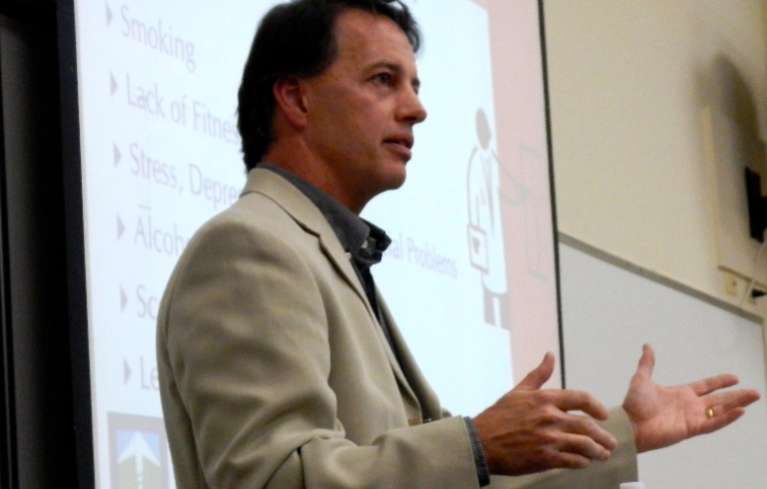
Two doctors with different approaches to low pain spelled out options for people last week during a lecture at Lake Tahoe Community College.

Michael Fry and Peter Costa are part of Barton Health’s team. Fry is an orthopedic surgeon focusing on the spine and sports medicine. Costa is a physiatrist, specializing in physical medicine and rehabilitation.

About 75 percent of adults will have low back pain at some point. It doesn’t mean it will be serious or require surgery. But according to stats presented at the Sept. 19 lecture, low back pain is the No. 2 reason people visit their primary care physician. In the United States, 25 million people miss at least one day of work each year because of low back pain. The direct health care cost of low back pain is $25 billion a year.

Peter Costa, a doctor with Barton Health, talks about his approach to low back pain. Photo/Kathryn Reed

Peter Costa, a doctor with Barton Health, talks about his approach to low back pain. Photo/Kathryn Reed

Some of the causes are hereditary. Smoking is a contributor because the nicotine reduces the flow of blood and discs in the back naturally lack a good supply of blood.

Sitting hunched over – like many people do at a computer – is a huge stressor on the low back. Or sitting like many of the nearly 70 people did at the talk in the college desks is another example of how posture is key.

“While we sit here all of our discs are degenerating,” Costa said. “As a disc degenerates, it gets sloppy in there. That’s when you get instability.”

Yet at the same time bending forward often decreases the pain because the canals open up and the symptoms go away.

But the problem is not always where the pain is. Kidneys, stomach and liver issues can cause low back pain, as does constipation, urinary tract infections, and uterus and ovary problems.

“You want to make sure you don’t miss a hip problem when you have back pain,” Fry said.

A series of exams and tests are regular protocols with Fry. Pain meds, epidurals and surgery are all possible treatments.

“An operation treats the symptoms of spinal stenosis. Degeneration is ongoing,” Fry said.

He said with surgery one can expect about 85 percent decrease in butt and leg pain and 65 percent decrease in back pain.

For Costa, as a physiatrist, he is treating the whole person and not just where the pain is. It’s a nonsurgical approach to medical care.

“I definitely take an educational approach. I believe the more you know about the problem, the more control you have,” Costa said.

Costa talks to patients about the medications they are on to determine if that could be the source of the pain. He asks about life issues to analyze how stress may be physically affecting a person.

“Epidurals control the pain. They don’t fix the problem,” Costa said.

When the pain comes on the doctors say don’t stay in bed all day. Do some gentle stretches and take anti-inflammatory meds. If pain lasts for a few weeks, see a doctor. And see a doctor immediately, they said, if there is a fever, numbness in the legs or uncontrolled bladder.


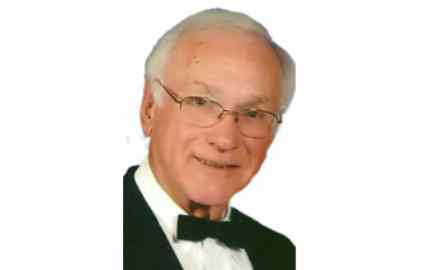
Al Goldberg — 1937-2013

Albert N. (Al) Goldberg, a resident of South Lake Tahoe since 1994, died Aug. 15 after a battle with colon cancer.

A memorial service will be Sept. 29 at 1:30pm at Temple Bat Yam, 3260 Pioneer Trail, South Lake Tahoe.

Al moved to Lake Tahoe from Los Angeles to become public relations manager of Harveys Resort Hotel & Casino after an extensive career in public relations and journalism. He retired in 2006 after 12 years with Harveys and Harrah’s.

Al Goldberg

Al Goldberg

He had been active in Temple Bat Yam, the Jewish congregation serving Lake Tahoe, Carson City and the Carson Valley, serving as president from 1998-2000. He also served as treasurer and as a board member for many years.

Born Dec. 16, 1937, in Toledo, Ohio, he graduated from Bowling Green State University in Ohio with a joint degree in public relations and journalism. He worked as a reporter and editor for 18 years for the Associated Press and the Toledo Blade for which he served as a political writer and business editor in the 1970s. He also won a fellowship in business and economics from Carnegie-Mellon University in Pittsburgh.

After leaving the field of journalism in 1978 Goldberg began a second career in public relations, serving as public relations manager of Jeep Corporation in Toledo from 1978-1981 after which he moved to Los Angeles as a senior vice president of Hill & Knowlton, then the world’s largest public relations agency. His major clients were Mazda Automobiles, Bridgestone Tires and Hitachi Electronics, he founded and was co-director of Hill & Knowlton’s Japanese business division which served public relations needs of then-burgeoning Japanese companies moving to the United States.

Al moved to Lake Tahoe from Los Angeles to become public relations manager of Harveys Resort Hotel & Casino after an extensive career in public relations and journalism. He retired in 2006 after 12 years with Harveys and Harrah’s.

He had been active in Temple Bat Yam, the Jewish congregation serving Lake Tahoe, Carson City and the Carson Valley, serving as president from 1998-2000. He also served as treasurer and as a board member for many years.

Goldberg is survived by his wife Ellen, who is active in several Lake Tahoe women’s organizations, and by his daughter Lauren and grandson Dean of Las Vegas: son Andy of Los Angeles, and granddaughter Michelle of Denver.; step children Debra Silverman (Chris Hebert), Gregg Silverman (Carolyn) and Lauren Wilson (Nathan), and six step-grandchildren.