Book clubs engage incarcerated youth

Teens at the Juvenile Treatment Center in South Lake Tahoe are doing more than sitting around.

Lynne Brosch and Rich Fischer of Friends of the South Lake Tahoe Public Library have been doing book groups on Monday nights with incarcerate youth.

This program began in September for the girls with the reading of “The House on Mango Street”. Next it was “Age of Miracles”.

Some of the other books include “The Curious Incident of the Dog in the Nighttime”, “Miss Peregrine’s Home for Peculiar Children”, “The Sweetness at the Bottom of the Pie”, “So.B.It” and “Perilous”.

Brosch wants to provide a variety of genres to cater to the girls’ interests. The biggest challenge has been to find used books in paperback for a reasonable price.

Books read in book group must be limited in violence, sexually explicit material, promotion of drug or alcohol abuse, and vampire stories are also frowned upon.

A boys’ reading group led by Fischer has just begun.

Friends of the Library has donated funds to the purchase of books for the reading group as well as many other titles requested for free reading, along with dictionaries and other reference materials for the school classrooms in the center.

Information about making a donation of either books or financial assistance is available at the library, 1000 Rufus Allen Blvd., South Lake Tahoe. Look for the Wishing Tree and choose a book title to donate or write a check or leave cash.


Tahoe Tails — Adoptable Pets in South Lake Tahoe

Rocky and Lola

Rocky and Lola

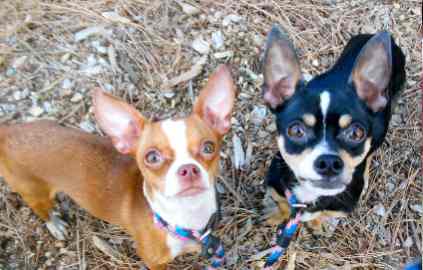
Rocky and Lola are two very friendly little Chihuahuas who could just about fit in your pocket. They are both about 6-months-old, and will probably put on another pound or two to get to 6 pounds. Both wag their tails and wiggle those huge ears constantly.

Lola is in charge of Rocky, but in a nice way – and he lets her make all the decisions. They share a kennel now, but don’t need to be adopted together.

Rocky and Lola are spayed/neutered, microchipped, tested for heartworm, and vaccinated. They are at the El Dorado County Animal Services shelter in Meyers, along with many other dogs and cats who are waiting for their new homes.

Go online or the Tahoe animal shelter’s Facebook page to see photos and descriptions of all pets at the shelter.

Call 530.573.7925 for directions, hours, and other information on adopting a pet.

For spay-neuter assistance for South Tahoe residents, go online.

— Karen Kuentz


Carbon monoxide alarms can save lives

By Teri Mizuhara

Carbon monoxide, aka CO, is widely known as the “senseless killer” because you can’t see it, taste it, or smell it.

Annually, more than 400 people die and another 20,000 are hospitalized due to CO poisoning.

So what exactly is carbon monoxide? CO is the result of burning of a fuel such as wood burning fireplaces, gas furnace, gas water heaters, gas stoves and ovens, portable generators, barbecue grills, even your running car or truck. The fumes from the combustion contain CO gas and when a person breaths this gas in, they are subject to CO poisoning.

If you are exposed to high levels of CO, you may feel flu-like symptoms such as a headache, nausea, shortness of breath, dizziness or light headedness because the CO replaces the oxygen in the red blood cells, which in turn does not allow oxygen to reach vital organs.

A person’s red blood cells actually bond with CO easier than it bonds with oxygen. High levels of CO can kill a person in minutes and it is the No. 1 cause of unintentional death by poison in the United States.

If you suspect CO poisoning, get the person or people to fresh air immediately, then call 911. In some cases CO poisoning can cause permanent brain and heart damage.

As of July 1, 2011, carbon monoxide alarms in single family dwellings are required. Minimally, you should have CO alarms outside each sleeping area and on each level of your home including the basement. It also is a good idea to put a CO alarm in each sleeping area. If they are plug-ins, test them once a month and if they have a battery backup, change that battery annually. Don’t forget to vacuum the alarms often to keep them in proper working order.

Key points:

Never use a barbecue or outdoor space heater in your home or garage.

Do not leave your vehicle running in your garage, even for a few minutes.

Never heat your room or home with your kitchen oven.

Have your home heating system checked by a professional annually.

Have your wood burning stove or fireplace professionally cleaned annually.

If your CO alarm sounds, get everyone out of the house and call 911. If you cannot physically leave the house, move to an open doorway or open a window and stay there. Call 911. Do not close the window or door.

Teri Mizuhara works for the El Dorado-Amador Unit of CalFire.


Exhibit celebrates Nevada’s history

In recognition of the Nevada’s sesquicentennial, Changing Faces and Places: Making Nevada is the second in a series of three Special Collections & University Archives exhibits commemorating 150 years of Nevada history at the Mathewson-IGT Knowledge Center at UNR.

In a free presentation related to the exhibit, Holly Walton-Buchanan, author of “Land of the Buckaroo: Historic Ranches of Western Nevada”, will discuss the origins of cattle ranching and truck farming in the Truckee Meadows, including the significant contributions of Italian immigrants to the economy. Her presentation will be April 2 at 7pm in the Faculty Graduate Room on the fourth floor of the Knowledge Center.

The exhibit covers topics ranging from Nevada’s immigrant population, ranching and snow surveying to women’s suffrage and Nevada’s societal changes with the passing of laws on divorce, gaming and the licensing of prostitution. Also included are historical aspects of past campus athletes, University of Nevada Cooperative Extension and the buildings of well-known architect Frederic DeLongchamps.

Located on the third floor of the Knowledge Center, Changing Faces and Places is open for viewing from 9am-5pm Monday-Friday and 1-5pm on April 12 and May 10. The exhibit runs through June 22.


Lady Gaga, Eagles to play at Harveys in Tahoe

Lady Gaga and the Eagles are the latest headliners to be added to the Harveys Outdoor Concert Series lineup.

Lady Gaga will be in Stateline Aug. 2 The Eagles will be making a return engagement on Aug. 29-30.

Lady Gaga tickets are $89.50 to $225, while Eagles tickets range from $99.50 to $255.50. Tickets for both concerts go on sale March 28 through Ticketmaster.

These artists join the list of confirmed concerts:

• June 24 – Sarah McLachlan

• July 18 – Carrie Underwood

• July 20 – Zac Brown Band

• July 30 – Journey-Steve Miller Band

• Aug. 3 – Boston-Doobie Brothers

• Aug. 14 – Bruno Mars.


Golden Bough to entertain on South Shore

Tahoe Arts Project is bringing the Celtic trio Golden Bough to St. Theresa Catholic Church on March 27 at 6:30pm.

Golden Bough captures the essence of America’s best-loved folk music, with an array of acoustic instruments and pristine three-part harmony. Sing along, clap along, or just sit back and enjoy, as Golden Bough blends Celtic harp, fiddle, guitar, accordion, penny-whistle, and bodhran with vocals for a lively Celtic-American evening.

General admission seating will begin at 6pm. Tickets are $12 for adults, $5 for children and $10 for seniors and will be available at the door. To charge tickets by phone, call 530.542.3632.

Tahoe Arts Project is a nonprofit organization dedicated to providing professional performing arts in the schools and community of South Lake Tahoe.

Golden Bough will be performing in the South Shore schools March 24-28.


Discoverer of Titanic wreckage to talk at UNR

Robert Ballard is known for his discoveries of the wrecks of the RMS Titanic, the battleship Bismarck, the aircraft carrier USS Yorktown and President John F. Kennedy’s PT-109.

The famous ocean explorer is the final speaker in this year’s Discover Science Lecture Series at UNR on April 3.

Ballard is a former Navy officer and a professor of oceanography at the University of Rhode Island. In his talk, through the use of high-quality images and personal accounts, Ballard will present his work in underwater archaeology, maritime archaeology and the archaeology of shipwrecks.

Ballard uses the emerging science of deep-water archaeology to share his findings from numerous expeditions where he searched for, located and documented sites of historical significance.

The lecture is at 7pm in the Redfield Auditorium in the Davidson Mathematics and Science Center at UNR. Parking is reserved for the event on the top level of the Brian J. Whalen Parking Complex. Admission is free.

For more information, call 775.784.4591.


5 common causes of prevalent tax mistakes

By Paul Taylor

Whether you’ve filed for an extension on your taxes this year, or have waited until the last minute to complete paperwork, or want a better strategy for the future, chances are you could be doing a better job throughout the year to save on income taxes.

Forty-nine percent of Americans think they pay more than their fair share in taxes, according to 2013 Rasmussen reports.

Come tax time, many of the other half could be doing more to legally and strategically save money.

He cites mistakes that many taxpayers are liable to make now and in future years.

• Not knowing which tax deductions are available. Tax reform measures are enacted frequently by Congress, which makes it hard for U.S. taxpayers to know which deductions are currently available for maximizing savings. One of the most overlooked deductions is state and local sales taxes. Taxpayers may be able to take deductions for student-loan interest, out-of-pocket charitable contributions, moving expenses to take a first job, the child care tax credit, new points on home refinancing, health insurance premiums, home mortgage interest, tax-preparation services and contributions to a traditional IRA.

• Misunderstanding deduction value for medical expenses. The Affordable Care Act has altered the guidelines for tax-deductible medical expenses. Effective Jan. 1, 2013, the new policy increased the threshold for the itemized deduction for unreimbursed medical expenses from 7.5 percent of adjusted gross income to 10 percent of adjusted gross income for regular tax purposes. The increase is waived for individuals age 65 and older for tax years 2013 through 2016.

• Confusing when taxes must be paid on IRA and employer-sponsored retirement funds. Traditional IRAs and most employer-sponsored retirement plans are tax-deferred accounts, which mean they are typically funded with pre-tax or tax-deductible dollars. As a result, taxes are not payable until funds are withdrawn. Exceptions are the Roth IRA and the Roth 401(k) and Roth 403(b). Roth accounts are funded with after-tax dollars. That’s why qualified distributions – after age 59½ and the five-year holding requirement has been met – are free of federal income tax.

• Overlooking tax-advantaged investments. Tax-advantaged investments can include real estate partnerships, oil and gas partnerships and suitability, which refers to how appropriate an investment may or may not be to an investor. Two of the most common types of real estate partnerships, for example, are low-income housing and historic rehabilitation. The federal government grants tax credits to those who construct or rehabilitate low-income housing or who invest in the rehabilitation or preservation of historic structures.

• Uncertainty when accounting for gift taxes. The federal gift tax applies to gifts of property or money while the donor is living. The federal estate tax, on the other hand, applies to property conveyed to others, with the exception of a spouse, after a person’s death. There are several exceptions to gift taxes, including gifts of tuition or medical expenses that you pay directly to a medical or educational institution for someone else, gifts to a spouse who is a U.S. citizen, gifts to a qualified charitable organization and gifts to a political organization.

Paul Taylor is the founder and owner of Capital Advisory Group & Tax Planners of Lake Norman and Capital Investment Advisors Inc. Taylor, a fully licensed investment adviser, has more than 20 years of experience in the industry.


LTCC instructor a student of Ansel Adams

By John Rogers, AP

LOS ANGELES — During the last years of his life, Ansel Adams pored over the tens of thousands of negatives he’d carefully stored since his teens, setting aside 70 he determined would stand as his greatest works of art.

Adams offered to personally print, sign and sell sets of 25 photographs from them — but with several strings attached: He would select the first 10 and let buyers choose the other 15.

But not just anybody with $30,000 to spend in 1980 could purchase the collection he called “The Museum Set Edition of Fine Prints.” They would only be sold to people Adams judged serious collectors and only after they promised never to resell them. If they left the buyer’s family, they would have to go to a museum.

Among the few dozen who made the cut were the late Leonard and Marjorie Vernon, prominent Southern California collectors whose set was given to the J. Paul Getty Museum in 2011 and is now the centerpiece of “In Focus: Ansel Adams,” which opens Tuesday.

How Adams developed his skills is explained in the exhibition, which includes photos ranging from 1921 to 1960. It was in the 1940s that Adams came up with his Zone System, dividing an image into 10 specific zones, ranging from black to white.

And it was while photographing “Monolith, The Face of Half Dome,” in 1927 with a camera with a glass-slide negative that he said he devised the system for picture-taking called Visualization.

“As I replaced the slide, I began to visualize how the print was to appear,” Adams would say later. “I began to see in my mind’s eye the finished product.”

That, said Kurt Molnar, a photography instructor who in his early 20s worked in Adams’ gallery and lived in a shack next door to him, was the greatest lesson he imparted — to every art photographer who followed him.

“More than anything I learned from Ansel was his ability to take pictures with his eyes and with his mind,” said Molnar, who now teaches photography at Lake Tahoe Community College in California’s Sierra Nevada, where Adams captured so many of his iconic images.

“Let’s say you’re standing on the edge of the Grand Canyon,” Molnar continued. “Most people are going to see the entire vista. He could envision, he could see in his mind, the finished product before he even took the picture.”

Augmented by several other Adams’ photos from the museum’s collection, the exhibition marks the 30th anniversary of the photographer’s death next month. More than that, it provides a fresh look at both Adams’ genius with a camera and in the darkroom.

“What sets them off, really,” said Karen Hellman, who curated the exhibit, “is that they were created all within a span of years by Ansel Adams himself, at a time when he was printing with a particular intensity in mind.”

These were the photos the pioneer of art photography considered his best, Hellman continued, and he would take special pains in reproducing them to make sure people knew that.

“He spoke about that at the time, how later in life he wanted to create images that were more impactful,” said Hellman, assistant curator in the museum’s Department of Photographs.

Although the collection contains several instantly recognizable images, such as “Moon and Half Dome,” photographed in California’s Yosemite National Park in 1960, and “The Tetons and the Snake River” captured in Wyoming in 1942, it’s safe to say even serious students of his work haven’t seen photos quite like these.

The difference is likely best displayed in two large prints of arguably Adams’ most famous work, “Moonrise, Hernandez, New Mexico.” The museum set photo printed by Adams in 1980 hangs side-by-side with one he printed in 1948.

In a brief video clip accompanying the exhibition, Adams describes how he captured the image on a late November afternoon in 1941. He was returning to Santa Fe from a day of fruitlessly searching for subjects to photograph, when he caught a glimpse out of his car window of an “extraordinary” scene of the moon rising over a cemetery.

“I practically ditched the car, and I had some companions with me,” he recalled. “I started yelling, you know, ‘Get me the eight-by-ten, get me the tripod.'”

He managed to get off exactly one shot before he lost the light from the setting sun that had been illuminating the crosses marking the cemetery’s graves – and providing the element that made the photo.

Although the brilliance of Adams’ work is clearly seen in the 1948 print, it’s displayed in much more intense contrast in the 1980 version: The crosses are brighter, the night sky is darker, the buildings in the background and the landscape in the foreground are sharper.

“My parents owned several ‘Moonrises,’ and to put them together and look at the differences from how they changed over time is really fascinating,” said Carol Vernon, who with her husband, Robert Turbin, gave “The Museum Set” to the Getty.

Under her parents’ agreement, the photos could have stayed in the family, but she and her husband thought it better for the public to have a chance to see them in an environment where they could be carefully preserved in the future.

“Composition was paramount for him and he spent a lot of time before he ever pushed the button and snapped the shutter,” said Vernon, who got to know Adams over the years. “But he also was an incredible technician in the darkroom.”


SNC launching Poetry Center

Sierra Nevada College’s new Poetry Center promotes an appreciation of contemporary poetry among students and community members while providing support for current and emerging poets.

At the grand opening March 28-29 the college will be hosting poet laureate of California Juan Felipe Herrera and award-winning poet Jane Hirshfield for public readings and workshops.

The Poetry Center represents a wide and diverse collection of poetry including voices that have not often been heard in the region. The library is open to the general public and offers free library access to all local and Nevada residents.

The March 28 event begins at 5:30ppm in the Prim Library

with a reception, followed by readings at 6:30pm and author signings at 7:30pm.

On March 29 there will be a workshop with Jane Hirshfield from 9:30-11:30am, a High School Student Workshop with Patricia Smith from 1:30-3:30pm, a workshop with Laura Wetherington from 1:30-3:30pm, and

open mic with Smith from 7-9pm.

All events are free and open to the public.