Exercising may be answer to healthier eyes

By Gretchen Reynolds, New York Times

Age-related vision loss is common and devastating. But new research suggests that physical activity might protect our eyes as we age.

There have been suggestions that exercise might reduce the risk of macular degeneration, which occurs when neurons in the central part of the retina deteriorate. The disease robs millions of older Americans of clear vision. A 2009 study of more than 40,000 middle-aged distance runners, for instance, found that those covering the most miles had the least likelihood of developing the disease. But the study did not compare runners to non-runners, limiting its usefulness. It also did not try to explain how exercise might affect the incidence of an eye disease.

So, more recently, researchers at Emory University in Atlanta and the Atlanta Veterans Administration Medical Center in Decatur, Ga., took up that question for a study published last month in the Journal of Neuroscience. Their interest was motivated in part by animal research at the V.A. medical center. That work had determined that exercise increases the levels of substances known as growth factors in the animals’ bloodstream and brains. These growth factors, especially one called brain-derived neurotrophic factor, or B.D.N.F., are known to contribute to the health and well-being of neurons and consequently, it is thought, to improvements in brain health and cognition after regular exercise.

Read the whole story


U.S. could save millions by changing font type

By Salvador Rodriguez, Los Angeles Times

A 14-year-old student has published a study detailing how the U.S. federal and state governments could collectively save about $234 million a year by simply switching the type of font that is used on printed documents.

In his study, Suvir Mirchandani, who lives in the Pittsburgh area, said he found that Garamond is the most efficient font for printing, among the fonts recommend for use by the General Services Administration. This is because Garamond uses thinner strokes for its letters, meaning less ink is used on each character.

If the U.S. government stopped using Times New Roman and Century Gothic and switched to Garamond, it could reduce its annual cost of ink from $467 million per year by more than 29 percent. That means it would save about $136 million per year.

Read the whole story


Tahoe Tails — Adoptable Pets in South Lake Tahoe

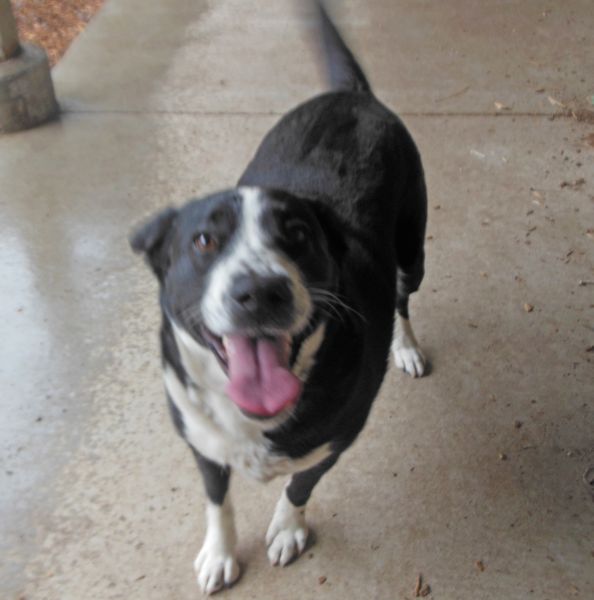
Chanel

Chanel

Chanel is perhaps not as sophisticated as her name, but she sure is friendly. Her tail never stops wagging.

Chanel is a 2-year-old Border Collie/Lab mix who is a bit portly now, and she is looking forward to going for lots of walks with her new owner to slim down.

Chanel is spayed, microchipped, tested for heartworm, and vaccinated. She is at the El Dorado County Animal Services shelter in Meyers, along with many other dogs and cats who are waiting for their new homes.

Go online or to the Tahoe animal shelter’s Facebook page to see photos and descriptions of all pets at the shelter.

Call (530) 573.7925 for directions, hours, and other information on adopting a pet.

For spay-neuter assistance for South Tahoe residents, go online.

— Karen Kuentz


Squaw to host 2-day film festival

The Wild & Scenic Film Festival returns to Squaw Valley April 11-12.

The festival will feature 16 films that focus on environmental concerns, as well as celebrate the beauty of nature. The event is all part of the Tahoe Truckee Earth Day, which is April 19.

Festival doors open at 6 each night, with screenings beginning at 7pm. General admission is $12 for adults, and $5 for students and all Tahoe area ski resort employees. The festival also features live music, food, and beer and wine.

Attendees may choose from several different packages of films, with all screening venues located in The Village at Squaw Valley.

To see movie trailers, and for festival information, go online.


Museum captures life inside Folsom Prison

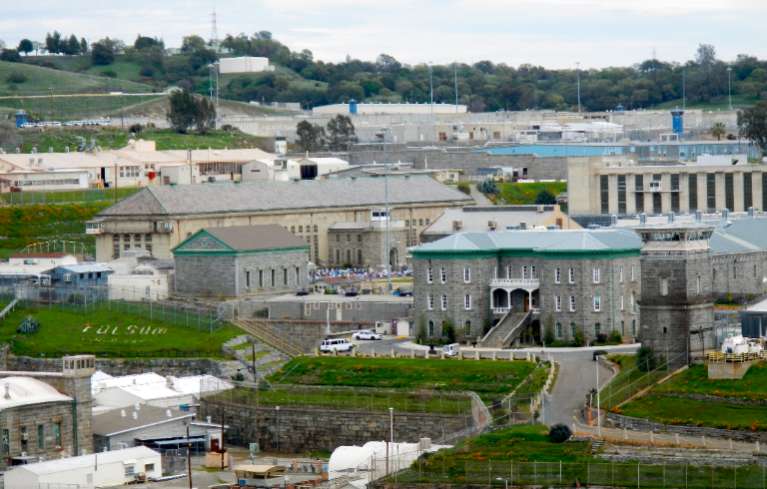
Folsom Prison from across the American River at the Folsom Lake State Recreation Area. Photos/Kathryn Reed

Folsom Prison from across the American River at the Folsom Lake State Recreation Area. Photos/Kathryn Reed

By Kathryn Reed

REPRESA – While Johnny Cash didn’t really shoot a man in Reno just to watch him die, he has been to Folsom Prison. It was to give a concert.

He is credited with making the prison famous beyond the inmates and riots.
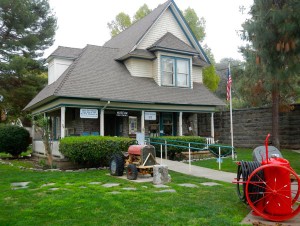
The museum is open 362 days a year.

The museum is open 362 days a year.

Every vehicle owner in California is driving around with a piece of Folsom prison. Since 1947 the facility has been making the state’s license plates; 40,000 are made a day.

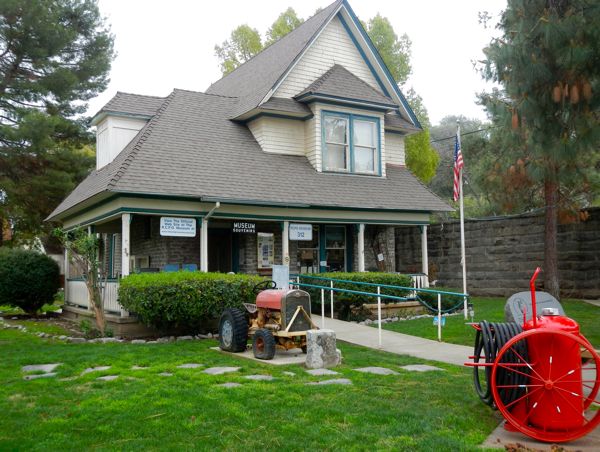
People can get a sense of the institution’s history and what it might be like today to be behind bars through the prison museum, which is on the prison grounds.

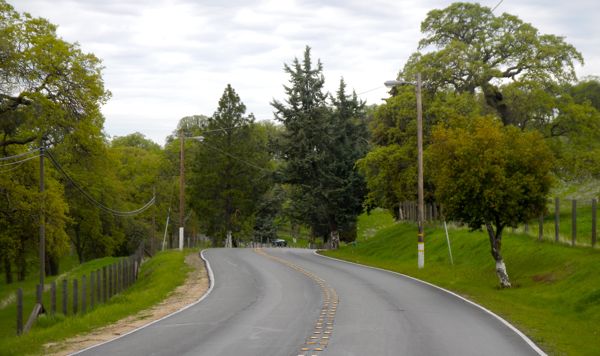
On the road in there is a sign that says, “No stopping or turning on prison road: Warden.” What happens if you do isn’t known.

The 1,000 acres are initially pastoral, welcoming, even.

“In custody inmates do the mowing,” Pino Ramacher tells Lake Tahoe News. Ramacher retired as a correctional sergeant in 2005 and now works at the museum.

Prison labor is also used to maintain the gardens.

Across the river is a walking path with views of the prison. It also means the prisoners have views of freedom that are beyond their reach.
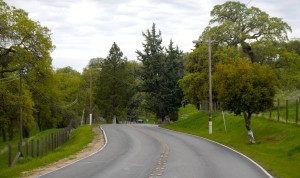
The prison road is inviting.

The prison road is inviting.

Arriving at the prison, the first building is where visitors check in. A long list of attire is not permitted – no blue clothing, no shorts, no hats, no clothes with logos, no toe strapped sandals, and no metal underwire on bras. People cannot take in purses, food, cameras, make-up, pennies or gum.

A line on the ground leads to the museum. And at the far end of the museum is another line. It’s to stop people from going farther onto the grounds. A stone’s throw away is the prison gate. It’s not known if sirens wail and the person stepping across that line would be carted off in handcuffs.

In many ways the outside looks like some ornate castle because of all the stonework. All native stone was used to build the facility and inmates handcrafted it.
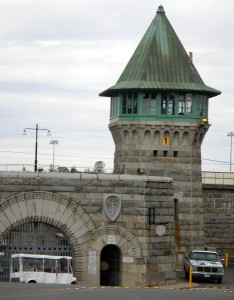
Stone for the prison was quarried on site.

Stone for the prison was quarried on site.

Their handiwork can also be seen along Highway 50 leading to South Lake Tahoe. The inmates made the granite mile markers.

“We had our own power plant. We had a quarry where all the stone for the prison came from. Much of it was dug out by hand,” Ramacher said. “There’s a lot of detail in the rock.”

The first inmates arrived on July 26, 1880. They came from San Quentin, which was overcrowded. That is why Folsom was built.

A movie gives some details about the early years as well as a tour of inside the prison.

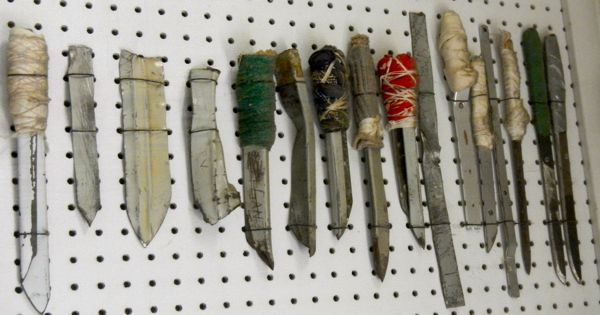
Artifacts in the museum include a wealth of weapons inmates have made and ones that were smuggled in. The gun used in 1937 during a riot where Warden Clarence Larkin was killed is included in the display.

It used to be that prisoners could be buried on the grounds, but that has not happened since 1959.

The plan is for this 900-square-foot museum to be replaced by a 35,000-square-foot museum that will have information from prisons across the country. That could happen in three years.
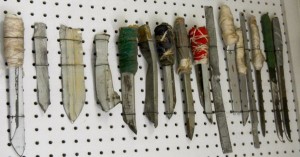
Confiscated contraband.

Confiscated contraband.

—-

Other things to know:

• There are other ways into the prison besides committing a crime or visiting someone who did. The annual Race Behind Bars mountain bike race is May 18. More info is online.

• The Johnny Cash Trail broke ground in February. The 2.5-mile trail will cross prison grounds and link El Dorado and Placer counties to the American River Parkway as well as to Folsom’s historic district. It should open in a year.

• The $3.8 million overcrossing at Folsom Lake Crossing Road will be built to resemble the prison’s guard towers.

• Museum fee is $2.

• Museum is open daily 10am-4pm, except for Thanksgiving, Christmas and New Year’s Day.

• More info is online.


Lessons outside college benefit students

By Matt Stewart

These days, it seems as though Americans are spending more for college while getting less value in return.

The average cost for an in-state public college is $22,261, and a moderate budget for a private college averaged $43,289 for the 2012–2013 academic year; for elite schools, we’re talking about three times the cost of your local state school.

Making matters worse, adults in their 30s have 21 percent less net worth than thirtysomethings 30 years ago, according to a new Urban Institute report.

More students are being saddled with long-term debt while getting less value for their education,” Stewart says. Because of the difficulty recent college grads are having finding jobs in today’s tough economy; today’s students may have even less worth in their 30s than 30-somethings today.

To add value to their professional career, I encourage students to seek outside-the-box avenues for increasing their career stock while in college. Running a business is a great way to do that; he explains why.

• Employers love ambition. A college degree is the minimum qualification employers are seeking. What hiring managers are looking for is that something extra when reviewing a stack of qualified resumes. At the heart of the economy is innovation; it’s the difference between simply existing in a market, and thriving in one. Employers know they need people with creativity and gumption for innovation.

• Real-world management of time and money. College is a time when young adults learn to live autonomously. It’s the rare student, however, who learns to manage his or her own affairs and the most precious resources in the business world – time and money. Managing employees, driving sales, developing specific skills for a real market and building strong customer relationships are best learned with hands-on experience.

• Learn where they need help. What do you do well and where do you need help? The best way to know with any certainty is through experience. Running a business while attending college allows students to circle back to their education and focus on their trouble areas by adjusting their curriculum in future semester.

• Develop meaningful bonds. One of the most meaningful aspects of the college experience is the relationships students develop with each other, which often have professional consequences after college. Enlisting the help of fellow students for a common business purpose tends to have a powerful bonding effect.

• Immediate ROI – finding phenomenal success. Most students who run a business during college will not prove to be the next Steve Jobs, Mark Zuckerburg or David Geffen, which is precisely why students should not drop out of college like those pioneers did. However, a student doesn’t have to be the next Zuckerburg to experience amazing success as an entrepreneur. College Hunks Moving Junk is just one recent example that began in an entrepreneurial student mind.

Matt Stewart co-founded National Services Group, which operates College Works Painting, SMJJ Investments and Empire Community Construction.


Social media may negatively impact self-esteem

By Jodie Gummow, AlterNet

In this technological age, social media has become a primary gateway to connect with friends and the world around us as part of our daily ritual. Yet what often begins as a harmless virtual habit for some can fast-track into a damaging, narcissism-fueled habit which negatively impacts our self-worth and the way we perceive others.

Studies show that up to two-thirds of people find it hard to relax or sleep after spending time on social networks. Of 298 users, 50 percent said social media made their lives and their self-esteem worse. So just what exactly is it about social media that allows it to affect our self-worth?

According to psychotherapist Sherrie Campbell, social media can give us a false sense of belonging and connecting that is not built on real-life exchanges. This makes it increasingly easy to lose oneself to cyberspace connections and give them more weight than they deserve.

Read the whole story


Music venue named after Nevada businessman

The Carson Valley Inn’s outdoor events center –- previously and temporarily referred to as the Valley Sky Theatre –- has been renamed TJ’s Corral in honor of Theodore James “T.J.” Day.

Day was a prominent and successful Nevada businessman, community philanthropist, ranch operator, and locomotive and aviation enthusiast who passed away in January.

Michael Martin Murphy will be the first artist to play at the renamed venue in Minden.

Tickets start at $29 for Murphy’s May 1 7pm performance.

The Oak Ridge Boys will take the stage next — May 15 at 7pm. Tickets start at $30.

Tickets to both shows are available online.


Summer camp devoted to performing arts

Camp Star Bound offers a six-night, seven-day performing arts experience combined with all the fun of a traditional summer camp at Lake Tahoe.

This is the third year.

Campers will have the opportunity to learn from professional dance instructors, choreographers, theater teachers, professional actors and vocal coaches.

Performers entering grades 5-12 with any level of experience, from beginner to advanced, are invited. There will be a performance at the end of the week that parents and family are invited to attend.

For more info or to register, call Stefanie McKnight at 775.250.0464.


Study: Sunshine lowers blood pressure

By Amanda McMillan, Outside

Scientists have known for years that rates of hypertension are higher in the winter and in countries farther from the equator, but they haven’t known why—until now. A new study from the universities of Southampton and Edinburgh suggests that exposure to sunlight plays a large role, by causing nitric oxide in the skin to be absorbed into the blood stream. Blood vessels widen as a result, causing a modest—but potentially life-saving—drop in blood pressure.

To study the sun’s effect on blood pressure, researchers exposed 24 healthy volunteers to ultraviolet light, mimicking the amount of exposure a person might get wearing short sleeves and shorts outside for 30 minutes on sunny day. In a second session, they were exposed to the same amount of light and heat, but no UV rays.

The UV exposure triggered a small decline in blood pressure—about two to five points—while the “sham” exposure did not. While that may not seem like a lot, the authors write that a even tiny drop can go a long way: A 10-point change in diastolic pressure, for example, can slash your risk of cardiovascular disease and stroke in half.

Read the whole story