Sonoma — a full bodied experience
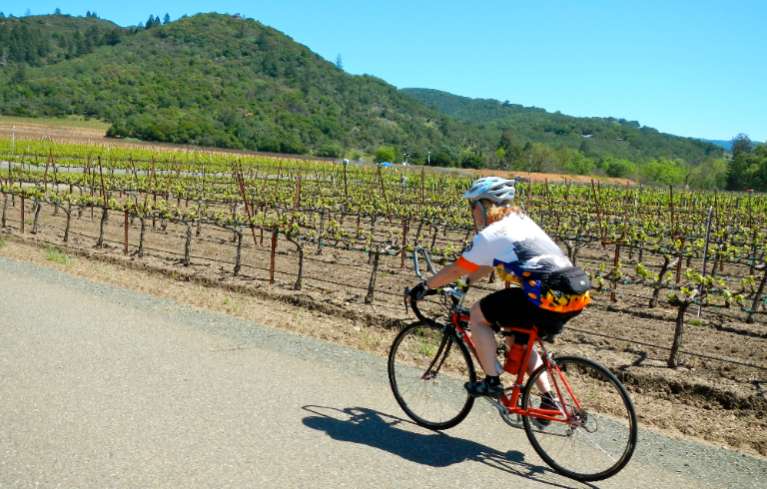
Sue Wood pedals past a vineyard on her way to Chateau St. Jean. Photos/Kathryn Reed

Sue Wood pedals past a vineyard on her way to Chateau St. Jean. Photos/Kathryn Reed

By Kathryn Reed

SONOMA – History beckons from our doorstep. A mission, wineries, early California, Jack London. But contemporary times are just outside, too, including innovative winemaking, cutting edge restaurants, logical trail networks, well-trained massage therapists.

Sonoma. It has it all.

Staying at the Sonoma Valley Inn was the perfect launching pad for a long weekend of fun to celebrate Sue’s birthday last month. The Best Western is just off the Sonoma Square.
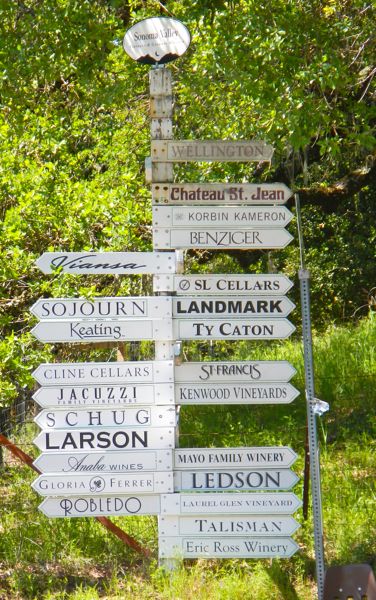
Plenty of wineries to choose from.

Plenty of wineries to choose from.

We start our first full day with a bike ride that ends up being 32 miles through vineyards, a stop at a state park and a leisurely wine tasting.

Zipping along a few city streets – with clearly marked bike lanes – and then onto a trail system, we then end up on Highway 12. The highway part of the ride is not ideal if you get nervous about traffic while on a two-wheeler. But it’s no biggie for those who ride the highways in Lake Tahoe.

After Sue changes my flat, we turn on Madrone Road and head toward Jack London Historic Park. Calmness comes over us as the cars are now few and far between. Instead it’s all about the vineyards that are budding and lush grass on the hills.

Jack London's works on display at the state park named after him.

Jack London’s works on display at the state park that was once his homestead.

The park is 9.8 miles via this bike route from our hotel. The woman taking our money says the mountain bike trails are worth exploring. That was not going to happen with our thin tires and me being out of replacement tubes.

Fortunately, we had been to the park before because it’s not ideal to explore in clip-on bike shoes. And knowing we hadn’t even made it to our halfway point, we didn’t want to linger too long. Still, we took a quick trip through the museum to reacquaint ourselves with one of California’s most famous writers.

On we pedal, now with Chateau St. Jean as our destination. We are allowing ourselves one tasting while on two wheels.

Idyllic, sweeping grounds beckon. A water feature is soothing. I have thoughts of hiring a car to give us a lift back. But it’s Sue’s birthday, so pedaling is how we return to the hotel.

We fuel up on a light lunch at the winery and sip their wines. Tastings are normally $15 per person, but one of the great things about the Sonoma Valley Inn is they have free tasting coupons for some of the nearby wineries. That’s one of the things that led us to Chateau St. Jean – that and it had been years since we were there, and we like their wine.

The hotel

We soothe our muscles in the hotel’s hot tub that is steps from our backdoor patio. It feels like we are in a secluded garden because of the mature landscaping. It’s quiet, except for the other guests. Traffic cannot be heard. Just the birds telling stories.

A pool, fire pit and steam room are part of the courtyard. Many of the rooms at this two-story hotel look out onto this area.
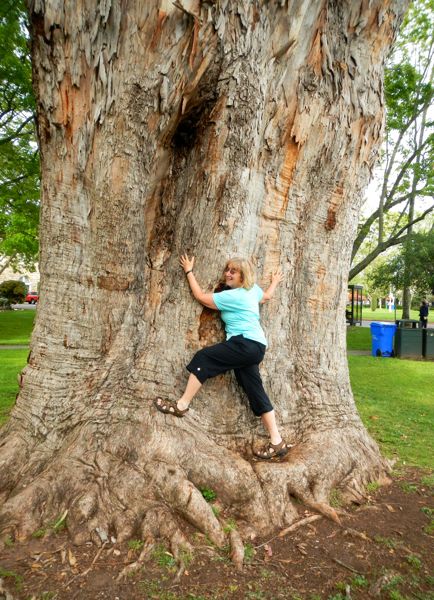
Sue Wood tried to do a little tree climbing at Sonoma Square.

Sue Wood tries to do a little tree climbing at Sonoma Square.

While there are children staying at the hotel, it has a definite adult feel to it. Maybe it’s because everyone seems to be there to go wine tasting – a distinctly adult activity.

We have our four-legged kid with us. AJ likes that she has her own grassy area to do her business.

And the staff all seems to understand people are there to unwind, have a good time and not be rushed. The service is several steps up from the typical Best Western.

The room is plenty big – larger than a typical hotel room, but not quite large enough to fit two massage tables.

A fireplace with a “fake” log is in the corner, adding a bit of ambiance as the evening cools off.

The only downside to the hotel is how far away the complimentary breakfast area is. While it wasn’t a big deal while we were there, had it been raining, it could have been a miserable experience.

Plenty of wineries

From historic to contemporary, from average priced to breaking the bank, from run of the mill service to off the charts – the wineries of Sonoma have it all.

One spot I wanted to visit was Buena Vista. It was my parents’ favorite winery and where my sisters and I threw them a surprise 25th anniversary party.

It was founded in 1857 and is considered California’s first premium winery. It is also the state’s oldest commercial winery. It is undergoing a multiyear, extensive renovation.

Close by is Gundlach Bundschu. It started a year later and is California’s oldest continuously family-owned winery.

In the opposite direction are Jacuzzi Winery and Cline Cellars. Both are owned by the same family, with Cline having been established first. And, yes, Jacuzzi is the hot tub family. The winery is built as a replica to the family’s estate in Italy.
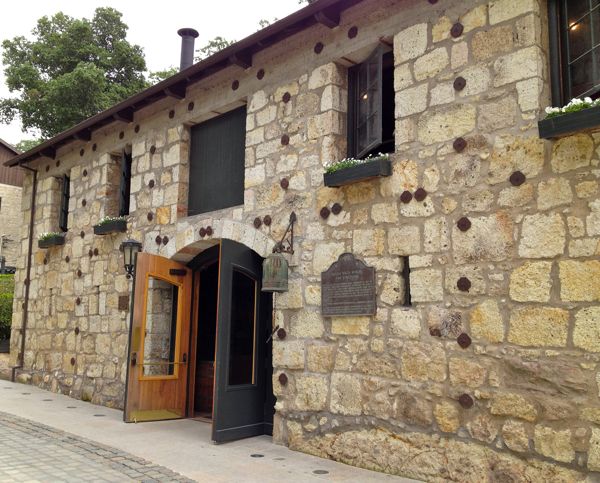
Buena Vista Winery

Buena Vista Winery

We learn about the Sip California card  from women in the hotel hot tub. The discount card costs $50 and is good at more than 20 wineries for the year. They gave us theirs so now we “have” to go back to Sonoma County this year.

Other things

Driving into San Francisco was easy from the Sonoma Valley Inn. We took in a (losing) Giants game that weekend.

We had contemplated getting a massage in our room, but I knew there was no way two tables would fit. So off we went to Spa Sonoma. It was about a five-minute drive.

It was the antithesis of a high-end spa – exactly to my liking. It was a little funky. But the most important part, each of our massages had our bodies feeling like putty.

One night we ate outdoors at the Plaza Bistro. Sue is still raving about the salmon special she had that came with little cherry tomatoes and roasted potatoes. My mushroom risotto was great. We shared a salad of greens and beets as well as crème brûlée.

Another night we opted for Mexican at Maya restaurant. While Mexican food is easy to make vegetarian, so many places don’t. It was nice to look at a menu with choices where I didn’t have to ask for anything to be removed. Sue indulged in the fish tacos. This was clearly a locals place just by overhearing conversations.

And it was nice having a Whole Foods market across the street from the hotel to provide picnic fare and an excellent selection of Sonoma and Napa wines.

—–

Notes:

• Sonoma Valley Inn is on 2nd Street West. Details are online. AJ was an extra $35 for the entire stay.

• Spa Sonoma is a short drive from the hotel, or therapists will come to your room.

• Jack London State Historic Park is accessible via bike for $5 or $10 per vehicle.


Laine — chronicling Tahoe one shot at a time

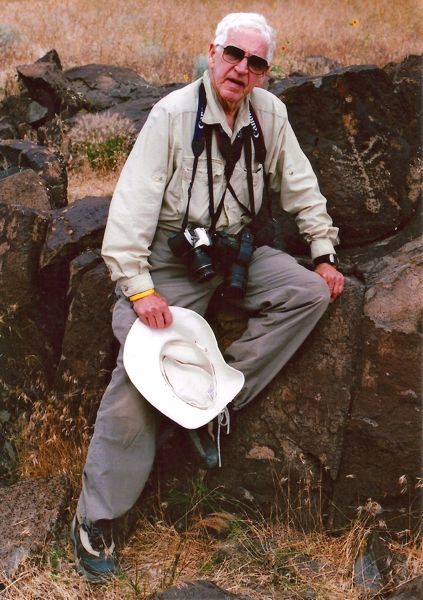
Ed Laine has been capturing Lake Tahoe for decades. Photo/Provided

Ed Laine has been capturing Lake Tahoe for decades. Photo/Provided

By Kathryn Reed

An artist is what Ed Laine always wanted to be. But he didn’t expect it to involve a camera.

He had majored in art at the University of Oregon, with the idea he would be creating pottery as a living. But life isn’t always predictable. Collecting a hundred bucks a month making pottery wasn’t paying the bills so he had to find another line of work.

“The market wasn’t here yet. It would be today I think,” Laine told Lake Tahoe News. “I was striving to do more commercialized pottery.”

And thus he launched his career in advertising and photography, where he saw the South Shore grow, businesses come and go, and lived through the evolution of printmaking.

The 82-year-old moved to South Lake Tahoe in September 1957. Not long after that he went to work at the Tahoe Daily Tribune. His job title? “Everything,” he said.

“It was all lead and ink at that time,” Laine said of the printing process, which he also called “cumbersome”.

Everything was shot with film. It was processed in a darkroom on site. (The Tribune didn’t use digital cameras until 2003.)

Laine remembers the time he was told to go get pictures of a bear hanging out by the California Lodge at Heavenly. It was standing on its back legs munching on a head of lettuce not more than 40 feet away. He kept shooting and shooting.

When he got back to the lab there were no images.

“It was completely blank,” Laine recalled. “I had forgotten to pull the slides.”

Camera equipment was much more complicated back in the day.

When color photography came around all the aluminum plates on the press had to be removed and the color put on. This would double or triple the length of a press run. It’s why color photos used to be rare in publications and why color ads once cost more than black and white.

With a population of less than 5,000 at the time in South Lake Tahoe, it also meant there were not many businesses. Selling ads was hard. The good thing at the time is businesses didn’t have a ton of choices for reaching the consumer.

The biggest advertisers were Harrah’s, Harveys, Outdoorsman and Barney’s.

By the time Laine left the Tribune in 1967 he had married Del, who wrote columns for the paper about skiing, hiking, bowling, fishing, gossip and other activities.

Together they opened Laine Associates. It was an ad agency. But there were not enough advertisers to sustain the business so they took the photography aspect of the company and started Laine Photolabs.

Weddings were the principal component of the business. Some were shot at the top of the tram at Heavenly Mountain Resort others at Taylor Creek, and even more at one of the beaches around Tahoe.

“Mothers of the bride were the worst,” Laine said. He added, if they had sisters, it got even worse.

The equipment was heavy. Laine was using a 4 x 5 Speed Graphic that he had to lug around.

The one-hour photo business became a reality when they moved from South Lake to Round Hill in 1989.

Laine Photolabs had contracts with area schools and then moved into sports photography. The business closed in 2010. While Laine was active in the company up until the end, his daughter, Brooke, was running it by that time.

(The Laines have four children and 10 grandchildren.)

Through the years Laine also did other jobs relating to photography. He did quite a bit of work for South Tahoe Public Utility District.

“When they ran the piping over Luther Pass I was hired to photograph it day and night. I had to camp out there,” Laine said.

For about seven years he volunteered to photograph sections of the Tahoe Rim Trail for the nonprofit association. It involved lugging heavy camera gear into various locations.

For the Lake Tahoe Historical Society Laine did a substantial amount of photocopying of old pictures that were donated to the organization.

A retired police sergeant from Fresno started an institute in South Lake Tahoe for officers to learn how to photograph evidence. Laine was one of the instructors.

Laine has kept some of the old photo equipment, but it’s all boxed up now. He admits if he is going to shoot anything today, he has a small digital camera.

As for the pottery, he never picked it up again.


Tahoe residents graduating from UNR

A number of Tahoe area residents will graduate today from UNR.

In all, the university will confer 2,251 degrees and certificates. There will be three ceremonies, one for advanced-degree recipients this afternoon, and two for bachelor-degree recipients the mornings of May 16 and May 17. All three ceremonies will be on the university’s Quadrangle, located on the southern part of campus.

Here are Tahoe grads:

Ryan Gutknecht, Bachelor of Science, Mechanical Engineering, Glenbrook

Tara Madden, Doctor of Philosophy, Incline Village

Virginia Bowman, Master of Music, Incline Village

Clare Pace: Master of Public Health, Incline Village

Stephen Krueger, Bachelor of Science, Business Administration Management, Incline Village

Kyle Richter, Bachelor of Arts, International Affairs and Political Science, Incline Village

Lauren Wilson, Bachelor of Arts, Criminal Justice, Incline Village

Joseph Lamb, Bachelor of Science, Biology, Incline Village

Jonathan Mandio, Bachelor of Science, Geography, Incline Village

Joana Wu, Master of Science, Elementary Education, Kings Beach

Jennifer Gibbons, Bachelor of Science, Speech Pathology, Kings Beach

Trevor Miller, Bachelor of Science, Environmental Engineering, South Lake Tahoe

Carolyn Triano, Doctor of Philosophy, Literacy Studies, South Lake Tahoe

Robin Mccully, Master of Education, Literacy Studies, South Lake Tahoe

Chelsea Garbarini, Master of Education, Special Education, South Lake Tahoe

Jessica Perasso, Bachelor of Science, Nutrition, South Lake Tahoe

Devin Gonzales Blom, Bachelor of Arts, Anthropology, South Lake Tahoe

Jordan Zager, Bachelor of Science, Biochemistry and Molecular Biology, Zephyr Cove

Michaela Murphy, Bachelor of Arts, Psychology, Zephyr Cove

Jordan Zager, Bachelor of Science, Biology, Zephyr Cove

Lauren Andrew, Bachelor of Science, Community Health Sciences, Zephyr Cove

Sarah Ehrler: Bachelor of Science, Biology, Stateline

Caitlin Robinson: Bachelor of Science, Nursing, Stateline.


Paper, plastic loyalty cards becoming obsolete

By John Ewoldt, Minneapolis Star Tribune

The days of the “buy-10-get-one-free” loyalty punch card are as numbered as the paper punch itself.

Mom-and-pop restaurants, convenience stores and pet groomers are joining national programs that equip them with an iPad at the register where a customer either swipes a loyalty card or waves a smartphone to record the purchase and any reward. National programs such as Belly, ­SpotOn, Perkville and FiveStars use cloud and mobile technology to enable retailers to offer programs that reward the customer faster and with more creativity than a punch card.

“Within five to 10 years, we’ll move away from punch cards and key fobs and even apps and go to smartphones,” said Rik Reppe, director of PricewaterhouseCoopers’ customer experience practice in Minneapolis.

Many consumers collect reward cards like playing cards, thumbing through more than a dozen in their wallet or purse. The average consumer has 18 cards, but only uses eight actively, according to the market research firm Colloquy in Cincinnati.

Read the whole story


Early fitness may improve middle-age brain

By Gretchen Reynolds, New York Times

The more physically active you are at age 25, the better your thinking tends to be when you reach middle age, according to a large-scale study. Encouragingly, the findings also suggest that if you negligently neglected to exercise when young, you can start now and still improve the health of your brain.

Those of us past age 40 are generally familiar with those first glimmerings of forgetfulness and muddled thinking. We can’t easily recall people’s names, certain words, or where we left the car keys. “It’s what we scientists call having a C.R.S. problem,” said David R. Jacobs, a professor of public health at the University of Minnesota in Minneapolis and a co-author of the new study. “You can’t remember stuff.”

But these slight, midlife declines in thinking skills strike some people later or less severely than others, and scientists have not known why. Genetics almost certainly play a role, most researchers agree. Yet the contribution of lifestyle, and in particular of exercise habits, has been unclear.

Read the whole story


Valhalla upgrading site, summer festival lineup

The Grand Hall's front has new siding. Photos/Kathryn Reed

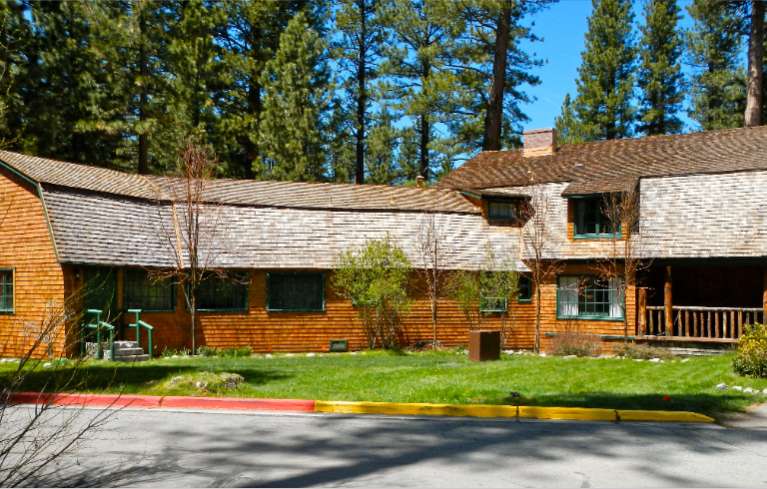
The Grand Hall’s front has new siding. Photos/Kathryn Reed

By Kathryn Reed

For nearly 40 years the Valhalla Art, Music & Theatre Festival has been staged at the Tallac Site on the South Shore. But for the last few years music has not had equal billing. That is about to change.

“I want to get the music to the level of what the theater is so it will be a world-class festival,” Evangeline Elston told Lake Tahoe News.

Elston was hired this winter to be the director of the festival. While she has less than a one-year contract, she is hoping the improvements she brings to this year’s offerings will warrant a longer contract.

She grew up near Carson City, spent the bulk of her career in the Grass Valley-Nevada City area in the music world, and the last year in Austin, Texas, doing work for artists. She knew she wanted to return to the Sierra and that is how she landed in Tahoe.

Ginger Nicolay-Davis, president of Valhalla Tahoe (formerly Tahoe Tallac Association), admits the group has been running on autopilot when it came to music – booking acts that had been there before and not doing much more.

This season expect a more eclectic mix.

One of the first things Elston was able to get the board to agree to was upgrading some of the sound equipment in the Boathouse Theater, which is where the paid performances will be.

A paved walkway bisects the Twin Cabins.

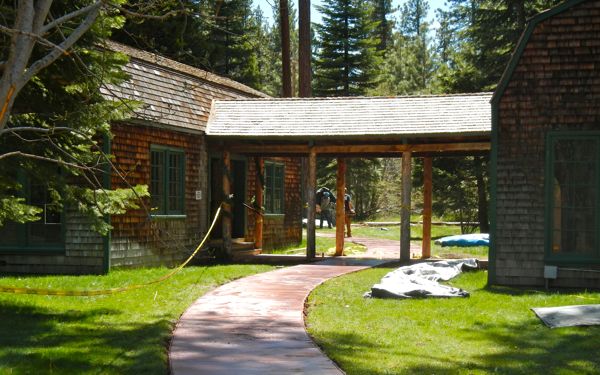
A paved walkway bisects the Twin Cabins.

Ray Bonneville will launch the 2014 season on June 25 at 7:30pm. Lance Canales and the Flood will also be on stage that night.

Grammy-nominated bluegrass duo Laurie Lewis and Tom Rozum will play Aug. 6 at 7:30pm.

For the first time, Valhalla and Lake Tahoe Community College are partnering to put on a summer play. “August: Osage County” will be at the Duke Theater in July.

To balance this adult-oriented production, “Charlie and the Chocolate Factory” will be at the Boathouse earlier in July.

Four nights of Improv are on the schedule.

In conjunction with this being the 50th anniversary of the Wilderness Act, the Wild and Scenic Environmental Film Festival will be at the Boathouse on Aug. 13. This is also going to be a membership drive event for Valhalla.

The nonprofit gets its funding from ticket sales and memberships. In a deal with the U.S. Forest Service, which owns the land, a certain percentage of the proceeds must be spent on upgrading the property.

In the last three weeks about $30,000 in improvements have been made. A walkway between the Twin Cabins, which are in front of the Grand Hall closest to the road, was completed May 12. The front of the Grand Hall and the side porch have been resided. The remaining siding will be replaced next year.

One of Elston’s goals is bring more public awareness to the partnership between Valhalla and the USFS, and how it’s not just a festival that is going on, but preservation of Tahoe’s past.

—-

Note:

• The event schedule for the 2014 season is available online.

• Membership information is also online.


Virginia Crespo — 1952-2014

By Robert D. Dávila, Sacramento Bee

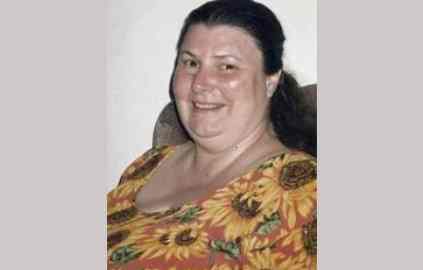
Virginia Crespo, a prominent El Dorado County activist who was a leader in political and civic groups, died April 26 of a heart attack caused by heart disease, her husband said. She was 62.

Virginia Crespo

Virginia Crespo

A Sacramento native, Mrs. Crespo had a strong interest in public affairs since she served as a legislative intern at the state Capitol in 1968. She was widely consulted by local officials in El Dorado County as an informed resident in many areas of community life, including housing, transportation, culture, education and voting.

She was founding president of the Placerville Area League of Women Voters and president of the El Dorado West Republican Women Federated club. As chairwoman of a citizens advisory group, she played a key role in funding and construction of the Bass Lake truck lane on Highway 50. She kept an eye on government spending as the first woman president of the Taxpayers Association of El Dorado County.

Read the whole story


Kings Beach affordable housing wins design award

The Kings Beach Housing Now is one of four California affordable housing developments to earn the 2014 HUD Secretary’s Housing and Community Design Award.

The other projects selected by the U.S. Department of Housing and Urban Development and the American Institute of Architects are the 28th Street Apartments in South Los Angeles; Kelly Cullen Community in San Francisco; and Sierra Bonita Apartments in West Hollywood.

“California continues to demonstrate that it is an incubator for innovation, energy efficiency and livability,” Regional Administrator Ophelia Basgal said in a statement. “The four design award winners are examples of the best and reflect the value of community and re-use of historic sites. These four recipients proudly show that affordable housing is a great place for award-winning architectural design.”

For Community-Informed Design – This award recognizes design that supports physical communities as they rebuild social structures and relationships that may have been weakened by outmigration, disinvestment, and the isolation of inner-city areas.

Kings Beach Housing Now (owned by Domus Development) is an affordable sustainable workforce housing project consisting of nine building on five sites in Lake Tahoe. The development provides low-income workers and families who previously lived in substandard converted motel rooms, cabins, and trailers with safe, energy-efficient places to live. The sites replace dilapidated, inefficient housing with new, LEED certified silver apartments that reduce negative impacts on the environment while reusing infill land and preserving Tahoe’s beautiful open space. The project offers 77 apartments at five sites in Kings Beach (Brook, Chipmunk, Deer, Fox, and Trout) consisting of a mix of apartments sizes.

The Kings Beach Housing Now development team formed partnerships with community advocates and nonprofit groups to sponsor the first housing needs assessment in Kings Beach. A total of 335 surveys (conducted in English and Spanish) were collected at community events and at local social service organizations during September 2007. The results of the assessment are now available to all organizations seeking to plan new affordable housing and services for the Kings Beach community. The development team listened closely to the community in its effort to create sustainable housing and strengthen the community as a whole. During the planning and design phases, the development team had more than 30 bilingual community meetings to receive feedback on strategies and insight into the needs of the workforce and business owners.

This state-of-the-art LEED certified silver housing places people near jobs and amenities, drastically reducing dependence on cars in a region of heightened environment sensitivity. Additionally, an advanced biofiltration system filters 100 percent of onsite storm water, preventing sediments and pollutants from impacting the health and clarity of the world-renowned water of Lake Tahoe.


Olympian to talk about living with Lyme disease

In recognition of Lyme disease awareness month, the Squaw Valley Institute is hosting Olympic freeskier Angeli Vanlaanen.

“Lymelight” is her story of living with Lyme disease.

She will be giving a talk May 31. Doors open at 5:30pm at the Resort at Squaw Creek.

Tickets are $15 or free for members.


Tahoe Tails — Adoptable Pets in South Lake Tahoe

Mondo

Mondo

Mondo is a very sweet 5-year-old Chihuahua who came to the shelter with another little dog, Paris, when their owners divorced.

Paris has found her new home, now it’s Mondo’s turn. He is good with other dogs and cats, and is very playful. He loves to chase tennis balls and his own tail!

Mondo is neutered, microchipped, tested for heart worm, and vaccinated. He is at the El Dorado County Animal Services shelter in Meyers, along with many other dogs and cats who are waiting for their new homes.

Go online or to the Tahoe animal shelter’s Facebook page to see photos and descriptions of all pets at the shelter.

Call 530.573.7925 for directions, hours, and other information on adopting a pet.

For spay-neuter assistance for South Tahoe residents, go online.

— Karen Kuentz