Tahoe Tails — Adoptable Pets in South Lake Tahoe

Tulip

Tulip

Tulip is one of several small dogs currently at the shelter. She’s a Chihuahua, as are most of the others. You see by the smile on her face that she is happiest in someone’s lap. Tulip is about 3 years old, has pretty fawn fur, and is a very nice little girl.

Tulip is spayed, microchipped, tested for heartworm, and vaccinated. She is at the El Dorado County Animal Services shelter in Meyers, along with many other dogs and cats who are waiting for their new homes.

Go online or to the Tahoe animal shelter’s Facebook page to see photos and descriptions of all pets at the shelter.

Call 530.573.7925 for directions, hours, and other information on adopting a pet.

For spay-neuter assistance for South Tahoe residents, go online.

— Karen Kuentz


Miss Nevada crowned Miss USA

By Stacey Plaisance, AP

BATON ROUGE, La. — Miss Nevada Nia Sanchez, a fourth-degree black belt in the Korean martial art of taekwondo, was crowned Miss USA 2014 on Sunday night.

She beat out 50 other contestants from all the states and the District of Columbia for the title of 63rd Miss USA. First runner-up was Miss North Dakota Audra Mari. Erin Brady, of South Glastonbury, Connecticut, the 2013 winner, gave up her crown to Sanchez after a three-hour telecast from the Baton Rouge Civic Center in Louisiana.

Miss Nevada USA Nia Sanchez is crowned Miss USA during the Miss USA 2014 pageant in Baton Rouge, La., Sunday, June 8, 2014. (AP Photo/Jonathan Bachman)

Miss Nevada Nia Sanchez is crowned Miss USA on June 8. Photo/Jonathan Bachman/AP

Other runner-ups, judged on interviews, evening gowns and swimsuits were: home state beauty queen, Miss Louisiana Brittany Guidry; Miss Georgia Tiana Griggs, Miss Florida Brittany Oldehoff and Miss Iowa Carlyn Bradarich.

Bradarich got a second chance when the viewing audience gave her the most votes on Twitter in the pageant’s first-ever “Save the Queen” option.

Sanchez will go on to represent the U.S. at the Miss Universe competition later this year.

In a vibrant red floor-length fishtail gown, Miss Nevada talked about the importance of women being able to defend themselves when asked a question about the high rate of sexual assaults on college campuses. Judge Rumer Willis, the 25-year-old daughter of Bruce Willis and Demi Moore, said 19 percent of U.S. undergraduate women are victims of sexual assault and asked Sanchez why she thinks this is being swept under the rug and what should be done about it.

Sanchez said bringing awareness to the issue was important, as well as women taking it upon themselves to learn how to defend themselves.

The subject of sexual assault was also on the mind of Miss Pennsylvania Valerie Gatto. She made headlines this week when she said she was the product of rape. During a taped segment that aired when her name was called, Gatto said her mother was 19 when she was attacked leaving work in Pittsburgh and became pregnant.

Gatto said she is living proof “that your circumstances do not define your life.”

First runner-up Mari said she overcame being bullied in high school by competing in ice hockey. The Fargo, N.D., native wore a green floor-length evening gown and in her final interview talked about the importance of getting an education and going to college.


Stay at home dads on the rise; many are poor

By Jennifer Ludden, KQED-TV

The number of dads staying at home with their children has nearly doubled in the past two decades, and the diversity among them defies the stereotype of the highly educated young father who stays home to let his wife focus on her career.

A study from the Pew Research Center finds that almost 2 million fathers are at home, up from 1.1 million in 1989. Nearly half of those men live in poverty.

“The largest share of stay-at-home dads are actually home because they’re ill or disabled,” says Gretchen Livingston, a senior researcher at Pew. “So that could be contributing to their low income, obviously.”

Another chunk of men say they’re at home because they can’t find a job.

“About 22 percent don’t have a high school diploma,” says Livingston, “and 36 percent have just a high school diploma but no college experience.”

Read the whole story


2-day event blends art and outdoors

Trails and Vistas’ Art Hikes blend art experiences with being immersed in nature.

This year’s guided art hikes will take place along an aspen lined trail at Spooner Lake in Lake Tahoe Nevada State Park on Sept. 6-7.

“Meadows to Mountains — A cultural journey” will include Scarlet Rivera, one of the world’s most prominent and versatile violinists, and award-winning flutist Ann Licater. Santa Cruz-based SambaDá, a funk band dubbed the “the West Coast’s hottest Brazilian band” will also perform during the Sept. 7 art hikes.

In addition to the art hikes, there will be an evening world music concert featuring prominent and celebrated musicians from near and far on Sept. 6. The concert includes multiple acts and serves as a fundraiser for Trails and Vistas’ Art in Nature fieldtrips for more than 300 third-grade students.

Tickets for the art hikes are $30 for adults and $10 for children (5 to 12 years old) when purchased by July 15. Beginning July 15, art hike admission goes up to $40 per adult and $15 per child. For tickets, go online.


‘Bigfoot and the Baby’ captures the imagination

By Kathryn Reed

Is it any more irrational to believe in God than it is to believe in Bigfoot?

While that is not a direct question posed by Ann Gelder in her first full-length novel “Bigfoot and the Baby,” it is a thread that is woven throughout the book.

big foot and the babyThis is also Bona Fide Books’ first foray into fiction. The Meyers publishing house will release the book June 13.

It’s 1986 and Jackie Majesky has suddenly become obsessed with God and the need to be saved. Her husband, Kyle, is a chronic TV watcher of a show that tracks Bigfoot. Together they have two daughters – a slightly rebellious and disinterested teenager and a newborn who wails incessantly. That is, until she meets Carl.

In the quest to find – and briefly live in what was to be a Utopian society – the Majeskys are tested in their beliefs of each other and humankind. And while that might sound like everyday life, theirs is anything but that.

Gelder is able to paint a picture with prose to describe a world consumed by materialism and the need to believe in something bigger than us. The characters are believable even in their outlandish moments. That’s part of what is captivating about the book — that while the story is fiction, there are elements of it that seem so plausible.

The book ends in such a manner that a sequel seems possible. But the author says there are no plans at this time to revisit this quirky family.

While clearly the book is fiction, it does make you wonder why people believe in fictional characters they’ve never seen.

At this time Bona Fide has no other works of fiction in the pipeline. In 2015 Bona Fide plans to publish three nonfiction books: “Permanent Vacation II,” “Tahoe Sepia,” and “July & Winter: Farming and Gardening in the Sierra.”

“I didn’t plan to expand into literary fiction, but I read this manuscript a few years ago and couldn’t stop thinking about it. It’s the kind of book I like to read: smart, weird, and funny with great characters,” Kim Wyatt, publisher at Bona Fide, told Lake Tahoe News.

—–

Notes:

• Events:

June 13, 7pm, Lake Tahoe Community College library South Lake Tahoe.

June 14, 10am-1pm Making It Strange: A Workshop for Fiction Writers Bona Fide Books headquarters, Meyers. Sign up here.

June 22, 6pm Tongue and Groove, The Hotel Cafe, 1623 1/2 No. Cahuenga Blvd., Hollywood.

June 26, 6-8pm, Village House of Books, 326 Village Lane, Los Gatos.

July 10, 7-9pm, Folio Books, 3957 24th St., San Francisco.

Aug, 14, 7pm, Why There Are Words, Studio 333, Caledonia St., Sausalito.

• The book is available online for $15.


A winning work culture isn’t hard to create

By Jack Daly

If you’re the CEO of a company, the realization that much of what you do can be copied by your competitors may be distressing.

Sure your competition copy what they can, but there are two things they can’t: your people and your culture.

I specialize in corporate coaching and sales, the latter of which really counts on the talent and sustained motivation of the sales force. Even your best salesperson needs that extra shot from time to time, and the best way to ensure a driven team is to create a culture that fosters the results you want.

Some companies are outpacing their competition because of their culture, including Southwest Airlines, Zappos and the Virgin Group.

Here are some tips:

· Start new hires on a Friday – and with a big welcome. Many managers think new employees should start on Monday – the day when their new co-workers are facing a long to-do list for the week. Consider starting them on Friday, when the office is a bit looser. Also – how about throwing the new hire a welcoming party? Many offices hold going away parties for departing employees, but it makes more sense to put this enthusiasm toward the person with whom you’re making a commitment, rather than the person who’s no longer working for you.

· Recognize accomplishments by putting it in writing – handwriting. Typing emails and instant messaging is clearly much more convenient, which is why an employee who deserves special attention will recognize the extra effort behind a hand-written note. A letter has that personal touch; the receiver knows that the manager or CEO has taken some time and effort to create a special communication just for him or her.

· Provide lunch – for free. One of my clients started with just 10 employees, and each day one would bring in lunch for everyone. As the company grew to several hundred employees, the CEO found that free lunches were so beneficial, the company now hires a caterer to maintain the boost in culture it provides. While many may cringe at the expense, employee appreciation outweighs the cost. And it keeps people engaged within the office, rather than having employees leave for lunch.

· Flatten the privilege structure. It’s not a good idea to create anything resembling a class system, including special parking for upper management. I was the No.1 salesmen at one company, but I always preferred to park with the others. I’d come in at 5am and noticed that those with reserved parking arrived significantly later than those who parked in unreserved spots. Parking should be on a first-come, first-serve basis. Upper management shouldn’t feel too entitled or privileged above other employees.

Jack Daly is the author of “Hyper Sales Growth” and is an expert in sales and sales management.


Dogs in hot cars a growing concern

The temperatures are rising fast and so are the numbers of “dog in hot vehicle” calls received by Washoe County Regional Animal Services.

With temperatures expected to rise into the 90s this weekend outside the Tahoe basin, Animal Services is reminding pet owners that leaving a pet in an enclosed and unattended vehicle with the windows just a few inches down, even for a short time, can be deadly.

It takes only a few minutes on a warm day for animals to succumb to heat exhaustion or heat stroke.

When it gets to the point where an animal’s well-being is threatened, Animal Control Officers will take the necessary steps, as obligated by the law, to save an endangered animal by removing it from the vehicle. Even if they have to break a window, to do it.

The public is encouraged to report distressed animals locked in hot cars immediately by calling 775.322.3647.


Homewood to host art festival

Pacific Fine Arts Festivals, a producer of high quality art festivals since 1980, has selected Lake Tahoe as one of its stops.

Festival organizers bring together talents of artists from across the nation.

The Homewood Fine Arts and Crafts Festival is July 4-6 from 10am-5pm. More than 50 artists will showcase their assortment of collectable arts and crafts in a variety of media including paintings, ceramics, jewelry, woodwork, photography and much more.


Tips to avoid a summertime ER visit

By Jessica Firger, CBS News

Summer holiday weekends and vacations mean days and nights chock full of activities: swimming, sun, sand, sports and soirees. But nothing puts a damper on warm weather fun more quickly than a trip to your local emergency room. That’s why it’s crucial to be aware of the safety issues that may arise when you have another beer, run that extra mile, ride a wave or take a long nap in the sun.

Antonio Dajer, director of the emergency department at the New York-Presbyterian hospital campus in Lower Manhattan has seen it all: the beach-goer who looks like a lobster; the party animal with a cracked skull who claims to have only had two beers; and the weekend warrior who got a little too creative on a skateboard.

Thankfully most accidents related to the season are easily avoided with a little common sense. Here are some common causes of summertime trauma and Dajer’s tips to avoid a visit to the ER.

Alcohol-related falls and fights

Throwing back a few with your friends is fine in moderation, but many people lose count and two quickly turns into 10, which can lead to unnecessary accidents, broken bones or a split head. “The chugging, the shots, the speed with which people drink is impossible to see where you’ll end up,” says Dajer. “The average person will get drunk on six beers in an hour.”

Read the whole story


Gap between wealthy travelers, others widens

By Christopher S. Rugaber, AP

NEW YORK — Private elevators, personal shopping assistants, six-bedroom suites with their own postal codes. Even helipads. This is what the super-rich have come to expect from hotels.

For others, vacation now means renting someone’s apartment, a spare room, maybe just a couch — anything to save on the cost of a hotel.

As the gap between the wealthiest travelers and everyone else has widened, so has the way people are experiencing vacations. The wealthy are looking for ever-more pampering. Many others are seeking new ways to economize.

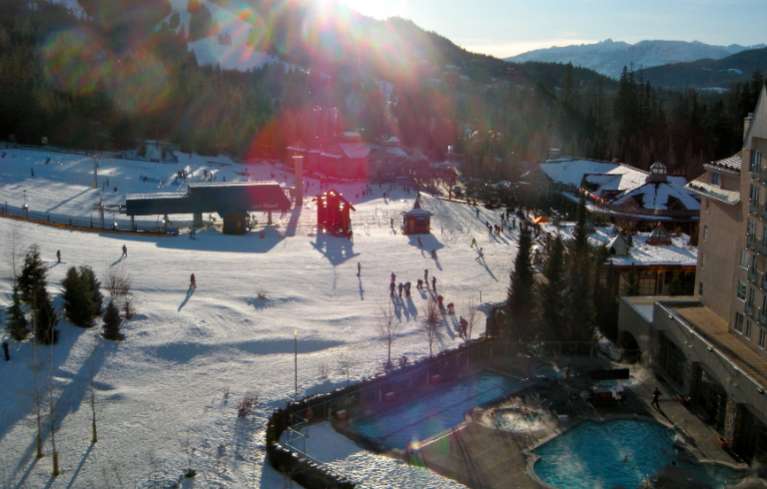
The Fairmont at Whistler is right on the slopes of the ski resort. Photo/LTN file

The Fairmont at Whistler is right on the slopes of the ski resort. Photo/LTN file

And the lodging industry is adapting — at the high and low ends — to meet the diverging needs.

Luxury hotels are catering to financial elites from Russia, China, Brazil or the Middle East who now routinely hop around the world and don’t mind dropping $20,000 a night for a glamorous accommodation.

“High-end travel in the air, on the sea and on land has never been more robust,” says Steve Carvell, an associate dean at Cornell University’s School of Hotel Administration. “There are more people with more concentrated wealth.”

Luxury hotels are arising even at iconic middle-American tourism spots such as Walt Disney World. Four Seasons will open a 444-room resort there in August with 68 suites, including a nine-bedroom royal suite sporting a 1,000 square-foot (93-square-meter) private terrace with views of the park’s nightly fireworks.

During the Great Recession, many resorts dropped “resort and spa” from their name. The idea was to appeal to corporate organizers who didn’t want trips to seem extravagant. Excess now appears back in style.

In November, Four Seasons added the phrase “and residences” to its mountain resorts in Vail, Colorado; Jackson Hole, Wyoming; and Whistler, Canada. It’s pursuing families seeking a residential experience with the pampering of a hotel staff.

The six-bedroom suite in Vail fetches $15,000 a night. You get three living rooms and a movie room. The suite includes a dedicated assistant who can arrange airport transfers, private ski lessons and after-hours shopping.

The return of extravagance reflects one characteristic of the recovery: After paring their vacations along with everyone else during the recession, the wealthy have rebounded with force. Since 2009, hotel spending by the wealthiest 20 percent of Americans has risen about 6 percent, according to inflation-adjusted data from the Bureau of Labor Statistics. The middle 20 percent are still spending nearly 3 percent less.

To stretch their discretionary dollars, middle-income vacationers are fueling one of the industry’s growth areas: “limited service” lodgings. At Marriott’s Fairfield Inn, Hyatt Place and Holiday Inn Express, you get free Wi-Fi and breakfast. But there’s no bellman, concierge or restaurants.

The idea is to draw travelers who feel priced out of full-service hotels. People can still say, “I’m staying at the Marriott,” even if it’s the Fairfield Inn, says Bjorn Hanson, dean of New York University’s hospitality school.

But many people are seeking deeper savings through increasingly popular sites such as Airbnb that arrange for people to rent rooms or apartments. The number of listed accommodations has soared since Airbnb’s founding in 2008 to 550,000 — not far below Hilton’s 685,000 rooms worldwide. Some studies suggest that Airbnb could be cutting into budget hotels’ revenue.

Robin Lynch, 34, of New York City put 14 relatives, including her in-laws, in five Airbnb facilities in Brooklyn for her wedding last year. She estimates she paid roughly $200 a night, on average, compared with the $300 she’d expected for a hotel.

“That amounts to a lot of savings over seven days,” she says.

High unemployment and flat paychecks have spurred more people not only to stay in Airbnb rooms but also to list their own homes.

Eric Worley, 30, and his girlfriend stayed at an Airbnb home in Columbus, Ohio, for $59 a night — half the lowest hotel rate they could find.

“Not only am I saving money, I’m also helping out another person … by giving them some extra money,” he says. “I’d much rather do that than have a corporation overcharge me for what is essentially the same service.”

Sometimes, the cut-rate experience goes further that visitors had expected. Ann Carman, 32, of Yellow Springs, Ohio, had always wanted to stay in an Airstream trailer. When she and her boyfriend visited Austin, Texas, in December 2013, she found one in a backyard. They weren’t alone. Sharing their accommodations were a pig named Fern, two dogs and a rooster.

“I was like, ‘They’ve got a pig in their backyard, we’ve got to stay there,'” she says.

Airbnb hosts can charge less than hotels because they typically don’t pay accommodation taxes or meet safety or disability regulations. That’s sparked grumbling from hotels — and from localities that lose out on tax revenue.

The luxury sphere is also trying to expand its base. Chains such as the Ritz-Carlton and the Mandarin Oriental are pursuing not just the uber-rich but increasingly the merely affluent.

“My father would never have stayed in a luxury hotel,” Hanson says. “He didn’t think he belonged there, even though he might have been able to afford it.”

As more modestly rich travelers have checked in, these hotels have sought to provide more for the ultra-wealthy.

With the recently opened St. Regis Abu Dhabi in the United Arab Emirates, architects considered how much privacy to provide its most sumptuous suites, says Paul James, head of Starwood Hotels and Resorts’ luxury properties.

“Part of the Abu Dhabi conversation was: ‘Where does the helicopter land?'” James says.

More of the wealthiest travelers are now booking on shorter notice — sometime less than a day. The St. Regis Mardavall in Mallorca, Spain, got a call from a 30-something German asking about the local weather. The receptionist reported 85 degrees and blue skies. The traveler booked the largest available suite and said he’d arrive in an hour.

He made the call from his private jet circling above Madrid.

The elite traveler’s experience was precisely what the Rosewood London had in mind when it opened its Grand Manor House Wing in December. The six-bedroom complex offers three living rooms, a library and a dining table for eight. It has its own street entrance and private elevator. For $42,000 a night, guests get some extra bragging rights: Their suite has its own postal code.

Mark Herron, general manager of the Four Seasons Vail, notes that his hotel recently arranged for a guest to feed elephants at a local zoo — even though the zoo was closed.

Then there was a celebrity who had a craving for Kentucky Fried Chicken. The nearest one was 28 miles way.

The hotel first tried to make it but couldn’t match the recipe. “Plus, the celebrity wanted the bucket,” Herron says.

Within an hour, the guest and his 21-person entourage had 10 buckets full of traditional and extra-crispy chicken.

Cornell’s Carvell has a theory about why anyone makes such extravagant requests.

“They’ll sometimes do it just to see if it can be done,” he says. “They don’t want to hear the word no.”