Hot temps can create serious health problems

By Tamara Burns

As an emergency room nurse, I have cared for visitors and locals who experience heat-related illnesses. This includes dehydration, heat exhaustion and heat stroke.

It is important to understand the differences, especially when exercising in an area like Lake Tahoe with higher altitudes and higher temperatures.

Dehydration occurs when the body does not have enough fluid to carry out normal functions. Young children, older adults, and people with chronic illnesses are most at risk. Common causes include intense diarrhea, vomiting, or excessive sweating. Not drinking enough water during hot weather or exercise also may cause dehydration.

Mild to moderate dehydration symptoms include:

· Dry, sticky mouth

· Fatigue

· Feeling thirsty

· Headache

· Not urinating

· Dry skin

· Constipation

· Dizzy/lightheaded.

You may reverse dehydration by drinking more fluids, but severe dehydration requires medical treatment.

Heat exhaustion can occur after a prolonged dehydration period. Triggers that cause the body to overheat include extended time in higher temperatures, and strenuous activity. Symptoms may appear suddenly, or develop over time, particularly after extended periods of exercise.

Possible symptoms of heat exhaustion include:

· Confusion

· Headache

· Muscle cramps

· Nausea

· Pale skin

· Fatigue

· Rapid heartbeat.

Treatment for dehydration and heat exhaustion is straight forward. If you, or anyone else, has mild or moderate symptoms of a heat-related illness, I recommend:

· Drink plenty of fluids (avoid caffeine and alcohol)

· Take a cool shower/bath/sponge bath

· Remove any tight or unnecessary clothing.

If this does not provide relief within an hour, contact a doctor because heat exhaustion can progress to heat stroke.

Heat stroke is the most serious heat injury. If the body’s core reaches 104 degrees, this is a medical emergency. If you suspect someone has heat stroke, also called sunstroke, call 911 immediately. Help cool the patient until paramedics arrive.

The National Athletic Trainers Association released guidelines in June suggesting that heat stroke victims need immediate cooling before going to a hospital.

Symptoms of heat stroke:

· Fainting (may be first sign)

· Nausea

· Altered mental state: person agitated, aggressive, or confused

· Dizziness/lightheadedness

· Red, hot, and dry skin

· Rapid heartbeat

· Muscle weakness, cramps

· Throbbing headache

· Seizures.

The safest approach is prevention and education. In hot weather, drink fluids regularly to help prevent dehydration and heat-related illness. Avoid waiting until you feel thirsty, you may be dehydrated. Monitor fluid loss during hot weather, illness, or exercise, and consume liquids to replace water loss. Sports beverages can replace salts and minerals after you sweat. Wear sun protection, including a brimmed hat, sunglasses, and sunscreen. Take breaks in the shade and wear lightweight, loose-fitting clothing.

Tamara Burns is a registered nurse in the emergency room at Barton Memorial Hospital in South Lake Tahoe.


How to escape unemployment or under-employment

By Richard B. Alman

There’s good news for jobs in the United States.

• In June, the private sector added 288,000 jobs, according to the Bureau of Labor Statistics.

• The unemployment rate has shrunk to 6.1 percent, the lowest since September 2008, when the Great Recession was just starting. The rate has dropped nearly 2 percent since the beginning of 2013.

• The U.S. Payroll to Population employment rate (P2P), as tracked by Gallup, now stands at one of its highest points since tracking began in January 2010.

• More companies, states and cities are either raising their minimum wage or considering it.

Does this mean that we can put our minds to rest regarding jobs and prosperity? Not exactly.

It’s great that reports show improvement, but the good news comes with an asterisk; we need to keep in mind the term that has become so common since 2009 – the “new normal,” which, in part, refers to a lower expectation for prosperity.

Raising the minimum wage, for example, is a step in the right direction for many, but it’s certainly not happening everywhere and it doesn’t guarantee a living wage. California raised its minimum to $9 per hour, but that’s a state with a very high cost of living.

What is the quality of these new jobs, and how many hours do they offer? What about the Catch 22 ensnaring the long-term unemployed, who can’t get work because they don’t have jobs? And where’s the hope for the recent college graduates who are deeply in debt and can’t find the jobs they’ve prepared for?

Here is a blueprint that can help would-be employees in these tough positions.

• One word: volunteer. This is, by far, the best advice I can offer if you feel like you’ve tried everything and it hasn’t worked. Volunteering can pay very high dividends for anyone who is unemployed, under-employed or simply looking for a new career trajectory. It helps current and future employees of any age.

You may not see the payoff right away, but volunteering has many long-term benefits.

• Volunteer in positions that will build your resume. When you volunteer, you can update your skills and resume, which shows potential employers that you’re not lazy. Ask for jobs that use the career skills you have. For instance, if you have a background or degree in marketing, look for opportunities to volunteer in marketing for a nonprofit.

For those with stretches of long-term unemployment on their resume, volunteering is the best way to show future employers that you value staying active and building new skills. And, if you’re a low-wage worker at a fast-food restaurant, for example, you can have a whole new headspace in which to consider your future.

• Work on developing leads. You can be just like everyone else who’s desperate for a decent job or you can be proactive and build professional relationships, which do more than resumes to earn interviews and employment.

The nonprofit sector attracts people who are passionate about a cause, a wide range of associated professionals and, frequently, people who are in high income brackets.

• Where can folks go to volunteer? A half-hour of research online can yield viable options for legit non-profit organizations. Other great sources are hospitals, which tend to work closely with nonprofit organizations. Hospitals also involve a wide variety of professionals.

Once again, if you work well and develop great working relationships with others, you open yourself up to a whole network of possibilities. Who you know can make the difference.

Richard B. Alman is the principal and chief career/employment strategist of Recruiter Media Inc., the world’s largest owner/operator of career websites, which offers recruiters, employers and job seekers a smarter alternative to the impersonal, less-specific “universal” employment websites.


Author to talk about book on early Tahoe residents

Author Mary Jo Sonntag will share “Write, If You Live to Get There Tracing Westward Expansion Through 120 Years of Family Letters” on Aug. 13 at 6pm.

It tells the story of the Phillips family’s westward migration from Vermont to Northern California told through a collection of letters. They talk of the family’s entrepreneurial spirit and how they combined their business and hospitable instincts to build prominent resorts in the Lake Tahoe region at Phillips Station, Rubicon Springs and Meeks Bay.

The free talk is at the South Lake Tahoe Library, 1000 Rufus Allen Blvd.


Breaking up in Internet age adds a layer of pain

By Nick Bilton, New York Times

The last thing I remember was the tears running in rivulets down my cheek as I confirmed that, yes, I did want to delete the picture on my Facebook page.

Several hours later, I, grossly hung over, was awoken by a flash flood of the rising sun through my hotel room. My face looked like Bubble Wrap after I fell asleep (likely with a thud) on the carpeted floor. And a bottle of whiskey, now empty, lay stranded amid a ruin of scrunched tissues, dried from my tears and snot, which sat in a makeshift shrine around me.

For a moment, as I started to piece together where I was, how I got there and what had happened the night before, I looked over at my laptop, which was clammed-open on the floor, and I felt sick to my stomach, not from the hangover but even worse, from what might be waiting to greet me on the Internet.

“Please God, let them be gone,” I thought. “All of them — gone.”

This had all begun a few weeks earlier, when my wife at the time and I decided to get a divorce. Saying goodbye was difficult, but removing a life we had both lived online for the better part of a decade proved to be close to impossible.

The web was littered with pictures, videos, check-ins, likes and tweets of our every moment. Now that online reality show that I produced, directed and starred in was there to remind me in an almost demonic tone that I was single and that those images weren’t going anywhere.

Facebook, Twitter, Instagram and other sites are happy to lure you to post every intricate moment of your relationships online. Yet when things go wrong, these social tombs do nothing to help people easily delete those memories.

If breaking up is hard to do, breaking up in the age of social media is unfathomable.

Read the whole story


Tahoe Tails — Adoptable Pets in South Lake Tahoe

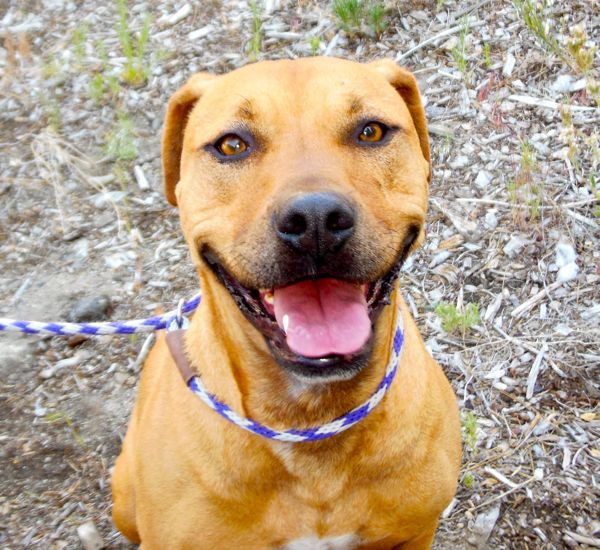
Baxter

Baxter

Baxter is a 4-year-old red pit bull who is very quiet in the shelter.

He is house trained and has great manners. He walks nicely on the leash and is very affectionate, and likes well-mannered children and other dogs.

Baxter is not a fan of cats, and needs to be on a runner when left outside as he can jump over 7-foot high fences. Baxter has been at the Reno Humane Society for almost a year and is hoping that a change of scenery to Tahoe will change his luck in finding a new home.

Baxter is neutered, microchipped, tested for heart worm, and vaccinated. He is at the El Dorado County Animal Services shelter in Meyers, along with many other dogs and cats who are waiting for their new homes. Go to the Tahoe animal shelter’s Facebook page to see photos and descriptions of all pets at the shelter.

Call 530.573.7925 for directions, hours, and other information on adopting a pet.

For spay-neuter assistance for South Tahoe residents, go online.

— Karen Kuentz


Pet insurance complaints prompt legislation

By Daniel Rothberg, Sacramento Bee

Stuart Waldman did all he could to help a dog that had been in his family for eight years. Treating the Anatolian shepherd came at a high cost: $17,000. When Waldman rescued his next dog, he decided, he would buy pet insurance.

“God forbid anything happen again,” the Los Angeles resident and former Assembly aide said. “We wanted to be prepared.”

At least that was his thinking at the time.

“We have been completely unimpressed ever since,” Waldman said. “We get claims rejected constantly because of a pre-existing condition. In fact, we’ve never had a claim that has gone just straight through. They always reject it. We always have to appeal.”

Waldman doesn’t necessarily regret paying for coverage, still hoping his dogs are protected for the “big thing,” but he wishes buyers could more easily access information before enrolling.

While only a sliver of American pet owners hold policies – 1 percent – the niche insurance has become an increasingly tempting option. Veterinary care can be costly, experts say, with more sophisticated medicine on the market and owners who treat their pets like members of the family.

Unlike human health care coverage, insurance for dogs, cats, even hedgehogs, falls into the category of property insurance. Providers have considerable leeway to place coverage limits and can carve out exclusions for pre-existing conditions or hereditary diseases.

Read the whole story


Know investment risk to achieve finance goals

By Haitham “Hutch” Ashoo and Chris Snyder

As people get closer to the age when they hope to retire, traditional wisdom calls for moving into more conservative – safer – investments, such as Treasury bonds and many fixed-income mutual funds.

The problem is, what is safe for one person may not be safe for another, given the amount of money in their portfolios, how their investments are allocated, and what their retirement lifestyle goals are.

Some investors believe certificates of deposit and U.S. Treasury bonds are safe investments because of their backing, but the income they generate is so low, they may not be safe in terms of producing the income you need for 30 years of retirement.

A better approach is to analyze how much investment risk you must assume to achieve what’s important to you.

Your lifestyle goals determine your risk level, and your portfolio should be an allocation of stocks, bonds and cash that correlates directly with the risk level you need to assume.

Here are tips for building a portfolio you likely won’t outlive:

• Don’t aim for earning a certain percentage rate simply because you consider it an acceptable one.

Once you’ve identified your retirement lifestyle wants and needs, you can calculate how much they’ll cost. Subtract your guaranteed income from sources like Social Security and pensions, and the remainder is what your portfolio will need to generate, adjusted for inflation, for the rest of your life.

Setting a goal of earning a 5, 6 or 8 percent return doesn’t work because the markets fluctuate each year and are unpredictable. It’s better to evaluate inflows and outflows during retirement and adjust for inflation. That process helps determine how much money you’ll need at certain points in your life, and the returns you’ll need.

• Market timing and chasing hot managers is not the way to build a lasting, long-term portfolio.

Modern Portfolio Theory, developed by Nobel Prize-winner Harry Markowitz, tells us that 90 percent of the return in your portfolio is based on the allocation of stocks, bonds and cash.

The percentages you allocate between these asset classes is far more important than timing the market or chasing around for the number one fund. Wall Street prefers you spend your time focused on the wrong thing.

• Don’t automatically spend when your portfolio earnings exceed expectations.

When your portfolio is growing at a rate that gives you a good amount of confidence you won’t outlive your money, are you safe to spend more when gains exceed your expectations?

Everyone has different priorities – some may want to increase spending to enhance their lifestyle while others may take the opportunity to lower their risk even more, so they can sleep better at night.

Clients in that situation this year have responded in varying ways. Some have paid down mortgages with the extra money, moved up their plans to retire, traveled more or lowered their portfolio risk.

What you need to remember is that gains can be taken away as quickly as they appeared.

Haitham “Hutch” Ashoo and Chris Snyder are co-founders of Pillar Wealth Management LLC of Walnut Creek, specializing in customized wealth management advice to affluent families.


Weight loss may depend if you are having fun exercising

By Melissa Healy, Los Angeles Times

A study delves into one of the great mysteries of diet, exercise and weight loss: why, when you’ve started a grueling exercise regimen in a bid to shape up, it’s common to gain, not lose weight.

Sure, there’s the old reassurance that muscles weigh more than fat. But when the weight gain comes before any evidence that we’ve changed our body composition significantly, I think we all know we’re kidding ourselves.

“Framing” — or the way we think about — the experience of exercise matters, a trio of researchers at Cornell University’s food psychology lab found. More specifically, they found, it influences not only what we choose to eat after the experience, but how much of it.

When we think of the physical activity we engage in as fun, or at least incidental to fun, we make better food choices. When we frame physical activity as exercise, we’re more likely to choose rewarding foods and to eat more of them, the study found.

Read the whole story


Technology helps those without green thumbs

By Allie Caren, NPR

Don’t have a green thumb but seeking the therapeutic nature of gardening? Want the convenience and satisfaction of growing your own produce at home? Not to worry: All you need is an electrical outlet, a flat surface and some water.

Meet SproutsIO Inc., a “plug-and-play” user-friendly microfarming appliance for people to easily grow fresh fruits and veggies inside their home or office.

Here’s how it works:

The system includes the appliance and seed cartridges. Though the seed options will vary, many of the cartridge choices are things you wouldn’t typically find at the grocery store, like black cherry tomatoes.

Once you pop the seed cartridge into the soil-free system, it recognizes what you’re trying to grow, and sets an automatic profile for how that plant should be grown.

SproutsIO uses hybrid hydroculture technology, meaning that they have combined the two main types of plant-watering: hydroponics, which involves submerging a plant’s roots, and aeroponics, which waters a plant through misting.

Ideally, users will interact with their plants with their mobile device through the SproutsIO app. Users can keep track of their plant’s progress (at home or remotely), adjust the lighting or watering to customize the automated profiles, and also interact with others who are using the system.

Read the whole story


Dan Kerr — 1937-2014

Dan Kerr

Dan Kerr

Avid volunteer and longtime Lake Tahoe resident Daniel Lee Kerr has died.

Mr. Kerr died June 27. He was 76.

He was born in Seattle on Oct. 7, 1937, weighing only 2.2 pounds. As a young boy the family moved to San Diego. That is where his love of surfing developed. He proclaimed himself to be a “beach rat”.

Mr. Kerr would also call himself “Dan the Mountain Man”. In his younger days he was an avid hiker.

Mr. Kerr moved to the South Shore in the late 1970s to take care of his mother after his father passed away. They lived on the top of Kingsbury Grade.

For six years Mr. Kerr was in the Marine Corps, which included serving in Vietnam. He was honorably discharged in 1967 with the rank of sergeant.

He earned a bachelor’s degree in history/philosophy from the University of San Diego and then a master’s in education from the University of Santa Clara.

Mr. Kerr was a teacher and administrator in California and Colorado before moving to Stateline. He put his experience to use as a substitute teacher in Douglas County School District.

Marilyn Richardson with DCSD said, “He was a very sweet man.” With his K-12 substitute license, he could be called on to work at any grade level for any subject. Mostly he preferred to work at the lake schools. He was part of DCSD from 1988-2013.

Volunteering was his vocation. Starting in 1985 he worked with the Barton Auxiliary, including as president of the nonprofit in 2001, 2002, 2004, 2005, 2009 and 2010.

“He loved what he did. He did amazing things for the hospital,” said Judy Cefalu, who worked with Mr. Kerr on the Auxiliary.

Mr. Kerr was instrumental in bringing more workers into The Attic thrift store and changing how things were run there.

Giving blood and coordinating blood drives was another passion of his. Locally, he donated more than 200 pints of blood. The only reason he stopped giving was because of his age.

He served on the Sacramento Blood Source Blood Drive since 1979 and chaired the South Lake Tahoe Community Blood Drive for 35 years.

Mr. Kerr also volunteered for the Sacramento Valley Area Council of Hospital Volunteers for many years as a board member and president.

He joined Sons in Retirement Inc. in 2012 and was “little sir” for the branch.

Mr. Kerr was a devoted Catholic, giving countless hours to Our Lady of Tahoe Church in Zephyr Cove. He never missed Mass.

Survivors include sons Glenn Ciganek and Ronald Ciganek of Florida, and Todd Ciganek of Illinois; daughter Traci Powers of Colorado; cousin Joe Wicker; and eight grandchildren.

Services will be July 24 at 11am at Our Lady of Tahoe on Elks Point Road in Zephyr Cove. Following the service will be a reception in the adjoining Father Bain Hall. Burial will be at 1:30pm at Happy Homestead Cemetery in South Lake Tahoe.

In lieu of flowers, donations may be sent to Barton Memorial Hospital Auxiliary, Attn: Memorial Fund for Dan Kerr, 2170 South St., South Lake Tahoe, CA 96150; BloodSource, Attn: Memorial Fund for Dan Kerr, 10536 Peter A McCuen Blvd., Mather, CA 95655-4128; Our Lady of Tahoe, Attn: Memorial Fund for Dan Kerr, P.O. Box 115, Zephyr Cove, NV 89448.