Essay contest for young Calif. hunters

California Department of Fish and Wildlife and California Wildlife Officer Foundation are co-sponsoring the annual Passing on the Tradition essay contest for young hunters.

The winner will receive a lifetime California hunting license valued at more than $600.

Junior hunting license holders or youths under 16 who earned a hunter education certificate in 2014 are eligible. Contestants need to submit an essay of 500 words or less on what Passing on the Tradition of hunting means to them. Applicants are encouraged to write about conservation, sportsmanship, ethics and the challenge of being a hunter in modern times.

Entries must include the applicant’s name, date of birth and a contact telephone number. Entries should be submitted via email to Lt. John Nores at john.nores@wildlife.ca.gov. All entries must be received before Dec. 19.

For additional information, call Lt. John Nores at 408.591.5174.


Anderson to give talk in S. Lake Tahoe

Meyers resident Jamie Anderson began her work with the Sugar Pine Foundation before her Olympic medal success, helping to plant sugar pine seedlings.

Earlier this year she reconnected with the group.

The Sugar Pine Foundation is a small organization trying to make big changes. The group is dedicated to saving Tahoe’s sugar pines and other white pines from blister rust disease by educating and involving the local community in hands-on forest stewardship.

To help the foundation raise money, will give a talk Nov. 6 about the Sochi Olympic Games. The talk is at Azul Latin Kitchen in South Lake Tahoe from 6-8pm. Cost is $20. Children are free.

The first 30 to arrive will receive a lift ticket to Sierra-at-Tahoe, Anderson’s home resort.


FBI agent part of Lake Tahoe’s fabric

By Kathryn Reed

“When victims and families have a really bad day, that is when our good work starts. That is one of the things that is odd about our career – some of the most challenging and interesting cases are some of the most horrific.”

Chris Campion, retired FBI agent
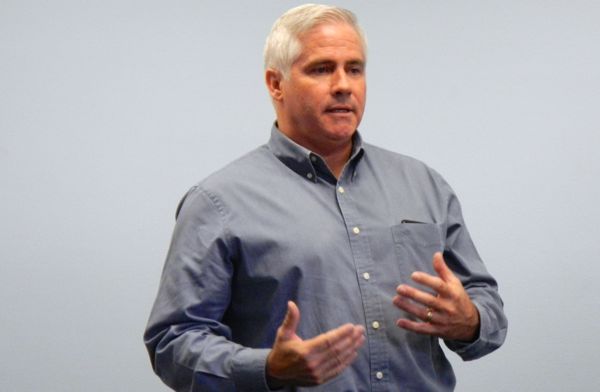
 

Chris Campion spent 25 years with the FBI stationed in South Lake Tahoe. Photo/Kathryn reed

Chris Campion spent 25 years with the FBI stationed in South Lake Tahoe. Photo/Kathryn Reed

Jaycee Lee Dugard is the one case in Chris Campion’s 25-year career that stands out above all the rest. The day she was kidnapped from a Meyers bus stop and 18 years later when she was freed from captivity.

“A lot of people don’t realize all the leads that went on in between … at times we thought we had something,” Campion told Lake Tahoe News. “Right up to the day she came back I was working a lead of a guy in New York who kidnapped five women, some as young as 14, and kept them in an underground bunker. He had ties to Lake Tahoe and Reno.”

Last spring he spoke at a conference for the National Center of Missing and Exploited Children. Terry Probyn, Dugard’s mom, was a speaker, too.

Campion has kept in touch with Dugard during the past five years.

“She is doing amazingly well. You stop and think about it … her spirit and ability to adapt. She is an amazing person and constantly astounds me,” Campion said.

Campion is a walking encyclopedia of crime on the South Shore for the last quarter century. But he is no longer going after the bad guys for the FBI. He retired from the agency – he was close the mandatory retirement age – two months ago.

He isn’t done working, though. He has been hired by a firm to do corporate investigations. It allows him to keep living in South Lake Tahoe, while also getting his passport stamped plenty of times.

And when Campion is in Tahoe he plans to do more of the outdoor activities he never had time for when he wore a badge.

Plenty to do

He attributes the crime rate on the South Shore to the casinos, the nightlife – that they are a draw for criminals, just like they are for the average person.

“People come here to get away from things all the time. They think maybe there is not as much law enforcement and more anonymity,” Campion said.

The office handled cases in five counties from Truckee to Mammoth.

South Lake Tahoe had an FBI office in the 1970s that closed in 1979. Then there was the Harveys’ bombing, and the Coddington and Operation Deep Snow cases.

(Herbert James Coddington, who was in his 20s at the time, murdered two women at his residence in the Tahoe Verde Mobile Home Park on May 16, 1987, and kidnapped and sexually assaulted a 14-year-old and 12-year-old girl. He is sitting on death row. Deep Snow involved the mayor of South Lake Tahoe and about 20 others on drug and money laundering charges.)

Those cases led to the FBI reopening the office in 1989. Chick McDevitt was the sole agent until Campion joined him.

This was Campion’s first assignment after graduating from the academy. While California was on his list of choices, originally he was headed for Fresno. He didn’t regret his destination changed before he ever went to the Central Valley.

Campion’s intention after graduating law school was to join the FBI, but the agency was in a hiring freeze. This led him to work in a large law firm doing civil work. In that time he wrote a brief for the Minnesota Supreme Court.

When the FBI called, though, he was still interested.

“I took a pay cut and never looked back,” Campion said.

FBI policy used to be that agents moved every few years. That changed and allowed Campion to stay in Tahoe. While thoughts of working in a bigger office filled his head in the early days, he realized he got to do more in a smaller office.

“When the phone rings, it is for you,” Campion said. “All the cases we get and worked have a big impact on the community.”

At times he was the only agent, other times there were three in the office; two from the Sacramento division, one from Las Vegas.

Memorable cases

Two cases he is glad to have gotten convictions in are Joseph Nissensohn and Richard Swanson.

The Platz case also sticks out for Campion. He was one of the hostage negotiators. What they didn’t know at the time is the little girl was already dead.

(In 2003, Lisa Platz was found guilty of the 2001 murder of her 9-year-old daughter, Rebbeca Aramburo. The child was found with her throat slashed inside a tent at Campground by the Lake. Platz was sentenced to life in prison. Her boyfriend James Csucsai hanged himself in jail.)

He was able to retire with all the child abduction cases in the area being closed.

But there are three missing person cases he hopes one day will be resolved even though the women involved are presumed dead. They are Donna Lass from the early 1970s who may be linked to the Zodiac killer; Bobette Ulrich who was in her 40s and went missing from South Lake Tahoe in the early 2000s; and Catherine Hatadis, a retired Stateline woman, who disappeared.

The three public corruption cases that stand out for him are Operation Clean Sheets that involved fraud with hotels in the redevelopment area; the arrest of Mary Kay McLanahan, South Lake Tahoe associate city planner, on embezzlement and grand theft charges; and the conviction of Johnny Poland, who was a South Lake Tahoe police officer.

Campion received the Shield of Bravery from the FBI after he was shot at in front of the Safeway in South Lake Tahoe.

Brian Williams, now a lieutenant with the South Lake Tahoe Police Department, was with Campion as they went after the fugitive robber.

“There was a big bullet hole in my brand new car where I would have been sitting if I were still in the car,” Campion said.

And, still, he would not have wanted another career.

“There was never a time I wanted out. It’s a tremendous privilege to be in those situations where you are needed, where you are bringing some harmony back to the community,” Campion said. “I look at it as law enforcement people are healers in a way. They are taking the ripped fabric of society and trying to mend it.”


LTCC names library after founder, trustee

By Diane Lewis

It took the considerable effort of a number of community members, educators and parents to bring Lake Tahoe Community College to life back in 1974. But from the college’s very beginnings to its present-day campus on Al Tahoe, no single person has contributed more to the creation, success and growth of LTCC as longtime board of trustee member Roberta Mason.

To honor her five decades of hard work on behalf of the college and its students, the board of trustees voted in favor of renaming the LTCC library in her honor. It will now be called the Roberta L. Mason Library.

“There is no one single individual that deserves more recognition for the formation of Lake Tahoe Community College,” LTCC President Kindred Murillo said. “Roberta is truly the mother of LTCC, and naming the library for her is just a small token of the deep appreciation the faculty, staff, students, and community have for her for her years of dedication. Roberta is the most amazing woman I have ever had the honor of working with.”

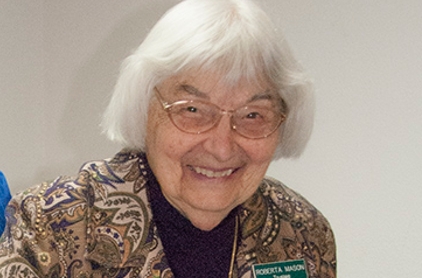
Lake Tahoe Community College's library is being named after Roberta Mason. Photo/Provided

Lake Tahoe Community College’s library is being named after Roberta Mason. Photo/Provided

Mason was one of a small group of citizens who began laying the groundwork for a college in South Lake Tahoe back in 1964. That’s when the Lake Tahoe Unified School District board first appointed a citizens study committee to explore the feasibility of operating a junior college. Friends with an interest in having a college in town reached out to the levelheaded and hard working Mason, who became the committee’s chairwoman.

She and El Dorado County Assistant Superintendent of Schools Hazel Hoak were primarily responsible for getting a community college off the ground – a feat that was finally accomplished on March 5, 1974, when voters approved the formation of the Lake Tahoe Community College District by a 66 percent vote.

“You could rename the college Roberta Mason University, and that would be perfectly appropriate,” Hoak says. “She absolutely deserves all the recognition and praise in the world for making Lake Tahoe Community College happen.”

On the same day the new college district was born, voters also selected a four-member board of trustees to supervise the new college district: Mason, Will Cluff, Donald Swanson, and Fritz Wenck. Mason has served as a trustee ever since, right alongside Wenck.

Staff and faculty at LTCC are quick to point out just how involved and supportive Mason has been over the years. If there is a lecture or concert or art exhibit opening or a theatrical presentation happening on LTCC’s campus, then Mason is pretty much guaranteed to be in attendance.

Library Director Lisa Foley says, “Roberta has honored this library with her presence quite frequently for years, to sit by the fireplace and catch up on news in the Sacramento Bee, or to attend our local author and writers’ series events. You’ve got to admit, the Roberta Mason Library has a catchy ring to it.”

Mason was born and raised in Sacramento. She earned an associate of arts degree from Sacramento Junior College, and a bachelor’s in science in chemistry from UC Berkeley. She worked for Dow Chemical in Pittsburg for about five years after graduating, then met her husband, married, and started a family.

They moved to South Lake Tahoe in 1957 when her husband’s architectural work brought him to the area to prepare for the upcoming Squaw Olympics in 1960.

She has served on a multitude of education-related committees and councils, worked at the El Dorado County Library for a few years, and is also a member of Soroptimist International of South Lake Tahoe and the American Association of University Women.

Mason has two sons who live in town, one teaches at South Tahoe High School. One of Mason’s granddaughters just started teaching kindergarten at Bijou Community School.

“I am deeply honored to have the college’s library named after me,” Mason said. “It means a great deal to me, especially because the library is not just for our students, but for our entire community. Anyone can come in and get a library card and enjoy what the library has to offer. It’s really gratifying to be associated with that.”

After 40 years of service as a board of trustee member, Mason will officially retire at the board’s last meeting of the year on Dec. 9.

Diane Lewis is LTCC’s marketing and communications officer.


‘Great Pumpkin’ still popular TV special

By Frank Pallotta, CNN Money

You’re still a ratings success, Charlie Brown!

The Halloween mainstay “It’s the Great Pumpkin, Charlie Brown!” may be old, but it’s still a ratings treat for ABC. When the 1966 Halloween special was shown in early October this year it brought in 6.28 million viewers for the network.

It’s not just Baby Boomers tuning in to watch. The Peanuts classic brought in 2.1 million viewers between the ages of 18-49, a prized demo for advertisers, and it generated an animated conversation on Twitter.

These numbers may seem small, but it actually beat current shows in its time slot including Fox’s “Hell’s Kitchen” and The CW’s “Arrow.”

Not bad for a special that’s been running since the Johnson administration.

Read the whole story


Dance convention at MontBleu

The 16th annual Mountain Magic Dance Convention is Oc.t 30-Nov. 2 at MontBleu in Stateline.

There will be a mini intensive workshop with dance champion Melissa Rutz, as well as a dance party on Friday and Saturday nights.

West Coast Swing, Hustle, Nightclub Two Step and Country Two Step are some of the dances.

For more info, go online.


Land dispute part of Nev.’s storied past

By Anne Knowles

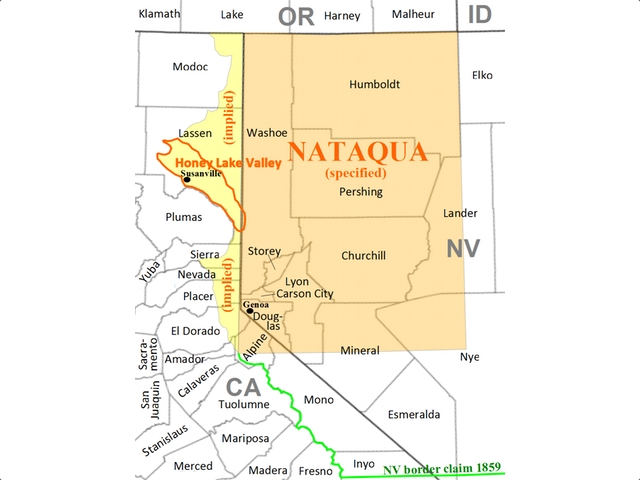
CARSON CITY – Nevada’s statehood, celebrated this sesquicentennial year, came on the heels of a boundary dispute with California that left one person dead and the border that split Lake Tahoe still undefined.

“The battle took place in February 1863 and lasted just four hours,” Jeff Kintop, Nevada state archivist in Carson City, told Lake Tahoe News. “As soon as somebody was hurt, they decided to try something else.”

The Roop County War, fought over Susanville and Honey Lake, ended in an agreement to jointly survey the land, but it was more than 100 years before the line between the two states would be definitively settled.

The problem started on the eve of California statehood in 1849. A convention was convened to write a constitution for land known as Upper California that was acquired during the Mexican-American War. The land stretched as far east as Utah and included the Great Basin, but for various reasons the convention delegates decided to cut California off at the Sierra Nevada mountain range.

The clause inserted into the state Constitution defined the border by latitude and longitude without surveying it. With the Gold Rush on, California, ill defined as it was, became a state in 1850.

Then a few years later California’s ambiguous border came into play around another body of water.

“Susanville up around Honey Lake was first settled in 1854 and the people there basically refused to pay California taxes,” Kintop said. “They tried to create their own territory called Nataqua. There weren’t that many people there and it wasn’t recognized, but they didn’t want to pay taxes to Utah either.”

Nevada and California land disputes continued until 1980.

Nevada and California land disputes continued until 1980.

Nevada became a territory in 1861 and the area known as Nataqua became Roop County, named after Isaac Roop, the founder of Susanville, named after his daughter, and a member of Nevada Territory’s Senate.

“He was serving in the Legislature and didn’t try to organize the county until 1863,” Kintop said. “California said ‘No, we won’t rescind from this boundary.’ But no one knew where the boundary was. They hadn’t surveyed it yet and they thought Susanville was in Nevada and Aurora was in California.”

In 1863, the Roop County justice of the peace, John Ward, issued an injunction against the Plumas County, Calif., justice of the peace. In retaliation, the Plumas County sheriff arrested Roop County’s sheriff and justice of the peace. He was stopped by an armed group of men, according to Kintop, and then organized a posse of about 70 men and headed for Susanville.

“They were met with resistance by Isaac Roop and his men held up in Roop’s cabin, which they named Fort Defiant,” Kintop said. “They started shooting at each other. As soon as one person was killed and two people were wounded, they mutually called a truce.”

To resolve it, they agreed to appoint a surveying team — Surveyor-General J.F. Houghton acting for the state of California and Butler Ives, for the territory of Nevada.

The final report placed Susanville and Honey Lake in California and was accepted by California in April 1864 and Nevada in February 1865, five months after it became a state.

But that didn’t put an end to the bigger border dispute. Surveys continued, including one approved by the U.S. Congress in 1872 and another conducted from 1893-99.

Then in 1977, California sued Nevada. “California was trying to collect taxes on Nevada property holders whose property crossed state lines,” said Kintop.

The U.S. Supreme Court settled the case in 1980, using the 1872 survey done by Alexey Von Schmidt for the boundary from North Lake Tahoe to Oregon and the U.S. Coast and Geodetic Survey started in 1893 for the border from South Lake Tahoe to the Colorado River, leaving Lake Tahoe, as always, split between the two states.

—-

Notes:

Nevada turns 150 on Oct. 31. The state has been having celebrations all year. It culminates Saturday with a parade in Carson City. For more info, go online.


Wedding expo in Stateline

South Lake Tahoe Wedding & Honeymoon Association’s bi-annual Something Blue Wedding Expo is Nov. 16   at Harrah’s Lake Tahoe.

This showcases some of the areas top professionals in this business sector.

“You don’t have to be getting married to attend the expo either; it’s a showcase of a wide variety of services available in our community and it’s open to everyone,” association president Grace Gore-Schorr said in a press release.

Photographers, bakers, event coordinators, musicians, event venues, entertainment options and lodging providers will be on site for the three-hour event. There will be a fashion show highlighting current trends.

The event is from noon-3pm. Tickets are $15. For more info, go online.


Experienced guide to relive Alps experience

Alpenglow Sports presents a unique evening with Dave Miller, technical director and senior guide at Shasta Mountain Guides.

Miller is also the owner of California Alpine Guides and one of only a few Americans to have the coveted international UIAGM/IFMGA mountain guide status. Miller has been climbing and exploring the mountains of California for more than 35 years and has traveled the globe in search of mountain adventure.

The Home Brew Series presented by Alpenglow Sports and Tahoe Art Haus & Cinema is designed to showcase local athletes who live regular lives and accomplish extraordinary feats in the mountains. The series is designed as mellow, free, and community-centric for all ages and abilities.

Miller’s show is the first installment in a three-part series that runs once per month from November through January.

Leaving drought-stricken California behind in the spring of 2014, Miller spent 40 days ski touring across the Alps. While the show is free, attendees are encouraged to arrive early for good seating.

Tahoe Art Haus & Cinema will serve refreshments and participants are encouraged to remain after the show for additional festivities.

The event is Nov. 4 at 7pm. Tahoe Art Haus & Cinema is located at 475 North Lake Blvd., Tahoe City.


WCSO to screen Halloween candy, offers tips

The Washoe County Sheriff’s Office will offer free Halloween candy X-ray screening at the Washoe County Courthouse on the day after Halloween.

Court security staff will screen candy inside the Court Street entrance to the courthouse in Reno from 9am-6:30pm Nov. 1.

The X-ray machine will detect metal objects only. Parents who feel candy has been tampered with should dispose of the candy immediately.

Here are some Halloween safety tips from the sheriff’s department:

  • Never allow a child to trick-or-treat alone.
  • Accompany children to the door of every house they approach.
  • Don’t allow children to enter a home or apartment without adult supervision.
  • Children should not approach strange vehicles.
  • Remain visible. Wear bright clothing or use reflective strips on costumes. Carry a glow stick or flashlight.
  • Obey all traffic and pedestrian regulations. Look both ways before crossing, walk on sidewalks, obey traffic signals and stop signs.
  • Always walk; never run across streets or lawns.
  • Trick or treat at friendly homes. Warn children to stay away from houses that are not well lit.
  • Do not go onto properties that are marked “Keep Out,” “No Trespassing” and/or “No Solicitors Allowed”.
  • Never allow a child to eat Halloween candy until an adult checks it. Dispose of anything that seems to have been tampered with, opened or unwrapped.
  • Instruct children to shout for help and make a scene if anyone tries to grab them or force them into involuntary situations.
  • Children should immediately report anything suspicious to their parents and/or law enforcement.
  • Consider alternatives to trick-or-treating such as community Halloween events or organize your own party at home.
  • Be sure to have a plan for what your child should do if you do become separated.