Throngs descend on Meyers for tree lighting

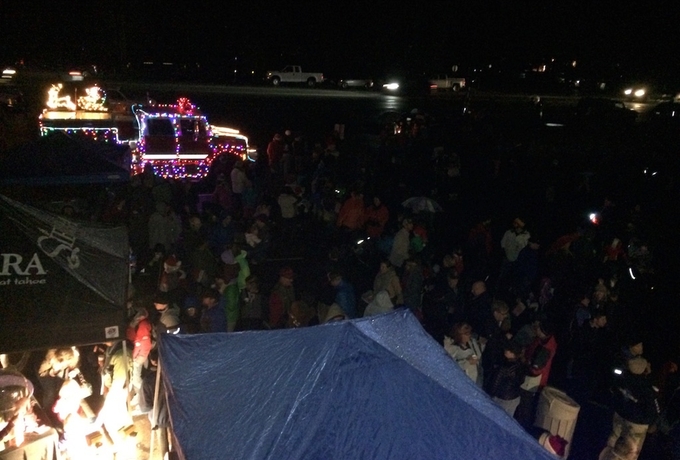
Hundreds of people gather in Meyers Dec 5 for the annual tree lighting. Photo/David Reichel

Hundreds of people gather in Meyers Dec. 5 for the annual tree lighting. Photo/David Reichel

A light sprinkle was not about to keep the nearly 350 people from attending the annual tree lighting in Meyers on Dec. 5.

As tradition would have it, Santa arrived by special carrier Friday night — via CalStar. And once he made his way to the elaborately decorated Lake Valley fire engine, youngsters formed a long line so they could whisper in his ear what they would like to find Christmas morning.

Sue Novasel, El Dorado County District 5 supervisor-elect, kicked off the event. New this year was the South Lake Tahoe Children’s Choral Society and Sierra-at-Tahoe contributing to the festivities. Rise Designs was a returning vendor.

“The CCC really stepped up and made it a great event — very much a community affair,” Kim Wyatt, Meyers Community Foundation board member, told Lake Tahoe News.

ngg_shortcode_0_placeholder (Click on photos to enlarge.)

— Lake Tahoe News staff report


Ex-Heavenly chief counting down to retirement

Blaise Carrig at Keystone, one of Vail Resorts 11 ski areas, that he is in charge of. Photo/Vail Resorts/Jack Affleck

Blaise Carrig at Keystone, one of the 11 Vail Resorts ski areas he oversees. Photo/Vail Resorts/Jack Afflec

By Susan Wood

Blaise Carrig, the skiing guru who led Heavenly Mountain Resort during a critical crossroads, is forging a new path of greener pastures – with a little white stuff mixed in for recreation sake.

That’s because soon skiing will no longer involve business.

At 63, Carrig will relinquish his post as president of Vail Resorts’ mountain division next August to work as a senior advisor. Patricia Campbell, CEO for Vail’s Breckenridge Ski Resort in Colorado, will replace him.

On the horizon for Carrig is full retirement in three years.

“I’ll miss the people. I love being around the youthful energy,” Carrig told Lake Tahoe News by phone.

He added the “juice of the business” in building chairlifts and the “energy of putting out great products.”

Waxing poetic, the Boulder resident talks about skiing as if it transcends itself. “I now love to ski the groomers as much as the moguls,” Carrig said. “And I still love steep, deep powder.”

Carrig is a beautiful skier.

“It’s incredibly compelling to be outside in the mountains. It strikes a sense of awe – to move against gravity is as close to flying as you can get,” Carrig said.

It’s the spirituality of “being in the mountains” that fills him most. “Especially Heavenly, it’s an incredibly spiritual place. To see that lake,” he said in the awe most avid Tahoe recreationalists have shared through the years.

That stark contrast of white to blue resembles a painting. That is a hobby Carrig plans to do more of in retirement, along with traveling, skiing, paddleboarding and cycling – as well as taking an excursion to Italy. In the winter, he’d like to visit various ski areas with no job to do.

When Carrig was the Heavenly chief from 2002-10, he would often get out of the office and go out on a ski to check on how his workers and the conditions were holding up. His tenure at Heavenly became one in which customer service, above all, took precedence.

Carrig started out at Sugarbush in Vermont as a ski patroller – with no notion of a ski career.

“When I started, I just wanted to pay rent and buy beer. I thought: ‘Wow, they’re paying me to ski’,” he quipped, further identifying with the ski bum label. “It’s been a great career.”

He left Sugarbush in 1997 and hasn’t returned to ski there since. In that time the ski industry has changed immensely.

“I think definitely there was a period of time when it became much more of a business. Back then you worked for the guy who founded the ski area. Now it’s more polished, more service. The ski vacation involves good lodging, good dining,” he explained.

With climate change being on the forefront of how the ski areas deal with a lack of snow, Carrig nonetheless sees a silver lining.

“I think climate change for sure has made the weather more erratic with storms more extreme. But there’s still skiing between Thanksgiving to Easter,” he said, pointing to snowmaking as having a huge impact on the survival of Western resorts such as Heavenly and Northstar. In Colorado the natural snow still “carries the day.”

He sees the industry’s future as bright.

He mentioned the evolution of ski technology as contributing to skiing’s steady market at least for the large Baby Boomer demographic. Think shaped, fatty and twin tip skis.

“One of the biggest things I’ve seen a change in is the grooming. It’s nothing like the ’70s. Now we have these high-end tillers that allow Baby Boomers to ski longer,” he said. The new grooming machines make the ski experience smoother and easier on the joints.

It appears Carrig’s careful observations will eventually be missed by those he dealt with at Vail Resorts.

CEO Rob Katz commended Carrig’s vision in the Denver Business Journal but admitted he “will miss his engagement as president.” Katz further expressed relief Carrig would at least stay on for a few years as a senior advisor.

One of Carrig’s closest peers also gave him a nod of appreciation.

“I think he’s had one of the most impressive careers in the ski industry. He’s been a key leader in the transformation of our company,” said Bill Rock, who’s undergoing a change himself. The former head of Northstar went to Utah this fall to run the newly acquired Park City Mountain Resort.

Rock identified the safety and service programs, along with key capital projects, as noteworthy initiatives Carrig has spearheaded for Vail. Carrig and Rock teamed up to advance the $30 million capital improvement program at Northstar in 2011.

“(It) allowed me to see his experience and insight in action, and it was fun to work with him directly on something so big,” Rock told Lake Tahoe News.

But all work and no play? After all, it is a recreation business.

“My favorite memories of working with Blaise are any time I got the chance to ski with him. I always learned something, and it’s amazing to see his incredible passion, experience and love for the business come through,” Rock said.
Free radon kits available to Nevadans

Free radon test kits are available now through Feb. 28 at University of Nevada Cooperative Extension offices and partner offices statewide.

Nevadans are encouraged to test their homes for this radioactive, colorless gas that comes from the ground, accumulates in homes and can cause lung cancer.

The Environmental Protection Agency estimates 21,000 Americans die each year from radon-caused lung cancer, killing more people than secondhand smoke, drunken driving, falls in the home, drowning or house fires.

A simple three-day test can determine if a house has a radon problem, and winter is an ideal time to test a home for radon.

In Nevada, one in four Nevada homes tested found radon concentrations at or above the EPA action level. According to experts, living in a home with radon concentrations at the action level poses as much risk of developing lung cancer as smoking half a pack of cigarettes a day. If radon problems are found, they can be fixed.

For more information, call 888.723.6610.


7.6% in U.S. are depressed, few seek treatment

By Karen Kaplan, Los Angeles Times

About 1 in 13 Americans was suffering from depression at some point between 2009 and 2012, yet only 35 percent of people with severe depression and 20 percent of those with moderate depression said they had sought help from a mental health professional, according to a report from the U.S. Centers for Disease Control and Prevention.

That’s troubling, the report authors write, because therapy combined with medication is “the most effective treatment for depression, especially for severe depression.” Drugs might be prescribed by a primary care doctor, but only a mental health specialist would conduct the type of therapy needed to get well.

The report, from the CDC’s National Center for Health Statistics, offers a snapshot of the nation’s mental state during recent years.

Read the whole story


Retirement tools for the new year

By Carl Edwards

Wow, what an amazing market ride over the last few years. Running on tracks laid by an unprecedented Federal Reserve monetary easing program, the market has once again run to new all-time highs and appears to still have some steam. Or does it?

While no one really knows the answer to this, it is important to remember history as a guide, and to think about the future — your future. It wasn’t all that long ago that the world’s financial system was shaken to its core, leaving many retirees running for shelter from the Ebola-like symptoms displayed by world financial systems. Fear over which institution or country would next display the almost certain deadly symptoms ran rampant.

I am certainly not echoing the calls of the past and screaming it’s time to get your guns and gold. I am, however, pointing out to consumers the recent and vivid reminders of the importance to get back to the basics with your financial planning this New Year. If we fail to remember the past, we repeat it. You have worked too hard preparing for this time in your life.

Let’s review three vital elements you should implement in your retirement plan this New Year.

• Get your annual financial check-up. How can we possibly forget to do this? Annual check-ups are the No. 1 preventative care tool at our disposal. While many individuals should be meeting more regularly with their financial advisor, everyone should have at least the minimum of an annual visit. Problems creep up and this is often the best way to catch them before it is too late.

• Don’t forget to diversify. Are you working with a broker who always wants to sell you mutual funds full of stocks and bonds? Does your annuity guy think every dime you have should be stuffed into insurance products? The reality is they are probably both wrong. Find an advisor this year who knows the benefits of each of these products, but who also knows the value of how they work together. Diversification is important and it may include each of these products along with other assets such as individual stocks and bonds, certificates of deposit (structured and fixed), business development companies, real estate investment trusts, precious metals, and numerous other investments.

• Rebalance, rebalance, rebalance. With the great equity run up we have encountered since the lows of March 2009, it is vital to remember that we must continue to evaluate our investment portfolios. While equity portfolios have risen significantly since that time, other areas of our portfolio may not have fared so well, leaving our risk levels in need of adjustment. It is often a good idea to capture some of those hard-earned gains. You never know — the next major pullback could be just around the corner. Be prudent, not greedy.

Carl Edwards is a chartered financial consultant and is the owner of C.E. Wealth Group.


Important to teach kids how to save money

By C. Ernie Nivens

For most children in America, the holiday season is a wonderful time, with tasty treats, vacation from school, and plenty of toys and gifts that seem to magically appear.

Of course, parents know it’s not magic — those gifts cost money. Not having to worry about that part of it is a gift found only in childhood, but young children do need to learn to appreciate the value of a dollar.

As a parent, grandparent and veteran financial advisor, I can talk all day about what I can do for an individual’s specific needs, but so much of it comes down to the basics of how we’re raised.

When children are spoiled and never taught the value of money, parents have neglected to empower them with the ability to budget and prioritize resources.

A percentage of money children earn or receive as gifts this holiday season should be put aside for at least one of four pockets.

• Pocket 1: College savings. College graduates in the class of 2014 share a sad historical fact – they’re the most indebted class ever. The average graduate with student-loan debt has to pay back about $33,000, according to an analysis of government data published in Edvisors, a group of websites about planning and paying for college.

Hopefully, we’ll have a better handle as a country on student debt in the future. Teaching children the importance of this pocket from a young age is important. They’ll understand the concept and need for establishing a budget for their future betterment.

• Pocket 2: Fun and games: Dream Pocket. Children need to know that the entertainment they consume on a regular basis – including TV, movies, Internet and video games – isn’t free. Having them help pay for a video game or a summer trip is a direct and concrete way for a child to experience the necessity of giving up something in order to gain something they’d like to have. It also helps them become more discerning about requests for toys, games and outings.

• Pocket 3: God Pocket. While the ability to save money is a virtue to a child’s future well-being, giving part of one’s savings to a higher purpose is a way of acting on their values. Giving donations to a church, charity or to buy a friend a treat teaches children that money isn’t the ultimate goal in life.

• Pocket 4: Saving for the future. Can a child always predict her money needs to the last dollar? Can adults? Of course not, and that’s why a pocket for general expenses is useful. It could be that a charitable effort takes off within the community, which could require travel. Or, she may accidentally break a window while playing catch with her friend. However the money may be needed for future use, it’s great to be able to supplement the other pockets with savings.

C. Ernie Nivens retired from the ministry in 1990 and began his career as a financial professional. 


Festival full of extraordinary trees

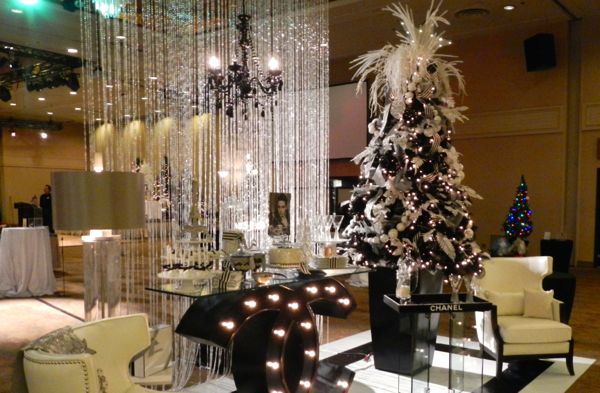
Best in show for the 6th annual Festival of Trees and Lights goes to the Chanel tree. Photos/Kathryn Reed

Best in show for the 6th annual Festival of Trees and Lights goes to the Chanel tree. Photos/Kathryn Reed

Judges had no trouble determining the most elegant designer tree gracing the convention center of Harrah’s Lake Tahoe. Unanimously they selected the Chanel tree.

It also received best in show for the sixth annual Festival of Trees and Lights. (Designer: Katie Long, Thran’s Flowers.)

Every year Barton Foundation puts out a call to designers to decorate a tree and then to continue the theme in the surrounding area. A multitude of gifts come with each tree. They are then auctioned off at the annual gala.

Each year all proceeds benefit a different component of Barton Health, with this year’s recipient being Barton Hospice.

The event runs through Dec. 7.

Even those who are not big into Christmas or don’t even celebrate the holiday are apt to find the spectacle engaging. The Chanel tree – all done in black and white – is not traditional by any means – especially since the tree is black. While the tree itself is exquisite, all the accouterments make it outstanding.

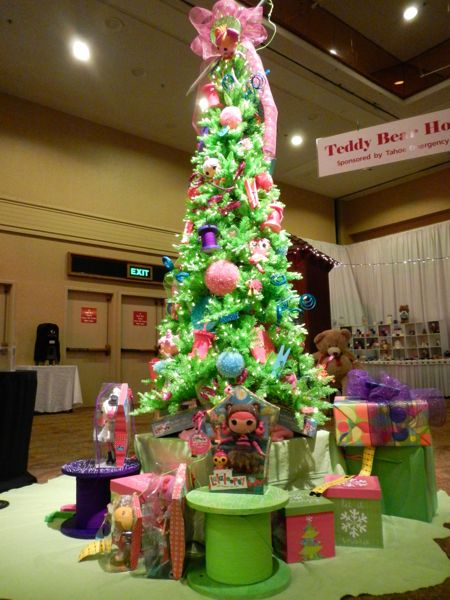
The Sew Wonderful tree is an unnatural color green.

Sew Wonderful is an unnatural  green color.

But the tree that was rewarded for thinking outside the box was Sew Wonderful. (Designer: Caryn Hughes.) It’s unique and garish at the same time.

The best interpretation of the theme went to Moulin Rouge. (Designer: The Merry Widows and The Gallant Widowers.) The designer even created a mechanical swing with a showgirl on it. Best tabletop designer tree went to Out of this World. (Designer: Katie Long, Thran’s Flowers.)

South Shore schools competed against each other with trees that size-wise were in between the two designer categories. Awarded the best handcrafted tree was the magnet school, Sierra House Elementary won for best of theme, and Bijou Community School won for most creative.

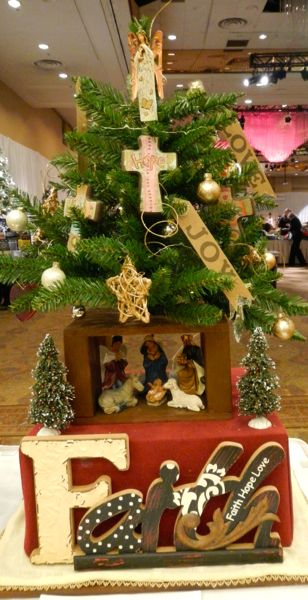
Judges like the Faith, Love and Hope's authenticity.

Judges like the Faith, Love and Hope’s authenticity.

The best Barton tree was Faith, Love and Hope. (Designer: Community Health Center.) The Barton wreath winner is Silver and White. (Designer: ICU.)

Judges were from Lake Tahoe News, Lake Tahoe Television, Lake Tahoe South Shore Chamber of Commerce, Lake Tahoe Community College and Edgewood Tahoe.

For more info about the festival, go online.

— Kathryn Reed


Road beat: Miata keeps its quality for 25 years

Miata retains its appeal 20 years after its introduction. Photos/Larry Weitzman

Miata retains its appeal 25 years after its introduction. Photos/Larry Weitzman

By Larry Weitzman

When the first Miata hit our shores in 1990, dealers were commanding price premiums of thousands of dollars. The rumor was they were only going to make 3,000. Yeah, sure. That was then and Miata production is now in its 25-year life with more than 900,000 built, the most produced two-seat sports car ever.

It is also the most raced brand ever. More Mazdas are raced every weekend that any other brand in the world, and the Miata is probably No. 1. One of the best Miata racers and preparer of Miata race cars, Mark Hoover, lives right here in El Dorado County. His shop European Performance is based in Cameron Park . They are amazing cars that just don’t die; offering perhaps the most bang for the buck than any other roadster.

Lately Miatas have been going a bit upscale coming with more bells and whistles and even a power retractable hardtop. My 2015 Miata was a Grand Touring edition, six-speed manual, with that very cool power retractable hardtop. It’s a great addition while only adding about 82 pounds. With the manual, its avoir du pois is still only 2,593 pounds.

Specifications Price $24,515 to about $33,000 Engine 2.0L DOHC, 16 valve inline four 167 hp @ 7,000 rpm 140 lbs.-ft. of torque @ 5,000 rpm Redline 7,200 rpm Transmission Five Speed manual Six speed close ratio manual Six speed automatic Configuration Longitudinal mounted front engine/rear wheel drive Dimensions Wheelbase 91.7 inches Length 157.3 inches Width 67.7 inches Height	49.4   inches Ground clearance 4.6 inches Track (f/r) 58.7/58.9 inches Weight 2,511/2,593 (PRHT) pounds Weight distribution (f/r) 51/49 percent Fuel Capacity 12.7 gallons Trunk Capacity 5.3 cubic feet Turning Circle 30.8 feet, curb to curb Steering lock to lock 2.7 turns Wheels (std/opt) 16X6.5/17X7 inch alloys Tires (std//opt) 205/50X16//205/45X17 Co-efficient of drag 0.32 Performance 0-60 6.53 seconds 50-70 3.72 seconds 50-70 uphill 5.48 seconds Top Speed Electronically limited to a speed with which if the Miata had wings it would fly Fuel Economy EPA 21/28 mpg city/highway.  Expect 27-28 mpg in rural mix driving, better than 34 mpg on the highway at legal speeds.

Specifications
Price $24,515 to about $33,000
Engine
2.0L DOHC, 16 valve inline four 167 hp at 7,000 rpm
140 lbs.-ft. of torque at 5,000 rpm
Redline 7,200 rpm
Transmission
Five speed manual
Six speed close ratio manual
Six speed automatic
Configuration
Longitudinal mounted front engine/rear wheel drive
Dimensions
Wheelbase 91.7 inches
Length 157.3 inches
Width 67.7 inches
Height 49.4 inches
Ground clearance 4.6 inches
Track (f/r) 58.7/58.9 inches
Weight 2,511/2,593 (PRHT) pounds
Weight distribution (f/r) 51/49 percent
Fuel Capacity 12.7 gallons
Trunk Capacity 5.3 cubic feet
Turning Circle 30.8 feet, curb to curb
Steering lock to lock 2.7 turns
Wheels (std/opt) 16X6.5/17X7 inch alloys
Tires (std//opt) 205/50X16//205/45X17
Co-efficient of drag 0.32
Performance
0-60 6.53 seconds
50-70 3.72 seconds
50-70 uphill 5.48 seconds
Top Speed Electronically limited to a speed with which if the Miata had wings it would fly
Fuel Economy EPA 21/28 mpg city/highway. Expect 27-28 mpg in rural mix driving, better than 34 mpg on the highway at legal speeds.

Styling has changed little. The original shape from 1990 is retained, but some of the slightly swoopy lines are gone from the later generations, but overall it still has a British feel and that is good. Coefficient of drag is decent at 0.32.

Miata also retains its miniscule size. Its wheelbase is only 92 inches with an overall length of just 157 inches. But it is relatively wide at almost 68 inches; meaning the track is also wide at 59 inches while standing only 49-inches tall.

Under the low hood, which has the Mazda symbol created in the metal, is an oversquare 2.0L inline four-cylinder powerhouse knocking down a 167 hp at 7,000 rpm (redline is a high 7,200 rpm) and 140 pounds of twist at a 5,000 rpm. But don’t think that because it makes its power at higher rpms that this is a peaky engine, it’s not. If anything, it has a flexible power curve allowing rpms to drop to 2,000 in sixth gear and still accelerate away without shifting the six-speeder snick-snick manual down a gear or three. In lower gears with 2,000 rpm on the clock acceleration is rather smart.

Quantifying the Miata’s performance shows that maximum performance 0-60 mph run stop the chrondex in 6.53 seconds, almost exactly the numbers of most magazines and that’s with two shifts. Using only third gear in 50-70 mph runs, the Miata on level ground will require 3.72 seconds and the same run up a 6-7 percent grade only slows that time to 5.48 seconds. In town it is easy to use fifth gear in traffic below 40 mph. It is a beautiful engine, smooth, powerful and flexible. If you don’t like shifting, there is a six-speed automatic that is hooked up to the same engine with a revised power curve that makes 158 hp at 6,700, but it should give you very similar performance with a little less effort and fun.

EPA ratings show the Mazda may use some gas at 21/28/24 mpg in city/highway/combined driving. However Road Beat testing says otherwise. Highway testing reflected a 34.9 mpg average in a two way 70 mph run and overall in 300 plus miles the average fluctuated between 27.5 and 28.4 mpg. The worst fuel economy recorded was 22-24 mpg which was during the extensively performance testing. Maybe the EPA did its test during a racetrack evaluation? Driven reasonably, it should do better than the EPA numbers. The secret is to short shift below 4,000 rpm and get into sixth gear at 45 mph when not driving aggressively.

Most drivers who buy a Miata do so because it is fun to drive as it has incredible handling. That was confirmed during testing. Instead of MacPherson struts up front, Miata gets a more expensive and sophisticated double wishbone set up as used in most race cars. Out back is a multilink system and Bilstein twin tube shocks are in all four corners. Even the steering is a hydraulic rack for added feel and feedback. Weight distribution is a perfect 51/49 percent front and rear. My tester had the $800 upgraded suspension package which was set up a bit firmer, had those Bilsteins and a limited slip diff. Buy it if you can.

All of the above adds up to one of the best handling cars in production. It goes around corners as good or better than any car I ever driven with feedback that lets you know when you approach its limits, which are hard to reach. Pushed hard you can actually feel the Mazda rotate under complete control with perfect turn-in and feedback. It doesn’t get much better. Even though the Miata has added some weight over the years, it hasn’t disturbed its perfect handling.

Ride quality is firm. On smooth roads with mild undulations it is wonderful, but harsher bumps, dips and potholes are not nearly as forgiving. You won’t break any teeth, but you will locate a road’s gross imperfections better than a GPS which my tester didn’t have. Even with the power solid hardtop and windows up, there is some road noise. Asphalt is quieter than concrete. The engine, which spins a rather quick 3,200 at 70 mph, is pretty quiet, although it has a nice bark from the duals when you are on the gas.

A two-seater with limited trunk space.

A two-seater with limited trunk space.

Braking is nearly instantaneous from the four wheel discs halting forward progress from 40 mph in about 37 feet. Miata comes with all the braking and safety acronyms (ABS, EBD, TCS DSC, TPMS) and more. Being a power hardtop there are only four airbags (front and side) and may you never use them.

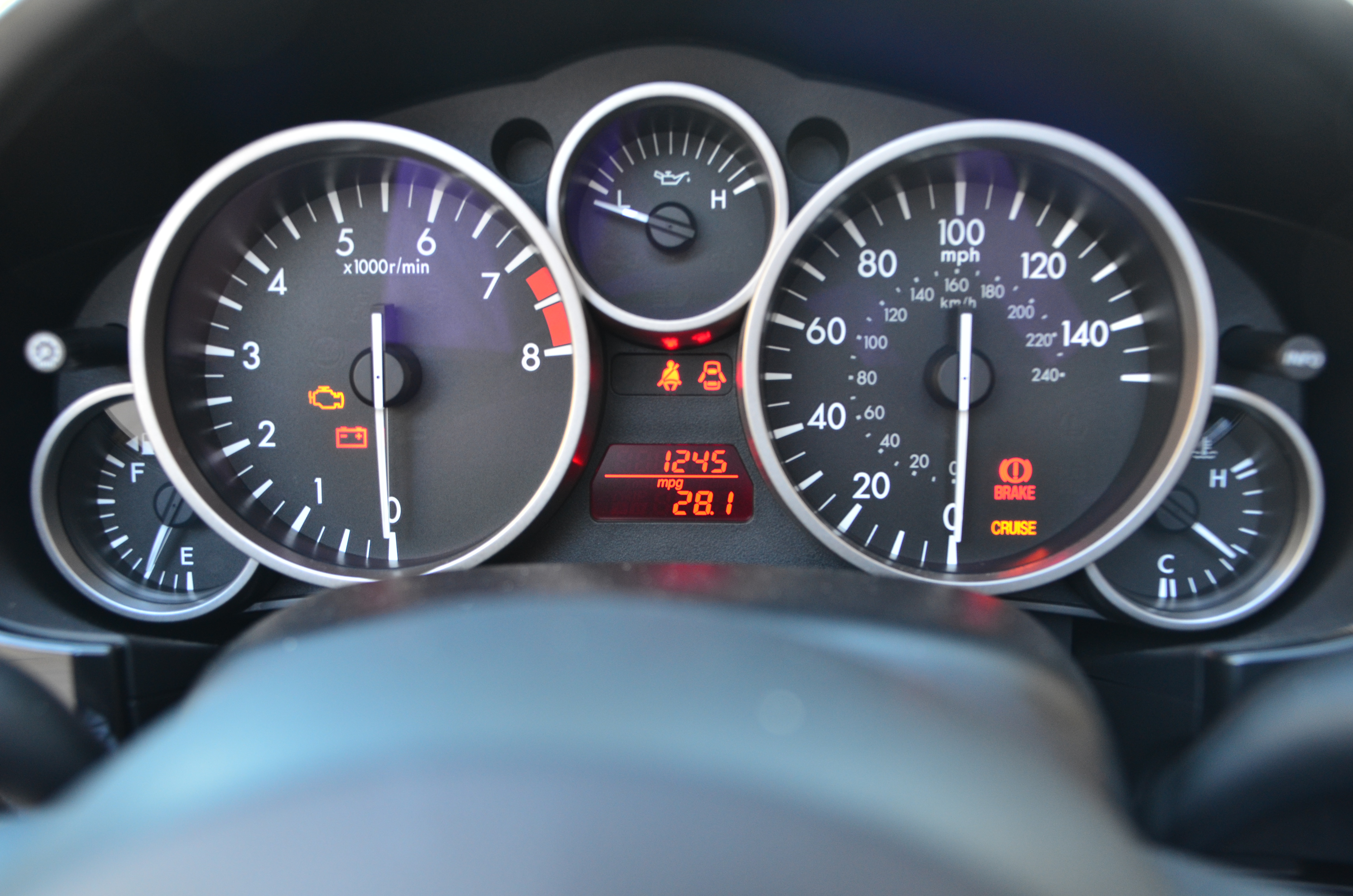
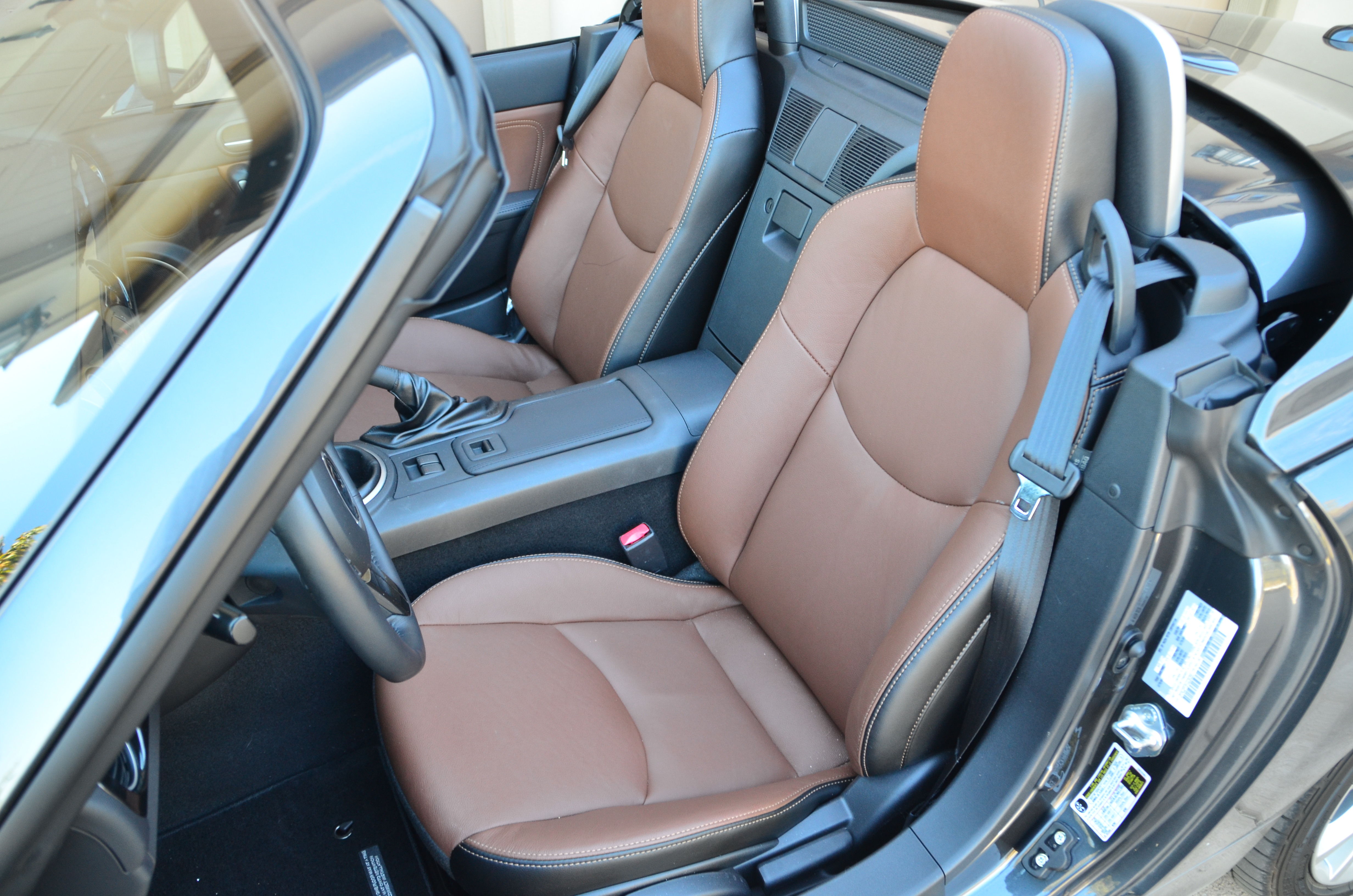
Inside is a very attractive interior. In my tester it was dark mocha heated leather and the seats were on the firm side, but supportive and comfortable. The instrument panel was wonderful, all business, everything you need nothing you don’t (meaning big tach and speedo) and it even had a trip computer. Also wonderful was the vertical stack with easy to use controls for the HVAC and sound system. That is appreciated by real drivers. While the trunk is only 5.3 cubic feet, it is well shaped.

Pricing for an MX-5 Sport starts at $23,720, a car that with a few mods you could track on Sunday and drive to work on Monday. My tester, the Grand Touring with a power hardtop, stickered for $29,450, plus the boat from Japan ($795). It also had besides the aforementioned suspension package, the premium package that added keyless entry, xenon headlights, bluethooth, theft and more ($1,300). With a couple of other items the total sticker shock was $32,935. The base Sport model looks mighty inviting, but if you want things like cruise, power locks and some other upgrades opt for the Club at about $3K more than the Sport.

Larry Weitzman has been into cars since he was 5 years old. At 8 he could recite from memory the hp of every car made in the U.S. He has put in thousands of laps on racetracks all over the Western United States.


’12 Days of Christmas’ items cost more than $116K

The cost of six geese-a-laying spiked considerably this year, while most of the items in the carol “The Twelve Days of Christmas,” saw little to no increase, according to the 31st annual PNC Wealth Management Christmas Price Index.

A set of gifts in each verse of the song would set you back $27,673 in stores, an increase of less than $300 — or 1 percent — from last year. But shoppers turning to the Internet would see a bigger bump of about 8 percent over last year’s online prices, bringing the set of gifts in each verse to $42,959. Buyers looking to purchase all the items each time they were mentioned in the song — 364 that is — would spend $116,273, a modest 1.4 percent increase from a year ago.

PNC’s sources for the Christmas Price Index include retailers, the National Aviary in Pittsburgh, Philadelphia-based PHILADANCO and the Pennsylvania Ballet Company.

Here is a look at the full set of prices from PNC Wealth Management:

Partridge, $20; last year: $15
Pear tree, $188; last year: $184
Two turtle doves, $125; last year: same
Three French hens, $181; last year: $165
Four calling birds (canaries), $600; last year: same
Five gold rings, $750; last year: same
Six geese-a-laying, $360; last year: $210
Seven swans a-swimming, $7,000; last year: same
Eight maids a-milking, $58; last year: same
Nine ladies dancing (per performance), $7,553; last year: same
10 lords a-leaping (per performance), $5,348; last year: $5,243
11 pipers piping (per performance), $2,635; last year: same
12 drummers drumming (per performance), $2,855; last year: same.

— Associated Press


USPS expects record number of parcels

The U.S. Postal Service is predicting this will be a record parcel season, with about 470 million packages delivered this holiday season, up about 12 percent from last year.

As Cyber Monday and online shopping in general grows, it means those items have to be shipped in some manner. Personal shipping also increases this time of year.

Facts about this holiday season and the Postal Service:

· USPS will process 15.5 billion cards, letters and packages this holiday season.

· In many large cities, delivery will be seven days a week.

· In some locations, there will be seven-day-a-week retail service.

· Three million people will use usps.com to print their postage and leave their parcel for their carrier to pick up.

Dec. 15 is expected to be the busiest retail day, while Dec. 17 should be the busiest delivery day.

Shipping deadlines to ensure delivery by Dec. 25:

Dec. 2 — Priority mail international
Dec. 10 — APO/FPO military priority mail and first-class mail
Dec. 15 – Standard post (ground)
Dec. 17 – Military priority mail express
Dec. 20 — First-class letters and priority packages
Dec. 23 — Domestic priority mail express.