Road beat: Mazda makes a true minivan
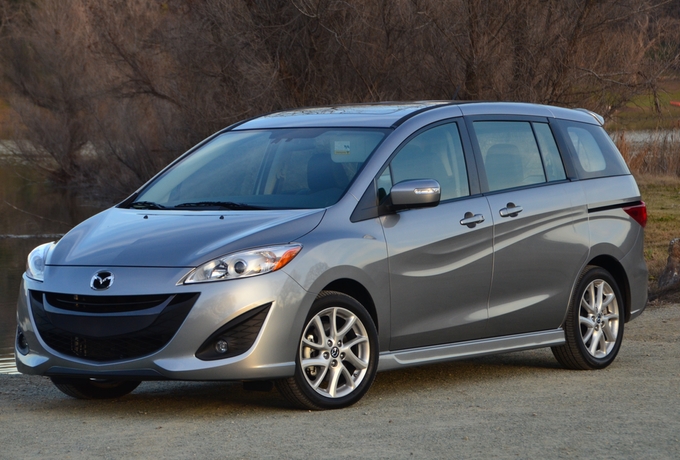
The Mazda5 is the last true mini van on the market. Photos/Larry Weitzman

The Mazda5 is the last true minivan on the market. Photos/Larry Weitzman

By Larry Weitzman

In this day and age, about every minivan in the U.S. market has a footprint the size of a full-size SUV. Length and width average about 202 inches and about 78 inches, respectively. They even stand about 68-inches tall or more. Who’s kidding who, the age of the minivan is gone, except for one and that is the Mazda5.

Still with three reasonably roomy rows of seats, the Mazda5 is a true minivan with a length of just 180 inches, a width of 69 inches and a shorter height of 64 inches. That’s about the footprint of your average compact car. And even better is that the Mazda5 splits the wind with a co-efficient of drag of just 0.30.
Specifications Price $22,060 to about $27,000 Engine 2.5L DOHC, 2.5L 16 valve inline four cylinder 157 hp @ 6,000 163 lb-ft of torque @ 4,000 rpm Transmission Five speed automatic Configuration Front engine/front wheel drive Dimensions Wheelbase 108.3 inches Length 180.5 inches Width 68.9 inches Height 63.6 inches Track (f/r) 60.2/59.8 inches Ground clearance 5.5 inches Weight 3,457 pounds Weight distribution (f/r) 56/44 percent GVWR 4,685 pounds Fuel Capacity 15.9 gallons Cargo capacity (third row folded flat) 44.4 cubic feet Steering lock to lock 2.9 turns Turning circle 36.7 feet Wheels 17X6.5 inch alloys Tires 205/50X17 All-season Performance 0-60 mph 8.48 seconds 50-70 mph level highway 5.02 seconds 50-70 mph up six percent grade 8.96 seconds Top speed Do they race Minivans yet? They already race lawn mowers Fuel economy 21/28/24 mpg city/highway/combined.  Expect 25-26 mpg in rural driving and 31-32 mpg on the highway at legal speeds.

Specifications
Price $22,060 to about $27,000
Engine 2.5L DOHC, 2.5L 16 valve inline four cylinder 157 hp @ 6,000
163 lb-ft of torque @ 4,000 rpm
Transmission
Five speed automatic
Configuration
Front engine/front wheel drive
Dimensions
Wheelbase 108.3 inches
Length 180.5 inches
Width 68.9 inches
Height 63.6 inches
Track (f/r) 60.2/59.8 inches
Ground clearance 5.5 inches
Weight 3,457 pounds
Weight distribution (f/r) 56/44 percent
GVWR 4,685 pounds
Fuel Capacity 15.9 gallons
Cargo capacity (third row folded flat) 44.4 cubic feet
Steering lock to lock 2.9 turns
Turning circle 36.7 feet
Wheels 17X6.5 inch alloys
Tires 205/50X17 All-season
Performance
0-60 mph 8.48 seconds
50-70 mph level highway 5.02 seconds
50-70 mph up six percent grade 8.96 seconds
Top speed Do they race Minivans yet? They already race lawn mowers
Fuel economy 21/28/24 mpg city/highway/combined. Expect 25-26 mpg in rural driving and 31-32 mpg on the highway at legal speeds.

That remarkably low CD becomes evident in examining the Mazda5’s slick profile. Watch how you drive it as you could get arrested for cheating, cheating the wind. Its shape and proportions are just right with the main standout detail being the Nagare flow waves created in its three subtle character lines along its flanks. Other impressive details can be seen in the headlights and front fenders. Remember when discussing looks, we are dealing with a minivan, not a Mazda6, which is perhaps the best looking midsize sedan currently on the market. No, I wasn’t paid to say that, it’s an empirical fact.

Lifting the rather long hood will expose a Mazda 2.5L inline, DOHC, 16 valve four cylinder engine that is used in the Mazda6 and some Mazda3s. However in the 5 it doesn’t get the SkyActiv treatment of direct injection and the ultra high, 13:1 compression. In the Mazda5 its has a rather low 9.7:1 compression with a port injection system so the production numbers are lower making a still respectable 157 hp at 6,000 rpm and 163 pounds of twist at 4,000 rpm. The SkyActiv engine cranks out 184 hp at 5,750 rpm and 185 pounds of torque at an even lower 3,500 rpm. That is a demonstration of the benefits of direct injection/higher compression; more hp and torque at a lower rpm.

Power is sent to the front wheels via a five speed auto cog swapper. It is not only smooth, but also intuitive. Drive it hard and you will find it downshifting as you power through a corner or drive it easy and you will find it upshifting sooner to maximize fuel economy and engine efficiency. Straight line performance is about what you would expect from a Mazda, better than expected as a standing start 0-60 mph run required just 8.48 seconds, not bad for a nearly 3,500 pound, 2.5L four cylinder true minivan. Passing times are adequate with a 50-70 mph simulated pass taking 5.02 seconds and the same run up a six percent grade extending that time by nearly 4 seconds to 8.96 seconds. Throttle response is sprightly. Fifteen years ago those numbers would be on par with a V-8 powered Lincoln Town Car.

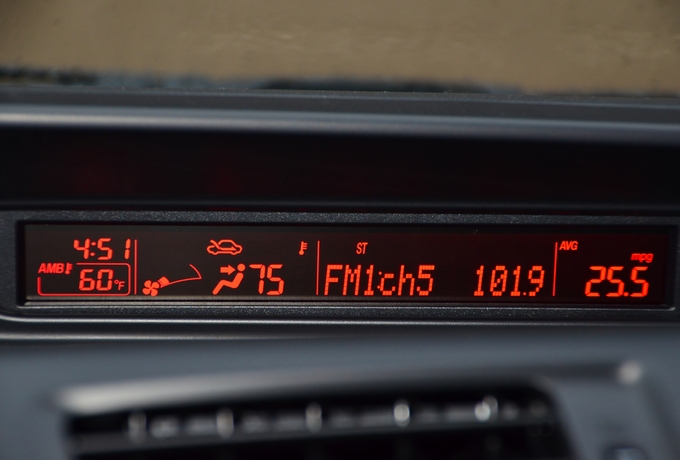
Most big minivans average about 21 mpg overall and 27-28 mpg on the highway. Mazda5 does a lot better. With about a liter less motor and at least 500-1,000 pounds less weight, the Mazda5 is projected by the EPA to achieve 21/28/24 mpg city/highway/combined. Overall the Mazda5 averaged about 25 mpg while on a level highway at 70 mph it returned 31.6 mpg or about 4 mpg better than the full size minivan. Fuel capacity is a good size 15.9 gallons, giving a highway range of almost 500 miles. The engine spins 2,350 rpm at 70 mph.

Being a Mazda you can expect state of the art suspenders with MacPherson struts up front and a multilink system in the rear. Seventeen inch alloys are shod with 205/50 series rubber and the steering rack is an electro-hydraulic unit that is quick for even a sporting sedan at 2.9 turns lock to lock. Even the turning circle is a tight 36.7 feet. Track front and rear is 60 inches. The result is one tight handling minivan. Pushed hard you could even get the Mazda5 to rotate a bit in the tighter corners. About the only complaint is some body roll. But steering is benign, turn in crisp, front to rear weight balance is good (56/44) as well as the grip. You would be surprised at what the Mazda5 can do when the road bends. It would stay glued to the butt of many sedans and do it easily. It is certainly more nimble than any full size minivan.

The highway ride is smooth. However, there is slightly more road noise than a sedan. Overall, the vehicle has a controlled, compliant ride over bumps big and small. Being a smaller four cylinder it runs at a little higher rpm, so expect a little more noise when pushing hard. However, in normal, easy driving the Mazda5 acquits itself well.

Four wheel discs of a foot in diameter with all the appropriate acronyms do the stopping chores. From 40 mph forward progress is arrested in a very good 41 feet. Of course it has all the safety features you would expect, a plethora of airbags and even back up sensors.

Another positive area is in the interior. First the leather adds a touch of class and comfort. Perhaps even more important are the extraordinarily, well bolstered, comfortable front seats and second row captain’s chairs. More good stuff is in the simplified instrument panel. The binnacle has a big tach and speedo with the trip computer and radio and HVAC info contained in the center stack. No touch screen or distracting insidious mice, just wonderfully clear buttons and knobs to operate everything.
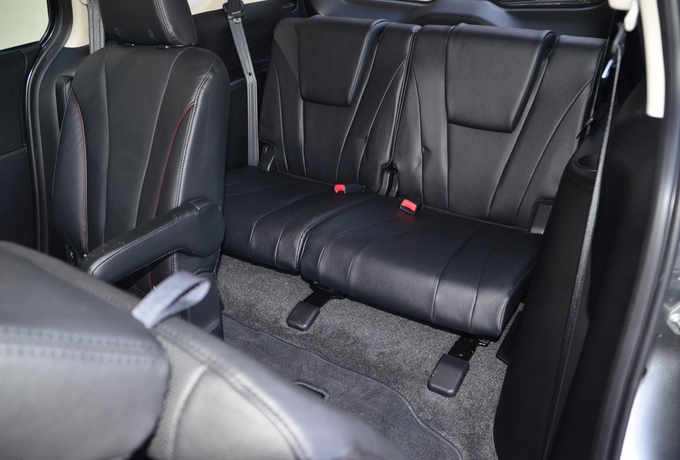
The mini van practically has room for a whole team.

The mini van practically has room for a whole team.

Rear sliding doors offer easy access to the second and third row seating. Third sow seats fold away to a flat floor and almost 45 cubic feet of cargo capacity. Total interior volume is a whopping 142 cubic feet, not bad for a vehicle the size of your average compact car. Perhaps because of its small size there is less of a minivan “stigma“ connected to the Mazda5. It is just an extremely practical vehicle at an even better price.

Pricing starts at $21,240 plus $820 for the boat ride from Hiroshima, Japan (and no it doesn’t glow in the dark). My loaded (all standard equipment) Grand Touring model stickered for $25,640 with destination. The only extra charge was $75 for a rear bumper guard cover. Everything else including moon roof, full power (except seats) and xenon headlights were standard. The optional equipment list is short with the most expensive item being an overhead DVD system. In reality the Mazda5 rates about an 8.5 to a 9.

Larry Weitzman has been into cars since he was 5 years old. At 8 he could recite from memory the hp of every car made in the U.S. He has put in thousands of laps on racetracks all over the Western United States.


Film festival highlights backcountry adventures

This year marks the 10th anniversary of the Winter Wildlands Alliance Backcountry Film Festival in North Lake Tahoe. On Feb. 26 the Tahoe Art Haus and Cinema in Tahoe City will host and showcase nine unique films aimed to inspire winter adventurers to seek the snow less traveled.

The Backcountry Film Festival is renowned for its mix of professional and grassroots films, from well- known filmmakers to first-timers who take a video camera out on their weekend excursions.

The evening celebrates both types, as they search out untracked powder and terrain in their respective ranges across the globe.

The program includes:

• “Out on a Limb”: Winner and Best of Festival production from T-Bar Films which tells the story of Vasu, who’s love for skiing and the backcountry overcomes all obstacles.

• “Powder Pilgrimage”: Best of the Backcountry Award Winner from Joey Howell, which chronicles the ventures of two friends ski bumming to Valdez, Alaska.

• “Backcountry Baker”: Best Grassroots Film winner by Jeremy Lurgio, which follows a Labrador Retriever named Baker as he and his owner pursue their love of backcountry skiing.

• “From the Road”: Fischer Creative portrays the balance between liberation and limitation as a group of athletes come together to help a skiing comrade gain reconciliation on a giant Alaskan peak which ended his professional guiding career.

• “Afterglow”: A revolutionary and visually spectacular film from Sweetgrass Productions that brings a whole new light to night skiing.

• “95 to Infinity”: Doglotion Media follows brothers Andy and Mike Traslin as they keep the torch lit for 95 months of consecutive winter turns.

• “Higher”: Teton Gravity Research continuation of the adventures of Jeremy Jones.

• “Sundog”: Sturge Films captures the dog days of skiing in powder-filled Patagonia.

Tickets are available online for $10. All ticket proceeds will benefit the Tahoe Cross Country Ski Education Association. Films start at 7pm.

The festival is part of the larger Alpenglow Mountain Festival, a nine-day celebration of human-powered winter mountain sports, events, clinics, equipment demonstrations, presentations, film and more.


When grief won’t relent

By Jane E. Brody, New York Times

Bereavement — how one responds and adjusts to the death of a loved one — is a very individual matter. It is natural to experience a host of negative reactions in the weeks and months following the loss of a loved one: among them, sadness, difficulty sleeping, painful reminders of the person, difficulty enjoying activities once shared, even anger.

Grief is a normal human reaction, not a disease, and there is no one right way to get through it. Most often, within six months of a death, survivors adjust and are more or less able to resume usual activities, experience joy, and remember their loved ones without intense pain.

But sometimes, even when the loss is neither sudden nor unexpected, as is true in the majority of deaths in the United States, survivors close to the deceased can experience extremely disruptive grief reactions that persist far longer.

In a report last month in The New England Journal of Medicine, Dr. M. Katherine Shear presents a composite portrait of what is known as complicated grief, an extreme, unrelenting reaction to loss that persists for more than six months and can result in a serious risk to health.

Read the whole story


Working remotely requires trust on both ends

By Ed Koch, Las Vegas Sun

In Las Vegas and across the country, many self-starting employees have shed the shackles of on-site, whip-cracking bosses to enjoy the freedom offered by virtual or remote offices. Working from home a few — or maybe a few thousand — miles away from bosses is becoming increasingly popular. It’s a setup both remote bosses and their workers enjoy.

“It’s part of the cyber world we now live in,” said longtime Los Angeles Times reporter John Glionna, who covers the Southwestern United States from his home in Henderson and reports to editors in Los Angeles.

Rick Kwiatkowski, vice president of Phoenix-based Inland Hobbs Material Handling, which rents and sells forklifts and other heavy equipment, said if a company expects to expand and be successful in today’s high-tech world, satellite offices are becoming a necessity.

“If you are the kind of business owner who has to have his hands on every phase of operation, then your company will have great difficulties growing, because you’ve become the bottleneck,” said Kwiatkowski, who oversees offices in Arizona, California, northern Mexico and Las Vegas. “You have to trust the people you have hired to do their jobs.”

Read the whole story


Tahoe Tails — Adoptable Pets in South Lake Tahoe

Castor

Castor

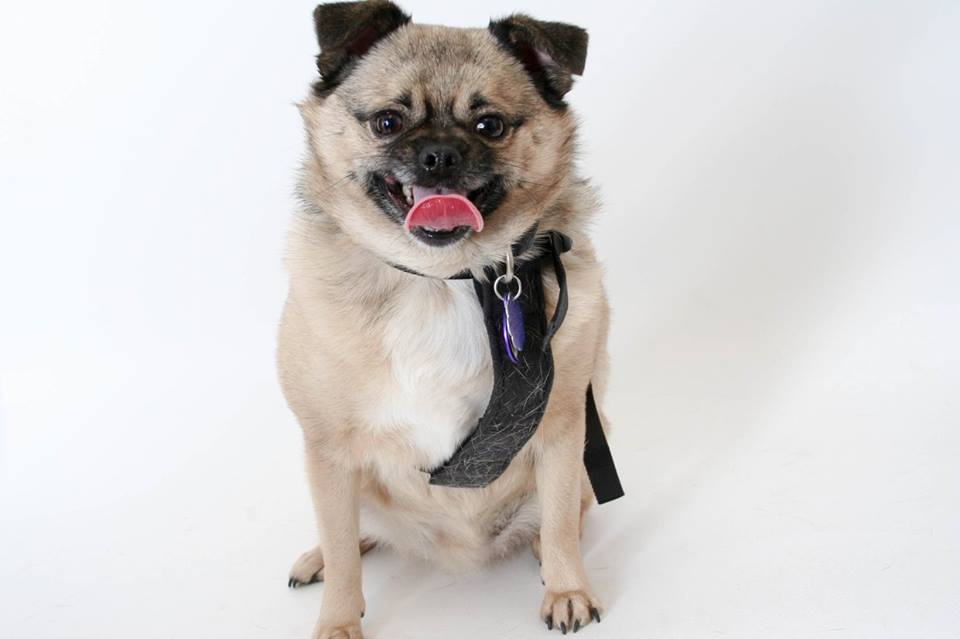
Castor and Pollux are Pug mix brothers, 4 years old, who are very happy and playful. They need a little more exercise and maybe less food than they’ve gotten in the past, but they have great Pug personalities and will make great pets. Bonus – they appear to be house trained.

Castor and Pollux are neutered, microchipped, tested for heart worm, and vaccinated. They are at the El Dorado County Animal Services shelter in Meyers, along with many other dogs and cats who are waiting for their new homes. Go to the Tahoe animal shelter’s Facebook page to see photos and descriptions of all pets at the shelter.

Call 530.573.7925 for directions, hours, and other information on adopting a pet. For spay-neuter assistance for South Tahoe residents, go online.

— Karen Kuentz


Doctor: Sleep apnea needs more attention

By Kathryn Reed

Not getting a good night’s sleep is the least serious complication of sleep apnea.

Sleep apnea, a sleep disorder, is an often-overlooked condition that can contribute to more serious medical problems.

And for those living in Lake Tahoe or other high elevation communities, the threat is even greater. This is because there is two-thirds the amount of air in the basin compared to the Bay Area. The difference is the change in atmospheric pressure.

At higher elevations people tend to breath deeper and faster because they need air, but then they exhale carbon dioxide. But bodies need CO2. Without CO2 people can stop breathing, then they start hyperventilating. It becomes a vicious cycle.

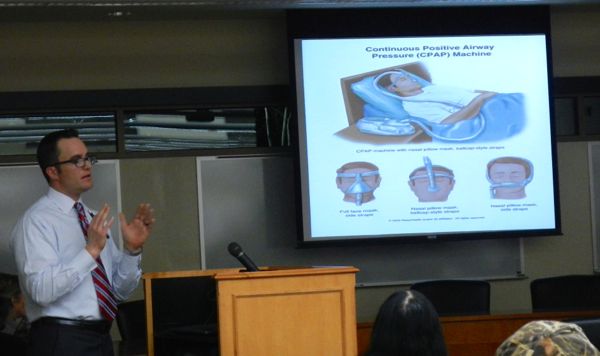
Dr. David Young talks about sleep apnea. Photo/LTN

Dr. David Young talks about sleep apnea. Photo/LTN

David Young with Barton Cardiology gave a lecture last week to about 80 people at Lake Tahoe Community about the dangers of sleep apnea.

“No one really knows a whole lot about sleep apnea. A lot more research is needed,” Young said. “I believe it is an under-diagnosed disorder, especially in Tahoe. Treatment can make huge changes in people’s lives.”

The best treatment today is a continuous positive airway pressure mask. The problem is people need to wear it every night about 50 percent stop doing so.

While snoring is the most common symptom of sleep apnea, not all snorers have sleep apnea.

Other symptoms include memory loss because of not having enough CO2 through the night, urinating at night, sexual dysfunction, depression and difficulty concentrating.

People are more apt to suffer from sleep apnea as they age, if they are male and are obese. Heavy drinkers and those who use opiates are also prone to sleep apnea.

The diagnosis, though, isn’t easy.

“It’s almost borderline torture,” Young said of diagnosing sleep apnea. Multiple electrodes are strapped to a patient.

Barton has a sleep lab where a more complete diagnosis can be established.

At Barton Memorial Hospital everyone who is going to have surgery will be screened for sleep apnea. This is because anesthesia and painkillers after the surgery can inflame sleep apnea.

Young would like to see Barton hire a sleep specialist. He said a pulmonologist might be hired soon who would be able to help with sleep apnea.


Updated ‘bible’ explores Eastern Sierra skiing

By Benjamin Spillman, Reno Gazette-Journal

Exploring the Eastern Sierra backcountry can be a spiritual experience — especially in winter. So it makes sense it would have its own bible.

That’s what skier Nate Greenberg and snowboarder Dan Mingori wanted to create with the book “Backcountry Skiing California’s Eastern Sierra,” a compilation of more than 200 snow descents from Mount Whitney to Matterhorn Peak.

The second edition of the book, published by Wolverine Publishing late last year, is another layer in the budding archive of information on the region Greenberg and Mingori trace back to the 1992 book “Backcountry Skiing in the High Sierra” by John Moynier.

“That was our go-to bible for quite a long time,” said Greenberg. “I wanted to produce something that was as much sort of a bible or reference point that inspired everybody else as it did me.”

Read the whole story


Study: Dogs can read people’s emotions

By Jane J. Lee, National Geographic

Science is still undecided on the matter, although evidence in favor of the idea is stacking up.

Now, a new study has found that dogs are able to tell the difference between happy and angry human facial expressions.

Biologist Corsin Müller of the University of Veterinary Medicine in Vienna, Austria, and colleagues tested 11 dogs — including border collies, a fox terrier, a golden retriever, a German shepherd, and some mutts — using a touchscreen. The scientists trained the dogs to touch either a happy face or an angry face for a treat.

They presented dogs with either the top half or the bottom half of the faces to ensure the animals weren’t just responding to a smile or the baring of teeth. Emotions show on all parts of a human face, not just the mouth, says Müller, whose study was published Feb. 12 in the journal Current Biology.

Read the whole story


Carson City woman cut from ‘American Idol’

By Susan Skorupa, Reno Gazette-Journal

Molly Seals’ attempt to be the next American Idol ended Wednesday, but not her love of singing.

The 22-year-old Carson City cosmetologist was cut from the “American Idol” competition on Wednesday’s program, during the group singing auditions, but she already has several singing performances scheduled.

“It’s been such great experience,” Seals said of her time on the Fox network program. “I can’t find anything negative about it.

“I didn’t feel it was unfair,” she said of the judges decision to send her home from the competition. “It felt like, ‘it is what it is.’ It was a great experience, but most people there have so much (singing) experience. I do not have that.”

Read the whole story


Author to talk about life at Pyramid Lake

Author Bernard Mergen lived at Pyramid Lake in the mid-20th century. He went on to earn a doctorate from the University of Pennsylvania and became a professor of American studies at George Washington University in Washington, D.C. Now professor emeritus, he comes to South Lake Tahoe to share his newest book.

In “At Pyramid Lake”, Mergen writes about the cultural history, including efforts of the Paiute Indians to preserve the land and survive as a community. He writes about reclamation projects, conflicts over water rights and the history of the lake’s recreational use, stories of the residents and squatters, and visits from celebrities such as Herbert Hoover and Zane Grey.

The talk is March 24 at 6pm at the South Lake Tahoe Library, 1000 Rufus Allen Blvd.

The event is put on by the Friends of the Library in partnership with the Lake Tahoe Historical Society.