Meditation for a good night’s sleep

By Anahad O’Connor, New York Times

Do you have chronic sleep problems? You may be able to significantly improve your ability to get a restful night of sleep by practicing a popular form of meditation, a rigorous new study shows.

The findings may be particularly relevant to Americans older than 55, about half of whom have some form of sleep trouble. The research, a clinical trial published in the journal JAMA Internal Medicine, recruited about 50 older adults with moderate sleep problems and assigned them to follow one of two programs.

In one group, the adults learned behaviors that could help them develop good sleep hygiene, like establishing a regular bedtime routine and avoiding caffeine and alcohol before bed.

Read the whole story


Tahoe Tails — Adoptable Pets in South Lake Tahoe

Mondavi

Mondavi

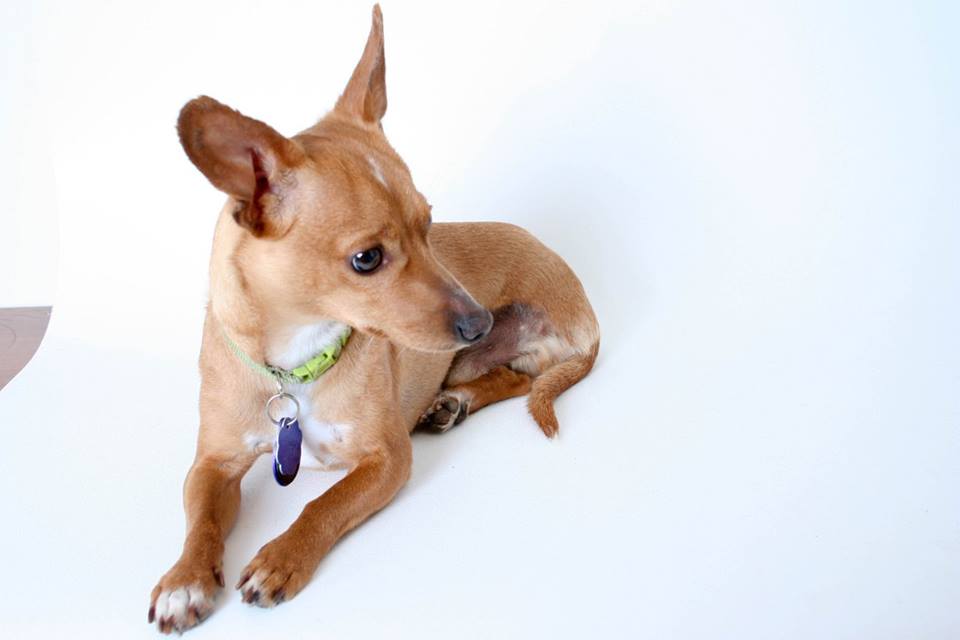
Mondavi arrived at our partner Umbrella of Hope with a badly broken rear leg, which ended up needing to be removed. He had a rough time during the operation, but has recovered extremely well. He has now arrived in Tahoe to find his new home.

He is very active and doesn’t seem to realize he’s missing a leg. Mondavi is a nice little boy with plenty of personality who will do well in just about any home.

Mondavi is neutered, microchipped, tested for heart worm, and vaccinated. He is at the El Dorado County Animal Services shelter in Meyers, along with many other dogs and cats who are waiting for their new homes. Go to the Tahoe animal shelter’s Facebook page to see photos and descriptions of all pets at the shelter.

Call 530.573.7925 for directions, hours, and other information on adopting a pet.

For spay-neuter assistance for South Tahoe residents, go online.

— Karen Kuentz


DCSD superintendent stepping down

By Kathryn Reed

After 32 years in public education, Lisa Noonan is ready for a change.

Now in her fifth year as superintendent of Douglas County School District, Noonan will not be at the helm next school year.

At least that is the plan. She has not given the board a hard retirement date, but instead is willing to work until a replacement if found. The board on March 3 is meeting to discuss how to go forward. Noonan said she hopes the board considers internal candidates.

“If Lisa wanted to stay longer, that would be wonderful,” Ross Chichester, president of the school board, told Lake Tahoe News. “We will look for someone as powerful as she is. She is collaborative and innovative. She has really, really turned the Douglas County School District around from times when it was not a popular place to be a board member. She has done a wonderful job through hard years of budgets.”

Lisa Noonan is retiring this summer as superintendent of Douglas County School District. Photo/Provided

Lisa Noonan is retiring this summer as superintendent of Douglas County School District. Photo/Provided

Noonan, 55, is looking forward to spending more time with family. She and her husband have six grandchildren – which is two more than when she started the job – who are spread out all over the country.

“I’ve missed out on things while serving other people’s children,” Noonan told Lake Tahoe News.

In her job, taking substantive time off isn’t always do-able. And a workweek, well, it’s much more than 40 hours.

“There are always projects. If you ever wake up and you are finished, something is wrong,” Noonan said.

She said it’s time to change her priorities and put family before work.

“I think probably what I will carry with me the longest is my tenure took place during very difficult economic times for the state and our profession. I tried to be caring and compassionate as possible with the tough choices that had to be made,” Noonan said. “Gently we got through those difficult times budget wise. There was no handbook on how to do that.”

Bringing full-day kindergarten to all schools and increasing the rigor at the high schools are other accomplishments she is proud of.

She was 23 when she took her first full-time teaching job at an elementary school. She has a bachelor’s from Humboldt State University, master’s from San Diego State University and doctorate from UNR. She was working for Washoe County School District in administration before being hired by DCSD in 2010. Noonan plans to continue living in Nevada.

“Our kids are just awesome. Our future is bright for all of us. We have great kids. That is nice and reassuring,” Noonan said.

—–

Notes:

• The special board meeting to discuss how to go forward with finding the next superintendent is March 3 at 4:30pm at the district office in Minden.

• Douglas County’s front office in Minden has already seen changes in the last year. Rich Alexander and Lyn Gorrindo, both assistant superintendents, retired last summer. Teri White was hired as assistant superintendent, doing much of the human resources work.


TOCCATA to put on ‘Passion according to St. Matthew’

Tahoe Symphony Orchestra and Chorus continues its Winter MusicFest with the 10th annual presentation of J. S. Bach’s masterpiece “The Passion according to St. Matthew.”

The first concert of the three concert series will take place March 29 at 4pm at Good Shepherd Lutheran Church in Reno, located at 501 California Ave.

The program will feature selections from “Part two of the Passion”, and will be performed in English. Soloists include Michael Dewayne as the Evangelist, Stuart Duke as Jesus, John Rabben as Pontius Pilate, and Chris Nelson as Peter. Maria Arrigotti, Anna Helwing and Joy Strotz are the soprano soloists, with JulieAnn Miller, mezzo soprano soloist. Scott Deupree performs as the High Priest, with Susan Horst, MaryAnn Helman, Linda Mitchell as the false witnesses. David Brock will play harpsichord continuo, along with Nicholas Haines, cello. Maestro James Rawie will conduct all performances.

The St. Matthew Passion will be repeated April 1 at 7pm at St Theresa Catholic Church in South Lake Tahoe, 1041 Lyons Ave. The final concert will be April 3 at 7pm at St. Patrick’s Episcopal Church in Incline Village, 341 Village Blvd.

Tickets are available at the door or online. General admission to all concerts is $25 adults, $20 seniors, $5 students aged 19 to 23 with valid ID. Preferred seating is $35 and $15 for youth/students. Youth under 19 years of age are admitted free, in non-reserved seating, to most regular season concerts in 2015.


Strategies to save money during tax season

By Reid Abedeen

Millions of Americans face a challenge in meeting their budgets every month – not just financially, but also in their time budgets.

Knowledge is power and time is often money, but what if you don’t have the time to empower yourself with knowledge? For many households, that often means losing out on thousands of dollars through tax deductions.

As a family man myself, I understand what it means to work hard to provide the best possible for my wife and children. Had I not worked in the financial sector for almost two decades, I might not have understood how to best troubleshoot my tax return, I sympathize.

Here are strategies that may be relevant for your family this tax season.

• Take tax deductions for capital loss. If your capital losses exceed your capital gains, the excess can be deducted on your tax return and used to reduce other income, such as wages, up to an annual limit of $3,000, or $1,500 if you are married filing separately. However, you may deduct capital losses only on investment property, not on property held for personal use.

• Fund your retirement to the max. You can contribute up to $5,500 to an IRA in tax-year 2014, or $6,500 if you are age 50 or older. Workers in the 25 percent tax bracket who contributed $5,500 to an IRA would save $1,375 on their 2014 tax bills. You’ll want to check your eligibility and understand the deadline for the 2014 deduction. If you make a deposit between Jan. 1 and April 15, you need to tell the financial institution which year the contribution is for.

• Advisory fees are tax-deductible. Don’t feel like spending money to save and make money? There’s a workaround. Before closing the door on the possibility, inquire with a financial expert. Most are happy to give a free initial consultation, and you don’t have to be a millionaire to make it worth your while.

• Gift assets to children. You don’t even have to file a gift tax return on an asset that’s valued less than $12,000, which is not taxable. If the fair market value of the gifted asset is more than $12,000 per person per year, but less than $1 million, there is the requirement of filing a gift tax return, but you won’t be taxed. The gift still is not income taxable to the recipient.

• Deduct a home-based office when used for your employer. If space in your home is used exclusively and regularly for a trade, you can count that as a deductible. Calculate the square footage of your home office and divide the area of your office by the area of your house. If the percentage is 14 percent, for example, that represents the percentage of your total home expenses that can be allocated toward the home office deduction. For further questions, consult a professional.

You’ll want to be very vigilant regarding these details of these deductions. For any questions, I seriously recommend consulting a professional.”

Reid Abedeen is a partner at Safeguard Investment Advisory Group. As an investment advisor, Abedeen has helped retirees for nearly two decades with issues such as insurance, long-term care planning, financial services, asset protection and many other areas. 


Road beat: Noticeable improvements to Sonata

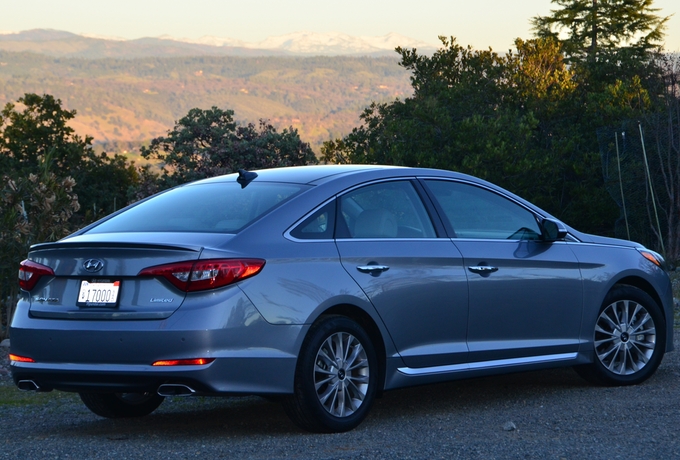
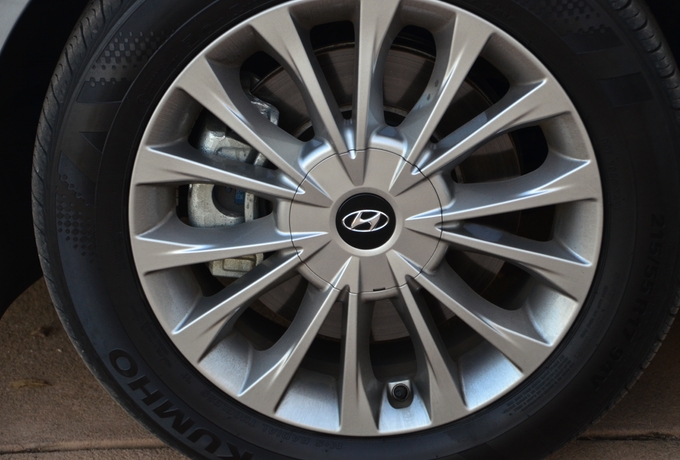
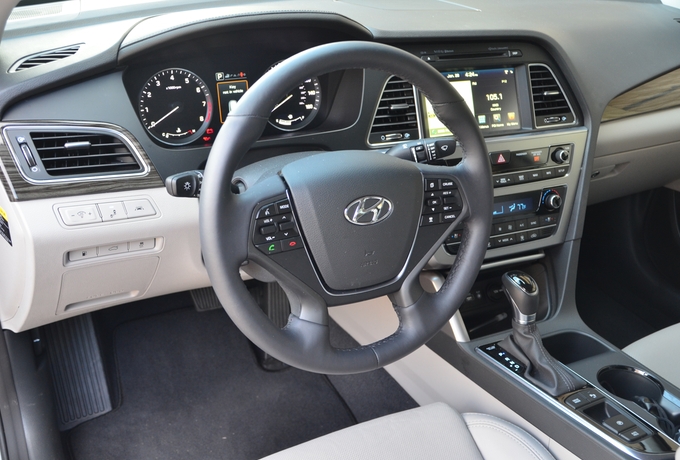
The 2015 Hyundai Sonata  has been upgraded since the last iteration in 2010. Photos/Larry Weitzman

The 2015 Hyundai Sonata has been upgraded since the last iteration in 2010. Photos/Larry Weitzman

By Larry Weitzman

Hyundai claims the 2015 Sonata is all new. While every body panel has changed and more than a face-lift has occurred, the resemblance to the prior generation is remarkable. Even the chassis dimensions have changed marginally all in the name of refinement and polish. In that respect Hyundai has accomplished its goal of a vehicle that has improved in most every way, so much so that it offers a ride and quiet that was only in an engineer’s dream 10 or 15 years ago.

Size-wise there have been changes in every chassis and body dimension like wheelbase is up 0.4 inches to 110.4 and length has grown by 1.3 inches to 191.1 inches. Width is up by an inch to a wide 73.4 inches, while chassis designers saw fit to widen the track by about the same amount, improving balance, stability and handling.
Specifications Price $21,150 to about $32,500 Engine  Four cylinder inline 16 valve 185 hp @ 6,000 rpm 		  	        178 lb.-ft. of torque at 4,000 rpm Transmission Six speed torque converter automatic with a semi manual mode Configuration Transverse mounted front engine with front wheel drive Dimensions Wheelbase 110.4 inches Length 191.1 inches Width 73.4 inches Height 58.1 inches Track (f/r) 63.1/63.3 inches Ground clearance 5.3 inches Cabin volume 106.1 cubic feet Trunk volume 16.3 cubic feet Fuel Capacity 18.5 gallons Weight 3,371 pounds Steering lock to lock2.78 turns Turning circle 35.8 feet Wheels 17X7 inch alloys Tires 215/55X17 Co-efficient of drag 0.27 Performance 0-60 mph 7.82 seconds 50-70 mph 4.25 seconds 50-70 uphill 6.56 seconds Top Speed Beyond sanity Fuel economy EPA rated at 24/35/28 city/highway/combined. Expect 27-28 mpg in suburban driving and 37 plus mpg on a level highway at 70 mph.

Specifications
Price $21,150 to about $32,500
Engine
Four cylinder inline 16 valve 185 hp @ 6,000 rpm
178 lb.-ft. of torque at 4,000 rpm
Transmission
Six speed torque converter automatic with a semi manual mode
Configuration
Transverse mounted front engine with front wheel drive
Dimensions
Wheelbase 110.4 inches
Length 191.1 inches
Width 73.4 inches
Height 58.1 inches
Track (f/r) 63.1/63.3 inches
Ground clearance 5.3 inches
Cabin volume 106.1 cubic feet
Trunk volume 16.3 cubic feet
Fuel Capacity 18.5 gallons
Weight 3,371 pounds
Steering lock to lock2.78 turns
Turning circle 35.8 feet
Wheels 17X7 inch alloys
Tires 215/55X17
Co-efficient of drag 0.27
Performance
0-60 mph 7.82 seconds
50-70 mph 4.25 seconds
50-70 uphill 6.56 seconds
Top Speed Beyond sanity
Fuel economy EPA rated at 24/35/28 city/highway/combined. Expect 27-28 mpg in suburban driving and 37 plus mpg on a level highway at 70 mph.

When the prior generation Sonata was introduced five years ago, it was a bombshell with cutting edge looks and class leading four cylinder performance, never mind an interior that blew away the competition. You can see the evolution from the prior generation. The shape of the new Sonata is uncannily similar, but it is different. You need to study the new body to discover why it is so improved. First, the new aggressive grille has much similarity to the new World Class Genesis. A huge curving body character line has been lightened and made almost straight while the window line has been improved in a similar manner without the curved lower line and a less radical top line. It all fits and flows smoothly without any gimmicks. It certainly matches the effort of the new Genesis.

A side benefit of the redesign was a 3-cubic-foot increase in cabin volume, making the new Sonata a true full size car interior with the largest trunk and interior cabin of any midsize sedan.

Even the Sonata’s co-efficient of drag has improved from a slick 0.28 to an even slicker 0.27.

Where things haven’t changed much is in the engine room. The power comes from the same state of the art 2.4L direct injected, DOHC 16 valve Theta four cylinder engine, now producing 185 hp at a lower 6,000 rpm and 178 peak pounds of twist at a lower 4,000 rpm. Power is sent to the front wheels via a six speed auto cog swapper. The unit operates extremely quietly and with absolute smoothness.

Performance hasn’t changed much since the prior generation’s intro five years ago as this 2015 unit knocks off 0-60 mph in 7.82 seconds. Passing performance times in simulated 50-70 mph runs on a level highway and a six percent grade were 4.25 and 6.56 seconds respectively which are virtually identical to the (2014) prior generation’s times which had times of 7.79, 4.25 and 6.64 seconds respectively. The Road Beat would place the Hyundai mid-pack, but mid-pack in the mid-size sedan class is a good performing automobile. A 1960 performance sedan like a 300 hp 6.4L (389 cubes) Pontiac Bonneville couldn’t match this level of performance while drinking at least two to three times more fuel. Boy, do we have it good.

Speaking of drinking fuel, by comparison the Sonata barely sips it, averaging exactly what the EPA says it should, about 28 mpg. EPA predictions are 24/35/28 mpg city/highway/combined. On the highway at 70 mph the Sonata did slightly better at 36.8 mpg with the engine spinning just 2,000 rpm. With the Sonata’s 18.5 gallon fuel tank, 600 plus miles on the highway would be a piece of cake, at least for the Sonata. The driver and/or passengers might have to stop earlier.

As with Sonata’s performance, fuel economy remains the same compared to the 2014 model. Mention should be made of the new turbo engine, which while producing slightly less hp (245 hp at 6,000), provides more real world performance with less turbo lag and a more responsive, linear power curve.

More improvements have been made to the Sonata’s structure and suspension. The use of advanced high strength steel has increased bending and torsional rigidity by about 40 percent. Revised dual lower arm rear suspension (over the prior single arm system) has improved the Sonata’s responsiveness, handling and stability. Even overall weight has been pared by a few pounds.

Other improvements include a revised quicker electric power steering rack and when you couple that with the wider track, handling has becomes a bit sharper almost to the level of a sporting sedan. Most drivers won’t notice these changes unless you push the car hard, but it will be noticed in the ride quality. In normal driving, the Hyundai handles easily and beautifully.

Sonata is a quiet, refined automobile. It handles bumps with reduced harshness and a sublimely compliant ride. It could call it almost luxurious (as in near luxury car). It is that quiet and smooth. There is no float. In a drive with a friend, even he remarked about the extremely smooth, quiet ride.

Of course Sonata comes with about every safety acronym in the book and in my Limited tester; blind spot detection, rear cross traffic alert and a rearview camera were standard. And the optional Ultimate Package ($1,500) comes with a lane departure warning system. Braking is also slightly improved with the Sonata’s four wheel discs (front ventilated) stopping the Sonata in 40 feet from 40 mph. Part of the improvement is due the Sonata new rear suspension. HID headlights were excellent.
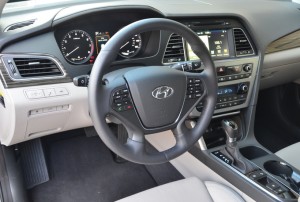
The 2015 Sonata has been improved.

The 2015 Sonata has been improved.

Inside you are greeted with a leather interior with sublime front chairs that are both powered. Everything you touch exudes quality with soft touch trim pieces. Full instrumentation (tach and speedo included) plus a trip computer are standard. The center stack is well done and the controls and touch screen sound system are easy to use. Because there is no engine, wind or road noise and because of its accurate steering, good fuel economy and high comfort level, Sonata is a wonderful long distance over the road vehicle.

It feels like most of that new interior volume can be found in the copious rear seating area. Legroom is huge as is the better than 16 cubic foot trunk.

More good news from Hyundai is pricing. The new Sonata bases $300 less than last year at $21,150, plus $810 for transportation from its Montgomery, Alabama assembly plant. The base price on tested leather Limited is $26,525. My tester was equipped with the $3,500 Tech Package which added the panoramic sunroof, Nav, HID lighting and more plus the aforementioned Ultimate Package. Carpeted floor mats were $125. After the transportation charges the total was $32,510. You will find the base car will offer most of the virtues of the Limited while the Limited offers a near luxury experience.

Larry Weitzman has been into cars since he was 5 years old. At 8 he could recite from memory the hp of every car made in the U.S. He has put in thousands of laps on racetracks all over the Western United States.
Fitness trackers may help doctors with diagnosis

By Anick Jesdanun, Associated Press

That phone app keeping track of your exercise and meals might keep you out of the hospital one day.

Why give your doctors permission to incorporate data from fitness trackers and health apps into electronic patient records? Well, they might spot signs of an ailment sooner and suggest behavioral changes or medication before you land in the emergency room. They also might be able to monitor how you’re healing from surgery or whether you’re following a treatment regimen.

“Right now we only see our patients for about a 15-minute visit in the office, and it’s a very constricted view,” said Lauren Koniaris, a specialist in pulmonary critical care at Hackensack University Medical Center in New Jersey. “This really globalizes the view of their health status, so that we’re really in contact with them on a much more daily if not hour-to-hour basis. It’s almost like a virtual house call.”

At Hackensack, a handful of patients at risk for heart failure are asked to use a fitness tracker to count steps walked and flights climbed. They are also asked to record what they eat — by photographing the product’s bar code, for instance — using a phone app that has a database containing nutrition information on thousands of food items. Using Apple’s new HealthKit technology, data from the various trackers and apps gets automatically transferred to the Epic MyChart app on the iPhone. From there, the information goes to the hospital’s records system, which also comes from Epic.

Hackensack wants to expand to more patients and start tracking blood pressure and amount of sleep, too. But the hospital first needs to ensure that teams are in place to review the glut of data coming in. More broadly, there’s also a question of whether these trackers and app really improve patient care, and consumer privacy and security issues to address. The University of California, San Francisco, is studying which gadgets are reliable and whether that reliability extends to patients with extreme conditions. Then they have to figure out which data are really meaningful — not just noise.

Many doctors and hospitals see potential. The Mayo Clinic in Rochester, Minnesota, uses Fitbit trackers to monitor hip-replacement patients for a month after surgery. Health workers get data on daily steps and can tell when patients have trouble walking — a hundred or more miles away. The Ochsner Health System in New Orleans is turning to wireless scales and blood-pressure devices to help reduce readmissions for chronic diseases such as heart failure. Noticing a small weight gain, for instance, might reveal fluid buildup resulting from the heart failing to pump normally. Not only can doctors intervene sooner, they can use the data to show how exercise can help lower blood pressure.

“If we’re going to succeed in improving health, we have to get patients more engaged in their care,” said Richard Milani, a cardiologist at Ochsner.

Heart-attack patients have long been asked to weigh themselves, while those with diabetes have had to check glucose levels. Smartphone technology makes all that easier and gets measurements to doctors more regularly and reliably. There’s no forgetting to record a number or transposing digits.

With Apple’s HealthKit tools, disparate gadgets and records systems can work together more easily. Think of HealthKit as a common language, eliminating the need for translators. Beyond sleep and exercise data coming from fitness trackers, doctors can eventually incorporate devices that measure glucose, blood pressure, respiratory rates and blood-oxygen levels. The devices communicate with the iPhone wirelessly or through the headphone or charging port. Google, Samsung and Microsoft have similar ambitions that will expand monitoring to users of Android and Windows phones, though they aren’t as far along. For now, developers must write separate code for each Android or Windows app to integrate.

Gary Wilhelm, 51, who works at Hackensack on payroll and finance technology, joined the hospital’s app test after he suffered a heart attack in October. He appeared animated during a check-up this month as he showed Sarah Timmapuri, his cardiologist, various charts on flights climbed and cholesterol intake. There were a few bad days that Wilhelm blamed on the Super Bowl. Timmapuri instructed Wilhelm to monitor his pulse on his new Fitbit Surge. If it gets to about 155 beats per minute, he’s to end his workout.

“Even if I did not do a single thing with the information, just the patient knowing that I’m reviewing it will already have a positive effect,” Timmapuri said.

Mayo patient Randy Smothers, 62, of Chisago City, Minn., agrees. He said he was in pain after getting his right hip replaced and would have stayed on his couch without the knowledge that someone was checking on him.

“This pedometer they gave me made me walk every day and move on and get going,” he said.

Apps and trackers could ultimately reduce patient visits, though there’s a risk patients would practice self-care.

“It may be an aid or a tool to help me deliver better care, but it is just a tool,” said Robert Wergin, president of the American Academy of Family Physicians. “It shouldn’t substitute for a face-to-face visit.”


Bona Fide Books making plans for 2015

Bona Fide Books will host an art reception for plein air painter Ginny Schankerman on March 6 from 6:30-8:30pm at its shop in Meyers.

The local independent press will also kick off the opening of its print shop and community mercantile, featuring goods made in the print studio. This event is free and open to the public.

Schankerman, who lived in Yosemite National Park for 15 years, finds inspiration in native plants and fungi. When she moved to Tahoe she studied painting at Lake Tahoe Community College, where she increased her skills and confidence, particularly under the tutelage of art department faculty and artist Phyllis Shafer.

Schankerman’s collection, “Have Paints, Will Travel,” will be at Bona Fide Books through March.

Bona Fide Books, now in its sixth year, will also reveal forthcoming titles including follow up to “Permanent Vacation,” “Tahoe Blues,” and the next installment of Tahoe History Comix.

Bona Fide HQ is located at 1069 Magua St., No. 4, behind the Getaway Café in Meyers.

For more information on this or other Bona Fide events, contact publisher Kim Wyatt at editor@bonafidebooks.com, 530.573.1513, or online.


Vitamins are making America less healthy

By Lindsay Abrams, Salon

A, C, D, E, K and the eight Bs: There’s a lot that can go wrong when we don’t get sufficient amounts of these 13 chemicals in our diets. Things like pellagra, caused by a B3 deficiency and characterized by delusions, diarrhea and “scaly skin sores,” or beriberi, which occurs in the dearth of B1 and can affect either the nervous or cardiovascular system, depending on which type you’ve got.

But in North America, vitamin deficiencies are a rarity.

The nutrition-related health problems we do have to worry about are a lot different: obesity comes to mind, as does diabetes and hypertension.

Incredibly enough, argues science writer Catherine Price, it’s the fact that we’ve solved the former that’s contributing to the latter: food companies add synthetic vitamins to otherwise unhealthy fare, preventing us from developing scurvy but also, at the same time, from following truly nutritious diets.

“We use vitamins as insurance policies against whatever else we might (or might not) be eating,” Price writes in “Vitamania: Our Obsessive Quest for Nutritional Perfection,” “as if by atoning for our other nutritional sins, vitamins can save us from ourselves.”

Read the whole story


How to slow down your life and enjoy the ride

By Steve Gilliland

It’s finally Friday night, the beginning of a weekend of freedom, which also happens to include your birthday. Your family, friends and spouse all have celebratory plans for you.

You have a rewarding career and a network of beautiful people who want to rejoice in your life. As you walk out to your car to officially kickoff the fun, a giddy thrill washes over you.

But as you click the seatbelt into place, rather than sitting in awe of how lucky you are, a list of concerns begin worming their way into your consciousness: “I need gas, but the conveniently located gas station charges more than others … I hope it’s not a surprise party … Maybe I should get the beverages I like before going home … I haven’t been to the gym all week … Did I pay the electric bill?”

And so it goes.

I think we’ve all had this experience, which often has us psychically living 30 minutes into the future – no matter how great the present circumstances might be.

Are we doomed to this torrent of noise which distracts us from enjoying our life? We don’t have to be.

• Don’t live your life 30 minutes ahead of the present. If you won’t live your life now, in the present, then who will?

An older man came up to me, grabbed my hand, and said he wished he’d heard me speak decades ago. After I asked why, he said that when he was eating lunch on break or dinner with his family, he was always thinking about what he had to do after the meal, which represented his daily life. “At the age of 97,” he said, “I’ve officially lived my life 30 minutes ahead” – 30 minutes ahead of whatever he was doing at the moment.

• Laugh more. It’s better than crying before you’re hurt. Don’t put your umbrella up until it rains. Worry restricts your ability to think and act effectively, and it forces you to mortgage fear and anxiety about something that may never occur. Laughter is the opposite. When you laugh, you’re living almost completely in the moment, and it’s one of the best feelings you can have.

• No one can ruin your day without your permission. As much as we cannot control in life – our genes, our past and what has led up to today – there is much control we may take upon ourselves. Today, for example, we can understand that life picks on everyone, so when the going gets tough, we don’t have to take it personally. When we do take misfortune personally, we tend to obsess, giving a legacy to something that may make you a day poorer in life.

• Cure your destination disease. Live more for today, less for tomorrow, and never about yesterday. How? You might have to repeatedly remind yourself that yesterday is gone forever, yet we perpetually have to deal with now, so why not live it? And what if tomorrow never occurs? There is a difference between working toward the future, which is inherently enjoyable in light of hope, and living in an unrealistic future that remains perpetually elusive. If tomorrow never comes, would you be satisfied with the way today ended?

It is not how you start in life and it is not how you finish. The true joy of life is in the trip, so enjoy the ride.

Steve Gilliland is a member of the National Speaker Association’s Speaker Hall of Fame. He shows audiences how to open doors to success in their careers, their relationships and their lives.