‘Chasing Ice’ to be shown at LTCC

“Chasing Ice” is the story of one man’s mission to change the tide of history by gathering undeniable evidence of the changing planet. With a band of young adventurers in tow, James Balog began deploying revolutionary time-lapse cameras across the Arctic to capture a multi-year record of the world’s changing glaciers.

The film will be shown April 17 at 7pm at Lake Tahoe Community College’s Duke Theatre. Doors open at 6:30pm.

Ticket are  $10 for adults, $5 for students and children, and free for kids 12 and younger. Tickets are available at Lake of the Sky Outfitters, League to Save Lake Tahoe, Sierra Nevada Alliance, or at the door.

Proceeds will benefit the League and Sierra Nevada Alliance.


Early exposure to peanuts helps prevent allergies in kids

By Marilynn Marchione, AP

For years, parents of babies who seem likely to develop a peanut allergy have gone to extremes to keep them away from peanut-based foods. Now a major study suggests that is exactly the wrong thing to do.

Exposing infants like these to peanuts before age 1 actually helped prevent a peanut allergy, lowering that risk by as much as 81 percent, doctors found. Instead of provoking an allergy, early exposure seemed to help build tolerance.

Anthony Fauci, director of the National Institute of Allergy and Infectious Diseases, called the results “without precedent” and said in a statement that they “have the potential to transform how we approach food allergy prevention.”

His agency helped fund the study, the largest and most rigorous test of this concept. Results were published in the New England Journal of Medicine and discussed at an American Academy of Allergy, Asthma and Immunology conference in Houston.

A big warning, though: The babies in the study were checked to make sure they didn’t already have a peanut allergy before they were fed foods that included peanuts, so parents of babies thought to be at risk for an allergy should not try this on their own.

“Before you even start any kind of introduction these children need to be skin-tested” to prevent life-threatening reactions, said Rebecca Gruchalla, an allergy specialist at the University of Texas Southwestern Medical Center in Dallas.

Also, small children can choke on whole peanuts, so smooth peanut butter or other peanut-based foods are safer, said Gruchalla, who wrote a commentary on the study in the journal.

The main finding — that early exposure to a problem food may keep it from becoming a long-term problem — should change food guidelines quickly, she predicted.

“Isn’t it wild? It’s counterintuitive in certain ways and in other ways it’s not,” she said.

Peanut allergies have doubled over the last decade and now affect more than 2 percent of kids in the United States and growing numbers of them in Africa, Asia and elsewhere. Peanuts are the leading cause of food allergy-related severe reactions and deaths. Unlike many other allergies, this one is not outgrown with age.

Food allergies often are inherited, but research suggests they also can develop after birth and that age of exposure may affect whether they do.

Researchers at King’s College London started this study after noticing far higher rates of peanut allergies among Jewish children in London who were not given peanut-based foods in infancy compared to others in Israel who were.

The study involved more than 600 children ages 4 months to 11 months old in England. All were thought to be at risk for peanut allergy because they were allergic to eggs or had eczema, a skin condition that’s a frequent allergy symptom.

All had been given skin-prick tests to make sure they were not already allergic to peanuts. They were put into two groups — 530 who did not show signs of peanut allergy and 98 others with mild-to-moderate reactions, suggesting an allergy might be developing.

Half of each group was assigned to avoid peanuts and the other half was told to consume them each week, usually as peanut butter or a snack called Bamba, a peanut-flavored puff.

The results at 5 years of age:

  • —Among children with no sign of allergy on the skin test: Only 2 percent of peanut eaters developed a peanut allergy versus 14 percent of abstainers.
  • Among children with some reaction to peanuts on the skin test: Only 11 percent of peanut eaters developed an allergy versus 35 percent of abstainers.

Hospitalizations and serious reactions were about the same in all groups.

Questions remain: How much peanut protein do infants need to consume, how often and for how long, to avoid allergy? If a child stops eating peanuts for a while, will an allergy develop? Would the same approach work for other foods such as milk, eggs and tree nuts?

“These questions must be addressed, but we believe that because the results of this trial are so compelling, and the problem of the increasing prevalence of peanut allergy so alarming, new guidelines should be forthcoming very soon,” Gruchalla and Hugh Sampson of Mount Sinai Hospital in New York write in the medical journal.

American Academy of Pediatrics guidelines used to recommend against giving children foods with peanuts before age 3, but that advice was dropped in 2008 because there was no evidence it was preventing allergies. Now, most parents introduce peanut-based foods as is appropriate for the child’s age, like other solid foods.

Gruchalla thinks that babies with some signs of a peanut allergy risk, such as parents who are allergic, should have a skin test between 4 and 8 months of age. If it’s negative, they should be started on peanut products as the babies in this study were. If they show some sensitivity to peanuts, a “food challenge” monitored by a doctor experienced at this should be tried.

For children who already have peanut allergies, researchers have been experimenting with small regular amounts of exposure to try to train them to tolerate those foods. But these are still experimental and must be done with the help of a doctor.

‘Secret Fort Chop’ sure to be a hit with kids

By Kathryn Reed

The importance of practicing and asking for help are the major themes of the latest Fujimini Adventure Series. Like the previous books, it is geared to preschoolers through first-graders.

“Karate Kid” is what came to mind when reading “Silver Bunny and the Secret Fort Chop” by Eileen Wacker. “Wax on, wax off” was going through my head.

book-secret fort chopThe book involves a colorful cast of animal characters who are bored with their Taekwondo class. These rabbits and hamsters have minds of their own and ideas to circumvent the adults.

But it doesn’t take them long to realize they don’t know as much as they think they do.

The message is clear, but not preachy.

Illustrations by Curt Spurging are bound to keep the attention of youngsters.

Wacker blends Chinese, Korean and Japanese cultures into her books.

“Asian cultures take immense pride in their customs and traditions,” Wacker said in a press release. “The characters in the books represent this in a way that strives to honor those traditions and share the wonder of Asian culture with children everywhere.”

The back of the book has a glossary of terms so the learning can be carried further if so desired. Things like Taekwondo, Noni bush and Mount Fuji are defined.

While there is a message, the book is also fun and light-hearted.


Tahoe Tails — Adoptable Pets in South Lake Tahoe

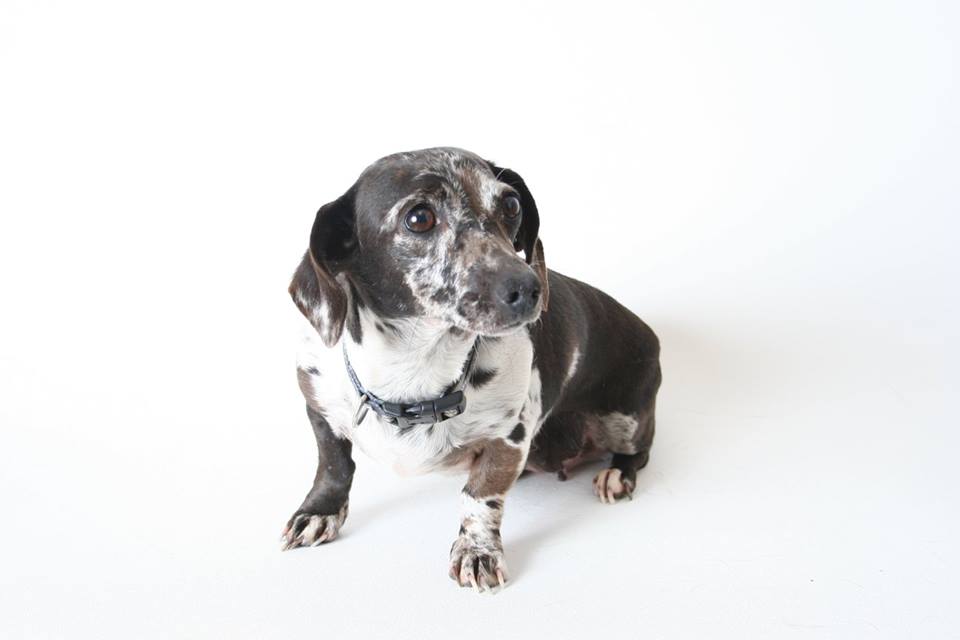
Skittles

Skittles

Skittles is a very nice 4-year-old Dachshund. She was found as a stray and her people never looked for her. She is housebroken and does well with other dogs, but no cats or small pets please.

Skittles is spayed, microchipped, tested for heart worm, and vaccinated. She is at the El Dorado County Animal Services shelter in Meyers, along with many other dogs and cats who are waiting for their new homes. Go to the Tahoe animal shelter’s Facebook page to see photos and descriptions of all pets at the shelter.

Call 530.573.7925 for directions, hours, and other information on adopting a pet.

For spay-neuter assistance for South Tahoe residents, go online.

— Karen Kuentz


Trend — hotels giving guests free boozes

By Jessica Festa, USA Today

One of my favorite new hotel perks for 2015 is Kimpton Hotels & Restaurants’ new nitecap program, which includes complimentary booze and snack pairings and a nightly wine hour, when vino flows like water. I love that Kimpton is embracing the ultimate pairing of travel and booze, and luckily other hotels are doing the same.

In February, the Sonesta Fort Lauderdale launched a “Daily Delights” schedule providing a different perk each day, such as free Prosecco from 5-6pm on the not-at-all-cheesy-sounding Toasty Tuesdays in the lobby bar, and wine and cheese from 5-6pm in the Bistro Restaurant on Wine Down Wednesdays.

The new boutique Canopy by Hilton brand will also be launching 11 properties within the U.S. and London in 2015-16, with each offering a tasting of local beers and seasonal cocktails for a dose of culture.

Read the whole story


Facebook’s plan to take over the news business

By Will Oremus, Slate

Facebook’s plan to take over the media was first articulated in October, by the New York Times’ David Carr. The social network had become a dominant source of online news for its billion-plus users. But it found that those users were frustrated by the experience of reading news on Facebook, especially on their phones. It required clicking links to third-party media websites, whose pages were slow to load, riddled with ads, and often failed to match the promise of their clickbait headlines.

Facebook has tried to solve this problem from a number of angles, many of which I’ve written about in the past. But the ultimate solution was the one Carr laid out: Facebook would simply host news’ sites content on its own platform, then share a slice of the ad revenue that resulted.

I wrote in depth in January about Facebook’s plan to cut out the middle man, explaining how it might work and why publishers would feel compelled to participate. At the time, Facebook had just published a blog post encouraging publishers to post videos natively on its platform, so that they could play automatically in users’ feeds. (Facebook’s algorithms heavily prioritize native video posts over, say, YouTube videos.) But I predicted that we’d eventually see Facebook nudge media outlets to post full news stories directly to Facebook as well — perhaps by “late 2016.”

That prediction suddenly looks far too conservative. The Times reported earlier this month that Facebook “has been quietly holding talks with at least half a dozen media companies about hosting their content inside Facebook rather than making users tap a link to go to an external site.” And it will start testing the new scheme “in the next several months,” with the New York Times, National Geographic, and BuzzFeed among the likely partners at launch. No doubt others will be lined up to follow their lead.

Read the whole story


SLT Library embracing Tai Chi, book reading in 1 day

Friends of the Library in South Lake Tahoe is hosting two diverse events April 25.

World Tai Chi and Qi Gong Day is being celebrated at 10am. Worldwide, people in hundreds of cities, spanning 80 nations, will come together for healthier bodies. Qi Gong originated in China more than 3,000 years ago. Qi means life force energy. Gong means work. Qi Gong means working with life force energy. Qi Gong’s flowing movements mimic the movements of nature, especially the fluidity of water. Come try something new.

At 1pm, author Jackie Boor will present “”LOGAN: The Honorable Life and Scandalous Death of a Western Lawman. Boor is the great-granddaughter of this historic sheriff and has unearthed the untold story of his 1906 murder. Dealing with rowdy miners, drunken gamblers, and even Wild West legends like Wyatt Earp was a routine part of the job for onetime Sheriff Logan. This is a story steeped in local history. There will be a question and answer session, book sale and signing to follow.

The library is at 1000 Rufus Allen Blvd.


Cable companies make cutting the cord difficult

By Timothy Stenovec, Huffington Post

Your options for how to watch TV continue to grow, but cable companies could make you pay dearly if you want to “cut the cord.”

Sony and Dish have recently launched services that allow you to watch live TV streamed over the Internet without subscribing to a cable or satellite package, and Apple is rumored to be working on its own live TV product that will be available this fall. HBO and Showtime will offer standalone streaming services later this year that will allow people to subscribe to the premium networks without paying for TV packages.

The slew of new offerings could prompt some of the millions of households that don’t pay for traditional TV to start buying subscriptions to new services. The new options could also spur others to cut the cord — that is, to ditch their expensive set top boxes in favor of paying Sony, Dish or even Apple, instead of their cable provider, to watch TV.

Read the whole story


Road beat: 4Runner keeps improving with age

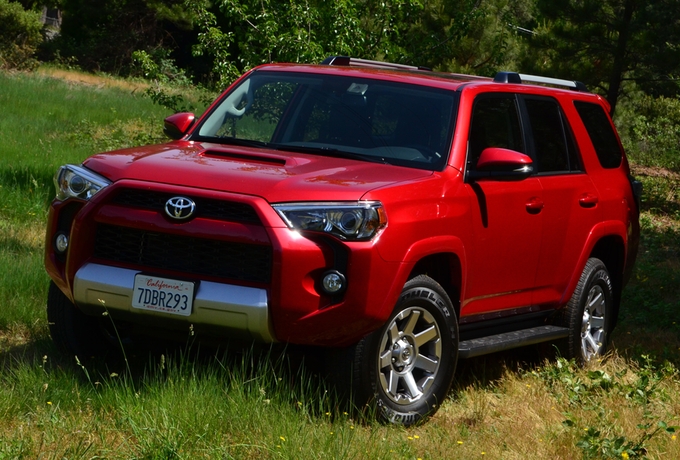
The Toyota 4Runner remains a workhorse. Photos/Larry Weitzman

The Toyota 4Runner remains a workhorse. Photos/Larry Weitzman

By Larry Weitzman

Now in its fifth year of the fifth generation (the 4Runner started production in 1984), the 4Runner continues to be a solid, consistent seller for Toyota, averaging about 50,000 units a year, despite sales being stolen by its similarly sized CUV sibling the Highlander. They are totally different vehicles with no relationship between them and effectively no parts bin sharing.

While the Highlander is a Camry based light duty unibody chassis, the 4Runner remains a real truck based SUV, borrowing heavily from the stout Tacoma truck line with a true body on frame design that is about as bulletproof as an M1A1 Abrams tank. The shape is rugged boxy with a higher belt line giving the 4Runner a chopped look. Squared off wheel wells with blisters and complex head and tail lights add to its statement that the 4Runner means serious business. Most people are impressed by its strong aggressive looks. It is muscular. Coefficient of drag is a relatively low 0.36.

While it may look big, it is a true midsize at 191-inches long riding on a wheelbase of 110 inches. However, it is wide at 76 inches and tall at 6 feet with the roof rack. But with that width comes a cabin with almost 5 feet of shoulder room and a track of over 63 inches, which pays dividends when doing the twisties.

Specifications Price $39,000 to about $42,000 (Trail Premium) Engine 4.0L DOHC 24 valve V-6 270 hp @ 5,600 rpm 278 lbs.-ft. of torque @ 4,400 rpm Transmission Five speed electronically controlled automatic (V-6) Transfer case (switchable locking) Part time shift on the fly with low range (2.566 reduction), SR5 and Trail only Full time single speed with locking center differential (Limited) Configuration Longitudinal mounted front engine/ rear wheel drive, all wheel drive Dimensions Wheelbase 109.8 inches Length 190.7 inches Width 75.8 inches Height 71.5 inches (with roof rack) Ground clearance (4X2/4X4) 9.0/9.6 inches Weight 4,750 (4X4 Trail) pounds GVWR (Trail) 6,300 pounds Track (f/r) 63.2/63.2 inches Steering lock to lock 2.7 turns Turning circle 37.4 feet Fuel capacity 23 gallons Cargo capacity (second row up/folded/third row up) 47.2/89.7/9.0 cubic feet Wheels 17X7.5 inches Tires  P265/70X17 Tow capacity 4,700 pounds  Coefficient of drag 0.36 Performance 0-60 7.78 seconds  50-70 3.98 seconds 50-70 uphill 5.78 seconds  Top speed Who cares? It will cruise effortlessly, quietly and smoothly well above all legal speed limits in the United States. Fuel economy EPA rated 17/21/18 mpg city/highway/combined.  Expect 18-19 mpg in rural country driving and 23.5 mpg on the highway at legal speeds

Specifications
Price $39,000 to about $42,000 (Trail Premium)
Engine
4.0L DOHC 24 valve V-6 270 hp @ 5,600 rpm
278 lbs.-ft. of torque @ 4,400 rpm
Transmission
Five speed electronically controlled automatic (V-6)
Transfer case (switchable locking)
Part time shift on the fly with low range (2.566 reduction), SR5 and Trail only
Full time single speed with locking center differential (Limited)
Configuration
Longitudinal mounted front engine/ rear wheel drive, all wheel drive
Dimensions
Wheelbase 109.8 inches
Length 190.7 inches
Width 75.8 inches
Height 71.5 inches (with roof rack)
Ground clearance (4X2/4X4) 9.0/9.6 inches
Weight 4,750 (4X4 Trail) pounds
GVWR (Trail) 6,300 pounds
Track (f/r) 63.2/63.2 inches
Steering lock to lock 2.7 turns
Turning circle 37.4 feet
Fuel capacity 23 gallons
Cargo capacity (second row up/folded/third row up) 47.2/89.7/9.0 cubic feet
Wheels 17X7.5 inches
Tires P265/70X17
Tow capacity 4,700 pounds
Coefficient of drag 0.36
Performance
0-60 7.78 seconds
50-70 3.98 seconds
50-70 uphill 5.78 seconds
Top speed Who cares? It will cruise effortlessly, quietly and smoothly well above all legal speed limits in the United States.
Fuel economy
EPA rated 17/21/18 mpg city/highway/combined. Expect 18-19 mpg in rural country driving and 23.5 mpg on the highway at legal speeds.

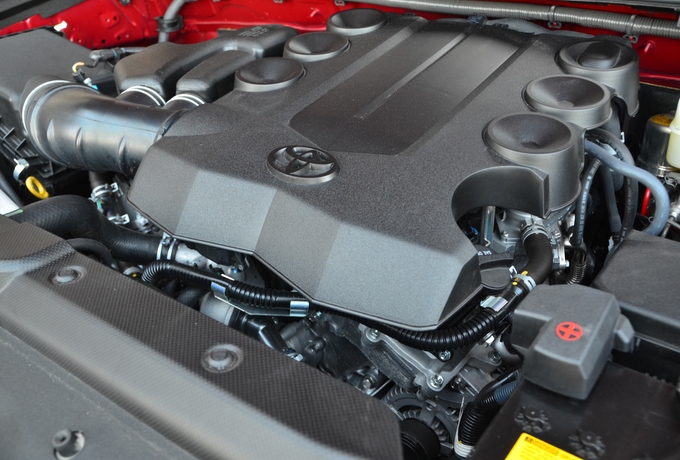
Under the hood is the familiar 4.0L DOHC 24 valve V-6 making 270 hp at a low 5,600 rpm and a stout 278 pounds of twist at 4,400 rpm. It is the only choice, as the 2.7L inline four is no longer offered in a 4 x 2. Good move Toyota as the four banger didn’t get any better fuel economy than the V-6 and it was saddled with a four-speed auto cog swapper. It gave up too much performance for essentially no better fuel economy. The V-6 sends its power to either the rear wheels or four wheels via a five-speed auto tranny. While not a six- or more speeder, the five-speed unit does a great job. A six-speeder wouldn’t make much difference with this engine’s broad torque curve, which is table top flat from 1,800-5,200 rpm.

Temperature during the road test was over 95 degrees, which may have some effect on diminishing performance, which is probably why this 4Runner Trail Premium performed differently than my road test of four years ago of the exact same model. Zero-60 mph times averaged 7.78 seconds. Passing performance was quick as well with a 50-70 run requiring just 3.98 seconds and the same run up a six percent grade slowing that time by almost two seconds to 5.78 seconds. Excellent times for a 4,750-pound vehicle, but slightly off the numbers from 2010 — 7.48, 3.65 and 5.22 seconds. While Temperature can make a difference, the difference in the numbers is insignificant.

However, fuel economy was about the same, if not slightly improved. EPA rates the 4Runner at 17/21/18 mpg city/highway/combined. But the 4Runner did a bit better with an overall average of about 18.5 mpg and at 70 mph on a level highway it returned 23.5 mpg (runs are done two ways to correct for winds and elevation changes). On a 150-mile roundtrip to South Lake Tahoe on Highway 50 with at least half a dozen full-throttle passing runs, the 4Runner averaged 21.4 mpg (17.8 from Rescue to SLT and 25.0 mpg on the return trip). Ten years ago those would be good numbers, but today they are only slightly above average. One saving grace is the 4Runner’s huge 23-gallon fuel tank.

Suspension duties are handled by a stout fully independent double wishbone set up in front and a four link extremely well controlled live or solid axle in the rear. Gas shocks with coils are in all four corners. This Trail Premium had the optional Kinetic Dynamic Suspension System, which used larger stabilizer bars that can disconnect for more axle travel and greater articulation in difficult terrain and rock crawling.

Also helping off road control is the CRAWL system to match terrain with five speed levels which keeps off roading smooth and under total control. In addition it also has a Multi-Terrain system which adjusts wheel slip to match the terrain selected. Also helping is Downhill Assist Control and Hill Start Assist Control, both excellent additions to increase off road safety.

Handling, enhanced by very quick steering, 2.7 turns lock to lock, is very good. When pushed hard in the corners you can feel the wide 265/70 series tires working on the 7.5 x 17 inch alloys changing the direction of a 5,000 pound vehicle. Surprisingly, body roll is controlled. In my prior test I remarked how the VSC intervened too early. The good news is that it must have been recalibrated as it didn’t intervene at all during this test. Thanks, Toyota.

During the Tahoe run I stayed behind a late model Corvette with no problem. He drove with sanity as our speeds rarely exceeded 60 mph.

Ride quality was extremely smooth on the interstate to a muted firm in more difficult road conditions. At no time was it jarring. Only when the engine was pushed hard did engine noise enter the cabin, but in normal driving it is very quiet, no wind, road or engine noise. The engine turns a slow 2,000 rpm at 70 mph. It is a comfortable ride.

Brakes are powerful with vented discs well over a foot in diameter in all four corners. Stops from 40 mph were accomplished in 42 feet under perfect control. All the acronyms are standard along with plenty of airbags including a roll sensing side curtain bag for all rows of seats.

With the Trail Premium upgrade, seats go from cloth to a very good synthetic leather called SofTex that will have you second guessing as to whether it’s leather. They seem more comfortable with excellent support then in my previous go-round. The instrument panel is a joy to use. Yes it has all the bells and whistles but it is very intuitive. Instrumentation is complete and extremely legible and usable as you would expect. Rear seating is huge also meaning cargo room is copious, about 90 cubic feet behind the front seats and almost 50 cubic feet behind the second row. A third row option is available as is a slide out rear table, very convenient for tailgating or loading and unloading.

Pricing for the Trail Premium starts at $38,645 plus $860 for the boat ride from Japan. It also had the optional KDSS for $1,750. Add in running boards, sliding cargo deck and floor mats and you are at $42,175. Everything else is standard including NAV, sunroof, backup camera, the connectivity to talk to the space station and power heated front seats. In 30 years the 4Runner has matured nicely. Maybe they should change the name to “4MostRunner.”

Larry Weitzman has been into cars since he was 5 years old. At 8 he could recite from memory the hp of every car made in the U.S. He has put in thousands of laps on racetracks all over the Western United States.


How depression warps your sense of time

By Carolyn Gregoire, Huffington Post

Time may fly when you’re having fun, but it can feel as though it’s screeching to a halt when you’re depressed.

People with depression actually perceive time as going by more slowly than people who are not depressed, according to a review of studies published in the Journal of Affective Disorders in January.

To investigate the link between depression and time perception, German researchers analyzed data from 16 previous studies on more than 800 depressed and non-depressed people. Most of the studies assessed time perception by asking participants to gauge the length of time that they had engaged in different activities, such as watching a short film or pressing a button. The analysis revealed that people with depression reported a slower subjective experience of time — they often felt as though time was slowly dragging by.

Read the whole story