Ultrarunner to talk about TRT

On May 19, Alpenglow Sports will host the fifth installment of the Education Series created by the Donner Party Mountain Runners.

Created in 2013, the Donner Party Mountain Runners is a grassroots running club that exists to inform and inspire mountain runners in the Truckee-Tahoe region.

Part of their mission involves educational outreach to the local community. Board member and local ultrarunner Gretchen Brugman will tell her tale of through-running the Tahoe Rim Trail. The presentation will tell the story of five runners who spent four days running the Tahoe Rim Trail, covering about 40 miles each day. The runners ended each day with dinner, a hot shower, and a hotel room – popularized as “glam” trail running.

The presentation will feature photos and stories from the trip, as well as detail the training, planning, equipment, and logistics involved to pull off such an endeavor. A short question and answer session will follow the conclusion of the show.

The cost is $3. There is no charge for Donner Party Mountain Runner club members.

Alpenglow Sports is at 415 North Lake Blvd., Tahoe City. Talk starts at 6:30pm.


Meditation workshop in South Lake Tahoe

There will be Mindfulness Stress Reduction Meditation workshop on May 30 in South Lake Tahoe.

Colleen Camenisch has been teaching mindfulness meditation for more than seven years, including a specialty in working with survivors of trauma. She has taught at the University of Massachusetts Center for Mindfulness and at UNR.

This six-hour silent retreat is designed for beginning or experienced meditators. Camenisch will be leading a series of guided meditations that include: mind-body practices, working with concentration, and gentle stretching yoga. The last portion of the program will offer time for participants to have dialogue about the experience and share insights that may have arisen throughout the day. Camenisch will offer suggestions for working with the meditation practice and how to integrate it into our daily lives.

The workshop is from 9:30am to 2:30pm at Unity at the Lake, 1195 Rufus Allen Blvd., South Lake
Tahoe. Preregistration is $50, registration at the door is $60 with cash or check.

For more information, contact Rosemary Manning at tahoehealthtouch@gmail.com.


Tahoe Tails — Adoptable Pets in South Lake Tahoe

Jodi

Jodi

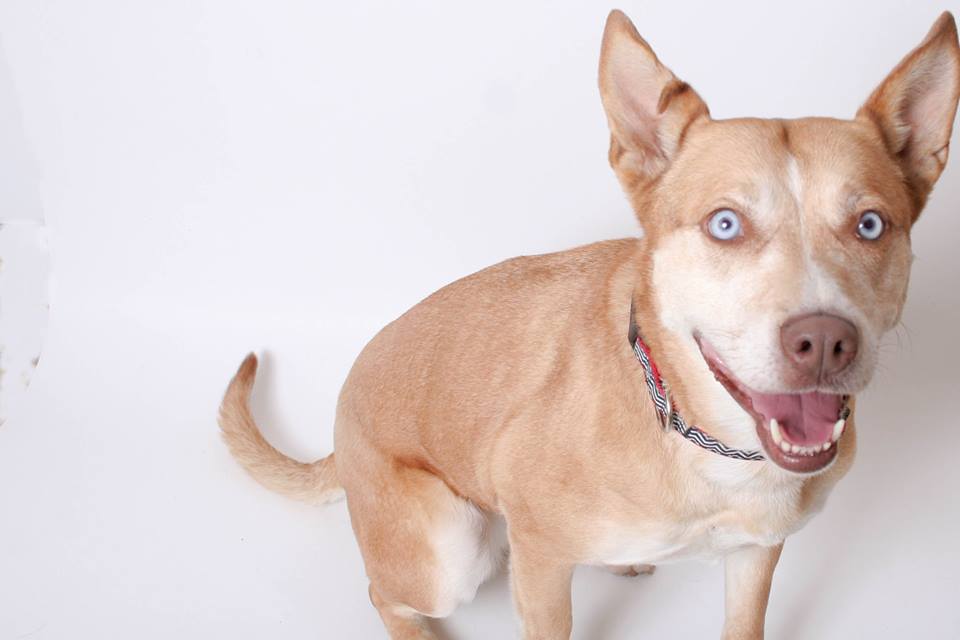
Jodi is a 3-year-old Husky mixed with a cattle dog — is the best guess. She shows many of the characteristics of both dogs — she is very energetic, smart, and generally well-mannered. But as is typical of both breeds, she has a strong prey drive and can play a bit rough, and will be best in a home without small kids, small dogs or cats.

Jodi is spayed, microchipped, tested for heartworm, and vaccinated. She is at the El Dorado County Animal Services shelter in Meyers, along with many other dogs and cats who are waiting for their new homes. Go to the Tahoe animal shelter’s Facebook page to see photos and descriptions of all pets at the shelter.

Call 530.573.7925 for directions, hours, and other information on adopting a pet.

For spay-neuter assistance for South Tahoe residents, go online.

— Karen Kuentz


Tahoe Paradise Park to host summer events

The Tahoe Paradise Park is trying to reinvent itself and be more of a destination.

The district’s board last week agreed to have OnCourse Events produce two music events this summer. The park at the base of Echo Summit is going to have what’s called Music in the Park on Aug. 23 and Sept. 13 from 4:30-8pm.

People are encourage to bring a picnic and chairs to the free concerts.

To help spruce up the park, there will be community cleanup days on May 16, May 23 and June 6. Bring gloves, garden tools, power tools, wheel barrels, ladders, paintbrushes and sandpaper. Also needed are volunteer stump grinders, welders and backhoes and chippers.

To celebrate the park’s 50th birthday, there will be a bash July 11 from noon-8pm. There will be food, art and craft show, music all day, and car shows. People are encouraged to bring kayaks and paddleboards.

Park founder and developer of the park Mary Jo Wilson, wife of Jim Wilson, and family members will be the special guests.

The park’s history will be on display in the clubhouse.

Tahoe Paradise Park is at 1101 San Bernardino Ave., Meyers. For more info, email tahoeparadise50@gmail.com.


Brothel lobbyist put friendly face on often-reviled industry

By John M. Glionna, Los Angeles Times

For half a century, George Flint has toiled on behalf of legal brothels in Nevada
Nevada lawmakers declare ‘George Flint Day’ to celebrate the work of the brothel lobbyist
Most lawmakers in this state capital simply call him “Georgie,” a soft-spoken old opinion-swayer with a cane who revels in his political incorrectness.

For half a century, George Flint held court in the hallways of the Legislature here, most lately in the first-floor coffee shop, at the round table nearest the elevators, so he didn’t have to walk too far on his gimpy left leg and two replaced hips.

Flint is Carson City’s oldest working political advocate, toiling on behalf of the world’s oldest profession — the lone brothel lobbyist in the only state to sanction legal prostitution.

Even at 81, he had intended to keep working, but a heart attack hit him last month. So now he’s calling it quits to a career of using a folksy, lean-over-the-fence style to advocate the legal pleasures of the flesh.

Read the whole story


LTCC student artists to be recognized

Lake Tahoe Community College’s annual Student Art Exhibition’s opening reception is May 17 from 2-5pm. The awards ceremony is at 3:30pm.

This free exhibition will be on display throughout the LTCC campus through June 19.

Paul Baker Prindle will serve as juror for the 17 categories. Prindle is the University Galleries Director at UNR, as well as an accomplished artist and administrative faculty member.


Preserving Mother’s Day wasn’t easy

By Katharine Lane Antolini

One hundred years ago last May, President Woodrow Wilson signed the first congressional resolution and presidential proclamation calling upon all citizens to honor Mother’s Day. The observance of the Mother’s Day holiday may have had an easy birth, but not an easy transition to maturity.

Anna Jarvis, who deserves credit for the holiday’s popularity and organized the first official Mother’s Day services on May 10, 1908, in her hometown of Grafton, W. Va., and in her adopted hometown of Philadelphia, designed the celebration in honor of her own mother, Ann Reeves Jarvis. As a young girl, she was inspired by a prayer she once overhead her mother give: “I hope and pray that someone, sometime, will found a memorial mother’s day commemorating her for the matchless service she renders to humanity in every field of life,” Jarvis remembered her mother saying. Jarvis chose the second Sunday in May to mark the anniversary of her mother’s death and selected Mrs. Jarvis’ favorite flower, the white carnation, as the holiday’s official emblem.

As a single woman in her 40s, Jarvis viewed motherhood simply through the eyes of a daughter. Thus she constructed a child-centered celebration of motherhood for Mother’s Day: a “thank-offering” from sons and daughters and the nation “for the blessing of good homes.”

Commercial industries quickly recognized the marketability in Jarvis’ sentimental celebration of motherhood. Her themes became central to Mother’s Day advertising campaigns. The designation of the white carnation emblem energized the floral industry.

Jarvis, however, considered Mother’s Day her intellectual and legal property. She wished for Mother’s Day to remain a “holy day,” to remind us of our neglect of “the mother of quiet grace” who put the needs of her children before her own.

Jarvis’ attacks on the commercialization of Mother’s Day became legendary. In 1922, Jarvis endorsed an open boycott against the florists who raised the price of white carnations every May. The following year, she crashed a retail confectioner convention to protest the industry’s economic gouging of the day.

The biggest threat to Mother’s Day was another holiday: a more inclusive Parents’ Day. In 1924, New York City philanthropist Robert Spero sponsored his first Parents’ Day celebration on the second Sunday in May. His rallies earned more holiday converts and media attention as the decade progressed. “We want fathers to feel they are more than breadwinners, that when they go off to work they have some responsibility for what goes on in the home,” Spero told the New York Times in 1926.

In 1930, when New York Assemblyman Julius Berg introduced a bill in Albany to legally replace Mother’s Day with Parents’ Day on the state calendar, he was confident that New York state mothers would have no complaints about sharing their day with fathers.

But Jarvis complained, vehemently. Not only did she consider the bill a personal attack on her legal copyright protection; she saw it as a patent, “humiliating” insult to the state’s mothers. For Jarvis, a threat to Mother’s Day was an affront to motherhood and, in turn, to family harmony. Although often criticized by her more feminist contemporaries, as well as modern scholars, for her failure to acknowledge mothers who were active in the era’s social and political reform movements, Jarvis never faltered from her defense of a mother’s preeminent role within the family.

The state and national success that Spero predicted for Parents’ Day never materialized. Berg’s bill failed repeatedly in Albany. And even George Hecht, the publisher of Parents magazine who had once endorsed Parents’ Day, abandoned the movement in 1941 to chair a new national committee on Mother’s Day.

Perhaps the holiday’s lack of broad appeal mirrored the larger cultural recognition of the unequal division of child care — that when contemporary child care experts or social pundits addressed “parents,” they were still really addressing mothers. Although many Americans certainly believed that fathers deserved regard beyond that of breadwinner, most hesitated to equate the maternal and paternal roles. Ultimately, Americans opted to honor fathers in a way that did not threaten the status of mothers or marginalize their role as children’s primary care takers. As the Parents’ Day movement faded in the 1940s, the celebration of Father’s Day grew in popularity.

On a national calendar already crowded with tributes to American fathers — from Presidents’ Day to our “pilgrim fathers” on Thanksgiving — Mother’s Day is the only culturally, commercially popular holiday that explicitly celebrates women. And that explains Jarvis’ protectiveness: “When a son or daughter cannot endure the name ‘mother’ for a single day of the year it would seem there is something wrong,” she implored.

Katharine Lane Antolini is an assistant professor of history and gender studies at West Virginia Wesleyan College. She is the author of “Memorializing Motherhood: Anna Jarvis and the Struggle for the Control of Mother’s Day”. She wrote this for What It Means to Be American, a national conversation hosted by the Smithsonian and Zocalo Public Square.


Virginia City to embrace its mining roots

To honor Virginia City’s mining heritage, the town celebrates with Muckfest: Mining, Whiskey & Cigars.

A full day of activities is scheduled in the Mining Village at the Delta parking lot, including mining demonstrations and exhibits. In the Whiskey & Cigar Lounge, study the old West’s favorite libations by sampling more than 20 whiskeys.

Bring the kids to learn about the mining and reclamation process at the cookie mining station or take them to Virginia City Mining Company where they can test their luck panning for gold or gems.

The event is June 13 from 10am-5pm.

For info, call 775.847.7500.


Finding solace in other people’s intimacy

By Patrick Quinn

Most people collect things, whether it’s casually or compulsively. You might accumulate many pairs of a favorite brand of shoe. Or you might be a Deadhead on a mission to stockpile Jerry Garcia bootlegs.

My own collection consists of unique items that are very personal, though they’re not an actual part of my life. I collect what’s known as “vintage ephemera” — postcards and letters, photographs and newspapers, calendars and maps, baseball cards and paper dolls, and even birth announcements and death certificates. These are written or printed items that, according to the Oxford Dictionary, “were originally expected to have only short-term usefulness or popularity.”

I offer my own definition that might help to explain my interest: Ephemera are curious and beautiful remnants of the past. One example from my collection is a letter sent by a widow to the officer who was at her husband’s deathbed when he was shot during the First World War.

When someone passes away, we assume that the surviving family will be responsible for their possessions. But often the families are estranged or the deceased leaves behind major debt. In those cases, the belongings are sold at an estate sale, storage units are auctioned to strangers, and the rest ends up on the dusty shelves of the Goodwill. It is not by accident that every thrift store has the same pervasive air of melancholy. I like to think that the objects I collect are being spared that injustice.

My interest in ephemera began when I bought an old photo album at the Rose Bowl swap meet in the early 2000s. As a visual artist, my original intent was to use old photos in my mixed media sculptures. But I found myself fascinated by these windows into another time. A dealer at the swap meet told me about an even bigger treasure trove of these kinds of items at Hal Lutsky’s Vintage Paper Fair, which was in an Elks Lodge in Pasadena at that time. I’ve been going to the vintage paper fair ever since.

These days, the fair features about 40 dealers who set up on folding tables in the Glendale Civic Center’s main room three times a year, including this coming May 16 and 17. Some specialize in one particular type of ephemera, such as restaurant matchbooks or Stereoviews, but most bring a wide variety. The prices can run the full gamut; a box of 25-cent photos might be displayed next to a single framed image worth hundreds of dollars.

Sherry Sonnett is a regular dealer at the fair. She accumulates her inventory of vintage valentines, sheet music, turn-of-the-century nude photo postcards from France, and other items at estate sales and through other dealers. It was through Sherry that I found love poems written by Private Edward Howard for his wife Dorothy every day he served in the Army during World War II. It was in this package of writings that I found a letter addressed to the couple in 1942, just after they lost a newborn daughter a few weeks earlier:

Dear Ed and Dorothy, Florence has just called me on the phone and has told me of the receipt of the telegram telling of the passing of your little baby. I am sure I don’t need to tell you we are both thinking of you constantly and send our sincere sympathy for your loss. Having passed through the same experience while we were living in New York, we know something of the problem that you face. It’s good at these times to have something to hold on to and to be able to know such problems as this do not represent the truth; to know that Life really is without either beginning or ending and that, despite the evidence that is pouring in on you, you really have lost nothing but that your little girl still lives. I know that such things are difficult to see at such times but, despite this fact, they are true — absolutely true.

The letter is a reminder of how harsh reality can be, and that, with all of our social and scientific advancements, the only cure for sorrow is still simple human compassion. Every time I read this letter, it reminds me to appreciate all of the good things in my life.

Steve Bannos has been selling vernacular photographs (photos of everyday life taken by non-professionals) on eBay since 1997. The people who collect vernacular photos are very specific in their interests — they focus on a single subject like shadows, men wearing hats, or photobooth images. Bannos met his wife when she purchased photos of watermelons from his website. One unique image I bought from Steve was a snapshot of an old man standing alone with the words “Whitey – 1948, three years before he went blind” written in the back.

Gail Pine, a Santa Barbara artist who also uses vernacular photos in her artwork, often sits next to me as we methodically dig in the fair’s discount bins. These bins hold thousands of photos or postcards priced at a dollar each or less. Even when they’re slightly out of focus or badly framed, Gail describes the photos she collects as “wonderful random mistakes.” Like many collectors, she wonders about the faces of the people in the photos and if they’re still around. A few years ago, she was in a thrift store in Arizona and found a picture of her own grandfather who had long before passed away. It seems that every dealer or collector has a similar story.

I’ve never come across an old friend or relative in a vintage photo, but I did feel a connection to the man who had saved a package of literary rejection slips that I found. Like that budding (and unsuccessful) author, I submitted short stories to dozens of magazines when I was younger — and was never published. Some of the magazines he was rejected from back then still exist today — and they rejected me, too. Apparently the editors didn’t enjoy my work anymore than they did his.

Fortunately though, the people whose lives I glimpse through my collection have occasionally been blessed with happy endings. Mrs. Cora Taylor of Oxnard must have been heartsick when she received a telegram on March 26, 1967, that informed her that her husband Sgt. Hershal Taylor was placed on the seriously ill list in North Vietnam because a grenade sent shrapnel to his head and chest. “His condition is of such severity that there is cause for concern but no imminent danger to life,” the telegram concluded.

But 10 days later, Mrs. Taylor received a second telegram:

I am pleased to inform you that your husband Sergeant H. Taylor has been removed from the seriously ill list. Since his condition is no longer considered serious, no further reports will be furnished. I share our hope that he will have a complete and rapid recovery.

The telegrams are old and brittle and I have to be careful when I unfold them. I have no idea how things turned out for Sgt. Taylor and his wife. But I every time I read them, I try to imagine her face as she read those words. Not everything I own is sad or bittersweet. There is a lot of humor and nostalgia in my collection.  But it’s the hunt for the special things, like the two telegrams, that keep me coming back to the Glendale Fair.

Patrick Quinn is a writer and a mixed-media artist living in Los Angeles. He wrote this for Thinking L.A., a partnership of UCLA and Zócalo Public Square.


Academy of Dance Arts to put on 2 shows

The annual spring concerts of the Academy of Dance Arts will be at MontBleu in Stateline on May 15-16.

This year the ballet is entitled Fairies Among Us. It is a ballet based on the four elements earth, water, fire and air.

After a brief intermission, the show will continue with the jazz, hip hop, lyrical, contemporary, and tap portion of the show entitled Let’s Dance.


Doors open at 5pm, the show is at 6pm. For tickets, call 800.745.3000.