TOCCATA celebrating 10th anniversary

Building on its June Go for Baroque kickoff series, TOCCATA will continue its 21-concert Summer MusicFest with a series that celebrates the 10th anniversary of Tahoe’s own Symphony Orchestra and Chorus.

The first concert is July 14, 7pm at Shepherd of the Sierra Lutheran Church in Carson City (3680 Highway 395 South) and opens with Mozart’s “Variations on Twinkle Twinkle Little Star” for flute and soprano performed by principal flute from the Puerto Rico Symphony, Josue Casillas, and soprano Joy Strotz. The concert continues with two hits for the 55 voice TOCCATA MusicFest Chorus an concludes with Beethoven’s “Choral Fantasy Op. 80”, dedicated to peace and world harmony with nature, with Donna Axton on piano.

Other concerts in the series will be presented on July 17, 7:30pm at St. Theresa Catholic Church in South Lake Tahoe (1041 Lyons Ave.), July 19, 4pm at Cornerstone Church in Incline Village (300 Country Club Drive), and July 21, 7:30pm at Bartley Ranch Amphitheater in Reno (6000 Bartley Ranch Road). Maestro James Rawie will conduct all performances.

Tickets are available at the door or online. General admission is $30 adults and $25 for seniors. Youth/students under age 24 with valid ID are $5 for seating 10 minutes prior to concert time, and under 18 enter free. Preferred seating is $40 and $15 for youth/students. Bartley Ranch lawn seating is $10.

For more information, call 775.313.9697 or email at ToccataTahoe@gmail.com.


4 people win Lake Spirit Awards

Four people who possess a strong commitment to preserving Lake Tahoe were recognized this week at the Tahoe Regional Planning Agency’s Governing Board meeting.

The Lake Spirit Awards honor people who have made progress at restoring Lake Tahoe.

Awards were given in two categories, exemplary citizen and exemplary agency representative or environmental scientist. This year’s winners are:

Exemplary citizen

Rebecca Bryson, South Shore, is a member of the Community Mobility Working Group, which advocates for improved community connections. Bryson also spearheaded a composting program in Lake Tahoe Unified School District elementary schools and was the lead organizer for the Sierra House growing domes project, generating more than $100,000 for its construction.

The Murphy Family, North Shore, consisting of Shawn, Angie, Tyler, and Savannah, are committed to fighting aquatic invasive species in Lake Tahoe. Through their business, Wet Leprechaun Dive Services, the Murphys have physically remove aquatic invasive weeds from iconic Tahoe locations, including Emerald Bay. The Murphy family also champions public education about aquatic invasive species in an effort to grow awareness of this threat to Lake Tahoe.

Exemplary Agency Representative or Environmental Scientist

Joy Barney, South Shore, of the U.S. Forest Service Lake Tahoe Basin Management Unit founded the Generation Green of Lake Tahoe Program, which educates high school students about the environment and gives them work and volunteer experience through the Forest Service. She helped found the South Tahoe Environmental Education Coalition, providing 1,500 hours of environmental education in local schools annually.

Madonna Dunbar, North Shore, of the Incline Village General Improvement District and Tahoe Water Suppliers Association promotes environmental programs in Incline Village and around the Region. Her work on the IVGID Waste Not Program reaches over 200,000 people every year. She promotes water conservation and encourages people to Drink Tahoe Tap.


A social network for talkers

By David Gelernter, Wall Street Journal

No group needs social network software more than the elderly. We have built a frenzied society full of shriek TV, shriek music, shriek movies, shriek ads. Texting and phone-fondling go on ceaselessly. None of this welcomes the elderly, who were often lonely even before we turned up the volume on American society.

So it’s too bad that today’s social networks are virtually useless to them. The elderly don’t want to type; they want to talk. And if they can’t make sense of new software in 10 seconds, they move on.

Audio is our first requirement. Losing dexterity is part of aging, and arthritis is not exactly rare. Your speed doesn’t matter when you type alone, but slow “conversational typing” hurts the flow. Anyway, unless you do it for a living, writing is an impoverished version of speaking.

Human contact is what too many older people lack. Why deprive them of voice? And why not let them take part in networked conversations while lying on a lounge chair or flat in bed?

Read the whole story


Dispensing homeopathic remedies instead of drugs

By Steven Litvak

My grandparents, Norman and Mary Litvak, founded the Santa Monica Homeopathic Pharmacy back in 1944, originally planning on selling the usual items found in drug stores at the time — medicine, alcohol, soda, cigarettes. Little did they know that within just a few years, they would be pioneering the first fully integrative retail pharmacy in the United States.

Norman had been trained as a pharmacist at the University of Buffalo and understood the side effects of medication and the nutritional deficiencies caused by them. When the pharmacy’s customers weren’t doing as well as he and Mary had hoped, they decided they should provide customers with education and other alternative methods of healing, even though it was far more profitable to sell just prescription drugs. When a homeopathic sales rep entered their store shortly after purchasing, they were intrigued and decided to see what would happen if they offered these remedies to their customers.

When customers came in with allergies or aches and pains, Norman started giving them a homeopathic remedy instead of a drug. After those customers ran out of remedies, they came back for more. Complaints about side effects went down. Customers had fewer symptoms or were symptom-free. As word spread, many local doctors and individuals came to inquire about alternative ways of treating their ailments.

Norman and Mary’s passion for homeopathy was contagious. My grandfather formed relationships with doctors in the community, and even took some doctors under his wing, teaching them the homeopathic trade. A form of treatment that used to be considered snake oil or a placebo remedy proved to be an effective, non-invasive approach to a wide range of health issues.

Homeopathy is a system of medicine founded in the early 19th century by German physician Samuel Christian Hahnemann, who claimed that the medicine he had been taught to practice sometimes did patients more harm than good. The word “homeopathy” comes from the Greek words homeo (“similar”) and pathos (“suffering”). It is based on the principle that a disease can be cured by smaller doses of a medicine that, at full strength, creates similar symptoms to what the patient is experiencing.

Modern medicine often addresses a single symptom and not the totality of symptoms, whereas homeopathic physicians take into account all symptoms, including how the patient is reacting to the symptoms. Modern medicine is based on killing, suppressing, or blocking symptoms. Homeopathy works by allowing the body to handle the symptoms and then restoring balance.

For example, to treat allergies, a conventional pharmacist likely will dispense an antihistamine like Claritin or Zyrtec in which the active ingredient is designed to calm down your body’s immune reaction to allergens like pollen or animal dander. A homeopath, however, might prescribe Histaminum 15C, a remedy that is made from purified chemicals called histidines, which come from living substances, such as plants. Rather than blocking the action of histamine, one of the body’s natural chemicals, as a conventional allergy medicine would, this homeopathic remedy works by gently helping our immune system reduce the histamine load on the body without any drowsiness. Most patients notice a difference in their symptoms within the first 10 to 15 minutes after taking the remedy.

All homeopathic remedies are derived from plants, minerals, and animal sources and are prepared in minute dosages. They can be used during pregnancy and breastfeeding; they don’t react with other medications and substances like alcohol. Homeopathic remedies can be dissolved in water for animals and babies, and most have a pleasant taste, so children accept them with ease.

There are limits, of course, to what homeopathic medicine can do. Homeopathy alone is not for life-threatening emergency situations. It can be used for the side effects of chemotherapy or radiation, but not alone for cancer. Serious health disorders need to use multiple approaches to get the best results. But we have found that homeopathy and other alternative medicine work well for chronic diseases and certain diseases where there are no modern treatments available.

There are many misconceptions about homeopathic medicine, including that it’s merely a placebo therapy. But infants, children and animals – living beings who can’t “overthink” themselves well — get results from using our remedies. And, scientific double-blind randomized clinical trials, many of which have been recorded and repeated, also prove homeopathic medicine’s effectiveness. A few years ago, the Swiss government affirmed that homeopathic medicine works and is safe to consume.

One misconception about our pharmacy, especially from first-time customers, is to assume that everything in our store is homeopathic. However, we are a completely integrated pharmacy and also offer a few safe prescription medications. It’s just that we have more than one option for treating illness.

“Alternative medicine” is an umbrella term used to describe many of the health sciences that are not classified as modern mainstream medicine. Homeopathy is only one of the sciences that falls under alternative medicine. We also offer flower essences (commonly used for emotional problems), Western and Chinese herbs, professional nutritional supplements, essential oils, and natural skin care and household products.

Throughout the years, the alternative medicines industry has been challenged. As recently as April, the FDA announced it was considering enforcing more regulations for homeopathic medicine. (The labs that manufacture homeopathy are already regulated by the FDA.)

Such controversy belies the consistency with which we have run our pharmacy for almost a century. At any given time during business hours, Monday through Saturday, people enter our doors knowing that they can have a free consultation with any of our staff members, all of whom have been trained and certified in a field such as homeopathy, herbology, acupuncture, pharmacology, and nutrition. We also have pharmacists on staff who have received conventional training.

Over the years, our store has definitely changed. The name evolved (from Santa Monica Drug Company to Santa Monica Homeopathic Pharmacy). Cash registers were replaced by computers. Candy and soda was replaced by healthy snacks and beverages that do not cause sugar spikes in the blood and other negative effects on the body. Cigarettes and alcoholic beverages are long gone. The clients have come to ask more about alternative medicines. And we now have hundreds of medical doctors and hospitals that send their patients into the pharmacy to get help. Alternative medicine for many has become their medicine of choice.

When Mary and Norm opened the pharmacy in 1944, their sons were 4 and 7 years old. Santa Monica was a center of aerospace manufacturing. Bub and Pop could never have imagined that their small, family-owned pharmacy would still be in existence so far into the future, or that the city where it was based would become an upscale tourist destination. But they would recognize that, just as they did, two more generations are continuing to find the best ways to cure what ails their customers, no matter what tradition the treatments might come from.

Steven Litvak wrote this article with the help of family members Kimberly Litvak, Robert Litvak and Donald Litvak, who also work at the pharmacy. He wrote this for Thinking L.A., a partnership of UCLA and Zócalo Public Square.


Road beat: Hyundai impressively revamps Azera

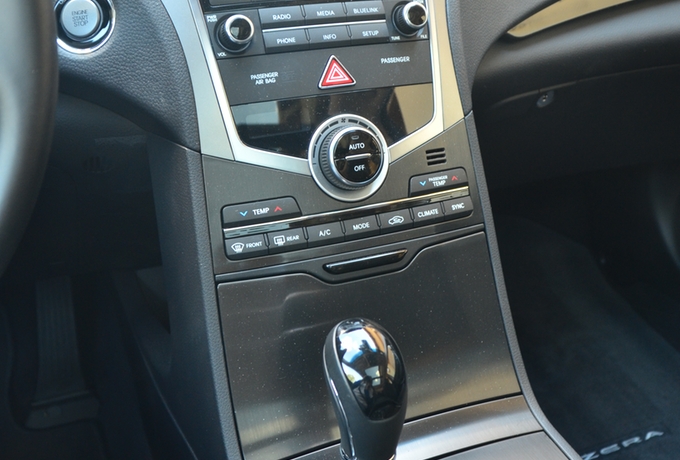
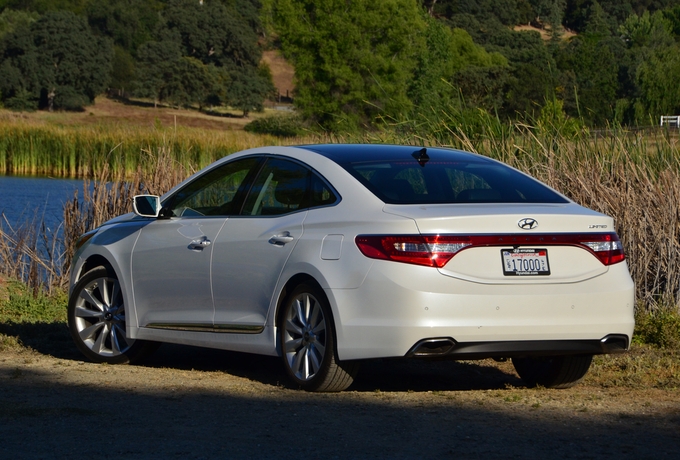
The latest Azera model from Hyundai is dramatically improved. Photos/Larry Weitzman

The latest Azera model from Hyundai is dramatically improved. Photos/Larry Weitzman

By Larry Weitzman

Never being a fan of the Azera, mainly because it was not attractive, has changed by about 180 degrees, with a new, fifth generation model. The prior generation, which was a follow on to the third generation known as the XG 300-350 (a car of real value), must have been designed by a competitor because it wasn’t exactly the belle of the ball.

But the fifth generation Azera changed everything. Sales have been slow to recover as auto experts think the intro in 2008 of the not much more expensive rear-wheel drive luxury Genesis made Hyundai Azera buyers quickly step up the few bucks to the superior Genesis.

Specifications Price (with destination) $34,895 to about $39,220 Engine 3.3L DOHC, 24 valve V-6 293 hp A 6,400 rpm  255 ft.-lbs. of torque @ 5,200 rpm Transmission Six speed torque converter automatic with paddle shifters Configuration Transversely mounted front engine/front wheel drive Dimensions Wheelbase 112.0 inches Length 193.7 inches Width 73.2 inches Height 57.9 inches Track (f/r) 63.1/63.1 inches Weight (18”/19” wheels) 3,684/3871 pounds Ground clearance 5.4 inches Fuel Capacity 18.5 gallons Cabin interior volume 107.0 cubic feet Trunk volume 16.3 cubic feet Turning circle 36.5 feet Steering lock to lock 2.9 turns Wheels (std/opt) 18X7.5/19X8.5 inch alloys Tires (std/opt) 245/45X18/245/40X19 inch radials Performance 0-60 mph 6.24 seconds 50-70 mph 3.35 seco9nds 50-70 mph uphill 4.97 seconds Top speed Way beyond sanity Fuel economy EPA rated at 19/28/22 mpg city/highway/combined. Expect 35 mpg in highway driving at legal speeds and 24 mpg overall in suburban/rural driving.

Specifications
Price (with destination) $34,895 to about $39,220
Engine
3.3L DOHC, 24 valve V-6 293 hp A 6,400 rpm
255 ft.-lbs. of torque @ 5,200 rpm
Transmission
Six speed torque converter automatic with paddle shifters
Configuration
Transversely mounted front engine/front wheel drive
Dimensions
Wheelbase 112.0 inches
Length 193.7 inches
Width 73.2 inches
Height 57.9 inches
Track (f/r) 63.1/63.1 inches
Weight (18”/19” wheels) 3,684/3871 pounds
Ground clearance 5.4 inches
Fuel Capacity 18.5 gallons
Cabin interior volume 107.0 cubic feet
Trunk volume 16.3 cubic feet
Turning circle 36.5 feet
Steering lock to lock 2.9 turns
Wheels (std/opt) 18X7.5/19X8.5 inch alloys
Tires (std/opt) 245/45X18/245/40X19 inch radials
Performance
0-60 mph 6.24 seconds
50-70 mph 3.35 seco9nds
50-70 mph uphill 4.97 seconds
Top speed Way beyond sanity
Fuel economy EPA rated at 19/28/22 mpg city/highway/combined. Expect 35 mpg in highway driving at legal speeds and 24 mpg overall in suburban/rural driving.

But this relatively new generation changes everything. What a great car. Sure it is front-wheel drive, but it is a non-issue. It is so well controlled that 99.9 percent of the time you will never know except for snowy conditions and then you will thank yourself for the front-wheel drive. Torque steer is deminimus, never thought about during the entire test with plenty of aggressive driving.

To improve the overall design, Hyundai designers went to the Fluidic Sculpture studio and came out with a pretty package with lines similar to the Sonata, but in some ways better. The front end is signature Hyundai, but the sides of the body are smooth with two stylish character lines especially above the rear quarter panel with perhaps its signature arrow. Nice touch. But with its long window line and proportions, you would have to call the Azera downright pretty. Many people seeing the car asked what it was saying it was sure stylish and pretty. Many didn’t know it was a Hyundai.

Having a long 112-inch wheelbase, a length of 194 inches and a width of 73 inches put the Azera into a large midsize class. But its voluminous interior dimensions place it squarely in the EPA large car class with a total interior volume of 123-cubic-feet, including a massive 16-cubic-foot trunk. This is a roomy, very comfortable sedan; so much so it could double for limo duty. But it doesn’t drive like a limo nor a Buick (which also don’t drive like Buicks anymore, either).

Powering the Azera is a choice of one silky, trick 3.3L, DOHC, 24 valve, direct injected V-6. Knocking down 293 thoroughbreds at 6,400 rpm plus a peak 255 pounds of twist at 5,200 rpm (meaning this engine is already making 252 hp at peak torque rpm), this engine pulls strong from off idle right to redline of about 6,600 rpm.  Power flows to the front wheels via a six speed auto cog swapper which you can by sliding the shifter over control manually for you boy racers out there. I did use the manual feature going down a long grade.

Azera is almost the mechanical twin of the Kia Cadenza and its performance is similar, matching the Cadenza times within a tenth of a second plus or minus, but its fuel economy was a bit better by an mpg. Zero to 60 mph averaged an excellent near world-class 6.24 seconds. Passing numbers also confirm the Azera’s rapid acceleration with a 50-70 mph passing run lasting just 3.35 seconds and the same test up a six percent grade only slowing the Azera to 4.97 seconds.

As to passing gas stations, the Azera is also exemplary. EPA rates the Azera at 19/28/22 mpg city/highway/combined. But the Azera exceeds those numbers by at least 10 percent in real world driving. Overall the Azera averaged 24.4 mpg and on the highway at 70 mph in a two-way run 35.6 mpg was the norm with the engine spinning 1,850 rpm at 70 mph. This may explain the 2 mpg better 70 mph fuel economy of the Azera over the Kia. While the transmission ratios are essentially the same the final drive ratio is lower in the Azera dropping 70 mph rpm by 150 and that would improve fuel economy. That would also explain why the passing numbers for the Kia are about a tenth of a second quicker over the Azera. Two mpg is significant; a tenth of a second is not.

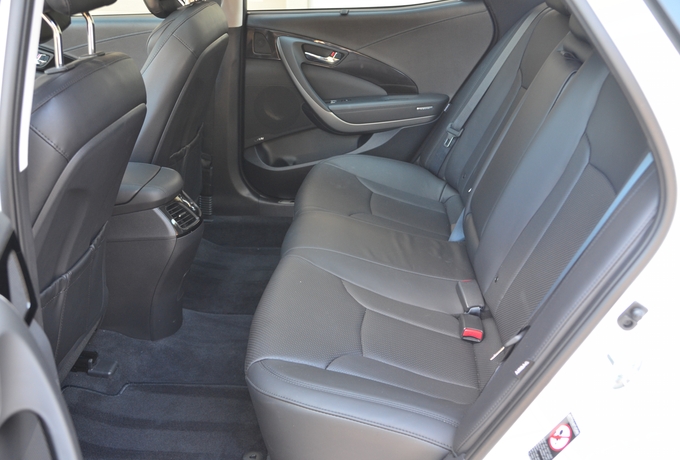
The roominess of the Azera is like sitting in a limo.

The roominess of the Azera is like sitting in a limo.

Handling is enhanced by state of the art fully independent suspension in all corners with Sachs ASD shocks and stab bars at ends. And those creds are improved by the Limited’s upgraded 19 inch alloys shod with super low profile and wide 245/40/19 rubber. Add in a 63 inch track front and rear and you should have a machine that can change directions with ease and the Azera does. Body roll is reasonably well controlled and the quick 2.9 turns lock to lock steering while slightly numb makes it easy to be aggressive and confident when the road bends, no matter how tight and frequent. Azera can straighten the road and keep your line with a minimum of fuss. Turning circle is a tight 36 feet.

Ride quality is superb. It eats road imperfections of any kind for breakfast, lunch, dinner and dessert plus any snacks you want to throw in. And it doesn’t gain weight. It is also extremely quiet, even with those low profile tires. The engine spins at 70 mph only 1,850 rpm and nothing can be heard unless you have back seat drivers which is easy to solve. Stop the car, unlock their doors and ask them to leave. They won’t find a better ride. They will willingly be quiet.

Braking performance was good stopping in 42 feet from 40 mph (large four-wheel discs with ABS). Having nine airbags including rear side impact bags, plus an alphabet soup of safety acronyms, HID headlights that turn night into day, Hyundai leaves nothing out, down to the rear view camera.

If you don’t like soft, buttery leather, don’t buy this car. It’s the only way it comes. Even the standard Azera is so equipped along with things like heated front and rear seats with the fronts having additional ventilation. The IP is superb with everything you need like a trick tach and a trip computer and more. There is only one easy to use Infinity sound  system, no upgrades required by the audiophile. Trust me this one is good, really good.

If there is an issue, I found the gorgeous front seats not to fit me well. Lower back support was lacking even with the adjustable bolster at maximum. It wasn’t low enough. Of course I should mention that during my week with the Azera, I was recovering from a severe lower back spasm. Blame it on me. Rear seating is a limousine and those rear quarter windows make the space feel even larger and the vehicle design better looking.

Now here is the deal. A base Azera stickers for $34,000 plus $895 for the boat from Asan, Korea, and the car is fantastically equipped. My tester was the moderately upgraded Limited stickered for $38,200 and the only option was floor mats for $125. With the limited you get a panoramic moonroof. My dermatologist says no to that so I might have to keep it closed, but the extra filtered light is nice.  With the Limited you get the 19-inch wheels and tires, but the standard Azera is no slouch there, as it gets great looking 18-inch alloys plus 245/45 series rubber that is also very capable.  Limiteds also get the HID lights, lane departures warning and forward collision warning and some other small items, but otherwise they are the same. At $38 large it is a phenomenal deal. At $34 large for the base Azera which is $2,000 LESS than a lesser equipped Camry V-6 tested a couple of months ago, it maybe the value sedan of the decade. Maybe Azera should be spelled v-a-l-u-e. And they still throw in for free a 100,000 mile power train warranty.

Larry Weitzman has been into cars since he was 5 years old. At 8 he could recite from memory the hp of every car made in the U.S. He has put in thousands of laps on racetracks all over the Western United States.


Safety fence going in at Truckee railyard

Union Pacific Railroad will install a safety fence along the downtown Truckee corridor from the McIver Train Depot Fence 1 Crossing roundabout to Bridge Street.

Crossing railroad tracks in non-designated areas is considered trespassing, punishable by fines or arrest. Last year in California, 154 pedestrians were injured or killed while illegally crossing train tracks, including one in Truckee.

Union Pacific Railroad has grown increasingly concerned with the number of pedestrians illegally crossing the tracks downtown, prompting the company to install a safety fence.

The fence will be aesthetically similar to the Depot wrought iron fence.

Safety tips:

• The only safe place to cross is at a designated public crossing with a crossbuck, flashing red lights, or a gate. Cross tracks ONLY at designated pedestrian or roadway crossings.

• It can take a mile or more to stop a train, so a locomotive engineer who suddenly sees someone on the tracks will likely be unable to stop in time.

• Do not cross the tracks immediately after a train passes. A second train might be blocked by the first. Trains can come from either direction. Wait until you can see clearly around the first train in both directions.

• Flashing red lights indicate a train is approaching from either direction. Never walk around or behind lowered gates at a crossing, and do not cross the tracks until the lights have stopped flashing and it’s safe to do so.
• Be aware trains do not follow set schedules.


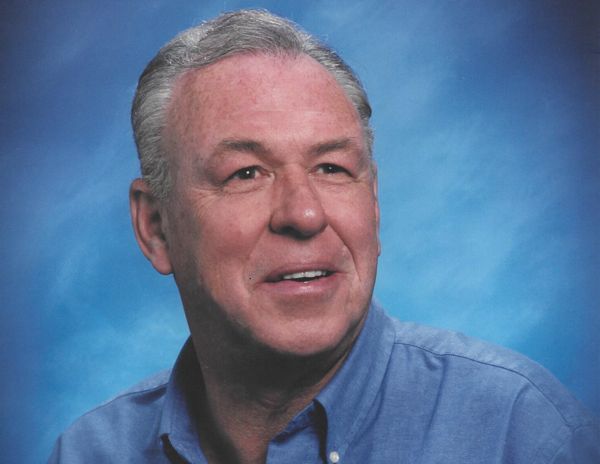
Robert McClain Bellemore — 1939-2015

Robert McClain Bellemore

Robert McClain Bellemore

On June 17, 2015, Robert McClain Bellemore passed away at Carson Tahoe Hospital in the company of his family at the age of 76 and a half.

Robert was born on Jan. 5, 1939, in Toledo, Ohio, to Capt. Douglas Hamilton Bellemore and Margaret Stewart Bellemore.

While attending high school in Boston and Summit, N.J., he discovered his talent in sales. In 1964 he moved to the Tahoe-Carson area where he started his family and began his automobile sales career. He owned several used car lots in South Lake Tahoe and Gardnerville, as well as a Chevrolet dealership in Yerington. He earned his customers’ respect as a fair and honest car dealer.

Bob was a longtime member of Kiwanis and later Rotary International. He was an avid car collector. He enjoyed boating on Lake Tahoe, long drives in western Nevada and hiking in the Sierra with those close to him.

The man who enjoyed fast cars, rare steaks and big cigars will be remembered as an engaging storyteller and a person who brought humor into the lives of the people he cared for.

He is survived by his wife Linda; his brother David and his wife Judy Bellemore; his three children, Robert Bellemore, Brian Bellemore and Patricia Alexander; and his grandchildren Mitch Chambers, Melody Lococo, Melinda Champion, Carson, Malia and Savanna Alexander.

A celebration of his life will be at Carson Valley United Methodist Church, 1375 Centerville Lane, Gardnerville on June 26 at 2pm.


Committing to a dog after cancer

By Steven Petrow, New York Times

Leap Year Day, 1986: I drove up to a ramshackle house in Berkeley to pick out my first dog. It was a month before my two-year cancer anniversary, at which point I would be considered “cured,” and I was ready to make a commitment – to life, longevity and a puppy.

In a local paper I had seen an ad for a litter of cocker spaniels; among the nine pups I watched the runt get trampled over and pushed aside from the kibble. Too small for the forces stacked against her, but determined to stay in the game, the little female struck a chord in me. “That’s my dog,” I said as I paid two Benjamins for her. I know it sounds treacly, but it truly was “puppy love” at first sight.

It didn’t matter a bit to me that she was fully accredited by the American Kennel Club (which I figure is akin to being a member of the Daughters of the American Revolution). I was much more enthralled by her political lineage. Her “mother” and “father” had joined many Vietnam-era protests. Soon enough, this little dog would make her debut in San Francisco’s Gay and Lesbian Freedom Day Parade.

For 13 years, “Billie” was the four-legged love of my life. She was fearless: On hot days, she would leap into our backyard pool and then paddle to the steps, climb out, and do it all over again. She was peripatetic: Over her lifetime she obtained elite status on United, having flown miles and miles in the airline’s friendly skies. And she was smart: able to open doors with a single paw.

Read the whole story


Tahoe Tails — Adoptable Pets in South Lake Tahoe

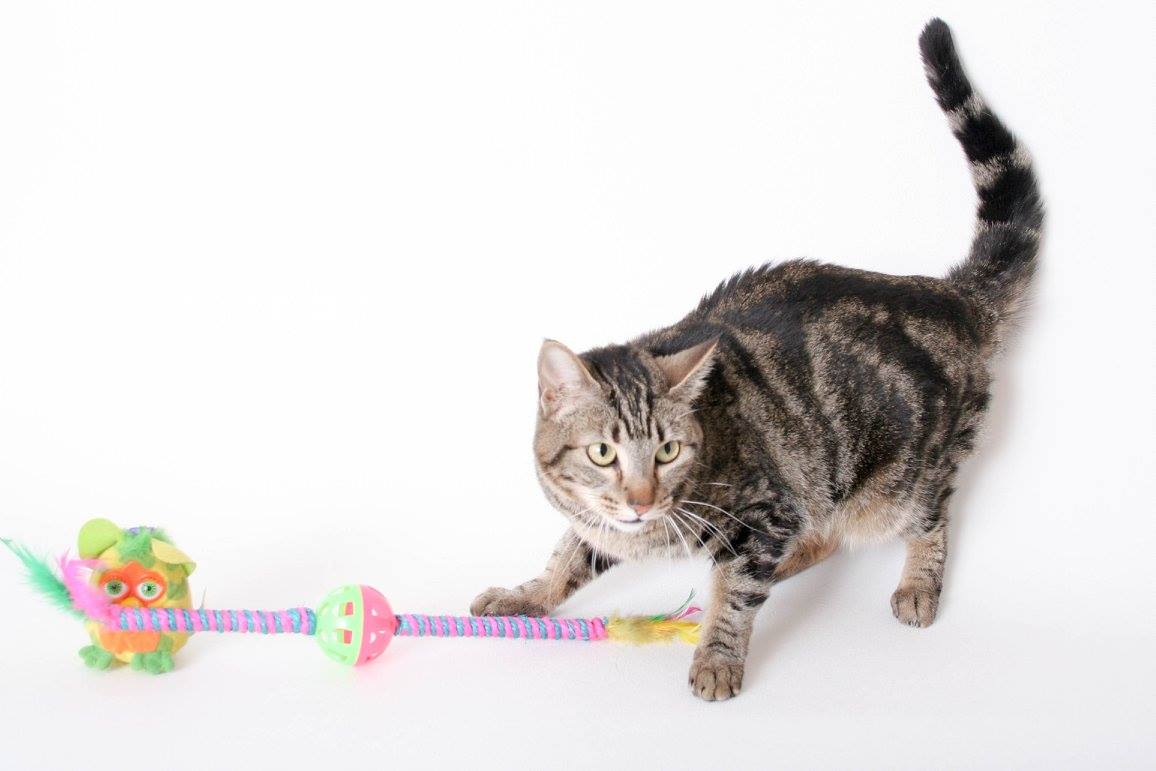
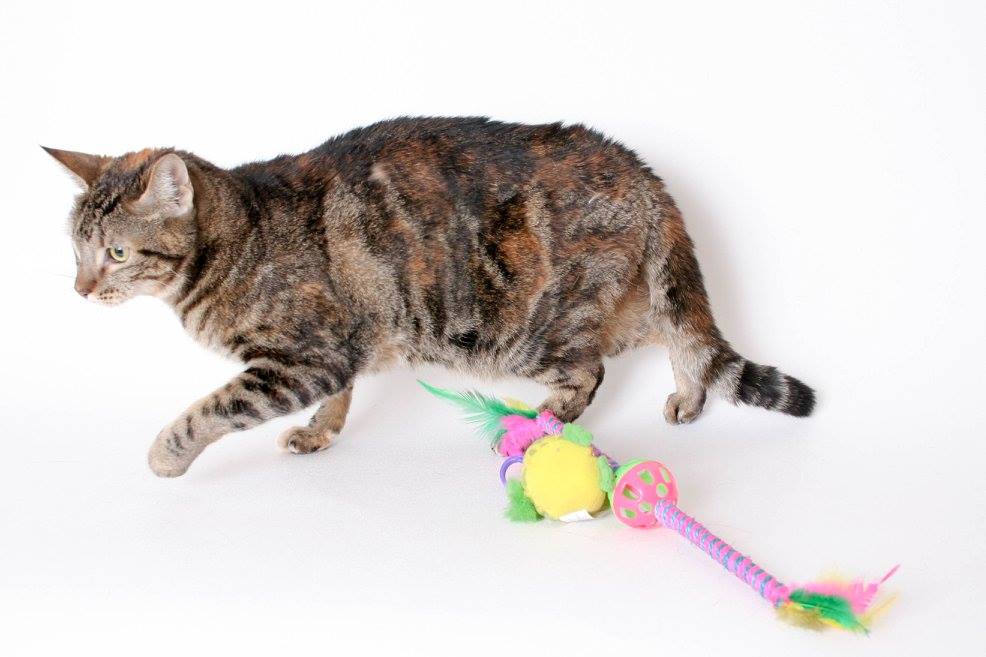
1614229_850400351664242_731816968967112544_o11313036_841871959183748_472539019204541179_oWendy and Lena are a bonded mother and daughter, 5- and 3-years-old. Wendy has a beautiful brown and white striped coat with cinnamon bursts. Also a beauty, Lena is brown and white striped.

They are both very friendly and love attention. These girls are indoor kitties and are litterbox trained. They were brought to the shelter when their owner passed away, and have been at the shelter for over a month patiently waiting to find their new home.

Wendy and Lena would do best as indoor cats in a calm, quiet household. Somewhat shy to begin with, they warm up quickly.

Wendy and Lena are spayed, microchipped, tested for FIV, and vaccinated. They are at the El Dorado County Animal Services shelter in Meyers, along with many other cats and dogs who are waiting for their new homes. Go to the Tahoe animal shelter’s Facebook page to see photos and descriptions of all available pets at the shelter.

Call Animal Services at 530.573.7925 for directions, hours, and other information on adopting a pet.

For spay-neuter assistance for South Tahoe residents, go online.

— Dale Payne


Study: Reduce teen smoking by upping sales age

By Nicholas Bakalar, New York Times

A study has found a simple way to significantly reduce teenage smoking: raise the tobacco sales age to 21. In 2005, Needham, Mass., did just that, while surrounding communities kept their age limit at 18.

Researchers surveyed 16,000 high school students in Needham and 16 surrounding communities four times between 2006 and 2012, gathering data on their smoking habits. The study is in Tobacco Control.

Over the seven years, the number of children under 18 buying cigarettes in Needham decreased to 11.6 percent from 18.4 percent, while in the surrounding communities it hardly changed — down to 19 percent from 19.4.

Read the whole story