Nevada tourism agency doles out awards

The Nevada Division of Tourism honored several individuals and organizations for their dedication to the state’s tourism industry.

Award winners are as follows:

Excellence in Tourism Award – Reno-Tahoe Territory

The Carson City Culture and Tourism Authority, formerly the Carson City Visitors Bureau, was recognized for its work to rebrand the community as a destination for outdoor recreation, arts and culture, farm-to-fork dining and special events.

Excellence in Tourism Award – Cowboy Country Territory

For more than 15 years, Kerrie Supanich has worked in tourism at West Wendover. Supanich has participated in several travel trade and consumer shows on behalf of Cowboy Country, including the Go West Summit in Salt Lake City earlier this year. Cowboy Country promotes tourism in northern Nevada along the Interstate 80 corridor.


Excellence in Tourism Award – Nevada Indian Territory

Michon Eben is actively involved with Nevada Indian Territory, which promotes cultural tourism throughout the state. She has coordinated cultural tours, as well as developed and curated exhibits highlighting the artists and veterans of the Reno-Sparks Indian Colony. Eben also is working to preserve historical photos and documents through digitalization and works with the Artown festival in Reno to ensure a Native American presence at the event.

Excellence in Tourism Award – Las Vegas Territory

Las Vegas tourism professionals Michelle Dillard, Richard Scown and Jan Johnson serve as the finance committee for Las Vegas Territory, which promotes visitation to the Las Vegas region. As a group, they were recognized for their volunteer efforts to improve and elevate Las Vegas Territory’s accounting processes.

Excellence in Tourism Award – Nevada Silver Trails

Shari Bombard, tourism and events coordinator for the town of Tonopah, was honored for her work with Nevada Silver Trails Territory, the section of Nevada south of Highway 50 and north of Las Vegas.

Excellence in Tourism Award – Pony Express Territory

Jane Moon, director of tourism and visitor events for the city of Fallon, was recognized by Pony Express Territory, which promotes visitation along the Highway 50 corridor. Moon, a longtime Nevadan and former Miss Sparks, was commended for her volunteer efforts with many community groups, as well as her work with the Fallon Convention and Tourism Authority.

Statewide Excellence in Grants Award

Ed Spear, president of the Grand Circle Association (promoting the American Southwest) and former chairman of Pony Express Territory, was recognized for his skill as a grant writer. He has used that skill to secure grants for various tourism entities, including Pony Express Territory.

Statewide Excellence in Tourism Award

In addition to his work as executive director of the Elko Convention & Visitors Authority, Don Newman represents rural communities on the Nevada Commission on Tourism, the entity that advises TravelNevada. A strong supporter of tourism throughout state, Newman has served on such committees as the Nevada 150th Anniversary Commission and was instrumental in the state’s acquisition of the Sesquicentennial Saddle, a handcrafted artisan saddle created by J.M. Capriola and on display at the Nevada State Museum in Carson City.

Larry J. Friedman Industry Partner of the Year Award

Papillon Grand Canyon Helicopters, with locations in Las Vegas and Boulder City, was recognized with the Larry J. Friedman Industry Partner of the Year Award.


Placer County setting for trafficking movie

By Sonaiya Kelley, Los Angeles Times
 
In one haunting moment from Liongate’s upcoming thriller “Traffik,” a young woman is drugged and loaded into a waiting truck by sex traffickers after having spent much of the night running for her life. Nina Simone’s stirring “Strange Fruit” punctuates the scene, a touch that filmmaker Deon Taylor calls a “spiritual moment” intended to draw a parallel between trafficking and that other institution that commodifies people held against their will.

“I had to put that in there because (trafficking) is the modern-day slavery,” Taylor said.

“Traffik,” which was “shot with a microbudget,” was produced in part by its star Paula Patton’s Third Eye Productions.


The film, which Taylor wrote, directed and produced through his Hidden Empire Film Group, was shot in Northern California’s Placer County, where the director lives with his wife, Roxanne Avent, a producer on the film. The project was inspired by true events.

Read the whole story


Tahoe Tails — Adoptable Pets in South Lake Tahoe

Rhomi

Rhomi is back as our featured pet at the animal shelter in Meyers. She was adopted, but returned because the fence at the house was not strong enough for her. 

She is a very nice 3-year-old girl who loves to play at the dog park and go for hikes. She has lived with children and is very affectionate, and is house trained and crate trained.

Her photo shows her modeling her Gentle Leader walking collar. With it she does not pull on the leash and shows she is very trainable. Rhomi cannot go home with cats.

Rhomi is spayed, microchipped, tested for heart worm, and vaccinated. She is at the El Dorado County Animal Services shelter in Meyers, along with other dogs and cats who are waiting for their new homes.

Go to the Tahoe animal shelter’s Facebook page to see photos and descriptions of all pets at the shelter. 

Call 530.573.7925 for directions, hours, and other information on adopting a pet. 

For spay-neuter assistance for South Tahoe residents, go online

— Karen Kuentz


Overeating may be a brain glitch

By Laurel Mellin, The Conversation

With springtime comes the desire to shed those few extra pounds, in preparation to don swimsuits and head to the pool. This year, new obesity research is making it easier to find a pathway that is right for us.

There is no doubt that weight loss is a higher priority than ever before. Americans have never been fatter, with close to 40 percent obese and 70 percent overweight. Clearly, wishful thinking that the problem is going to go away is not working. Meanwhile, the risk of those extra pounds is ever more apparent. Even one condition, pre-diabetes – with 84 million Americans currently affected – can be daunting, as well as expensive. Moreover, the annual cost of diabetes in the United States is projected to climb to $600 billion by 2030.

We want to lose weight and keep it off, but quick weight loss may not be the answer as it can dramatically slow metabolic rates, making weight rebound more likely. Nor is finding the “right diet” the solution as new research has shown that a variety of healthy eating plans all work similarly well, and with dieting rarely producing lasting weight loss, more people are giving up on weight loss altogether.

I am a health psychologist whose neuroscience research has led me to study the underlying causes of overeating and weight regain, specifically how physiologic stress or “brain stress” sets up a myriad of chemical changes that makes overeating and weight regain almost inevitable. I am convinced that much, if not most, of people’s struggles with food are based in the emotional part of the brain, specifically circuits that process stress, or circuits that we can rewire.

Why do people overeat?

One of the primary reasons people overeat and regain lost weight is that they have not changed the underlying behavior that leads them to crave comfort from food. These mechanisms play out mostly in the brain. Studies have shown that they are related to habitual ways of responding to stress that leave us triggered to overeat and awash in the chronic stress that promotes weight regain. It is difficult to overcome physiology with behavior change, medications or surgery, but a new study demonstrated that changing how we process stress changed food behavior without rigid dieting.

The patterns in the brain that control how we respond to stress are “wires.” Whether we reach for a cookie or bury ourselves in overwork, our daily responses to stress are the reactivation of instructions of how to respond that were encoded years or decades before. The hand that dips into the cookie jar is driven by the activation of a wire that was encoded during stress long before and unleashes chemical and electrical impulses that make us overeat in our currently daily life.

Traditional weight loss programs have not focused on changing these stress reactions that trigger overeating and I believe this is one reason their long-term effectiveness has been so dismal: Even if people lose weight, two-thirds of them regain more weight than they have lost.

Focus on the brain’s habits

The good news is that there are promising ways to retrain the brain and to help people change the way they think about food. In developing a neuroscience-based approach to weight loss, which we call Emotional Brain Training, my colleagues at UC San Francisco and I decided to focus on changing the brain’s wiring that triggers stress eating. Our approach was to ask people to focus on something more positive than counting calories or measuring portion sizes: identify moments when they have cravings, indicating the offending circuit is activated and open to rewiring, and use simple emotional tools to process their stress and change the instructions encoded in that wire to reduce their desire to overeat.

This approach give practical application to the long-established stress-weight link. We know that in times of stress, three brain structures: the amygdala (“fear center”), the hypothalamus (“appetite center”) and the nucleus accumbens (“reward enter”), activate a cascade of biochemical changes that increase hunger, slow metabolism and favor fat deposition.

The missing link has been to find practical ways to control “brain stress” and those overreactions that trigger mindless eating, sugar appetites and food binges. The neuroscience-based approach is to focus on changing our stress wiring, the self-regulatory circuits that are triggered in a matter of nanoseconds that control our response to stress (and whether we eat that cookie or go for a walk instead). These stress wires are stored in parts of the emotional brain that activate automatic, unconscious responses. If we could change those wires, behavior change could be easier and, as activation of these wires contribute to chronic stress, lasting weight loss might be possible.

Survival circuits drive overeating

The specific wires that trigger stress eating and other stress-induced emotional and behavioral patters are called survival circuits. They encode instructions about how to feel, what to think and what to do when stressed and, once encoded, reactivate that response automatically. We all have some of these wires as our hunter-gatherer ancestors survived because of these primal instructions: If they ran to a cave and escaped the jaws of a hungry lion in rapid pursuit, a survival circuit was encoded to ensure the automatic replay of their response in a similar stressful situation.

However, there’s a glitch in the way the brain responds to stress in that the survival instructions that enabled our ancestors to reflexively race to a cave to survive a physical threat were generalized to emotional stress. Any random experience of emotional stress, particularly early in life or in adulthood during those inevitable times of stress overload, encodes this survival drive. If we coped by eating sugary, processed treats, the brain strongly remembers that response based on the associative learning of long-term potentiation, a process of encoding recent experience into circuits that control our strongly ingrained, lasting responses. The brain then reactivates that circuit in response to small daily stresses (to be sure that we “survive”) and we find ourselves with strong urges to overeat, as if our life depended upon getting that food.

I call these survival drives “food circuits” and once one has been encoded, dieting becomes very stressful as the circuit tells us that we need to overeat to meet our survival needs (safety, love, protection, security). We can eat healthy for a while, but when stress comes our way, our food circuit fully activates, and we cannot do what we “should” do and stay with our diet. Instead, we surrender to the instructions encoded in our food circuit to eat sugary, fatty foods that cause blood sugar highs followed by blood sugar lows that trigger hunger, stress, lethargy and weight grain. We are caught in a vicious cycle of dieting, weight loss, overeating and weight regain.

Zapping these circuits

What can we do about these wires? Researchers at New York University have opened the doors to using neuroplasticity to erase stress circuits. They found that these circuits could be rewired, but only if we intentionally activate a momentary level of stress that matched the stress level we were in when the circuit was encoded. We cannot relax our way to rewiring these circuits or think our way around them. We needed to learn how to stress activate them in order to change them.

The Emotional Brain Training approach draws upon this research, but involves two steps. Initially, participants target and weaken the circuits. Instead of counting calories, grams or points, they profile the circuits that trigger their overeating. They then use a technique that stress activates the offending drive and reprocesses the emotions stored in the circuit. This changes the wire’s faulty instructions that promote overeating into instructions to eat healthy. Second, after their drives for comfort food fade, they turn their attention to eating healthy and losing weight.

The field needs more research, but the approach is promising. A recent study showed sustained improvements in physiologic stress in a seven-week controlled clinical trial that EBT but not the behavioral comparison group maintained improvements in the stress that underlies weight regain at 20 weeks. In an observational study conducted at UCSF, researchers followed participants after 18 weekly trainings on the method’s tools and showed sustained weight loss even two years later, the first intervention to avoid the “V” shaped weight loss curve of obesity treament: losing weight during the treatment, then rapidly regaining it thereafter.

Moving from dieting to rewiring

As obesity causes both personal suffering and a budgetary health care crisis, perhaps it’s time to reinvent the wheel. Our relentless pursuit of changing what we eat without changing the brain’s habits that cause the stress that promotes overeating and regain needs updating.

Using brain-based methods to make it easier to push away from the table and eat healthy could help turn around the nation’s obesity epidemic and, on an individual level, make it easier to peel off those extra pounds and enjoy our summer weekends at the beach.

Laurel Mellin is an associate clinical professor of family and community medicine and pediatrics at UC San Francisco.


Road Beat: Land Cruiser, not the biggest, but perhaps the best

Land Cruiser is well known for its world-class performance. Photos/Larry Weitzman

By Larry Weitzman

In its current generation, the Land Cruiser is several years old, but that hasn’t stopped the refinement of one of the world’s best automobiles in terms of comfort, handling, utility, performance and value. Some of you might question that value when the LC with full time four-wheel drive stickers for nearly $85,000. The answer is easy. Land Cruiser provides you with the luxury of some of the best luxo rides in the world, build quality that is above reproach, near world class performance and the utility of a moving van in a package that 5inches short of 200 inches, 78 inches in breath and 6-feet-2-inches tall.

Land Cruiser rides on a long 112-inch wheelbase and in reality, could be considered a large mid-size SUV, not a full size even though its strong, squared muscular shoulders, strong flanks and 65 inches of track make seem bigger than it really is. While it looks upright, the design is kept simple and smooth with perfect proportions and limited add-ons. Consequently, LC’s coefficient of drag is a remarkably low 0.35. The window line is next to perfect and it is a great looking packaged first developed nearly 20 years ago. Toyota was smart to only refine what was already a great looking ride, making this year’s rendition the best yet.

Under the hood is Toyota’s iForce, long stroking 5.7L, DOHC, 32 valve V-8 that produces 381 hp at a low 5,600 rpm and a stout 401 pounds of twist at another low 3,600 rpm. This baby makes prodigious power as demonstrated at the quickness it can move its curb weight over 5,800 pounds (meaning a test weight of well over 6,000 pounds especially with a full fuel load of nearly 25 gallons). Zero to 60 mph arrives in a near world class 6.24 seconds, a time that a 400 (gross) hp 1960 Chrysler 300F could only dream about. Passing performance is also commensurate with 50-70 mph acceleration taking 3.45 seconds on level ground and just 4.73 seconds up a 6-7 percent grade. That is getting it done. One more note is the engine’s sound and feel. It doesn’t get any better or sweeter.

Specifications
Price $83,665 to about $87,160
Engine
5.7L, DOHC, 32 valve V-8 381hp @ 5,600 rpm
401 lbs.-ft. of torque @ 3,600 rpm
Transmission
Eight-speed electronically controlled automatic
Configuration
Longitudinal front engine/all wheel drive
Dimensions
Wheelbase 112.2 inches
Length 194.9 inches
Width 77.95 inches
Height 74.0 inches
Ground clearance 8.9 inches
Track (f/r) 64.9/64.7 inches
Weight 5,815 pounds
GVWR 7,385 pounds
Weight Distribution (f/r) 51/49 percent
Towing capacity 8,100 pounds
Fuel capacity 24.6 gallons
Cargo capacity third row removed, second row folded 83.1 cubic feet
Turning circle 38.7 feet
Steering lock to lock 3.14 turns
Wheels 18X8.0-inch alloys
Tires 285/60 HR mud and snow
Coefficient of drag 0.35
Performance
0-60 mph 6.24 seconds
50-70 mph 3.45 seconds
50-70 mph uphill 4.73 seconds
Top Speed Electronically limited to 137 mph
Fuel economy EPA rated at 13/18/15 mpg city/highway/combined. Expect 15 mpg in rural country driving and 20-21 mpg on the highway at legal speeds.

Helping this remarkable defiance of gravity and Newton’s first and second law is an eight-speed torque converter automatic cog-swapper that is smoother than a baby’s butt and as responsive as a bull with a rider coming out of the gate.

On the other side of the coin and this LC requires a bit, is fuel consumption. The EPA test cycle says the big LC should return 13/18/15 mpg city/highway/combined. In real life it does perhaps 10 percent better. With the cruise control set at 70 mph on a level highway in a two-way run the LC averaged 20.9 mpg. The engine spins just 1,650 rpm at 70 mph, which is not far above idle. Overall the fuel economy was about 15 mpg in 500 miles of aggressive driving with only five percent of that time on a four-lane level freeway and with significant use of that delicious throttle. In a 200-mile round trip from Placerville to Carson City via Highway 50 the LC averaged a very good 18.7 mpg. So, yes, the LC by today’s standards is not a fuel miser, but compared to the big 6-7.0L V-8’s of the late 1950s and 60s, the LC would blow the doors off of most of those offerings and get significantly better fuel economy, too boot. Everything needs to be in context. The Land Cruiser considering its size and performance is surprisingly economical.

Suspension is what Toyota calls Kinetic Dynamic Suspension System, with double wishbones up front and a four-link system in the rear. It is a solid axle with four locating arms with coils in all four corners and big stab bars at each end.  Eighteen by eight-inch alloys are shod with fat 285/60 series rubber and the steering is reasonably quick 3.14 turns lock to lock. The bottom line is heavy vehicles don’t like to change directions, but this LC does it well with lots of grip from those wide tires. And its not so top heavy to give you an uneasy feeling. I really enjoyed the LC in the twisties and I am sure most other cars I encountered were a bit surprised as to its agility. It will surprise you too. Even when the road was damp from rain it was extremely secure in high speed turns. Turning circle is a reasonably tight 38.7 feet.

But now to the best part, ride quality and this is where the LC competes or even outshines vehicles costing tens of thousands more. First it is about the most solid vehicle the Road Beat has encountered. A literal bank vault on wheels. It is also one of the quietest, smoothest and best riding vehicles ever encountered by the Road Beat, soaking up all road imperfections like a Tempurpedic mattress. There is absolutely no float as it literally sucks up the bumps, big ones, little ones, dips, speed bumps and even curbs. Off road, that first scratch on its magnificent finish will be a killer, so be careful.

LED headlights are outstanding on both high and low beams with the added feature of automatic high beams. Just leave them in auto, it will not only amaze you but keep you safer. Brakes are strong and huge with four-wheel ventilated discs of nearly 14 inches diameter. All the safety acronyms are here, too.

Inside is sublime luxury with semi-aniline perforated leather seating and any seat in the first two rows is a treat to be in. All four are heated with the fronts being ventilated as well. This LC exudes luxury in the doors, dash covering and center console.

Instrumentation is complete with a big tach and speedo and four ancillary gauges plus a complete trip computer. The center stack is touch screen and easy to use. You will be up to speed in about five minutes and the sound system is about equal to Carnegie Hall.

Cargo capacity is voluminous, over 81 cubes behind the front chairs and 43 cubes behind the second row with the third row folded. It still has 16 cubes behind the third row when in use.

Sticker shock is $84,960, including the boat from Aichi, Japan. My tester had the $2,200 rear entertainment system bringing the total to $87,160. But this isn’t your ordinary Camry, the Land Cruiser is a special vehicle. One passenger who owned a 1994 LC remarked how the character of the LC remained the same, just improving the luxury and capabilities, but the feel was quite similar, like riding in an impregnable bank vault. That pretty much sums it up, except for it will be the most comfortable bank vault you will ever experience.

Larry Weitzman has been into cars since he was 5 years old. At 8 he could recite from memory the hp of every car made in the U.S. He has put in thousands of laps on racetracks all over the Western United States.


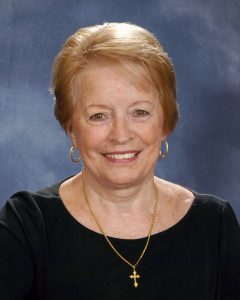
Bernice Attinger — 1947-2018

Bernice Attinger

Bernice Ann Attinger died peacefully at her home in South Lake Tahoe on April 5, 2018, at the age of 73.

The 42-year South Lake Tahoe resident is survived by her husband of 52 years, Robert Attinger and her children, Julie and (Robert) Cain of South Lake Tahoe, Scott Attinger of Zephyr Cove, and Jeff and (Anne) Attinger of Palm Desert. She will be fondly remembered by her three grandchildren, Justin, Matthew, Baileya, by her siblings, Michael Scott of Ontario, Canada; Regina Dawe, Terry Scott, and Bill Scott of Newfoundland, Canada, and many nieces and nephews.

Bernice “Bean” Ann Scott was born on Aug. 18, 1944, in Kelligrews, Newfoundland to Donald and Bernice “Bunny” Scott.

Bernice and her husband met minutes before midnight New Year’s Eve 1965 and married the following year. She stayed at home caring for their children until they were all in school, and then began waitressing at various restaurants in Lake Tahoe. Her gracious manner and uncompromising work ethic resulted in her managing some of Lake Tahoe’s finest restaurants. 

In 2003 Bernice was diagnosed with non-small cell lung cancer. With the help of her doctors, and faith in God, she beat it twice. During the 15 years that followed, her role as “Nana” took on new meaning in the lives of her grandchildren, baking for them, loving them, and instilling her values.  These years were marked by the celebration of Bernice and Bob’s 40th and 50th wedding anniversaries, and 50th renewal of marriage vows.  

She divided her spare time between volunteering at St. Theresa’s Catholic Church and Lake Tahoe Cancer League. She would share her inspirational story of cancer survival with cancer patients while driving them to and from treatment in Truckee, Reno, Carson City, and Sacramento.

A memorial service and reception are scheduled for May 4, 2018, at 2pm at St. Theresa’s Church in South Lake Tahoe. A private interment will take place at a later date. All are welcome to attend and celebrate Bernice’s life.

The family would like to thank the staffs at Barton Home Health & Hospice, Barton Memorial Hospital, UC Davis Cancer Center and UC Davis Hospital for their dedicated efforts. 

Donations in memory of Bernice can be made to any of the fine organizations listed above.

We wish to extend our appreciation to friends, family and community for the outpouring of support.


SLTFD offering emergency training for residents

The next South Tahoe Action Team training begins April 18.

South Lake Tahoe Fire Rescue is accepting applications for the four-week disaster training class.

Classes are April 18, April 25, May 2 and May 16 from 5:30-7:30pm.

This program is designed to incorporate trained citizens in the field with SLTFR and other first responders during times of crisis.

Participants will be expected to help in times of natural disaster, large scale emergencies and other times of need in the South Lake Tahoe area. STAT team members will need to be well versed in emergency first aid, lifting/moving techniques, use of extinguishers, flood safety and building collapse.

To register for this free training, contact Capt. Kim George at 530.542.6161 or kgeorge@cityofslt.us.


STHS student recognized as future medical leader

South Tahoe High School junior Alyx Carlson has been selected to be a delegate to the Congress of Future Medical Leaders.

Carlson was nominated by Mario Capecchi, winner of the Nobel Prize in medicine and the science director of the National Academy of Future Physicians and Medical Scientists, to represent California based on her academic achievement, leadership potential and determination to serve humanity in the field of medicine.

This is an honors-only program for high school students who want to become physicians or go into medical research fields. The purpose is to honor, inspire, motivate and direct the top students in the country who aspire to be physicians or medical scientists, to stay true to their dream and, after the event, to provide a path, plan and resources to help them reach their goal.

During the June 25-27 gathering in Lowell, Mass., Carlson will join students from across the country and hear Nobel laureates and National Medal of Science winners talk about leading medical research; be given advice from Ivy League and top medical school deans on what to expect in medical school; witness stories told by patients who are living medical miracles; hear from fellow teen medical science prodigies; and learn about cutting-edge advances and the future in medicine and medical technology.


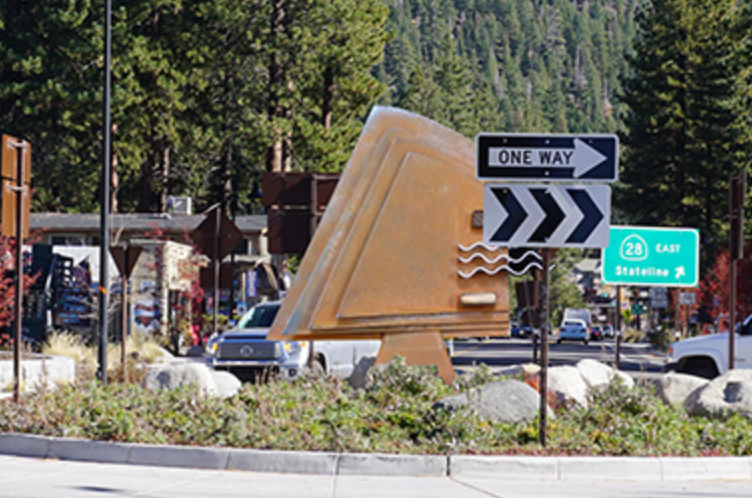
Artwork selected for Kings Beach roundabouts

Artist’s rendering of “Daow Aga” that will be placed in Kings Beach

Placer County supervisors this week chose the art for two roundabouts on Highway 28 in Kings Beach.

“Daow Aga” by artist Brett Moten of Reno and “Estrella” by artist Roger Berry of Clarksburg were selected by members of the community through a nationwide search facilitated by Tahoe Public Art.


In June 2017 the Placer County Board of Supervisors approved a grant contract with Tahoe Public Art in the amount of $209,152 to manage installation of the artwork for both Kings Beach roundabouts. The project is funded with transient occupancy tax revenue collected in unincorporated eastern Placer County.

Annual funding of $10,000 for future maintenance will be set aside in the county’s Lake Tahoe tourism and promotions budget.

The project will be submitted to Caltrans for final approval, which expected this summer. Installation is scheduled to be complete by this fall.


Why is it so stressful to talk politics with the other side?

By Melanie Green, The Conversation

People disagree all the time, but not all disagreements lead to the same levels of stress.

Even though people can be passionate about their favorite sport teams, they can argue about which basketball team is the best without destroying friendships. In the workplace, co-workers can often dispute strategies and approaches without risking a long-term fallout.

Political conversations, on the other hand, seem to have become especially challenging in recent years. Stories of tense Thanksgiving dinners and of Facebook friends being unfriended have become commonplace.

Why does this happen?

Our research – and related research in political psychology – suggest two broad answers.

First, our work shows that divisive topics – issues that are polarizing, or on which there’s no general societywide consensus – can evoke feelings of anxiety and threat. That is, simply considering these topics appears to put people on guard.

Second, research on moral conviction by psychologist Linda Skitka and her colleagues suggests that attitudes linked to moral values can contribute to social distancing. In other words, if someone considers their position on an issue to be a question of right versus wrong or good versus evil, they’re less likely to want to interact with a person who disagrees on that issue.

An automatic trigger of anxiety

In our research, we define divisive issues as ones that don’t have a clear consensus.

For example, just about everyone supports food safety; but if you bring up issues like abortion or capital punishment, you’ll see people fall into opposing camps.

People also like to have a general idea of where someone falls on an issue before they start debating it. If you’re talking with a stranger, you don’t know how to anticipate their position on a divisive topic. This creates an uncertainty that can be uncomfortable.

With this framework in mind, behavioral scientist Joseph Simons and I designed a series of studies to explore how this plays out.

In our first study, we simply asked individuals to look at a list of 60 social issues (ranging from safe tap water to slavery) and estimated what percentage of people are in favor of that issue. Participants also rated how much they would feel anxious, threatened, interested or relaxed when discussing that issue.

As expected, people thought they would feel more anxious and threatened when discussing a topic that was generally considered more divisive. (Under some circumstances – such as when people didn’t hold a strong attitude on the issue themselves – they did feel somewhat more interested in discussing these topics.)

In a second study, we investigated the experience of threat at an unconscious level. That is, do divisive topics automatically trigger anxiety?

We conducted an experiment that was based on the psychological finding that people don’t always recognize the source of their emotional responses. Feelings that are evoked by one event or object can “carry over” to an unrelated judgment. In this study, we presented participants with a popular topic (for example, supporting veterans), an unpopular topic (high unemployment) or a divisive topic (stem cell research). They then saw a neutral computer-generated picture of a face and had to quickly rate how threatening the face appeared.

Participants were more likely to see a neutral face as threatening if they were thinking about a divisive topic. (Unpopular topics showed a similar effect.)

A third study replicated these effects using fictitious polling data about direct-to-consumer drug advertising. We told some participants that there was a high public consensus about support for this sort of advertising, and we told others that there was wide disagreement. Specifically, we told them that either 20 percent, 50 percent or 80 percent of the public was in favor of these ads.

Participants then imagined discussing the issue and reported how they would feel. As in previous studies, those who were told there was more disagreement tended to feel more threatened or anxious about the prospect of discussing the issue.

‘Right and wrong’ adds a layer of complication

An additional social obstacle goes beyond mere disagreement. Consider two individuals who oppose the death penalty.

One person may think that the death penalty is morally wrong, whereas the other person may believe that the death penalty is ineffective at deterring crime. Although both individuals may strongly support their position, the first person holds this attitude with moral conviction.

Research by Skitka and her colleagues highlights the social consequences of these “moral mandates.” When it’s a matter of right or wrong, people become less tolerant of others who hold the opposite view. Specifically, individuals with stronger moral convictions tended to not want to associate with those who disagreed with them on certain issues. This social distancing was reflected both in survey responses – “would be happy to be friends with this person” – and even physical distance, like placing a chair farther away from a person with an opposing view.

Of course, no one is ever going to agree on every issue. But it’s important for people to learn about where others are coming from in order to reach a compromise.

Unfortunately, compromise or consensus is more difficult to come by if people start out the conversation feeling threatened. And if individuals feel that someone who holds an opposite view is simply a bad person, the conversation may never happen at all.

In the end, it doesn’t matter if you’re talking to a stranger or friends; the possibility of exclusion or avoidance increases when a divisive topic is raised.

There’s no easy solution. Sometimes raising these topics may reveal irreconcilable differences. But other times, a willingness to approach difficult topics calmly – while truly listening to the other side – may help people find common ground or promote change.

It might also be helpful to take a step back. A disagreement on a single issue – even a morally charged one – isn’t necessarily grounds for discontinuing a friendship. On the other hand, focusing on other shared bonds and morals can salvage or strengthen the relationship.

Melanie Green is an associate professor of communication at University at Buffalo, the State University of New York.