‘Group tours’ being rebranded as ‘guided vacations’

By Catharine Hamm, Los Angeles Times

My first group tour was a four-city trip to China in 2001. We breezed by the highlights in Beijing, Shanghai, Suzhou and Hangzhou, had abominable buffet food and got herded to lots of silk and jewelry stores.

Sometime during those nine days, I decided it was My. Last. Group. Tour. Ever.

That may have been a bit premature.

Thanks to the emphasis on authentic and cultural experiences, the group tour has experienced a rebirth, starting with its name. They’re now called “escorted tours” or “guided vacations,” thank you very much.

Look for the upgraded group — er, escorted tour, said Colleen Clark, managing editor of JetSetter.com, a travel website that offers curated selections of hotels and travel deals.

Enter the reinventors.

Read the whole story


Beach Boys’ Wilson coming to Tahoe

By Patrick Ryan, USA Today

Brian Wilson has announced an extensive world tour, which is being advertised as the last time he’ll perform the Beach Boys’ iconic 1966 album “Pet Sounds” in its entirety, in honor of its 50th anniversary.

The 70-plus date stretch hits Australia, Asia and Europe this spring, before landing in the U.S. in June.

He will be at Harrah’s Lake Tahoe on Oct. 14 for the final show of the tour.

Read the whole story


Peshon embraces duties of EDSO undersheriff

By Kathryn Reed

Randy Peshon is a man who understands every facet of law enforcement.

And that’s a good thing because for nearly a year he has been undersheriff of El Dorado County.

“He’s a star. He’s excelled at everything,” El Dorado County Sheriff John D’Agostini told Lake Tahoe News.

D’Agostini tapped Peshon for the job when Rich Williams retired.

“His knowledge and leadership are the two main reasons I selected him for undersheriff,” D’Agostini said. “I looked at where we have been and where we are going. Randy was the best choice for the next phase of this administration.”

Peshon started with El Dorado County Sheriff’s Department in February 1997 after having spent time as a ranger with the National Park Service and East Bay Regional Parks.

After the initial training he became the resident deputy in Tahoma, a job he had for eight years.

“It was great. At that time you not only did patrol, search and rescue, coroner, I was the dive team – you did everything the sheriff’s office did,” Peshon told Lake Tahoe News. “I was never bored.”

When he made sergeant he was transferred to the South Lake Tahoe office where he worked in patrol and the courts. For a time he supervised the bailiffs. Then he spent three years in detectives before going back to patrol. As a lieutenant he oversaw the jail in Tahoe.

Undersheriff was never on his radar. Neither is being sheriff. Peshon is happy to serve as No. 2; especially knowing D’Agostini intends to run for a third term in 2018.

“I’m expected to handle everything for the sheriff. It’s a very delicate, very political job,” Peshon said. “There are competing priorities. Nothing is easy. Every challenge lands on your desk.”

The 60-year-old admits things are much different now compared to when he started.

“Technology is a big change. When I started we did reports in pencil. There were no computers in the cars,” Peshon said.

He said the public scrutiny, especially lately, is another thing to contend with. Cameras are everywhere now – on officers, suspects and bystanders.

“It’s the Ferguson effect. It’s the accountability piece,” Peshon said in reference Michael Brown, an unarmed black man, who was killed in 2014 by a white police officer in Ferguson, Mo. An officer’s word is no longer golden.

Then there is the Hollywood effect, where TV shows and movies paint an unrealistic picture of what officers are able to do – like having DNA tests back in five minutes, when the reality is some tests take weeks or months.

“Social media drives a lot of perceptions a lot faster. We still have to manage perception even if it is wrong,” Peshon said.

And, still, at the end of the day many aspects of law enforcement are the same. It’s all about dealing with people and their problems.

“How you do it has changed. It’s more procedure driven,” Peshon said.
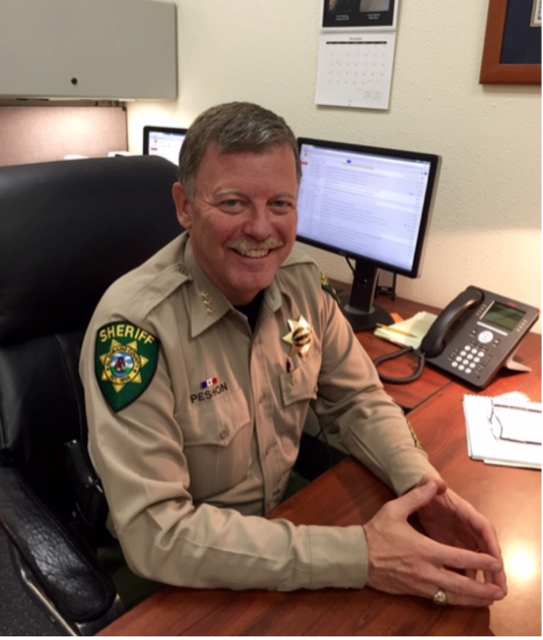
Randy Peshon has been undersheriff of El Dorado County for nearly one year. Photo/Provided

Randy Peshon has been undersheriff of El Dorado County for nearly one year. Photo/Provided

It was while Peshon was lieutenant of the Tahoe jail that D’Agostini got to know him.

Peshon was the force behind creating the culinary program at the Tahoe jail. This allows inmates who qualify to learn a skill that can translate into a job once they are released. And every year at the El Dorado County fair the inmates bring home multiple ribbons for their baking prowess.

“I’ve known Randy since his days as the Tahoma resident deputy. Randy has been instrumental in bringing a much needed focus on providing appropriate treatment to the mentally ill offenders who are incarcerated in our local jail. His hard work and tenacity resulted in the county receiving a MIOCR grant, which supported transitional housing for those leaving the jail and reentering society,” El Dorado County Superior Court Judge Suzanne Kingsbury told Lake Tahoe News. “He worked with other county agencies, NAMI and the court to develop our Behavioral Health Court. The primary goal was to reduce the number and length of incarcerations of mentally ill offenders who could be safely treated in the community. It was extraordinarily successful, but when the funding ran out, the county was not able to sustain the housing component of the program, which was a huge blow. Just recently, Capt. Jackie Noren worked with criminal justice partners to obtain another MIOCR grant, which enabled the county to secure a new transitional house.”

After Peshon made captain he was transferred to Placerville, oversaw both county jails and then was tapped as undersheriff. Not all of California’s 58 counties have an undersheriff, so he doesn’t have many peers.

“It’s a very unique job. It’s really an honor that someone selects you to run the agency for them. It’s also a huge opportunity to leave a legacy. The decisions I make now will affect the agency for 10 to 20 years. It tends to keep you awake at night at times,” Peshon said.

The main job D’Agostini has thrust upon Peshon is to get the new headquarters in Placerville built.

“He has been my No. 1 advisor through the whole process,” D’Agostini said.

Peshon was instrumental in finding the $2.6 million for the property in Placerville, which will be paid for in February. Construction will be another $45 million.

The sheriff said his No. 1 goal is public safety, No. 2 is to get the headquarters built. He said the current facility is so bad it “needs to be bulldozed.”

While the fact that Peshon hails from Tahoe was not a deciding factor to promote him to undersheriff, D’Agostini admits it’s a bonus. The sheriff has made a concerted effort to eliminate the us vs. them mentality of the divide between Placerville and Lake Tahoe. Peshon is that human bridge.

For Peshon, though, the job has him spending the bulk of this time – even the nights – on the West Slope. He returns on the weekends to his home and wife.

“I’m having the time of my life. I have a really good boss,” Peshon said. “He has extremely clear values, a vision for where the agency needs to go. It’s an honor to do that for him.”



Online booking makes hotel loyalty harder to keep

By Amy Zipkin, New York Times

For the past six months, Erin Gifford, a marketing director based in Washington, has traveled for business at least once a month, mostly to Boston.

But she has yet to see a single reward from a hotel chain.

“I’m not big into loyalty programs,” said Gifford, who works at Cove.is, a work space provider. Instead, she books hotels on Priceline about two weeks ahead. She typically picks an area that is a 15-minute walk from her meetings and pays about $100 a night with taxes. She has never stayed at the same hotel twice.

In the end, she said her hodgepodge approach, made possible by online booking, offered greater flexibility and savings than loyalty to a single chain.

Read the whole story


Tahoe Tails — Adoptable Pets in South Lake Tahoe

Beaker

Beaker

Beaker is a nice 1 year old female gray tiger and white domestic medium hair cat. She has very pretty fur, and is friendly and curious.

Beaker has been at the shelter since October, and would love to go home soon.

Beaker is spayed, microchipped, tested for FIV, and vaccinated. She is at the El Dorado County Animal Services shelter in Meyers, along with many other dogs and cats who are waiting for their new homes. Go to the Tahoe animal shelter’s Facebook page to see photos and descriptions of all pets at the shelter.

Call 530.573.7925 for directions, hours, and other information on adopting a pet.

For spay-neuter assistance for South Tahoe residents, go online.

— Karen Kuentz


Tahoe medical personnel win wilderness race

Staff and physicians from the Tahoe Center for Orthopedics won the MedWAR Challenge this month in Mesa, Ariz.

MedWAR, which stands for Medical Wilderness Adventure Race, is a contest that combines physical challenges and wilderness medicine in a daylong race. Competitors participated in a multi-sport race — canoeing, mountain biking, trekking, and orienteering their way through an adventure course. Along the adventure, they were expected to address and treat patients in mock wilderness medicine scenarios. Some of the “incidents” they encountered were a bear bite and a potential spine injury.

Two teams of providers from Tahoe Center for Orthopedics volunteered their time to compete against other teams from across the nation. Lauren Hansen, Chris Kozlowski, and Alby Dean finished in first place.  The second team comprised of Terry Orr, Khristy Gavigan, and Caitlin Robinson, placed fourth.

MedWAR is tentatively scheduled to take place in the Lake Tahoe area in September.


Joints benefit from exercise, healthy eating

By Molly Hucklebridge Coolidge

Want to do right by your joints? A low-impact exercise regimen can keep them strong and limber and prevent them from being overburdened by excess weight.

“Low-impact exercise is beneficial for all joints, especially knees and hips,” says Kyle Swanson, orthopedic surgeon at Barton Health’s Tahoe Center for Orthopedics. “Cartilage and soft tissues respond well to exercise by strengthening the joints and maintaining their range of motion. If you don’t exercise and cartilage damage occurs, arthritis, which is cartilage breakdown, can develop.

“Strengthening the muscles around the joints is important, too,” Swanson adds. “Muscles act as shock absorbers, and if they’re strong and healthy, they will help take the load of the body off the joints.”

Low-impact exercises—activities that don’t include weight bearing—are ideal for joint health. Some examples include cycling, swimming, rowing, and walking. If you enjoy running, do so on a pliable surface, such as a dirt trail, rather than asphalt.

“The worst thing you can do is keep your joints immobile,” says Alison Ganong, physical medicine and rehabilitation physician subspecializing in sports medicine and spine health at Barton Health. “Frequent movement promotes the development of protective synovial fluid in the joints.”

Consumption for healthy function

Exercise alone isn’t enough to keep weight off and joints healthy. Following a heart-healthy diet – eating fruits, vegetables, lean meats, whole grains, fish, nuts, and low- or nonfat dairy products, while limiting fats, sodium, and sugar—is equally essential.

Not only does eating healthfully affect your weight, it’s an important part of preventing diabetes, which is linked with joint problems. “We have found that the cartilage and soft tissues that make up joints are weaker in individuals with diabetes than in the general population,” explains Swanson.

Bones, joints, and surrounding soft tissues also need adequate amounts of vitamin D and calcium, according to Swanson. Good sources of vitamin D include cheese, mackerel, and salmon; the fish also includes beneficial omega-3 fatty acids. Pack in the calcium by enjoying leafy greens, such as spinach and kale.

Planning surgery? Prepare for success

If you’re considering joint replacement surgery, your surgeon may recommend a structured program of preoperative exercise to help prepare your body for surgery and ease your recovery.

“This ‘prehabilitation’ may include flexibility training to maintain or restore range of motion in the affected joint, as well as stretching exercises and physical therapy to work on stabilizing the joint with muscle control,” Ganong says. “Patients typically experience atrophy in the joint after surgery, so we want to increase strength as much as possible beforehand to decrease weakening following the procedure.”

Postoperative physical therapy will begin in the hospital just hours after surgery and will continue with outpatient rehabilitation after your discharge.

Molly Hucklebridge Coolidge works for Barton Health.


Bay Area clay artist coming to LTCC

The Art Club at Lake Tahoe Community College is hosting Bay Area artist Mark Jaeger for a two-day artist-in-residence event.

Jaeger, who primarily works with clay, will talk Feb. 5 at 6pm in Room F101. A hands-on demonstration will be given Feb. 6 at 11am in Room F104. Both rooms are located in the Fine Arts building.

These are free events, but space will be limited.

Jaeger developed his artwork while studying ceramics at UC Davis, and he continues to evolve his techniques while teaching ceramics in Marin County. He also operates a private studio in San Anselmo. Jaeger has already solidified himself as a significant figurative artist, and his work has been acquired by notable art collectors such as Clinton Reilly and the late Robin Williams.


Nebelhorn Ski Resort founder dies

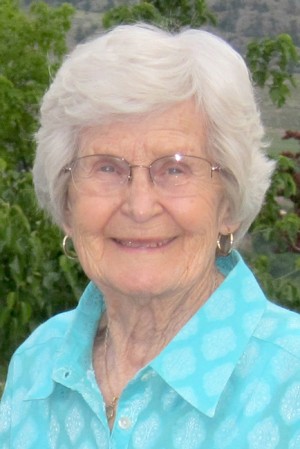
Harriet Erickson Stangland

Harriet Erickson Stangland

Harriet Erickson Stangland, the founder of the now defunct Nebelhorn Ski Resort atop Echo Summit, died Jan. 16 She was 91.

She and her late husband, Gordon, built the resort in the 1940s. It was one of the first ski areas in the greater Lake Tahoe area. Today it is Adventure Mountain. Part of the lodge used today is the original one from Nebelhorn

The Stanglands met in Oregon after he had served in World War II and while she was attending Oregon State College.

They moved to Placerville in 1954 to raise their three children. In 1995 they relocated to Tonasket, Wash., to be near family. Gordon Stangland died in 2011.


Treating pain with integrative medicine

By Erin Jones

Did you know that more than 30 percent of adults use health care approaches outside of mainstream Western or conventional medicine? You may have heard the terms complementary, alternative, and integrative medicine—but what do they really mean?

Integrative medicine brings conventional and complementary approaches together and takes the whole person into account: body, mind, and spirit, with the goal of improved health and wellness.

Erin Jones

Erin Jones

This marrying of concepts can include supplements (vitamins, minerals, herbs, and probiotics), acupuncture, mind-body medicine, and physical manipulations like chiropractic and massage therapy.

Pain management is one area in which integrative medicine is often used. The most common conditions targeted are back pain, neck pain, joint pain, and arthritis. In my practice, I consider both conventional and alternative therapies valuable and appropriate options.

The National Center for Complementary and Integrative Health is the federal government’s lead agency in defining the usefulness and safety of complementary health interventions based on scientific research. Some alternative methods are still in the early research stages, though many methods have been studied and are proven to be beneficial.

Recent research suggests that chronic pain can affect the brain’s anatomy. Pain can impair central nerve pathways, leading to a “negative feedback loop” in which people experience more pain and subsequent problems with emotions and reasoning.

Mind-body practices such as meditation, relaxation, and yoga are safe and helpful treatments for chronic pain and other conditions like depression and anxiety. Studies suggest that mind-body practices could help reverse brain changes associated with chronic pain and may have protective effects on the brain.

If you’re taking any supplements, be sure to let your doctors know. Supplements can play a role in your treatment, but they also can interfere with other medications or your underlying medical conditions.

Erin Jones is a family physician, specializing in integrative medicine, at Barton Family Medicine. She was born and raised in South Lake Tahoe and recently returned after attending medical school at USC and serving her residency at Kaiser Permanente Woodland Hills.