Tahoe Tails — Adoptable Pets in South Lake Tahoe

Romeo

Romeo

Romeo is a cute designer dog — Basset and Beagle — he’s a Bagel!

He is about 3 years old and a bit confused to find himself in the shelter. He needs a well fenced yard or to be on a runner when outside. Like most hounds he follows his nose wherever it takes him. Romeo would do best in a home without small children.

Romeo is neutered, microchipped, tested for heart worm, and vaccinated. He is at the El Dorado County Animal Services shelter in Meyers, along with many other dogs and cats who are waiting for their new homes. Go to the Tahoe animal shelter’s Facebook page to see photos and descriptions of all pets at the shelter.

Call 530.573.7925 for directions, hours, and other information on adopting a pet.

For spay-neuter assistance for South Tahoe residents, go online.

— Karen Kuentz


Forensic vets battle pet abuse, neglect

By Colleen Long, AP

The cocker spaniel arrives at the animal hospital with a police officer, whimpering and shaking. He has a pus-filled pink socket for a left eye and is so skinny his spine and ribs show through his caramel-colored fur.

Because animal abuse is suspected, this dog won’t be handled like the other pets coming in for treatment to the American Society for the Prevention of Cruelty to Animals – it will go instead to a specialized team of forensic veterinarians who are trained to treat animals while also developing evidence for possible criminal charges.

“The message to people who are abusing animals is that there is action being taken,” said Dr. Alison Liu, one of the forensic vets on staff. “And if they’re thinking they may not get caught, that’s not always the case.”

The New York-based nonprofit has a team of three forensic vets dedicated to capturing evidence to punish animal abusers. Their jobs include traveling to crime scenes and working with the New York Police Department in a new partnership that has seen cruelty-related arrests doubled in the past two years. They have a necropsy lab, evaluation unit and a rehabilitation center that houses about 60 animals with the goal of adoption.

The team leader, doctor Robert Reisman, developed evaluation standards that are used nationwide in determining cases of abuse and neglect, and testified in some of the first animal cruelty cases to use DNA at trial to obtain felony convictions. The nonprofit agency has also created an animal forensic sciences program at the University of Florida, and has a traveling team of forensic vets that help out around the country – an ASPCA crew rescued some 600 animals from a no-kill shelter in North Carolina in January suspected of abuse and neglect. The nonprofit is funded mostly through donations.

Last year, the forensic team in New York saw 700 animals – mostly cats and dogs, but some chickens and rabbits, too.

“You can’t really separate out what’s happening to animals with what’s happening to people,” Reisman said. “The most obvious reason is the connection between animal abuse and human interpersonal violence. The cases we see on a regular basis are domestic abuse cases where there’s both a human victim and an animal victim.”

One such case was a pit bull named Honey, who was shot in the mouth by a man who was also accused of beating up his girlfriend. He was charged with animal cruelty, menacing and strangulation. The girlfriend and the dog survived.

The team can’t talk about the spaniel because it’s an ongoing case. But each live animal brought in receives the same treatment. They are physically examined and weighed multiple times. A specific set of blood work is completed to rule out possible illness, and then the vets set out to heal the animal.

One dog, a boxer named Brewster, was dropped off last year by a good Samaritan who said he found the starving animal in a park. The dog was shockingly thin with sad, brown eyes.

Police later discovered the Samaritan was actually the owner, who starved him. In part because of the forensic evidence, he ended up pleading guilty to felony animal cruelty charges.

Meanwhile, Brewster was carefully cared for, eventually regaining his health, doubling his weight and getting adopted.

Veterinarian Laura Niestat said that in addition to starvation, the vets often see cases of neglect in which tight collars wear off layers of skin, frostbite destroys ears and tails, and extreme matting of fur chokes limbs like a tourniquet.

Some animals have been shot, others beaten and suffocated.

“We try to focus on how we’re helping the animals,” Niestat said, “and not on how awful it is.”


Road beat: Toyota Camry SE — A proper mid-size

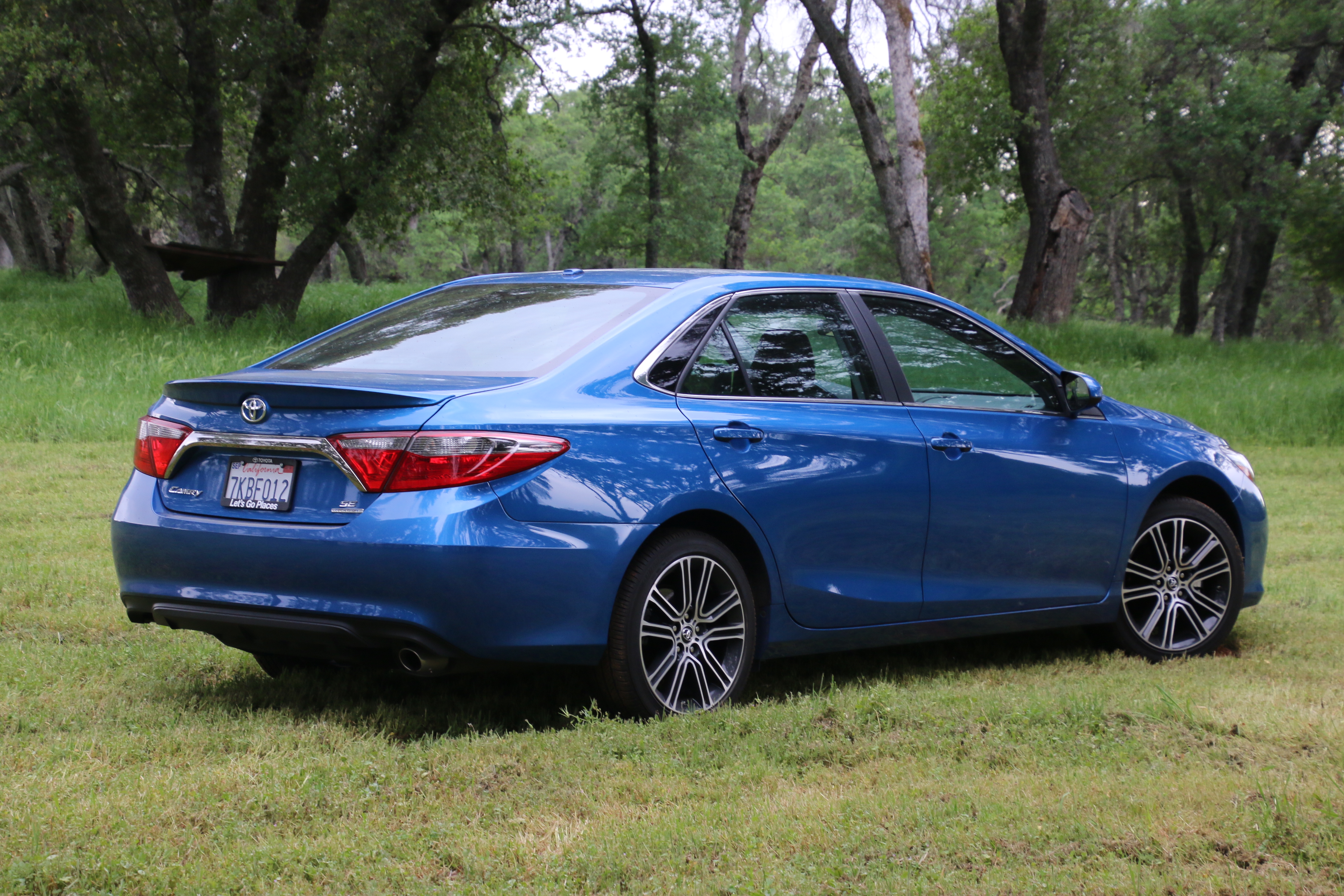
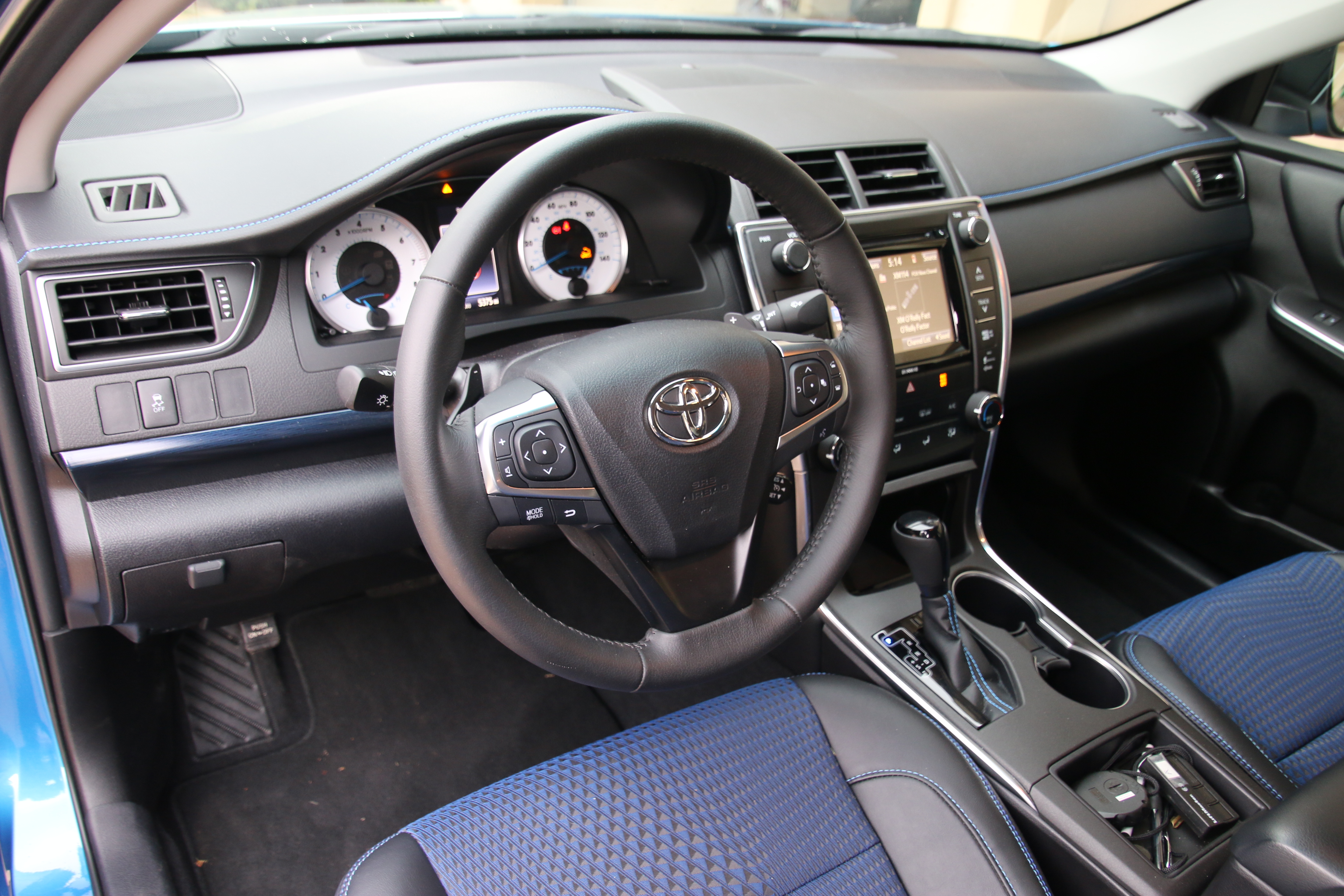
The Camry SE Special Edition is stellar in almost all categories. Photos/Larry Weitzman

The Camry SE Special Edition is stellar in almost all categories. Photos/Larry Weitzman

By Larry Weitzman

If Webster’s had a definition for a mid-size car, it would likely have a picture of a Camry SE Special Edition. Now in its seventh generation Camry has been the bestselling car in the United States from 1997 to 2015 except for year model 2001. For every year but two, sales exceeded 400,000 units. Quite a record.

As Bob Lutz said at an automotive press event about 10 years ago, Toyota has become the “default” brand in the United States, meaning when you need a new car, people simply default to brand “T” without thinking about any other brand. It’s a reputation built on reliability and quality.

While many automotive scribes write that the mid-size sedan market is loaded now with quality choices that are claimed to handle and perform better than some others, this Camry SE “Special Edition” tested here can hold its own with the best of them and in some categories it is the best of them.
Specifications Price (base including transportation) SE $27,075 to over $35 large for a loaded V-6 Engines 2.5L, DOHC 16 valve inline four 178 hp @ 6,000 rpm  170 lbs.-ft. of torque @ 4,100 rpm  Transmissions Six speed automatic  Configuration Transverse front engine/front wheel drive Dimensions Wheelbase 109.3 inches Length 190.9 inches Width 71.7 inches Height 57.9 inches Track (f/r) 62.4/62.0 inches Ground clearance 6.1 inches Weight 3,305 pounds Tow capacity 1,000 pounds Passenger volume 102.7 cubic feet Trunk capacity 15.4 cubic feet  Fuel capacity 17.0  Steering lock to lock 2.85 turns Turning circle 36.7 feet Wheel sizes 7.5X18 inches alloy Tires 225/45X18 Co efficient of drag 0.28  Performance  0-60 mph 7.47 seconds 50-70 mph 3.99 seconds 50-70 mph uphill 6.19 seconds Top speed Do you think that any of the prior nine or so million Camry buyers in the United States really care?  But without intervention electronic or otherwise even the four cylinder should top out at close to 130 mph (but not with me in the car). Fuel economy EPA rated at 25/35/28 mpg city/highway/combined. Expect to achieve 28-29 mpg in overall driving and 38 mpg plus on the highway at legal speeds.

Specifications
Price (base including transportation) SE $27,075 to over $35 large for a loaded V-6
Engines
2.5L, DOHC 16 valve inline four 178 hp @ 6,000 rpm
170 lbs.-ft. of torque @ 4,100 rpm
Transmissions
Six speed automatic
Configuration
Transverse front engine/front wheel drive
Dimensions
Wheelbase 109.3 inches
Length 190.9 inches
Width 71.7 inches
Height 57.9 inches
Track (f/r) 62.4/62.0 inches
Ground clearance 6.1 inches
Weight 3,305 pounds
Tow capacity 1,000 pounds
Passenger volume 102.7 cubic feet
Trunk capacity 15.4 cubic feet
Fuel capacity 17.0
Steering lock to lock 2.85 turns
Turning circle 36.7 feet
Wheel sizes 7.5X18 inches alloy
Tires 225/45X18
Co efficient of drag 0.28
Performance
0-60 mph 7.47 seconds
50-70 mph 3.99 seconds
50-70 mph uphill 6.19 seconds
Top speed Do you think that any of the prior nine or so million Camry buyers in the United States really care? But without intervention electronic or otherwise even the four cylinder should top out at close to 130 mph (but not with me in the car).
Fuel economy EPA rated at 25/35/28 mpg city/highway/combined. Expect to achieve 28-29 mpg in overall driving and 38 mpg plus on the highway at legal speeds.

When the 2006 Camry was introduced, it created the theme for this new generation, with the exact same side window line with this new model adding a piece of applique to the down line of the rear window to make a different look. But the overall shape was a 100 percent improvement with respect to the generation the ceased production in 2005. Size-wise since 2006 and through three generations, the dimensions are essentially the same. Wheelbase remains 109.3 inches, length is 190.9 inches and width is 71.7 inches. As designs go, this is not a spectacular car, but a very attractive design with nothing offensive to spoil its pleasing proportions, except for its upside-down frown front end. The designer at the time must have been going through a divorce or worse.

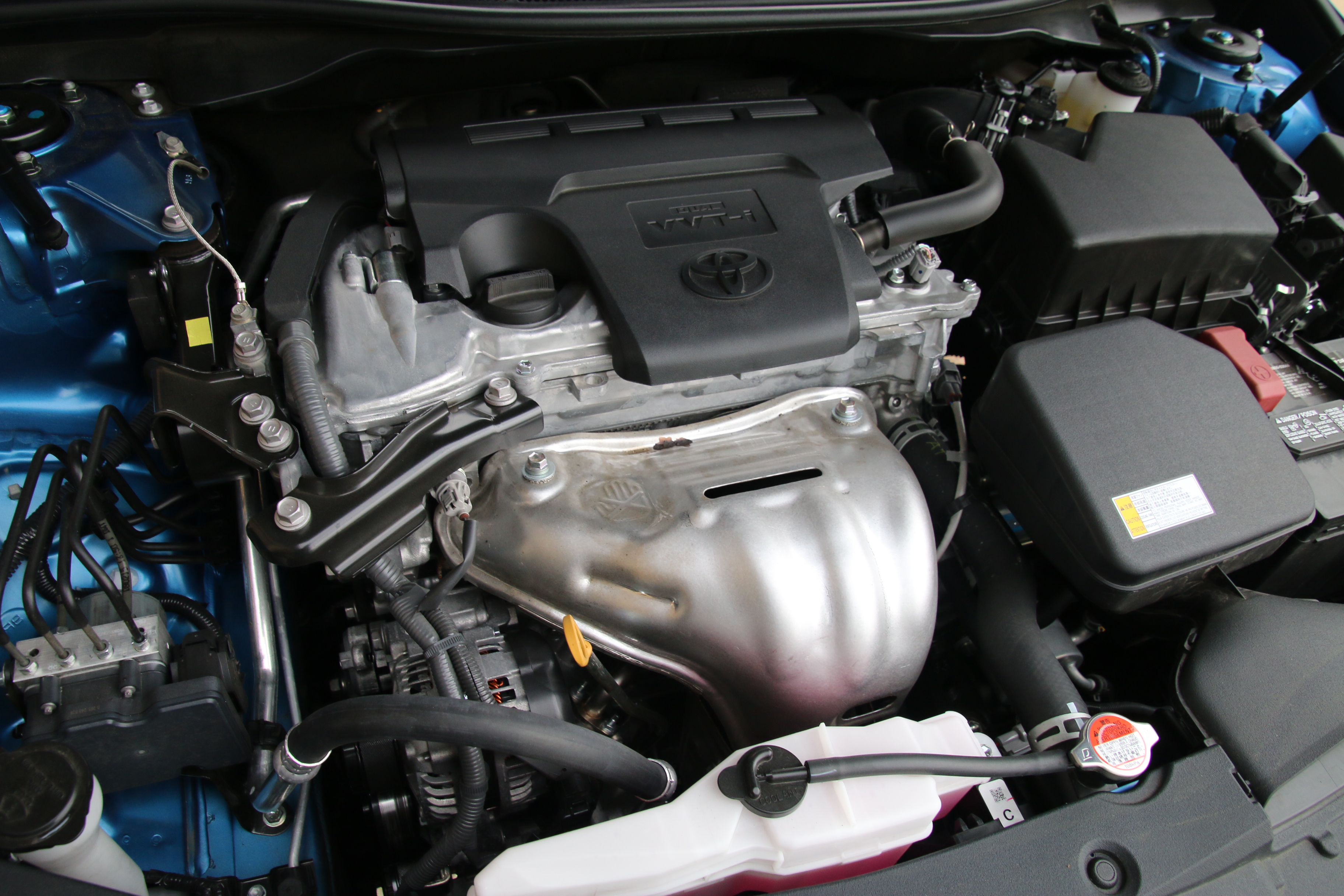
Under the hood is a Toyota 2.5L inline four cylinder DOHC, 16-valve engine that cranks out a very respectable 178 hp at 6,000 rpm and 170 pounds of twist at 4,100 rpms, about average for the class. One thing that would even improve performance and fuel economy more is direct injection with the Camry doesn’t have. With direct injection the Camry would make 10-15 more hp without any fuel penalty. But it is still anechoic chamber room quiet and extremely smooth running. It transmits power to the front wheels via a six-speed cog-swapper and the gears shift quickly and smoothly. Gearing is tall keeping rpms low. At 70 mph the tach shows just 1,950 rpm. Even though this “Special Edition” is there sporty model it is dead quiet, no road engine or wind noise.

Performance for the Camry is very good with 0-60 mph taking just 7.47 seconds, that’s mid-pack or better for this extremely competitive class with the standard engine. Even the class leader the Mazda 6 is only a tenth of a second quicker. Passing performance is also very good with a 50-70 mph elapsed time of just 3.99 seconds and the same exercise up a six percent grade was scored at 6.19 seconds. It is truly amazing how well cars perform today, being able to smoke big V-8 muscle car from the late 1950s.

But here is the difference, the muscle car would be ready for the shredder by 100,000 miles and would average about 12 mpg over its life. The Toyota Camry with reasonable maintenance will go for 300,000 miles or more and average near 30 mpg over its life. And the Camry has a sticker price $27K including destination and with standard equipment that was unknown to the industry even 30 years ago, GPS, full power, Bluetooth and probably some stuff I haven’t discovered yet. Cars today are a phenomenal bargain.

As to fuel economy, the EPA rates the Toyota at 25/35/28 mpg city/highway/combined. It does at least 10 percent better with an overall fuel economy of 28-29 mpg, some city, but mostly rural hills. On the highway at 70 mpg the Camry averaged on a two way run 38.5 mpg. Fuel economy is again mid-pack maybe a bit better.
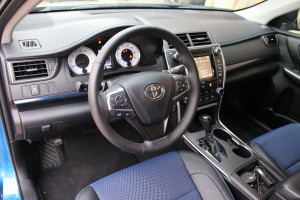
Handling is not a problem with this Camry

Handling is not a problem with this Camry

But here’s where it gets interesting, the Special Edition Camry with the “tighten up” suspension really acquits itself in the twisties, it is not just competent, it is aggressive. After just a few miles your confidence builds as it goes where you point it, holding its line perfectly with benign response from the quick electric rack steering that goes lock to lock in just 2.85 turns. Cornering power is very good especially with a front and rear track of 62 inches.

Suspension is the usual MacPherson struts up front and a dual link independent set up in the rear with stab bars at both ends, which really limit body roll. But that’s not all, it comes with stock 18X7.5-inch great looking machine finished alloys shod with serious rubber (225/45X18). Hey, Kyle “Rowdy“ Busch won two races in Camrys last weekend and he is on a roll to win it all in NASCAR this year. Yeah, sure Busch’s Camrys just look like a Camry and it is a completely different car. The drive train and chassis are different as is the suspension, but Toyota must be learning from it as this Camry changes direction beautifully.

The other half of the equation is ride quality and this is where the Camry shines. It is extremely quiet like a hybrid and smooth like a Lexus. Camry retains its composure on the most difficult roads. There is no wind and road noise so highway trips, especially with all its room, quiet and fuel economy would be fabulous. And it is super long legged as the fuel tank holds 17 gallons or almost 600 miles with a two-gallon reserve.

Braking performance with the full alphabet soup of acronyms was excellent stopping the Camry in 41 feet at 40 mph. It has a standard back up camera plus a plethora of electronic interventions and enough airbags to refloat the Titanic.
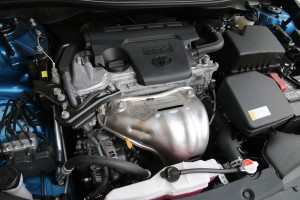
Plenty of power with this engine.

Plenty of power with this engine.

Interior quality is good with comfortable and supportive seats done in a rich cloth. There are some hard plastic trim pieces, but they look quality. Instrumentation is complete with big sporty black/blue tach and speedo on white, which flank left and right of the trip computer, information center.

Rear seating with copious legroom can easily and comfortably handle three adults and the trunk is over 15 cubic feet.

The bottom line including the train ticket from its Georgetown, Ky., assembly plant is $27,075. I just read in an automotive publication the U.S. vehicle content is more than many American cars. And the standard equipment list is long and deep and nothing is left wanting. GPS, check, trick sound system with XM, check, 8-way power driver’s seat, check, back up camera, check. Even the Special Edition embroidered, carpeted floor mats, check. It had everything I would want. The only option was an upgraded radio system at just $525. This Camry is a hard to beat, it’s great value and it’s a (NASCAR winning) Toyota (sort of).

Larry Weitzman has been into cars since he was 5 years old. At 8 he could recite from memory the hp of every car made in the U.S. He has put in thousands of laps on racetracks all over the Western United States.


Carol Elder — 1936-2016

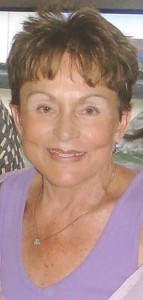
Carol Elder

Carol Elder

Longtime South Lake Tahoe resident Carol Roberta Elder died April 17, 2016. She was 80.

Carol was born March 17, 1936, in Reno. She was raised in Marin County. She lived in South Lake Tahoe for the last 56 years.

Carol touched lives in very precious ways. Her passion for life and infectious laugh immediately made a friend of everyone she met. This contributed to Carol having a very successful real estate career in South Lake Tahoe.

Carol was an ardent protector of animals, always fighting for the rights of every one of God’s creatures. Her love for animals was exceeded only by her love for her family. Carol had a strong will for adventure. From being a ski mom attending gates on the side of a mountain, to traveling to Europe with her family and walking for hours to soak in every site, or participating in the countless activities of her children, Carol was always up for more. She had boundless energy. She cherished her garden, her sanctuary where she found true peace and love with God.

She is survived by her loving husband of 52 years, Richard Elder; her children and their families, Michelle Elder and Kyle Settles, Richard and Kim Elder and children Whitney and Jason, Stacey and Dennis Barsema and their children Matthew and wife Gina, Eric, and Jason and wife Ashley; brother Michael Nagy; brother-in-law Steve and wife Willy Elder; and many nieces, nephews and great-grandchildren. She was preceded in death by her parents Rose Helene Bonnenfant and Robert Edmund Nagy, and her son Steven Michael Zaner Elder.

A memorial Mass will be said at 12:30pm April 30 at St. Theresa Catholic Church, 1041 Lyons Ave., South Lake Tahoe. There will be a reception immediately following in the parish hall. A prayer service will be at 5:30pm April 29 at St. Theresa Catholic Church.

In lieu of flowers, please make a donation in Carol’s name to Lake Tahoe Wildlife Care or St. Theresa Catholic Church.


Painkiller critics want procedures changed

By Matthew Perrone, AP

Critics of how prescription painkillers are administered in the U.S. are calling on health officials to phase out hospital procedures and questionnaires used to manage pain.

They say the current system inadvertently encourages the overprescribing of addictive drugs like Vicodin and OxyContin, fueling an epidemic of overdoses tied to the opioid medications. Deaths linked to misuse and abuse of prescription opioids increased to nearly 19,000 in 2014, the highest figure on record, according to the Centers for Disease Control and Prevention.

More than five dozen nonprofit groups and medical experts sent a letter this month to the Joint Commission, a nonprofit agency that accredits U.S. hospitals, asking it to revisit its standards for pain management. Only hospitals that have been accredited can receive payments from government plans like Medicare and Medicaid, making the group’s standards highly influential.

The letter specifically takes issue with guidelines instructing doctors to ask patients to assess their pain.

“The Pain Management Standards foster dangerous pain control practices, the endpoint of which is often the inappropriate provision of opioids with disastrous adverse consequences for individuals, families and communities,” states the letter, which is co-signed by health commissioners from Vermont, Pennsylvania, Alaska and Rhode Island.

The Chicago-based Joint Commission rejected the idea that its standards push clinicians to prescribe opioids. Instead, the group said its standards require doctors to assess patients for pain and manage it.

“The standards do not require the use of drugs to manage a patient’s pain; and when a drug is appropriate, the standards do not specify which drug should be prescribed,” it said.

The group also stressed that it does not view pain as a “vital sign,” a medical mantra often debated by pain specialists and their critics.

Beginning in the 1990s, pain specialists and patient groups encouraged doctors to treat pain a vital sign that should be routinely monitored, alongside biological measures like body temperature, heart rate and blood pressure.

“All pain was viewed as being bad and so it pushed providers too often to over-prescribe opioids,” said doctor Michael Carome of the consumer advocacy group Public Citizen, one of the groups signing the letter.

The effort was spearheaded by Physicians for Responsible Opioid Prescribing, which advocates for alternative treatments to opioids, including non-opioid pain relievers, physical therapy and psychotherapy. The group is funded by Phoenix House, a nonprofit chain of addiction treatment centers.

The same coalition filed a petition with the federal agency that administers Medicare and Medicaid, the government health programs for the elderly, disabled and poor. The letter asks that officials eliminate certain pain-related questions from patient-satisfaction questionnaires, such as: “During this hospital stay, how often was your pain well controlled?”

The groups argue that such questions inadvertently encourage aggressive use of painkillers to maintain high patient-satisfaction metrics.

“Aggressive management of pain should not be equated with quality health care as it can result in unhelpful and unsafe treatment,” states the petition, which calls on the government to release a proposal for a new questionnaire within 90 days.

Last week a bipartisan group of senators introduced legislation that would eliminate the connection between pain survey questions and the payment rates hospitals receive from Medicare. Sen. Ron Johnson, R-Wisc., introduced the bill with senators Joe Manchin, D-W. Va., John Barrasso, R-Wyo. and Richard Blumenthal, D-Conn.


Taking notes by hand better for retention

By James Doubek, NPR

As laptops become smaller and more ubiquitous, and with the advent of tablets, the idea of taking notes by hand just seems old-fashioned to many students today. Typing your notes is faster — which comes in handy when there’s a lot of information to take down. But it turns out there are still advantages to doing things the old-fashioned way.

In the study published in Psychological Science, Pam A. Mueller of Princeton University and Daniel M. Oppenheimer of UCLA sought to test how note taking by hand or by computer affects learning.

“When people type their notes they have this tendency to try to take verbatim notes and write down as much of the lecture as they can,” Mueller tells NPR’s Rachel Martin. “The students who were taking longhand notes in our studies were forced to be more selective — because you can’t write as fast as you can type. And that extra processing of the material that they were doing benefited them.”

Read the whole story


Locally made items to be featured at festival

The 4th annual Made in Tahoe Festival returns to the Village at Squaw Valley for Memorial Day Weekend, May 28-29.

This one-of-a-kind event celebrates all things local, and hosts an array of offerings that are made in or inspired by the Lake Tahoe Basin and Truckee areas. Local artisans, businesses, foodies, organizations and entertainers will come together to celebrate all things Made in Tahoe including music, food, art, clothing, and more.

New this year, Squaw Valley Alpine Meadows’ MTN ROOTS food truck will host the Made in Tahoe Community F2T Dinner, a five course family style dinner featuring local chefs and produce benefiting the Squaw Valley Institute and Tahoe Food Hub. The dinner will take place May 28 at 6:30pm on the KT Sun Deck.

There will be more than 70 booths. The event includes music from local bands and musicians. Local food and beverage will be offered, with proceeds from all drink sales will benefit Tahoe Food Hub.

Go online for more info.


Artwork by mental health patients to be shown

Participants in El Dorado County mental health programs will have a chance to show off their skills in an art exhibit hosted by the Tahoe Art League. The exhibit will take place at Lake Tahoe Community College May 2-6 in recognition of Mental Health Awareness Month.

The art that will be on display has been created through Art Angels, a program of the Tahoe Art
League. Each Friday Charisse Sotto, a volunteer with TAL, teaches clients of the county’s Mental Health Department various techniques in artistic expression. The program not only develops
participants’ artistic skills, but also allows them to focus on a positive, creative process that builds
confidence and pride in their accomplishments.

The arts allow people of all walks of life to experience the human desire to be creative.

The exhibit will be a juried event with renowned local artist and Lake Tahoe Community College Art
Director Phyllis Shafer serving as jurist.


Sleep — Best thing you can do on vacation

By Suzy Strutner, Huffington Post

For some travelers, relaxing while on vacation seems like the last thing they should do. Trips are best spent exploring, culture-seeking and absorbing every single second, right?

Not quite.

Travel can indeed teach lessons that alter the course of your life. But it also serves as a time to decompress, unplug and get to know your true self, the one that exists after all the pressures and problems of daily life are stripped away. Quality rest is a critical part of this self-discovery experience.

Read the whole story


Award-winning author to talk at LTCC

Novelist and short story writer Daniel Chacón will be at Lake Tahoe Community College on May 13 at 7pm.

Chacón will read selections from his works, answer audience questions about the writing process, and sign copies of his books, which will be available for sale.

Daniel Chacón

Daniel Chacón

This free event will be in the college library.

Chacón is the author of “Hotel Juárez: Stories, Rooms, and Loops” (2013), which won the 2014 Pen Oakland Award for Literary Excellence and the Tejas NACCS Award for Best Book of Fiction for 2013. His collection of short stories, “Unending Rooms”, won the 2008 Hudson Prize. He also has a novel, “And the Shadows Took Him”, and another collection of stories called “Chicano Chicanery”. His fiction has appeared in the anthologies “Latino Boom; Latino Sudden Fiction;” “Lengua Fresca: Latinos Writing on the Edge;” “Caliente: The Best Erotic Writing in Latin American Fiction;” and “Best of the West 2009: New Stories from the West Side of the Missouri.”