3-day literary festival returning to South Shore

WordWave, a three-day festival on the grounds of Valhalla at the Tallac Historic Site, returns Oct. 21-23.

This literary mash-up will feature oral storytelling, theater performances and free readings, panels on craft, and a novel writing camp for kids. Highlights include a staged reading of the WordWave one-act playwriting contest winners, a maker’s station demo with bookbinding, letterpress printing, found poetry and art.

On Oct. 21, the festival kicks off with the annual Tall Timber Ball: Steampunk in the Woods fundraising gala. Tickets are available online.

A partial list of speakers for WordWave on Oct. 22 includes Galadrielle Allman, who wrote “Please Be With Me: A Song for My Father,” about the late musician Duane Allman of the Allman Brothers; Melissa Cistaro, the author of the memoir “Pieces of My Mother” and poet Alice Anderson, author of “the watermark,” and the forthcoming memoir from St. Martin’s Press, “Some Bright Morning I’ll Fly Away.” That Sunday features James Rollins, Todd Borg, and other thriller and mystery writers in a Mysterious Morning at the Grand Hall.

Free workshops include Novel Writing Camp for Kids with instructor Lewis Buzbee, Writing the Healing Story with Melissa Cistaro and House Afire: Burning Down Expected Narratives to Tell the Difficult Stories poetry workshop with Alice Anderson.

WordWave received more than 100 entries for the one-act play competition. Three winners will receive a cash prize and a trip to Tahoe to prepare a staged reading of the winning works on Oct. 22 at the Boathouse Theatre.

Visit the WordWave website for information and updates.


Web-savvy park ranger turns spotlight on wilderness

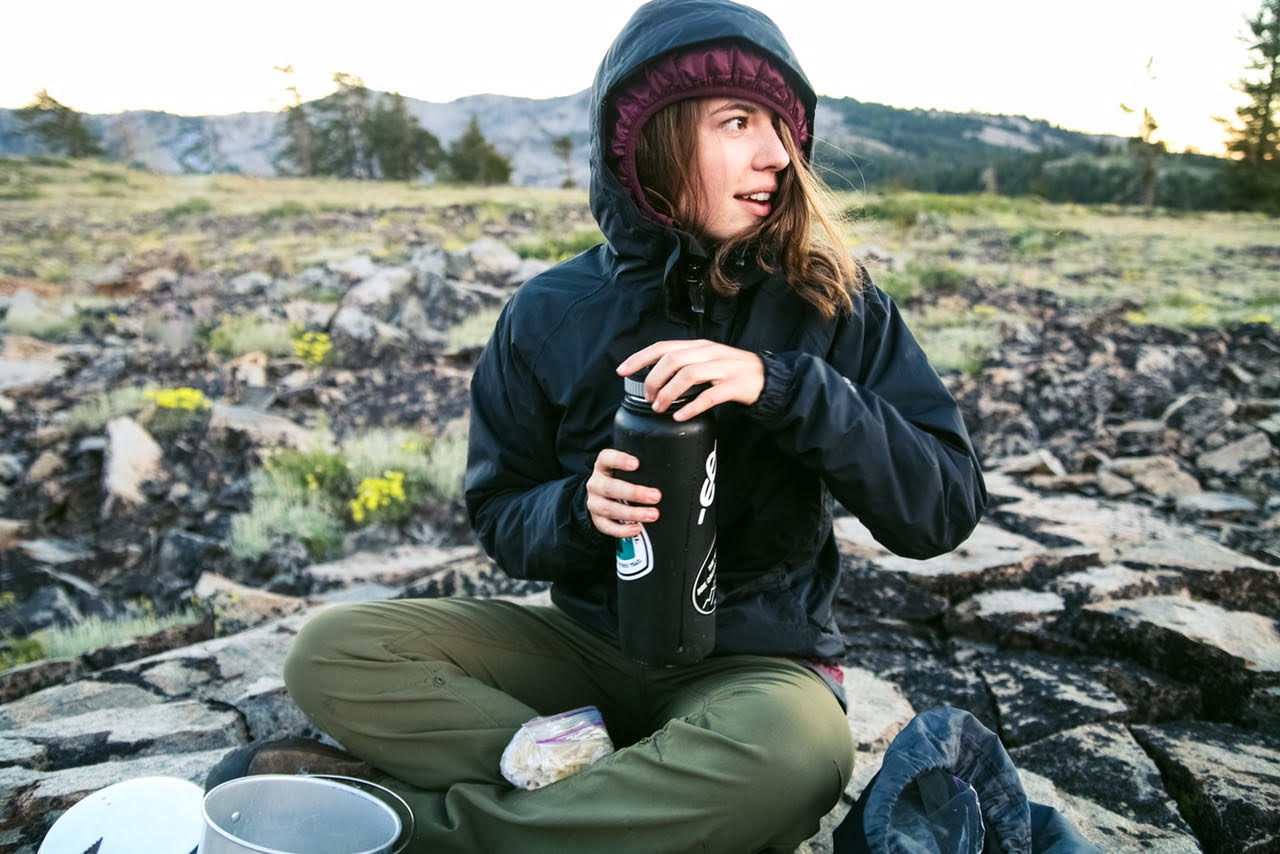
For ranger Miranda LeConte, interacting with people is her favorite part of the job. Photo/Provided

For ranger Miranda LeConte, interacting with people is her favorite part of the job. Photo/Provided

By Sammy Caiola, Sacramento Bee

Miranda Leconte can’t stand litterers. She’s irked by backpackers who camp in Desolation Wilderness without permits, and she’s got a lot to say to people who build fires there, despite the many warnings that it’s forbidden.

If she sounds like a stickler it’s because she is, but for good reason – it’s her job. The 23-year-old Camino native just finished her first season as a U.S. Forest Service ranger, patrolling the 64,000 breathtaking acres of Desolation Wilderness area near Lake Tahoe and teaching people how to keep it clean.

Her environmental conservation crusade, much of which she documents on social media, has garnered the attention of 17,000 Instagram followers and some major outdoor gear companies. When she’s not out maintaining trails or restocking permit boxes, she’s most likely blogging about her work or striking a mountaintop pose for the camera.

Read the whole story


Ski film shorts coming to Tahoe City

Alpenglow Sports and DPS Skis are putting on the first national screening of “DPS Cinematic”, a collection of inspirational ski film shorts designed by industry-leading filmmaker Ben Sturgulewski.

The event is Oct. 26 at 7pm at the Tahoe Art Haus & Cinema in Tahoe City.

Cinematic’s mission is to create an annual offering of fresh, festival-worthy film shorts with meaningful storytelling amidst storm-chasing and deep powder riding.

Tickets are $11 pre-sale and $13 night of.


Elementary students learn intricacies of water

Sierra House second-grader Aeron Pettus helps his team in the water relay competition on Oct. 3. Photo/Kathryn Reed

Sierra House second-grader Aeron Pettus helps his team in the water relay competition on Oct. 3. Photo/Kathryn Reed

By Kathryn Reed

Not everyone in the world – even in the United States – has running water. And while this might be common knowledge for adults, students in Lake Tahoe Unified School District have a better understanding of that reality after hauling water from one container to another.

This is just one of the hands-on lessons that is part of Wonders of Water.

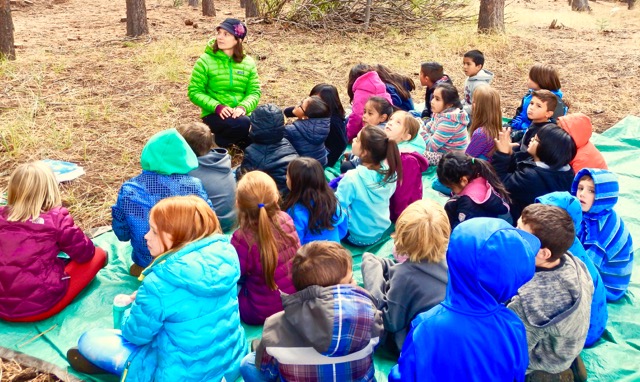
Each elementary grade level is spending time outdoors, right near their campus, learning various aspects of water.

“I learned how invasive species break the life cycle,” Aeron Pettus told Lake Tahoe News.

The Sierra House Elementary School second-grader was a tui chub. He was at the top of the food chain – eating the daphnia, which feasted on the phytoplankton. But then an Asian clam came along and disrupted the food chain.

Invasive species and the harm they can do was one lesson the youngsters learned. The importance of cleaning boats was stressed.

At another station in the wooded area beyond the playground students were asked to pay attention to what was growing nearby.

They were quick to know that “trees help you breath” and they “make oxygen.”

Maria Mircheva with the Sugar Pine Foundation talks about trees and bushes. Photo/Kathryn Reed

Maria Mircheva with the Sugar Pine Foundation talks about trees and bushes. Photo/Kathryn Reed

Maria Mircheva with the Sugar Pine Foundation explained how willows are deciduous – meaning they shed their leaves – and how the Washoe Indians used to use their branches to make baskets.

Manzanita, she told them, means little apple in Spanish. The berries on it are said to look like apples. It falls into the evergreen category, just like the towering pines.

Donielle Morse with South Tahoe Public Utility District explained how most of the water used in South Lake Tahoe comes from wells. But then she got into what happens if you don’t have a faucet. That’s when the students participated in a relay race to see what it was like to haul water from one area to another without spilling, but still doing so quickly. This was to simulate what it might be like to haul water from a lake to a dwelling.

Other agencies helping on Oct. 3 were the U.S. Forest Service, Tahoe Regional Planning Agency, Sugar Pine Foundation, and Lake Tahoe Humane Society. Lake Tahoe Educational Foundation and the Optimist Club helped to fund the districtwide program.

All of the instruction meets the state science standards. Each year Beth Quandt, science outreach coordinator for LTUSD, works with teachers and presenters to improve on the stations.

At Sierra House a fence that was just beyond the playground has been removed, which has created an outdoor classroom of sorts.

“Now that the teachers know some of things that are out here they can bring their classes out here to continue the learning,” Quandt told Lake Tahoe News.


‘Mountain of Storms’ captures storied Patagonia trip

“Mountain of Storms” documents the storied 1968 road trip adventure of five friends: Yvon Chouinard, Doug Tompkins, Dick Dorworth, Chris Jones and Lito Tejada-Flores. Piled into an old sketchy van, the group embarked on a 5,000-mile journey from California to Patagonia to attempt a new route on Cerro Torre’s infamous Fitz Roy.

Along the way the friends found surf, skiing and climbing as they headed southward toward the then still-mythical land of Patagonia.

Though the friends did not know it at the time, “Mountain of Storms” would inspire and pave the way for the modern-day adventure film category. At the time of the adventure they were merely seeking a better way to tell the story to their friends upon returning home. Accordingly, the group shot film on hazy 16mm film to a soundtrack of contemporary folk-rock; the result was a cult classic that has endured the test of time and inspired generations of adventure seeking “fun hogs.”

In addition, each individual from the trip would go on to play a prominent role in the outdoor industry, as founders of Patagonia, The North Face and Black Diamond Equipment. The road trip would forever change the lives of each person in the group and help ignite a golden era for new and cutting-edge outdoor companies. Each one of these men would continue as pioneers of the outdoor industry, stewards of the environment and land conservationists.

“Mountain of Storms” van adventurer Dick Dorworth will be the featured guest at the film premier on Oct. 19 at 7pm at Tahoe Art Haus & Cinema in Tahoe City. Tickets are $13 in advance and $15 at the door.


Burlesque show coming to The Loft

The music and dance revue ElectroSwing Burlesque is returning to The Loft in South Lake Tahoe on Oct. 12.

This original live production show features the vocals of Ashley Kepler, along with the trumpeter Jef Derderian, rhythmic drumming by Dosto Klee, as well as dance artists of The Dame Doll Dancers, Jayde Reid and Mikaela Bianchi.

The cast is often rotating and the songs changing.

The burlesque show will be every other Wednesday — Oct. 12, Oct. 26, Nov. 9, Nov. 30,  and Dec. 14. Showtime is 8pm, doors open at 7:45pm, with pre-party in the lounge at 7pm.

The show is recommended for those 17 and older. Reserved seats are $30 (plus tax/fees), and are available online.

As part of the ticket price, Jeff VanHee of Tahoe Moonshine will be offering a flight of tastings during intermission.


Tahoe Tails — Adoptable Pets in South Lake Tahoe

Thor

Thor

Thor is a beautiful 10-month-old Lab mix. He is a sweet, active boy with lots of personality. He is house trained and loves to play with other dogs, especially fetch and tug of war. Thor would love a home with people who would take him hiking and to training classes to help him control his enthusiasm just a little.

Thor is neutered, microchipped, tested for heartworm, and vaccinated. He is at the El Dorado County Animal Services shelter in Meyers, along with many other dogs and cats who are waiting for their new homes. Go to the Tahoe animal shelter’s Facebook page to see photos and descriptions of all pets at the shelter.

Call 530.573.7925 for directions, hours, and other information on adopting a pet.

For spay-neuter assistance for South Tahoe residents, go online.

— Karen Kuentz


Tahoe MedWAR Challenge tests wilderness skills

By Molly Hucklebridge Coolidge

When Krysinthia White’s team, 20 Percent Survival, completed the MedWAR Tahoe Challenge at the Taylor Creek Sno-Park, they knew it was not a first place finish. Yet they were still smiling after six flat tires, a bee sting, and multiple wrong turns.

“From our perspective, last place was the best place,” says White. “We had the entire lake [Fallen Leaf] to ourselves and pretty much the entire trail.”

20 Percent Survival is one of 10 teams of wilderness enthusiasts and medical responders who participated in the inaugural MedWAR Tahoe Challenge last month.

MedWAR, which stands for Medical Wilderness Adventure Race, is an all-day competition. In teams of four, racers navigate through various physical activities and complete wilderness medical scenarios. The winning team is determined by race time and points accumulated during the scenarios. For the Tahoe Challenge, teams could also earn extra points for collecting trash and showing their respect for the sensitive ecosystem where the event occurred.

The race is designed for participants with or without a medical background. For the Tahoe Challenge, participants varied from military personnel from Travis Air Force Base to medical staff from Arizona.

“We had an amazing team from all different backgrounds and with different skill sets which made our team whole,” says White. She says her team, who came from Reno and Carson Valley, drew from their experience in the outdoors as well as their varied medical experience as emergency and trauma nurses, ski patrollers, and as a summer camp medic.

Team EPI, from South Tahoe and Reno, received first place for their fast finish of five and a half hours and how well they responded to the medical scenarios. The team was comprised of Jeff Meagher, a building contractor; T.J. Middlemis-Clark, a water engineer; Greg Koeck, a paramedic; and Jeff Koeck, a pharmacist.

This is the first MedWAR to take place in the Lake Tahoe area. After a running start from the sno-park off Highway 89 in South Lake Tahoe, teams kayaked on Fallen Leaf Lake, mountain biked up and down Tahoe Mountain, and trekked through public land in the Lake Tahoe Basin Management Unit.

Along the way, racers encountered volunteer “victims” depicting medical incidents. Victims acted out a drowning, hypothermia, an allergic reaction, and a climbing accident. Racers also encountered a mock bear mauling incident and a winter avalanche. Calling an ambulance was not an option and all teams were expected to assess, stabilize, improvise, and – when appropriate – treat the patients with the items they had available. Volunteer proctors and staff, mostly comprised physicians and staff from Barton Hospital, assessed how well each team responded.

“All scenarios resembled realistic events that could happen when you are in the backcountry and help is not immediately available,” says Terry Orr of Barton Health’s Tahoe Center for Orthopedics who, along with Steve Bannar and Khristy Gavigan organized the event. “It is our hope that racers and volunteers walk away with a new understanding for how to handle situations in the wilderness and how they can be more prepared.”

Molly Hucklebridge Coolidge works for Barton Health.


The original Tahoe cowboy

In 1962, Bud Jones walked back into a burning cabin and locked the door, ending his life in Squaw Valley. Photo/Truckee Donner Historical Society

Bud Jones decided how he was going to leave Squaw Valley. Photo/Truckee Donner Historical Society

By Abby Stevens, Moonshine Ink 

No one can remember Bud Jones ever changing his clothes. His garb was Levi jeans and jean jacket, a cowboy shirt, big boots, and a black floppy hat with grease rings around the top. He usually kept a tin of Star Tobacco and a flask of whiskey close by, and reportedly sold his wife to a sheepherder for the price of a horse, forever claiming he got the better end of that bargain. Yet beneath his tough exterior lay an industrious entrepreneur and surrogate parent with a fierce dedication to a still wild Squaw Valley, when cows and horses outnumbered skiers.

In 1931, Bud — then a rancher from Folsom — arrived in Squaw Valley (to be named Olympic Valley when the valley was chosen as the site for the 1960 Olympics) with his cattle and horses and founded the Squaw Valley Stables. For the next 31 years Bud would run the Squaw Valley Stables, and a pack station, which supplied visitors to the valley with tools for backcountry fishing and hunting trips. He also supplied milk to residents in Tahoe City and along the Truckee River all summer long. He embodied the rough independence for which this high mountain area is known, an attitude that shakes up local debates — for example about how to manage the land, and how much you can tell people what to do — even today.

Locals who knew him well will never forget him. He resided in a small, shingled cabin that was “completely lopsided,” recalled Mazie Carnell, a longtime Tahoe and Sierra Valley resident who spent her summers with Bud in the ’30s and ’40s milking cows and driving horses. It was one of the only houses in the valley at the time, she said. It was located right next to the horse corral and had no running water. Bud leased the land the house and corral sat on from the Smiths and eventually the Poulsens.

Read the whole story


How trolls are ruining the Internet

By Joel Stein, Time

This story is not a good idea. Not for society and certainly not for me. Because what trolls feed on is attention. And this little bit–these several thousand words–is like leaving bears a pan of baklava.

It would be smarter to be cautious, because the Internet’s personality has changed. Once it was a geek with lofty ideals about the free flow of information. Now, if you need help improving your upload speeds the web is eager to help with technical details, but if you tell it you’re struggling with depression it will try to goad you into killing yourself. Psychologists call this the online disinhibition effect, in which factors like anonymity, invisibility, a lack of authority and not communicating in real time strip away the mores society spent millennia building. And it’s seeping from our smartphones into every aspect of our lives.

The people who relish this online freedom are called trolls, a term that originally came from a fishing method online thieves use to find victims. It quickly morphed to refer to the monsters who hide in darkness and threaten people. Internet trolls have a manifesto of sorts, which states they are doing it for the “lulz,” or laughs. What trolls do for the lulz ranges from clever pranks to harassment to violent threats. There’s also doxxing–publishing personal data, such as Social Security numbers and bank accounts–and swatting, calling in an emergency to a victim’s house so the SWAT team busts in. When victims do not experience lulz, trolls tell them they have no sense of humor. Trolls are turning social media and comment boards into a giant locker room in a teen movie, with towel-snapping racial epithets and misogyny.

Read the whole story