Geology and California subject of talk at LTCC

Lake Tahoe Community College Earth science instructor Scott Valentine will present How Geology Shaped California on Oct. 21.

Valentine will share the story of how earthquakes, volcanism, and geologic riches shaped the state and helped to create the world’s sixth largest economy.

Valentine began his career in the Lake Tahoe Basin 16 years ago working as a restoration hydrologist for the U.S. Forest Service. He is now the head of the Earth Sciences Department at LTCC, where he teaches a wide range of classes. He also serves as a Parks and Recreation commissioner for South Lake Tahoe.

The free talk begins at 6pm in the Duke Theatre.


Blue Ribbon award nominees being sought

Lake Tahoe South Shore Chamber of Commerce is seeking nominations for the Blue Ribbon Awards.

This is a chance to recognize South Shore businesses and individuals who excel in working as one in an effort to improve the quality of life on the South Shore. The public is encouraged to nominate South Shore businesses or individuals that have made a positive and lasting impression on the community.

The deadline is Oct. 17 at noon.

The categories are:

  • Geotourism Award – Providing an authentic Tahoe experience
  • Tourism Award – Innovative program, promotion or product for our visitors
  • Experience Award – Business providing compelling and captivating experiences
  • Entrepreneur Award – An innovative individual who assumed the risk of starting a new business
  • Customer Service (Business) Award – An individual who consistently provides quality service
  • Customer Service (Public Agency) Award – Quality service in the not so usual places
  • Wendell Award for Green Business or Program – Business that is minimizing impact on the environment

Businesses and individuals are not required to be chamber members to be nominated or to win.

Nominees will be announced later in October and the winners will be announced Nov. 10 during at the Blue Ribbon Awards ceremony at Hard Rock.


Workshop to focus on Millennials, Gen Z

As the first digital generation, Millennials are known for being entrepreneurial, tech savvy, collaborative multitaskers – but Generation Z is the first generation of mobile technology – raised in the era of smartphones. Many do not remember a time before social media.

The Sierra Human Resources Association is presenting Millennials Rising – Gen Z on Deck on Oct. 25 from 8:30-10am at Truckee Tahoe Airport.

Gen Z will take multi-tasking to a new level — think five screens at once, instead of two screens like Millennials. At just less than 21 years old, they’re on deck.

The speaker is Laura Moriarty, nationally known corporate trainer and president of Tahoe Training Partners.

Register online. The cost is $39 for SHRA & SHRM members, $49 for chamber and NTBA members and $59 for non-members. Seating is limited.


Money Matters: Plan for stages of retirement

By Nic Abelow

Although many Americans now plan for a retirement up to 20 years, your retirement may last much longer.

Nic Abelow

Nic Abelow

Believe it or not, living nearly a century may someday soon be almost commonplace. As a result, rather than thinking of retirement as the final stage of life, a more realistic approach may be to view it as a progression of phases, such as early, middle, and late. This involves taking a fresh look at retiree expenses and income, as well as withdrawal and estate planning strategies.

The need for flexible planning

Traditionally, retirees were advised to project income needs over the length of time of retirement, add on an annual adjustment for inflation, and then identify any potential income shortfall. But the planning required may not be that linear. For example, research suggests that some retirees’ expenses — other than health care — may slowly decrease over time.

That means many retirees — depending on personal expenses — may need more income early in their retirement than later. That’s why it’s critical not just to determine a sustainable withdrawal rate at the outset of, but also to periodically evaluate that withdrawal rate.

Or consider another trend: The desire to remain active means many people are continuing to work part time or starting new businesses in retirement. In fact, some psychologists and gerontologists believe that many people don’t really want to retire, but instead want to reinvent themselves through a mixture of work and leisure. As a result, older men and women may be inclined to jump back into the workforce – and possibly enjoy the most productive years of their lives.

Early years: Income and tax decisions

Keep in mind that adding employment earnings to your retirement “paycheck” requires careful planning because it may impact other sources of retirement income or bump you into a higher tax bracket. For example, in 2014 retirees who collect Social Security before the year of their full retirement age will see their benefits cut $1 for every $2 earned above $15,480. Also, depending on adjusted gross income, you might have to pay taxes on up to 85 percent of benefits, according to the Social Security Administration.

The need to potentially stretch out income over a longer period than previous generations also means that some people may not want to tap Social Security when they’re first eligible. Consider that for each year you delay taking Social Security beyond your full retirement age until age 70, you’ll receive a benefit increase of 6 percent to 8 percent, depending on your age. One caveat: If you do decide to delay collecting Social Security, you may want to sign up for Medicare at age 65 to avoid possibly paying more for medical insurance later.

Also plan ahead as to how you’ll pay for health care costs not covered by Medicare as you age. Remember that Medicare does not pay for ongoing long-term care or assisted living and that qualifying for Medicaid requires spending down your assets.

If you have accumulated assets in qualified employer-sponsored retirement plans, now may be the time to decide whether to roll that money into a tax-deferred IRA, which could make managing your investments easier. A tax and financial pro can also help you decide which accounts to tap first at this point in your post-retirement planning — a situation that could significantly affect your financial situation.

Finally, don’t overlook any pension assets in which you may be vested, especially if you changed employers over the course of your career. Pensions can supply you with regular income for life. Annuities may also play a role in helping you generate steady income.1

Middle years: Distributions and lifestyle realities

By April 1 of the year after you reach age 70½, you’ll generally be required to begin making annual withdrawals from traditional IRAs and employer-sponsored retirement plans (except for assets in a current employer’s retirement plan if you’re still working and do not own more than 5 percent of the business you work for). The penalty for not taking your required minimum distribution (RMD) can be steep: fifty percent of what you should have withdrawn. Withdrawals from Roth IRAs, however, are not required during the owner’s lifetime. If money is not needed for income and efficient wealth transfer is a goal, a Roth IRA may be an attractive option.

Also, consider reviewing the asset allocation of your investment portfolio. Does it have enough growth potential to keep up with inflation? Is it adequately diversified among different types of stocks and income-generating securities?

Later years: Your legacy

Review your financial documents to make sure they are true to your wishes and that beneficiaries are consistent. Usually, these documents include a will and paperwork governing brokerage accounts, IRAs, annuities, pensions, and in some cases, trusts. Many people also draft a durable power of attorney (someone who will manage your finances if you’re not able) and a living will (which names a person to make medical decisions on your behalf if you’re incapacitated).

You’ll still need to stay on top of your investments. For example, an annual portfolio and asset allocation review are important. Keep in mind that a financial advisor may be able to set up an automatic rebalancing program for you. And finally, be aware that some financial companies require that you begin taking distributions from annuities once you reach age 85.

Preparing for a retirement that could encompass a third of your life span can be challenging. Regularly review your situation with financial and tax professionals and be prepared to make adjustments.

Points to remember

  • By April 1 of the year after you reach age 70½, you’ll generally be required to begin making annual withdrawals from any tax-deferred accounts.
  • Match living arrangements to changing lifestyle needs and plan ahead for how you’ll pay escalating health care expenses.
  • Make sure that financial documents are true to your wishes and beneficiaries are consistent.
  • Regularly consult with financial and tax professionals and be prepared to make adjustments, depending on how your life and needs change.


Nic Abelow is a LPL Financial Advisor with Abelow, Pratt & Associates Financial Advisors and Wealth Management.

Pumpkin Festival, ski swap at Homewood

This year the North Lake Tahoe Ski Swap will take place at Homewood Mountain Resort’s north lot on Oct. 22 from 10am-4pm.

This is a fundraiser for North Tahoe High School.

The ski swap is being paired with Homewood’s Pumpkin Festival.

The swap features affordable winter sports gear and equipment from private sellers, as well as over a dozen vendors including established local ski shops. Admission is free, and gear purchases are handled directly between seller and buyer.

There will be pumpkins for sale, a pumpkin carving contest, pumpkin pie eating contest, pumpkin rolling, face painting, live music, food, pumpkin-inspired craft cocktails, seasonal wine and beer tastings, and more.

Individuals interested in selling their personal ski gear, or vendors interested in securing booth space should contact JT Chevallier at jtchevallier@skihomewood.com.

For more information, go online.


Tahoe Tails — Adoptable Pets in South Lake Tahoe

Porky

Porky

Porky is one of two cute male kittens waiting at the shelter for their new homes. Both boys are 2- to 3-months-old, and very playful.

These kittens, along with four other older and very nice cats, are ready to move out of the shelter environment and into new homes.

Porky and the other cats are spayed/neutered, microchipped, tested for FIV, and vaccinated. They are at the El Dorado County Animal Services shelter in Meyers, along with many other dogs and cats who are waiting for their new homes. Go to the Tahoe animal shelter’s Facebook page to see photos and descriptions of all pets at the shelter.

Call 530.573.7925 for directions, hours, and other information on adopting a pet.

For spay-neuter assistance for South Tahoe residents, go online.

— Karen Kuentz


Nevada gardeners tame desert

By Ashley Andrews, Reno Gazette-Journal

More than 170 years ago, a woman named Gertrude Jeckyll was born in Mayfair, London. Eighty-nine years later, she died. Gertrude filled the years in between to the brim. She created a line of flower vases, and she documented fading facets of 19th-century life. Gertrude published more than 300 photos. She wrote more than 15 books and 1,000 articles. Gertrude was a painter. She also created more than 400 gardens.

“There is no spot of ground, however arid, bare or ugly, that cannot be tamed into such a state as may give impression of beauty and delight,” she said.

I am glad to know Gertrude understood the plight of Nevada gardeners. Our spot of ground comes with challenges. Its organic matter content is often less than 1 percent. Because of this, Nevada soil has a decreased ability to absorb and store water, hold plant nutrients and support soil biota. Some consider this the biggest obstacle to gardening in our area.

Read the whole story


Slots and free drinks no longer a guarantee

By Thomas Moore, Las Vegas Sun

Free booze, handed out by casinos to reward regular gamblers is a tradition that may be going by the wayside.

“There’s always been this unspoken rule that the bartenders decide who gets what,” said Scott Roeben, a blogger who reported on the issue last week. “They’re watching the play and if you don’t play enough, they say you gotta play more. They’re automating that system … so there’s a very one-to-one correlation between play and the rewards.”

Roeben thinks automating the process is a way for the casinos to tighten up on comps and ensure people are really gambling before they get free booze.

On his blog vitalvegas.com, Roeben posted pictures of a system at Caesars Entertainment properties that feature red and green lights that tell the servers when to hand out comps. In a statement, Caesars officials confirmed they rolled out a comp-validation system in all its Nevada resorts, which includes Harrah’s Lake Tahoe and Harveys.

Read the whole story


Road Beat: Mitsubishi Outlander Sport shines

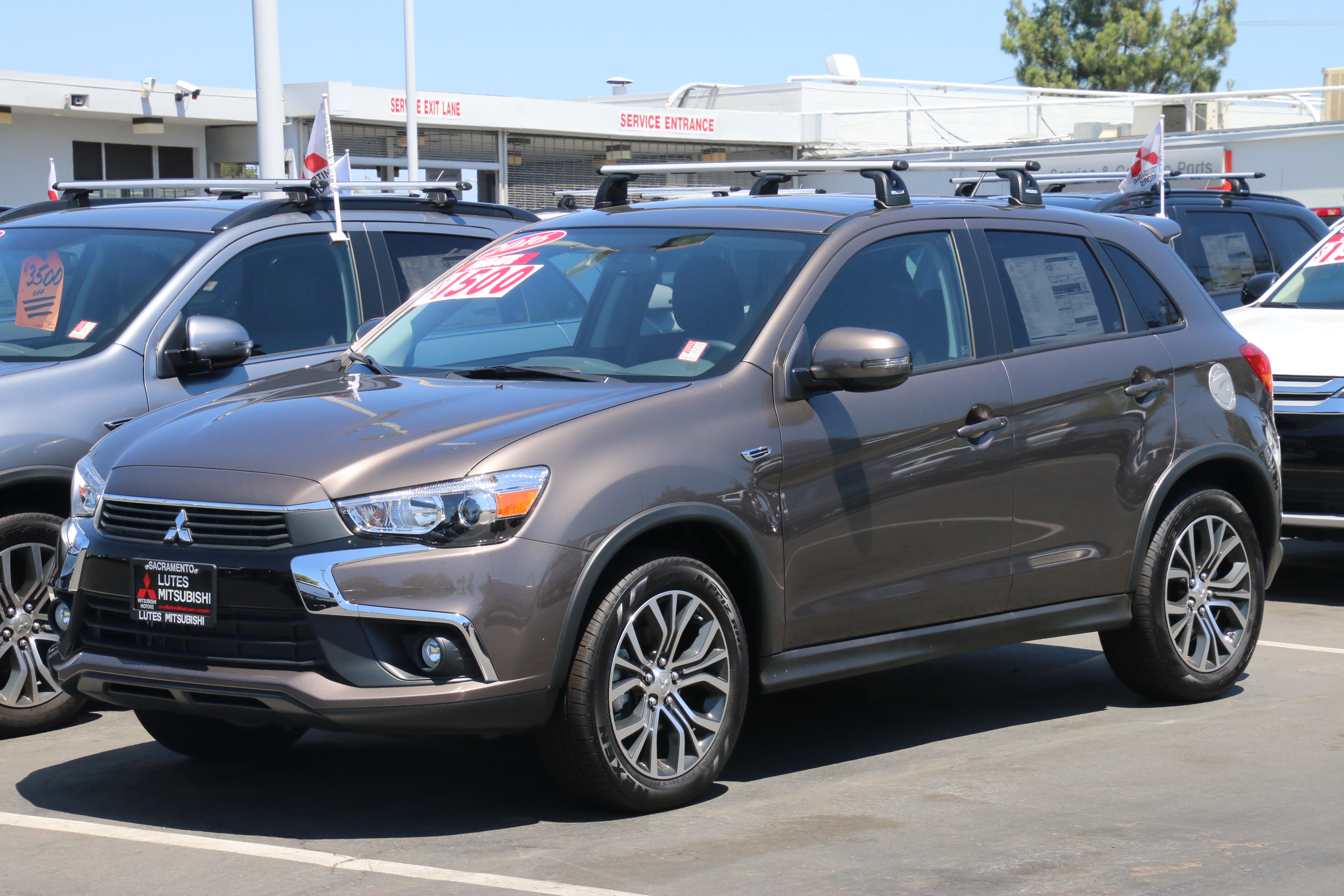
The Mitsubishi Outlander Sport is a stout, but compact CUV. Photos/Larry Weitzman

The Mitsubishi Outlander Sport is a stout, but compact CUV. Photos/Larry Weitzman

By Larry Weitzman

Good things come in small packages, and you could say this new Mitsu Outlander Sport can be classified as such. And the Outlander Sport is a small CUV being just 171 inches long or about 10 inches shorter than your average compact SUV such as the CR-V and RAV4. But since it is built on the same 105-inch wheelbase as the 185-inch-long Outlander, it is not only stout and has copious second row cabin room, but it means the front and rear overhangs are short giving it outstanding terrain clearance and ground clearance (8.5 inches).

Since the chassis is shared, the overall width remains at over 71 inches. When you slip inside, it almost feels like a full size SUV. Outside is a very attractive design following in the theme of the bigger brother Outlander. The front end is smooth and attractive and that theme is carried through its side view, only the window line is truncated. While it is still a great looking ride it looks a little stubby. Remember the Sport carries almost the exact same dimensions (height is about an inch shorter) as the bigger Outlander other than in length.

There are some other benefits carried over from the Outlander such as the identical size 18-inch alloy wheels and generous 225/55X18 inch tires and the identical track of 61 inches. They also share engines in the 2.4L DOHC, 16 valve inline four that belts out 168 hp at 6,000 rpm and a 167 pounds of twist at a very low 4,100 rpm, so as you might suspect this motor pulls strong from the bottom end. It is connected to CVT with the ability to shift six preselected gears, although CVTs are most efficient when left alone. It always picks the most efficient ratios. However, the pre selects can be useful for engine braking when going downhill or in heavy traffic at constant speeds.

Specifications Price as tested $25,995 plus $850 for shipping Engine 2.4L DOHC, 16 valve inline four 168 hp @ 6,000 rpm; 167 lb.-ft. of torque @ 4,100 rpm Transmission CVT automatic with six preselected gears Configuration Transverse mounted front engine/FWD/AWD Dimensions Wheelbase 105.1 inches Length 171.5 inches Width 71.3 inches Height 64.2 inches Track (f/r) 60.6/60.6 inches Ground clearance 8.5 Weight 3,109 pounds GVWR 4,343 pounds Weight distribution (f/r) 60/40 % Fuel Capacity 16.6  Wheels 18X7 inch alloys Tires 225/55X18 inch all season Steering lock to lock 3.3 turns Turning circle 34.8 feet Cargo capacity behind front row/second row 49.5/21.7 cubic feet Performance 0-60 mph 8.41 seconds 50-70 mph 4.89 seconds 50-70 mph uphill 7.22 seconds Top speedwell into triple digits Fuel economy EPA rated 23/28/25 mpg city/highway/combined. Expect 27-28 overall in rural country driving and 33-34 mpg on the highway at legal speeds.

Specifications
Price as tested $25,995 plus $850 for shipping
Engine 2.4L DOHC, 16 valve inline four 168 hp @ 6,000 rpm; 167 lb.-ft. of torque @ 4,100 rpm
Transmission
CVT automatic with six preselected gears
Configuration
Transverse mounted front engine/FWD/AWD
Dimensions
Wheelbase 105.1 inches
Length 171.5 inches
Width 71.3 inches
Height 64.2 inches
Track (f/r) 60.6/60.6 inches
Ground clearance 8.5
Weight 3,109 pounds
GVWR 4,343 pounds
Weight distribution (f/r) 60/40 %
Fuel Capacity 16.6
Wheels 18X7 inch alloys
Tires 225/55X18 inch all season
Steering lock to lock 3.3 turns
Turning circle 34.8 feet
Cargo capacity behind front row/second row 49.5/21.7 cubic feet
Performance
0-60 mph 8.41 seconds
50-70 mph 4.89 seconds
50-70 mph uphill 7.22 seconds
Top speedwell into triple digits
Fuel economy EPA rated 23/28/25 mpg city/highway/combined. Expect 27-28 overall in rural country driving and 33-34 mpg on the highway at legal speeds.

This same engine is the base engine for the longer Outlander, but in the Sport the base engine is a 2.0L inline four that produces 148 hp at 6,000 rpm and 145 pounds of twist at 4,200 rpm. In my bigger Outlander test vehicle of a few months ago it had the 224 hp 3.0L V-6. Performance of the Sport while not quite as quick as the Outlander V-6 was still peppy scampering 0-60 mph in 8.41 seconds. Backing that up was a level passing time of 4.89 seconds and an uphill run of 7.22 seconds. Because of the CVT it feels peppy and stronger than the numbers reflect.

Fuel economy is EPA rated at 23/28/25 mpg city/highway/combined. Overall with almost no time spent on the freeway it averaged 27-28 mpg about average for the class. However, in a two-way run to South Lake Tahoe and back to Placerville the Sport returned a remarkable 34.2 mpg averaging 28.0 on the uphill climb and 40.4 mpg returning to Placerville. Part of the fuel mileage secret is the Sport’s weight of 3,109 pounds. Its GVWR 4,343 pounds meaning it has a huge payload of over 1,200 pounds. That’s stout.

Underpinnings are also similar to the bigger brother’s state of the art set-up, MacPherson struts up front and a multilink system out back. It also shares the electronic power steering rack with 3.3 turns lock to lock among other parts bin engineering. Don’t get me wrong here, there is nothing wrong with sharing parts and here it’s a good thing as the Sport really is the smaller brother of the Outlander which is a great product. If you think about it, they even share powertrains.

Riding on the same wheelbase and almost 500 pounds lighter handling should be good and it is. With those big wheels and tires it has plenty of grip and it goes where you point it. But that takes some effort in spirited driving as the steering is a bit slow creating a feeling of understeer.

Since the Sport is a shortened Outlander, the Outlander’s improved ride quality, quiet and smoothness transfers right over so the Sport while on the firm side of riding quality still delivers an excellent balance. Road and wind noise are inaudible with special attention to window sealing. The engine spins a low 2,200 rpm at 70 mph.

Safety is also second to none with big four wheel discs (front ventilated) stopping the Sport in 41 feet from 40 mph. Its safety inventory includes a full alphabet soup of acronyms, a plethora of airbags and a rear view camera.

Inside is a leather interior and firm comfortable seats with the rear holding three people in reasonable comfort. The instrument panel has a big speedo and tach separated by an information center including trip computer info. The uncomplicated center stack is easy to use. Behind the front seats is 50 cubic feet of cargo volume and 22 cubes are behind the second row, a bit smaller than some other compact CUVs, but remember this Sport is about a foot shorter than those other vehicles it competes with.

Pricing makes the Sport a vehicle you should consider. This full boat, top of the line FWD Sport with leather and no options as delivered to the Road Beat stickers at $25,995 plus $850 for the boat ride from Okazaki, Japan. AWD will add $1,400. The only option package is NAV which stickers for $1,800. The new Sport shines on standard features and value and looks great in its new Octane Blue. Finally, Mitsubishi is the other car company that warranties their entire car for five years/60,000 miles and the power train for 10 years/100,000 miles.

Larry Weitzman has been into cars since he was 5 years old. At 8 he could recite from memory the hp of every car made in the U.S. He has put in thousands of laps on racetracks all over the Western United States.


Keyboarding all day doesn’t have to be painful

By Jana Mortellaro

Spending hours typing on a computer keyboard can lead to back pain, neck pain, and repetitive-stress injuries of the fingers, hands, elbows, and wrists. But you can avoid such problems by practicing the following strategies.

Comfort basics

Jana Mortellaro

Jana Mortellaro

Be sure to schedule regular breaks throughout the day:

·      Briefly rest your eyes every 30 minutes. Spend 10 to 30 seconds looking across the room or out a window.

·      Take a 10-minute computer break every two hours. Get up and move around to relieve stress and reduce muscle tension. Gently shake your hands and wrists.

·      Occasionally switch to other tasks that don’t involve typing.

Improve your posture

Improper posture can lead to aches and pains. To reduce stiffness, follow these suggestions:

•      Sit with your back, head, and neck in a line perpendicular to the floor. Don’t lean or hunch over the keyboard.

•      Keep your back at a right angle to the floor and your hips, knees, and ankles at 90 degree angles, with thighs and forearms parallel to the floor when you sit. Sit with your feet flat on the floor. Use a foot rest if your feet can’t reach the floor.

•      Avoid leaning on your elbows on the desk or chair armrests.

•      Keep your shoulders down, not hunched.

Hand and wrist protections

These tips can help reduce pain in your hands and wrists:

•      Keep your wrists flat and in a straight line with your forearms.

•      Learn how to type properly. Memorizing the keyboard and using the touch-type method puts less stress on the fingers than the hunt-and-peck method.

•      Keep your fingers and thumbs in a slightly curved, relaxed posture, not straight and extended, while you’re typing.

•      Rest your hands frequently, relaxing them with your thumbs up.

•      Avoid bending your wrists up and down or straining your hands from side to side at the wrists. Move your arms to reach for keys at the edge of your keyboard.

•      Don’t push or rest your wrists or forearms against hard desk edges; this can compress your nerves and cause or aggravate nerve problems. Consider using a wrist rest.

•      Adjust your laptop computer if you’re using it for an extended period. You can attach a full-size keyboard and mouse to most laptops and raise the monitor to the correct height by placing it on a stand.

Mouse musts

Gripping and clicking a mouse improperly may lead to discomfort. When you use a mouse:

•       Keep it within easy reach of the keyboard.

•       Hold it gently; don’t grasp or tap it forcefully.

•       Avoid extending or flexing your wrist back while using the mouse. Concentrate on keeping your wrists even with your hands and forearms.

Get help

If you are experiencing joint or muscle strain or have signs of repetitive hand trauma, contact your primary care provider. Prompt treatment can reduce the discomfort and speed up your recovery.

Jana Mortellaro provides rehabilitation and occupational therapy services at Barton’s rehabilitation services in Stateline.