Trevor Bartholomew– 1982-2017

Trevor James Bartholomew

Trevor James Bartholomew

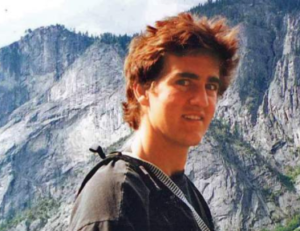
Trevor James Bartholomew, who graduated from Whittell High School in 2000, died Jan. 21, 2017. He was 34.

He was born Feb. 19, 1982, and grew up in Stateline.

At Whittell he played soccer, was a member of the ski team, and was loved by his classmates. His sense of humor and ability to make others laugh was unlike any other.

Whether he was hiking, backpacking, rock climbing Lover’s Leap or racing down the slopes at Heavenly, he loved and longed to be in the great outdoors.

As Trevor aged, he bravely endured life’s physical and mental challenges. He cared so deeply about our world. There was a frustration, hope and an intense drive to make positive changes.

Trevor is survived by his parents, Mark and Stephanie, younger brother Chase, grandparents, aunts, uncles, cousins and many friends.

In lieu of flowers, donations may be made to NAMI El Dorado County, PO Box 393, El Dorado, CA 95623 or Warm Room, PO Box 13514, South Lake Tahoe, CA 96151.


Chinese achieved enormous feats on Donner railroad

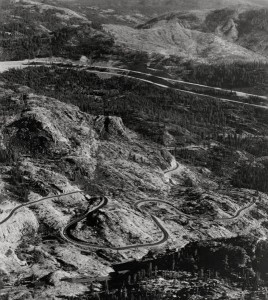
The railroad made Donner Summit much easier to cross; now it's an interstate. Photo/Caltrans

The railroad made Donner Summit much easier to cross; now vehicles traverse it across the interstate. Photo/Caltrans

By Abby Stevens, Moonshine Ink 

When Charles Crocker, an executive for the Central Pacific Railroad, suggested in 1864 the company hire Chinese immigrants to help build the railroad, he was met with laughter.

The defense against hiring Chinese was that the men were small in stature and building railroads required brute strength. At the time, Central Pacific was charged with building the railroad from the West Coast to Utah, and Union Pacific was building its portion from the East Coast to Utah much quicker — so Crocker was feeling pressure.

Many Chinese men had immigrated to the U.S. to try and get a piece of the gold rush, but as jobs in mines dwindled, Central Pacific decided to capitalize and hired 50 men on a trial basis. The experiment went well — by 1865, there were 3,000 Chinese working on the railroad.

Read the whole story


Palliative care subject of talk in S. Tahoe

Sherellen Gerhart will give a talk about palliative care on Feb. 1 from 6-7pm.

Palliative care is a medical specialty focusing more broadly on improving life and providing comfort to people of all ages with serious, chronic, and life-threatening illnesses.

Gerhart will discuss:

·       Palliative care vs. traditional care

·       Palliative care vs. hospice care

·       Qualifying for palliative care services

·       Understanding patient referrals.

The free talk will be in the board room at Lake Tahoe Community College.


Manzanar — Testament to racism in the U.S.

Not everyone made it out of Manzanar alive. Photo Copyright 2017 Carolyn E. Wright

Not everyone made it out of Manzanar alive. Photo Copyright 2017 Carolyn E. Wright

By Kathryn Reed

INDEPENDENCE – Without touching the barbed wire, it inflicts a wound on my soul.

The raw imagery of Manzanar coupled with my imagination is almost too much to take in. What’s left of this internment camp is a stark reminder of one of the darkest times in U.S. history.

The government sent more than 100,000 Japanese-Americans to what were called war relocation centers. Others would call it jail. The only crime committed was their ancestry.

After Pearl Harbor was bombed, President Franklin Roosevelt in 1942 issued an executive order that removed anyone of Japanese descent – even if they were born in the United States – to the camps. It was forced incarceration. Most lost their homes, businesses and worldly belongings all because they looked different than the white power structure.

Guard towers were located throughout the property to ensure no one escaped. Photo Copyright 2017 Carolyn E. Wright

Guard towers were located throughout the property to ensure no one escaped. Photo Copyright 2017 Carolyn E. Wright

They were finally allowed to leave the camps in November 1945, three months after World War II ended.

Manzanar is a juxtaposition with its desolate beauty. The Eastern Sierra peaks – including Mount Whitney – tower over the Owens Valley. They are majestic no matter the season. For the people shipped there they were just another physical barrier. Most of those at Manzanar had come from coastal towns in California.

They had to endure barren conditions. Temperatures in the summer along this outpost on Highway 395 can hit triple digits. It was nothing like what they were used to.

When Manzanar was open there were rows of barracks. Photo Copyright 2017 Carolyn E. Wright

The 504 barracks housed 11,070 people. Privacy didn’t exist – showers were communal and toilets had no barriers. Dust blew through the knot holes in the floorboards. Mattresses were filled with hay.

Looking at the barracks today from the outside it would be easy to say these were nothing more than barns – except people were housed in them.

It was like a little self-contained city in some ways. A driving tour points to where a garden once blossomed, to the various buildings that have long since been demolished. It was row, upon row of substandard housing.

Barracks were crowded and lacked privacy. Photo Copyright 2017 Carolyn E. Wright

Barracks were crowded and lacked privacy. Photo Copyright 2017 Carolyn E. Wright

The first time I went to Manzanar I watched the video in the visitors center. To this day I remember walking out feeling ashamed to be white, ashamed to live in a country that could lock people away because of their race.

When I went back last year there had been improvements to the displays that allowed me to get a better idea of what living conditions were like. Cots fill the barracks. Cloths lines are full of hand washed items. They lived out of suit cases or trunks. There were no closets.

Remnants of the limited recreation at the site. Photo Copyright 2017 Carolyn E. Wright

Remnants of the limited recreation at the site. Photo Copyright 2017 Carolyn E. Wright

A dirt basketball court shows there was time for play amid the travesty.

Scattered about are testimonials regarding the “loyalty questionnaire” they had to fill out. One question asked if the men would serve in the military and if the women would aid the war effort in some other manner. They were being asked to fight for a country that had taken away their freedoms. That irony was not lost on them.

Manzanar was one of 10 war relocation centers. Photo Copyright 2017 Carolyn E. Wright

Manzanar was one of 10 war relocation centers. Photo Copyright 2017 Carolyn E. Wright

More than 130 internees died at Manzanar. One of the inmates who had been a stonemason built a memorial at the cemetery. The literal translation of the inscription means “soul consoling tower,” though some say a better phrase in English would be “memorial to the dead.”

Since 1992 Manzanar has been a National Historic Site operated under the National Park Service. It’s one of those places every U.S. citizen should go to – especially white ones. We can’t forget our history, lest we repeat the evils of the past.


When an avalanche comes knocking

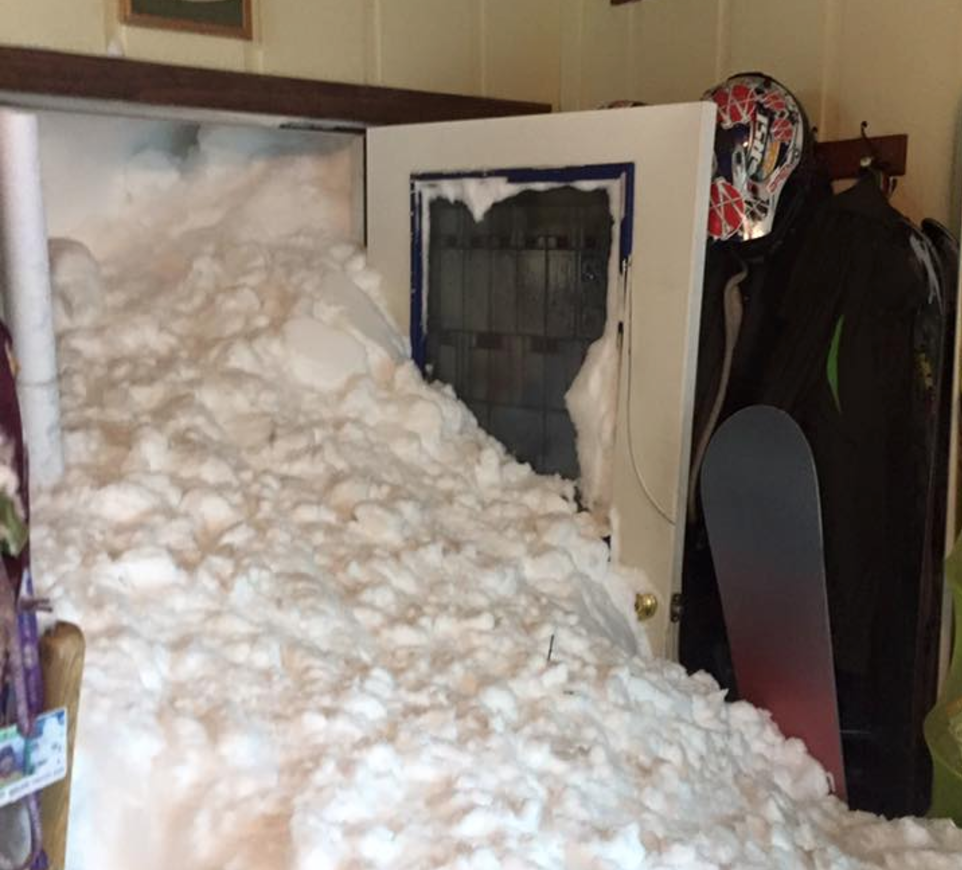
A wall of snow at the Siig's house in Alpine Meadows on Jan. 10. Photo/Steven Siig

A wall of snow at the Siig’s house in Alpine Meadows on Jan. 10. Photo/Steven Siig

By Melissa Siig, Moonshine Ink

On the morning of Jan. 10, little did I know that by the end of the day I would have one of the most famous doorways in the country. But that’s what happened when an avalanche slammed into the front of our house, and the picture we took of our mudroom filled with snow went viral.

Welcome to life in an avalanche zone.

Living in Alpine Meadows’ Avalanche Zone is like living anywhere else in Tahoe, except when there is major snowfall. Then the mountainside across from our house, which separates Squaw Valley from Alpine Meadows, begins to look different. It begins to look ominous. I stare at it and pray: please be kind. Please be stable. Please don’t slide into our home.

Read the whole story


Tahoe Tails — Adoptable Pets in South Lake Tahoe

Delilah

Delilah

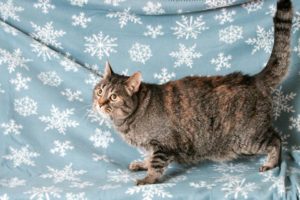
Delilah and Eli are 10-years-old and are brother and sister who are looking for a home together. Delilah is very sweet and loves to be scratched. Eli is a beautiful black kitty. He has silky fur and is quite friendly once he starts to warm up to someone.

This pair will be great in a home where they are given a little time to blossom.

Delilah and Eli are spayed/neutered, microchipped, tested for FIV, and vaccinated. They are at the El Dorado County Animal Services shelter in Meyers, along with many other dogs and cats who are waiting for their new homes. Go to the Tahoe animal shelter’s Facebook page to see photos and descriptions of all pets at the shelter.

Call 530.573.7925 for directions, hours, and other information on adopting a pet.

For spay-neuter assistance for South Tahoe residents, go online.

— Karen Kuentz


Road Beat: Alfa Romeo Giulia Quadrifoglio, escape velocity   

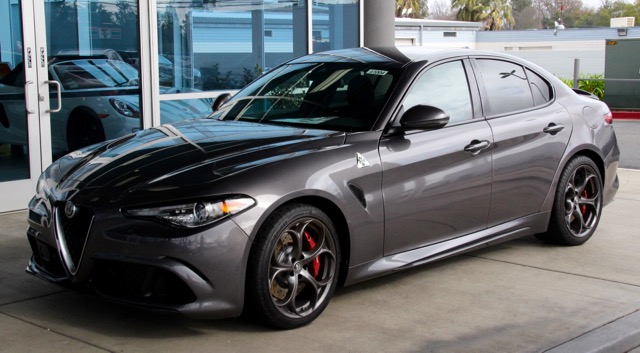
The 2017 Alfa Romeo Giulia Quadrifoglio will have you drooling. Photo/Larry Weitzman

The 2017 Alfa Romeo Giulia Quadrifoglio will have you drooling. Photo/Larry Weitzman

By Larry Weitzman

Besides being capable of super sedan acceleration (0-60 mph times in the mid threes), the experience of driving the new Alfa Romeo Giulia will also help you escape from the mundane and take you to perhaps the twisties of the famed Targo Florio course or maybe Monza, all by driving from your home to work, or even better driving home from work.

It is the second Alfa to come to the United States in about 20 years, the first being the diminutive, sinewy and sexy Alfa Romeo 4C sports car. The new Giulia is a sophisticated, state of the art car designed to grab a market owned by BMW 3s, Mercedes C and E, Infiniti Q50, Lexus IS and some others. It will do it by having the most voluptuous, gorgeous body, the best running gear and the best combination of ride and handling offered in this class of automobile.

Alfa’s dimensions are compact with a length, width and height of 183x74x56 inches on a long 111-inch wheelbase, meaning a usable backseat. Instead of looking like everyone else, the body is all Alfa with its tradition Alfa front end, smooth, curvaceous lines creating perfect proportions. It follows in the footsteps of other great Alfa’s like the 1930’s 8C 2900, a late ’60s early ’70s GTV (a Giugiaro design), the Montreal and the more recent Alfa 8C super car.

When asked about Italian design inspiration, head of Alfa design Lorenzo Ramaciotti said, “Italy has 60 percent of the (western) world artifacts … we have been around it our whole lives.” There is little question Alfa Giulia is the looker of its class and for a lot of other classes too.

Inside may be an even better treat. The instrument panel gives the driver a command position with beautifully done, serious business gauges and a color center stack info screen that magically appears. Instead of a dash push to start button, it’s a big red button located on the fabulous steering wheel. Seating is sublime and gorgeous as well and rear seating which was tested by my friend Rich. He said it is an easy six-hour space with copious room and comfort.

Now to the best part, the drive. In as few words as possible, simply the best. Performance is outrageous. The few times I got into the throttle is was astounding, probably the quickest car I have ever driven, which includes Z06 Corvettes and Vipers. I suspect 0-60 times as above for the Quadrifoglio model which has RWD, a turbocharged, direct injected 2.9L V-6 of 505 hp. For the entry model the engine is a 2.0L turbocharged, direct injected inline four with 280 hp. It is also RWD with an AWD option. Both models have a superb eight-speed auto cog swappers. Expect 0-60 mph times of low fives for the 280 hp four cylinder. Why I didn’t mention some other allegedly competing cars above in the entry luxo class is because many of them are front wheel drive.

In hitting the throttle, the response was instantaneous, hit it hard and the growl it makes will give you goosebumps.  During mild throttle applications, which will still bring on startling acceleration, it is reasonably quiet. Driving in traffic, it was a dream, extremely smooth and sharp. Steering is quick, crisp and very accurate as you would and should expect from a world class super sedan. It also gives your four distinct driving modes as well to suit your style, from eco-mild to full on track. They work and do change the character of the car. This car needs to be driven to be fully appreciated.

I would suspect that the standard, non-Quadrifoglio, should be within 99 percent of the Quadrifoglio in almost all driving except for acceleration and track performance, but the base model is still almost world class quick, anyway, with an Alfa claimed 0-60 mph time of 5.1 seconds which bests the competition smartly.

Now it even gets better. The entry level Giulia starts at just $37,995 and a Ti or AWD only adds two grand. Sounds like a deal. For the Quadrifoglio, the price of admission goes up to about $72,000. But remember, it blows the doors off anything in its class and then some. And then there is the Alfa styling, nothing else comes close. This is definitely not a cookie cutter entry level luxury vehicle, that looks like every other entry luxo ride. It has among all its other attributes, panache. Neillo is the dealer with the Franchise for Alfa in Sacramento. It’s worth the drive.            

Larry Weitzman has been into cars since he was 5 years old. At 8 he could recite from memory the hp of every car made in the U.S. He has put in thousands of laps on racetracks all over the Western United States.


Chickenfoot’s Tahoe concert featured on new album

Chickenfoot’s latest two-CD set has 13 songs from the group’s two shows at Harrah’s Lake Tahoe in March 2016.

The CD — “Best + Live” — will be released this March.

Chickenfoot is comprised of Sammy Hagar, founding Van Halen bassist Michael Anthony, Red Hot Chili Peppers drummer Chad Smith and guitarist Joe Satriani.

The first disc is songs from the group’s past, while the second is the live performance at Tahoe. Many of those songs are not new, though.

— Lake Tahoe News staff report


Study: Hospital patients do better with women docs

By Efali Luthra, Kaiser Health News

When patients go to the hospital, they hope for a doctor who is knowledgeable and experienced, but new research suggests they might start wishing for something else: a woman physician.

That’s because female doctors may on average be better than their male counterparts at treating patients in the hospital and keeping them healthy long-term, according to findings published last month in JAMA Internal Medicine.

The study, conducted by a team of researchers at Harvard, examined a random sample of Medicare patients hospitalized between January 2011 and December 2014 treated by general internists. Overall, the researchers scrutinized more than 1.5 million hospitalizations, controlling for differences in hospitals and patient cases.

Read the whole story


Western governors’ group putting on art contest

The Western Governors’ Association is sponsoring a regional art competition that challenges high school students to create works inspired by their state.

Entrants must create an original two-dimensional artwork inspired by their state or informed by living in the West. Students may draw ideas from a variety of sources, including state history, landmarks, natural resources, national parks and monuments, people, communities, and culture.

It is open to high school students in the 19 Western states and three U.S.-flag islands served by the nonpartisan policy association. 

Winning artists will receive cash prizes and their works will be displayed at an upcoming WGA Governors’ meeting, as well as on the WGA website.

For more information, go online.