From the garden to the party

By Melinda Myers

Make every meal a special event by bringing the garden to the table. Serve your favorite dishes made from homegrown ingredients. Then allow guests to add their own herbal seasonings right from the garden or container.

Start by growing the ingredients for your favorite recipes and beverages. Consider those, like tomatoes, that taste best fresh from the garden. Or create a salad bar by filling window boxes and raised beds with greens, hot peppers, green onions and more. Just hand your guests a plate and let them create their own fresh salad.

Dress up the table or balcony with a few containers of herbs on your patio, deck or near the grill.  Use small herb containers as edible centerpieces. Just include a pair of garden scissors and allow your family and guests to season the meal to their taste.

Add a bit of color and interest to salads with edible flowers like nasturtium. Photo/Melinda Myers

Add a bit of color to your meal with edible flowers. Try nasturtium and daylily blossoms stuffed with cream cheese, calendula petals sprinkled on your salad and mint leaves a top a slice of chocolate cake.

Include a few herbs and vegetables that can be blended, muddled or added to your favorite beverage. Use the hollow stems of lovage as a straw for your tomato juice or bloody Mary. You’ll enjoy the celery flavor this edible straw provides. Or pluck a few mint or rosemary leaves to flavor iced tea and lemonade.

Just be sure the vegetables and flowers you select are free of pesticides. Remove the bitter tasting pollen from edible flowers.

Start your party preparation in the garden. Once you compile your list of favorites prepare your garden and containers for a productive growing and entertaining season. 

In the garden, add several inches of organic matter such as compost to the top 8-12 inches of soil. You’ll improve drainage in clay soil and increase the water holding ability in sandy soils. This is also a good time to incorporate an organic nitrogen fertilizer into the soil. This slow release fertilizer provides needed nutrients for six to eight weeks. Then be sure to add a mid-season boost to keep your garden healthy and productive.

For container plantings, select a pot with drainage holes and fill it with a quality potting mix. This is also a good time to add an organic nitrogen fertilizer which will eliminate the need for weekly feedings. Just give containers a second application mid-season.

Mulch the soil with shredded leaves, evergreen needles or other organic matter to suppress weeds and conserve moisture. As the mulch breaks down it improves the soil for future plantings.

Harvest regularly to keep your plants looking good and producing. Cut the outer leaves of leaf lettuce when four to six inches tall and it will keep growing new leaves. Pick peppers and tomatoes when fully ripe, so the plant continues flowering and forming new fruit.

And dress up the table with a bouquet of your favorite garden flowers. Pick a few extras to send home with your guests and they’ll surely remember your special gathering filled with homegrown flavor and beauty.

Gardening expert Melinda Myers has more than 30 years of horticulture experience and has written more than 20 gardening books, including “Small Space Gardening” and the “Midwest Gardener’s Handbook.”” She hosts The Great Courses “How to Grow Anything: Food Gardening For Everyone” DVD set and the nationally syndicated Melinda’s Garden Moment” TV and radio segments.


Study: Hungry kids lag behind peers in school

By Rhitu Chatterjee, NPR
 
Growing up in a hungry household in the first couple of years of life can hurt how well a child performs in school years later, according to a study.

An estimated 13.1 million children live in homes with insufficient food, according to the most recent figures from the U.S. Department of Agriculture.

Many of those children experience hunger during their first few years of life, or their parents are hungry and stressed out about food during those years – the most crucial time for a child’s development.

Read the whole story


Tahoe Tails — Adoptable Pets in South Lake Tahoe

Jessica

Jessica and her brother, Jack, have been at the shelter for over a month. They are 6-month-old Chihuahua mixes who are sweet little puppies.

Jessica is a bit shy and laid back, Jack is a little more playful. Both are ready to move out of the shelter into homes to begin their lives.

Jessica is spayed, microchipped, tested for heart worm, and vaccinated. She is at the El Dorado County Animal Services shelter in Meyers, along with many other dogs and cats who are waiting for their new homes. Go to the Tahoe animal shelter’s Facebook page to see photos and descriptions of all pets at the shelter.

Call 530.573.7925 for directions, hours, and other information on adopting a pet.

For spay-neuter assistance for South Tahoe residents, go online.

— Karen Kuentz


Donors enable SLT Library to expand offerings

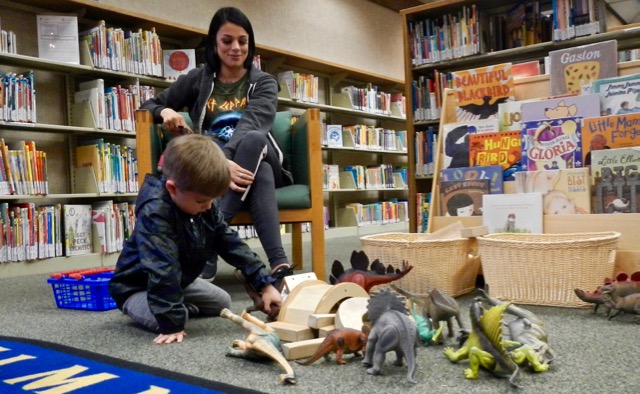
Shelby Hadjes watches her son, Connor, play at the South Lake Tahoe Library. Photo/Kathryn Reed

By Kathryn Reed

South Lake Tahoe’s public library is about to be transformed.

Two generous donors are allowing the facility to rethink what it offers patrons in terms of materials and programs, hours of operations, and what it looks like.

An anonymous donor wrote a check for $30,000 with the sole purpose of revamping the children’s section.

“We are still examining what is available to us and what possible changes we can make,” librarian Katharine Miller told Lake Tahoe News. Improving and refurbishing the area in some manner to make it more fresh and flexible are goals.

For 3½-year-old Connor Hadjes he likes things the way they are – plenty of dinosaurs to play with and read about. His mom, Shelby, tries to bring him to the library as much as possible.

“They have good dinosaur books. That’s what he is obsessed with,” Hadjes said. She, too, likes what is offered today, but is intrigued by how the space might evolve.

While this donation came as a surprise to the library, a large endowment has been promised since the late 1990s. The $150,000 a year that will start arriving this year is from the Jean P. and Stephen D. Myers Trust. The local couple set this up years ago, with payment to start after both died. Steve Myers passed away last summer, and Jean Myers in 2008.

Beyond the legacy they will leave at the library, Steve Myers is known for starting the Tahoe Drive-In in 1947, and together the couple bought the Echo Summit Ski Area in 1957. Then they opened a series of retail stores. She was also a renowned stained glass artist.

“Their primary goal was to increase access to the library for the community. That may result in an extension of hours and services we offer,” Miller said. “We just have to look at the costs of possible changes and make sure they are sustainable in the long term.”

A group is working to come up with ideas on how best to spend this ongoing gift. A decision is likely to be made later this spring, with implementation possible in the summer.

Miller had met Steve Myers before his passing. They spoke a few times about his interest in the library remaining a viable part of the community. Now she is working with a trustee of the estate to ensure Myers’ vision comes to fruition.


Panels: Symptoms should trigger celiac testing

By Rebecca Hersher, NPR
 
Celiac disease, the autoimmune disorder that prevents people from digesting gluten, affects about 1 percent of the population.

But there’s not enough evidence to recommend screening everybody to find that 1 percent, an advisory panel said.

In people with celiac disease, eating foods with gluten inflames the lining of the intestine and makes it difficult to absorb nutrients. People who are diagnosed with the condition are told to cut gluten out of their diets entirely, which can be difficult and expensive, even as gluten-free products have become more widely available.

Read the whole story


Man saves cub — gives it mouth-to-mouth

By Peter Holley, Washington Post

The bear cub was emaciated, soaking wet and barely breathing, its stuffed-animal-sized body lying face up in a meadow. It would almost certainly die within minutes.

As Corey Hancock stood over the cub on a remote trail near Oregon’s Santiam River Monday evening, the 41-year-old father didn’t see a bear — he saw a baby in distress.

A feeling of panic descended as Hancock realized he had minutes to make a decision. He could watch the cub die in the rain, or he could scoop the animal up, risking the wrath of a raging mother.

After 10 minutes of waiting for any sign of the mother, Hancock chose to act. He wrapped the cub in his flannel shirt and a rainproof sack and ran the mile-and-a-half to the trailhead, where his car was parked. After posting a plea for help on Facebook, he rushed the cub to Turtle Ridge Wildlife Center in Hancock’s hometown of Salem, performing mouth-to-mouth resuscitation along the way when it appeared the animal had stopped breathing.

Read the whole story


Money Matters: Buying a piece of the American Dream

By Nic Abelow

For many people, buying their first home represents the biggest financial commitment they’ll  make. Before making such an important decision, you should consider a variety of factors, starting with whether home ownership is right for you.

Nic Abelow

When considering this question, it may help to view the ownership decision as a lifestyle choice first, and a financial decision second. While over time buying a home can potentially be a good way to build equity, history has shown that like many other investments real estate prices can fluctuate considerably. If you aren’t ready to settle down in one spot for a few years, you may want to defer buying a home until you are. But if you are ready to take the plunge, you’ll need to determine how much you can afford to spend.

How much house can you afford?

Most people, especially first-time buyers, must take out a mortgage to buy a home. To qualify for a mortgage, the borrower generally needs to meet two industry standard ratio requirements: the housing expense ratio and the total debt ratio.

·      The housing expense ratio compares basic monthly housing costs to the buyer’s gross monthly income (before taxes and other deductions). Basic costs include mortgage payments, insurance and property taxes. Income includes any steady cash flow, including salary, child support or alimony payments. For a conventional loan, your monthly housing cost generally should not exceed 28 percent of your monthly gross income.

·      The total debt ratio is the percentage of income required to service all of your monthly debt payments. Monthly payments on student loans, installment loans and credit card balances, for instance, are added to basic housing costs and then divided by gross income. Your total monthly debt payments, including basic housing costs, generally should not exceed 36 percent.

In addition to qualifying for a mortgage, you will likely need a down payment. Down payment requirements generally vary from a minimum of 3 percent to 20 percent or more depending on individual factors. Down payments greater than 20 percent generally exempt you from buying private mortgage insurance and may help you secure a lower interest rate. Mortgages available to some military veterans and active duty military personnel through the Veterans Administration (VA) may require no down payment.

Closing costs

Closing costs vary considerably, but typically add between 2 percent and 7 percent to your purchase price. Such costs can include, but are not limited to, a home inspection, loan origination fees, upfront “points” (prepaid interest), application fees, an appraisal fee, title search and title insurance, homeowner’s insurance, recording fees and attorney’s fees.

Operating costs

In addition to mortgage payments, there are other costs associated with home ownership. Home association fees, utilities, heat, property taxes, repairs, insurance, services such as trash or snow removal, landscaping and replacement of appliances are some of the more common costs incurred. Check the actual expenses of the previous owners and make sure you know how much you are willing and able to spend on such items.

Once you’ve determined a price range and location, you’re ready to look at individual homes. Remember that much of a home’s value is derived from the values of those surrounding it. In addition to “comparables,” consider the neighborhood, schools and other qualities that may be attractive to future buyers as well as those attractive to you. The more research you do today, the better your decision will look in the years to come.

Nic Abelow is a LPL financial advisor with Abelow, Pratt & Associates Financial Advisors and Wealth Management.


From the trenches to retirement for SLT doc

By Linda Fine Conaboy

You might not expect a vascular surgeon to be dressed in a plaid, flannel shirt, with shirt sleeves rolled to the elbow and a bill cap hugging his head at a jaunty angle. But Irwin Berman isn’t your regular surgeon.

And you probably wouldn’t expect the good doctor to call MontBleu casino home either. But Berman, like we said, isn’t just a regular guy and MontBleu is a temporary residence, at least he’s hoping so.

At 87, Berman is now retired. And in late December he was firmly ensconced in his South Lake Tahoe home in Trout Creek Meadows, waiting for his kids to arrive from Southern California to spend Christmas with him.

Unfortunately, just before the holiday (and his children) arrived, the sewer system arrived too, backing up into Berman’s home and eventually forcing him out of the house and into the Stateline hotel-casino.
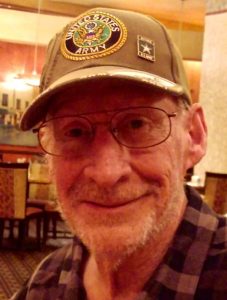
Irwin Berman of South Lake Tahoe has watched the field of medicine evolve. Photo/Provided

For one armed with a seemingly unassuming ans soft-spoken disposition, Berman’s life so far has been one of bumping into and making the most of golden opportunity.

He and his twin brother, Stanley, a thoracic surgeon, were born in 1929 to immigrant parents in the small west Texas town of Colorado City—that’s Colorado with a long A, about 70 miles from Abilene.

His father, from Lithuania, and his mother, from London, met and married in the early 1900s.

“The reason I’m from Texas,” he related somewhat incredulously and still with a discernible Texas drawl, “is that my dad’s ship from Lithuania landed in Texas. I found the ship’s log where the captain had written that dad’s family was on board, all the way from Lithuania, with less than one dollar to their names.” His mom, he said, landed at Ellis Island.

Although his parents didn’t have a particularly long life, the Berman boys have; there is an older brother, Harold, who at age 90 is still a practicing attorney in Dallas.

According to Berman, while at the University of Texas where both twins studied medicine, they were drafted into the Korean War; however, with the dean running interference, the duo was deferred from active military service until after graduation.

Irwin entered the Navy as a lieutenant (junior grade) and was stationed at the Naval Medical Center in Bethesda, Md.; at the same time, Stanley, also a lieutenant, joined the Army and was stationed at Walther Reed Army Medical Center. Because of the close proximity of the two health centers, they saw each other often.

After their tours in Maryland, Irwin became a flight surgeon and moved on to the Alameda Naval Air Station, while Stanley was assigned to a MASH-like unit, which was not nearly as hilarious as the unit portrayed on the TV show. “Not at all,” Berman laughed.

During his two-year stint in Alameda, Berman said if the injuries troops sustained during the Korean conflict were serious, they were flown to the States, but if not, transportation by ship was the order of the day (the General Mann, a troop transport that served in WWII, the Korean War and the Vietnam War). It was on this ship that Berman spent his time tending to the injured on the return trip from Korea.

While on active duty, both brothers, unbeknownst to each other, applied and were accepted to the residency program at the Mayo Clinic in Rochester, Minn., a grueling program that included 36 hours on duty and 12 hours off.

“We got $150 a month, but the GI Bill supported us for four years at Mayo. My brother and I went to Houston to work with Dr. Michael DeBakey and Dr. (Denton) Cooley, both pioneers in heart and vascular surgery,” he said.

Cooley is well-known for the first heart transplant and DeBakey for inventing the roller pump, a central component of the heart-lung machine.

Although he was a genius and becoming well-known for his amazing skills, DeBakey was not a man who inspired a companionable feeling within his students. “He was terrible to work with,” Berman said. “He was an excellent surgeon, but just not a people person. He stood behind us and would literally kick us, while calling us names.”

Additionally, Berman and his brother trained in surgery with Charles Mayo, the son of the founder of the Mayo Clinic.

With families to think about now, the Berman brothers concluded it was time to settle somewhere they loved and open their joint practice. In tandem, they selected California as their landing place—Santa Cruz.

In the seaside town the twins happily practiced surgery for 10 years; Irwin working in his specialty and Stanley in his. But when the Cuban missile crisis became a looming and frightening threat in 1961-62, Irwin, who was still in the naval reserves, decided it was time to make his exit from military life.

Sending a resignation letter to his superiors prompted a return missive from President Lyndon Johnson congratulating him on his promotion to commander in the Navy. It seemed that Irwin was not to become a civilian after all.

While he was still in the naval reserves, and still practicing in Santa Cruz, surprisingly, the Army came calling, seeking him out and asking if he would become an Army surgeon stationed in Europe for three years.

“I thought this was the biggest joke,” he said. However, the Army was serious in its bid to pre-empt this Navy family, and the Bermans, now including two children, packed up and moved to Nuremberg, Germany, where he remained as chief of surgery in a military hospital for three years.

“My wife and kids liked it in Germany,” he said. “Dad was home more.”

From Germany he went to Fort Huachuca in Arizona, where Berman decided to move from the Army reserve to the regular Army, leading to his promotion to a full colonel.

Taking it all in stride and continuing to practice medicine, the colonel and his wife took another post in Seoul, Korea, where he was named chief of surgery in 1989. By this time, the peripatetic doctor was beyond the Army’s mandatory retirement age of 60. Not a problem, he said, the Army simply extended him beyond retirement age.

Three years later, at age 63, Berman finally returned stateside, retiring from the Army at Fort Hood, Texas.

Fast forward to his life as a full-time resident of South Lake Tahoe, which began while the family still resided in Santa Cruz with the building of a summer home at Tahoe. During those busy years, with his wife and kids ensconced in their Tahoe home, Berman established his regular summer-time commute between the lake home and his seaside residence.

Unfortunately, divorce upended Berman’s retirement plans to spend the winter in Arizona and warmer months at Tahoe where he planned to assist other practicing Lake Tahoe surgeons.

“Come to find out, at South Lake Tahoe, where I had become a full-time resident, I had to carry full malpractice insurance, which in 1994-95 was $100,000 and which [the local hospital] refused to cover. So I went to a Harveys casino job fair, where I was hired and for eight months to work the 2-10am shift when the high rollers were there.”

It may seem surprising that a renowned surgeon, a retired Naval commander and a retired Army colonel would wind up at Harveys, but listening to him talk, Berman has no regrets about his job as a keeper of statistics at a local casino.

Although he said now he’s doing exactly what he wants to do, he intimated that he would have liked to keep the casino job, but not on a full-time basis, which would have been a requirement.

Nevertheless, now, after a couple of surgeries that require him to walk with a cane, Berman is a happy man with time to feed his growing interest in geology, fostered by his life in the desert at Fort Huachuca.

“I’ve taken all the courses in geology that Lake Tahoe Community College offers,” he said, with perhaps a longing for warmer climes. “The least thing I like about Lake Tahoe is the winter and the cold and snow. But the best things are the beautiful scenery, the clean air and the small town atmosphere. I’ll leave this place when I die.”

And what does he think about the state of medicine today?

“In Santa Cruz there was no Medicare. I thought when the government got into medicine, it would ruin it. I think this has proved true. I don’t blame the young doctors for putting in their hours and not being on call like I was,” Berman said. “Now there are so many government regulations”

However, he quickly added, “Technically, healthcare has advanced far more than I anticipated, but I think that perhaps doctors don’t care about medicine as much as we did.”


Ren Faire returning to the South Shore

The Valhalla Renaissance Faire returns to Camp Richardson on June 10-11 with a fantasy-pirate theme.

The event did not take place in 2016 because of all the work the U.S. Forest Service was doing to the campground. Because of the venue’s extensive updates and changes organizers have decided to limit the 2017 event to one weekend, with an expected return to the full Valhalla Renaissance Faire two-weekend schedule in 2018.

This will be the 25th anniversary of the festival.

Adult tickets are $15. It will be open from 10am-6pm Saturday and 10am-5pm Sunday. For more info, go online.


Douglas County working on mobile library

Books from Douglas County’s library might have wheels one day.

The goal is to have a mobile library in 2018. It could deliver books and other library materials – even programs – to people who have a hard time reaching the physical library.

To date, the Library Foundation has raised $125,000. Another $15,000 is needed to purchase the vehicle, which would resemble a UPS truck.

Donations may be made to the Library Foundation, Douglas County Library, PO Box 337, Minden, NV 89423.

— Lake Tahoe News staff report