Rangers lead educational hikes at Heavenly
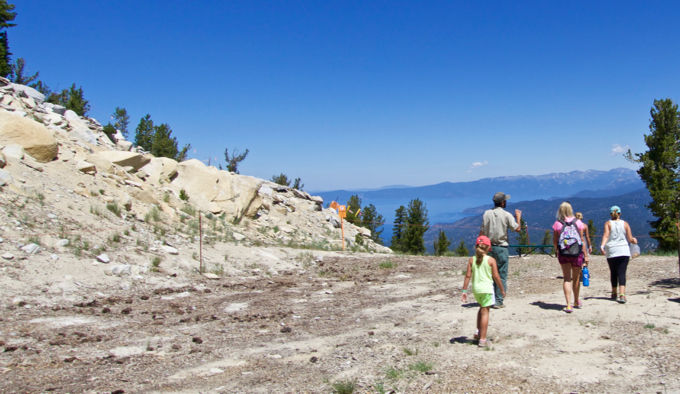
USFS ranger Gustavo Nava leads the Smith family to what looks like the edge of the resort. Photo/Kathryn Reed

By Kathryn Reed

A tree is not just a tree. And those sounds; they mean something.

Gustavo Nava walks a little way before he starts an impromptu quiz about how to identify the various trees that line the trail. The three key differences – bark, needles and cones. Key phrases like “gentle Jeffrey” for the Jeffrey pine and “prickly ponderosa” for that varietal are offered as reminders.

Elevation plays a huge factor in what will grow where. White bark pines are prevalent here, not so much at lake level. They like it the 8,000- to 9,000-foot level. These trees are unusual in that they grow together so their trunks are a cluster.

Flora and fauna, and a little history about the Indians dominate the walk.

Nava is one of the U.S. Forest Service rangers who leads these free hikes at Heavenly Mountain Resort. This is the second year the Forest Service has offered these excursions from the top of the gondola.

“The goal is to connect the public more with the land,” Jaclyn Tain with the Forest Service told Lake Tahoe News. “It offers them something where they get more in depth knowledge about the land they are enjoying.”

On this particular Friday a mom and her three daughters are learning from Nava. They spend their summers in Carnelian Bay, with the rest of the year in Turlock. This was an opportunity to see a part of the lake they are less familiar with.

“They like guided hikes because they don’t trust their mother,” Kim Smith told Lake Tahoe News. Her daughters – ages 13, 10 and 6 – didn’t disagree. Besides not having to rely on her map reading skills, Smith said it’s a chance for them to “learn more and explore more about our back yard.”
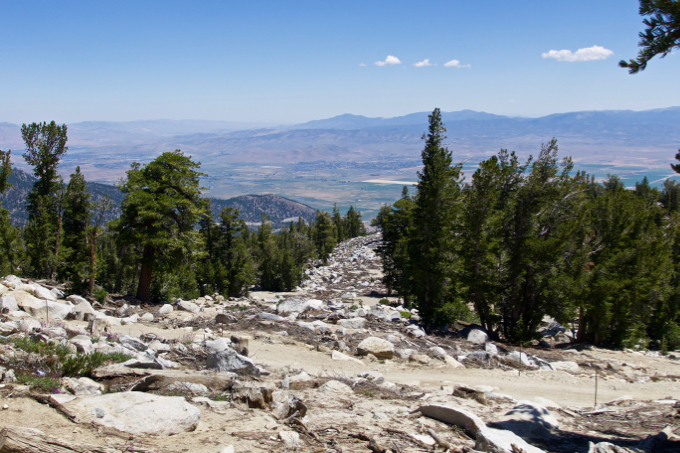
Ski runs without snow seem to flow into the Carson Valley. Photo/Kathryn Reed

Snow was a factor this year for the ranger program. The normal route is to take the Tamarack lift and hike from there to Sky Express. The alternate is to hike to the top of Olympic chair – elevation 9,470 feet.

Nava stops again. Everyone listens. It’s a Clark’s nutcracker. Some see it through the branches. Others trust that it must be there because they hear its song.

Each excursion is different. What wildlife will be out can change day to day, what flowers are sprouting leads to other information being dispersed, then there are always questions by the participants.

Even on days when there is no hike the Forest Service has a presence on the mountain. Six days a week employees hand out maps and answer questions. After all, this is Forest Service land that the resort is operating on.

—–

Notes:

·      Hikes are Fridays and Saturdays at 11am and 1pm.

·      They start at the top of the gondola. Meet near the Tamarack Lodge. (Must pay to ride the gondola.)

·      They last about one hour and are about 2 miles.

·      They will go through Sept. 2.

·      Bring water.

·      Wear closed toe shoes.


Billions in new spending for housing, water, parks and more could be on 2018 California ballot

By Liam Dillon, Los Angeles Times

Californians could vote on billions of dollars in new spending for low-income housing developments and water and parks improvements next year.

Gov. Jerry Brown and lawmakers are considering five proposals that would finance new homes for low-income residents, build parks in neighborhoods without them and restore rivers, streams and creeks among dozens of other projects. The Legislature is likely to decide how much money would be borrowed and where it would be spent before it adjourns for the year in mid-September — a debate that legislative leaders say is pressing.

Voters have long backed bond financing, which allows the state immediately to spend more money than is otherwise available and pay back the debt with interest over time. Over the last four decades, California voters have approved $164 billion in bond spending while only rejecting $18 billion, according to the nonpartisan Legislative Analyst’s Office.

Read the whole story


Study: Forests taking longer to recover from drought

By Emily Guerin, KPCC

Gov. Jerry Brown may have declared the drought emergency over in April, but don’t tell that to California’s plants and trees. According to a study, not only do the effects of drought on the environment linger after it starts raining, but this “drought recovery” period is lasting longer than ever before, likely because of climate change.

Scientists with Woods Hole Research Center, University of Utah and other institutions found that trees often don’t return to their pre-drought growth rates — even after rain and snow return.

“Just because the rains come back doesn’t mean the ecosystem is functioning,” said lead author Christopher Schwalm with the Woods Hole Research Center in Massachusetts. His study was published in Nature on Aug. 10.

Read the whole story


LTCC soccer teams eager to launch ’17 season

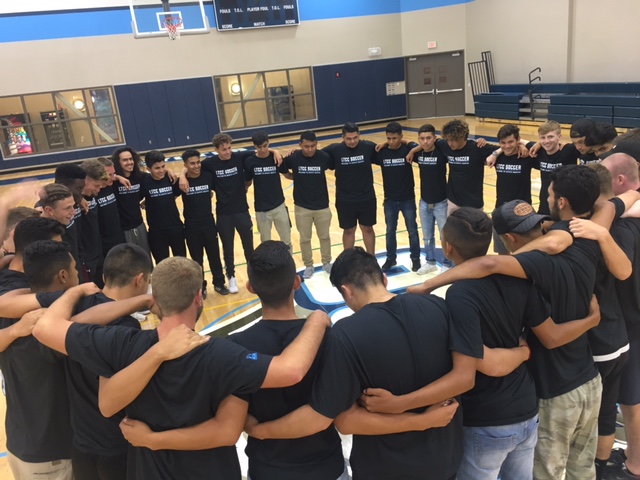
Camaraderie is key to success on the soccer field. Photo/Terra Breeden

By Terra Breeden

The only thing artificial about soccer at Lake Tahoe Community College is the field on which the players smack that white and black ball.

The men and women’s teams have been practicing for weeks in anticipation of the season opener Aug. 22, with both squads hoping to improve upon last year’s results. In 2016 the men went 12-5-6, after winning the Golden Valley Conference championship the year before for the second time. Two years ago the team earned its first state final four appearance. The women went 11-5-4 in 2016.

Men’s head coach Nick Arbelaez and women’s head coach Jeremy Evans have built what they hope are all-star teams, having recruited players from all over the country to play at LTCC. Both soccer teams are expected to do well this year.

LTCC coach Jeremy Evans, center, works with the women in preparation for the 2017 season. Photo/Diane Lewis

The Coyotes are in their fourth season, with head coaches who are in their second (Arbelaez) and third (Evans) years.

“In soccer, we are one of the top 10 junior colleges in the country,” Arbelaez told Lake Tahoe News. “The focus is there and we’re hoping to come away with a championship this year.”

Sixty percent of sophomore soccer players at LTCC receive an athletic scholarship to attend four-year schools and because of LTCC’s standing as a top junior college, many gifted players come to the school for soccer.

“I’m looking forward to a fun year and the expectations are high because for these players. Soccer is a privilege, not a right,” Arbelaez said.

Both teams are practicing nonstop to get ready for their first game on Tuesday. The women take on West Valley College at 5pm and the men will be playing the 1868 Reno professional soccer team at 7pm. Both games will be at the LTCC soccer field.

Once the season starts, the LTCC teams will be competing every week. Each plays 22 games in 90 days.

“It can be a grueling schedule, but we’re excited for the season,” Evans said.

Although the teams are composed of a lot of talented locals, both have players from all corners of the globe. On the men’s team, three players come from England, one from Spain and another from Jamaica. The women’s soccer team has many local players, as well as members from the Bay Area and England.

“This is about providing a college experience and having players from different cultural backgrounds provides that,” Evans said.

There are several players to keep an eye on this season.

“We have 18 solid players,” Evans said. “It’s the best collection of talent that has ever come through this program.”

Veterans like Caitlyn Bidart, who plays defender center-back, and forward Kenya Maltese should be forces to be reckoned with.

“Caitlyn Bidart had a phenomenal freshman year and having that kind of leadership on the team is critical because I have 16 newcomers who are looking for guidance,” Evans said.

Last year, Maltese was voted to be an all-league player in the Golden Valley Conference as a freshman. This year, she is revving up for another big season as she returns to the field at LTCC.

“I’m looking for her to be leading goal scorer and build on her impressive first year,” Evans told Lake Tahoe News.

On the men’s team, sophomore forward Sean Keith is captain of the team. Keith will be graduating from LTCC in June. He already has an opportunity to play at Creighton College, which is a Division 1 school in Nebraska.

LTCC men’s soccer team is aiming for a division title. Photo/Diane Lewis

“He’s quick and an overall leader,” Arbelaez said. “He’s the first one at practice and the last one to leave, just a really special athlete.”

Co-captain of the men’s team Dalton Rice plays center-mid position and brings high energy to the game.

“He’s a dynamic player and a team leader who’s also great in the classroom,” Arbelaez said.

Sophomore Omar Trujillo came to LTCC from the Reno area and is the goalkeeper. Although Trujillo will be graduating from LTCC soon, his soccer skills define him as one of LTCC’s star players.

“He has quite a few schools gauging his interest — he is that good,” Arbelaez told Lake Tahoe News. “He had the starter position as a freshman.”

Although both LTCC soccer teams are looking forward to a stellar season, there is more to the players than school and sports. Players are involved in the South Lake Tahoe community throughout the year. They tutor and read books with local children at South Lake Tahoe elementary and middle schools. Several team members also volunteer at Tahoe Youth & Family Services and provide mentoring to youth. Both LTCC soccer teams are involved in the South Lake Tahoe American Youth Soccer Organization (AYSO) and have “soccer days” at the schools.

“Soccer is a big part of their lives, but we encourage community outreach. When the players get out in the community, the community gets to know them on a different level, as human beings and not just talented athletes,” Arbelaez said.


Violent crime in El Dorado County up 15%

By Jim Miller, Sacramento Bee

For the second year in a row, California saw an increase in violent crimes, according to new state figures, which also include the first detailed look at peace officers’ use of force.

The Department of Justice’s inaugural use of force report, required by recent state legislation, covers incidents that caused serious bodily injury or death. There were 782 such incidents in 2016, including 328 that involved the discharge of a firearm, according to the agency.

Most Sacramento-area counties had overall decreases in violent crime in 2016. Violent crime reported by 17 agencies in Sacramento County declined by 6.4 percent. Placer County had a 7.9 percent drop and Yolo County violent crime declined by 20.5 percent. El Dorado County had a 15.1 percent increase.

Read the whole story


Nev. team will capture eclipse from 100,000 feet in air

The view from 100,000 feet, part of NASA’s eclipse live-streaming project. Photo/NASA

By Benjamin Spillman, Reno Gazette-Journal

A group of Nevada researchers plans to take solar eclipse viewing to new heights.

They’re launching a balloon outfitted with cameras to the edge of space just as the eclipse shadow rolls over eastern Oregon and Idaho.

The idea is to capture unique images from the first total solar eclipse viewable from the contiguous United States since 1979.

Read the whole story


Crusade under way to pass SLT sales tax for roads

By Kathryn Reed

When South Lake Tahoe was incorporated in 1965 many of the roads were still dirt. The engineering at the time called for asphalt to be laid on top of the dirt. That’s not how things are done today, especially in an environment with a freeze-thaw cycle like Tahoe.

Bad roads to begin with and no plan to deal with maintaining them has led to the city to have streets that some say resemble Third World countries.

Advocates to raise money for South Lake Tahoe’s roads via increasing the sales tax are making their rounds to various groups.

Many at the Progress for Tahoe meeting on Aug. 16 admitted it was like preaching to the choir.

Leon Malmed, who is one of the main leaders behind the city’s efforts of Measure C, led the discussion, with council members Austin Sass and Wendy David adding additional facts. Attendees offered advice on how to spread the message and what to say to the naysayers.

The question on the November ballot asks to raise the sales tax from 7.75 percent to 8.25 percent. It will require two-thirds of the voters to say yes. This equates to an additional 50 cents on every $100 spent. Locals are expected to be impacted by $25 to $50 a year, according to Malmed.

While there is no definitive proof, Measure C advocates say about 75 percent of sales tax dollars collected in the city are from tourists. The biggest contributor to those dollars are restaurants, with Ted Kennedy’s three restaurants at Heavenly Village collectively being the No. 1 generator of sales tax in South Lake Tahoe.

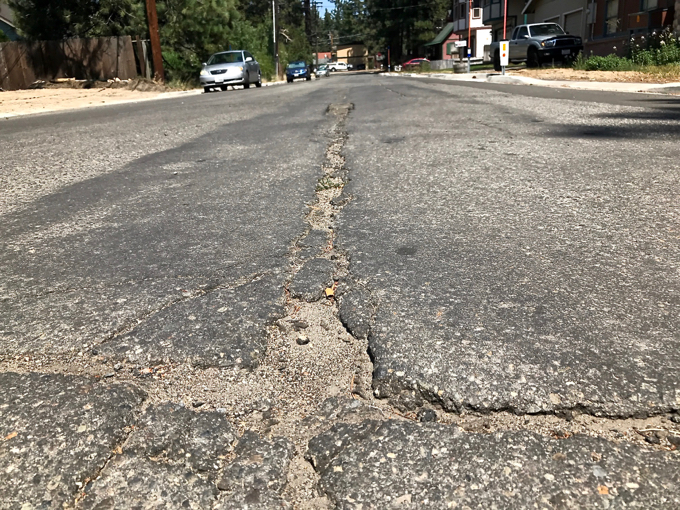
Palmira Avenue between Reno and Carson avenues is rated 4 out of 100. It’s the worst rated road in South Lake Tahoe. Photo/LTN

The $2.5 million that is expected to be raised annually could only be spent on roads. Where appropriate, this will also include curbs, gutters and bike lanes. A bike lane is on the street, not a separated trail. It essentially requires a line of white paint and the lane is created.

David pointed to how Al Tahoe Boulevard was rebuilt nearly a decade ago. It was reconstructed as a road should be and still is in good condition. That is the type of work these new dollars would go toward – not patches and pothole repair – true road construction.

Measure C is designed to sunset after 15 years. This would give taxpayers an opportunity to assess if the money is being well spent.

Two ways the city wants to ensure transparency is with a roads management authority and a roads oversight committee. The latter is just like what Lake Tahoe Unified School District and Lake Tahoe Community College created for measures G and F, respectively. It’s community members analyzing the books after the fact to make sure the money was spent as the agencies said it would be. It’s an audit of sorts.

The roads management authority, which the council approved at its Aug. 15 meeting, is more akin to the Planning Commission. The main difference is that all decisions will go before the council. In essence the RMA is the one deciding what gets done first. City staff will give input and be at those public meetings. The RMA will consist of members of the public appointed by the council. The council, though, will have the ability to overrule what the RMA recommends.

The plan is for these roads groups to be formed before the voters even weigh in. This is so the RMA in particular can be working this winter – if the measure passes – to start prioritizing projects.

Another advantage to having an RMA is that the state requires jurisdictions to have one to qualify for funding from the recently passed gas tax. Malmed said the city is expected to receive $134,000 the first year from the gas tax and then $300,000/year.

At Wednesday’s meeting it was noted that so many grants require matching dollars. Measure C would qualify as the city’s portion of those roads dollars from other outlets.

The city also intends to work with utility companies which are doing work that tears up local roads. Southwest Gas in the next 10 years intends to replace all of its underground lines in South Lake Tahoe. The city plans to coordinate efforts so the road is torn up once and fixed to a higher level than what the utility would have been required to do.

The other added bonus is that with a dedicated source of money it means contracts can be long term. This will add to job creation in the area and trickle down spending. This work will be done by outside contractors – not city staff. All projects valued at more than $70,000 must go out for bid. The local employees will still be doing the pothole repairs, storm drain and other summer work.


Reno airline capacity still trails pre-recession levels

By Richard N. Velotta Las Vegas Review-Journal

Airline seat capacity has grown at Reno-Tahoe International Airport over the past 2½ years, but it still hasn’t reached levels prior to the Great Recession, the Nevada Commission on Tourism was told Wednesday.

About 5 million seats are flown into the airport serving Reno on nine airlines from 23 destinations, thanks in part to marketing efforts by the Regional Air Service Corp., which receives funding from the commission. In 2008, capacity at the airport that is key to Northern Nevada’s rural tourism economy, was 6.5 million seats.

By comparison, capacity at McCarran International Airport in Las Vegas is about 28.3 million seats a year.

Read the whole story


Efforts to keep sediment from Tahoe paying off

By Kathryn Reed

“It’s about finding opportunities and doing the work we know needs to be done.”

This is how Bob Larsen with the Lahontan Regional Water Quality Control Board summarized the ongoing efforts to reduce the pollutants reaching Lake Tahoe. Much of that is fine sediment that is washed into the lake, which then degrades the clarity of the water.

His agency along with the Nevada Division of Environmental Protection are the overseers of the total maximum daily load program in the basin. Goals are set for each government jurisdiction in Tahoe – from the city to the counties, state departments of transportation, U.S. Forest Service and state land owners.

The 2017 performance report was released Aug. 17.

“Exceeding the target was expected based on the work done,” Larsen told Lake Tahoe News.

The five-year goal was to reduce sediment reaching the lake by 10 percent. Collectively, there was a 12 percent reduction from the 2004 base year. (The TMDL program started in 2011.) In the process, the amount of phosphorus reaching the lake decreased by 8.5 percent and nitrogen by 6 percent.

The sediment reduction equates to 268,500 pounds or 70 dump trucks worth of fine dirt that have been keep from the water.

In the spring, South Lake Tahoe, El Dorado County and Placer County were notified they met their goals. The next five-year goal for each is reducing pollutant loads by another 15 percent.

Throughout the basin the next five-year goal is another 11 percent reduction on top of the last 10 percent goal.

“It will be a challenge, but I feel it’s a challenge we can overcome,” Larsen said.

Runoff from roads is a primary source of sediment reaching the lake. The worst roads, according to officials, mean more gunk going into the water.

“There is some new information we have showing roads contribute upward of 30 percent of the sediment into the lake,” Russ Wigart with El Dorado County said last spring.

Different surface materials are being studied and various catch basins installed.

The long-term goal of the TMDL is to restore the lake’s clarity to 97.4 feet by 2076. This means when scientists put what looks like a white dinner plate into the water it will be able to be seen by the naked eye to that depth.

In 2016 the average depth of clarity was 69.2 feet. Sixty-four feet is the worst it’s been. That was recorded in 1997; the same year as the first environmental summit at Lake Tahoe. Since that time about $2 billion worth of environmental improvement projects have been implemented in the basin, all with the ultimate goal of protecting Lake Tahoe.

Other factors besides sediment are contributing to the clarity loss-gain. Climate change is a biggie, according to scientists. Time will tell if the millions of dollars spent each year on these TMDL projects will be enough to keep Tahoe blue and not have it look brown like so many lakes in the world.


South Lake Tahoe city attorney calling it quits

By Kathryn Reed

South Lake Tahoe City Attorney Tom Watson tendered his resignation Aug. 16, with his last day being at the end of September.

Tom Watson

Watson told council members he is leaving to become city attorney for Tracy.

When he was hired in May 2013 he told Lake Tahoe News the Tahoe position was a “dream job.” Clearly, things changed. He did not return calls Wednesday.

Mayor Austin Sass said he was not surprised Watson is leaving based on his wife living in Fresno, which is where he lived before taking the Tahoe job. She was not able to get a job in this area; she is the coordinator for the Department of Educational Leadership at California State University, Fresno.

The new job will put him much closer to his wife. There was a time she lived here, along with their daughter. She is now in college.

Watson has been a victim of the housing shortage in the basin. He never owned here, and has had to move when his long-term rental became a vacation home. Being gone so much for personal reasons he never made Tahoe his home and was not immersed in the community.

“I enjoyed working with Tom. I enjoyed the fact that he had a background in private industry and a public service background. I thought his perspective on things was good,” Sass told Lake Tahoe News. “He could look at things from both sides of the aisle, so to speak.”

Sass and Councilwoman Wendy David plan to meet with City Manager Nancy Kerry this afternoon to discuss how to proceed. The entire council at the Sept. 5 meeting will likely make a decision about the next steps.

The two city employees who report directly to the council are the city manager and city attorney; therefore, they are the ones who hire, fire and review those individuals. This will be the first time Sass, David and Councilmember Jason Collin have gone through this process for either of those jobs. David, though, was part of Lake Tahoe Unified School District’s board when Diane Scheerhorn and Jim Tarwater were hired as superintendent.

Most likely the city will hire a consulting firm to aid in the search. Inevitably it will take several months to fill the position. And depending on how much time that person would need to give notice it could be after the winter holidays before someone is on board.

Watson is leaving at a time when two key issues are before the City Council. It’s likely the revise of the vacation home rental ordinance will essentially be written next month before he leaves, but the marijuana issue could be unresolved.

In the interim, the city has a deputy city attorney and a legal secretary. The city also contracts with Burke, Williams & Sorensen LLP out of Oakland for Nira Doherty to come up once a month for one week. Doherty was the assistant city attorney for South Lake Tahoe before leaving to be a partner in the private law firm. On that firm’s website she is listed as the assistant city attorney for South Lake Tahoe, though on the city’s website there is no mention of her.

Nonetheless, Doherty is well versed in many city legal issues. She gave the last presentation about marijuana and will likely be at the workshop later this month.