SLT council open to future recreational pot sales

By Kathryn Reed

Recreational marijuana won’t be for sale in South Lake Tahoe on Jan. 1, but it might be by next fall.

The City Council is taking a slow, deliberate approach to implementing Proposition 64, the 2016 statewide initiative legalizing recreational pot. Jurisdictions don’t have to allow sales.

The city must allow the personal use (though it can be banned in public and at private businesses), the growing of six plants for personal use, and transportation. All of that becomes law Jan. 1.

On Aug. 29 the council heard 35 people voice their opinions about local sales of recreational pot during a nearly four-hour meeting that started at 5pm. Most were in favor of allowing pot shops in town.

This was a much different meeting than last December when the city trotted out a cadre of people who were totally against recreational marijuana and didn’t allow for another point-of-view to be heard.

More than 57 percent of the voters said yes to Proposition 64. In El Dorado County the initiative barely failed with 50.07 percent saying no. However, 65.26 percent of the voters in South Lake Tahoe said yes to recreational marijuana. In district five of El Dorado County, which encompasses the entire South Shore west to parts of Pollock Pines, 62.4 percent approved the measure.

On Tuesday night, only people from the Drug Free Coalition and NAMI believed there should be a total moratorium. They echoed much of what Police Chief Brian Uhler said in his presentation – this isn’t what the town needs, it’s a gateway drug, it’s horrible for kids, and that there are already enough drugs in town without adding a legal source.

They and others had buttons that said “Not Here Now!”

Those who spoke in favor of recreational marijuana shops agreed with the naysayers in that children must be protected. The state law prohibits the sale to those younger than 21 – just like alcohol.

Rules for how close an establishment can be near a school or day care center are outlined by the state. The minimum is 600 feet. The city could make it more rigid.

Education was urged – mostly for kids.

Ultimately the council agreed to impose a temporary moratorium on recreational pot shops. This is because the state doesn’t have all of its rules in place. At the same time, if the city doesn’t have any regulations on the books by 2018, it’s possible the state could permit businesses in the city limits. That’s why there is a need to take action, even if it’s temporary.

The emergency measure will require a four-fifths vote by the council. This will likely be on the November agenda. It will be good for 45 days. It may be extended once for 10 months and 15 days.

Based on all the regulatory procedures, the city will have about four months to come up with an ordinance.

There are more than 20 types of licenses per state law that the city could allow – ranging from cultivation to sales to edibles. The city will have to determine what it wants to allow and then the rules surrounding them.

Because the Tahoe Regional Planning Agency governs land use in the Tahoe basin, it’s likely that board will have a say. This is because amendments to the city’s area and community plans will be required.

Councilman Jason Collin had several questions pertaining to whether TRPA would allow the changes since it is a federal organization and the U.S. government deems marijuana illegal. A precedent, though, may have already been set with the pot shop that opened earlier this month in Incline Village – which is in the basin.

The city is allowed to put an excise tax on recreational marijuana sales. However, the voters would have to agree to this. If the city goes this route, it is likely to be November 2018 when that vote would be cast. The city could write the ordinance saying without the tax there would be no recreational pot sales in town.

Where that money would go could also be a component of the ordinance. Uhler is an advocate of using those dollars to resurrect the South Tahoe El Dorado Narcotics Enforcement Team. Education could also be a beneficiary.

The council at its Sept. 5 meeting will discuss further creating a subcommittee of the council to work with the community to devise an ordinance. Where the shops can be located, the number of retail outlets, criteria for ownership, taxes, allowable advertising, distance from schools and other issues need to be worked out.

It was pointed out by speakers that even if the city bans the sale of pot permanently, it doesn’t mean people won’t be using. People can bring it in from elsewhere. Plus, the medicinal marijuana outlet plans to keep operating.

For now, the city’s neighbors are saying no to recreational pot.

Douglas County has already said it will not allow recreational marijuana sales.

El Dorado County CAO Don Ashton told Lake Tahoe News, “The county has not taken a position at this time. The board has established an ad hoc committee (of supervisors Sue Novasel and Mike Ranalli) to work on this issue. We are on schedule to have a decision by the full board prior to the end of the year.” (Novasel attended a portion of Tuesday’s council meeting.)

DeDe Cordell with Placer County told Lake Tahoe News, “The board’s actions thus far have been to ban all commercial activities, regardless of recreational or medical.”

Heller talks tourism at aviation forecast summit

By Richard N. Velotta, Las Vegas Review-Journal

Nevada Sen. Dean Heller told the story Monday morning of how Sen. Charles Schumer, D-N.Y., invited some airline executives to his office, seated them on a couch, then jammed a coffee table up against their knees.

It is an example of how lawmakers are lobbied to legislate consumer protection because airlines won’t address it voluntarily.

This was one of a score of travel and tourism issues that Heller and Las Vegas Convention and Visitors Authority President and CEO Rossi Ralenkotter addressed at the opening session of Boyd Group International’s 22nd annual Aviation Forecast Summit at Wynn Las Vegas.

Read the whole story


Calif. lawmakers agree on affordable housing bond

By Guy Marzorati, KQED-TV

Gov. Jerry Brown and Democratic leaders in the Senate and Assembly have reached a deal on a $4 billion bond measure to fund affordable housing in the state.

The measure addresses one cause of California’s affordable housing crisis: a lack of state funding to construct homes for low-income residents.

Senate Bill 3, authored by state Sen. Jim Beall of San Jose, originally proposed $3 billion to fund the construction of new housing. The deal announced late Monday adds $1 billion to that total for the Cal-Vet Loan Program,  an initiative to provide home loans to California veterans that expires next year.

Read the whole story


Near shore clarity issues difficult to solve

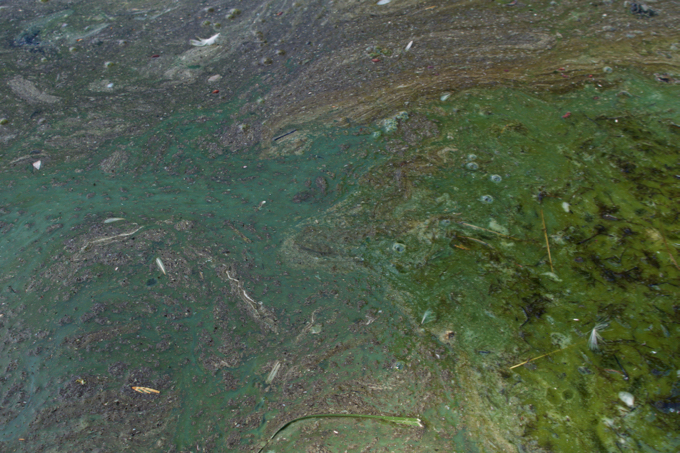
Blue-green algae in the Tahoe Keys showed up this month. Photo/LTN

By Kathryn Reed

Figuring out how to make the water near the shore as consistency clear as it is in the middle of Lake Tahoe is confounding scientists.

Part of the problem is the limited historical data there is to work with. While scientists for decades have been studying the overall lake clarity issue, the near shore has been an afterthought. Some data goes back 15 years, but even it is spotty.

It has been in the last few years that agencies have started to take an interest in the water that most people interact with. It got on people’s radars because of the deterioration of water clarity. In some places it is brown, not “blue.”

The Tahoe Regional Planning Agency was given an update last week on what is going with the near shore. Dan Segan with TRPA and Bob Larsen with Lahontan Regional Quality Control Board delivered the message.

For TRPA, there are 19 standards related to the near shore. With all the other agencies studying this subject, there are 62 standards. The bi-state regulatory agency divides them into four main groups: clarity; trophic status (primarily periphyton); fish, invertebrates, plants; community structure (human health).

“Our standard in the basin should be less than 1 NTU (nephelometric turbidity unit) at the near shore. At outflow less than 3 NTU. One NTU is near drinking quality,” Segan said.

Scientists from the Desert Research Institute in Reno did not find any measurements of more than 1 NTU from November 2014 to November 2015.

UC Davis installed 11 monitoring instruments two years ago and two more will be online this year on the South Shore. These are designed to determine if lake clarity is changing based on natural factors or if they are human caused. Wind and wave action play a role in those findings.

Periphyton, or the algae that sticks to rocks, has been studied for the last 28 years by UCD. The nine sites are visited five times a year.

“The findings are interesting. There is no lakewide trend. There is no clear signal what is happening,” Segan said.

Metaphyton is the algae that floats in the water. It has never been studied, but will be going forward.

A request for proposal is being developed for a comprehensive aquatic plant survey. The hope is it will incorporate near shore management and aquatic invasive species. The study will include marinas.

The plan is to also establish intervals for fish and invertebrate surveys.

One of the human health issues is the blue-green algae that was found in the Tahoe Keys earlier this month. And while people at the board meeting knew about the outbreak in the Keys, nothing was said to the Governing Board – at least in public – during the meeting.

For 2018, the plant survey will be done, micro-organism and toxic survey (human health) will be conducted, and algae research.


Lake Tahoe’s fast-pitch history revisited

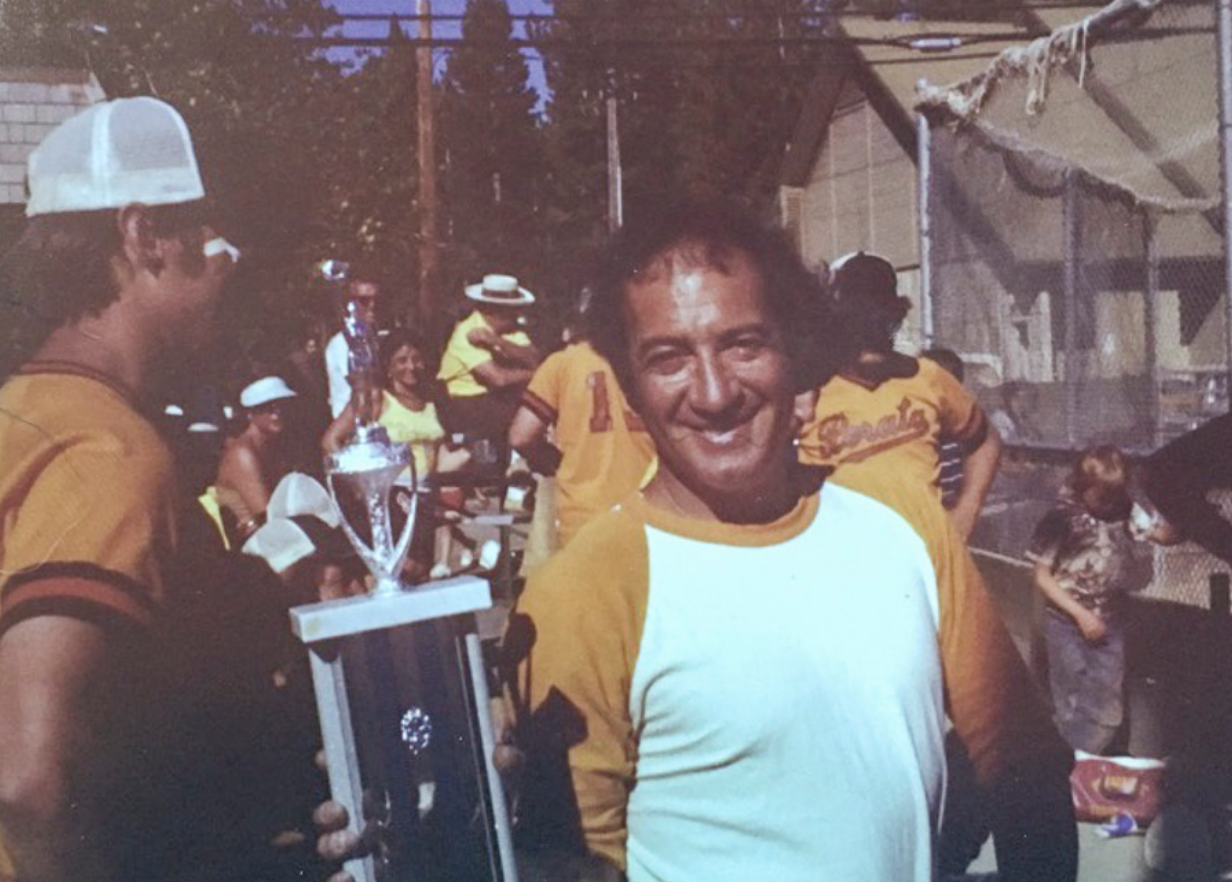
Perata Excavation team sponsor Pete Perata stands with a first-place trophy. Photo/Provided

By Moonshine Ink

They came from the San Fernando Valley, the Bay Area, the beaches of Santa Barbara and the Sacramento Valley.

Many were ex-collegiate level athletes that mostly came to Lake Tahoe to swing hammers in the summer months to help with the area’s building boom of the 1970s. Some came to work and play in the snow.

But most of all, they were Tahoe’s “Boys of Summer,” a once-in-a-lifetime grouping of fastpitch softball champions, who kicked off a community sports renaissance in the basin.

“A lot of us came up here to work, but for me, I just enjoyed the laid-back lifestyle,” said Chendo Hernandez, who owns Mountain Lake Painting in Truckee. “We got up here, loved it, and never left.”

Read the whole story


Calif.’s car culture hurts fight against climate change

By Dale Kasler, Sacramento Bee

Californians can’t shake their love affair with cars – and pickups and SUVs. That’s hurting the greenest state in the union’s much-publicized crusade against climate change.

While California is making headway in reducing greenhouse gas emissions, the rate of progress is slowing. Emissions fell by a scant 0.3 percent in 2015, the last year for which figures are available. It was one of the smallest year-to-year declines recorded since California enacted laws aimed at defeating global warming more than a decade ago, and calls into question the state’s ability to meet long-term goals for curtailing carbon.

The chief culprit: California’s cars and trucks.

Read the whole story


LimeBike — great concept, bike not so wonderful

By Kathryn Reed

Gears. Oh, my, I will never take them for granted on my bikes ever again.

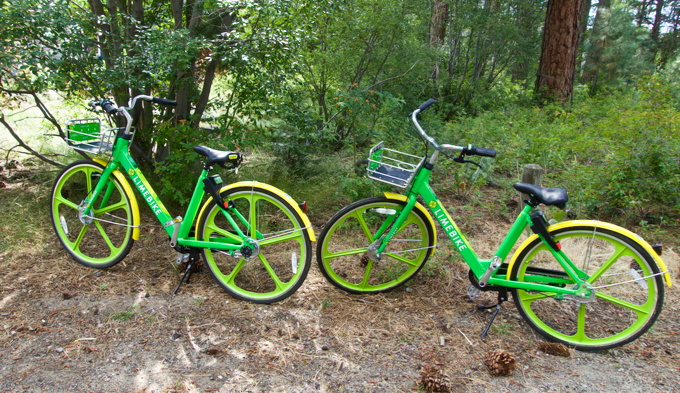
Sunday’s tiny excursion through South Lake Tahoe on a LimeBike proved a few things: a) I might be in worse shape than I want to admit, b) the town is not as flat as I think it is, and c) a heavy bike cruiser is not meant for a mountain environment.

I love the concept of LimeBike; love the whole shared economy. I don’t mind the color. It’s fun. I’m totally good with not having docking stations. It adds to the flexibility of the whole rental.

Does the system need some tweaking? Of course. Every business needs to make adjustments, especially when first starting out.

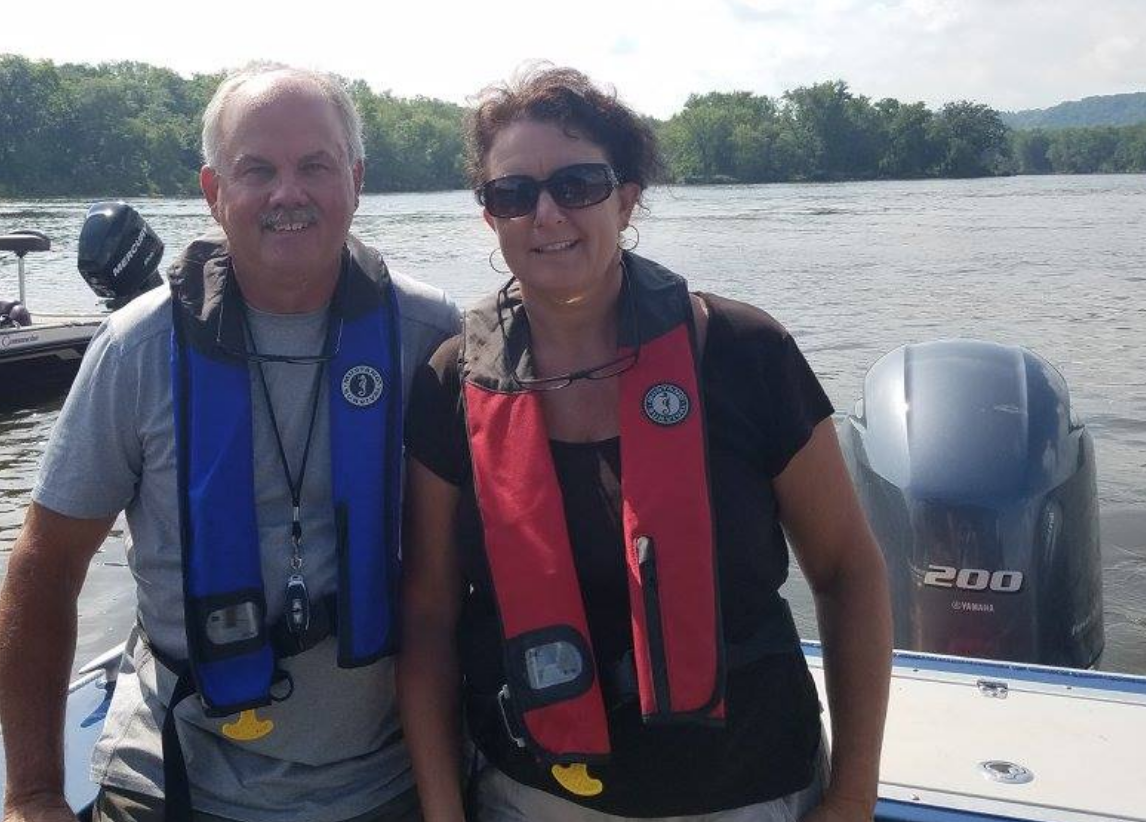
Two us started from different locations with the goal of meeting up and riding to lunch on Aug. 27. Sue had looked the night before to see where a LimeBike was located (it’s all done through an app) and there was one on 13th Street. By the next morning it was gone. She walked about 15 minutes to Burger Lounge for the next one. It wasn’t locked. She rode for free the whole day.

“I began to have guilty feelings, thinking someone would come out of the restaurant without their transportation. This is my ethical dilemma with the LimeBike program. It’s like stealing someone’s horse in the Old West,” she said.

In reality, there is a big difference. She would have been shot dead for stealing a horse. LimeBike’s, well, they are meant to be shared. No stealing possible. No reserving either.

LikeBikes are cheap transport, but it’s a bit of a workout. Photo/LTN

People are known to not lock them when they stop. In part this is to thwart someone from taking it. For those on a free ride it means having the bike that much longer without paying.

I thought I was going to have it easy getting my bike. There has been a LikeBike on my street for at least week. When I went to unlock it it said it was out of service for maintenance. A neighbor came out. He said he called LimeBike to come move it. He said they had no record of it being on this street near the Y.

There is a GPS system in the bikes, which is how the owners know where they are and how people can find them via the app.

This meant I had to start walking. The closest was at Grocery Outlet. But that one didn’t unlock either. I tried moving it and a recording said something about the police would be called if it’s moved without unlocking it. I moved on without the bike.

Next one was on Bertha. It was at a residence. The guy poked his head over the fence. He was fine that I wanted to take the LimeBike away.

He’s hoping the next incarnation of the bikes have gears and a better steering mechanism. Sue echoed those sentiments.

“For one thing, I wished I had my Allen wrench to fix the crooked handlebars,” she said.

I was whining about the little things. I had actually looked forward to having the front basket for my phone, camera and notebook. Didn’t work. All could slide out.

We both thought the seats were uncomfortable after a couple miles. Riding on our crappy roads on a LimeBike was worse than being on my 20-year-old mountain bike. There’s no give on these LimeBike’s. The cracks on the roads are jarring; not sure if I should send my massage bill to the city or LimeBike. (Just kidding of course.)

Sue had issues with the handlebars to the extent she felt awkward, saying her elbows were bent the whole time. I didn’t have the same issue. I liked that the grips were flat. Way more comfortable than my bikes.

At the end of the ride LimeBike shows you a map of your route, how many miles you went, the carbon you saved, and calories burned. I’m too embarrassed to share the mileage. Suffice it to say we sweated more than we would have on our own bikes.

“Having no gears could be problematic as I felt the hard pedaling associated with having one gear was the equivalent to an hour’s workout at the gym,” Sue said.

Mostly we were on city streets or bike paths.

“I also appreciated having tires that could ride over dirt since I took the Washington-Dunlap street cutoff,” Sue said.

The tires are tubeless, so no need to worry about getting a flat. But it does make the bike heavier.

LimeBikes are here through September on a trial basis. I’m not sure they are ideal for tourists unaccustomed to this elevation. Gears are a beautiful thing and these bikes don’t have any. There is no way I would recommend them to guests. I’d send them to a local bike shop with a better bike – the cost would be worth it. Locals who have a bike probably aren’t going to get on one unless they are writing about the experience. What I can see is locals who don’t have a bike and need to get from point A to point B faster than walking would use them. It would be great for errands, going to class, that sort of thing.

The concept is great, it’s the bike itself that leaves a lot to be desired.


Nev. regulators reaffirm pot and gaming don’t mix

By Thomas Moore, Las Vegas Sun

When it comes to recreational marijuana here, the message from the Nevada Gaming Commission to casino companies is clear: Stay away from the newly legal industry, whether it’s pot use by customers or business relationships with the weed industry.

The commission discussed the issue Thursday during its monthly meeting at the request of the gaming industry and the Nevada Gaming Control Board, the enforcement arm of the state’s gaming regulatory structure.

Commission Chairman Tony Alamo said it had discussed the issue twice before — once after Nevada began selling pot for medical use in 2015 and then again last December, shortly after voters approved legalized recreational sales.

Read the whole story


Expert: Looming water crisis for thirsty world

By Megan Rowling, Reuters

The world needs to use water more efficiently rather than exhausting invisible underground supplies and blindly exporting “virtual water” to avert a global crisis that would undermine food and energy systems, a leading expert warned.

More than one-third of humanity is water-stressed every year or season, while drought crises are on the rise from California to Ethiopia as the planet warms, said Fred Boltz, who leads The Rockefeller Foundation’s work on science and environment.

“We are really facing a global crisis,” he said, noting that demand is predicted to outstrip supply by 40 percent by 2030.

Read the whole story


Water recovery experts find missing kayaker’s body near Emerald Bay, boy in Stampede Reservoir

Bruce’s Legacy is helping families locate their loved ones who have drowned. Photo/Bruce’s Legacy

By Kathryn Reed

Being in the business of recovering dead bodies is stressful and rewarding.

The past few days have been extremely satisfying for Keith Cormican and his girlfriend Beth Darst.

On Saturday they recovered the body of Pham Dan Vu Thanh just north of Emerald Bay. He had gone kayaking by himself on June 8 from D.L. Bliss State Park and was never heard from again. Two days earlier they found the body of a Carson City boy who had drowned near Truckee.

Cormican, through his nonprofit Bruce’s Legacy, travels the United States with his 22-foot Hewescraft boat in search of people who are presumed to have drowned. His equipment is top of the line, but could be bought by any agency. And some have. But not all know how to use the sonar or have the manpower to scour a waterbody for the missing individual.

Cormican takes the time. He knows what it’s like to have a loved one who never surfaced.

“Bruce’s Legacy is in memory of my brother. He was a firefighter in our hometown in Wisconsin. He passed away in a recovery operation in a drowning back in 1995,” Cormican told Lake Tahoe News. “I’ve been involved with public safety diving for 25 years. I’ve seen the need for specialized equipment.”

Cormican started the nonprofit about four years ago. Mostly it is he and his girlfriend who are doing the work, sometimes with volunteers at the location.

“The El Dorado County sheriff’s detectives have just been fabulous to work with. You don’t always get that,” Cormican said. “They are a big reason we were so successful. Their cadaver dogs need to be credited as well.”

The dogs had pinged on a location near where Thanh’s body was found. That was critical because there had been no witnesses to whatever went wrong that day.

Thanh’s body was in 245 feet of water, more than 100 yards from shore, just north of Emerald Bay.

Keith Cormican and Beth Darst

Cormican and Darst are also the duo who found the body of UNR football player Marc Ma in July, about one year after he went missing on the West Shore.

On Aug. 23-24 the rescue team was at Stampede Reservoir near Truckee looking for 11-year-old Markos Vasquez of Carson City. He had been with a friend when their canoe capsized July 10. Neither was wearing a life jacket. The 14-year-old was pulled to safety, but his younger friend was not so lucky.

Not every mission is successful. The Aug. 26 recovery of Thanh’s body was the 19th for the Wisconsin duo.

It’s a labor of love, not something the couple make money from. They ask for their travel expenses to be paid for, like gas and lodging. The rest of their expenses are covered by donations.

After the Ma recovery their phone has been ringing more frequently. They can’t go everywhere. The next operation will be somewhere in California. They have multiple options.

But today, well, it’s a day off. They will be back out on their boat, only this time to enjoy Lake Tahoe.

Tools of the trade aboard the recovery boat. Photo/Bruce’s Legacy

They have come to appreciate Lake Tahoe.

Working on it, though, is a challenge.

“This area is so brutal. It drops off so horribly fast. There are boulders as big as a house down there,” Cormican said. “There are so many places they can fall and you cannot see them.”

They used a grid search based on the cadaver dog ping. They started at 7am Aug. 26. At 5pm Thanh’s body was located.

The one good thing about Lake Tahoe is the clarity. They were able to use an underwater camera to find the body.

Long days are the norm. Rivers are hardest. There is no exact time that they work a body of water. It’s a matter of going back and forth, and then having to call it quits.

“It’s horribly tough to tell someone’s family you can’t find them. That is the hardest thing we do,” Cormican said.

But this past week it was elation, of sorts. Recovery is a bittersweet ending. It means a proper burial, no wondering what really happened and the proverbial closure.

“It’s extremely rewarding to bring these family member home when they’ve been told there is nothing else they can do,” Cormican said.