Why the West is burning this season

By Wes Siler, Outdoor

Hurricanes, earthquakes, and nuclear war, oh my. And don’t forget to add a near-record wildfire season to that list of disasters. According to the National Wildfire Coordinating Group, there are 137 large wildfires currently raging across the American West, burning a total of 7.8 million acres.

That’s not yet as bad as 2015, which saw 8.4 million acres burned, but it’s only September and this is already the third worst year for wildfires in the last decade. It’s already way ahead of the previous 10-year annual average of 5.4 million acres burned.

You’ve seen the apocalyptic images from the Columbia River Gorge, Glacier National Park, and the Los Angeles Suburbs, but those fires are only a small part of the overall picture. Currently there are 13 active wildfires in Washington, 26 in Oregon, 23 in Idaho, 46 in Montana, and 38 in California.

Read the whole story


Page Meadow — a tranquil, scenic trek

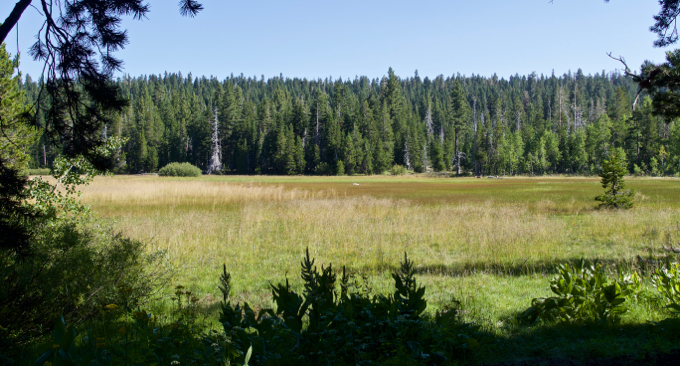
Page Meadow pops out of the forest on the North Shore. Photo/Kathryn Reed

By Kathryn Reed

TAHOE CITY – Something about meadows is mesmerizing. These vast grassy areas seem to appear out of nowhere. Such a contrast to all the conifers that dominate Tahoe hikes.

Page Meadow was not a disappointment; especially considering I had heard so much about this North Shore area that is part of the Tahoe Rim Trail.

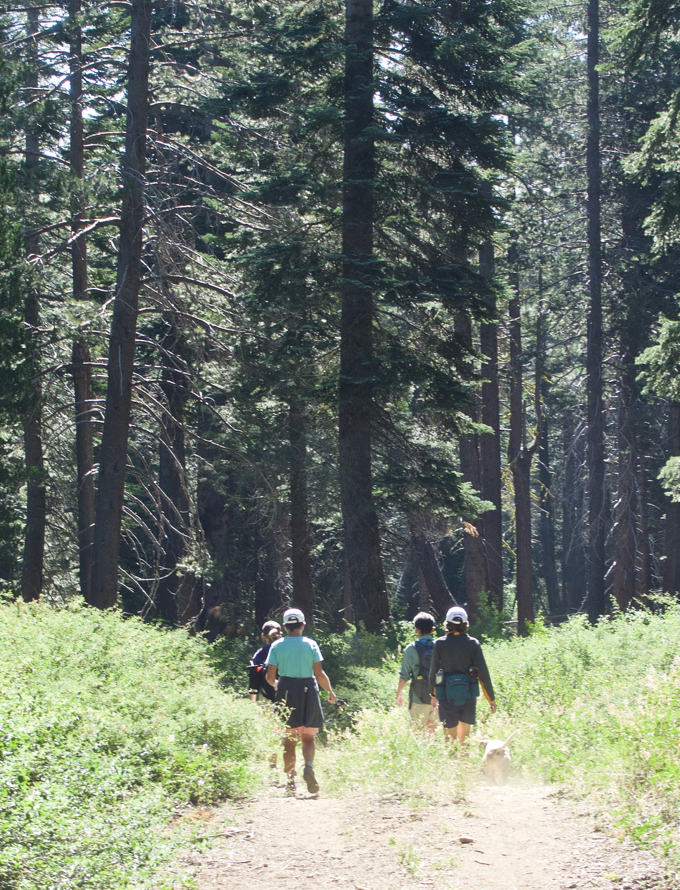
A month ago today five of us and the wonder dog AJ explored the area for the first time. For a summer weekend it was surprisingly uncrowded. We ran into a woman who lives nearby; this is her regular route for exercise. And no wonder – it would undoubtedly be one of those locations that would seem to change with the seasons.

In mid-August a few wildflowers still dotted the terrain. The grasses were full of life, some golden, some verdant. They didn’t look dead or even dying. The actual meadow was more like fertile grasslands reminiscent of the Midwest. It was inviting in the sense part of me wanted to run through it. I knew better. It seemed almost sacred. I didn’t want to ruin the beauty for others.

Mountain bikers, too, kept to the trail that skirts around the perimeter of the meadow.

The trail in parts is a road, other sections it is single track. Photo/Kathryn Reed

I would imagine with fall in the air now that the foliage will soon be turning yellow and orange.

Winter must be spectacular in there for snowshoeing and cross country skiing.

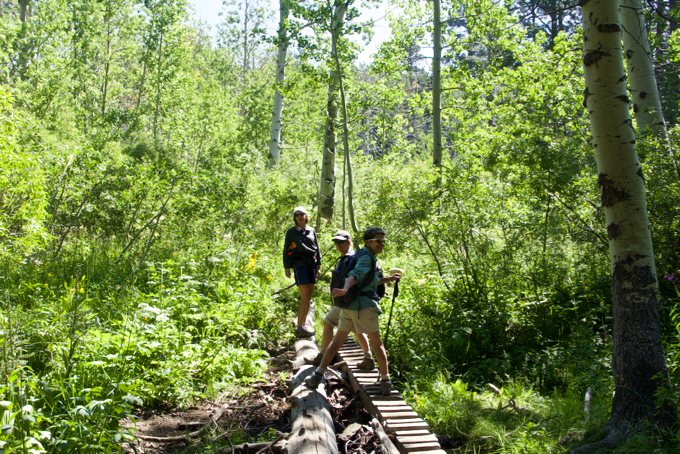
Even in late summer water was an issue in one spot. Fortunately someone had laid down what looked like a homemade ladder only it was a foot bridge across the boggy area. This might be the only section anyone would really need/want hiking poles.

We were thankful for the fellow hiker who told us to look to our left for this crossing.

Signage is spotty. Multiple connector trails intersect with the main one. On the one hand this is good because it disperses users, it also means more options for accessing the meadow, as well as being able to lengthen the trek if so desired.

Starting out we were on what seemed like a road – wide enough to walk alongside someone. No aspect of this approximately 5-mile loop is steep. It’s a gentle meander up and down, and around.

Liz, Sue and Rosemary crossing the wet area. Photo/Kathryn Reed

—–

Getting there:

From South Lake Tahoe, take Highway 89 north. Not too far after Sunnyside, turn left on Pine Street. Go right onto Tahoe Park Heights Drive. Then go right on Big Pine Drive. Go left on Silvertip Drive. The trailhead is at the end of Silvertip.


Seismologists hope to create Calif. earthquake forecasts

By Rong-Gong Lin II and Raoul Rañoa, Los Angeles Times

One day, next to the traffic map and weather forecast on your smartphone, seismologist Thomas H. Jordan envisions an app that you can check to see when the chances of a major earthquake in California rise.

Jordan, director of the Southern California Earthquake Center, is quick to make clear this is not an earthquake prediction. Predicting exactly when and where a catastrophic earthquake will strike next is impossible, scientists say.

But what scientists can do is pay close attention when moderate quakes strike in perilously sensitive spots — places right next to major faults such as the San Andreas.

Read the whole story


Heller sees changes to mortgage interest deduction in Trump’s tax plan

By Ray Hagar, Nevada Newsmakers

Tax reform is anticipated to be the next big issue before Congress, and Sen. Dean Heller, R-Nev., should have a front row seat since he sits on the Senate Finance Committee and Senate Banking Committee.

The cherished mortgage-interest tax deduction will survive but with changes, Heller said on “Nevada Newsmakers” on Thursday.

“I’m hearing rumbling about it, but I don’t think they are talking about the average family’s deduction for mortgage interest,” Heller said. “I think they are talking about, perhaps, they may cap it (mortgage-interest deduction) at $500,000, and they may cap it on second and third homes.”

Read the whole story


Trial date set in case against Squaw Valley

By Kathryn Reed

A jury next year could decide if Placer County violated the state open meeting law and if there was a secret agreement with Squaw Valley Ski Holdings that involved the Tahoe Regional Planning Agency.

A Placer County judge last week ruled that there is enough evidence for the case to go forward. The trial is slated to start in March.

Sierra Watch filed the lawsuit earlier this year after the Board of Supervisors in November 2016 approved a large-scale development project that would transform the base area of the ski resort.

The lawsuit alleges county staff gave documents to the Board of Supervisors less than 72 hours before the public meeting that weren’t simultaneously made available to the public. This would be a violation of the Brown Act.

The other allegation is that the county failed to give notice in the agenda for its November hearing that the Board of Supervisors would be considering the deal, detailed in those very same documents, to avoid litigation by the attorney general over impacts to Lake Tahoe as part of the proposed project’s development agreement. This, too, would violate the Brown Act.

If Sierra Watch prevails, Placer County could be required to rescind the November approvals and conduct a new public hearing on the proposed development.

(Squaw’s parent company, Denver-based KSL Capital Partners, plans to spend $1 billion over 25 years to build more than 1,000 residential units, hotels, retail, restaurants and bars, and an indoor adventure center.)

“Sierra Watch continues to mislead the courts, the public and spread untruths about the Village at Squaw Valley redevelopment project and the public process that led to its approval,” Whit Manley, environmental attorney at Remy Moose Manley who is representing Squaw Valley Ski Holdings, said in a statement. “When this case goes to trial, Sierra Watch will be required to produce facts that would prove there was some sort of ‘secret agreement’ Placer County was a party to when it publicly noticed the Board of Supervisors’ hearing agenda. To that we say: ‘bring it on.’ We’re confident Sierra Watch’s deliberate and calculated misstatement of facts will ultimately be exposed through the trial process.”

Squaw Valley’s contention is that the $440,000 it gave to the Tahoe Regional Planning Agency was to protect Lake Tahoe’s water quality; and that it did so voluntarily.

“It’s sad to see a self-described environmental group use legal maneuvers to delay and ultimately try to take away close to $500,000 of voluntary funding that would be used to protect Lake Tahoe’s pristine, clear waters,” Manley said.

To that statement, Tom Mooers with Sierra Watch said if Squaw’s intentions were so altruistic, write another check today.

“The issue of Tahoe’s clarity deserves more than a backroom deal,” Mooers said in a statement. “It deserves a fair hearing. Placer County’s approvals threaten everything we love about Tahoe. And they were in clear violation of state law.”

Sierra Watch had filed a separate lawsuit seeking to overturn Placer County’s approvals based on violations of the California Environmental Quality Act.


Calif. homeless crisis expands to rural areas

By Kevin Fagan and Alison Graham, San Francisco Chronicle

California housing costs are spiraling so high that they are pushing the state’s homelessness crisis into places it’s never been before — sparsely populated rural counties.

A Chronicle analysis of biennial homeless counts taken early this year across California shows the sharpest increases occurred not in San Francisco and other urban centers but in out-of-the-way places such as the thickly forested Sierra Nevada and the dusty flatlands and low hills of the northern Sacramento Valley.

Statewide, the Chronicle’s examination shows, homelessness rose by 15 percent from 2015 to this year. In heavily populated centers such as Los Angeles and the Bay Area, where tent cities have long been part of the landscape, even double-digit increases like that might not suggest that something has fundamentally changed. But in rural areas, the increases have come as a shock.

There is no year-round shelter in El Dorado County , and camps are multiplying on the edges of the county seat of Placerville.

Read the whole story


Nevada opposes being nuclear waste dump site

By Yvonne Gonzalez, Las Vegas Sun

Representatives in Congress are expected to take up a nuclear waste policy bill this fall that deals with issues tied to the Yucca Mountain project.

House Energy and Commerce Committee staffer Andy Zach was in Las Vegas on Thursday to present the congressional outlook on nuclear waste policy and Yucca Mountain. Zach said resuming the licensing process for construction authorization for a Yucca Mountain repository is the most immediate priority.

The bill passed out of committee on a 49-4 vote.

Despite Nevada’s official opposition, which is contrary to a group of rural counties that want the science heard through licensing, the bill has bipartisan support. More than 60 co-sponsors on the bill include Republicans and Democrats alike.

Read the whole story


Suicide — it doesn’t have to be the final answer

By Kathryn Reed

“How can I support you to be here tomorrow?”

That one sentence could make someone realize they have a reason to live. Listening, being there – those are two of the more powerful antidotes to death by suicide.

So often when someone wants to end it all they believe they are a burden and that everyone around them would be better if they weren’t in the picture. That person in distress needs to know they are loved, they would be missed, that they bring something wonderful to this world.

Still, as Alisa Merino with the Suicide Prevention Network said, “It’s not your job to save them. You are not responsible if they die by suicide.”

That’s the sad reality. For some people, they will seek the lethal way out no matter the other options presented, no matter what someone else says or does.

Suicide is nothing new. What is new is how people are talking about it. It’s more out in the open. The stigma is slowly being erased. Help no longer involves a straightjacket and being locked up.

About 70 people showed up last week at Lake Tahoe Community College to hear what Merino had to say.

Most people who choose death by suicide have been depressed. It could be the loss of a loved one, the loss of a job, financial problems, drug issues – the triggers are limitless.

Merino stressed that it is imperative to ask direct questions – even asking the person if they are contemplating suicide. Don’t be worried about giving them ideas; you aren’t, she said. And if they say, “yes” – don’t leave that person. Call a hotline, get them to a behavioral specialist. If they are in imminent danger of hurting themselves, call 911.

Noticeable changes to eating habits, sleep changes and giving away possessions are signs someone may be thinking about suicide. They might start talking about death. Pulling away, becoming isolated is a normal precursor. Unusual risky behavior – which could even be driving under the influence – is another red flag.

Ask about how best you can support them. Be calm, neutral and non-judgmental.

“Suicide is messy, complex and it’s hard to understand,” Merino said.

It’s something that touches every community. And when it does happen, those left behind often feel a tremendous amount of guilt and are left with questions that may never be answered. To help get people through this grief there is now a survivors of suicide support group that meets the fourth Thursday of the month at Barton Health’s PR office in South Lake Tahoe from 6-8pm.

—–

Notes:

·      Walk for Hope in memory of Emily Alessi is Sept. 10 at Lakeview Commons in South Lake Tahoe. Registration is at 9am, walk at 10am, barbecue at noon. Cost $20 adults, 12 and younger free. All proceeds go to local suicide prevention services. (Alessi, a South Lake Tahoe resident, died by suicide three years ago at the age of 24.)

·      Suicide Prevention Awareness and Mental Health 101 will be presented entirely in Spanish on Sept. 12, 5-7pm at the Family Resource Center on Spruce Avenue in South Lake Tahoe.

How oceans impact Western reservoirs and rivers

By Emily Benson, High Country News

As Houston cleans up after Hurricane Harvey and Hurricane Irma barrels through the Caribbean and Florida, this year’s Atlantic hurricane season offers a stark reminder of the power of oceans over weather. But ocean influences aren’t limited to the Atlantic. Last winter, rain and snow drenched California, much of it the result of “atmospheric rivers,” storms that channeled water from the Pacific straight to the Sierra and across the West. Torrents of rain flooded cities and damaged dams, but also helped end five years of drought in the Golden State.

In a region that relies heavily on snowmelt to supply homes and irrigate fields, Western water managers need to know how much precipitation they can expect in the coming years. While scientists understand the broad strokes of how wet and dry periods are driven by energy traveling through the atmosphere, new research is refining that understanding — something that may ultimately help officials trying to fill the reservoirs and rivers of the West.

The world’s oceans and its atmosphere are tightly connected. Because of that link, and global forces like wind and ocean currents that shuttle energy through the atmosphere, far-flung ocean conditions can influence weather.

Read the whole story


Regulators mull ways to expand esports betting

By Thomas Moore, Las Vegas Sun

Nevada’s Gaming Control Board will soon begin allowing sports books to offer bets on a year’s worth of esports events, the board’s chief of enforcement Karl Bennison said Thursday at a gambling and esports conference at the Westgate.

Currently, books can only get permission to offer bets on one event at a time. Under the new procedure, the books would be able to ask for permission to offer bets on a series of events, possibly a year’s worth, if the events are hosted by the same company.

The change could mean more esports betting in Nevada and reflects a growing comfort Nevada’s regulators have with the industry. There have only been three events listed in books since the board began approving them last year.

Read the whole story