Ski patrollers have ambulances on their backs

By Heather Hansman, Ski

Breckenridge ski patroller Hunter Mortensen says it never fails. The instant patrol responds to someone seriously sick or injured on the hill, a doctor skis by. “They want to help but they’re used to perfect light and perfect conditions,” Mortensen says. “Then they see me on my hands and knees managing an airway and they ski away.”

And, luckily for the on-slope patient, Mortensen has what he likes to call “an ambulance in his backpack.” He’s used to starting IVs, stabilizing vitals, and initiating other invasive medical procedures that were formerly restricted to emergency rooms—on the side of a ski run.

Mortensen is part of a bigger movement, mostly invisible to happily oblivious skiers, to raise the level of on-hill medical care.

Read the whole story


Editorial: Vote no on South Tahoe’s Measure C

By Lake Tahoe News Editorial Board

“Don’t tell me what you value, show me your budget, and I’ll tell you what you value.”  — Joe Biden

That sentiment needs to be applied to the city of South Lake Tahoe and all other public agencies.

When looking at the city’s budget for this fiscal year, which began Sunday, there are zero dollars for roads. If the former vice president of the United States is correct, that shows the five elected members of the City Council who last month approved this budget and the staff who presented it don’t value roads.

Shame on all of you.

For months, even years, people associated with the city of South Lake Tahoe have touted how important roads are. They say what we drive our cars and ride our bikes on are in disrepair. They say something needs to be done. We agree.

But what are they doing?

Not a single road was paved in 2000, 2002, 2004, 2005, 2011 and 2016.

Still, from 1995 to today the city has spent $11,792,473.10 on pavement rehabilitation. That is an average of $512,7616.22 per year in each of the last 23 years. So, clearly, the city has money for roads when it wants to. At least some councils saw it as a priority.

This money was solely for paving.

Measure C on the November ballot is projected to bring in $2.5 million annually. The proposal would have money going toward complete streets – meaning more than an overlay. It would include curbs, gutters and striping for bike lanes where appropriate.

We believe safe roads is one of the basic fundamentals government is supposed to provide. Clearly, based on this council’s budget priorities, the five disagree.

This current group has neglected its duty to be fiscally prudent, cut costs, increase revenue and provide the basics for their constituents. They, instead, want people to pay a higher sales tax to fix the roads.

Measure C on the November ballot asks the residents of South Lake Tahoe to raise the sales tax from 7.75 percent to 8.25 percent.

While advocates say 75 percent of the local sales tax is paid by people who don’t live in the city limits, they have not provided any proof to substantiate that fact. Even if tourists, and not just our neighbors in El Dorado and Douglas counties, were paying the bulk of the tax, that should not be a reason to say yes.

At some point the people we elect and nearly 200 workers employed by the city need to make roads a priority. It is their job to work within the budget to provide all of us with safe roads. It is not the taxpayers job to come to the rescue every time they want something.

Higher taxes for the extras in life are one thing – like an increased hotel tax for recreation amenities or property taxes for improved K-12 facilities – are logical. Another tax for the basics, like roads, is ludicrous.

Come on city officials, do your job – make roads a priority by funding them out of the General Fund.

And voters, do your job – vote no on Measure C on Nov. 7.


U.S. climate change policy: Made in California

By Hiroko Tabuchi, New York Times

SACRAMENTO — The Trump administration may appear to control climate policy in Washington, but the nation’s most dynamic environmental regulator is here in California.

Mary D. Nichols, California’s electric-car-driving, hoodie-wearing, 72-year-old air quality regulator, is pressing ahead with a far-reaching agenda of environmental and climate actions. She says she will not let the Trump administration stand in her way.

As chairwoman of the California Air Resources Board, or CARB, Nichols is the de facto enforcer of the single biggest step the United States has taken to combat the effects of climate change: standards adopted under the Obama administration that mandate a deep cut in emissions from the 190 million passenger cars on America’s roads. Together, those vehicles regularly emit more earth-warming gases than the country’s power plants.

Read the whole story


Gov’t jobs sprouting as legal pot looms in Calif.

By Michael R. Blood, AP

Scientists. Tax collectors. Typists. Analysts. Lawyers. And more scientists.

Recreational marijuana use becomes legal in California in 2018, and one of the things to blossom in the emerging industry isn’t green and leafy – it’s government jobs.

The state is on a hiring binge to fill what eventually will be hundreds of new government positions by 2019 intended to bring order to the legal pot economy, from keeping watch on what’s seeping into streams near cannabis grows to running background checks on storefront sellers who want government licenses. Thousands of additional jobs are expected to be added by local governments.

Read the whole story


Computer-guru Wozniak shares his story in Tahoe

By Linda Fine Conaboy

INCLINE VILLAGE – At least a thousand people sat shivering inside a huge tent under a brilliant icy blue Lake Tahoe sky, all captivated by Steve Wozniak as he talked about the beginnings of his company Apple Computer, Steve Jobs, his life as a teen in Silicon Valley, life at Hewlett-Packard, where he worked as an engineer although he had no college degree, and an assortment of topics in between.

A natural entertainer, The Woz, as many know him, never lacked for words during the interview-style discussion last week at Sierra Nevada College, where he headlined the Siebens-Binz SNC Tahoe Forum and was introduced by Nancy Siebens-Binz, a long-time benefactor of the college.
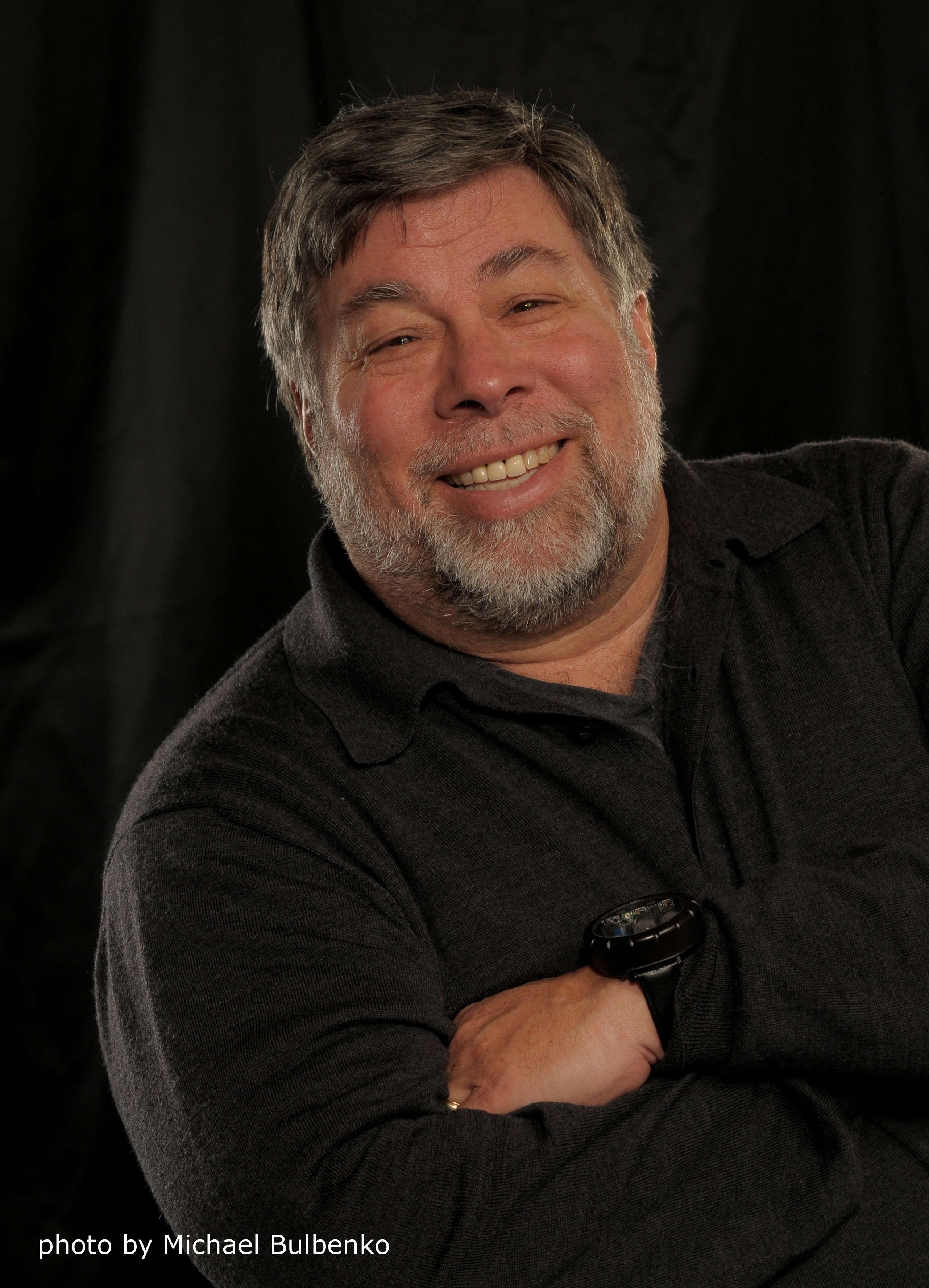
Steve Wozniak speaks to a sold-out group at Sierra Nevada College in September. Photo/Provided

Siebens-Binz, in her 80s, thawed the audience with her witty introduction of Wozniak, making her a perfect warm-up act, but she also let it be known that the Harold Walter Siebens Chair in Entrepreneurship at SNC, named for her father, is extremely important to her.

Wozniak, 67, the son of an electrical engineer at Lockheed and a homemaker, described himself as a fantastic inventor, a fact which he has proven many times. He was into electronics even as a kid, making things from kits or from his own designs. He said he loved being a ham radio operator as a youngster.

His science fair projects won top prizes. He built a system to show movies in hotels and sold it for 5 cents a pop. He designed and built his own computer, way before computers became a way of life.

Although he was extremely bright, school bored him. He attended the University of Colorado and flunked out. When he decided to enroll at UC Berkeley in 1971, he failed to graduate, but he did then return to Hewlett-Packard, a company to which he was extremely loyal.

As a teen he met Steve Jobs, whom he describes as an exceptionally effective marketer. Jobs, who worked for Atari, and Wozniak designed a spin-off of Pong, the popular Atari electronic game, which earned them $750, although Wozniak later learned that their game garnered much more than the paltry $750. He only saw half of that figure, he said. 

Working at night after returning home from his day job at H-P, The Woz built a viable computer. In fact, he said, he gave out the design for free. “I wanted to start a computer revolution,” he said, even though HP wasn’t interested in getting into the market and was even less interested in his design. The company was betting heavily on handheld calculators.

Jobs, however, saw the possibilities of this new machine and envisioned a computer company selling Woz-designed computers, one that he and Wozniak would start. Jobs wasn’t able to convince him to leave H-P. But it didn’t take long for them to form a partnership and to dive into the world of business, even though neither one of them had any money. What they did have was a computer and plenty of youthful enthusiasm.

“Steve Jobs saw what Apple could do. I just wanted to be an engineer.”

With a $50,000 order in hand and a loan to carry them through production, Apple was in business—Jobs and Wozniak each owning 45 percent of the company. The other 10 percent was held by an investor who eventually sold out.

By the end of 1978, Apple sales increased tenfold, making Apple one of the fastest growing companies in the United States. Around this time, Wozniak crashed his airplane, nearly killing himself as well as the others, including his future wife. He developed amnesia, from which he took several years to recover—it seems that this was the time he started to re-evaluate his life.

He returned to Cal Berkeley for the second time and again, failed to graduate, but received a degree later in the 1980s. He said he is very interested in the psychology of education and he taught school for several years after leaving Apple. He said he sees the big divide that computers close when it comes to kids and learning. “Computers help kids excel in school,” he told his audience.

He said he likes to surround himself with independent thinkers. “I run into entrepreneurs everywhere. They spin off new products from the various companies they work for then they start their own companies.”

And of course, the Apple story is the epitome of the entrepreneurial spirit. “Apple cared about making products easier. We made easy computers because human needs are important. I decided I wanted to do things the human way.”

The Woz said he’s in love with Siri, the built-in “intelligent assistant” that enables users of Apple iPhone 4S and later and newer iPad and iPod Touch devices to speak natural language voice commands in order to operate the mobile device and its apps.

“Siri was the greatest app ever done,” he said. “Apple bought Siri, but it’s not intelligence, it’s all algorithms.”

A discussion of Siri led to computer intelligence and the worry that maybe computers will one day replace humans in most jobs. “There is no computer that thinks. They don’t say, ‘What shall I do today?’ They have to be programmed by humans. Computers don’t have a personality. They aren’t human yet. But computers are faster than humans.”

As an example, he talked about the business of buying and selling stocks and said a computer program can consummate stock trades in nano seconds, compared to the time it takes a human.

Computers, he said, are all about assisting humans, not causing them problems. “But I don’t think self-driving cars will be viable for another 10-20 years.There are too many unusual situations for self-driving cars to control.”

He’s devoted to two concepts—honesty and happiness, saying he felt it imperative that he remain loyal to H-P even though he spent his nights working on the Apple computer and operating on very little sleep. “Engineering represents the greatest honesty in the world.”

About happiness, he said he wants to be the person who laughs at jokes. Ever the computer techie, he said the emotions of happiness are smiles and frowns.

“Pursue the stuff that makes you happy. You don’t have to win an argument. Be glad for who you are. If my car gets scratched, I don’t worry about it.

“I put on music festivals. Happiness equals food, fun and friends. Oh, and there might be a fourth F,” he laughed.

Nev. pot sales hit $27 million in first month

By Jenny Kane, Reno Gazette-Journal

Nevada took a gamble on recreational marijuana, and it’s paying off. 

Dispensaries sold $27.1 million of pot in Nevada, in July alone. That’s almost double what Colorado and Oregon sold in their first months. It’s almost seven times what Washington sold. 

Banking on weed, Nevada made $10.2 million off the fledgling industry during the first month of sales in July, according to the Nevada Department of Taxation. Of that, $6.5 million came from industry fees and $3.68 million came from tax revenue.

Read the whole story


Private business on public lands a growing trend

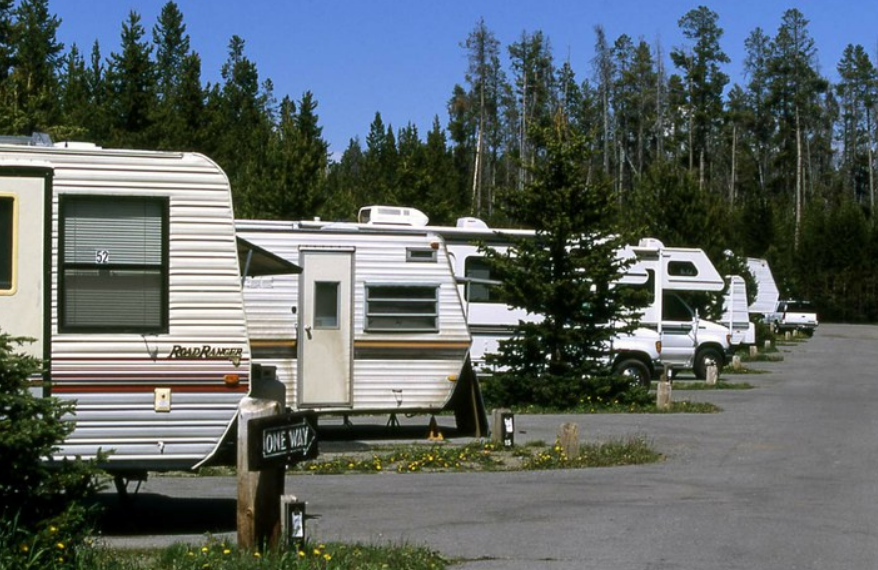
Recreational vehicles at an RV-only camping area in Yellowstone National Park run by Xanterra. Photo/Jim Peaco/National Park Service

By Joshua Zaffos, High Country News

A family heading to Yellowstone National Park this summer to sleep amid the geysers and grizzlies had lots of choice in accommodations. They could throw up a tent on a simple campsite without flush toilets for less than $20 a night. Campgrounds with full RV hookups, showers and bathrooms would cost $24 to $47. Cabins and rooms around Old Faithful, while much pricier, offer easy access to restaurants, stores, cell service and Wi-Fi.

Beyond the upgraded amenities, a difference the park-visiting family might not have noticed is who was running those campsites and cabins. The National Park Service manages the basic campgrounds, while Xanterra Parks & Resorts, a private concessionaire, operates the more developed campgrounds and lodges, food services, gift shops and guide outfits — all the services, in other words, that are well positioned to turn a profit.

Turning over campgrounds and other services to private companies is a common — and somewhat controversial — practice in popular national parks, and even many well trafficked national forests. And it may soon become even more ubiquitous, bringing changes that could alter the natural settings of campgrounds and public lands.

Read the whole story


Mt. Rose making upgrades in time for Oct. opening

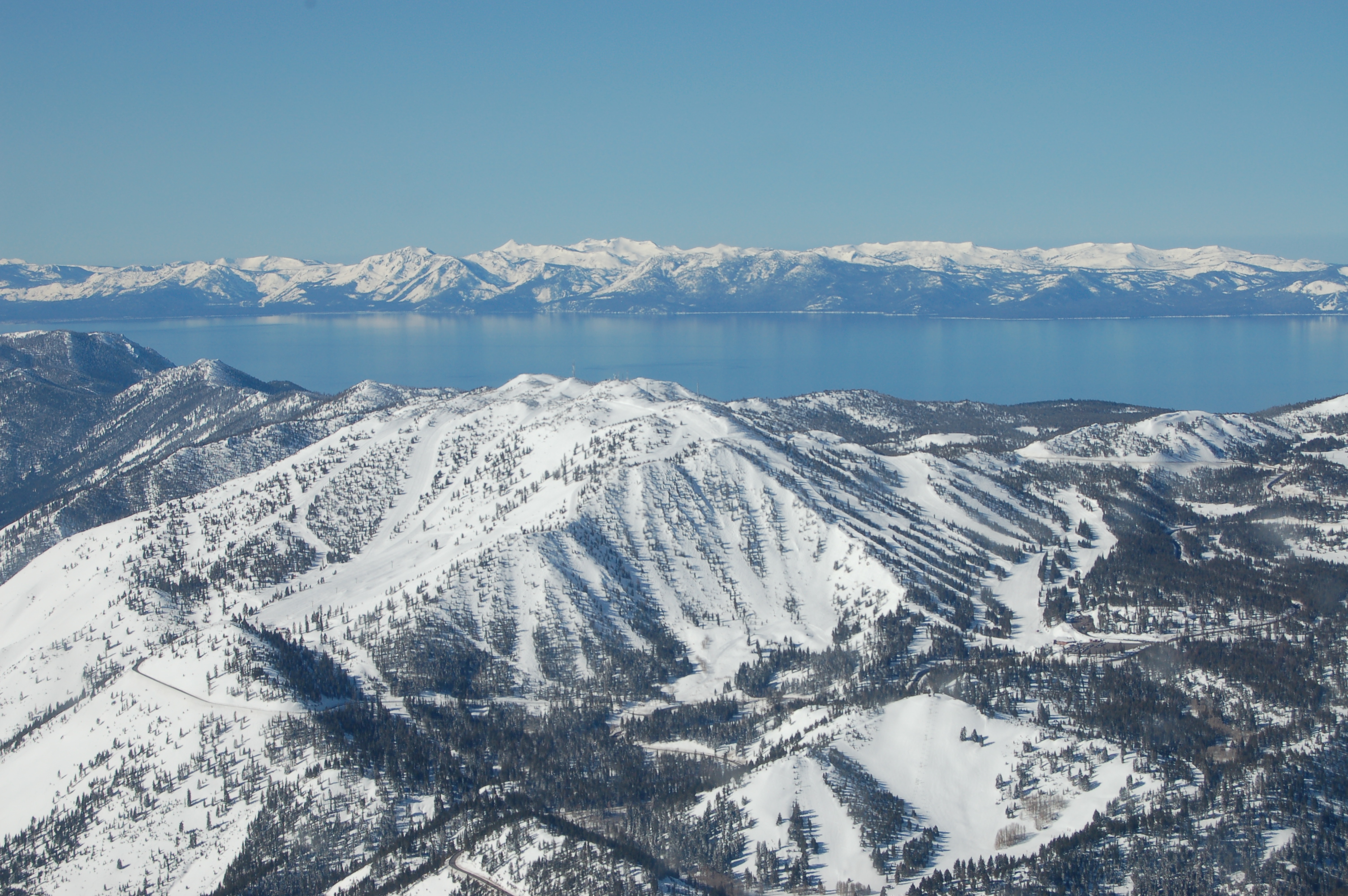
Mount Rose has the highest base of any Tahoe-area resort. Photo/Provided

By Kathryn Reed

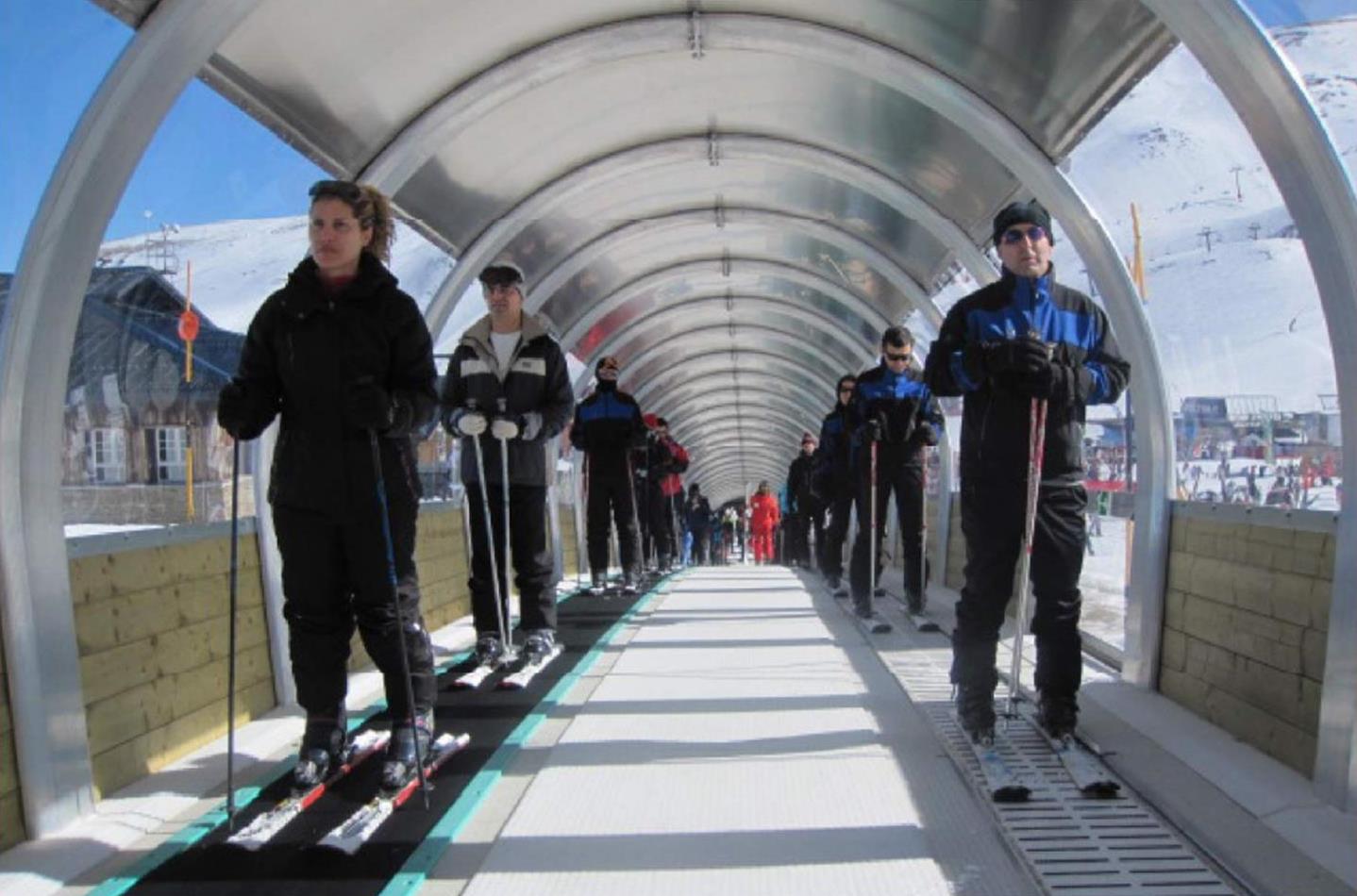
Mount Rose is installing North America’s first dual enclosed conveyor belt lift to better serve beginners. It will be only the second one in the world.

“Our learning terrain is very popular. The goal is to increase uphill capacity,” Mike Pierce, the resort’s spokesman, told Lake Tahoe News.

The hope is that this lift will give newbies more time on the hill. The thinking it that will speed up their learning curve so they will be able to graduate to terrain serviced by actual chairlifts.

It will be located in the Show-Off beginner area near the main lodge. The single, exposed conveyor known as Flying Jenny has been removed.

The first time packages and beginner lessons keep growing, Pierce said.

In all, Mount Rose is infusing more than $2 million into the resort for the 2017-18 season.

The dual conveyor coming to Mount Rose will be the second in the world. Photo/Provided

The Reno-area ski resort had been on market, but is staying family owned. Fritz Buser, 96, was ready to sell in January 2016. He has been a majority owner since 1968. Two of his sons and a grandson have taken over the resort. One son, Curt Buser, lives in the area, is president of the company and has been involved with the resort for more than a dozen years.

“The organic, local feel won’t change,” Price said.

Owners have been investing millions of dollars in the resort in the last several years – from lifts to lodges. Plans are still on the books to expand the resort across the highway.

Lately Mt. Rose has been battling with Boreal to be the first Tahoe-area resort to open each season. This year Rose is hoping to have terrain open by Halloween. With a base of 8,260 feet, mixed with cold nights (which are in the forecast) to make snow, this makes it possible to create just enough skiable terrain in the early season. Oct. 27 is the tentative opening day.

“The goal is to open early and have a six-month season. We’ve proven that is possible the last couple of seasons,” Pierce said.

Mother Nature will need to come through to open the remaining nearly 1,200 acres of skiable terrain. Much of this is on private property, though the resort also is on U.S. Forest Service land. Rose has increased its snowmaking capacity for this winter, realizing that record snowfall can’t be counted on every winter. A mix of stationary and mobile devices have been added.

With the record 762 inches that fell at Rose last season, it made building the new lift challenging because construction crews had to wait until the snow melted. It’s possible not all of last year’s snow will melt before winter truly arrives this season. A stash is tucked in the Slide bowl area, plus the September storm added to what was left over.


Opioid deaths in Nev. decline, hospitalizations rise

By Jessie Bekker, Las Vegas Review-Journal
 
Opioid-related deaths dropped in Nevada in 2016 from a year earlier, but hospitalizations and prescription rates rose, Nevada Department of Health and Human Services data presented this week show.

At the Opioid State Action Accountability Meeting in Carson City, convened by Gov. Brian Sandoval, state agencies said access to reliable, unlimited data remains a hindrance in fighting opioid problems.

Presenters at the meeting said data from hospitals, emergency medical services and law enforcement are limited, lacking information that could be used to better illustrate the opioid problem. Less complete data can hamper researchers’ analyses and make devising solutions harder.

Read the whole story


Calif. Realtors want to change tax laws

By Jim Miller, Sacramento Bee

California homeowners looking to move up would get a major financial break under a possible 2018 ballot measure to change a key provision of the state’s landmark tax law.

Proposition 13, the 1978 ballot measure, has discouraged homeowners from moving to pricier homes because a property’s assessed value is based on its most recent sales price.

Any of the three proposals crafted by the California Association of Realtors would be a significant change to Proposition 13, which caps property taxes at 1 percent of assessed value.

Read the whole story