Will Wine Country disaster push Congress to fix fire budget?

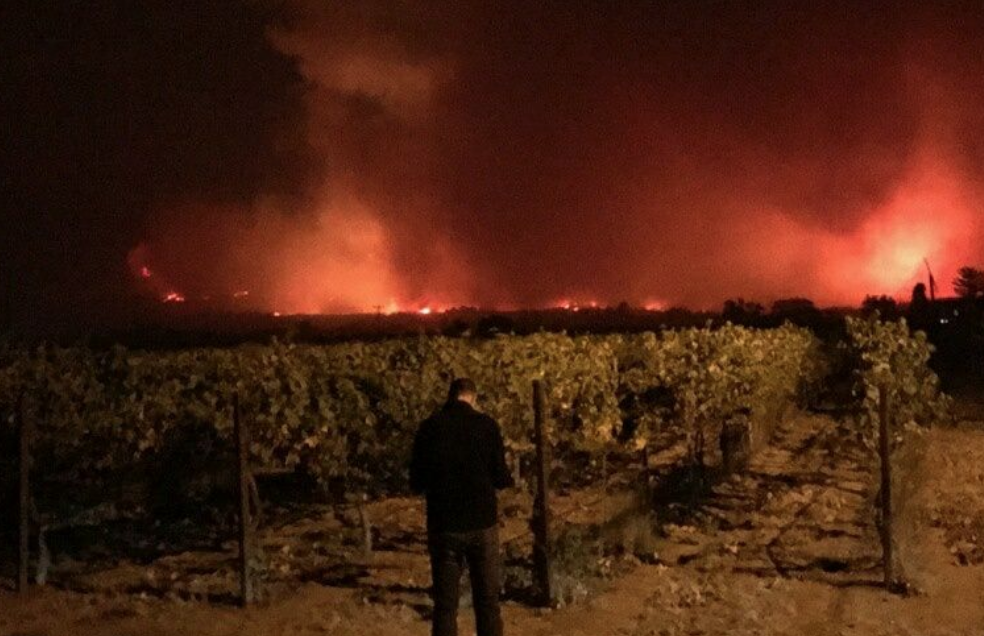
The Tubbs Fire in has spread into Lake County. Photo/CalFire

By Emily Cadei, Sacramento Bee

Washington It’s a rare point of bipartisan agreement in divided Washington: The federal system for funding firefighting is broken, and that’s hurting our ability to prevent fires from breaking out in the first place.

But lawmakers are at a loggerheads over how to fix the problem, a split that breaks down on largely regional, rather than partisan, grounds. Some in the House and Senate, however, now hope that national coverage of Northern California’s devastating fires could finally spur a congressional compromise, a bit of a silver lining emerging out of all the destruction.

At the root of the problem is the fact that forest fires are not treated like other natural disasters.

Read the whole story


SnowGlobe 2017 plans being solidified

By Kathryn Reed

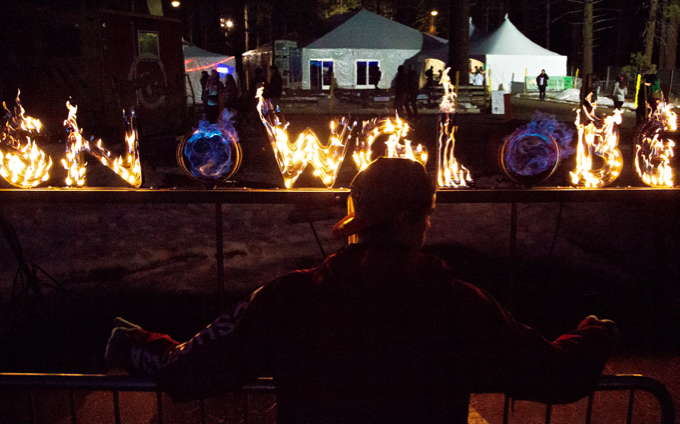
While a contract has not been signed, most of the particulars have been worked out to ensure SnowGlobe, the three-day music festival, returns to South Lake Tahoe in December.

Lake Tahoe Community College is having a different role this year compared to the past. No longer will buildings on campus be used by the festival organizers. Instead, a tent will be set up at Bijou Community Park for the concert to run its administrative components from there.

The college parking lot will continue to be the drop off location for patrons coming via bus.

With the college and city being partners in the community ball fields consortium, the two entities together regulate what happens with the two new fields. Sod was put in this fall, so this will be the first time the three-day concert will be on the new fields. Last year it was just on the dirt. Prior to 2016 the concert was on the soccer field.

The college board at its meeting on Oct. 10 gave direction to staff to essentially finalize the contract. It should be before the board in November for a vote.

“As related to the field, we are making sure they are protected,” LTCC President Jeff DeFranco told Lake Tahoe News.

There are three tiers to renting the ball fields. The least expensive level is for local nonprofits, then for nonprofits using it as a fund raiser, and the highest fee reserved for for-profit organizations like the Colorado-based SnowGlobe. DeFranco said the rental rate for SnowGlobe will be $50,000. This is about double the price of the least expensive rate.

This will be year-seven for SnowGlobe in South Lake Tahoe. Photo/Lesia Witkowsky

The city at a meeting earlier this year had wanted to implement an assessment per ticket that would be used for field maintenance. If a long-term contract were ever entered into, like promoter Chad Donnelly wants, this component could be part of that deal. Donnelly would like a 10-year commitment from the city.

The electeds have agreed SnowGlobe can come back in 2018, but beyond that they want to see how the field holds up. That assessment will come in the spring after the snow melts.

The college agreement, though, would be for just 2017.

The rental fee is strictly to be used for long-term maintenance, not any damage associated with the festival. Another part of the contract will deal with promoters being responsible for repairs.

“The other discussion was to ensure concrete requirements about demobilization,” DeFranco said. The board wants to put some “teeth” into the contract.

The college, city and residents were frustrated last spring as the site started to look dilapidated because remnants from the concert littered the area long after the promoters left town.


Study: Climate change could bring earlier Sierra runoff

By Rebecca Ash, UCLA

California has taken a wild weather ride over the past two years: A historic drought finally came to an end, and the winter of 2016–17 was the wettest winter in decades. Meanwhile, recent studies have projected that climate change will turn up the heat by up to 10 degrees in the Sierra Nevada mountains by the end of the century.

In a study published Oct. 10 in the Journal of Hydrometeorology, UCLA climate scientist Alex Hall and colleagues predicted that by the end of the 21st century, the runoff midpoint for snow and rainwater — the time of year by which half of a year’s precipitation leaves the mountains as runoff — could be an average of 50 days earlier than it is now, and 90 days earlier in some locations. The finding could have serious implications for the state’s water infrastructure, which was not designed to handle such a major shift, according to Hall.

Understanding runoff timing would allow California water managers to better plan for the future.

Read the whole story


Experts: ‘Dice was really loaded’ for wildfires

Entire neighborhoods in Santa Rosa have been reduced to ash. Photo/CHP

Publisher’s note: The smoke blowing into the Lake Tahoe Basin and Truckee on Oct. 11 is from the Wine Country fires.

By Stuart Leavenworth, Sacramento Bee

A cascade of extreme weather events fed Northern California’s wildfires that exploded Sunday: Unusually high winds blew flames through unusually dense and dry vegetation, which sprang up following last winter’s heavy rains and then were toasted by months of record hot temperatures.

“The dice was really loaded because of the big wet winter,” said Park Williams, a California native and a research scientist at the Lamont-Doherty Earth Observatory at Columbia University. “That set up the West with a lot of fuel to burn, and this summer has been exceptional in terms of dryness.”

Scientists such as Williams say California is especially prone to wildfires, in part because of the state’s dense population, which makes it easy for sparks to be ignited and turn into raging fire storms. But this week’s blazes also show the fingerprints of climate change, he said, a harbinger of what the West should expect in the years to come.

Read the whole story


Squaw-Alpine invest $4M for avalanche control

By Kathryn Reed

Combined, Squaw Valley and Alpine Meadows ski resorts are getting $4 million worth of safety improvements that will be used starting this season. All are centered on avalanche control.

A variety of tools have been added. For the first time a helicopter will be enlisted. The resort is leasing an ASTAR AS-350B3 from Minden’s Skydance Helicopters. Squaw-Alpine are the only resorts in California using a helicopter for this type of work, though Alta, Snowbird, Telluride and Whistler Blackcomb use one.

Using the helicopter would help get the mountains open sooner.

“The helicopter enables us to assess snow conditions around the mountain, using test explosives, in under 30 minutes. We can use it to drop explosives onto the terrain below and transport our teams up onto the mountain to complete their avalanche control routes on the ground,” Will Paden, Squaw Valley ski patrol director, said in a statement.

Skydance pilots will fly the bird, with specifically trained ski patrol employees launching the devices.

The helicopter will be stationed near the Far East building and chairlift in the high season, with the ability to have them fly in from Minden at other times.

“All of these investments were voluntary. Our first priority as a company has always been safety, and that priority is evident not only in this season’s expansion, but the millions that we have invested in snow safety over the years,” Liesl Hepburn, spokeswoman for the resorts, told Lake Tahoe News.

She said the upgrades are not a reaction to the January death of ski patroller Joseph Zuiches at Squaw Valley. CalOSHA found infractions at the ski resort and fined Squaw $11,250 for “failing to correct an identified unsafe working condition by implementing a procedure for protection against the workplace hazards associated with hang cord entanglement during hang cord blasting operations.” The second fine of $9,000 was for “failing to ensure that all crew members maintained visual contact or awareness of physical location of crew members at all times during avalanche control activities.” Squaw is appealing the decision, saying the state’s findings are not accurate and the fines not justified.

With the 728 inches of snow last season, it meant avalanche control was needed almost every third day. In all, 56 days of avalanche control were required.

Another tool that will be available this season is the avalauncher, which can send an explosive more than a mile. Alpine has been using them and will get two additional ones. Squaw used them in the past; and now will have two.

They allow ski patrollers to trigger avalanches from a distance and control the snowpack prior to the resort opening. They are compressed-nitrogen cannons that fire an explosive projectile.

Dragons are another resource for snow safety. It’s something Squaw has been using since 2015. A combination of propane gas and oxygen are used to create a concussive blast to trigger an avalanche. The discharge is done remotely. Thirteen have been added to the arsenal.

Several will be placed along Alpine Meadows Road. This is always a precarious location. Last year debris from an avalanche impacted several houses.

Ski patrol at both resorts is rather significant, with 34 pro patrollers at Alpine Meadows, 70 at Squaw Valley. Nearly two thirds of Squaw Valley and Alpine Meadows ski patrollers have more than 10 years of patrol experience. If national ski patrollers are trained and licensed to perform avalanche control, then they may help out.

“The goal is to have as many patrollers as possible trained on these tools, but with newer ones like the helicopter it will take more time to develop those groups,” Hepburn said.


Vegas shooting could create push for Nev. gun legislation

By Sean Whaley and Ben Botkin, Las Vegas Review-Journal

Just as the Sandy Hook school shooting prompted efforts to regulate gun policies in Nevada in 2013, the mass shooting in Las Vegas on Oct. 1 will likely result in a new push when the Legislature convenes in 2019.

As one lawmaker described it, the gun lobby will be on steroids in the 2019 session.

But even in the wake of the worst mass shooting in modern U.S. history, it remains to be seen whether the Oct. 1 attack that killed 58 people and wounded 489 more prompts changes in Nevada law.

Read the whole story


Report: To cut housing prices 10%, Calif. needs 20% more units

By Peter Fimrite, San Francisco Chronicle

It could take decades and cost billions to build enough housing to make even a modest dent in home prices across the state, a team of economists reported.

Jerry Nickelsburg, director of the UCLA forecast team, said it would take 20 percent more housing to achieve a 10 percent reduction in prices. Such a reduction throughout California would bring costs down roughly to 2014 levels, he said, citing figures provided by the Legislative Analyst’s Office.

California needs to build 180,000 units of housing a year to keep up with demand, but falls 80,000 units short, according to Gov. Jerry Brown’s housing department. Catching up to the demand, the department said, would cost an additional $26 billion.

Read the whole story


Bowman eager to defend gold medal in Korea

Publisher’s note: This is one of a series of stories about Lake Tahoe area athletes who hope to compete in the 2018 Olympics in South Korea. 

By Susan Wood

PARK CITY, Utah – The girl next door may become an even bigger household name.

Olympic gold medalist Maddie Bowman of Meyers is gearing up in a big way for the Winter Games next February in PyeongChang, South Korea.

At age 23, the humble, modest freestyle skier plans to return to the podium in half pipe skiing coming off the Sochi Olympics in 2014.

What new tricks are up her sleeve?

“I find a lot of inspiration when trying something new,” she responded to Lake Tahoe News at last month’s Olympic media summit in Park City.

Maddie Bowman of Meyers is gearing up for her second Olympics in February. Photo/Kathryn Reed

Sometimes flying in the air and landing an acrobatic move can even be an accident – unintentional but inventive. She finds the fun of her sport being creative with her friends.

“I don’t just say I’m going to try something new for the Olympics,” she said, explaining the individual nature of the sport. “Everyone has a unique style.”

Bowman has no rituals. She cross trains on her mountain bike in the woods of Tahoe – Mr. Toads being her favorite route. (She even welcomes the sandpits.)

Bowman watched every Olympic Games she can remember as a child, and it’s left an indelible mark. Her father, Bill Bowman, was a racer for the U.S. National Alpine Ski Team, so ski competition runs in the family.  

Now, she’s turning a corner in maturity – wanting to give back. 

“I’m in a unique position that I never thought I’d be in. I hope I inspire the athletes of younger generations,” she said.

Throw in what she calls a little “rebel vibe,” and you’ve got quite a mix destined for greatness on and off the hill. Bowman is active in the Protect Our Winters organization. POW is an environmental advocacy group consisting of athletes who use educational means to warn of the dangers of climate change.

The celebrity athlete tours schools, spreading the dire message to students in the hopes a younger generation will save the planet and the snow continues to grace the Tahoe mountains.

With her busy schedule, Bowman took a break as a junior at Westminster College in Salt Lake City to prepare for the South Korea Olympics.

She feels exuberant about the upcoming Games, including the security of them despite the war of words exchanged between the United States and South Korea’s neighbors 50 miles to the north.

 “I do trust the State Department. They’re not going to put us in harm’s way,” she said.

She also likes her chances at the event, especially since going out for a test run of the mountain last year. She likes how wide the halfpipe is, raising the bar for big tricks.

This year, the Olympic trials slated for December and January allow for a short window. But she’ll be prepared to go and looks forward to the whole experience.

Maddie Bowman at the 2014 celebration at Sierra-at-Tahoe. PhotoLTN file

The Olympian who took the South Shore by storm more than three years ago has had a few bumps and bruises along the way. Her knees get battered, but a relaxed-looking Bowman insists she feels great.

Of course, there’s much pressure to repeat her spectacular performance in Russia and numerous podium stands at the X Games and World Cups but “I keep it in check,” she insists.

Not many athletes would make a better candidate for a Wheaties box.

Part of the self-assured quality comes from knowing an entire community is behind her.

When she and fellow Meyers gold medalist Jamie Anderson came home after their stunning performances, the community threw a huge “Golden Girls” party for them. The duo, with fellow Olympian Hannah Teter, rode from South Lake on a vintage fire truck on a route lined by hundreds of spectators. It ended 12 miles west on Highway 50 at the trio’s home resort, Sierra-at-Tahoe, where longtime General Manager John Rice greeted them with open arms.

Bowman grew up skiing at Sierra, even gaining a free ski pass when she got all A’s through an incentive program between the ski resort and Lake Tahoe Unified School District.

Skiing wasn’t the only sport she was good at. She was a member of the state championship-winning South Tahoe High School soccer team.  

Perhaps that’s why she shared such a fondness for the U.S. Olympic women’s ice hockey team. She still has an appreciation for team sports.

“They’re spunky and funny,” she said.

Her legacy will be permanently cemented on the South Shore when she is inducted into South Lake Tahoe’s Champions Plaza on Lakeview Avenue later this year. She will join the likes of Anderson, Teter, Jonna Mendes, Glen Plake, Shaun Palmer, Kyle Smaine, Elena Hight, Travis Cabral and Travis Ramos.

“I’m honored and flattered. It’s so cool how the community has come together,” Bowman said.


Moose are putting down roots in Nevada

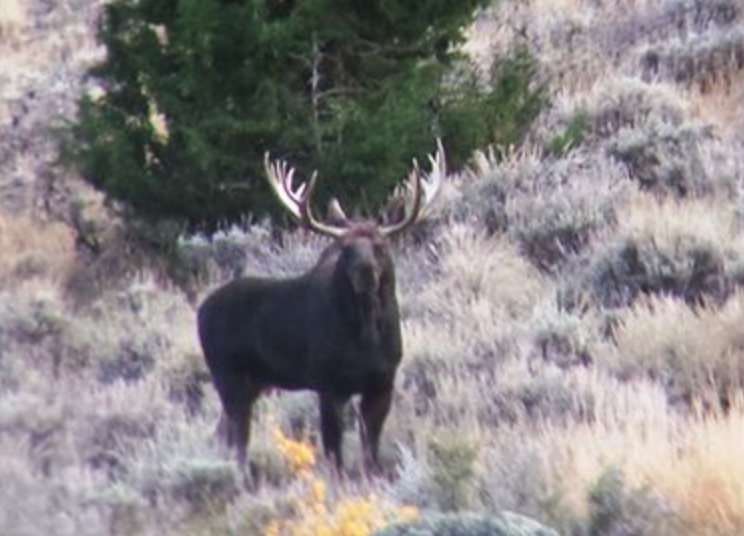
Moose are taking up residence in northeastern Nevada. Photo/Nevada Department of Wildlife

By Benjamin Spillman, Reno Gazette-Journal

Add “moose attack” to your list of hazards in the Nevada backcountry.

The state’s northern reaches appear to be home to a small but growing number of the gangly ungulates, according to the Nevada Department of Wildlife.

The increased number of sightings suggests moose are no longer just visiting the Silver State and are putting down roots.

Read the whole story


Californians spent $681M on pot in 3 months

By Julie Johnson, Santa Rosa Press Democrat

To understand Californians’ favorite methods for ingesting cannabis, Joshua Hoffman likens it to the different ways of experiencing music.

Think of smoking cannabis flowers like attending a live concert, he said. The second most popular method — vape pens — is like listening to a CD on high-end speakers.

A  study based on data gathered from dispensaries across the state attempts to capture how California medical marijuana users spend money at legal pot shops — an estimated $2.68 billion by the end of the year, according to Boulder-based research firm BDS Analytics.

Read the whole story