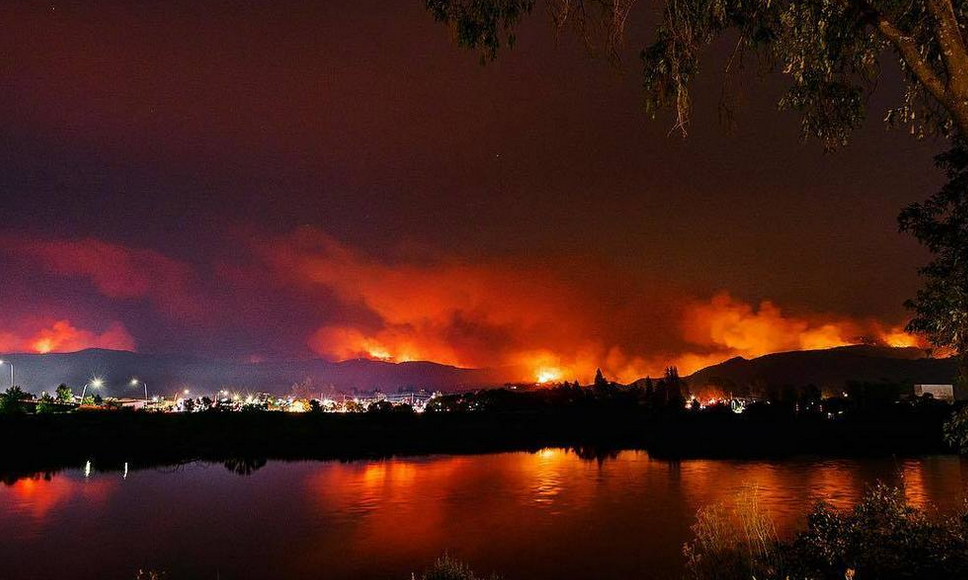
Hope as vintners assess long-term impact of fires

The moisture in grape vines makes them resilient. Photo/CalFire

By Esther Mobley, San Francisco Chronicle

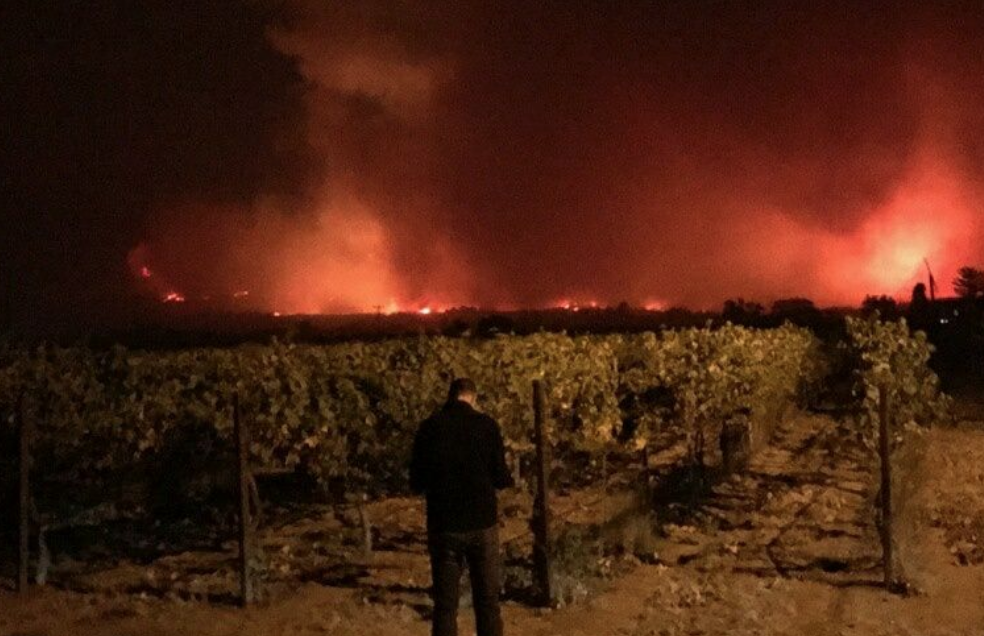
Many of the most powerful images coming out of the Wine Country fires last week depicted the wine industry as charred, its future threatened.

A generations-old winery engulfed in flames and reduced to rubble. Symmetrical rows of grapevines, backlit by a bright line of approaching fire.

Uncertainty and anxiety grip the wine community. And as the magnitude of the damage becomes clearer and missing loved ones are located, attention will turn to the scale of the devastation to the pastoral region’s multibillion-dollar wine industry.

 No one would compare the loss of wine with the loss of life. But wine is these communities’ lifeblood — economic, cultural and otherwise. As Sam Coturri, owner of Sonoma’s Winery Sixteen 600, put it: “Saving our lives up here also means protecting our livelihood.”

Read the whole story


New normal? Ever more-intense heat, fires, drought, floods

By Stuart Leavenworth, Sacramento Bee

As portrayed in novels, the California of the future is barely habitable. Brutal storms alternate with crushing droughts. Mudslides and wildfires create waves of climate change refugees.

Fiction, right? Perhaps less so after the last week.

The wildfires in Northern California created scenes from a sci-fi horror movie: Obliterated neighborhoods; thousands evacuated or made homeless; fire authorities stunned by fast-moving blazes and tinderbox conditions that, as Gov. Jerry Brown said, “we’ve never seen.”

California is no stranger to extreme weather. Throughout its history, it has endured natural disasters, ranging from floods to heat waves. But many scientists say the wildfires of the last week are not completely natural. Park Williams, a Columbia University research scientist, said the fingerprint of climate change “is definitely there.” Daniel Swain, a climate scientist at UCLA, agrees.

Read the whole story


Park City much more than just a ski town

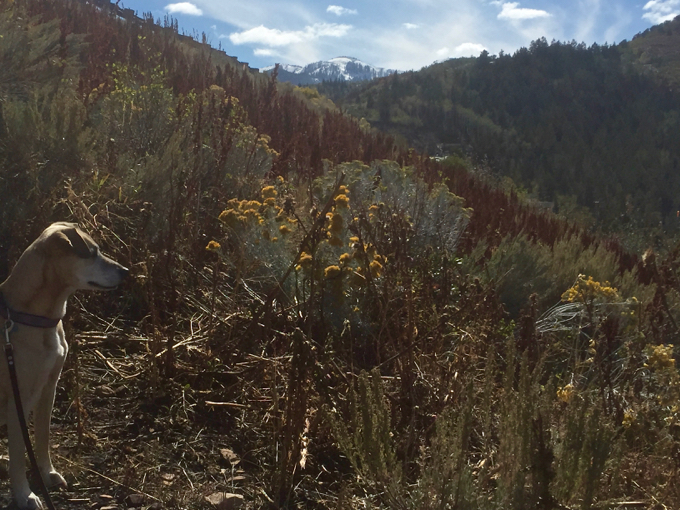
Trail connectivity in Park City is good for dogs and people. Photo/Susan Wood

By Susan Wood

PARK CITY, Utah – When the kids go back to school, Park City goes to the dogs – or hikers, cyclists, foodies and thrill seekers searching for solace from the crowds.

At 7,000 feet, the Utah ski town is best known for its monumental winters. It’s home to Ski magazine’s No. 1 ski resort Deer Valley, now owned by KSL Partners, which also has Squaw Valley in its investment portfolio. It’s also home to Park City – which ski giant Vail Resorts has made the largest U.S resort by combining it with Canyons.

Park City is also considered a bedroom community for skiers and boarders venturing out to Little and Big Cottonwood canyons outside nearby Salt Lake City. Snow riding options abound in these two canyons – home of Snowbird, Alta, Solitude and Brighton mountain resorts.

More important, Park City was placed on the global map in 2002 by co-hosting the Winter Olympics with neighboring Salt Lake City. The big advantage here is the assortment of adventure-sports venues left for visitors and residents alike to use.
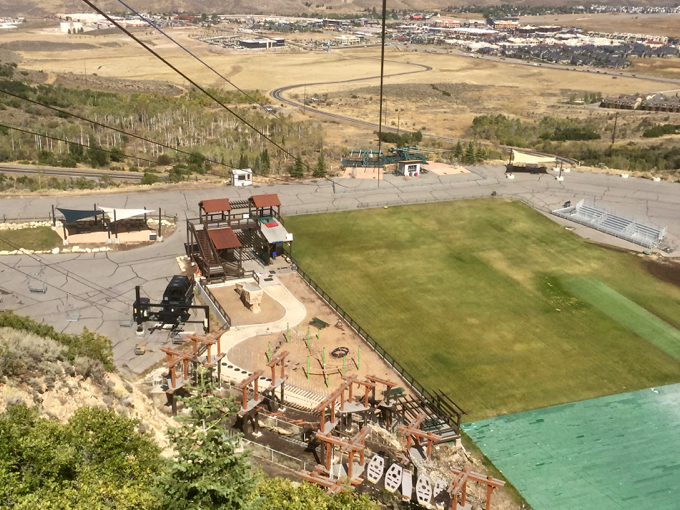
Outdoor entertainment comes in various forms. Photo/Susan Wood

In summer, visitors flock to Park City for the mild climate and outdoor adventure. But summer and winter aside — when fall rolls around, visitation drops off when kids are in school.

This leaves miles of trails and empty seats on activity rides, restaurants and bars.

“The Park City Chamber/Bureau does do extensive work to attract guests to visit our destination year round. Since the 2002 Winter Olympics in Salt Lake City, we have seen the shoulder seasons (aka spring and fall) dwindle,” Park City Chamber/Convention & Visitors Bureau spokeswoman Rachel Buhler told Lake Tahoe News. “Park City was once known as a winter-only destination, but now it has earned a reputation for visitation at any time of year.”

Buhler listed the foliage as a mainstay for visitors to come out in the fall.

Park City and Canyons, the mountain operations with an alpine coaster and slide, zip line and mountain bike venue, closed at the end of September. 

But the Utah Olympic Park remains open on the weekends for those seeking a thrill in three adventure courses, two zip lines at the tower and, better yet, the Comet bobsled that can transport a rider up to 3Gs (70mph) on a course that twists down the mountain. It’s a thrill a minute. It closes Oct. 22.
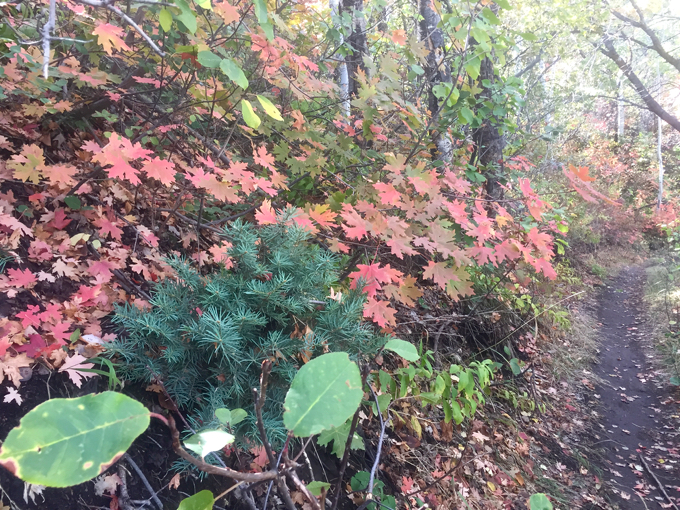
Fall colors are low to the ground and high in the trees. Photo/Susan Wood

To slow things down, a visitor can enjoy the solitude of utter beauty by hiking or sauntering on trails. The aspens turn a vivid yellow in some groves, with spots of red sprinkled in. Wide open, expansive views reveal mountainsides with shades of rust- or orange-colored trees against the green landscape marked with patches of white snow.

Park City is a lot like Lake Tahoe in the fall. One day may bring on 70-degree, pleasant temperatures. Another may portray an early winter, as it did leading into the last week of September as summer came to a cold end.

The scenery is exceptional at Park City this time of year.

Plus, there are more than enough places to take woman’s best friend.

AJ became an Olympic dog-for-the-day when the sun came out and beamed down on the foothills atop the ridge overlooking Olympic Park.

Hikers can drive to the facility where the Alf Engen Ski Museum, training pool and adventure activities are located to pick up the Welcome Center Trail. From there, the scenery only improves as the switchbacks climb up the Nordic View Trail that leads to the ridge at Peak Plaza where the top of the ski jump comes into full view. The aptly named Legacy Ridge Trail veers off into a particularly quiet part of the mountain where it meets with the Iron Bill Trail for the descent leading back to the base at the Nordic Plaza. Not a soul was in sight.

The hike is a feast for the senses. The smell of autumn permeates the trails, with wet leaves scattered about.

If the approximately three miles doesn’t fill up one’s day, a hiker can just hop in the car and venture down the Olympic Park Road to pick up a system of trails in the Basin Recreation Area.

With a four-legged friend, there’s a special place to stop right off the main road.

The 2-mile Run-A-Muk Trail is specifically designed for canines. It’s fenced in, hence the name for dogs that love to go off leash. At the gated trailhead, poop bag dispensers have been installed. Cute signs along the way make the walk entertaining: “If your dog poops, you must scoop.”

Across the road, a trailhead for a more ambitious trail awaits. Park City gets an A-plus for trail connections. A hiker can pick up the Overland Trail from the growing civilization at Kimball Junction outside of the historic town and climb up to a beautiful grove of aspens where the two trailheads intersect. The trail promises views and comes equipped with lights for night walking, along with a bench to take a break. AJ thoroughly enjoyed the endeavor.

From the main intersection at mid-mountain, hikers and riders such as the large Park City High School Mountain Bike Club may ambitiously climb up to the base of Olympic Park. It would be easy to spend the whole day in just this one section of Park City.

It’s obvious based on the offerings and the activity out and about where people spend their time in Park City. Miles and miles of trails dot the landscape from the foothills to the high reaches of the mountaintops spanning more than 10,000 feet at the top of Guardsman Pass.

This massive recreational offering and change of scenery is what gets one Tahoe couple to return year after year with their mountain bikes, paddleboards, dirt bikes and tennis gear.

They enjoy starting at Stein Eriksen Lodge where they’re sure to see wildlife. Sure, Lake Tahoe comes with that bonus. But when’s the last time you’ve come up to a moose out on a hike or bike ride?

Park City has also captured the visitor seeking a unique experience indoors as well – jumping on the foodie tourism bandwagon.

Entrees like the steelhead trout at Twisted Fern rival big city restaurants. Photo/Kathryn Reed

A restaurant experience at a different level

The Twisted Fern offers a refreshing approach to dining in this recreational paradise.

This eatery on Snow Creek Drive provides that delicate balance between plentiful nourishment and an explosion of flavors at adequate prices with a lovely atmosphere.

“Park City has a significant food scene. There is a large variety of blends in town, but many people are focused on local, organic and sustainable sourcing,” Buhler, the town’s spokeswoman, said. “Many chefs in town are award-winning and bring in a heightened sense of creativity to offer foods that are new as well as old classics with a spin to the ingredients.”

She couldn’t be more right about chef-owner Adam Ross’s Twisted Fern.

For starters, the elote appetizer billed as gluten free gets the taste buds going as the combination of fried corn, fingerling potatoes, shishito peppers and cherry tomatoes to replace the off-season heirloom variety represents a perfect melding of flavors. (Warning: the corn on the small cob is a bit awkward to eat.)

To wash it down, the Delusional Donkey cocktail is a zesty vodka-ginger beer-mint concoction, while the Wasatch Smash named after the local mountain range is a smooth libation made up of spiced whiskey, lemon, rosemary and simple syrup.

Many choices fill the chef’s entrée menu – without clogging it up. And these are no ordinary meal options. Highly recommended is the chicken fried portabello mushroom – a unique take on a common comfort meat dish.
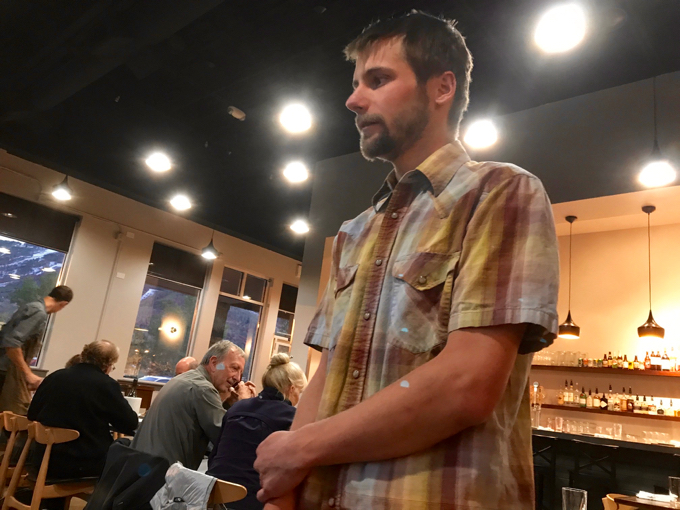
Chef Adam Ross is happy to not be on Main Street in Park City. Photo/Kathryn Reed

Christy, the waitress, was more than happy to go over the ins and outs of the menu. She seemed genuinely excited to work for a restaurant and chef who care about sustainability and takes part in the farm-to-fork movement. It’s a level of understanding she said she didn’t get in her home state of Pennsylvania.

The pan-seared steelhead trout, albeit from British Columbia, tasted like it jumped on the plate. The savory vanilla oats mixed alongside the arugula pesto, asparagus and pecan granola provided ideal complements to the main ingredient of the dish.

The décor in the restaurant that opened in June is as delightful as the food. There’s a lighted bar off to the side of the open floor where 13 tables are adequately spaced. Outdoor seating doubles the occupancy. It’s nice the restaurant has the corner space in the strip mall to provide a view of the hill outside the window. Some seating offers views of the Park City mountain itself to remind diners and even the chef himself why they are here.

Chef Ross came out 11 years ago to go snowboarding. He has never looked back.

He frequents the farmers market every week, scours the meat and mushroom channels from Idaho, Washington and Montana on a regular basis and can come up with creative ideas at any time.

“I wanted to fill a niche that no one else was doing,” Ross told Lake Tahoe News.


Climate change turning the dial on Calif. wildfires

By Stefan Becket, CBS News

The deadly wildfires ravaging Northern California have destroyed more than 3,500 homes and businesses, leveling entire neighborhoods and forcing thousands of residents to flee the flames.

At least 40 people have died in the blazes, which have burned 265 square miles of land and rank among the most destructive in California’s history. The wildfires kicking off California’s fire season come after millions of acres in the western U.S. went up in flames over the summer.

Experts say fires like those burning up Wine Country will be more frequent, more intense and last longer as global temperatures rise. While no single fire can be said to have been caused by climate change, variations in temperature and precipitation are already affecting the complex dynamics that determine how wildfires develop and spread.

Gov. Jerry Brown laid the blame squarely at the feet of climate change on Wednesday.

Read the whole story


Threat of fire a problem for insureds in Tahoe-Truckee

By Melissa Siig, Moonshine Ink

About a year ago, Tahoe City resident Kevin Plumb received a letter from The Hartford that it would not be renewing his homeowner’s insurance because his fire protection classification had jumped to a six. (The rating is from 1 to 10, with 1 being the least risky.)

Plumb, a contractor who had insured his West Shore house in the Talmont neighborhood for a decade with the company, was shocked. He had been a diligent homeowner and dedicated client. A few years ago during a home remodel project, Plumb cut down all the dead and dying trees from his property. He also had auto insurance and a second home insured with The Hartford. Nevertheless, he was given three months to find a new insurance carrier. After calling every major insurance company he could find, he finally had to settle with Lloyd’s of London, and his insurance premiums tripled.

Plumb is not alone. Homeowners all around the basin and Truckee are seeing their homeowner’s insurance policies not renewed or premiums increasing as insurance companies try to minimize their risks with regards to wildfire.

Read the whole story


Rare disease kills 2 LTWC bear cubs

By Kathryn Reed

Not every bear has always been able to be released into the wild, but until this year none had mysteriously died at Lake Tahoe Wildlife Care.

Two have in a three-week period.

The diagnosis is adenovirus.

“It is rare,” Peter Tria with the California Department of Fish and Wildlife said of the disease. “It has never been detected in free range wild black bears ever to our knowledge. It has been detected in captive bears.”

While the South Shore rehab facility’s goal is to heal injured animals and return them to their natural environment, the animals are considered captive while being treated.

This the first time anything like this has happened in the 17 years LTWC has been treating black bears under a permit from the state. (The facility has been open since 1978.)

The disconcerting thing is that it’s not known how the virus got into the facility. It is a strain found in canines and coyotes. However, it is something domestic dogs can be vaccinated against so those cases are seldom seen. Humans can also get the virus.

“We might not ever know (how we got it), but we are trying to prevent it from happening next year,” LTWC owner Tom Millham told Lake Tahoe News.

The four remaining bears have tested positive for adenovirus. However, they are continuing to put on weight, as is normal as they bulk up for their winter slumber. (Two of the original eight bears being cared for this season have already been released.) The bear deaths occurred in August and September.

Millham is now the only one allowed into the bear cage. Instead of feeding the bears twice a day, they are getting a larger quantity once a day. He’s wearing a disposable hospital gown, gloves and dipping his shoes in a bleach solution before putting on booties.

The goal is to keep that pen from being exposed to any outside contaminant. The bears are essentially quarantined.

Tria told Lake Tahoe News the state is happy with the measures LTWC is taking to ensure all of the animals’ health.

UC Davis and Cornell University have received blood samples. Scientists there, along with the state officials and local veterinarian Kevin Willits are trying to get to the bottom of the virus, but it’s possible answers may always be elusive.

Cheryl Millham, the other owner of LTWC with her husband, speculates that if their facility on Al Tahoe Boulevard that is being built were complete, it would have been easier to separate the sick animals. But until more funding is secured, the site continues to operate in the Millhams’ back yard.


‘Do not disturb’ signs scrutinized after Vegas shooting

By Eli Segall, Las Vegas Review-Journal

When a “Do not disturb” sign hangs outside a hotel room for a while, staff will usually call or knock at some point to make sure everything’s OK.

But in the wake of the Las Vegas massacre, hotel operators may be asking themselves: How long should we wait before contacting guests who want to be left alone?

A gunman broke two windows in a 32nd-floor room at Mandalay Bay and sprayed bullets at concertgoers across the street on Oct. 1. Armed with at least 23 firearms, he killed 58 people at the Route 91 Harvest festival and left nearly 500 injured in the deadliest mass shooting in modern U.S. history, and then killed himself. He may have been able to prepare for the attack because housekeeping staff didn’t enter the room for some time.

Read the whole story


Fires devastate California cannabis economy

By David Downs, San Francisco Chronicle
 
California’s $21 billion cannabis economy is reeling from likely more than a billion dollars in crop losses related to a series of deadly wildfires that swept through the cultivation heartlands of Mendocino, Sonoma, Napa and Solano counties this week.

Up to one-third of the annual outdoor cannabis crop in those regions could be destroyed or significantly damaged as 22 wildfires continue to burn in California. The fires have torched more than 170,000 acres and thousands of homes, farms and businesses, and taken the lives of at least 31 people. Hundreds remain missing.

 The entire supply chain has been damaged as well, because the fires swept through not only cannabis gardens but the properties of seed breeders and those who make and sell cuttings, as well as cannabis oil extraction facilities, manufacturers and distributors.

Read the whole story


Complaint filed against ZCES first-grade teacher

By Kathryn Reed

An alleged whack of a first-grader’s knuckles that left a mark sparked an investigation into the behavior of a teacher at Zephyr Cove Elementary School.

“I’m not interested in speaking to you about this. The matter has been handled,” teacher Brenda Capshaw told Lake Tahoe News before abruptly hanging up.

Amber Prevost, the mom of the 6-year-old, had plenty to say. She is still furious with how things were handled at the local level and district office.

It was the child’s word against his teacher’s because there were no witnesses.

A second incident occurred that same week in September, Prevost said. Her son asked to use the restroom and was denied to the point he almost wet his pants. This had her livid. A formal complaint was filed.

The district conducted an investigation. And while the conclusion was the knuckle incident did not take place, safety plans for the child are now in effect.

“They said there was no wrong-doing from the teacher. They dismissed it all,” Prevost told Lake Tahoe News.

This isn’t the only time a spotlight has been shined on Capshaw. Other parents and students have had run-ins with her through the years. More than one parent even wrote a letter to the board of education in response to the Prevost incident to express their experiences and concerns.

Principal Nancy Cauley and Superintendent Teri White said because it is a personnel issue they cannot talk about what may have happened, the outcome of the investigation, or any changes that were a result of this case.

What Prevost wanted as a solution was to move her son into the other first-grade class. She was told by Cauley that couldn’t happen because other parents would want to do the same thing.

The child told his parents the pencil whack was because he didn’t get into line immediately with the other kids. He was at his desk playing with the pencil and Capshaw reportedly took it and hit him with it.

The youngster repeated this story multiple times to authorities.

“What I told him is he is standing up to a bully,” Prevost said.

The child was scared to go back to school and was crying about the thought of it. His parents kept him out for two weeks. Prevost said the superintendent sent a letter threatening to take action related to truancy laws.

This has been the second week he has returned to school. Things are better in spite of being in the same class.

To make him feel safe he is allowed to leave the classroom at any time without permission. He has an adult staff member who is his “safe” point of contact if he needs to talk to someone.

“He said ever since the teacher had to a sign paper she has been nice,” Prevost said, adding that the yelling in class has subsided as well.

So, while the district says nothing happened, it did implement some rudimentary safeguards.


Calif. fires making more pollution than a year of traffic

The Bay Area has been inundated with thick smoke; it reached Lake Tahoe on Oct. 11. Photo/CalFire

By Benjamin Spillman, Reno Gazette-Journal

There’s enough wildfire activity in California and Nevada to blanket much of both states with a layer of smoke in the coming days.

In California alone more than 140,000 acres are burning in large, wildland fires throughout the state. A fire in rough terrain near Reno is also contributing to smoke in Northern Nevada.

In just the past two days, fires in California’s Wine cCuntry are thought to have produced as much small particulate matter as all the vehicles in the state produce in a year.

Read the whole story