Proposed bill would block utilities from passing wildfire costs to customers

By David R. Baker, San Francisco Chronicle
 
Four California legislators on Monday said they plan to introduce a bill that would bar electric utilities from passing on to their customers the costs of wildfires caused by the companies’ negligence.

The move comes as investigators are exploring whether Pacific Gas and Electric Co. power lines played a role in starting last month’s Wine Country wildfires, which killed at least 43 people. And San Diego Gas and Electric Co. has asked state regulators for permission to make its customers pay some of the costs of settling lawsuits triggered by a deadly series of fires in 2007.

In response, PG&E issued a statement that did not directly address the proposed legislation itself but called dealing with wildfires a statewide safety issue.

Read the whole story


Affordable housing runs gamut in Tahoe-Truckee

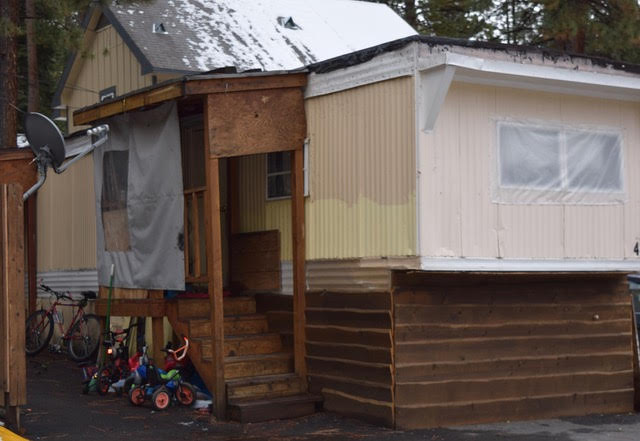
Housing, while it may be affordable, isn’t always ideal. Photo/Heidi Hill Drum

Publisher’s note: This is one in a series of stories about affordable housing in the Lake Tahoe-Truckee region. All articles may be accessed via the home page under Special Projects, 2017 Affordable Housing.

By Linda Fine Conaboy

Few things are more important than a roof over our heads—preferably one that doesn’t leak.

But as the price of housing, especially affordable workforce housing, continues to escalate within the Tahoe basin and Truckee, many are finding it more and more difficult to obtain a suitable place to live. According to research, this problem is having an affect not only locally, but also nationwide, especially for those on the lower end of the income scale.

In an attempt to make sense of the local housing scene, Lake Tahoe News talked to local area experts to try to quantify the extent of the situation, which continues to spiral out of control. Communities around Lake Tahoe and the town of Truckee are all feeling the economic pinch that a lack of accessible housing brings.

Workers find themselves burdened not only by not having places to live near their jobs, but also, because many must commute miles and miles just to get to work, they must dig deeper to afford the high price of transportation costs.

As an example, one family consisting of mom and dad who work in Truckee, and three kids who attend Truckee schools, now commutes every day to work and to school from Reno, where they were lucky enough to find a home to suit their paychecks.

Their story is not atypical—many individuals and families around the lake are struggling, some even to a much greater degree.

Affordable housing. Workforce housing. Low-income housing. Section 8, below market rate, deed restricted and extremely low-income are a few of the names used to indicate various income groupings.
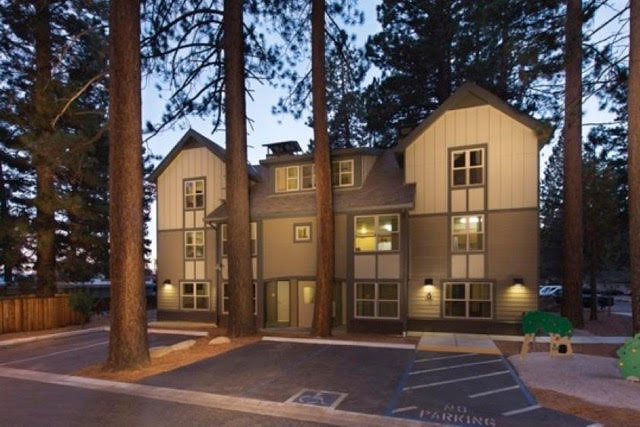
An example of an affordable housing project in Kings Beach. Photo/DOMUS Development

What do these classifications mean? A brief summary is in order before we can even begin to take a look at what housing is available within the assorted categories.

·      Affordable housing: Under federal statutes, housing is considered affordable when it requires the dedication of no more than 30 percent of gross household income, including rent or mortgage payments, utilities, taxes and insurance, homeowner’s association fees and other related costs.

·      Area median income: The median household income for an area. Usually household size is considered when designating this term.

·      Below market rate housing: Refers to properties that are leased or sold at prices that are below the current market value.

·      Deed restriction: A requirement recorded at the sale of the property that ties the current or future owners to the specific use of the property.

·      Extremely low-income: This grouping includes those with annual incomes that are equal to 30 percent or less of the area median income of an area.

·      Workforce housing: Targeted to be accessible to households that include members of the local workforce. However, the income levels targeted for workforce housing are often limited to those who do not otherwise qualify for subsidized rental or for-sale housing, but who may still have a hard time affording market-rate housing.

·      Subsidized housing: Housing that utilizes some sort of rental assistance. For example, housing where all or a portion of the monthly housing costs are paid directly by the government. A good example of this is Section 8 housing where a renter pays only a portion of the rent determined by the household’s income.

An article from the website, Realtor.com, written by Lisa Johnson Mandell, stated that unfortunately, being eligible for affordable housing doesn’t mean you will actually get the help you need. Under current funding levels, affordable housing programs can assist only approximately 4.8 million low-income families—that’s about 1 in 4 eligible households, and the waiting lists in some communities are extremely long. Cities such as Los Angeles have an estimated waiting list of more than 10 years.

Research also shows that the situation around Lake Tahoe is not as extreme; however, there are waiting lists in some locales as long as four years.

It is important to note that 1) there is a housing crisis at Lake Tahoe and Truckee, and 2) this is not a new crisis. However, it is also important to note that this near-catastrophe has come to the fore and is being addressed by civic and community leaders.

For example, Heidi Hill Drum, the CEO of Tahoe Prosperity Center, said, “It is difficult to build affordable housing in the Lake Tahoe region because the projects often don’t pencil for a developer. Most affordable housing projects that have been completed were done when the state of California had redevelopment funds. Those funds are no longer available and local government jurisdictions do not have many options to bridge that gap.”

DeDe Cordell, Placer County’s director of public affairs and communications, concurred with Drum, also noting the demise of California’s redevelopment agencies.

A document highlighting the history of RDAs in California says the death of this government-based entity will surely reduce the number of new affordable housing developments in the foreseeable future.

This forecast is now coming to fruition, and as the document says, no approved measures currently allow for an equivalent statewide set-aside fund exclusively for providing future affordable housing after all existing obligations are met by other agencies.

Affordable housing is a high priority for Placer County, Cordell told Lake Tahoe News. “We are looking at a lot of different possibilities to determine the best approaches to tackling this challenge. It’s a challenge countywide (Placer County encompasses not only Auburn, but also Tahoe City, Kings Beach and Tahoe Vista), but it’s especially challenging at Tahoe because it’s such a tourism/service-based economy, and with so many people opting to use their homes as short-term vacation rentals, it’s significantly reduced the available housing stock, making the problem that much worse. We are even considering ways to encourage/incentivize owners to rent their properties seasonally or long-term to create additional housing stock that can be affordable to people in a variety of income levels.”

A report (The Regional Housing Study) from the Tahoe Truckee Community Foundation backs up Cordell’s statements. In fact, the report says, 65 percent of the homes at Tahoe and Truckee sit vacant most of the year because they are vacation houses. Consequently, in order to stay close to their workplace, locals spend a huge chunk of their incomes on housing, some of it without adequate space or heating.

And from Drum, “There are some federal programs that help subsidize building affordable housing projects, but without local government funding, they often aren’t enough. And given how expensive land is at Lake Tahoe, it makes it even more challenging here. Add to that the additional regulations we have due to our environmental protections, Tahoe is a challenging place to build any housing in the affordable and mid-ranges.”

TTCF’s Regional Housing Study’s further examination of housing within the Tahoe basin, including Truckee, reports that the region’s median housing price far exceeds the prices considered affordable for the area’s median incomes, pricing a significant portion of the workforce out of the housing market.

To make matters worse, Drum said, there is little affordable housing in the pipeline or in the planning stages in any location around the lake. “But that doesn’t mean there’s no effort in getting that pipeline full,” she told Lake Tahoe News, referencing another task force spearheaded by Sue Novasel, county supervisor for district 5 in El Dorado County.

“One of the things that’s come out [talks about affordable housing] is that every jurisdiction has specific problems and needs and that trying to embrace the entire lake is difficult. We decided we need to get specific about the South Shore,” Novasel told LTN.

Additionally, with a consultant’s help, the group decided to work with Tahoe Prosperity on a pilot project. Novasel said, “Tahoe Prosperity will take the lead to develop a pilot project to redevelop an area, maybe a motel for low income people. We need to develop a tool box and we hope to get some of the fees lowered. The need is immediate. Private business needs to be a part of this.

“If we as a group can come up with a blueprint; if we can put a dent in this by getting people working together, we can at least start on the problem.”

As to the question of how many more units are needed throughout the basin to meet demand, Placer County’s Cordell said there is no simple answer to this conundrum. “Our county is in the process of preparing the Economic and Housing Needs Analysis for Placer County,” she said. “This is anticipated to be completed by the end of the year and will provide us a better understanding of what the needs are in the area.”

Following is a fairly comprehensive list of the housing available now for moderate to low-income families and individuals. Although there may be other existing data, that information was not readily available to Lake Tahoe News at press time. The information was gleaned from the May 2014 Tahoe Regional Housing Needs Report compiled by BAE Urban Economics and, also assembled by BAE, from the North Tahoe Regional Workforce Housing Needs Assessment as well as from conversations with representatives from Tahoe Regional Planning Agency, Placer County, Douglas County, El Dorado County and South Lake Tahoe.
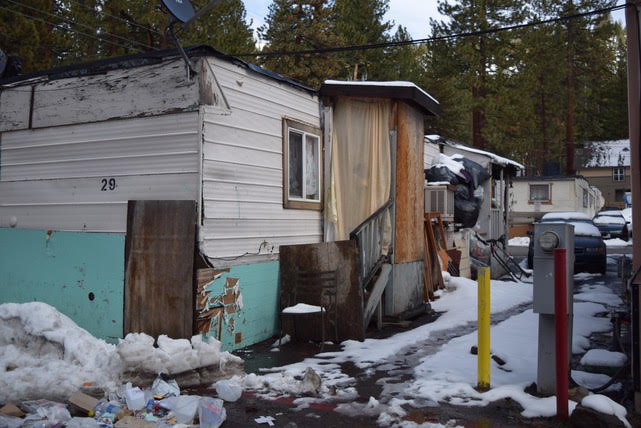
Landlords in the Tahoe-Truckee area don’t always care about providing quality housing. Photo/Heidi Hill Drum

Complex name: 

California side

·      Bijou Woods Apartments/South Lake Tahoe/92 units low or very low income

·      Evergreen Apartments/South Lake Tahoe/26 units low or very low income

·      Kelly Ridge Apartments/South Lake Tahoe/30 units very low income/2 units 62 or older

·      Sierra Garden Apartments/South Lake Tahoe/76 units low or very low income

·      Sky Forest Acres/South Lake Tahoe/17 units very low income/1 unit for disabled

·      Tahoe Pines Apartments/South Lake Tahoe/26 units low or very low income

·      Tahoe Senior Plaza/South Lake Tahoe/45 units very low income

·      Tahoe Valle Townhomes/South Lake Tahoe/70 units low or very low income

·      The Aspens/South Lake Tahoe/56 units

Nevada side

·      Lake Vista 1/Stateline/24 units low or very low income

·      Lake Vista 11/Stateline/40 units low or very low income

·      Meadowbrook Apartments/Stateline/30 units low or very low income

·      Aspen Grove Apartments/Stateline/39 units low or very low income

North Lake Tahoe area

·      Kings Beach Housing Now/Kings Beach/77 units low or very low income

·      Corda/Tahoe City/1 unit

Truckee area

·      Frishman Hollow/Truckee/32 units very low income

·      Henness Flats/Truckee/92 units low or very low income

·      River View Homes/Truckee/38 low or very low income homes

·      Sawmill Heights/12 low income (this is a mixed-income property containing 96 units, 12 of which are low income)

·      Sierra Village/59 low or very low income

·      Truckee Donner Senior/60 low or very low income

·      Truckee Pines/104 low or very low income

·      Martis Valley/4 units.

Douglas County Community Development Director Mimi Moss advised that Douglas County’s 2011 Housing Element suggests that to meet historic population growth over the next 20 years, there will need to be 1,258 additional new low or very low income housing units, and an additional 700 new rental spaces. These figures represent the need for the entire county and not just the areas within the Tahoe basin.

In Placer County, Cordell reported several new housing projects are in the development stage, although no specific build-out data is now available.

As for easing some of the obstacles faced by potential developers, Tom Lotshaw, the public information officer for TRPA said, “Affordable, multi-family housing projects (serving people with 80 percent or less of county median income) are exempt from the need for the normal residential building allocations.

“Hundreds of bonus units are available for these types of projects at no cost from TRPA based on project need. Unfortunately, while these bonus units are readily available, we have not seen them requested or used much at Lake Tahoe.”

He added that the 2012 Regional Plan included a number of land-use planning incentives including height, density, coverage and provisions for mixed-use development for affordable multi-family housing units in town centers, in close proximity to the places where people work, shop and go to school.

As discussed earlier, the Lake Tahoe Basin is not unique in its need for housing that will meet the requirements of all of its citizens and employees. However, there are statistics compiled by the Tahoe Prosperity Center that indicate the area may have some additional hurdles to jump before the housing basics of everyone can be met. Consider these statistics:

·      Tahoe has higher than average unemployment and poverty rates

·      More than 60 percent of the children are on subsidized meal programs at their schools

·      Only 18 percent of residents can afford the median-priced home at Lake Tahoe

·      Lake Tahoe includes two states, six local governments and 198 plan areas making economic progress challenging.

Despite the challenges, there may now be enough people willing to confront the barriers and see that the forward momentum stays in place.

“As in many other parts of the country, a major shortage of affordable housing is a critical issue for the Tahoe region, and one that many partners must work together to address. It’s an issue for families and their finances; it’s an issue for community health and vitality; and it’s an issue for the environment, with many people forced to commute long distances to or from work at Tahoe,” Lotshaw told Lake Tahoe News.




Study: Media made difference in water conservation

By Karen Kaplan, Los Angeles Times
 
What does it take to get Californians to save water during a massive drought? Apparently, a lot of ink and newsprint helps.

Extensive news coverage of the state’s historic drought prompted residents to conserve water, research out of Stanford University suggests. The more that major newspapers wrote about the drought, the more people in the Bay Area cut back on their personal water use, according to a report this week in the journal Science Advances.

Indeed, the overwhelming volume of news stories appears to have motivated Californians to conserve even before Gov. Jerry Brown ordered mandatory water restrictions on April 1, 2015.

Read the whole story


Poll: Climate change responsible for wild weather

By Seth Borenstein and Emily Swanson, San Francisco Chronicle

After hurricanes Harvey, Irma and Maria blitzed the nation, most Americans think weather disasters are getting more severe and see global warming’s fingerprints.

A poll from the Associated Press-NORC Center for Public Affairs Research finds that 68 percent of Americans think weather disasters seem to be worsening, compared to 28 percent who think they are staying the same and only 4 percent who say they are less severe.

And 46 percent of those who think it’s getting worse blame man-made climate change mostly or solely for the wild weather, while another 39 percent say it’s a combination of global warming and natural variability.

Read the whole story


Ganong confident Olympic medal in his future

Publisher’s note: This is one of a series of stories about Lake Tahoe area athletes who hope to compete in the 2018 Olympics in South Korea. 

By Kathryn Reed

PARK CITY, Utah – In a sport where fractions of a second can make the difference between being on the podium or not, what one wears can impact the final outcome.

“We were playing catch up the last few years with suit development. Now we may have something better,” Travis Ganong said.

Ganong, who was born in Truckee and calls Squaw Valley ski resort home, knows all about fractions of a second. At the Sochi Olympic Games in 2014 he placed fifth in downhill. He was 0.31 seconds from bronze, 0.35 from silver, and 0.41 from gold.

Will a better engineered racing suit make the difference? Maybe.

He and other U.S. Ski Team members were in North Carolina in August testing suits at the wind tunnel there. In a sport where speeds can reach 80 mph, aerodynamics and weight are the fine details that complement the athleticism required to compete at the most elite level.

Russia was Ganong’s first Olympics. He also competed in super G, where he placed 23. Since then, he has been on the downhill World Cup podium four times.

Travis Ganong is more confident in his ability to medal at the 2018 Winter Games. Photo/Kathryn Reed

At the U.S. Ski Team media summit last month in Utah, Ganong talked about how much different the course will be in PyeongChang, South Korea, compared to Sochi. He called the 2018 course “mellow,” “not that steep” and “not scary.” He also said it’s fun, there will be no room for error and that it will look great to the television audience.

While there is a new team event for the alpine racers, Ganong is opting not to participate, but instead is focusing on downhill and super G.

This time around Ganong will have experience to count on. Tactically, he said, he now knows when to push and when to hold back. Before it was all about going 100 percent.

“The mental part is what separates athletes,” Ganong said. “Now it’s easy to flip a switch when I need to go faster.”

His girlfriend, who skis for the Canadian team, is one of his sounding boards. “She’s my best mental coach,” Ganong said.

Teammates and those who helped define men’s skiing in the United States are also integral to his development. While they will be competing against each other for a spot on the team going to South Korea in February, there is a solidarity between them.

Ganong’s peers came up with the American downhiller vest. That jean vest circulates among the guys based on who placed the best. Patches and artwork have been added. It’s a source of pride to wear it in public after a race.

“We are a band of brothers. We try to beat the Europeans. We work together,” Ganong said.

Daron Rahlves, the most decorated male skier in the U.S. in downhill and Super G, calls with encouragement. He, too, lives in Truckee.

It is Truckee and Squaw that are still home to Ganong. He trains there in the off-season.

Skiing is what he knows. He was 1½ years old when he first hit the slopes. Today he wants to give back to the sport. He’s doing so by being a mentor to athletes at the Squaw Valley Academy. There are also two scholarships in Ganong’s name.

Ganong wants to instill in these youngsters a sense of enjoying the whole mountain and not just focusing on gates.

“I want to bring the fun back to ski racing,” he said. While he doesn’t see being a coach in his future, what Ganong does envision is “sharing the passion” of skiing and racing with generations to come even while he pursues his dreams to be the top downhill racer in the world.


Added pain at Calif. gas pumps starts Nov. 1

By Mark Glover, Sacramento Bee

Jose Medina has Nov. 1 circled on his calendar, because “that’s the day the gas goes boom.”

More to the point, it’s the day that a 12-cent increase in the base gasoline excise tax goes into effect statewide.

Senate Bill 1 was signed into law earlier this year by Gov. Jerry Brown, who vigorously supported the measure that will raise more than $52 billion over the next decade to help pay for extensive road-improvement programs statewide. Public transit and other transportation programs likewise will benefit.

Read the whole story


Congress considers lethal methods to manage rangeland

By April Corbin, Las Vegas Sun

In July, the House Appropriations Committee voted to remove language from the Interior Department’s budget that prohibits the “destruction of healthy, unadopted wild horses and burros” managed by the Bureau of Land Management in the American West.

Groups like the American Wild Horse Campaign that seek to protect the animals have described the change as “a death sentence” for more than 46,000 wild horses and burros cared for by the BLM and an additional 40,000 loose on the range considered in excess of “appropriate management levels.” On the other side, rangeland advocates describe euthanasia as unfortunate but necessary for protecting land they say has been ravaged by overgrazing from animals that lack any natural predators.

Rep. Mark Amodei, R-Nev., sits on the House Appropriations Committee and supported lifting the prohibition, which was pushed forth by Rep. Chris Stewart, R-Utah.

Read the whole story


Trumpeter Botti takes audience’s breath away

Caroline Campbell’s violin complements Chris Botti’s trumpet on Oct. 28 at Harrah’s Lake Tahoe. Photo/Kathryn Reed

By Susan Wood

STATELINE – It was nothing short of phenomenal.

Armed with an all-star ensemble of accomplished musicians who could seize the stage on their own, Chris Botti showed an enthusiastic Harrah’s South Shore Room crowd that live jazz is anything but dead.

Botti is a rock star on the trumpet, taking the audience on a journey Saturday night through his compilations including his landmark “Night Sessions” 2001 album, signature jazz collection of 2003’s “A Thousand Kisses Deep” and his latest “Impressions” assortment from 2013. 

“It’s so nice to be back,” Botti told the crowd Oct. 28, while referring to the trip from New York as a “planes, trains and automobiles” exercise.

“It makes all the long mornings and layovers go away,” he said in appreciation as he launched into an unforgettable evening of music composition.

The intimacy of the South Shore Room is ideal for Chris Botti and his jazz ensemble. Photo/Kathryn Reed

The jazz musician has played at Lake Tahoe before. Once he collaborated with jazz great Diana Krall on the piano in the Harveys Outdoor Concert Series. And years ago, he was one of saxophonist Dave Koz’s friends at the Hyatt in Incline Village.

Hands down, the intimate South Shore Room has turned out to be the best venue.

For it was not only Botti doing his magnificent renditions of jazz classics on the trumpet that made the event, it was what he didn’t do.

He often stepped back and let his stand-alone musicians demonstrate their undaunted dedication to their craft. To that, the crowd screamed and lunged to its feet on several occasions — a somewhat uncharacteristic reaction to either classical concerts or jazz music performances.

Caroline Campbell’s heart-stopping solo evolution from classical violin to country fiddle and onto Led Zeppelin’s classic “Kashmir” rock fantasy dropped jaws.

In his introduction, Botti referred to her medley as an “opus jam.” Then he stepped aside as Campbell transitioned from a soft sway with her violin to bouncing with an upbeat blue grass number.

Campbell, who’s collaborated with the likes of opera great Andrea Bocelli, even interrupted her own performance to address the cheering enthusiasts who rose to their feet. One man in front imitated a cowboy roping when she broke into a fiddle sound. She scurried to the microphone and declared that “classical audiences don’t usually whoop,” adding: It’s nice,” she said, smiling.

And with a few flips of her long blonde hair, a steely look came over her face. From there, the predominantly baby boomer crowd instantly identified the legendary tune from one of America’s greatest rock bands. It was like she was channeling Jimmy Page and Robert Plant.  

“Way to bring it,” Botti said, acknowledging Campbell’s greatness.

Up to that point, the accomplished violinist had graced the showroom early alongside Botti’s trumpet with sentimental jazz classics such as “When I Fall in Love,” onto his signature “The Look of Love” and adding on Roberta Flack’s well known “For All We Know.” The melancholy of the sound based on the band’s harmonious beauty was tear-welling. The performance represented dinner party meets sleepy jazz club meets billboard rock stage. 

By captivating the stage with Botti, pianist Taylor Eigsti, guitarist Leonardo Amuedo, bassist Richie Goods, keyboardist Rachel Eckroth and drummer Lee Pearson, Campbell was in good company that night.  

Pearson also put on a nimble show of his own, tucking a drumstick under his armpit as he played and taking his superior percussion skills to the floor. He even played his drum set with his hands in a performance that could have competed with Iron Butterfly’s most famous solo.

Botti had warned the crowd of the risk taking when he described his drummer’s skills as capable of taking him “over a cliff” because of the degree of difficulty.

“It depends how he’s feeling,” Botti said. The audience laughed, and Pearson reaffirmed that attendees should brace themselves.

Sy Smith’s vocal range is off the charts. Photo/Kathryn Reed

In what Botti referred to as his “Rubik’s Cube of all-star” band members, guitarist Amuedo competed with Campbell and the quick-fingered Eigsti on the piano for solos that provided an emotional crescendo.

Amuedo accomplished such a task with his stirring rendition of the late Leonard Cohen’s classic “Hallelujah.” The trumpet-guitar-piano combo continued with the jazzy “Venice” off the “Impressions” album, compiled as an international testament to romantic melodies.

And as if all this wasn’t take-your-breath-away enough, the music morphed into vocals when singer Sy Smith walked down the aisle for a few sets. Her vocal range appeared unbelievably angelic at times.  

She had the audience roaring with her singing and dancing to “Let’s Stay Together,” the blockbuster rhythm and blues hit recorded by Al Green and then Tina Turner.

The seemingly quick one and a half hours quieted down with Botti’s encore fave — “My Funny Valentine,” the legendary 1954 jazz classic performed by Frank Sinatra and Ella Fitzgerald that the trumpeter remade famous on his brass instrument almost a half century later.


Scientists: Jack Frost nipping at your nose ever later

By Seth Borenstein, AP

Winter is coming … later. And it’s leaving ever earlier.

Across the United States, the year’s first freeze has been arriving further and further into the calendar, according to more than a century of measurements from weather stations nationwide.

Scientists say it is yet another sign of the changing climate, and that it has good and bad consequences for the nation. There could be more fruits and vegetables — and also more allergies and pests.

Read the whole story


Housing scarcity forces ski companies to do something

By Jason Blevins, Denver Post

Ski resort companies are shouldering more responsibility for workforce housing after years working in the background with community partnerships.

In Telluride, Colo., resort owner Bill Jensen spent $6 million this year on homesites and revamping an empty apartment complex for employees. Aspen Skiing spent $4 million on 40 tiny homes it plans to park in a former KOA campground it bought in Basalt. Vail Resorts, which promised $30 million for employee housing in 2015, is planning a new apartment complex in East Vail to join its new housing partnerships in Summit County, although it has run into resistance from residents concerned with traffic and environmental impacts.

Employee housing was becoming a critical problem in the mid-2000s, but then the economic recession hit and locals with their own housing started working for resort companies. But as the economy improved and locals found jobs elsewhere, resort companies started looking farther afield for workers and that required housing.

Read the whole story