What happens to fire retardant-soaked crops?

By Julie Cart, CALmatters

The full extent of the damage from the northern California wildfires that killed 43 people and destroyed 8,400 homes is still being tallied. The devastation left an obvious scar, but not all the damage is visible.

Among the assessments still to be made is what impact millions of gallons of fire retardant—essentially a potent fertilizer—may have on carefully tended plants and soils.

Saved by timing, nearly 80 percent of the renowned wine region’s grapes had been harvested when the multiple fires started in early October. And for the most part, the blazes did not linger at the vineyards, which are kept free of grasses and other fire-devouring fuels.

But there was collateral damage: bright red slathers of fire retardant dropped from the state’s fleet of supertankers. In one week, more than 2 million gallons of retardant were dropped in California—a record, according to Cal Fire, the state firefighting agency.

“We are always mindful of where we are trying to drop aerial fire retardant,” said Chris Jurasek, the CalFire aviation supervisor who directed many of the drops. “It’s always in our mind to try and alleviate contacting anything other than fire.”

CalFire has the largest aerial firefighting fleet in the world. As planes become increasingly central to fighting fires in California, more and more retardant is served up.

On one day during the recent fires, Oct. 12, crews loaded nearly 700 gallons of retardant a minute from dawn to dusk to help slow the fire, according to CalFire.

By way of comparison: The state’s largest aviation facility, near Sacramento, pumped 1.7 million gallons of retardant into firefighting tankers in 2016. The base has already used more than 4 million gallons so far this year.

The retardant, called Phos-Chek, contains ammonium phosphate, a fertilizer. It also includes chemicals to regulate how the slurry drops, emulsifiers that render it gooey so it sticks to targets, and a coloring agent so air crews can track what they’ve dropped. For the most part, the ingredients are disclosed to CalFire by the Phos-Chekmanufacturer, ICL-Performance Products, LP.

But the entire formula is not made public. George Matousek, an ICL chemist who helped formulate the retardant, said the precise recipe is a trade secret but “all products in Phos-Chek are food-grade or better.”

The chemicals are mixed with water and are generally harmless to humans and most animals, according to the company. But retardants are known to be toxic to fish, so state and national fire-fighting agencies prohibit drops within 300 feet of water sources.

But as Western wildfires increasingly move out of forests and into developed areas, firefighters have less wiggle room to target their drops.

When a converted 747 jetliner is lining up to release nearly 20,000 gallons of retardant, there’s no guarantee of precision. Pilots are often guided away from water sources and landscapes containing plants that are endangered or otherwise protected by law, using retardant avoidance maps published by the U.S. Forest Service.

It’s an issue that’s taken seriously by fire-fighting agencies. Biologists say that a sudden dump of nutrients in soils can encourage the growth of non-native or invasive plants.

“There is a precedent for concern about soil chemistry,” said Andy Stahl, executive director of Forest Service Employees for Environmental Ethics, a watchdog group made up of Forest Service employees and others.

Improving soil productivity “would allow invasive plants that are better able to utilize these nutrients (to) crowd out natives.”How those interactions might play out in carefully curated vineyards is not known. Winemakers are famously fussy about soil: It’s what imparts the terroir that gives wines their unique characteristics.

Some vintners choose not to use fertilizers of any kind.

“A lot of time and effort is put into that soil,” said Andrew Walker, a geneticist at the University of California, Davis’ Department of Viticulture and Enology, which is devoted to all things wine-making. Fertilizers may be altogether undesirable, he said.

North Coast vintners “make expensive wines. They work on quality rather than quantity. They don’t necessarily want excessive vine growth.”

Walker said not much is known about potential effects of retardants on commercial crops. Previous blazes have raced out of wildlands and into agricultural lands, destroying fruit and nut orchards, hay fields and, increasingly, California’s highly lucrative cannabis plantations. Farmers of such crops have specific guidelines for fertilizing their plants.

Academics and researchers are beginning to study the issue—a good thing, Matousek said. “It’s something that’s going to come up more often.”The Napa County Agricultural Commissioner did not return phone calls for comment.

The Wine Institute, an advocacy group for 1,000 wineries and business in California, declined to comment. A representative of a regional cannabis-growing association did not respond to a request for comment.

But the Napa County Health and Human Services Agency posted an online warning earlier this month. It stated that although there is little danger in ingesting produce when retardant is present, it’s to be avoided.

“Individuals are advised against consuming fruits and vegetables from home gardens to which retardant may have been applied, or from areas in wildlands where residues are visible,” the agency said.

“In addition to avoiding consuming food items with visible residues, the fertilizer component of the retardants may lead to temporary increases in the nitrate content of soils in areas of application.” Walker said plants take in chemicals in soils, but they also can absorb some chemicals to no ill effect.

Still, Dennis Hulbert, a retired regional aviation manager for the U.S. Forest Service who oversaw firefighting action in California, said retardants are relied upon too much by overwhelmed fire managers.

Hulbert said he spent 39 years ordering retardant drops without knowing much about the potential long-term implications. “This is 50-year-old technology,” he said. “I’m not sure it’s a good thing.”

Cal Fire’s Jurasek, for his part, said the tankers and their loads of retardant were instrumental in quenching the recent fires. The wineries will recover, he said. As for the possibility of lingering problems in soils and plants, he said, “I do not have any concerns.”

CALmatters.org is a nonprofit, nonpartisan media venture explaining California policies and politics.


General aviation in rural Nevada an economic driver

Minden’s airport continues to grow. Photo/LTN file

By Megg Mueller, Nevada Magazine

Nevada is the land of wide-open space. Miles of highway, endless valleys, and vistas are the stuff roadtrippers dream about. Some travelers to the Silver State, however, don’t need any roads. Certain intrepid sightseers prefer to do their traveling with a little altitude.

Sure, there’s McCarran International Airport in Las Vegas, Reno-Tahoe International in Reno, and Elko Regional Airport in Elko, but because there are only three airports to offer commercial service in and out of the state, that leaves a lot of ground to cover.

For small aircraft owners—those who fly in what is called the general aviation (GA) category—there are 47 public-use airports in Nevada, with many other private airports and landing strips spread across the state. That is a lot of access to Nevada’s great wide open.

Read the whole story


Overhaul of look, functionality of SLT’s Sierra Blvd.

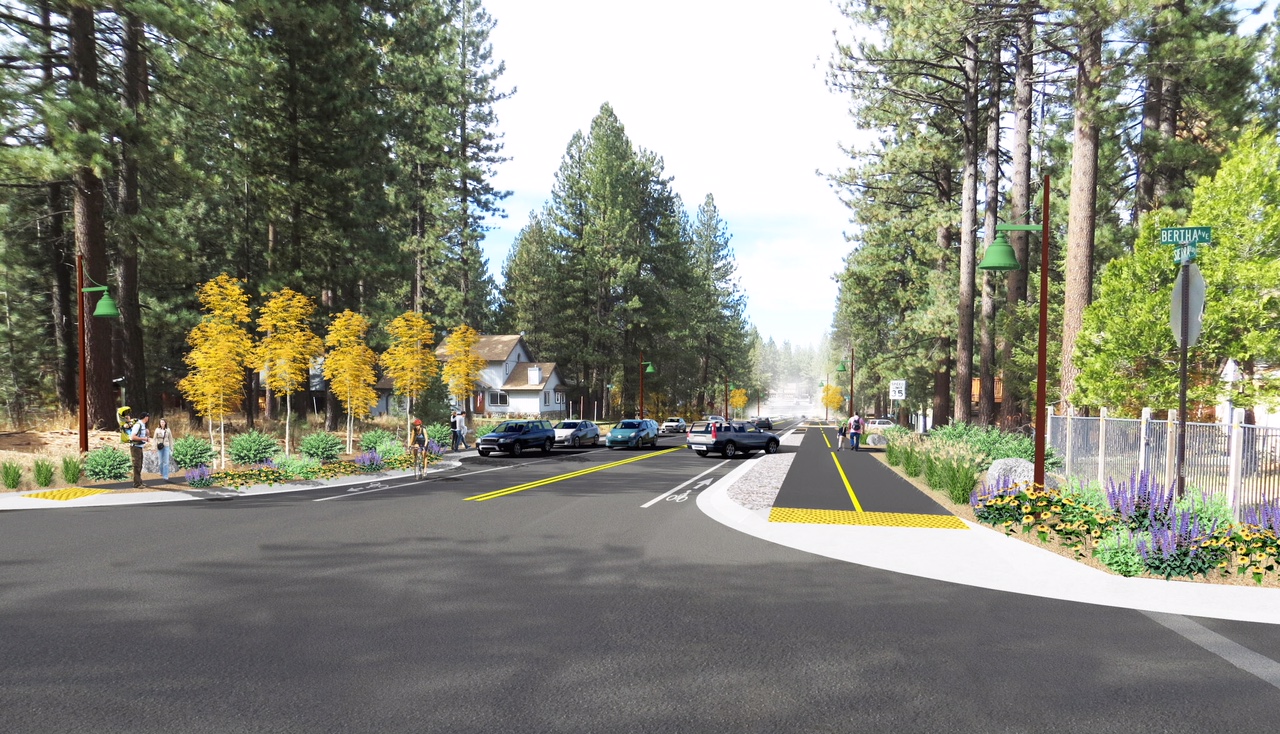
Sierra Boulevard in South Lake Tahoe is soon to be completely renovated. Rendering/Provided

By Susan Wood

One of South Lake Tahoe’s main crosstown arteries is getting a face lift.

Once the design process is wrapped up, the city expects to begin construction on Sierra Boulevard’s complete street plan – which should be next year.

The extensive transportation project driven primarily by human power is now in the environmental review phase. It heads to the city Planning Commission upon completion.

The plan would essentially represent a complete overhaul of the thoroughfare running from Highway 50 to Barbara Avenue. At the end is where the trucks dump their snow loads.  

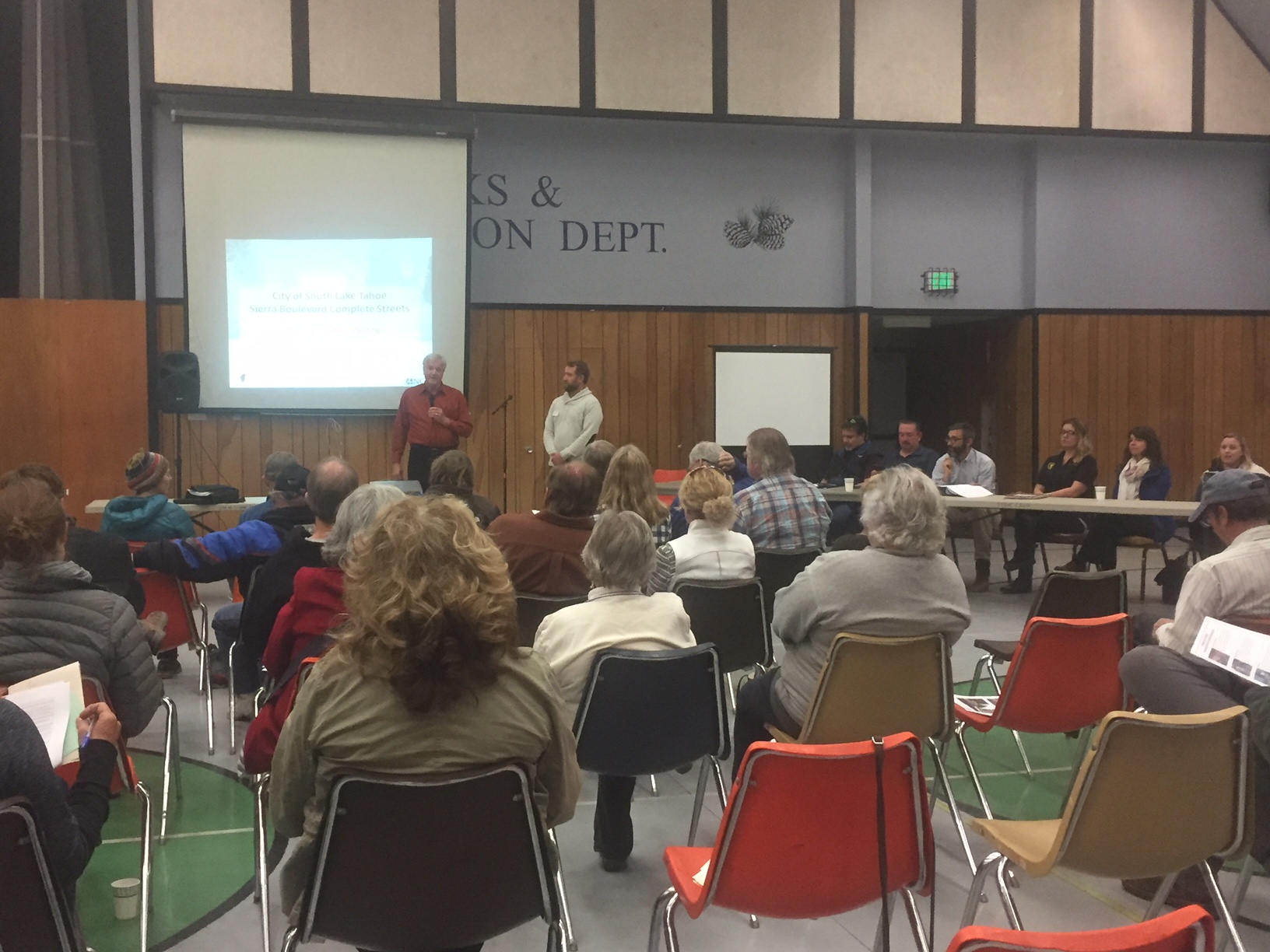
South Lake Tahoe Public Works – joined by Tahoe Transportation District and NCE design representatives – on Thursday provided about 30 people a glimpse of the design. The meeting at the recreation center was the last scheduled community input meeting.

Many in the audience seemed heavily invested in the approximately $6 million plan that spun out of Phase 4 of the Sierra Tract Erosion Control Project. The “boulevard” plan, which has been in the works for years and stalled in 2008, is a little more than halfway in the process.

More than two dozen people listen Nov. 2 to plans for Sierra Boulevard. Photo/Susan Wood

It calls for curbs and gutters with storm water drains to channel the runoff that collects in mini lakes and ponds on the side of the street. Landscaping and lighting are set to illuminate a Class II bike lane, Class I 10-foot shared use path, as well as a 5-foot sidewalk for pedestrians. A crosswalk is slated to go in near Sierra Community Church, a quasi-anchor of the street. 

Money is coming mostly from an Active Transportation Project grant.

And beyond the strip, a crucial component to the bicycle-friendly improvements is the connection between an improved Highway 50 and the Greenway bike project.

The city sought to cover all bases with this project – from air quality and water quality to active transport and safety. The latter led to the city’s intention to install road features called “bulb outs.” These bulbous sidewalk extensions are used to reduce the pedestrian crossing distance and to slow down traffic.

On most days, motorists drive down the road “like a drag strip,” NCE senior engineer Christian Heinbaugh told attendees Nov. 2. The thought is the extensive width of the street gives the driver a fast, open-road feel.

But these road-narrowing features brought up questions from the group whether they would pose a hindrance to snowplowing operations – which dominated the discussion.

“Why so narrow?” a community member asked.

To that, Heinbaugh reminded those in attendance that the features were added because of public concerns expressed over the safety of the boulevard. The “bulb outs” in the street prompt motorists to slow down as they approach encroaching road features.

“It’s going to feel like a 35mph road,” he said of the current speed limit. New to the transportation planners’ vernacular is the term “traffic calming,” as if motorists need to take a chill pill.

Some attendees couldn’t quite grasp where the snow would go if the boulevard and multi-use path are due to be cleared of the white stuff in winter. They treated the quizzical type of features set to go in as something abnormally excessive, except they represent what one would find in any progressive, bike-friendly town. That conversation resulted in a more far-reaching chat about what constitutes a right-of-way and what is deemed an easement in respect to tossing the snow.

Transportation planners and engineers have learned a lot over the years about how to make these street features durable, the crowd was assured. For one thing, the separation between sidewalk features and roads are curvy in nature to where it’s easier for trucks to roll over them without destroying them.

Probably the most biting part of the question-and-answer segment came up when resident Mark Cutright asked who was going to pay for the maintenance. The accusation of missing funds from recreation-oriented Measures S and R prompted Bicycle Advisory Committee member and advocate Peter Fink to insist that at least now funding is thoroughly watched and scrutinized.

Cycling advocates have long waited for improvements to make South Shore roads friendly, safe and inviting to negotiate.

Motorists have long wanted to keep their oil pans on their vehicles as they take the boulevard, which is substantially beat up by truck traffic.

Residents have long wanted relief from flooding roads in big winters like last year.

When asked by Lake Tahoe News if NCE has witnessed whether these types of improvements in other communities prompt street-side property owners to make upgrades of their own, Heinbaugh was undecided but called it “logical.”

If anything, the city is going for a more pleasing look.

“It’ll definitely spruce up the neighborhood,” city engineer Stan Hill told LTN before the meeting.


Calif. planning for raging fires, extreme heat

By Christopher Cadelago, Sacramento Bee

As massive fires that would kill more than 40 people ravaged his state last month, Gov. Jerry Brown met with state emergency officials, jabbing at culprits of the latest disaster.

“That’s the way it is with a warming climate, dry weather and reducing moisture,” Brown warned. “These kinds of catastrophes have happened, they’ll continue to happen, and we have to be prepared to do everything we can to mitigate.”

California efforts to prepare for climate change already have begun.

In the Sierra Nevada, scientists and forestry management experts burn and thin acres of forest to cut back on fuel for intensifying wildfires. Down south in San Diego County, they replenish beaches, repair sand dunes and plant thousands more shade trees.

Read the whole story


Seasonal forecasts unreliable indicators

Long term forecasts are not all that reliable, according to experts. Photo Copyright 2017 Carolyn E. Wright

By Benjamin Spillman, Reno Gazette-Journal

Skiers and snowboarders struggling with the decision to buy a season pass or book a destination shouldn’t expect much help from seasonal weather forecasts.

That’s because forecasts that lay odds on temperature and precipitation months in advance are notoriously unreliable.

Just look back to November of 2016 when the forecast map for December through February, the heart of the ski season, showed “EC” over much of California and Nevada, representing an equal chance for greater-than-normal or less-than-normal precipitation.

“Another way you could put that is equally clueless,” said Chris Smallcomb, warning coordination meteorologist for the National Weather Service in Reno.

Read the whole story


Tahoe’s original 18-hole golf course to be sold

By Terra Breeden

MEYERS – The Tahoe Paradise Golf Course in Meyers is the first 18-hole golf course in the Lake Tahoe Basin and now, the historic property is up for sale.

The property is listed for an asking price of $8 million. If sold, the golf course will close, ending its legacy, and the 50-acres of pristine land and forest may be appropriated for a different use.

Bruce Beeman opened the Tahoe Paradise Golf Course in 1960. At that time the town of Meyers was little more than an outpost and the only other businesses in the vicinity were an old gas station and a dusty horse stable across the street on Highway 50.

Beeman, a farmer from Woodland, wanted to get out of agriculture and do something different. His passion was golfing and even though there was little evidence to suggest that Tahoe would become a popular golfing destination, Beeman decided to invest in the 50 acres of untouched land in Meyers.

“There was nothing here, it was barren,” Beeman’s granddaughter Dawn Steimer told Lake Tahoe News. “Everyone thought he was crazy to open a golf course here but he just did it.”

Tahoe Paradise Golf Course is on the market after being in the same family since 1960. Photo/Terra Breeden

Tahoe Paradise Golf Course is a family-owned business and Steimer grew up in the family golfing tradition. One of her earliest memories is learning to golf in the junior golf program at the course. Over the years, the sport changed, evolving from a leisure pastime for the wealthy to a popular summer activity for people from all walks of life.

“This is where I spent my summers as a kid,” Steimer says. “But it wasn’t until Tiger Woods came out that it became cool to golf.”

Tahoe Paradise Golf Course enjoyed several decades of success. Famous figures like Clint Eastwood played there and the sprawling course became the first location of an informal celebrity golf championship.

“There weren’t any other golf courses in Tahoe, so celebrities would come here and have tournaments,” Cinda Beeman, daughter of Bruce Beeman and co-owner of Tahoe Paradise Golf Course, said.

The Beemans planned to keep the business in the family and pass down the property to the younger generation. However, when the recession hit in 2006, the bustling golf course became a ghost town.

Since then, Tahoe Paradise Golf Course has regained some momentum, but still, the golfing business has been slow to recover.

“Golf has changed. The economy isn’t great and people don’t spend money on golf when they don’t have extra money,” Steimer says. “Now there are all these big golf courses right off the hill for less money so people go there instead and it hurts us.”

The property has been on the market now for two years. Potential buyers can use the land for golf or for other recreational activities. A snowmobiling operation leases the property from the Beemans in the winter.

However, those thinking to purchase the property will have to look at zoning for land use. Currently, the property is listed under forest resource Zoning, but when the new Meyers Area Plan goes into effect, the Tahoe Paradise land will be changed to recreational zoning.

The Meyers Area Plan, according to El Dorado County principle planner Brendan Ferry, will rezone 137 acres of wild areas in Meyers like Lake Baron, the Truckee River area and the Tahoe Paradise Golf Course to become strictly recreational. This means there will be no housing development or commercial building allowed on the property, but the land will be open to all sorts of recreational opportunities.

 “The zoning will change, but there’s a lot of things that can be done with this land,” Ferry told Lake Tahoe News. “The district allows for many different types of uses under recreational zoning. I’d like to see the Meyers community drive what goes on the property, but my job is to set the framework for the site.”

In the meantime, Tahoe Paradise Golf Course is closed for the season but those interested in the property may contact Coldwell Banker McKinney and Associates at 530.542.5555.


Analyst: Reno’s economic surge could last 10-20 years

By Ray Hagar, Nevada Newsmakers

The city of Reno is poised for a long-term economic upswing, according to an analyst from Union Gaming Research of Las Vegas.

“We’ve seen housing prices really firm up,” said Union Gaming analyst John DeCree on “Nevada Newsmakers” Monday. “That is always a great economic indicator for the casino and entertainment industry.”

Construction jobs and residential development spur more sustainable economic activity. “As large companies come and create construction jobs, they bring population and migration to the city, which then requires housing development, then expansion of schools and other social services,” DeCree said.

Read the whole story


Wildfires can attack houses from the inside

By Lauren Sommer, KQED

It’s not just residents in the northern Bay Area who are at risk from wildfire. Millions of other Californians live in fire-prone areas and many homes were built before modern fire codes.

Buildings don’t have to lie directly in the path of the flames to be at risk. The larger concern comes from something much smaller.

“During a wildfire, the major source of ignition is the wind-blown ember that lands on or near the house,” says Steve Quarles of the Insurance Institute for Business and Home Safety.

Read the whole story


EDC taking its time addressing VHR concerns

Cherie Raffety, El Dorado County tax collector, talks VHRs on Nov. 1 in South Lake Tahoe.

By Kathryn Reed

If the intent was to waste 2½ hours of people’s lives, the goal was accomplished.

If the intent was to educate people about the El Dorado County’s policies on vacation home rentals, it was a poor attempt to do so because the only department represented at the Nov. 1 meeting was the tax collector.

If the intent was to find out what people want changed with the current policy, it was a haphazard approach that took more time than needed. Instead of allowing people to take three or five or some other arbitrary number of minutes to talk, county Treasurer-Tax Collector Cherie Raffety selected a topic and had people speak to it. This meant the more than 70 attendees had to wait the entire time if they wanted to address each of their individual concerns.

And then Raffety, who is an elected official — not staff, ended the meeting before everyone had their say.

Many of these same people in October gave the Board of Supervisors their two cents when the electeds were in town for their annual Tahoe meeting. Lake Tahoe News was the lone local media outlet to cover that meeting.

It would have been more effective for Raffety to put out a survey with pointed questions as well as open ended ones to gather input. Plus, that approach would reach a greater number of people – including out of town VHR owners who can’t attend a 2pm Wednesday meeting.

It was also perplexing since the elected officials are doing their own intel gathering. Raffety said the point of her meeting was to get info to bring to the supervisors for a potential ordinance revision.

El Dorado County first adopted its VHR ordinance in 2004.

Supervisors Sue Novasel and Michael Ranalli are the members of the board’s ad hoc committee that is tasked with addressing the VHR issue throughout the county – not just the basin. While Tahoe is a problem, the Apple Hill area also has a great number of short-term rentals.

Those two have met with staff twice and plan to conduct public meetings in the future, though they may not occur until after the new year.

Novasel told Lake Tahoe News those meeting will include all appropriate departments “and anyone else we need to sit down with the public to have these discussions.”

At the meeting on Wednesday many of the complaints were the same ones people in South Lake Tahoe have – trash, noise and parking. The frustrations are so great that some called for moratorium, much like the city is on a path to enact.

Most who spoke were against VHRs in residential neighborhoods, saying this is a commercial use of a home. Legally, though, that argument is not valid. Still, the county could ban these types of rentals if so desired.

While VHR and real estate industry reps were in the audience, they did more listening than talking.


Calif. taxes on legal pot could boost black market

By Patrick McGreevy, Los Angeles Times
 
State and local taxes on marijuana could surpass 45 percent in some parts of California, jeopardizing efforts to bring all growers and sellers into a state-licensed market in January, according to the global credit ratings firm Fitch Ratings.

“High tax rates raise prices in legal markets, reinforcing the price advantage of black markets,” the firm said in a report Monday. “California’s black markets for cannabis were well established long before its voters legalized cannabis in November 2016 and are expected to dominate post-legalization production.”

The report said that increased enforcement may blunt the illegal market, “but high taxes may complicate such efforts by diverting in-state sales to the black market.”

Read the whole story