Douglas County Parks and Rec tries to do more with less

By Kathryn Reed

Even though nearly $1 million has been cut from the Douglas County Parks and Recreation budget in three years, expansion and improvements are always being considered.

Kahle Community Center in Stateline would like to develop its open attic space that is sitting unused. This would add about 2,000 square feet to the 22,000-square-foot gym.

Kahle Community Center is busy most hours of the day. Photo/Kathryn Reed

Kahle Community Center is busy most hours of the day. Photo/Kathryn Reed

Different ideas have been talked about through the years, including a dance or boxing studio. More recently, having a commercial grade Wii fitness area has been bouncing around.

“We’d like to convert it to a specialized fitness facility,” said Scott Morgan, director of the parks department. “It would be a significant enhancement.”

Like most things, funding is the issue.

Morgan believes the clientele exists on the South Shore for such a facility that might appeal more to teens and young adults.

Even though part of the multi-level facility is 15 years old, and another section is 10, it looks in good condition. In the middle of the day people are playing basketball, running on the indoor track and pumping iron.

A few years ago Ray Sidney with Big George Ventures paid to have a lid put on the 800-square-foot gymnastics area.

Morgan said the number of users at Kahle has not changed much as the area has been hit by a sagging economy. In fact, he said, “Business is booming.”

Still, the parks department is taking a $350,00 hit for the next fiscal year. The department lost $300,000 for the current year and the same amount for the previous year.

“Mainly you see a reduction in service levels in our park facilities,” Morgan said. “No longer is there a nighttime ranger in all of our facilities.”

That person was responsible for making sure lights came on when they were supposed to and sprinklers weren’t soaking a field where people expected to play.

Hours have been cut, including at Kahle.

Eighteen people are expected to lose their jobs in the next fiscal year, with 3.3 full-time positions cut. In the 2009-10 budget Morgan had to cut 5.4 full-time jobs and 7.4 in 2008-09.

Tennis courts are not getting their regular maintenance. However, a $10,000 donation from the Zephyr Cove Tennis Club will allow for a crack and color coat on those courts once the snow is melted.

At Lake Tahoe, the parks department runs Kahle, Zephyr Cove Park, the park at the top of Kingsbury Grade, and the Round Hill bike path. There are 14 facilities in the Carson Valley.

Douglas County has until May 17 to finalize its 2010-11 budget that begins July 1. Commissioners last week could not decide how to trim more than $2 million.

Folsom provides central location for fun without snow

By Kathryn Reed

FOLSOM — Folsom, really? That was the reaction I got before and after people learned about my whereabouts last weekend.

Yes, really, that’s where I was for three nights. It provided the ideal location for a long weekend out of town that was close by, but completely different than the mountains.

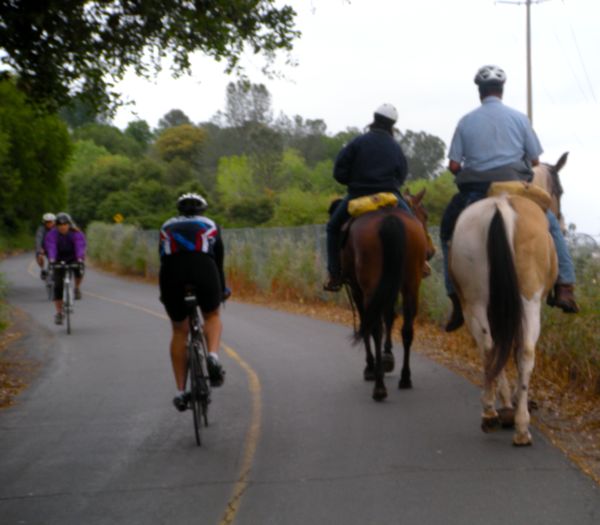
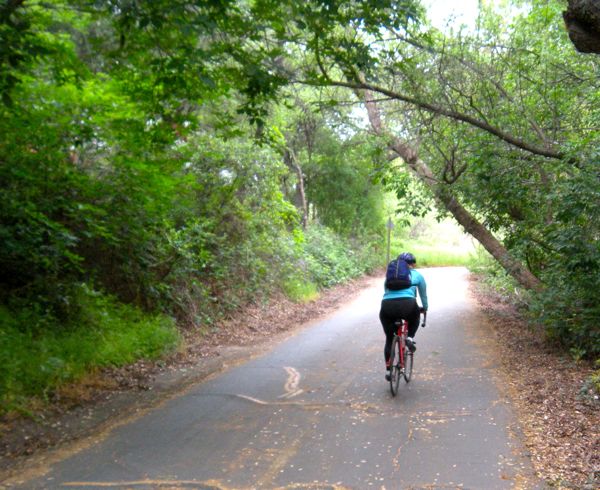
The American River Trail exemplifies mixed use. Photos/Kathryn Reed

The American River Trail exemplifies mixed use. Photos/Kathryn Reed

Flowers and trees are in bloom. Hills are a vibrant green. Birds are singing songs other than “cheeseburger.” And people are wearing shorts.

It was nice to experience spring – that season that seems to elude Lake Tahoe every year.

We drove down Thursday to shorten the drive for the following day’s trek to San Francisco to catch the Giants’ home opener. Staying at the Marriott Residence Inn allowed me the comfort to do a little work from the room, have a real kitchen to avoid eating out each meal, a hot breakfast served in the common area, an indoor pool-hot tub to relax in, and be within walking distance to one of my favorite stores — REI.

The Giants didn’t disappoint that Friday as they beat the Braves in extra innings.

San Francisco Giants run onto the field opening day, April 9.

San Francisco Giants run onto the field opening day, April 9.

Something about the pageantry of opening day always gives me goose bumps.

Baseball signals the end of winter (except in Tahoe since there was snow to shovel that following Monday), the return of warm weather and garlic fries.

It’s hard to believe the ballpark opened 10 years ago. It still looks and feels new.

The next morning we awoke to gray skies. But that didn’t change our plans. We set off on our bikes from the hotel down Iron Point Road for about four miles until we crossed Folsom Boulevard. From there the bike path links to the 30-plus mile American River Trail that ends in Sacramento.

Sue Wood rides along the American River Trail.

Sue Wood rides along the American River Trail.

Even riding the city streets of Folsom was a pleasure. It, like South Lake Tahoe, is a Bike Friendly City. The difference is you don’t have to snicker when you say “bike friendly” and “Folsom” in the same sentence.

Bike lanes are wide enough for two cyclists. The painted white lines for riders extend to intersections to avoid being caught up in right-hand turn lanes. Wayfinding signs are cute and easy to read.

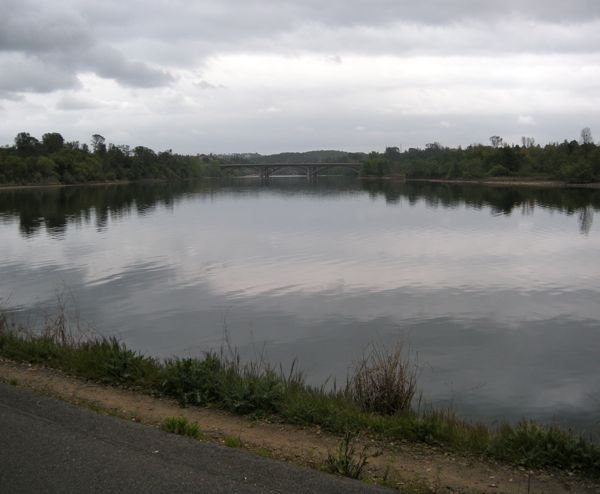
This being my second time on the American River Trail from this starting point, we opted to head right. It took us around Lake Natomas, across a bridge (but not in vehicle traffic), to Folsom Lake where we turned around.

Trail users understand mixed use. Walkers are to the side, allowing cyclists to pass without hesitation. Equestrians, too, plod along as cyclists whiz by.

Off to the side for part of the ways are dirt paths where dog owners were more apt to be found.

Views along the trail.

Views along the bike trail.

Several parks, some with camping, spring up quite often. With all the oak trees, bright orange poppies and flowing water it was easy to forget I was not far from the urban, concrete jungle.

After the 28-mile ride it was time to soak in the hot tub.

That night we drove the four miles into old Folsom, where the monthly wine and art walk was taking place. It brought out locals and tourists to this area that is steeped in history and where storefronts are a reminder of the Old West.

Sunday morning it was about loading up on breakfast at the hotel because wine tasting was the activity for the day. We opted to do one day of the annual Passport Weekend put on by the El Dorado Winery Association. Sundays are less crowded.

Folsom, yes, it really is worth the short drive – for what it offers alone and what activities can be combined with it.


Foothill wineries working hard to keep frost from vines

By Kathryn Reed

PLACERVILLE — As winter lingers at Lake Tahoe, grape growers at lower elevations in El Dorado and Amador counties are hoping spring weather becomes the norm.

Most of the vineyards are still dormant, with the Chardonnay grapes just beginning to bud. It’s that bud break combined with freezing temperatures that can destroy a harvest.

Thin-skinned grapes like Pinot Noir are more vulnerable to inclement weather, too. Cabernet grapes tend to survive nasty weather because they bud late.

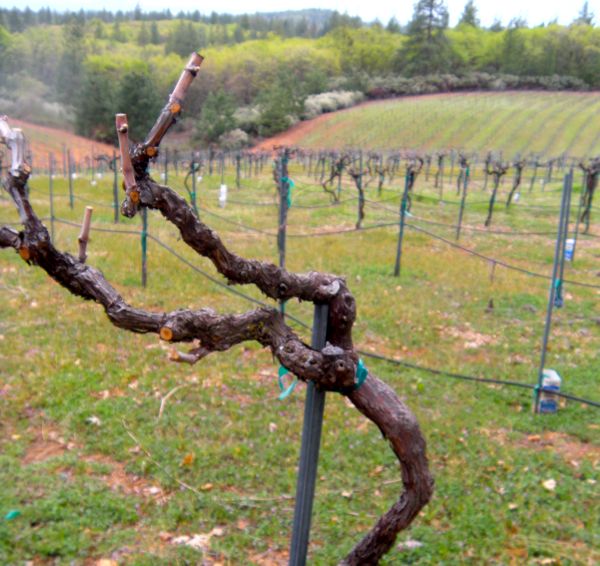
Frost damage to El Dorado County vnes is minimal. Photos/Kathryn Reed

No frost damage on these El Dorado County vines. Photos/Kathryn Reed

Madrona Vineyards owner-winemaker Paul Bush has been posting regularly this month to Facebook about the cold temperatures. An April 12 post says, “On the drive home, I did happen to see a wild dogwood tree blooming. Technically, it did snow on the dogwood today. And if you believe the old wives’ tale that once it snows on the dogwood it won’t freeze again in the spring, then we should be in the clear. I must say I am not superstitious, but I’ve never seen this wives’ tale to fail.”

Bush has a weather station in his Placerville vineyards. He keeps a close eye on air and leaf temperatures, and wind speed.

Raymond McKay at Chateau Rodin said buds were not coming out 3.5 weeks ago when he pruned. The Chardonnay is now beginning to push – which means the green is coming out.

The earlier vines are pruned, the earlier budding occurs.

“One advantage to being on a slope is you have constant air drainage. Frost only does damage when it’s still,” McKay said. He has 17.5 acres in Placerville.

That’s why vineyards in low lying areas or in valleys often use wind machines to stir the air so frost can’t settle on the vines. Frost can cause damage at about 31 degrees after about 30 minutes. It’s the hours of 3-5am that are most worrisome as the mercury falls to its lowest point.

Amador County has the low Shenandoah Valley. Wind machines are more apt to be whirring there than in El Dorado County. With so much Zinfandel planted in both counties, those hearty vines are doing fine. No reports of severe damage have come in.

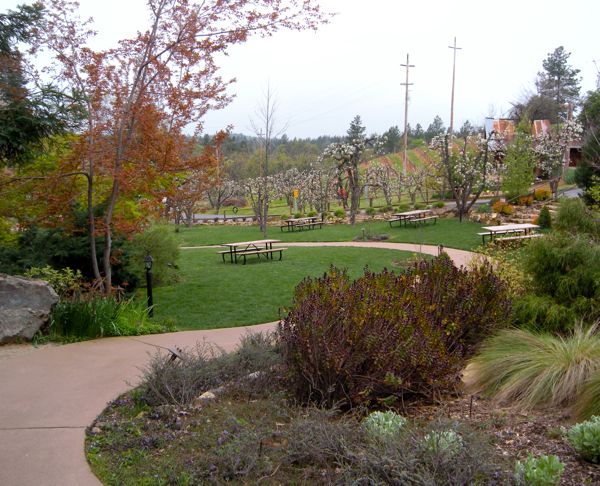
Boeger's grounds are in full bloom.

Boeger's grounds are in full bloom.

Greg Boeger said he and his colleagues in the wine business wouldn’t begin to breath easy until the second week of May when the threat of a freeze should be long gone.

“It’s been really exciting,” Boeger said of the spring weather. He owns Boeger Winery in Placerville. “For the most part to date we have dodged a bullet.”

He’s been running sprinklers on the higher elevation vineyards to protect against frost. Sprinkler systems raise the temperature in the vineyard.

Charlie Jones, vineyard manager at Lava Cap Winery, said, “During a hard frost late in the spring, a winery could lose half of its fruit or more.”

Rain isn’t a concern; it’s the temperatures.

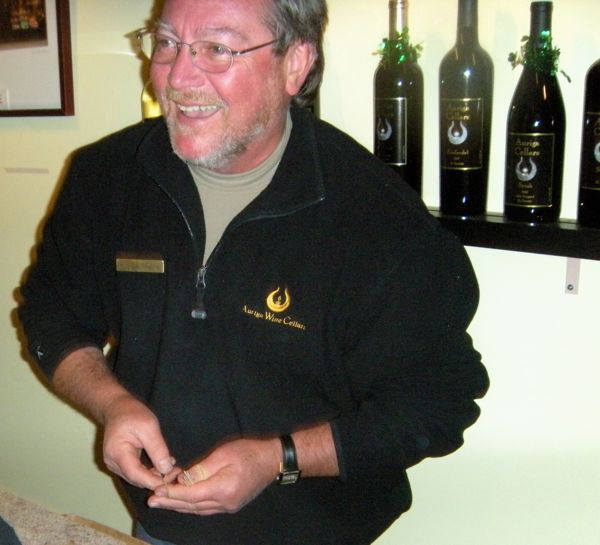
Richard Stading, owner-winemaker at Auriga Wine Cellars in Camino, is hoping all the moisture will mean a bountiful harvest like what occurred in 2005, 2007 and 2009.

Richard Stading

Richard Stading

“A lot of white wines will probably come in early. The reds will probably be good if we wait,” Stading said.


El Dorado County sheriff’s candidates politely spar

By Kathryn Reed

STATELINE — Relaxing the renewal process for people carrying concealed weapons and knowing the budget will be a critical issue facing the next sheriff of El Dorado County are two things the six candidates for the job agree on.

During a lunch meeting Wednesday at Harrah’s Lake Tahoe that was hosted by Soroptimist International of South Lake Tahoe, six questions were presented to the men who want to be sheriff.

El Dorado County sheriff's candidates.

El Dorado County sheriff's candidates.

The candidates were lined up as they will appear on the June 8 ballot: Ernie Hillman, retired sheriff’s captain; Larry Hennick, retired sheriff’s sergeant; George Nielsen, Placerville police chief; Craig Therkildsen, El Dorado County sheriff’s captain; Bob Luca, retired chief of the California Bureau of Investigation; and John D’Agostini, district attorney’s investigator.

The need for a new sheriff is because Jeff Neves left in December before his term was to expire at the end of this year. Undersheriff Fred Kollar was appointed to be interim sheriff until the next sheriff is elected. He had planned to retire at the end of the year and will still do so.

If no candidate receives more than 50 percent in the June primary, then there will be a run-off in November.

On Wednesday, each had to explain what sets them apart from the others seated at the front of the room.

Hillman: “My experience differentiates me. I’ve held every sworn position except sheriff (in El Dorado County). I’m the only candidate with military experience. I served two terms in Vietnam.”

Hennick: “I’ve worked the streets here. I have a home here. I have a back to basics approach.”

Nielsen: “I’m a top executive of a law enforcement agency now.”

Therkildsen: “I’m working for you now. I’ve worked up here for 4.5 years.”

Luca: “I didn’t spend my whole career in one department doing the same thing over and over again.”

D’Agostini: “My age. I have three, four terms in me.” He is also the only candidate currently with an elected position. He is on the Pioneer School District board of education.

Another question posed to them was: “What steps will they take to ensure the budget ax doesn’t continue to fall on the sheriff’s department?”

Hillman: “I can’t promise you it will not take a hit. I will argue for every dime we can get. It may be an uncomfortable situation for the Board of Supervisors, but I will take them on.”

Hennick: “You need to be revenue generating. With alternative sentencing programs you have them pay for their time so they are not spending time in jail. Use asset seizure and forfeiture.”

Nielsen: “First, I have experience doing these things. You focus on staffing. I transferred a management person to the streets. We must prioritize public safety. I’ve written five (grants) in the last year and got three. That’s results.”

Therkildsen: “We’ve made cutbacks and have not reduced the number of deputies on the street. We are not going to cut street deputies.”

Luca: “The role of sheriff is to set priorities. I’ve managed large budgets. The role of the sheriff is to be in the community, at the Legislature to lobby.”

D’Agostini: “There will be cuts. The last place I want to cut is the boot on the street. I will do a line item review of the budget. Grants are great, but some come with long tails.”

Hillman’s 30-year career is all with El Dorado County, including a stint as lieutenant on the South Shore. Although now retired, he says his batteries are recharged to take on the job as sheriff.

This is Hennick’s third run for sheriff. He wants to bring back the mounted patrol, have a resident deputy at Meek’s Bay and have the DARE program in schools.

Nielsen says in the last five years he has helped to reduce the crime rate in Placerville by 53 percent. As a law enforcement executive now, he believes he could hit the ground running.

Therkildsen, the only candidate to have his ballot statement translated into Spanish, believes he too will not need a learning curve because he is immersed in the department now as a captain.

Luca believes his diverse background with the California Bureau of Investigation and as an investigator with the El Dorado County District Attorney’s Office is an asset. His priorities are to stop sexual predators and elder abuse.

D’Agostini wants to rebuild community trust. His priorities are solving property crimes and increasing respect for civil rights.

There will be another sheriff’s candidates’ forum April 20 at 7pm in the El Dorado Hills Community Services District Pavilion, 1021 Harvard Way, El Dorado Hills.

California residents have until May 24 to register for the June 8 primary. There are a slew of positions up for grabs on the ballot.


Dye study may lead to use of herbicides in Lake Tahoe

By Kathryn Reed

One day the Lahontan Water Quality Control Board is probably going to have make the decision to either leave the invasive non-native Eurasian milfoil plant in Lake Tahoe or eradicate it with herbicides.

The mantra for handling invasive aquatic species, be it plant or animal, is prevention, control, eradication. Prevention, in this case, is not an option because it’s been here for years. Control seems sketchy as the plant continues to clog the canals in the Tahoe Keys in South Lake Tahoe and is growing in other locales around Lake Tahoe. Eradication would be the next step.

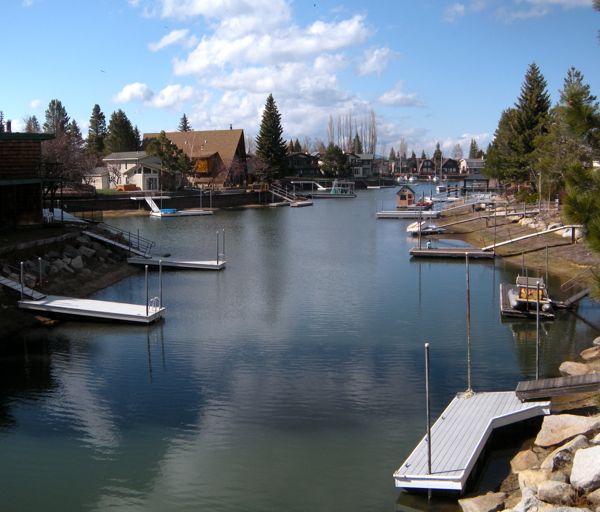
Channels in the Tahoe Keys in South Lake Tahoe are full of milfoil. Photo/Kathryn Reed

Channels in the Tahoe Keys in South Lake Tahoe are full of milfoil. Photo/Kathryn Reed

For now, though, Lahontan is allowing a study to go forward this summer involving a dye that is designed to duplicate how an herbicide would react if it were injected into Lake Tahoe.

“Part of why we are doing this is to see how long it will stay in a localized area,” Lars Anderson, lead scientist with the U.S. Department of Agriculture’s Weed Science Program, told the board Wednesday. (The water board met April 14 at Lake Tahoe Community College.)

Dan Sussman, environmental scientist with the water agency, said how the dye breaks down would help determine what herbicides could be used in the future.

The agency is not advocating herbicides be used, but wants the studies in place to know what options are available. Studies like the one Anderson will conduct this summer could then be part of environmental documents that would be put together on a case-by-case basis for eradicating the various invasive species in Tahoe.

Herbicides are not permitted in Lake Tahoe. However, a revision to the document that dictates what’s allowed per Lahontan is likely to permit herbicide use. The amendment is expected to be before the board in November. The document will be available to the public this summer.

The fluorescent red dye will be put into the lake in June and late summer in about 2 to 3 feet of water. Instruments on boats will be used to collect data in real time about the spread of the dye. It’s expected that the dye will not be able to be seen more than eight hours after it enters the lake.

The board and Executive Director Harold Singer voiced concerns about letting the public know what is going on to minimize any potential outcry. Officials are meeting with the Tahoe Keys Homeowners Association later this month as part of that outreach. Information will also be posted at the marina and other locations where the dye may be used – like in Emerald Bay, Lakeside Marina and Incline Village.

The problem with milfoil is that it can overtake a lake. It easily spreads from lake to lake via boat trailers. The feather-like leaves are distinctive. The plant is popular in home aquariums.

It can interfere with swimmers, boats and clog in-take systems for drinking water. Dealing with those issues as well as eliminating the weeds is expensive.

In the past, harvesters have been used to get rid of milfoil. Sussman told Lake Tahoe News there are harvesters on the market now that pull out the entire plant instead of mowing it.

Bottom barriers are also a tool. These have been used more often for eradicating clams. However, Sussman said they are working on invasive plants because they block out the light.

The dye (Rhodamine WT) tracer study that will begin in two months is one of several pilot programs being conducted around the lake to look into how best to rid Lake Tahoe of invasive plant and animal species.


South Tahoe to probe potential convention center investor

By Kathryn Reed

South Lake Tahoe is waiting for a $30,000 check so it can begin its due diligence – aka background and financial checks – of Woodridge Capital Partners LLC, the firm wanting to take over the would-be convention center.

At the City Council meeting this month, attorney Lew Feldman, who has represented original developer Lake Tahoe Development Company and now Woodridge, wanted the item to be discussed at a special meeting.

The city doesn’t want to use taxpayer money to pay consultants to investigate Woodridge.

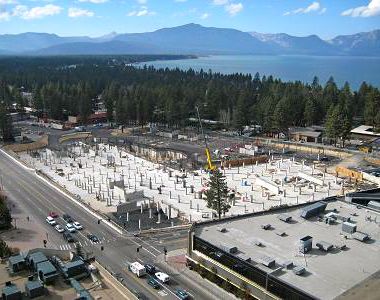
South Lake Tahoe onvention center project in 2007. Photo/Provided

South Lake Tahoe convention center project in 2007. Photo/Provided

The action unanimously taken by the council last week allows for the due diligence of Woodridge Capital Partners to be done, for the company to be an assignee to the owner participation agreement, and for the formation of a conceptual plan of the construction of what is known as the Chateau at Heavenly Village.

The council approved the item with the fee intact, but has since scheduled a special meeting for 10am April 27. (The budget and possible increase to business license fees will also be discussed at that meeting.)

Councilmen Hal Cole and Bill Crawford were appointed as an ad hoc committee to meet with Michael Rosenfeld, CEO of Woodridge. No meeting has been scheduled between the parties. However, Rosenfeld is expected to address the full council at the April 27 meeting.

“This guy, I don’t think he has the money, but he has access to money,” Gene Palazzo, South Lake Tahoe redevelopment director, said of Rosenfeld.

City Attorney Patrick Enright echoed those sentiments.

“He has access to funds. He would obviously be doing this with others who have funds,” Enright said. “If he can’t get the financing, it’s not going to work.”

Randy Lane and John Serpa, the men behind Lake Tahoe Development Company, have been in bankruptcy court since October because of their inability to pay creditors the $54 million they are owed. They have until June 2 to come up with a plan.

Rosenfeld, so far, is the plan. He has been a player in projects this size and larger.

“Eventually, if we pick this guy, we will either amend the existing (owner participation agreement) or have a new one,” Palazzo said.

The $410 million, 11-acre project that was approved several years ago was to include two hotels – with at least one a four star; extensive retail space (this was before commercial vacancies became the norm here); a convention center that would double as a facility local organizations could us; have a possible under or overpass linking to Heavenly Village; and open space.

What a future project may look like is unknown. The footprint is likely to remain the same because of existing permits and environmental documents. What the inside looks like is expected to change. A smaller project has also been talked about.

The Tahoe Regional Planning Agency permits were to expire this summer, but they will be extended for the length of time the project is in bankruptcy court, so probably another 10 months, according to Lane.

“This is not something that is going to be an easy solution even if new people come in. There are still many issues that have to be addressed on an ongoing basis,” Lane told Lake Tahoe News. “First, you have to make some sort of reasonable agreement with the creditors. Second, you have to wait things out and decide when it is a good time to bring the project forward. You can’t build it today for what you can sell it for. That means you don’t build it. That’s the issue.”

He said just when he thinks things are solidified something unexpected pops up.

Per the judge’s order from last month, Lane et al have been filing twice monthly reports to the court that creditors and interested parties have been receiving.

Another report is due this week, but it is the first one in May that will be the most significant because that’s when an outline of a potential deal must be filed.

“That will give us our first inclination as to whether he can make this work or not,” Enright said.

One thing that makes this situation unique is that the foundation has been poured. But it’s not one parcel. A final map was never recorded so the concrete and rebar near the Nevada border is laid on 29 parcels. That’s why foreclosure is not much of an option for creditors because then there is little or no value for someone who would want to resurrect the project.

“I think what needs to go there is what is planned there. It makes sense,” Lane said. “Whether we get to a plan or don’t will be driven an awful lot by creditors. I’m not saying we aren’t going to get consensus.”

Once Lane and his people present a plan to the bankruptcy judge by the June 2 deadline, the judge has until Aug. 2 to make a ruling.

“Our position always has been we want the creditors paid and the project to go forward,” Lane said. “We don’t have anymore money to throw at it. At some point we’ll find a solution. We would not continue to be the developer. Whoever comes in would be.”


Concessionaire has 6 weeks to get Fallen Leaf Lake ready

By Susan Wood

The community services district managing Fallen Leaf Lake operations put to bed months of ambiguity by awarding its concessionaire contract to Rob and Sandy Wirth, who run a South Shore electrical company with ties to the mountain haven.

The Fallen Leaf CSD board voted 4-0 Saturday in a special meeting at Lake Tahoe Airport for the Wirths to take over the store and marina business. Now the clock ticks for the duo to get the operation going by summer’s kickoff on Memorial Day weekend.

For the first time in 14 years, Fallen Leaf Lake's operations are in different hands. Photo/Susan Wood

For the first time in 14 years, Fallen Leaf Lake's operations are in different hands. Photo/Susan Wood

Sandy Wirth told Lake Tahoe News she’s well aware of the task before them. They have pledged a number of improvements during the upcoming months and years, plan to conduct community outreach and offer an enhanced experience at the popular gateway to the Desolation Wilderness outside South Lake Tahoe.

“It’s going to be exciting,” she said.

Wirth has supported her husband’s dream of expanding the options at the store and café – with a little help from qualified friends. He spent seven years working at Stanford Sierra Camp as the electrician for the university’s lake retreat. They will continue to own and run Innovative Electric.

“We feel we can keep the electrician part going while running the marina and store,” she said.

Their desire is to stay grounded on what can be delivered immediately. The couple would like to offer lakeside dining, but that idea may come to fruition down the road. The Wirths expect their background in business and desire to please the community to be their recipe for success.

CSD President Mike Kraft said Monday he was in full support of their plans.

“Rob has a great reputation with our community for being an outstanding person with good business ethics. This is a win-win situation for the board and the Wirths. Not only is the minimum payment (to the district) much higher, we have also negotiated a completely open-book contract. This will allow the transparency required to be able to work together as a team,” Kraft told Lake Tahoe News.

The final contract includes $110,000 to be paid by the Wirths to the board for rent and access to the store, café and marina operation for six years. The Wirths agreed to put up a $20,000 security deposit.

Kraft had major issues with some of the business practices that helped lead to a breakdown in talks with former concessionaires John and Ruth Rich. An impasse with the Riches, who ran the operation for 14 years, led to shouting matches, legal threats and a divided community for almost a year. (See Lake Tahoe News’ article on the intent to recall two board members.)

The turmoil resulted in one of the board’s earlier choices to run the operation to resign after less than a month of accepting the job. At Saturday’s meeting, the board approved canceling the contract with caterer Rick Firkins.


Stamp of approval for annual wine Passport Weekend

By Kathryn Reed

PLACERVILLE — It’s not exactly like the bar Cheers where everyone knows your name, but it’s close because more people are apt to know you by the time you leave.

Passport Weekend in El Dorado County is like one big party – except it’s at 26 locations.

Some might say visiting 26 wineries in two days isn’t possible. Cara Alfonso of Sacramento hit all the wineries last year during Passport Weekend. By Sunday afternoon she was at 13 while she sipped some red at Boeger Winery. She and her friends were at No. 4 on Sunday, having hit nine on Saturday. The little one she was carrying in front of her might have been slowing her down.

With all those barrels, Boeger isn't about to run out of wine to taste. Photos/Kathryn Reed

With all those barrels, Boeger isn't about to run out of wine to taste. Photos/Kathryn Reed

“It’s a fun community event,” Alfonso said. This was her fourth Passport. “You meet people from all over.”

She brought along Marilyn Hovland of Fresno as a newbie to the event. The food pairings are what stood out for Hovland. It wasn’t just food to eat, but learning what foods go well with particular wines.

At Boeger Winery there was not a consensus by the crowd as to what would taste best with the mac-n-cheese provided by chef Beth Sogaard. The line for the decadent comfort food on this blustery Sunday was almost as long as the line for wine upstairs among all the barrels.

It was Auriga Wine Cellar’s beef stew that had Sue Wood of South Lake Tahoe admitting she found one better than her mom’s. She said it was scrumptious with the Syrah.

“What we are striving for here is the melding of food and wine,” Richard Stading, owner and winemaker at Auriga, said.

Stading said his winery is all about education – especially about how food and wine complement each other. They have recipes on their website and suggest wines for the food.

This is Auriga’s first Passport. Party tents were taken down when at 10am a 40mph gust of wind nearly took everything down. However, it just meant the party moved inside.

The weather (so far) is forecast to be more spring like for the second weekend of Passport. Tickets are still available.

Meeting the winemaker or owner is common at Passport. Most tasting rooms are staffed with people who know the wines and aren’t just reading from cheat sheets.

Raymond McKay signs a bottle at Chateau Rodin.

Raymond McKay signs a bottle at Chateau Rodin.

Raymond McKay at Chateau Rodin will sign personal messages on bottles people buy. In 2003 and 2006 Chateau Rodin was voted best winery at the annual Soroptimist International of South Lake Tahoe wine tasting.

Joe and Lena Martini of Reno have been coming to Passport for the last decade. It’s a birthday gift to Lena from her parents each year.

“I wouldn’t miss it. Everyone is friendly, the food is fabulous and there are great prices on wine,” Lena Martini said.

The 16 people in their group had hit five wineries each of the two days. Joe Martini called it a slow weekend for them because in the past they’ve visited 10-14 wineries in a day.

Reds Regan of South Lake Tahoe is painting at Lava Cap both weekends.

Reds Regan of South Lake Tahoe is painting at Lava Cap both weekends.

Instead of merely having art for sale, Lava Cap Winery had the artist creating original work. Reds Regan of South Lake Tahoe will paint an original canvas both weekends.

“Passport Weekend was launched by El Dorado’s wineries 19 years ago to encourage people to explore our beautiful wine country in the springtime. Since then, Passport has grown to include two popular weekends that attract multiple generations of families from across the U.S.,” said Beth Jones, owner of Lava Cap Winery and president of the El Dorado Winery Association.

For more information about Passport Weekend, click here.


Officials: Muck on roadways not from change in de-icing

By Kathryn Reed

Every spring the sides of the roads in the basin and on the highways leading to Lake Tahoe are black and not the pristine white of fresh snow. The difference this year is locals have noticed the black has been more prominent throughout the winter.

However, snow removal officials on both sides of the state line say nothing new is going on.

A South Lake Tahoe street sweeper creates dust. Photos/Kathryn Reed

A South Lake Tahoe street sweeper creates dust. Photos/Kathryn Reed

Caltrans is responsible for the highways throughout Lake Tahoe in California, while the Nevada Department of Transportation handles them in the Silver State. On city streets and in the county it is those jurisdictions that take care of the side streets.

The Tahoe Regional Planning Agency does not oversee what is put on the roads each season, but it does take a look at the reports the various jurisdictions compile. On the California side, the Lahontan Regional Water Control Board looks at what was put on the roads and what the sweepers took off.

“We don’t regulate public safety,” TRPA spokesman Jeff Cowen said.

Public safety is the main focus of snow removal policy.

“You have to find that fine line to provide for public safety and be environmentally conscious,” said Tom Celio with the El Dorado County Department of Transportation. “Our primary skid resistance material we use for ice control are cinders, volcanic cinders. We’ve been using them for 20 years. There’s been no change.”

Those cinders are also what are used in South Lake Tahoe. In the city it’s a mix of two-thirds cinders and one-third salt.

John Greenhut, public works director for South Lake Tahoe, said his department believes cinders create less fine sediment. It’s the fine sediment that people charged with protecting the clarity of Lake Tahoe want to keep from reaching the water.

Caltrans uses a mix of sand and salt. Years ago the agency was blamed for the dying trees along state highways because of the amount of salt being used. Part of the problem was blowers spraying the salt into the foliage and then the conifers turning a rust color.

“If the sand is wet, it may appear black in color. It’s gray or brown in color when it’s dry,” Deanna Shoopman, Caltrans spokeswoman said. “We use the purest sand we can get for Tahoe.”

The state and an independent environmental agency tests each delivery of sand and salt to make sure it meets appropriate standards, Shoopman said. The same components used in the basin are used on the highways on the outskirts of Tahoe.

NDOT uses three parts sand to one part salt on the 150 lane miles it services in Lake Tahoe.

“This ratio, with a relatively smaller amount of sand than used in some other situations, helps reduce sand particulates form being blown into the air,” said Meg Ragonese, NDOT spokeswoman. “When spread on the roads, salt and sand is wetted with brine (a water-salt solution) to create heavier sand that keep roads ice-free at lower temperatures and will not as easily bounce off roadway surfaces. Brine is also sprayed on wet road surfaces prior to snowfall to delay ice pack build up.”

NDOT has reduced the amount of sand it uses from about 4,300 cubic yards in 1990 to a little more than 800 cubic yards in recent years.

Celio said one of the benefits of the cinder is they are easier to pick up with a sweeper because they are coarser than sand.

“We sweep it up as soon as it is practical, as soon as we get dust,” Celio said.

Lahontan requires the county and city to keep a log of the material put on the road, what is swept off and what is collected in sediment traps the in various detention basins.

Russ Wigart, an engineer with the county DOT, along with others in the basin keep researching the best methods to melt snow and ice. Crushed walnuts have been used other places, but it’s cost prohibitive at $300/ton. Cinders cost about $20/ton.

ngg_shortcode_0_placeholder


Room tax expected to increase 3% in Douglas County

By Kathryn Reed

MINDEN — Starting June 1 the cost of a hotel room in Douglas County is likely going to be 3 percent higher.

Notices were sent out Tuesday to the hundreds of properties that will be affected by increasing the hotel tax from 10 percent to 13 percent. The commissioners on April 15 will hear the first reading of the ordinance to create the higher tax, with implementation expected June 1.

For every 1 percent increase it’s expected to generate $400,000 at Lake Tahoe and $60,000 in the Carson Valley. The 3 percent will be split with 1 percent going to the county for parks and recreation and the tourism agencies taking 2 percent. The money generated at the lake stays at the lake; the money in the valley stays there.

The room tax at Stateline casinos may go from 10 to 13 percent in June. Photo/Kathryn Reed

The room tax at Stateline casinos may go from 10 to 13 percent in June. Photo/Kathryn Reed

“The additional fees collected will bolster Lake Tahoe South Shore’s efforts to stay competitive as a premier vacation destination,” said Carol Chaplin, executive director of Tahoe Douglas and Lake Tahoe visitors’ authorities. “Uses for the increased revenues have yet to be discussed, but should the license fee be implemented, it allows us to look toward the 2011 budget for a more impactful presence in our markets through advertising, online and public relations efforts.”

TDVA board chairman John Packer did not return multiple calls.

“I like the nexus between the tax and the service,” Douglas County Manager Michael Brown said. “If the promotional agencies were not pushing for it, we wouldn’t be doing it.”

Tourism is the largest industry in Douglas County. Officially called the Transient Lodgers License Tax, the fee is assessed on every room in the county including vacation rentals. With fewer people traveling and hoteliers dropping room rates to attract people, the income generated has been declining for the past 10 years.

In 2000-01, just more than $7 million was collected from the room tax. That figure dropped to $5.46 million in 2008-09.

From the 10 percent collected at the lake the division is:

• 1 percent goes to the Tahoe Douglas Visitors Authority;

• 1 percent to the Tahoe Douglas Transportation District;

• 1 percent is split with five-eighths going to the State Economic Development, $75,000 of three-eighths going to the South Shore Lake Tahoe Chamber of Commerce, and the rest of the three-eighths to the Lake Tahoe Visitors Authority;

• 7 percent is split with TDVA getting 65 percent of the 7 percent and the county getting 35 percent.

The threat of the state taking money from local jurisdictions is one reason Douglas officials opted to not have the voters decide the measure. Even if the outcome were to increase TOT, the state would have to sign off on it and could have redirected where the money was spent.

With the county implementing the plan, the state cannot take the money.

In a memo from Brown to the commissioners dated March 24, it says, “The state may impose a 3 percent increase in the TOT rate for all Nevada counties in order to raise funds to help address its financial crisis. In the last legislative session, the state increased the TOT 3 percent to be charged and collected in Washoe and Clark counties. The extra funds collected can be used for a variety of state [not local] purposed until 2011 when the funds will be directed to ‘public education’.”

If the state increases TOT, this would be on top of what Douglas County is proposing.

Plus, the language is being written so tourism agencies at the lake and in the valley get the money and the county can’t change its mind about how to distribute it. This is partly in response to what many say South Lake Tahoe did with the hotel tax collected in the city – it uses the money for things other than marketing the area to tourists even though tourists have paid the tax.

The other benefit is being able to start collections a year earlier than if the state were involved. This equates to a projected $1.36 million.

“Putting these additional funds to work as soon as possible is critical to support our local economy, as well as our park and recreation facility and equipment needs,” Brown said in his report.

A 13 percent room tax is in line with other areas. Reno’s ranges from 12-13.5 percent; South Lake Tahoe is from 10-12 percent, plus the Tourism Improvement District flat rate fee of a few dollars a night; San Francisco is 14 percent; Seattle 16 percent and Houston 17 percent.