4% proposed STPUD rate hike comes with questions

stpudBy Kathryn Reed

When ratepayers in South Tahoe Public Utility District incurred a 4 percent hike in 2007 it generated about $668,000 in revenue. Salary and benefit increases that year for STPUD totaled about $750,000. When ratepayers incurred another 4 percent hike in 2008 it raised about $700,000, with the district spending about $1.7 million on salaries and benefits that year.

The district is proposing a rate hike of 4 percent that would take effect July 1 – the start of the fiscal year. No raises are expected for the more than 100 employees. The money generated is earmarked for capital improvement projects.

On May 6 at 6pm the board will conduct a public hearing on the 2010-11 budget at 1275 Meadow Crest Drive, South Lake Tahoe. The board will vote on the rate increase on the May 20 meeting that starts at 2pm.

That is also the last day the 17,000 ratepayers can submit comments about the proposal. If 50 percent plus one objects to the increase, the proposal dies per California Proposition 218. The board could also vote against it.

As of April 27 there were 66 objections. Two years ago the rate increase received 65 objections and there were more than 160, or less than 1 percent of the ratepayers, who objected three years ago.

“The thing that is the driving force for the increase is the capital improvement program for the next two years,” South Tahoe PUD General Manager Richard Solbrig said. “The next two years there is a real glut of projects to get done. We need some cash upfront right away to take advantage of all of these programs.”

Part of the urgency is matching dollars and low interest loan programs the district has received from the state and federal governments. Some of the money will be spent on installing water meters, some to upgrade the water flow for fire suppression and some to improve the 51-year-old wastewater treatment plant.

Board President Dale Rise believes a 4 percent rate increase is too much.

“I was hoping to convince the board of 2 percent,” Rise said. “My problem is they want a 4 percent increase every year for the next 10 years.”

If the rate hike were approved, the average household would pay an additional $8 per quarter or $32 a year. Rise is concerned about the cumulative affect of 4 percent hikes, pointing out that in three years it’s more than $100 more a year that people would be paying for water and sewer each year compared to today’s rates.

The district does its budget calculations on a 10-year cycle to project its current and anticipated needs.

“If we did zero percent this year and did 4 percent for the remaining nine years and did all the capital projects, we would have a deficiency in the ending balance,” Solbrig said.

To that, Rise says perhaps some of the projects should be deferred.

If the 4 percent hike is not approved, Solbrig says the board will have to decide which capital improvement projects need to be shelved and/or approve other cost-cutting measures.

In the $40 million annual budget about one-third is used for capital improvements, one-third for maintenance and operations, and one-third for salaries and benefits.

The latter has caused several disgruntled ratepayers to voice their dissatisfaction with how the district spends ratepayers’ money. The highest paid employee in the district is Solbrig, who makes $180,744 a year. The lowest wage is $16/hour. The average annual salary at the district is $75,474.

There are 100 workers who are represented by one union. The 15 managers operate under a memorandum of understanding with the district. The highest paid union worker makes about $95,000/year.

Below is the salary range for the 10 highest paid positions beneath the general manager. All are management positions.

Position

Minimum

Maximum

Assistant GM

$127,016

$162,108

CFO

$108,587

$138,588

Eng Dept Manager

$110,205

$140,652

Mgr of Field Ops

$102,213

$130,452

Principal Engineer

$99,157

$126,552

Mgr of Plant Ops

$99,157

$126,552

Human Resources

$90,215

$115,140

Senior Engineer

$88,100

$112,440

Hydrogeologist

$88,100

$112,440

Land App Mgr

$88,100

$112,440

Most employees in the district are at the highest level of the five-step range for their position, Solbrig said.

He and CFO Paul Hughes explained the large salary-benefit spike in 2008 was twofold. First, salaries were adjusted to bring STPUD employees inline with the state median for their respective positions. This was the first survey conducted since Solbrig started with the district in 1990. It was a board decision to pay the median salary. Second, the district switched to a wellness program that mandated employees get baseline exams. This meant more visits to doctors than would be normal.

“The district’s view is investing in the cost of the wellness program in a long-term investment. We expect to reap benefits for years to come,” Hughes said.

In the current budget the salary and benefits category is down 1 to 2 percent from the previous year because the health plan is working, Hughes said. The district is self-insured.

This is the last year of a four-year contract with the union. It’s anticipated an extension of one year will be agreed to a by all sides that will include zero raises.

The general manager and the chief financial officer defend the salary and benefits packages for the 115 employees of South Tahoe PUD.

“It’s easier to retain people when you pay a fair, livable wage. We need an adequately trained staff. We don’t have a high turnover rate,” Solbrig said. “We don’t want to be like the police and fire departments where at times they have been like a training ground.”

Below are the cost of living adjustments for STPUD employees compared to the consumer price index:

Year        COLA         CPI

2009        2.0%            -1.3%

2008        3.8%             3.8%

2007        3.2%             3.2%

2006        2.5%             2.9%

2005        2.5%             3.1%

2004        2.5%             2.5%

2003        2.5%             1.1%

2002        2.5%             2.8%

2001        2.0%             3.2%

2000        2.0%             2.0%

Wages have been frozen. However, STPUD employees have not incurred furlough days like their brethren throughout the public and private sectors. Nor have they had salary reductions since the recession hit.

Solbrig said the district maintains the staff it needs. He said when more construction was going on in Lake Tahoe the district hired a consultant or paid overtime to handle the new connections.

Solbrig said the maintenance and operations budget has been trimmed some and that grants are continuously being sought so ratepayers don’t foot as much of the bill.

He said the staff and board have not identified what services could be cut and still have public health and safety issues addressed.

“What work are we not going to do if we have people on furlough?” Solbrig asked. “Are we going to reduce service? If your water is off, are you willing for us to get to you in a couple days?”



LTCC president wants to leave; he’s interviewing

Updated April 27 8:23am.

By Kathryn Reed

If Lake Tahoe Community College President Paul Killpatrick has his way, he won’t complete his three-year contract that expires in summer 2011.

Killpatrick is one of four finalists for the president’s job at Green River Community College in Auburn, Wash.

Paul Killpatrick

Paul Killpatrick

A decision on that job is not expected until early May. Finalists will be interviewed the first week of May.

Killpatrick told Lake Tahoe News on Tuesday morning that when the Green River job came open he jumped at the chance to apply because he and his wife would like to return to the Northwest where they’ve lived for 30 years, and their children and grandchildren live.

“It’s no reflection of (LTCC) or the community,” Killpatrick said of his desire to move on. “It’s been a positive experience.”

Killpatrick called board President Kerry David to tell him about the possibility of his leaving South Lake Tahoe’s two-year institution.

“I know Paul has not felt as though he has been a proper fit. He is from the Northwest and has roots there,” David said. “It’s not an easy transition to follow in the shadow of long tenured leaders.”

Killpatrick is the third president the college has had since opening more than 30 years ago.

Killpatrick has been criticized by some for not being a better fund-raiser since arriving here in summer 2008. David, who is also on the college’s foundation board, said Killpatrick has planted seeds and that in this economy raising money is near impossible.

David anticipates the board will release Killpatrick from the contract when he gets another job.

Asked if he thought Killpatrick would be able to continue to his job at LTCC when everyone knows he is interviewing, David said yes. He also said the board is not likely to ask him to leave before he secures another position.

“In our economic situation we are not in a position to afford to try to make that happen sooner rather than later,” David said.

Killpatrick said if he does not get the job he is a finalist for or one of the others he’s applied for, he will continue to do the job in Tahoe, with possible mid-year budget cuts still something that will have to be tackled.

David credits Killpatrick with working in difficult financial times that have involved cutbacks at the college as the state continuously wrestles with deficits.

“While we have had to undergo cuts, he has participated in leading us through those troubled waters,” David said.

The board’s first order of business it hire a vice president of Academic Affairs and Student Services. Two finalists will be interviewed Friday. A decision should be made in early May.


Mom-daughter survive depths of despair with CASA’s help

By Kathryn Reed

Stubbornness is what Sonja Burns call it.

Tenacity, love – those are other words that could be used to describe the fight she and her mom put toward ensuring they would be reunited.

Between 2006 and 2008 Sonja was part of the Court Appointed Special Advocates program in South Lake Tahoe. She lived with a foster family while her mom, Katrina Burns, straightened her life out so an El Dorado County judge would award her custody of her now 16-year-old daughter.

Katrina and Sonja Burns fought to be a united family. Photo/Kathryn Reed

Katrina and Sonja Burns fought to be a united family. Photo/Kathryn Reed

Katrina has been clean for more than three years. She has been off cigarettes for nearly two weeks.

“Not every family ends up on the other end together. They were strong,” Kelly Parker, site manager-senior case supervisor for CASA El Dorado, said of the Burns.

Sonja Burns, a sophomore at South Tahoe High School, will be the keynote speaker at the May 1 Evening of Opulence fundraiser for CASA. She’s not nervous to tell her story to the more than 100 people who are expected to attend the event at Marcus Ashley Gallery.

The rocky times for mother and daughter seem to be in the past. Now it’s just the normal teen-mom battles.

CASA provided both Burns an outlet that hadn’t been there before. The caseworker, Linda, is considered by both to be a member of the family.

“I know how closed up my daughter was and can be. If there was a chance she could open up to somebody, I (wanted her to),” Katrina Burns said. Another female adult in her daughter’s life  didn’t threaten her. She wanted her daughter to have the support she needed.

CASA is designed to provide a child with an advocate in court. That person can speak for the youth in court if they don’t want to speak for themselves. A CASA is also a friend — someone to go to the movies with, have lunch with and share with.

The South Lake Tahoe office has been open since 1994, with the Placerville office opening two years earlier. The money raised next weekend benefits the entire county.

“Our program has consistently grown every year. With a rise in substance abuse, there will be a rise in child abuse and neglect,” Parker said.

The lousy economy is taking its toll on families. Despite less money in households, she said cash for alcohol does not seem to be a problem.

From August 2008 to August 2009 more than 400 children in El Dorado County were served by CASA. The numbers indicate 500 will be part of CASA from August 2009 to August 2010.

It took some time before Sonja opened up to her CASA worker. Politeness was always there. But conversations centered on the basics, with no real depth to them.

In the end, having someone to talk to was a key benefit of CASA, according to Sonja.

“I couldn’t tell my friends how I was feeling. I thought showing sadness was a weakness,” Sonja said.

It was a struggle for Katrina and Sonja to be allowed to live under the same roof.

“The first court papers they handed me they were putting her up for adoption,” Katrina said. This is often the case when Child Protective Services has been involved with a family.

Sonja doesn’t think that would have happened. She thinks a group home is where she would have ended up.

But the determination of mother and daughter, and with the CASA worker’s help, the two are under the same roof.

For more information about CASA, click here. Call Kelly Parker at (530) 573.3072 for tickets – they are $75 – to the May 1 Evening of Opulence.


Turning 50 in grand style without leaving Tahoe

By Kathryn Reed

Doing nothing is a concept I would like to embrace more often.

A morning bath. That never happens at home.

Reading on the couch while the sun is out. Not a home activity.

Black Bear Inn's lodge from the Snowshoe Thompson cabin. Photos/Kathryn Reed

Black Bear Inn's lodge from the Snowshoe Thompson cabin. Photos/Kathryn Reed

Ignoring phone messages and emails. More unusual things.

Having breakfast cooked and brought to me. Another rarity.

So, the truth is, I did do things – bathe, read, hot tub, eat, drink and then repeated it all.

Black Bear Inn owner Kevin Chandler called it recharging our batteries. Sue and I both needed it. She much more so because it was her 50th birthday celebration, which means she has years of recharging to catch up on, unlike some of us.

So often we go out of town to get away from Tahoe. This time we decided to stay in South Lake Tahoe to get a feel for what those millions of travelers to the basin experience each year.

Apparently the Black Bear is a popular place to celebrate milestone birthdays. A couple from Vacaville was staying in one of the rooms in the lodge – it was her 50th birthday.

As a treat for the four of us last Sunday morning, we were brought mimosas to toast the occasion.

I’ve stayed at the Black Bear once before (bid on the inn at silent auctions) and had eaten breakfast there another time for a food column, so I knew what I was in for when breakfast arrived.

One morning breakfast was brought to the cabin, the next we went to the lodge. It is so filling that lunch was not needed. The plate is full – and these are full-size plates. The flavors are diverse and intense, the presentation spectacular – and neither owner has a background in culinary arts.

They cater to different eating habits – like vegetarians.

The food is so incredibly good that I still say it’s the best breakfast in town. The problem is you have to stay overnight to experience it. It’s not a bad problem to have, though.

The Snowshoe Thompson cabin exceeded Sue’s expectations. It’s spacious, without being pretentious. The gas fireplace is visible from the bedroom and living area. TVs are in both rooms. A Jacuzzi tub for two and separate shower occupy the roomy bathroom.

A nice twist in the kitchen is the fresh coffee in the fridge – none of that prepackaged coffee found in most lodging establishments. A full size refrigerator is great. We had snacks that turned into dinner one night. A microwave is the only apparatus for cooking – which satisfied our needs.

Dinner the first night was at Café Fiore – our favorite restaurant in town. The menu is perfect for meat/seafood eaters like Sue, and the veggie connoisseur like me. Sue loved her lobster pasta dish and my pasta dish was superb.

Besides the entrees, the garlic bread is a must-have. The wine list is one of the most extensive I’ve seen in the area. And don’t leave without having the white chocolate ice cream. Ours came with a candle in it.

There are many things to like about the Black Bear – one is that it’s on Ski Run Boulevard. This means it is within walking distance to several really good restaurants. Heavenly Mountain Resort is just up the road and Ski Run Marina, with the Tahoe Queen paddle-wheeler, is down the road.

Another thing about the inn is that it makes you feel like you are in Tahoe. Pine trees are everywhere. The woodwork in the buildings is stunning. The décor of each room is different, with many items originating in Texas where the owners came from before opening the inn 11 years ago.

I’ve been massaging Black Bear Inn guests for years – long before co-owner Jerry Birdwell was elected to the City Council – which means I’ve been in every room (five in the lodge) and cabin (three, with one a duplex).

This time I wanted to be on the table. My colleague and friend Dawn came to the room to give us each an hour massage. My muscles are still thanking her.

From the table to the lodge we went. It was time for wine and cheese. At 5pm every day it’s a bit of a happy hour. It’s a great way to meet the other guests, enjoy the large fireplace and ultra comfortable couches.

This area also beckons during other hours of the day because it is so relaxing. Doors lead to the patio. The sun was shining enough last Saturday to bask outside and read while Sue got her massage.

In the summer the grounds are a spectacular array of color with all the flowers. I remember a couple years ago needing to close the blinds in a room where I was giving a massage because the inn was on either a garden or home tour.

The Black Bear Inn is truly an experience in getting away, even though the drive is only three miles.

ngg_shortcode_0_placeholder


Fine sediment clouds future of Washoe Meadow State Park

By Kathryn Reed

MEYERS — “Parklands are for the entire state, not just one community.”

That was the overriding message of Pam Armas, superintendent of the Sierra District of the California State Parks. She was one of many park officials dressed in their trademark green uniforms at Thursday night’s open house at Lake Tahoe Golf Course.

The golf course in Meyers sits on land that is part of the Lake Valley State Recreation Area, adjacent to the Washoe Meadow State Park. Both are part of the State Park system. Many people, even locals, don’t know this is one of the 17 parks in the Sierra District. It made the news in 2007 when nearly 20 acres of the more than 700-acre park burned in the Angora Fire.

America Golf is the concessionaire of the golf course and will continue to have a month-to-month contract until a decision is made about the future of the links, the park and the river that runs through it.

Amacker barn in Washoe Meadow State Park. Photos/Kathryn Reed

Celio dairy barn in Washoe Meadow State Park. Photos/Kathryn Reed

This undeveloped park is ideal for snowshoeing and cross country skiing in the winter, hiking and mountain biking in drier conditions. The old Celio dairy barn is an iconic relic of days gone by.

Trails traverse alongside and across the meandering Upper Truckee River.

A mix of meadows and forest dot the landscape.

Snowmobiling is the most common issue Brian Barton and other park law officials handle. It’s not allowed in the park. In the summer it’s dogs – especially ones off leash. They are only allowed on drivable roads.

Maria Mircheva, executive director of the Sugar Pine Foundation, was dispensing information about blister rust and how it affects the sugar, white bark and Western white pines in the Lake Tahoe Basin.

“We donate sugar pines to the State Parks and they plant it in the upland areas where they see fit,” Mircheva said. “We brought them two boxes (tonight).”

El Dorado County had a table set up to talk about issues such as the Sawmill Bike Path that will go through Washoe Meadow State Park property.

Earth Day was an opportunity for the parks department to showcase Washoe Meadow, to answer questions about animal habitat, plants, forest fuels management, blister rust, law enforcement issues, and re-routing the Upper Truckee River.

Like most reaches of the Upper Truckee River, the one in the park is being studied to potentially re-route it so it would follow its natural path. The draft EIR and EIS should be out this summer. It will include five alternatives. A 60-day comment period will follow. Park officials did not give a time line for when the final documents would be released.

Upper Truckee River in the state park.

Upper Truckee River in the state park.

The reason to mess with the river is to reduce the amount of fine sediment that reaches Lake Tahoe. The theory is stream restoration also allows for better plant management, flooding into meadows and other environmental benefits.

But what has people like Krissi Russell, who is part of the Washoe Meadows Community, concerned it the potential relocation of some of the holes from the golf course into the undeveloped area of the park.

This grass-roots organization of 200 people formed in 2006. Mostly it’s people who live in the area or use the park. She said her group also is worried about the logging going on in the park.

Piles of felled trees are sitting in the park waiting to be hauled off when the ground is dry.

“I wonder if the logging is to prepare to move the golf course,” Russell said. “It will fragment the park.”

Her group has made several Public Records Act requests to Armas’ office. The superintendent, after the last request, invited representatives of the group to Tahoe City to look at whatever documents they want.

Pam Armas, Sierra District parks superintendent, talks about Washoe Meadows State Park.

Pam Armas, Sierra District parks superintendent, talks April 22 about Washoe Meadow State Park.

Armas said she is trying to be as transparent as possible and keep communication open with the public.

Rich Adams, a forester with State Parks, said the goal of his department is to return the area to pre-settlement conditions. This has necessitated removing trees that are more than 100 years old.

He said the problem is fire suppression has created an unnatural environment. Removing trees by hand and machine is being done, as is chipping the material, burning slash piles, having contractors haul away the lumber and having prescribed fires. Some material is sold as lumber, some to cogeneration plants, some to composting companies.

“We want a variety of vegetation structures,” Adams said. “We think having a variety of structure is good for wildlife.”

This means larger trees will be 30-feet apart, while some stands will be more dense.

Lisa Fields, environmental scientist with State Parks, said, “Anything living in this park is comfortable with people.”

This is because the park is surrounded by development.

The golf course is an Audubon certified course – which means it provides substantial bird habitat.

Fields said a study from the state Department of Fish & Game and Caltrans came out this month saying most animals travel around the valley the park is situated in by migrating via the nearby ridges.

Click here for more information about the Upper Truckee River restoration project.


Judge wants more information before ruling on Kindertown

By Kathryn Reed

Maria Barrows-Crist was planning a victory party for Friday afternoon. The judge denied anyone a party. Instead, he asked both sides in the South Lake Tahoe day care battle to file more briefs.

June is the soonest a decision will be rendered, unless El Dorado County Superior Court Judge Steve Bailey works over Memorial Day weekend.

A tearful Maria Barrows-Crist with attorney Mike McLaughlin after court on April. 23

Maria Barrows-Crist with attorney Mike McLaughlin after court April 23.

The state Department of Social Services has been trying to put Barrows-Crist’s Kindertown out of business since last summer.

Mike McLaughlin, who is representing Barrows-Crist, said after the 90-minute hearing on Friday that he doesn’t believe the court will shutter Kindertown for one violation.

Although multiple allegations have brought against Barrows-Crist, the three that dominated the discussion April 23 were whether any employee was under the influence of alcohol or drugs while supervising children; the nickel-size burn on a child from spilled soup; and a peanut product given to a child with a known allergy to the nut.

Everyone agrees the child was given the peanut product even though the necessary precautions and warnings were in place. McLaughlin does not believe that incident alone is reason enough to close the center.

Brenda Ray, deputy attorney general with the state Department of Justice, kept up her mantra that she’s been preaching that if Kindertown stays open, there is the strong likelihood a child will be seriously injured or die.

Despite the 8-month-long court fight, Kindertown’s enrollment is increasing. She has 93 children, whereas in February she had 83. However, in September she was at 120.

Tears filled Barrows-Crist’s eyes as the judge said to file the briefs by May 21, with rebuttals to him by May 28.

“I thought there would be a celebration today,” she said.


South Shore teens take charge of issues facing them

By Kathryn Reed

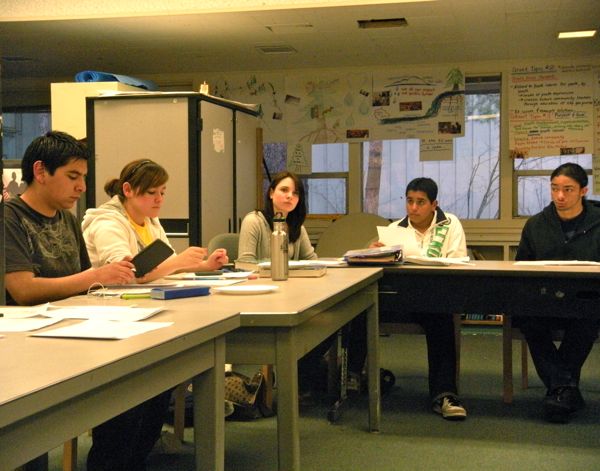
So many groups on the South Shore are dedicated to providing services to youth. It’s adults identifying problems or noting successes; it’s adults finding solutions. Seldom, though, are the youths asked what they think.

In a twist seldom seen, the adults in the room Wednesday night deferred to high school students. Daniel Reyes, chairman that night for the South Lake Tahoe Youth Commission Focus Group, told Boys & Girls Club Executive Director Karen Houser she could speak further when the “open forum” part of the agenda came up.

South Lake Tahoe Youth Commission Focus Group

South Lake Tahoe Youth Commission Focus Group

Houser was fine with that.

Reyes sounded like he had been running a meeting for more years than he’s been alive. He didn’t let people ramble on too much. He kept to the agenda. He asked for motions to be made, votes to be cast.

The chairman duties rotate each meeting, as does operations officer and clerk. Elsa Garcia was operations officer for the night, while Ashni Patel was tasked with taking minutes on a laptop.

This group of young people fluctuates between seven and 12 at a meeting. They’ve been meeting since October.

“This is more about governance and not activities,” Houser said. “They are focusing on issues of South Lake Tahoe (that youths care about) – gangs, transportation, lack of employment, the environment.”

For now the local Boys & Girls Club oversees the group, with Shawn Tonozzi and Mary Cook the adult leaders. They work for the Boys & Girls Club. Neither appears to be much older than the teens in the room.

Tonozzi acts like an executive director would.

The goal is the group will become an official commission with teens from both sides of the state line involved. Talks are under way with South Lake Tahoe Parks and Recreation Commission for the youth to be under their auspices because the city is not creating any more standalone commissions that report to the City Council. The parks group will likely take this up a meeting later this spring.

It could be that after the Youth Commission becomes official, a commissioner may be a liaison to other city commissions. Parks and Rec is a natural because it deals with youth activities.

With the number of Latinos in the community, it’s possible a student could be a rep to the Latino Commission. The environment is of clear importance to this group based on the conversation, so the Sustainability Commission may be another route they will pursue.

One of the tasks this week was to give input for Tonozzi and Cook as they create an application for perspective Youth Commission members. Tonozzi gave them the option to let the adults create the form. The youths unequivocally wanted input.

A minimum 2.5gpa was suggested, they agreed the form should only be in English, they want to ask about community service, to allow ninth-graders and older be voting members, and younger members to have a non-voting status.

At a future meeting they’ll approve the application.

Ernie Claudio, an adviser to the group, brought in examples of what other youth commissions focus on. The purpose and structure of the commission are still things to be defined and refined.

The idea is the youth will develop the answers to issues facing them and offer solutions. Several adults are already coming to them to share how they can help or might like the youth to help them.

Keith Taylor, who is doing his senior project on youth commissions, told his peers about how groups like this are found throughout the world. He talked about a youth camp going on in China now and how Mexico City is hosting a world youth conference in August.

A major endeavor the youth are undertaking is a summit on Nov. 2-3. The students will stay at Stanford Sierra Camp at Fallen Leaf Lake. It will be about team building, governance and it will have an environmental component – per the task force’s request.

The next meeting is May 4 at 6:30pm at the Boys & Girls Club in the old Al Tahoe Elementary School in South Lake Tahoe. The public is welcome.


Do It Center begins remodel of old car dealership in SLT

By Kathryn Reed

Work has begun on transforming the old South Shore Motors building into a Do It Center.

The locally controversial chain store based in Southern California is expected to open this summer – a year later than it had wanted to. Disagreements between store owners, South Lake Tahoe officials and nearby businesses led to months of back-and-forth arguments and petitions to ban the store from opening.

Shane Guzman works on the exterior of the Do It Center this week. Photos/Kathryn Reed

Shane Guzman works on the exterior of the Do It Center this week. Photos/Kathryn Reed

The City Council finally ruled that a general merchandise store could go in at the Lake Tahoe Boulevard location. Ace Hardware, which is kitty corner to the new store, is considered general merchandise.

It was another 3-2 vote last fall to deny the last appeal. Only this time it was Councilmen Bill Crawford and Bruce Grego in the minority.

Scotty’s Hardware and Meeks Lumber were vocal that Do It Center would bring unfair competition to their respective businesses as well as other construction/home improvement related stores in the area.

The one thing Do It Center can’t sell as a general merchandise store is lumber. This means Meeks Lumber continues to have a monopoly on that product.

The irony is John Carricaburu, the general contractor from Gardnerville hired to remodel the building, is going to Meeks for his lumber needs.

It's a construction zone inside the old South Shore Motors buidling.

It's a construction zone inside the old South Shore Motors buidling.

Carricaburu this week told Lake Tahoe News that Do It Center officials want to use as many local workers as he can hire and told him to buy local when possible. Axelson Irons Shop Welding will be doing work and South Shore Glass has a contract.

Mike Mauck, senior vice president and general manager for Do It Center, had little to say when contacted by Lake Tahoe News. He wouldn’t confirm the projected opening month of July.

Work on the exterior will begin May 1 when the building season begins in the Lake Tahoe Basin per Tahoe Regional Planning Agency regulations. The crack-filled asphalt parking area extends to the Cardinale auto dealer building.

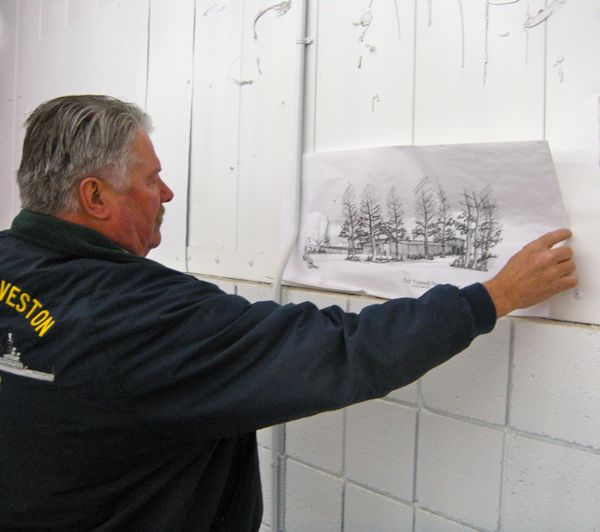
John Carricaburu shows what the buidling will soon look like.

John Carricaburu shows what the buidling will look like.

Carricaburu said it’s possible all the parking lot work the city wants done could cost $100,000. He didn’t have an estimate for how much money will be spend on getting the interior and exterior of the building suitable and looking more appealing.

On the roof, a 20-foot-by-20-foot tower will be built for the store’s sign.


Broc’s Puppies, sister store in Carson City out of business

By Kathryn Reed

Broc’s Puppies and Lil’ Pups are closed. Where the dogs are is unknown. A family member who at one time claimed to be an owner is in a Nevada prison on charges relating to violating probation regarding an earlier drug charge.

The phone numbers for the South Lake Tahoe and Carson City stores that were owned and operated by members of the Franks clan are both disconnected. Websites for both stores are still up.

Broc's Puppies has a padlock on the front door. Photos/Kathryn Reed

Broc's Puppies has a padlock on the front door. Photos/Kathryn Reed

The van that so often was parked outside of the South Lake Tahoe store has not been seen for a few days. A padlock is on the front door. Signs are gone that had been in the window.

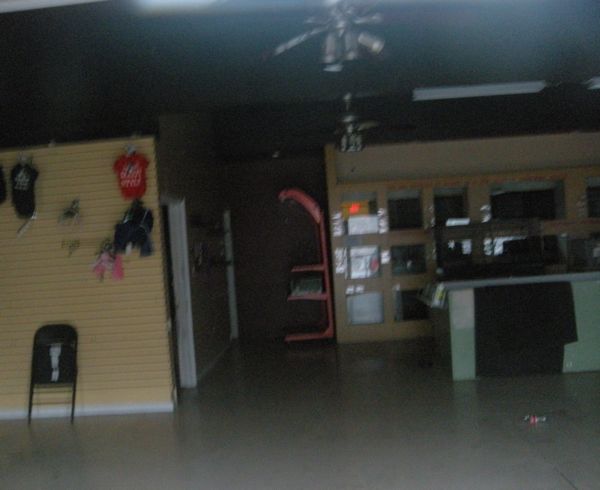
Peering inside it is obvious most items have been cleared out. There is no evidence any dogs are inside.

A filing cabinet with a couple missing drawers is in the back by the dumpster. Inside the dumpster is a television and the stench of animal urine.

At the Carson City store the sign is still up, but the windows are covered with paper to prevent anyone from looking in.

Where the owners are is not known. Nor is it known exactly how long each store has been closed.

Sources close to the issue told Lake Tahoe News the Tahoe store was shuttered because the owners were evicted for not paying rent and not having the proper permits because they had begun to groom and board animals without authorization.

A South Lake Tahoe police sergeant said his department was not involved in getting the owners to leave.

Both stores were the first in the respective cities to sell puppies. After the Carson store opened in November 2006, people complained of sick dogs much like they did when the Tahoe store later opened. Animal advocates alleged puppy mills were the suppliers. Owners denied these allegations.

Not much is left inside Broc's.

Not much is left inside Broc's.

A year ago, the South Lake Tahoe City Council enacted an ordinance prohibiting the sale of live dogs and cats. Broc’s was to be grandfathered in for two years.

Albert Franks at one time was the manager in Carson City and Danny Franks had owned the store. Albert Franks is the patriarch of the family and has also managed the Tahoe store.

Albert Franks told this reporter in fall 2008 that his grandson owns the Tahoe store. David Franks is the one now in a Nevada penitentiary. He was arrested at Broc’s in January.

Dennis Franks, brother of Danny, is David Franks’ father. Dennis Franks was listed as the owner when El Dorado County Animal Control officers raided the store in June 2009. The District Attorney’s Office had not determined if charges would be filed.


STHS ushers in new era with opening of CAT building

By Kathryn Reed

Walking into the Construction, Arts and Transportation Academy students could be heard saying, “Wow!” – “It smells good.” – “It smells weird.”

It was all of the above and then some Monday on the first day of instruction in the new building on the campus of South Tahoe High School.

With only one class – small engines – being taught first period, it was rather quiet. But a certain amount of excitement was evident from this group of freshmen.

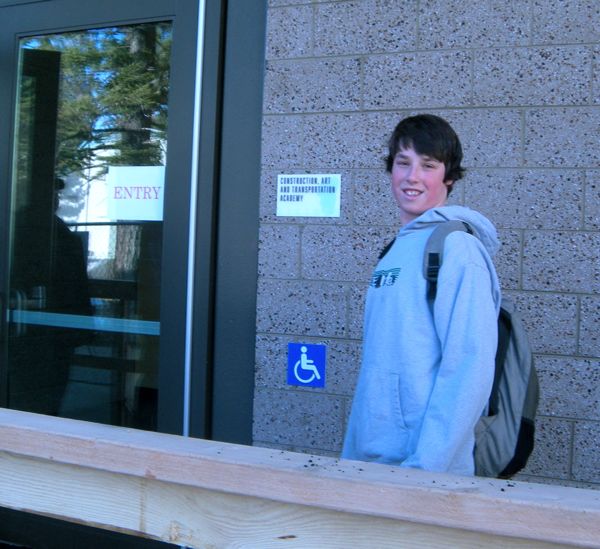
Nathan Wieburg is the first student in the new building Monday.

Nathan Wieburg is the first student in the new building at South Tahoe High on Monday. Photos/Kathryn Reed

Nathan Wieburg was the first person through the door.

“It’s lots better. The shop was dirty, bolts were everywhere and the desks were falling apart,” Wieburg said as he descended the stairs to the auto shop.

With all the teachers who will call the CAT building their home bringing classes in for a tour prior to last week’s spring break, the students knew where to go. The guys flew down the stairs – the first staircase in the district.

Security guard Troy Gregory was holding the door for each student.

The 17 students fill the stools before the four rows of tables. Some huddled by teacher Mike Patterson’s desk to get a locker.

“They built this for you,” he tells the students. “You need to help take care of it.”

A little glitch is the wrong lockers arrived. For now students will share. When the correct ones arrive they’ll each have one to store notebooks, safety glasses and coveralls.

Something new for Patterson is having a desk.

Teacher Mike Patterson, left, talks with students.

Teacher Mike Patterson, left, talks with students.

Adjacent to the classroom is the lab area for the small engine class. Behind the classroom is the mega-auto shop with mostly new devices. What could be saved from the old shop was. But next week Patterson is looking forward to being trained on the state-of-the-art alignment rack.

It’s not just engines the group of guys handles. (This is the first year in a while no girls have signed up for the class.) Patterson is having them put in the shelf for their workbenches by figuring out which drawer to remove, the need for a No. 3 Phillips screwdriver and an 11mm wrench.

“I think it’s pretty cool. It’ s a lot newer and nicer. We’ll be able to do more,” said Kyle Rossi as he and Jason Elder worked on putting in the shelf.

Their tools fill the top two drawers. The bottom two and the cabinet are for engines and engine parts.

Kyle Rossi works on his work station.

Kyle Rossi assesses what to do on his work station.

Patterson told Lake Tahoe News, “I think this sends a really important message that taking career technical education classes is important to the district. I think they sent the opposite message before.”

Despite the significance of this being the first building to open with the $64.5 million voter approved bond money, no district office personnel or school board members were there to witness the occasion.

Lake Tahoe Unified School District Director of Facilities Steve Morales had been at the school since 5:15am – but that isn’t unusual.

“We still have some loose ends,” Morales said. But the smile on his face was similar to that of a new parent. Video distribution should be installed in the next few days and white boards will arrive in a few weeks.

With this building open three months ahead of schedule, it means the little theater is being demolished now. A sign warning about asbestos is on one door. The clanging of SMC Contracting workers can be heard on the other side of the chain link fence.

Lots of metal fencing will remain at the school. Those getting to the CAT building must go through the C Wing. In an emergency, all doors would be available to students in the CAT building.

Because ground will be broken in May on the media arts center, the school will remain a construction zone for quite a while. That structure will go directly in front of the CAT.